Marble That Cools Your Skin
Sultan Qaboos Grand Mosque’s 300,000 tons of Indian sandstone are cut so thin the floor radiates chill even at 40 °C. Look up: the 14-metre chandelier took 1,200 kg of gold leaf and still sways a millimetre in the breeze.
Muscat, Oman, is a low-rise capital with Indian-sandstone mosques and 16th-century Portuguese forts. The guide covers 15 listed attractions. The best season to visit is November–February, with an average visit duration of 3–4 days.
The first thing that throws you in Muscat is the silence. No glass towers humming with AC, no neon, no honking—just the hush of a city that capped itself at ten storeys and chose sandstone over steel. Oman’s capital feels like someone pressed pause on the Gulf’s usual race to the sky, then threaded a 16-lane highway through limestone cliffs just to prove they could still move around.
 Muscat · Oman
Curated from places in this city. Same price as official sites.


Prices shown are indicative — final pricing and availability are confirmed at checkout. Audiala may receive a commission from bookings made via these links.
Researched from Wikidata, Wikipedia & official sources · fact-checked · How we make our guides →
MThe first thing that throws you in Muscat is the silence. No glass towers humming with AC, no neon, no honking—just the hush of a city that capped itself at ten storeys and chose sandstone over steel. Oman’s capital feels like someone pressed pause on the Gulf’s usual race to the sky, then threaded a 16-lane highway through limestone cliffs just to prove they could still move around.
Walk the Muttrah corniche at dusk and the air is equal parts salt, frankincense and diesel from the dhows unloading crates of dates and plasma TVs. Old men in immaculate dishdashas sit on the sea wall, twirling prayer beads while Indian trawlers repaint their hulls the same turquoise as Pakistani trucks. The souq starts two steps back: a dark maze where silver khanjars glint under fluorescent tubes and every third stall offers the same plastic snow globe of the Sultan.
Drive ten minutes south and you’re in a neighbourhood that didn’t exist in 1970—low villas, palm-lined boulevards, a Royal Opera House that books Rossini and Youssou N’Dour in the same season. The city keeps its history on the surface: Portuguese forts lit gold at night, a palace you can photograph but never enter, a mosque that holds 20,000 worshippers and still manages to feel intimate. Muscat doesn’t shout; it lets the Gulf’s loudest region talk over itself while it tends the rose water distilleries in Jebel Akhdar and waits for the sea breeze to come in.
What makes this place worth slowing down for.
Sultan Qaboos Grand Mosque’s 300,000 tons of Indian sandstone are cut so thin the floor radiates chill even at 40 °C. Look up: the 14-metre chandelier took 1,200 kg of gold leaf and still sways a millimetre in the breeze.
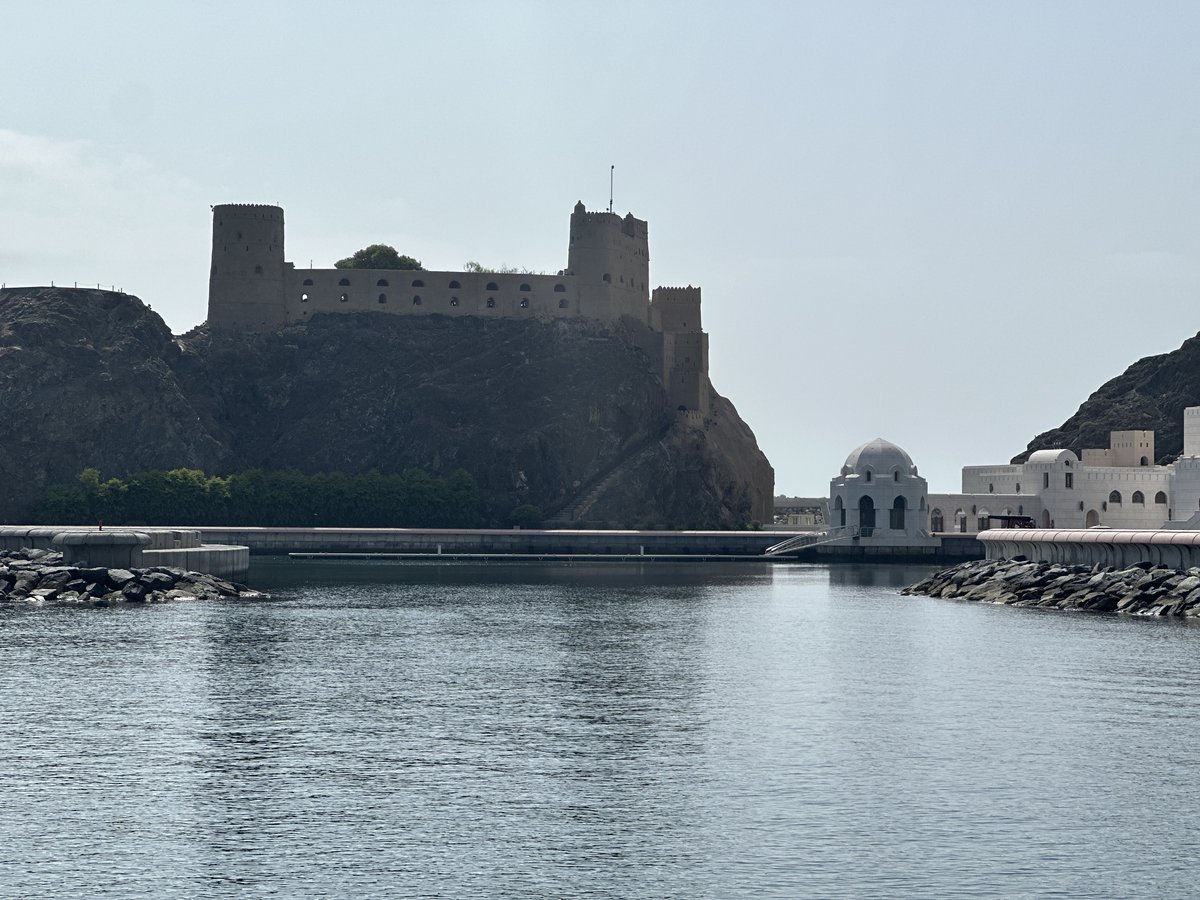
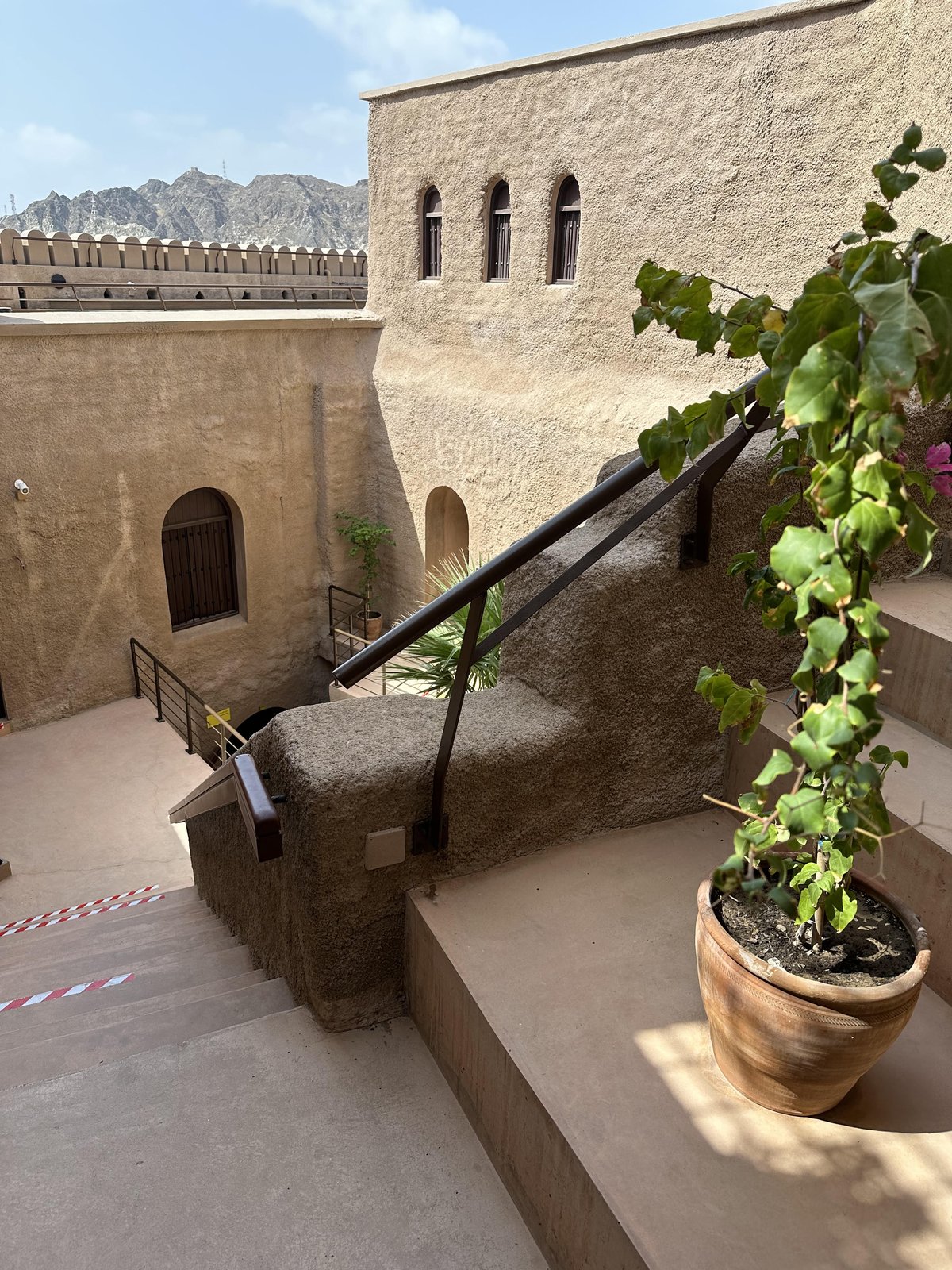
Al Mirani reopened in 2024 after three centuries off-limits; climb its rebuilt stair to see the palace roof tiles at eye level and the Sea of Oman stretched like hammered pewter below.
No skyscrapers means galleries sit in converted merchant houses where the AC rattles like an old taxi. Bait Muzna’s current show hangs canvases opposite 200-year-old ventilation screens so the shadows become part of the composition.
Muttrah’s new corrugated roof is shaped like a manta ray; inside, auctioneers sing prices in Swahili-accented Arabic while ice chips crack under hammerhead steaks still twitching from the boat.
Not every monument, just the ones we'd walk you past ourselves.
The Sultan Qaboos Grand Mosque in Muscat stands as a magnificent emblem of Oman’s religious devotion, cultural heritage, and architectural innovation.
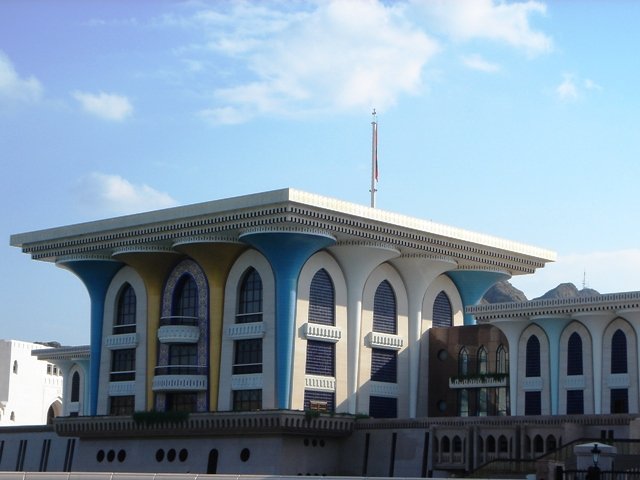
Al Alam Palace, located in the heart of Muscat, Oman, stands as one of the nation’s most iconic landmarks and a vibrant symbol of Omani heritage, culture, and…
The Royal Opera House Muscat (ROHM) stands as a remarkable cultural beacon in Oman, symbolizing the nation’s dedication to artistic excellence and…
Nestled in the heart of Old Muscat, the National Museum of Oman stands as a beacon of the Sultanate’s rich and diverse cultural heritage.
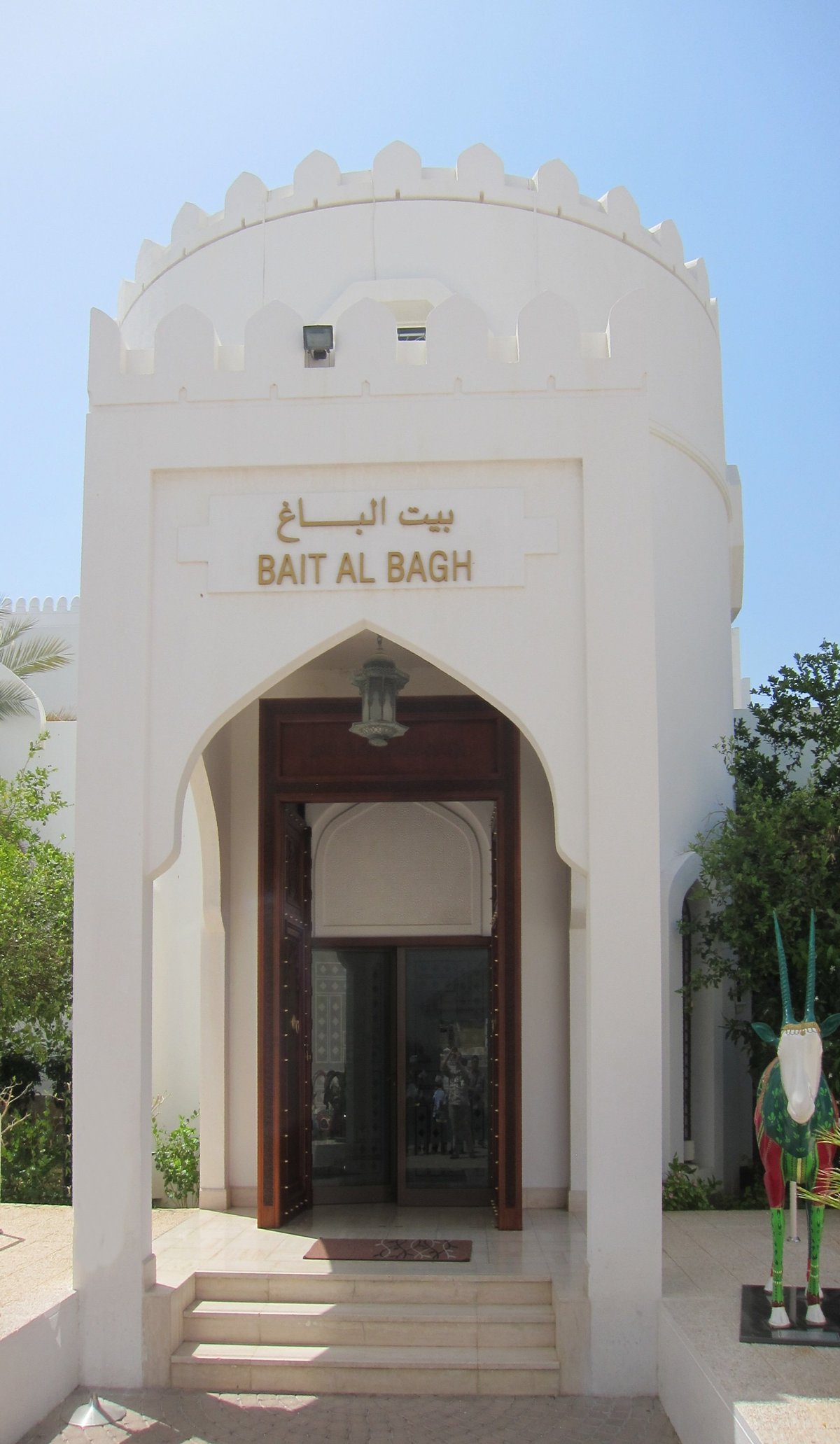
Nestled in the heart of Muscat, Oman, the Bait Al Zubair Museum offers an immersive journey into the rich cultural and historical heritage of the Sultanate.
The Council of Oman, or Majlis Oman, stands as a pivotal institution embodying the Sultanate’s unique blend of traditional consultative governance and modern…
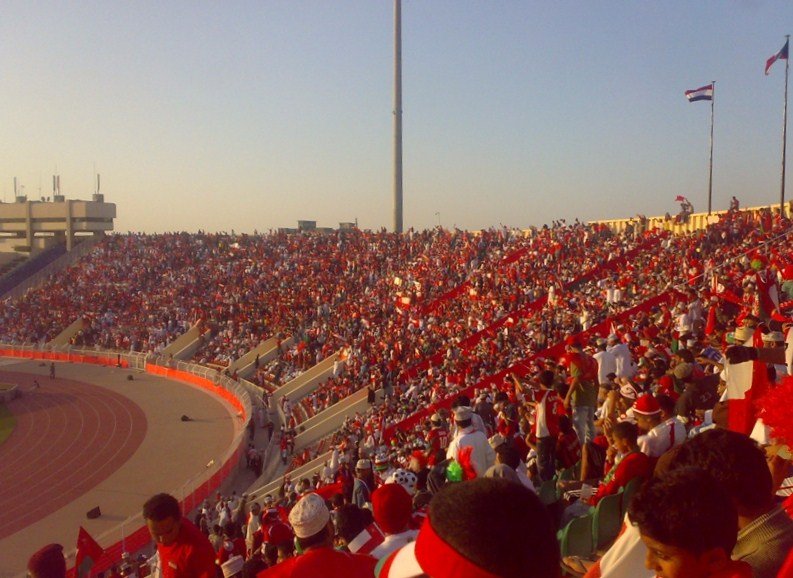
Nestled in the vibrant Bausher district on the outskirts of Muscat, Oman, the Sultan Qaboos Sports Complex stands as a premier destination for sports…
Where to wander, by quarter — each with its own rhythm.
The working heart of the city. Dhows dock beside a 19th-century souq where you’ll smell luban (frankincense) before you see it. Climb Muttrah Fort for harbour views, then descend to the fish market—a wave-shaped concrete hall that gets frantic at dawn when swordfish are auctioned by flashlight.
A pocket-sized enclave of whitewashed ministry buildings, Al-Alam Palace (photogenic, closed) and two Portuguese forts—Al Mirani now open after a 2024 makeover with harbour-view café and cannons you can touch. Everything closes after dark; come for the golden-hour palace shot, leave before the guards start yawning.
Leafy embassy quarter where locals picnic under banyan trees and teenagers drift Lexus SUVs along the beach road. Qurum Beach is the city’s easiest swim—shallow, clean, patrolled—and the backstreets hide the best Omani coffee roasteries, open till 11 p.m. for cardamom-scented nightcaps.
The business-strip that tourists never see: 24-hour shawarma counters, Pakistani barbers, and the Royal Opera House—marble cloisters, hand-carved Islamic patterns, tickets from 5 rials for a weekday recital. Dress sharp; the foyer is a catwalk of embroidered abayas and Italian loafers.
Where the airport spills into suburbia. Modern malls, Friday goat market, and the launching pier for Dimaniyyat Islands snorkel trips. The corniche here is grittier than Muttrah—fishermen mending nets while kids blast Khaleeji rap from dusty Toyotas.
The old Indian mercantile quarter. Gold shops blink under neon, money-changers sit behind inch-thick glass, and the vegetarian cafés serve sambar that tastes like Mumbai. Come for cheap SIM cards and the 50-cent ride to Muttrah in a shared taxi that smells of sandalwood and diesel.
From copper-age camp to opera-house capital in fifty centuries
Fishers camp on Ras al-Hamra headland, stacking oyster shells into middens that still crunch underfoot. Their circular huts face the sea; burials lie flexed, toes pointing toward the water they never stopped watching. The camp smells of dried tuna and smoke from driftwood fires.
Omani copper leaves through Muscat’s natural harbor in bun-shaped ingots bound for Sumerian foundries. Reed boats, twenty tons each, ride the monsoon north. The city’s first wealth is measured in bronze axes, not yet in coins.
Emissary Amr ibn al-As hands the Azdi rulers a letter from Muhammad. They accept Islam without a sword drawn; Muscat becomes one of the earliest ports outside Arabia to pray toward Mecca. The harbor mosque is a palm-trunk affair, but the call echoes across the inlet at dawn.
Afonso de Albuquerque’s caravels rake Muscat with cannon fire; 3,000 defenders fall in four hours. The Portuguese hoist their standard atop the cliff and start blasting rock for Al Mirani Fort. For the first time, European guns control the entrance to the Gulf.
Al Jalali and Al Mirani forts are completed, walls angled to create a killing crossfire. Sailors entering Muscat pass between stone jaws bristling with 120 cannon. The forts cost 12,000 Portuguese gold cruzados and still smell of fresh lime mortar.
Imam Sultan bin Saif’s night assault ends 143 years of Portuguese rule. The last garrison sails out at dawn, leaving behind their forts, a chapel altar, and a warehouse of cinnamon. Muscat’s new flag is plain white—the Ibadi preference for simplicity.
Ahmad bin Said al-Busaidi is elected Imam, founding the Al Bu Saʿid line that still rules today. He accepts the post inside al-Hazm Fort, wearing an old wool robe and carrying a sword nicked at the tip. The family will reign for twelve generations and counting.
Sultan signs a trade accord with Britain—commerce yes, colony no. Muscat becomes the first Gulf port where the Union Jack flies only over the consulate. The treaty keeps Omani ships out of Bombay courts and sets a precedent: sovereignty traded for protection.
Sultan Said bin Sultan loads 3,000 retainers, 80 horses, and a personal orchestra onto his fleet and sails south. Muscat’s harbor suddenly quiet; the clove scent of Zanzibar replaces it. The city will spend ninety years playing second fiddle to an island off Africa.
A late-season cyclone drives a six-meter surge through the creek at dawn. Seven hundred bodies are counted in the date gardens; the Portuguese forts lose half their garrison to flying coral blocks. The smell of soaked frankincense lingers for weeks.
Sultan Said bin Taimur bans radios, sunglasses, and bicycles. Muscat’s gates close at dusk; electric light is illegal. The city sleeps behind mud walls while oil surveyors prowl the desert beyond, maps rolled under their arms.
Qaboos bin Said opens his eyes in Salalah but spends childhood summers inside the palace his ancestors built. By age twenty he will know every crenellation of Jalali Fort and every verse of Omani sea poetry. The coup he leads will start with a radio speech at dawn.
Sand-colored Land-Rovers surround the palace; Sultan Said bin Taimur signs abdication papers with a fountain pen held steady by his own son. By sunset Muscat has electricity, newspapers, and a promise of schools. The renaissance begins over sweet tea in the harbor café.
The ceremonial palace emerges in 18 months—blue columns, gold capitals, a façade that looks like it floated in from Jaipur. It is protocol, not residence: receiving courts, marble ramps for camels, a balcony wide enough for a 21-gun salute. Photographs must be taken from the corniche; no closer.
Sultan Qaboos University admits 500 students—half of them women—to a campus that smells of wet concrete and eucalyptus. Lecture halls sit under domes inspired by Nizwa fort wind-towers. The library’s first acquisition: a 16th-century Portuguese navigation manual found in Jalali.
The Sultan Qaboos Grand Mosque opens with a Persian rug woven by 600 women over four years—4,343 square meters, 1.2 billion knots. The chandelier above it is 14 meters tall and weighs 8.5 tons; cleaners ride hydraulic lifts like window-washers. Friday dawn smells of sandalwood and new carpet.
Royal Opera House Muscat unveils with pink Omani limestone and a pipe organ shipped from Germany in 180 crates. Domingo sings opening night; the air vibrates with Verdi and frankincense. Tickets sell in rials, but the standing ovation sounds the same in any currency.
Swedish DJ Tim Bergling checks into a Muscat hillside villa and never checks out. When news breaks, teenagers leave bouquets outside the opera house gates—roses wilting in 40-degree heat. For a week the city’s playlists shift to acoustic versions and lowered volumes.
Qaboos dies at 79, having ruled longer than most citizens have lived. The palace courtyard fills with barefoot mourners reciting Surah Yasin; the flag drops to half-mast above the forts he restored. Sultan Haitham takes the oath beneath the same chandelier where his cousin once proclaimed renaissance.
The people who shaped the city — and were shaped by it.
He overthrew his father in the 1970 palace coup and turned a dirt-road port of 5,000 into a leafy capital with an opera house and university while keeping the skyline mosque-low. Today’s clean, white-and-corniche Muscat is essentially his autobiography in stone.
From the gravel pitches of Seeb to saving penalties for Bolton and Wigan, Al-Habsi became the Gulf’s first household-name keeper. On match nights, Muscat cafés still switch channels to watch their local hero dive across English screens.
Her Scottish banker father posted here meant the future star’s first breath was Gulf-salty; the family left when she was two, but she jokes that her birthplace explains an early taste for cardamom coffee and over-the-top drama.
He flew his yacht-party-weary body to Muscat for quiet recovery in April 2018, but the silence couldn’t drown the noise inside. His death in a Muscat hotel room stopped the city’s usual calm in its tracks and made every sunset playlist that week sound like an elegy.
He stormed the harbour with 500 men, built the twin forts that still guard the cliff edges, and used Muscat as his halfway house to India. Stand atop Al Mirani at dawn and you’re looking at the same bottle-green water that Albuquerque ordered his gunners to command.
Where locals actually book dinner — not the tourist menus.
Small things that change how the city treats you.
Photographing Al Alam Palace is fine from the corniche, but point your lens away from any uniformed guards or the adjacent ministry buildings—those shots can get you arrested.
Al Mirani Fort finally lets visitors inside as of April 2024; go at 8 a.m. to have the harbor view cannons to yourself and avoid the midday heat that bakes the stone battlements.
During Ramadan, eating, drinking or even chewing gum in public is illegal—hotel cafés stay curtained off for non-Muslims, so slip inside before the call to prayer if you need water.
Orange-and-white taxis have no meters—agree on the price before you get in; 2 OMR covers most central hops, and drivers will try to add passengers unless you say ‘private’.
Daytime hovers around 25 °C with low humidity; March starts hitting 34 °C and May leaps to 38 °C, so plan outdoor walks for early morning when the sandstone still feels cool.
The city, as it actually looks.

A diplomatic meeting takes place in a grand, ornately decorated hall in Muscat, Oman, captured by a cameraman framed by traditional wooden doors.
Österreichisches Außenministerium

Visitors gather in front of the striking, colorful facade of the Al Alam Palace, a prominent royal landmark in Muscat, Oman.
Dr. Ondřej Havelka (cestovatel)

An aerial perspective captures the stunning contrast between the arid, rocky landscape of Muscat, Oman, and the vibrant turquoise waters of its secluded bays.
Erfan.arafat

A peaceful view overlooking the coastal terrain and lush greenery of Muscat, Oman, captured from an elevated perspective.
Majda Geis Kuddah

A traditional public drinking water fountain located on a quiet street in Muscat, Oman.
A1000 (talk) 16:47, 3 January 2019 (UTC)

The stunning, pristine turquoise waters of the lagoons contrast beautifully with the rugged, arid desert landscape along the coast of Muscat, Oman.
Erfan.arafat

International delegates gather for a formal group portrait at the 27th GCC-EU Joint Council and Ministerial Meeting held in Muscat, Oman.
Österreichisches Außenministerium

An stunning aerial perspective of the dramatic, rocky coastline and hidden turquoise bays found along the shores of Muscat, Oman.
Erfan.arafat

Delegates participate in a high-level international meeting held in a grand, well-lit conference hall in Muscat, Oman.
Österreichisches Außenministerium

International delegates gather in Muscat, Oman, for the 27th GCC-EU Joint Council and Ministerial Meeting held on October 9-10, 2023.
Österreichisches Außenministerium

International diplomats and officials engage in high-level discussions during a formal summit held in Muscat, Oman.
Österreichisches Außenministerium

A beautifully decorated traditional Hindu altar stage in Muscat, Oman, adorned with floral garlands, oil lamps, and ceremonial offerings.
కాసుబాబు
Yes—Muscat delivers old-Arabia atmosphere without the glass-tower overload of its Gulf neighbours. You can wander a 400-year-old souq at dawn, watch dolphins from a dhow before lunch, and sit under the 50-metre dome of the Sultan Qaboos Grand Mosque by mid-afternoon, all in a city that feels genuinely lived-in rather than stage-managed.
Three full days covers the essentials: Old Muscat forts and palace, Muttrah’s corniche and souq, the Grand Mosque and Royal Opera House, plus half a day on the water. Add a fourth day if you want a scuba trip to the Daymaniyat Islands or a dawn drive into the Hajar foothills.
You can, but it takes planning. The Mwasalat bus network links the airport, Sultan Qaboos Grand Mosque, Muttrah and the National Museum for 0.5 OMR a ride, yet most stops are still a 10-minute walk from the gates—ride-hailing apps (Mwasalat, Marhaba) fill the gaps and cost 2–4 OMR per hop.
Muscat is one of the safest capitals in the region—violent crime is vanishingly rare. Dress modestly (cover shoulders and knees), avoid public displays of affection, and you’ll find Omani men overwhelmingly polite; many women report feeling more comfortable here than in nearby Dubai.
Women need long sleeves, ankle-length skirt or trousers, and a headscarf that fully covers the hair; men need long trousers and covered shoulders. The mosque loans appropriate abayas at the entrance, but arriving already dressed saves queuing and earns a nod of approval from the Omani staff.
A fragrant plate of biryani and a yoghurt drink in a local café costs 2–3 OMR; a grilled kingfish dinner on the Muttrah waterfront runs 8–10 OMR. Hotel restaurants slap on 20 % service, so walk one block inland to eat where the airport staff do and your rial stretches twice as far.
Ready to book?
Curated from places in this city. Same price as official sites.
Prices shown are indicative — final pricing and availability are confirmed at checkout. Audiala may receive a commission from bookings made via these links.
Muscat International Airport (MCT) sits 15 km west of downtown. No rail link yet; metered taxis run 8–10 OMR to the Corniche in 10 min. Highway 1 (Sultan Qaboos St) feeds straight in from Dubai via the Hatta border post.
Mwasalat operates 12 city bus routes; single ride 0.5 OMR, app tickets only. No metro as of 2026 despite 2024 announcements. Orange-and-white private taxis are unmetered—agree 2 OMR for Old Muscat to Muttrah before you sit.
November–February: 24–28 °C, dry, perfect. March–April climbs to 34 °C. May–September is 36–40 °C plus 80 % humidity on the coast—locals call it the “hair-dryer season.” Rain is rare; when it comes (January) the wadis flood in minutes.
Violent crime is near-zero; the city feels like an open-air living room. Fines kick in fast—don’t eat outside during Ramadan daylight, don’t photograph the palace fence, and keep knees and shoulders covered outside hotel pools.
15 places to discover