
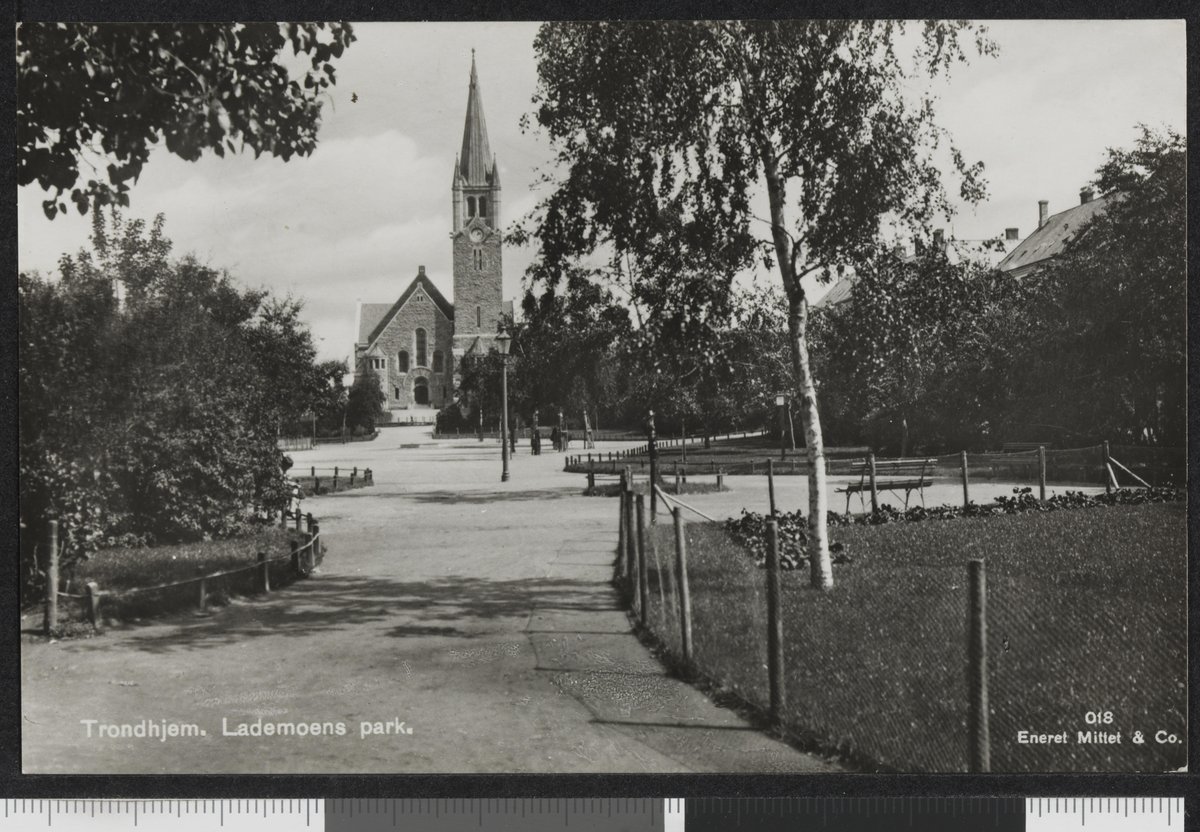
Historical Background and Construction
Responding to the needs of a rapidly growing working-class population in the late 1800s, Lademoen Church was conceived as a new parish church for Trondheim’s expanding east side. The foundation stone was laid in 1903, and the church was consecrated in November 1905. Architect Ole Stein, a proponent of the National Romantic movement, designed the church to reflect Norwegian identity through its use of local granite and integration of folk motifs. Funding came from both municipal and private sources, attesting to the church’s importance in the community (Trondheim Municipality).
Architectural Features
Jugendstil and Neo-Romanesque Synthesis
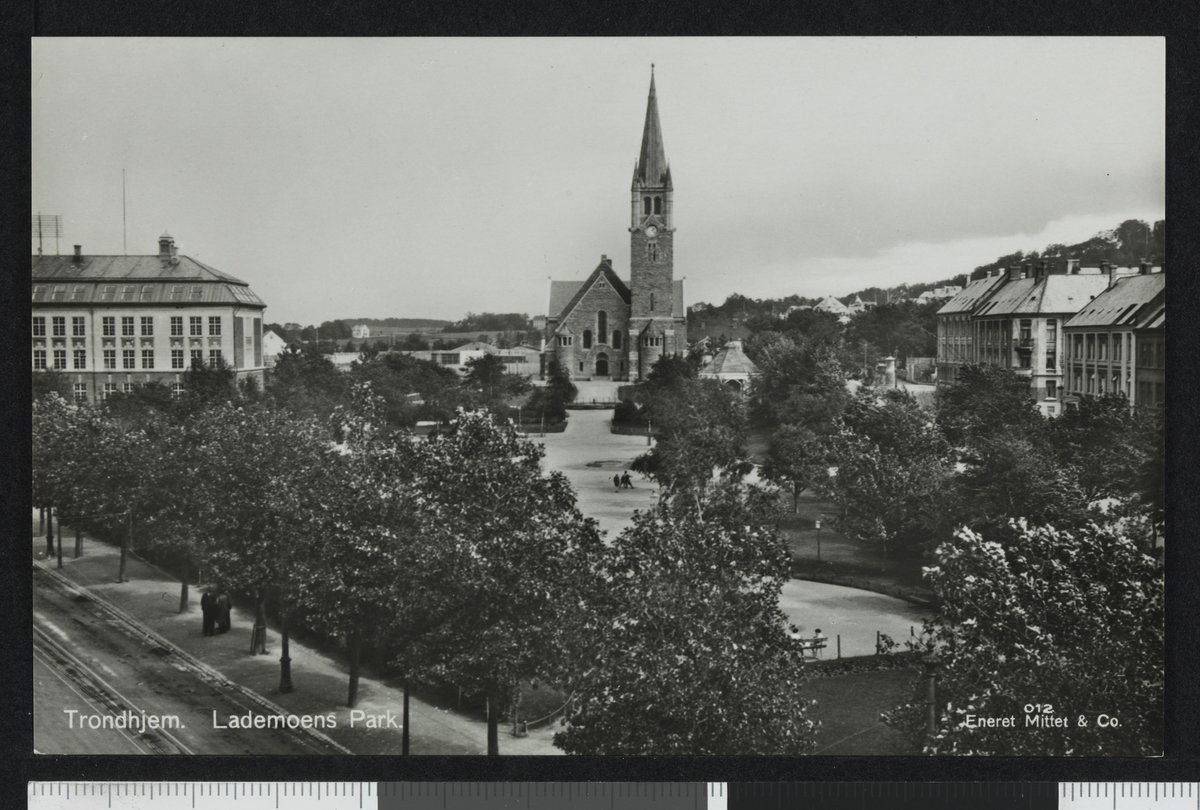
Lademoen Church is a distinctive example of early 20th-century Norwegian architecture, merging the ornamental grace of Jugendstil with the solidity of Neo-Romanesque tradition (Wikipedia, Religiana). The church’s exterior is characterized by its imposing granite walls, rounded arches, and decorative elements inspired by both medieval Norwegian churches and contemporary Art Nouveau style (Pilegrimsleden).
Jugendstil details are most evident in the wrought-iron door fittings and organic lines of certain façade elements, while the rounded arches, semi-circular apse, and overall massing reflect the Neo-Romanesque influence.
Cruciform Layout and Capacity
The church is built in a traditional cruciform plan, with a spacious nave, two large transepts, and an elevated chancel that terminates in a semi-circular apse. With seating for approximately 500 people, Lademoen Church is Trondheim’s second-largest, after Nidaros Cathedral (Kirker i Norge).
Materials and Masonry Techniques
A hallmark of Lademoen Church is its use of råkopp masonry—roughly hewn granite blocks with outwardly curved surfaces—marking it as the first church outside Oslo to use this technique (Pilegrimsleden). The granite exterior evokes a sense of permanence and national rootedness, while the brick interior ensures thermal efficiency and favorable acoustics (Wikipedia).
Decorative and Artistic Highlights
- Exterior Subtle stone carvings and Jugendstil ironwork accentuate the granite façade.
- Altarpiece Created by Gabriel Kielland, the altarpiece portrays Christ at Emmaus, blending religious iconography with Norwegian landscapes.
- Organ The original 1905 Claus Jensen organ, with 36 stops, remains central to the church’s musical life.
- Baptismal Font Crafted from soapstone by Ludvig Olsen, the font is an excellent example of Norwegian church furnishings.
Inside, stained glass windows illuminate the nave with vibrant biblical scenes and Norwegian saints, and the woodwork is meticulously crafted from native pine and oak (Kirkesøk – Lademoen kirke).
Community and Cultural Significance
From its earliest days, Lademoen Church has been integral to the district’s spiritual and social life. It provided shelter and unity during the World Wars, supported relief efforts, and has hosted countless baptisms, weddings, confirmations, and funerals. Today, the church continues to serve the diverse local population through services, concerts, art exhibitions, and partnerships with schools and charities (Trondheim kirkelige fellesråd, kirkerinorge.com).
Lademoen Church is also actively involved in interfaith and ecumenical initiatives, promoting dialogue and cooperation among Trondheim’s faith communities.
Visiting Information: Hours, Tickets, and Accessibility
- Opening Hours Generally open Monday–Saturday, 10:00 AM–4:00 PM, and Sunday, 12:00 PM–4:00 PM. Some sources cite daily opening from 9:00 AM–5:00 PM. Hours may vary on holidays or for special events—always check the official website before visiting.
- Entry Fee Admission is free. Donations are encouraged to help support preservation efforts and community programs.
- Guided Tours Available by request and during select cultural events. Advance booking is recommended, especially for groups.
- Accessibility The church is wheelchair accessible, with ramps and accessible restrooms. Assistance is available upon request at +47 99 43 60 00.
- Photography Photography is permitted outside of services. Please avoid flash and tripods.
- Restrooms and Facilities Restrooms are available, and the adjacent Lademoen Park offers a pleasant green space for relaxation.
How to Get There and Nearby Sights
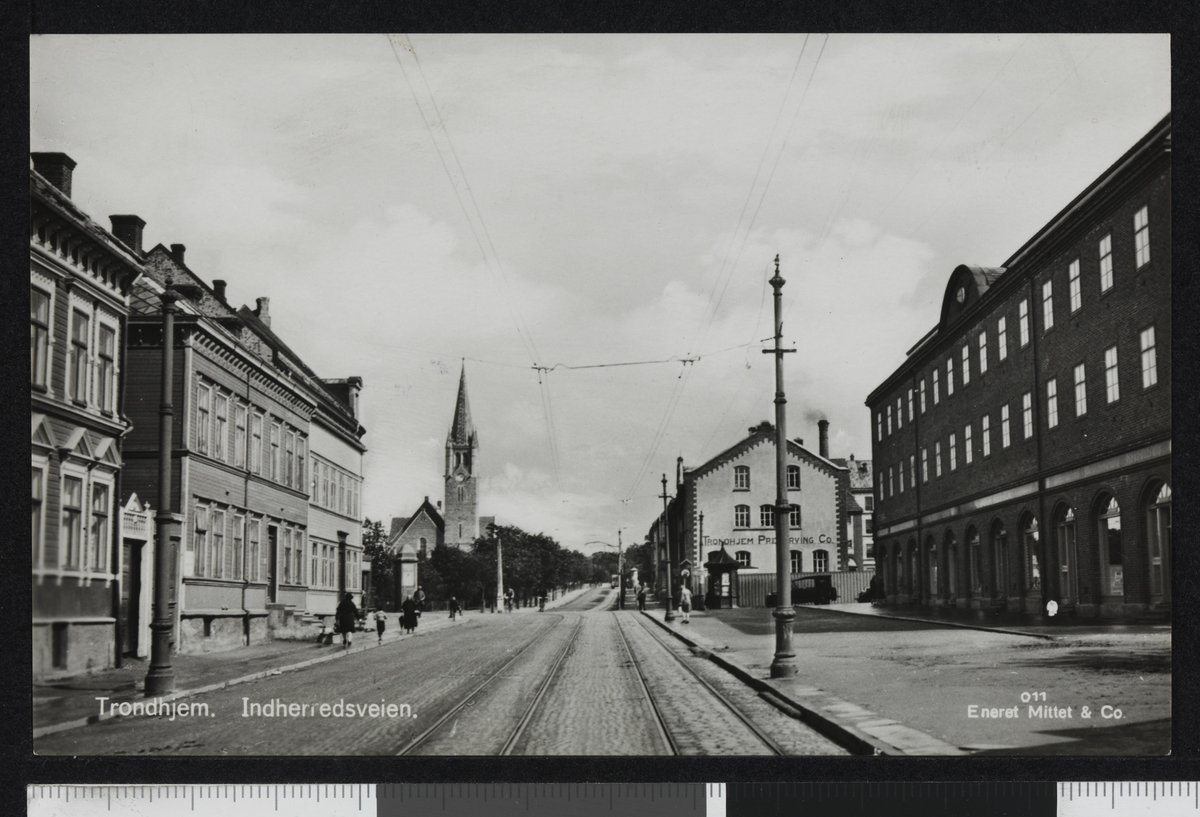
- Location Innherredsveien 78, 7067 Trondheim, Norway (Naturkartan).
- Public Transport Easily reached via several AtB bus lines and nearby tram stops. Trondheim Central Station is within walking distance (AtB public transport website).
- Parking Limited street parking is available; public transport is recommended.
- Nearby Attractions
- Lademoen Park Adjacent green space for relaxation.
- Nidaros Cathedral Trondheim’s most famous landmark and a highlight for any visitor (destinationabroad.co.uk).
- Bakklandet District Known for its picturesque streets and cafés.
- Kristiansten Fortress Offers panoramic city views (touristplaces.guide).
Practical Tips for Visitors
- Dress Wear modest clothing out of respect for the sacred space.
- Language Norwegian is used for signage, but staff typically speak English.
- Events Check the official website or Bandsintown for concert and event schedules.
- Food & Drink Local cafés and bakeries nearby offer refreshments.
- Best Times Late spring to early autumn (May–September) is ideal for pleasant weather and fewer crowds.
Frequently Asked Questions (FAQ)
Q: What are Lademoen Church’s visiting hours?
A: Typically 10:00 AM–4:00 PM Monday–Saturday, 12:00 PM–4:00 PM Sunday. Some sources list 9:00 AM–5:00 PM daily. Check the official website for the latest updates.
Q: Is there an entry fee?
A: Entry is free; donations are appreciated.
Q: Are guided tours available?
A: Yes, by request and for special events. Book in advance via the parish office.
Q: Is the church wheelchair accessible?
A: Yes, with ramps and accessible restrooms. For details, call +47 99 43 60 00.
Q: Can I take photos inside?
A: Yes, except during services. Please avoid flash and tripods.