Stavanger
Norway Updated Apr 2026
Salt hangs in the air around Vågen, and the old white houses uphill look almost too tidy until you notice laundry on a line and bikes leaned against 19th-century clapboard. Stavanger, Norway, lives on that tension: a wooden town that somehow became the capital of the North Sea oil age, with a medieval cathedral, a street-art trail, and ferries pulling out toward Lysefjord in the same afternoon. Many visitors treat it as the launch pad for Preikestolen, the 604-metre cliff above the fjord. That sells the city short.
 Photo: Susanne Jutzeler, suju-foto / Pexels
- Attractions
- 12
- Trip length
- 2-4 days
- Best season
- Late spring to early autumn (May-September)
Why Stavanger
Built from cited sources · see the method · How we make our guides →
Gamle Stavanger proves why. Roughly 170 preserved wooden houses from the 18th and 19th centuries climb the slope in a hush of cobbles, roses, and painted fences, and people still live here, which keeps the place honest. A child’s scooter by a white wall does more for the district than any heritage plaque.
Stavanger’s modern story is harder-edged and more interesting than the postcard version. The Norwegian Petroleum Museum, built on the harbor like a piece of offshore infrastructure hauled ashore, explains how oil money remade Norway while refusing to pretend the trade came without cost; the Kielland disaster and climate exhibits give the whole thing some moral weight. Before oil, this was a canning city, and IDDIS still carries the smell of smoked sprats and printing ink through that older economy.
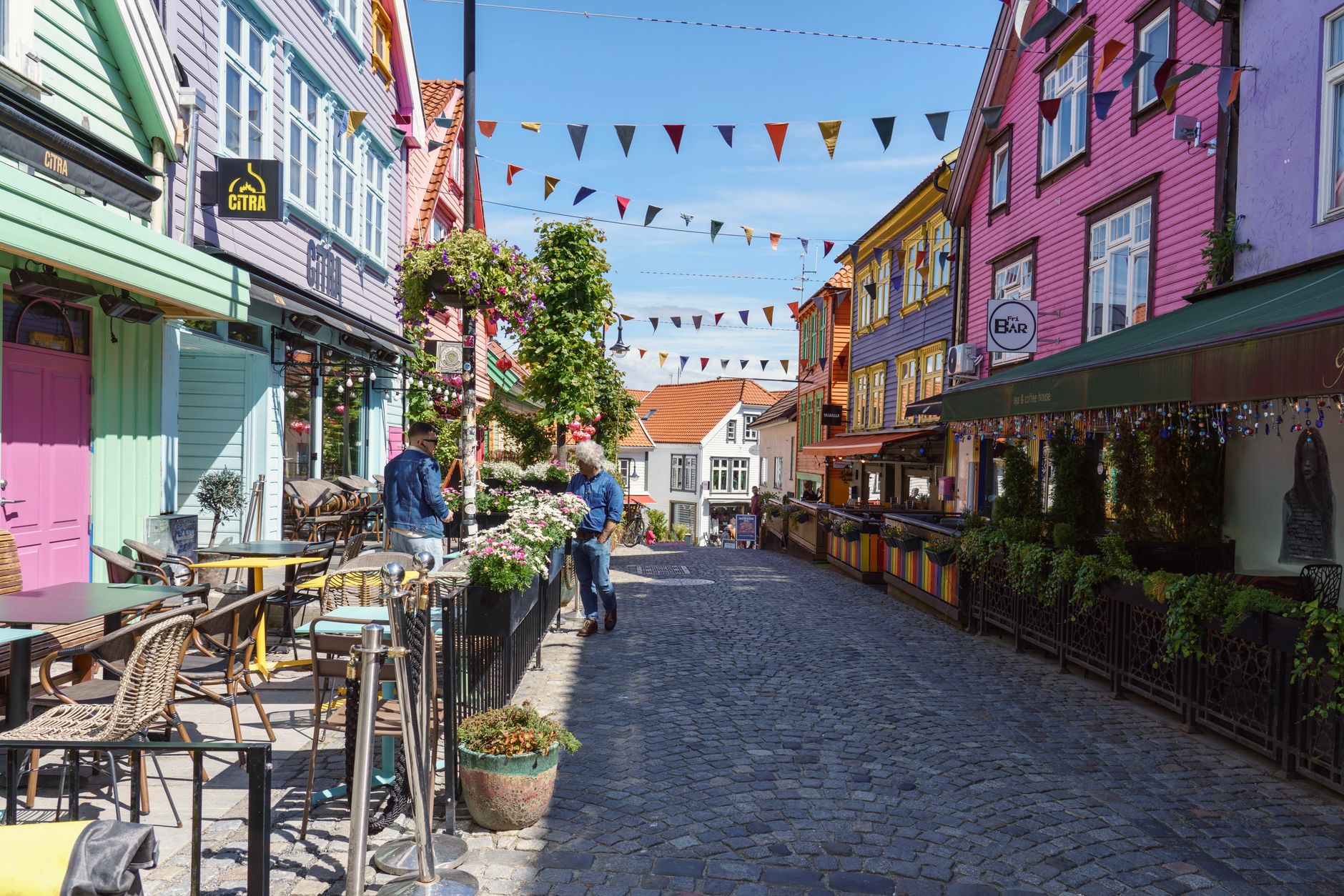
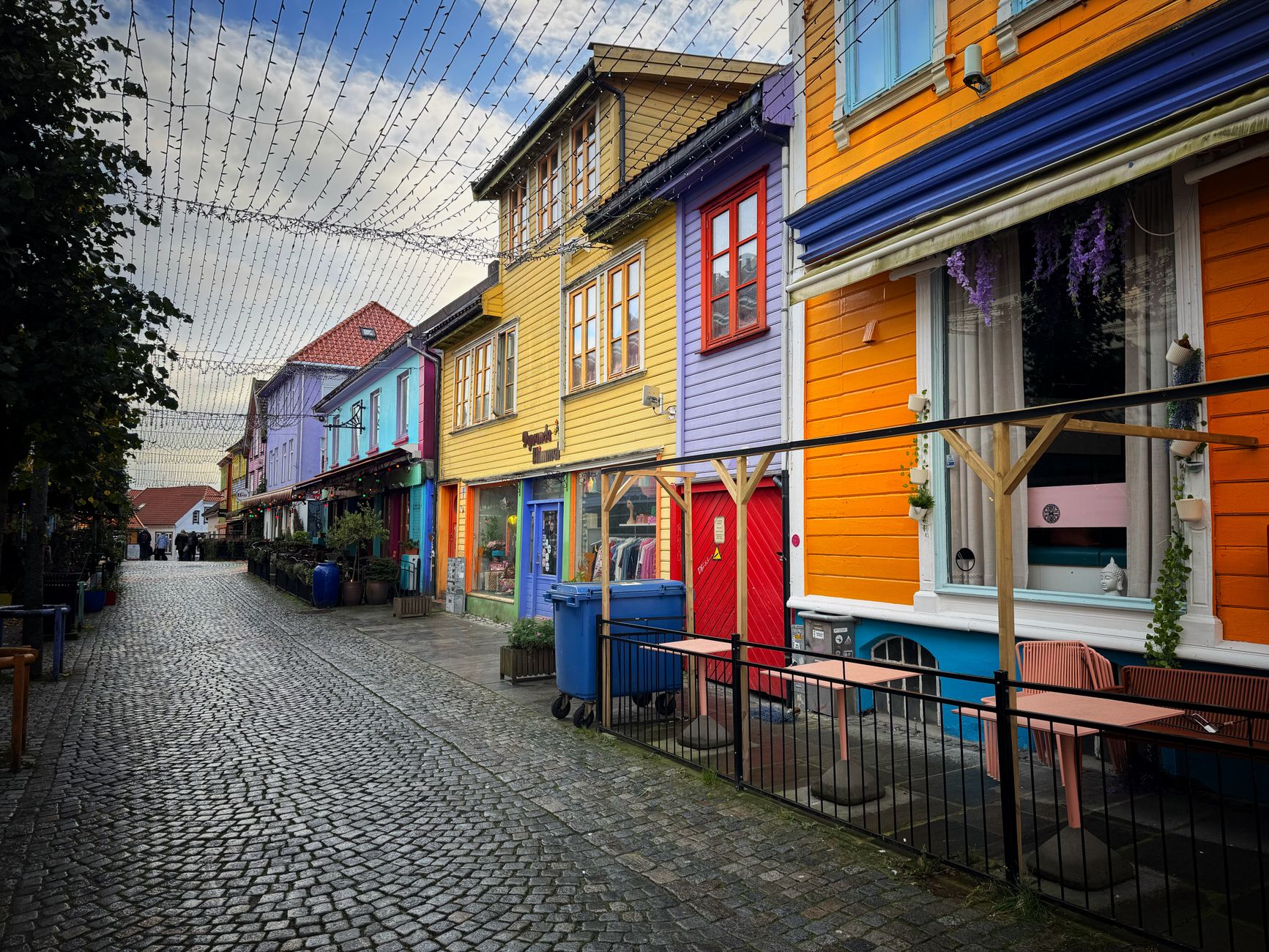
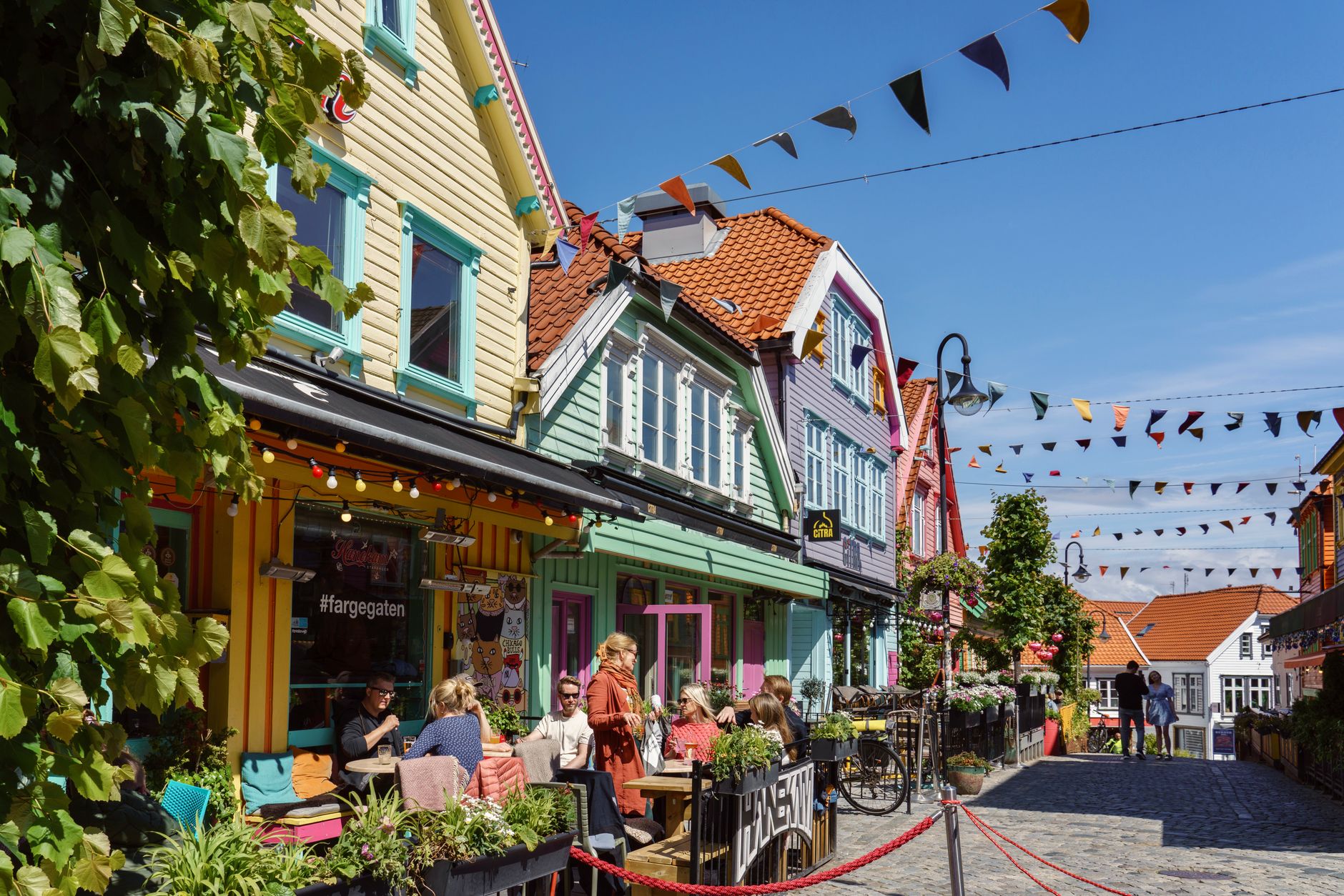
Then the city swerves again. Øvre Holmegate is painted in sherbet colors and full of coffee cups and bar chatter, while Pedersgata and Storhaug push the energy east into ramen counters, natural wine, Tou Scene’s old brewery buildings, and murals left by Nuart artists who treated blank walls as arguments. Stavanger turns out to be less a fjord gateway than a compact, slightly contradictory city where medieval stone, white timber, and industrial steel all insist on staying in the same frame.
Fjord Drama, 604 Meters Up
Preikestolen hangs 604 meters above Lysefjord, and the hike there is a solid 7.6 to 8 kilometers round trip. Even if you skip the trail, a fjord cruise from Stavanger lets you see the cliff from below, which is the smarter choice on a wet or windy day.A Wooden City That Still Breathes
Gamle Stavanger holds around 170 to 173 white wooden houses from the 18th and 19th centuries, but the surprise is that people still live here. Laundry lines, roses against white clapboard, and the creak of old steps keep it from turning into a heritage stage set.Oil Changed Everything
The Norwegian Petroleum Museum explains why Stavanger became one of Norway’s richest and most complicated cities. Its harborfront building looks like an offshore platform, and the exhibitions move from drilling technology to the Alexander Kielland disaster and the uneasy question of what comes after oil.Street Art and East-Side Energy
Stavanger’s creative pulse sits well beyond the postcard center, especially around Øvre Holmegate, Pedersgata, and Tou Scene in a converted brewery. Murals from the Nuart orbit turn ordinary walls into arguments, jokes, and occasional acts of sabotage against boring urban life.
Neighborhoods
Where to wander, by quarter — each with its own rhythm.
Gamle Stavanger
This is the postcard district, but it earns the attention. Around 170 white wooden houses from the 18th and 19th centuries line narrow lanes above the harbor, and because the quarter is still residential, you get flowerpots, creaking gates, and the faint feeling that you should lower your voice.Sentrum and Vågen
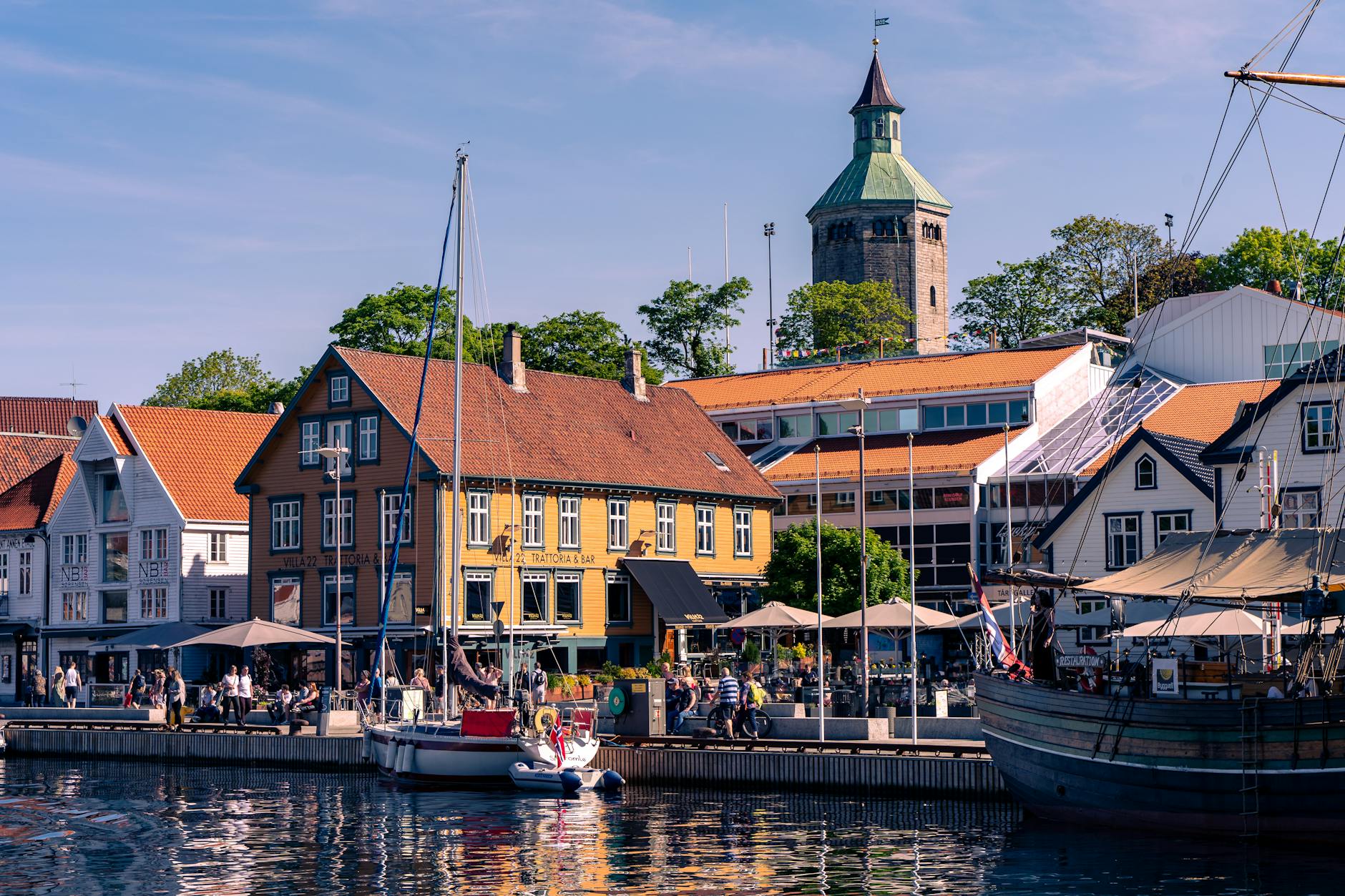
The center gathers the city’s older power in a tight area: Stavanger Cathedral, generally dated to around 1125, faces Breiavatnet, while the harborfront at Vågen carries seafood restaurants, ferries, and the Petroleum Museum’s angular silhouette. Come here for the first read of the city, then look closer at the warehouses and hotel facades that show how trading port became oil capital.Øvre Holmegate
Locals call it Fargegaten, and the name tells you enough: a row of boldly painted facades with cafes by day and bars by night. It can get a little self-aware in high season, but the street still works because people actually use it, drifting from coffee to beer as the light fades over the harbor.Pedersgata
If you want Stavanger as it feels now, go here. Pedersgata has become the city’s food street, with casual international spots, wine bars, Michelin-level ambition in places like Sabi Omakase and K2, and a local crowd that makes the center feel less polished and more alive.Storhaug
East of the postcard core, Storhaug has the texture many visitors miss: wooden houses, corner shops, street art, and a more local pulse. Tou Scene, in a converted brewery, anchors the district with concerts, exhibitions, and the kind of cultural programming that tells you this city is not living on fjord views alone.Eiganes and Våland
These residential districts suit travelers who like cities at walking pace. Broad streets, older villas, and the climb toward Vålandstårnet give you a quieter Stavanger, with good views and none of the harbor’s performance; the route matters as much as the tower.Musegata and IDDIS area
Near the old canning quarter, this area holds one of Stavanger’s older working identities. IDDIS, the Norwegian Printing Museum and Norwegian Canning Museum, turns sardine labels, factory labor, and smoked fish into a sharp explanation of what the city was before oil arrived with its larger paychecks and larger shadows.
Plan your trip
Before you go
- Getting There
- Stavanger Airport, Sola (SVG) is the main gateway in 2026, about 20 to 30 minutes from the center by Flybussen airport coach. Stavanger Station is the city’s main rail hub on the Jæren Line, with frequent trains toward Sandnes and Egersund, and the road approach is mainly via the E39 north-south corridor plus National Road 509 toward Sola and the airport.
- Getting Around
- Stavanger has no metro and no tram in 2026, so the city works on a simple formula: walking in the compact center, then Kolumbus buses, ferries, and regional trains for longer hops. Kolumbus lists single tickets from NOK 49, a 24-hour ticket from NOK 133, and a 7-day ticket from NOK 354; its city bikes unlock in the app, with the first 15 minutes free if you already hold a valid Kolumbus ticket.
- Climate & Best Time
- Spring usually sits around 5 to 12C, summer around 15 to 20C, autumn around 7 to 15C, and winter often hovers near 0 to 5C, which is mild by Norwegian standards. May is usually the driest month, October the wettest, and the sweet spot for most visitors is late May through August; July and August bring the warmest weather and the heaviest crowds for Preikestolen and fjord cruises.
- Language & Currency
- Norwegian is the local language, but English is spoken with almost suspicious ease, especially in hotels, museums, and restaurants. Norway uses the Norwegian krone (NOK), cards are accepted almost everywhere in 2026, and cash feels close to ceremonial; Visa and Mastercard are the safe choices.
- Safety
- Norway remains a low-risk destination, and the practical hazards in Stavanger are usually weather, slick cobbles, and exposed hiking conditions rather than urban crime. Save the emergency numbers before you head out: 110 for fire, 112 for police, 113 for ambulance, and 120 for emergencies at sea.
Stavanger Between Sword Blades, Sardine Tins, and Oil Rigs
From Bronze Age farms on the fjord edge to Norway's energy capital
- c. 1800 BCE
Bronze Age Chiefs Arrive
Most scholars date the region's first wealthy chiefdoms to the Bronze Age, when farms on the Stavanger peninsula began trading far beyond Rogaland. Bronze objects, horses, and burial mounds point to a coast already plugged into European exchange. Power came early here.
- c. 400
Farms Spread Across Jæren
Archaeology in the Jæren district shows roughly 200 farms in use between the 5th and 6th centuries. That matters because Stavanger did not grow out of emptiness or legend, but from a settled farming world of smoke-dark halls, grazing land, and tight control over good soil.
- 872
Battle of Hafrsfjord
According to tradition, Harald Fairhair defeated rival chieftains in the waters of Hafrsfjord just west of today's city. The clash became the founding drama of a united Norway, though the spray, splintered oars, and shouted orders would have felt less mythic to the men in those boats. Stavanger's story begins with a fjord full of war.
- c. 950
Christianity Reaches the Coast
By the mid-10th century, Christian influence was filtering into the region through trade and political contact. Pagan burial customs faded, and stone crosses began rising in the coastal wind. The old gods did not vanish overnight, but the balance had shifted.
- 1028
Erling Skjalgsson Falls
Erling Skjalgsson, the great strongman of southwestern Norway, was killed in 1028 after years of power struggles with the crown. A memorial cross tied to his name still survives in the wider Stavanger area, a blunt piece of stone for a man who had ruled by force, loyalty, and sea power.
- c. 1125
Cathedral Makes a City
Stavanger is usually dated from the completion of its cathedral around 1125, when the town became a bishop's seat. That stone church beside Breiavatnet did more than frame a skyline: it turned a coastal settlement into an ecclesiastical capital with courts, rents, and status. Cities often pretend they were born naturally. Stavanger was organized into being.
Show the full timeline (26 moments)
- c. 1125
Bishop Reinald Builds in Stone
Tradition links Bishop Reinald, likely from Winchester, to the cathedral's construction and the shaping of early Stavanger. His church brought Anglo-Norman stonework to western Norway, with thick walls, round arches, and the cool, echoing air of imported ambition. The city still leans on that choice.
- 1272
Fire Tears Through Town
A major fire burned through Stavanger in 1272 and badly damaged the cathedral. In a wooden town, flame moved fast and without mercy; tar, timber, and roof shingles made sure of that. The blaze forced Stavanger to rebuild its religious heart almost from scratch.
- 1276
Bishop Arne Rebuilds the Choir
After the fire, Bishop Arne oversaw the cathedral's Gothic rebuilding, especially the eastern choir. Pointed windows, taller lines, and a different sense of light changed the mood of the building from fortress-solid Romanesque to something leaner and more lifted. You can still read the fire in the masonry.
- 1349
Black Death Empties the Hinterland
The plague that devastated Norway in 1349 hit Stavanger through its countryside as much as its streets. Farms were abandoned, tithe income collapsed, and the bishopric lost the rural base that had fed its power. Cathedrals survive on grain as much as prayer.
- 1537
Reformation Breaks the Bishopric
When the Protestant Reformation reached Norway under Danish rule, Stavanger lost much of its Catholic wealth and autonomy. Church lands were seized by the crown, relics disappeared, and St. Swithun's shrine was likely destroyed for metal value. The smell of incense gave way to state accounting.
- c. 1660
Andrew Smith Paints the Gallery
The Scottish-Danish craftsman Andrew Lawrenceson Smith left one of Stavanger's stranger visual layers in the cathedral's painted gallery decoration. His work belonged to a 17th-century burst of embellishment that tried to warm a once-medieval church with color, carved wood, and learned symbolism. Severity never lasts forever.
- 1682
Diocese Moves to Kristiansand
King Christian V transferred the diocesan seat from Stavanger to Kristiansand in 1682. The move cut the city's status with a bureaucrat's pen, leaving Stavanger smaller, poorer, and no longer the church center it had been. Prestige can leave quietly.
- 1814
Cathedral Becomes an Election Church
In the constitutional spring of 1814, Stavanger Cathedral served as a valgkirke, an election church, where local electors were chosen for the national assembly at Eidsvoll. Medieval stone that had once staged bishops now held the first machinery of Norwegian democracy. Same walls, new authority.
- 1849
Alexander Kielland Is Born
Alexander Kielland was born into one of Stavanger's leading merchant families in 1849, and he never quite let the city off the hook. His realist writing cut into bourgeois hypocrisy with the confidence of a man who knew the furniture, the table manners, and the money behind them. Stavanger gave him his target.
- 1853
Valberg Tower Watches the Harbor
Valbergtårnet rose in the 1850s as a fire watchtower and lookout above the harbor. That tells you what kind of town Stavanger still was: a dense wooden port where someone had to watch for sparks, ships, and trouble. Industry was coming, but fire remained the old enemy.
- 1866
Obstfelder Hears the City's Unease
Poet Sigbjørn Obstfelder was born in Stavanger in 1866, and his writing would carry a nervous, modern estrangement far from the neat certainties of small-city respectability. He grew up in a place of merchants, piety, and sea weather; what he wrote back was restless and thin-skinned in the best way.
- 1870s
Herring Fails, Canneries Rise
When the herring fisheries faltered in the 1870s, Stavanger could have shrunk back into provincial quiet. Instead it pivoted hard toward canning, building factory wealth on smoked fish, solder, and export labels. The city began to smell of oil long before North Sea crude: first lamp oil, then fish oil, then machine grease.
- 1886
Sardine Capital Takes Shape
By the late 19th century, Stavanger had become Norway's canning capital, with factories multiplying near the harbor and workers pouring in. The business ran on repetitive labor, bright tin designs, and ruthless timing. Prosperity arrived packed in small metal rectangles.
- 1925
Diocese Returns for the Jubilee
On Stavanger's 800th anniversary, the Diocese of Stavanger was restored after 243 years. King Haakon VII gave the moment royal weight, but the deeper point was local: the city reclaimed a piece of its medieval identity just as modern Norway was settling into itself. Old titles still mattered here.
- 1940
German Forces Seize Stavanger
German troops moved on Stavanger in April 1940 because Sola Airfield and the harbor mattered strategically from the first hours of the invasion. Occupation brought curfews, rationing, and a city bent to military purpose. The North Sea suddenly felt narrower.
- 1945
Occupation Ends, Preservation Begins
Liberation came on 8 May 1945, but peace did not mean simple repair. In the decades that followed, local planners and architects fought to save what remained of old Stavanger from demolition, treating white wooden houses as living fabric rather than dead scenery. That argument shaped the city you walk now.
- 1969
North Sea Oil Changes Everything
The Ekofisk discovery in 1969 turned Stavanger toward the offshore age with astonishing speed. Government agencies, engineers, and foreign energy firms remade the city into Norway's oil capital, bringing money, migration, and a sharper global profile. Sardines had built the harbor. Oil rebuilt the horizon.
- 1999
Petroleum Museum Opens on the Waterfront
The Norwegian Petroleum Museum opened in 1999 in a harborfront building shaped to recall offshore platforms and coastal rock. Few museums state a city's identity so plainly. Stavanger had become a place where industry itself was displayed, debated, and turned into civic memory.
- 2001
Nuart Paints the Modern City
With the rise of Nuart in the early 21st century, Stavanger earned a new reputation as Norway's street-art capital. Murals and interventions appeared on walls that once advertised fish and shipping, giving the city a rougher, cleverer public face. Oil money built part of modern Stavanger. Spray paint argued with it.
- 2012
Concert Hall Faces the Fjord
Stavanger Konserthus opened on the waterfront in 2012, a glass-and-concrete statement that the city intended to be more than an energy headquarters. Music now spills across the same harbor that once sent out sardine tins and supply vessels. Cities mature when their sound changes.
Who lived here
-
Novelist · 1849–1906
Alexander Kielland
Born here
Alexander Kielland grew up in Stavanger when the city still smelled of herring, trade, and wet timber. His sharp realist writing would have found plenty to work with here, and today's polished harbor might amuse him less than the older streets where class and ambition still show through the walls.
-
Painter · 1843–1914
Kitty Lange Kielland
Born here
Kitty Kielland left Stavanger and became one of Norway's defining painters, yet the city's weather helps explain her eye: low light, shifting skies, and a coast that never sits still. She'd probably recognize the same silver air over the water before she recognized the new skyline.
-
Poet · 1866–1900
Sigbjørn Obstfelder
Born here
Sigbjørn Obstfelder, one of Norway's early modernist voices, was born in Stavanger and wrote with the uneasy, electric feeling of a world tilting out of shape. The city suits that tension: old cathedral stone on one side, oil-era ambition on the other.
-
Peace activist and political scientist · 1869–1938
Christian Lous Lange
Born here
Christian Lous Lange was born in Stavanger long before the city became shorthand for offshore wealth, then went on to win the Nobel Peace Prize. He might look at Stavanger now and see a place still negotiating power, money, and responsibility, just with rigs and energy policy instead of steamships.
-
Singer-songwriter · born 1996
Aurora Aksnes
Born here
Aurora was born in Stavanger, and her music carries some of western Norway's familiar weather in it: clear one moment, eerie the next. A city of white houses, dark water, and sudden light feels like the right prologue for that voice.
Where to Eat
Where locals actually book dinner — not the tourist menus.
-
Smalahove
This western Norwegian classic is a smoked and boiled sheep’s head, and yes, the face arrives looking back at you. It is not everyday Stavanger fare, but if you see it on a traditional menu, you are getting a hard-edged taste of coastal frugality.
-
Fresh fjord and North Sea seafood
Stavanger’s harborfront menus lean heavily on cod, salmon, shrimp, mussels, and shellfish, and they should. Order the fish of the day when you can; cold air, salt on the quay, and a plate that tastes of the morning catch make more sense here than any imported luxury.
-
Fish soup
Creamy Norwegian fish soup shows up across the city, often with white fish, salmon, prawns, dill, and a broth rich enough to warm you after a wet ferry ride. Done well, it tastes of butter, sea salt, and restraint rather than flour.
-
Reindeer
Reindeer appears on some Stavanger menus as steak, cured slices, or slow-cooked dishes with juniper and dark berry sauces. It is lean, slightly sweet, and better suited to a cold evening than a sunny lunch on the harbor.
-
Klippfisk and salted fish traditions
Stavanger’s older food history runs through preservation, trade, and the sea, so dishes built on salted or dried cod still carry local weight. They are a reminder that this city was feeding itself from barrels and boats long before oil money arrived.
-
Canning-era sardine heritage
The city’s old sardine industry survives less as a single dish than as a whole edible backstory, best understood after a stop at IDDIS. If you find smoked sprats or good preserved fish in a shop or casual plate, take the hint; Stavanger once packed this story into tins and shipped it around the world.
-
Pedersgata dining scene
For a meal that feels current rather than ceremonial, head to Pedersgata. The street has become one of Stavanger’s strongest restaurant corridors, with kitchens that range from polished Nordic plates to more relaxed global cooking, and the crowd usually tells you you’ve chosen well.
-
Cinnamon buns and coffee
Stavanger does quiet comfort very well: a cinnamon bun, strong coffee, and rain on the window can feel like the whole city in miniature. Skip the first tourist-facing pastry case you see on the harbor and duck into a neighborhood cafe instead.
Insider tips
Small things that change how the city treats you.
Start Preikestolen Early
Aim for an early morning departure if you're hiking Preikestolen. The trail is about 7.6 to 8 km round trip and usually takes 4 to 5 hours, while July and August bring the thickest crowds.Keep Old Town Quiet
Gamle Stavanger is still a lived-in neighborhood, not an open-air set. Walk softly, keep cameras out of private gardens, and save louder conversations for the harbor.Choose Water Over Road
A Lysefjord cruise is the smart swap if you want the cliff drama without the hike. Boats leave from central Stavanger, and you get the fjord, waterfalls, and a look up at Preikestolen from below.Bus To Hafrsfjord
Take the local bus to Sverd i fjell instead of paying for a taxi. The monument is easy to reach from the city, and the coastal path nearby makes the trip feel bigger than a quick photo stop.Walk The Murals
Set aside time for the Nuart street-art route rather than treating murals as background. Some of Stavanger's sharpest images are on ordinary walls, especially around the center and east side streets.Use The Free City
Stavanger can empty your wallet fast, so balance paid museums with the city's best free hours: Gamle Stavanger, Øvre Holmegate, Mosvatnet, Valbergtårnet's surroundings, and the Hafrsfjord shore.
Gallery
The city, as it actually looks.


Frequently asked
Is Stavanger worth visiting?
Yes, especially if you want a city that can pivot from white wooden lanes to North Sea oil history to a fjord by lunchtime. Stavanger works best for travelers who like contrast: medieval cathedral stone, bold street art, and easy access to Preikestolen and Lysefjord.
How many days in Stavanger?
Two to four days is the right range for most people. Two days covers the city center, Gamle Stavanger, the Petroleum Museum, and one fjord or hiking outing; four gives you time for Preikestolen, a Lysefjord cruise, and a slower look at neighborhoods like Storhaug.
How do you get to Preikestolen from Stavanger?
Most visitors go by organized transport or drive to the trailhead, then hike from there. The walk usually takes 4 to 5 hours round trip, so treat it as a half-day to full-day plan, not a casual gap between meals.
Can you visit Lysefjord without hiking?
Yes, and that's one of Stavanger's better decisions. Fjord cruises leave from central Stavanger, giving you cliff walls, waterfalls, and the famous view up to Preikestolen without the climb.
Is Stavanger expensive for tourists?
Yes, by most European standards. Keep costs down by mixing one or two paid headline experiences with free walks through Gamle Stavanger, the street-art districts, Mosvatnet, and the Hafrsfjord shoreline.
Is Stavanger safe?
Yes, Stavanger is generally a very safe city for visitors. The main caution is outdoors: weather shifts quickly, and hikes like Preikestolen demand proper shoes, layers, and respect for trail conditions.
What is the best time to visit Stavanger?
Late spring through early autumn is the sweet spot, with May to September best for fjord trips and hiking. July and August bring the warmest, busiest stretch, while shoulder-season days often feel calmer in the city.
Can you get around Stavanger without a car?
Yes, easily within the city. Central Stavanger is walkable, local buses reach places like Sverd i fjell, and harbor departures make Lysefjord trips simple without driving.
Pick up where you left off
Saved and recently read places — kept on this device only.
Photo credits (7)
- Susanne Jutzeler, suju-foto — Pexels License (https://www.pexels.com/license/) — Source: https://www.pexels.com/photo/26201302/
- Susanne Jutzeler, suju-foto — Pexels License (https://www.pexels.com/license/) — Source: https://www.pexels.com/photo/26201298/
- Adam Cole — Pexels License (https://www.pexels.com/license/) — Source: https://www.pexels.com/photo/25036885/
- DSD — Pexels License (https://www.pexels.com/license/) — Source: https://www.pexels.com/photo/34390063/
- Jonathan Borba — Pexels License (https://www.pexels.com/license/) — Source: https://www.pexels.com/photo/33647416/
- Susanne Jutzeler, suju-foto — Pexels License (https://www.pexels.com/license/) — Source: https://www.pexels.com/photo/26201304/
- ASHOK KAPALI — Pexels License (https://www.pexels.com/license/) — Source: https://www.pexels.com/photo/34142645/
Photos may have been resized or cropped.