Plan and listen to St. Hallvard's Church And Monastery with Audiala.
Audio guide in your pocket, itinerary in your browser. Built for the way you actually visit.
Introduction
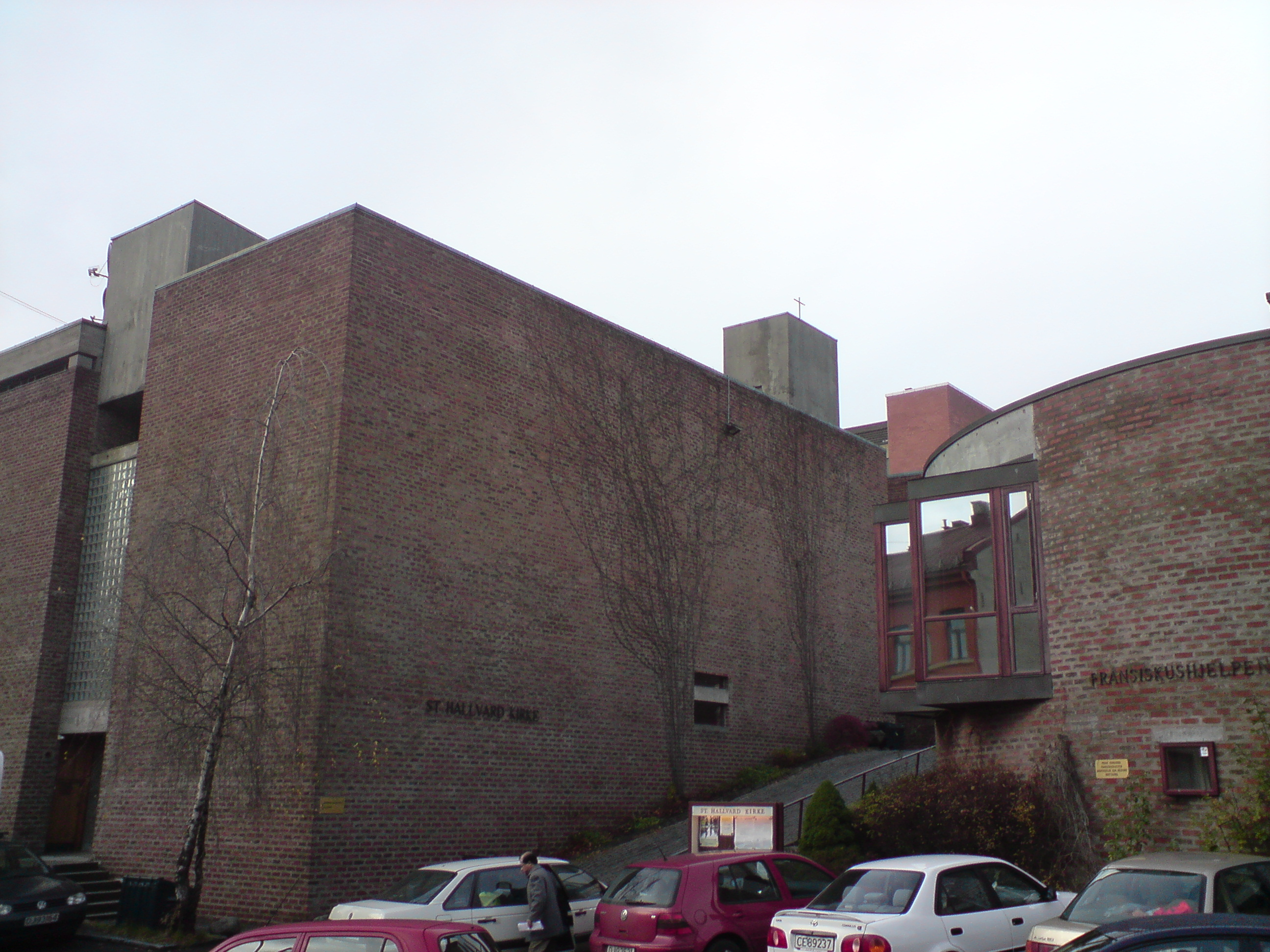
St. Hallvard’s Church and Monastery, located in the historic Enerhaugen district of Oslo, stands as a distinguished symbol of Norway’s Catholic heritage. Combining medieval roots with acclaimed modernist architecture, the site serves as a vibrant center for Oslo’s largest Roman Catholic parish, welcoming worshippers from over 140 nationalities. Named after Oslo’s patron saint, St. Hallvard, the church is a testament to centuries of faith, cultural diversity, and architectural innovation. This comprehensive guide offers detailed insights into its history, design, and cultural significance, along with practical information for visitors, including hours, accessibility, and nearby attractions.
Origins and Historical Context
The Legacy of St. Hallvard
St. Hallvard, Oslo’s patron saint, was a nobleman martyred in the early 12th century while defending an innocent woman. His unwavering sense of justice and compassion earned him sainthood and eternal commemoration in the city’s coat of arms and liturgical celebrations (St. Hallvard Parish Brochure, 2019).
Medieval Predecessor: St. Hallvard’s Cathedral
The site’s spiritual lineage traces back to the original St. Hallvard’s Cathedral, Oslo’s first cathedral, constructed in the 12th century. It served as the religious and administrative heart of medieval Oslo until the city was relocated in the 17th century. Today, the evocative ruins of the cathedral are an integral part of the historical landscape, offering a direct link to Oslo’s medieval past (Guide to Europe; Three Churches, One History).
Post-Reformation Catholicism and the Modern Church
Following the Protestant Reformation, Catholicism was suppressed in Norway until the 19th and 20th centuries, when religious freedom and immigration revived the Catholic community. The need for a new church in eastern Oslo culminated in the consecration of St. Hallvard’s Church in 1966, designed to serve a rapidly growing and diverse parish (Wikipedia).
Architectural Highlights
St. Hallvard’s Church and Monastery was designed by Norwegian architects Kjell Lund and Nils Slaatto, reflecting a bold synthesis of modernist principles and traditional Norwegian forms. The complex is composed of three main sections: the church, the monastery, and parish offices, unified around a circular nave. The interplay of raw brick, concrete, and glass creates dynamic contrasts between the fortress-like exterior and the serene, light-filled worship space within (Archello; Nils Slaatto - Wikipedia).
The church’s most distinctive feature is its inverted dome, which descends over the central nave—an architectural metaphor for divine compassion reaching toward humanity. The gently ascending floor and subtly outward-sloping walls enhance both acoustics and the spiritual symbolism of ascent. The interior is intentionally simple, in keeping with Franciscan values, and accommodates 300–350 people, with additional space in the chapel (Kirker i Norge).
St. Hallvard’s Church has earned prestigious accolades, including the Houen Foundation Award, for its innovative design and contribution to Norwegian architecture (Nils Slaatto - Wikipedia).
Parish Life and Community
For over four decades, St. Hallvard’s was administered by the Franciscan order, whose influence is reflected in the monastery’s simple living quarters and community-focused facilities. Today, the monastery houses priests and supports a range of parish activities, including Fransiskushjelpen, a Catholic charitable organization (Wikipedia).
The parish is renowned for its multicultural congregation, with Masses celebrated in multiple languages to serve Oslo’s diverse Catholic population. The church is a hub for worship, religious education, youth programs, and intercultural dialogue, supporting both locals and newcomers.
Artistic and Liturgical Features
The church’s artistic program is rooted in simplicity and spiritual depth. Key features include:
- A Byzantine-style crucifix behind the altar, painted by Anne Lise-Knoff and students, echoing the San Damiano cross of Assisi.
- A bronze sculpture of St. Hallvard by Krzysztof Piotrowski.
- A wooden statue of St. Francis by Ragnhild Butenschøn.
- A Madonna statue from the Sisters of St. Elisabeth.
- 15 Stations of the Cross by Herman Bongard.
- Baptismal reliefs in concrete by Dutch Franciscan Renald Rats (St. Hallvard Parish Brochure, 2019).
Visitor Information
Visiting Hours and Tickets
- Church: Open Monday–Friday, 9:00 AM–6:00 PM; weekends, 10:00 AM–4:00 PM. During major liturgical events, some areas may be reserved.
- Ruins (Archaeological Park): Open May–September, 8:00 AM–8:00 PM; October–April, 9:00 AM–5:00 PM.
- Admission: Entry is free; donations are appreciated.
Accessibility
St. Hallvard’s Church is wheelchair accessible, with ramps and accessible restrooms. Some uneven terrain is present around the ruins, so caution is advised. For special assistance, contact the parish office in advance.
Guided Tours and Events
Guided tours are available by appointment, providing in-depth exploration of the church’s architecture, history, and art. Tours are offered in Norwegian and English; group bookings are welcome, especially during summer. The church also hosts concerts, cultural events, and religious festivals throughout the year (Atlas Obscura).
Getting There
- Public Transport: Tram lines 18 and 19 to “St. Halvards plass”; bus lines 32 and 34 to “Oslo Hospital.”
- Walking: About 20 minutes from Oslo Central Station through historic districts.
- Bicycle: Oslo city bike stations are located nearby.
Nearby Attractions
- Ruins of St. Hallvard’s Cathedral: A short walk from the church, these medieval remains offer historical context and tranquil settings.
- Oslo Ladegård: Former bishop’s residence, now a museum.
- Ruins of Holy Cross Church: Nearby site for further medieval exploration.
- Akershus Fortress: Reachable by tram, offering panoramic views and museums.
Photography Guidelines
Photography is permitted during non-service hours; avoid flash and be mindful of worshippers. Some areas, particularly within the monastery, may have restrictions.
FAQs
What are the visiting hours?
Church: Mon–Fri 9:00–18:00, weekends 10:00–16:00. Ruins: Summer 8:00–20:00; winter 9:00–17:00.
Is there an entrance fee?
No; entry is free. Donations welcome.
Are guided tours available?
Yes, by appointment via the parish office or website.
Is the church accessible to visitors with disabilities?
Yes, with ramps and facilities; caution is needed around the ruins.
Can I take photographs?
Yes, except during services and in restricted areas.
Are there restroom facilities?
Accessible restrooms are available at the church; public facilities are nearby in Gamlebyen.
Discover More
St. Hallvard’s Church and Monastery embodies the remarkable synthesis of Norway’s medieval traditions and contemporary Catholic life. With its award-winning architecture, artistic treasures, and welcoming parish, it offers a unique opportunity for spiritual reflection and cultural discovery. Visitors benefit from free admission, accessible facilities, and enriching guided tours. The nearby ruins and historical sites further enhance the experience, making it a must-see for anyone interested in Oslo’s religious and architectural heritage.
Plan your visit today—explore the layered history of Norway's capital, attend a special event, or book a guided tour. For the most immersive experience, download the Audiala app for audio guides and event updates, and follow us on social media for ongoing insights into Oslo’s cultural treasures.
Listen to the full story in the app
The whole St. Hallvard's Church And Monastery,
told well.
Audio guides for 1,100+ cities across 96 countries. History, stories, and local insight — offline ready.

Verified, and shown.
Researched and written by the Audiala editorial team from historical records, architectural archives, and local expertise.
Hallvard’s Church and Monastery, 2019, St. Hallvard Parish Brochure
Hallvard's Church and Monastery - Wikipedia
Hallvard Church and Monastery - Archello
Hallvard's Kirke
Hallvard’s Church and Monastery
Hallvard’s Church
Last reviewed
Researched from Wikidata, Wikipedia & official sources · fact-checked · How we make our guides →


