Plan and listen to Oscarshall with Audiala.
Audio guide in your pocket, itinerary in your browser. Built for the way you actually visit.
Introduction: Oscarshall’s Legacy in Oslo
Perched on the scenic Bygdøy peninsula overlooking the Oslofjord, Oscarshall Palace is a jewel of Norwegian architecture and royal heritage. Built between 1847 and 1852 as a summer retreat for King Oscar I and Queen Joséphine, Oscarshall is a masterwork of Neo-Gothic design and a symbol of Norway’s National Romantic movement. Danish architect Johan Henrik Nebelong crafted the palace to blend regal elegance with Norwegian cultural identity, using local materials and artists to create a total work of art—gesamtkunstverk—where architecture and decorative arts merge seamlessly (Royal Court; Wikipedia; Oslofjord Guide).
Oscarshall’s interiors, adorned with works by artists such as Joachim Frich, Adolph Tidemand, and Hans Gude, reflect the palace’s role as a monument to Norwegian art and craftsmanship. Since its transition to state ownership in 1863 and subsequent opening to the public in 1881, Oscarshall has remained accessible and preserved as a museum, retaining its original 19th-century character (Royal Court).
Today, Oscarshall is open to visitors from May to August, offering guided tours, tranquil gardens, and a charming café, all set within a romantic park that boasts panoramic views of Oslo. Its proximity to other major Bygdøy attractions, such as the Viking Ship Museum and the Norwegian Folk Museum, makes it an essential stop for anyone seeking to experience Norway’s royal and cultural heritage (Kongehuset; Visit Norway).

History and Royal Commission
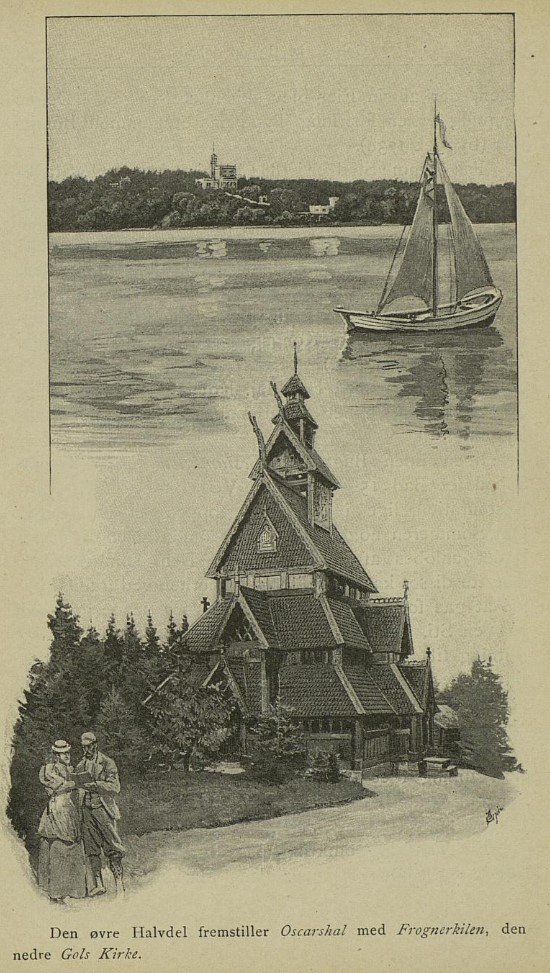
Oscarshall was commissioned by King Oscar I and Queen Joséphine as a summer residence during Norway’s union with Sweden. The palace was constructed from 1847 to 1852, designed by Johan Henrik Nebelong to reflect both regal grandeur and Norwegian identity (Royal Court). The choice of Bygdøy, with its lush landscape and fjord views, underscored the royal family’s appreciation for nature and national symbolism (Wikipedia).
Architectural Style and National Romanticism
Oscarshall is a prime example of Neo-Gothic architecture, with its pointed arches, slender towers, and intricate ornamentation inspired by medieval Norwegian churches and castles. Its design also embodies the ideals of the National Romantic movement, which sought to assert Norwegian culture and heritage during a period of growing national consciousness (Royal Court; VisitNordic). The surrounding park, with romantic paths and terraces, further enhances the palace’s harmonious relationship with the landscape.
Artistic Contributions and Interior Decoration
Oscarshall’s interiors feature the work of celebrated Norwegian artists:
- Dining Hall: Adorned with national romantic paintings by Adolph Tidemand and Joachim Frich, depicting Norwegian landscapes and folk life.
- Salon: Inspired by medieval Norwegian guildhalls, with Gothic décor and woodwork.
- Drawing Room: Gothic arch windows, stained glass, velvet walls, and sculptures of Norwegian kings (Oslofjord Guide; Stephen Travels).
The palace’s furnishings and decorative details showcase Norwegian craftsmanship, making it a showcase for the country’s creative talents.
Transition to State Ownership and Public Access
In 1863, Oscarshall was sold to the Norwegian state by King Carl IV. By 1881, it was opened to the public as a museum, reflecting the democratization of royal heritage. While plans to reconvert it into a royal residence in 1929 were abandoned, Oscarshall retained its role as a cultural monument and public venue (Wikipedia; Royal Court).
Restoration and Preservation
Major restoration from 2005 to 2009 returned Oscarshall to its original 1859 appearance, preserving colors, furnishings, and decorations. Ongoing efforts ensure the palace remains a living museum and a symbol of national pride (Royal Court; Daily Scandinavian).
Visiting Oscarshall: Practical Information
Visiting Hours and Tickets
Season: 10 May – 31 August 2025
Days: Thursday to Sunday
Hours: 11:00–16:00 (Kongehuset)
- Palace Tickets: Available online via Ticketmaster or on-site during opening hours. Advance booking is recommended, especially on weekends.
- Park and Café Access: Free during opening hours; no ticket required (Kongehuset).
Accessibility
- Ground Floor: Salon and Dining Room are wheelchair accessible.
- First Floor: Accessible only by stairs; no elevator due to the palace’s historical design.
- Assistance: Staff can help with stairs; folding chairs are available.
- Restrooms: Wheelchair-accessible toilets near the cloakroom.
- Park: Some paths are uneven or include stairs, limiting full wheelchair access (Kongehuset).
Transportation and Getting There
- Address: Oscarshallveien 15, Bygdøy, Oslo (Visit Norway)
- Public Transport:
- Bus: Lines 30 and 31 stop near the entrance (Ruter).
- Ferry: Seasonal service from Aker Brygge to Bygdøy, followed by a short walk (Krista the Explorer).
- Parking: No on-site parking. Public parking is available nearby. Two disabled parking spaces are reserved for permit holders (Kongehuset).
On-Site Facilities
- Café: Open during palace hours for Norwegian treats; no admission ticket required (Kongehuset).
- Restrooms and Cloakroom: Accessible toilets and a cloakroom are available.
- Guided Tours: Explore the palace at your own pace, with guides present to answer questions. Tours are mainly in Norwegian, but English guidebooks are provided.
Visitor Etiquette
- Mobile Phones: Please switch off during tours.
- Photography: Permitted throughout the palace and park.
- Food/Drinks: Not allowed inside palace rooms.
- Pets: Not permitted in the palace; may be allowed in the park if leashed—confirm with staff.
Special Events and Temporary Closures
- Oscarshall occasionally hosts royal or cultural events. Closures are announced in advance on the official website and Facebook.
- Summer 2025 features an outdoor exhibition of ceramics by Oslo National Academy of the Arts students (Kongehusets barnesider).
Nearby Attractions
Bygdøy is Oslo’s museum peninsula, home to:
- Norsk Folkemuseum
- Viking Ship Museum
- Fram Museum
- Kon-Tiki Museum
- Norwegian Maritime Museum
Combine your Oscarshall visit with these for a full day of cultural discovery (Krista the Explorer).
Frequently Asked Questions (FAQ)
Q: What are Oscarshall’s visiting hours?
A: 10 May–31 August 2025, Thursday to Sunday, 11:00–16:00.
Q: How do I buy tickets?
A: Online via Ticketmaster or on-site during opening hours.
Q: Is Oscarshall accessible for wheelchairs?
A: The ground floor is accessible; the first floor is not. Wheelchair-accessible toilets and parking are available.
Q: Are guided tours available in English?
A: Tours are mainly in Norwegian, but English guidebooks are provided and guides can answer questions.
Q: Can I take photos inside Oscarshall?
A: Yes, throughout the palace and grounds.
Q: Are pets allowed?
A: Not inside the palace; check with staff for garden policies.
Listen to the full story in the app
The whole Oscarshall,
told well.
Audio guides for 1,100+ cities across 96 countries. History, stories, and local insight — offline ready.
Verified, and shown.
Researched and written by the Audiala editorial team from historical records, architectural archives, and local expertise.
Researched from Wikidata, Wikipedia & official sources · fact-checked · How we make our guides →