Plan and listen to Bakkehaugen Church with Audiala.
Audio guide in your pocket, itinerary in your browser. Built for the way you actually visit.
Introduction
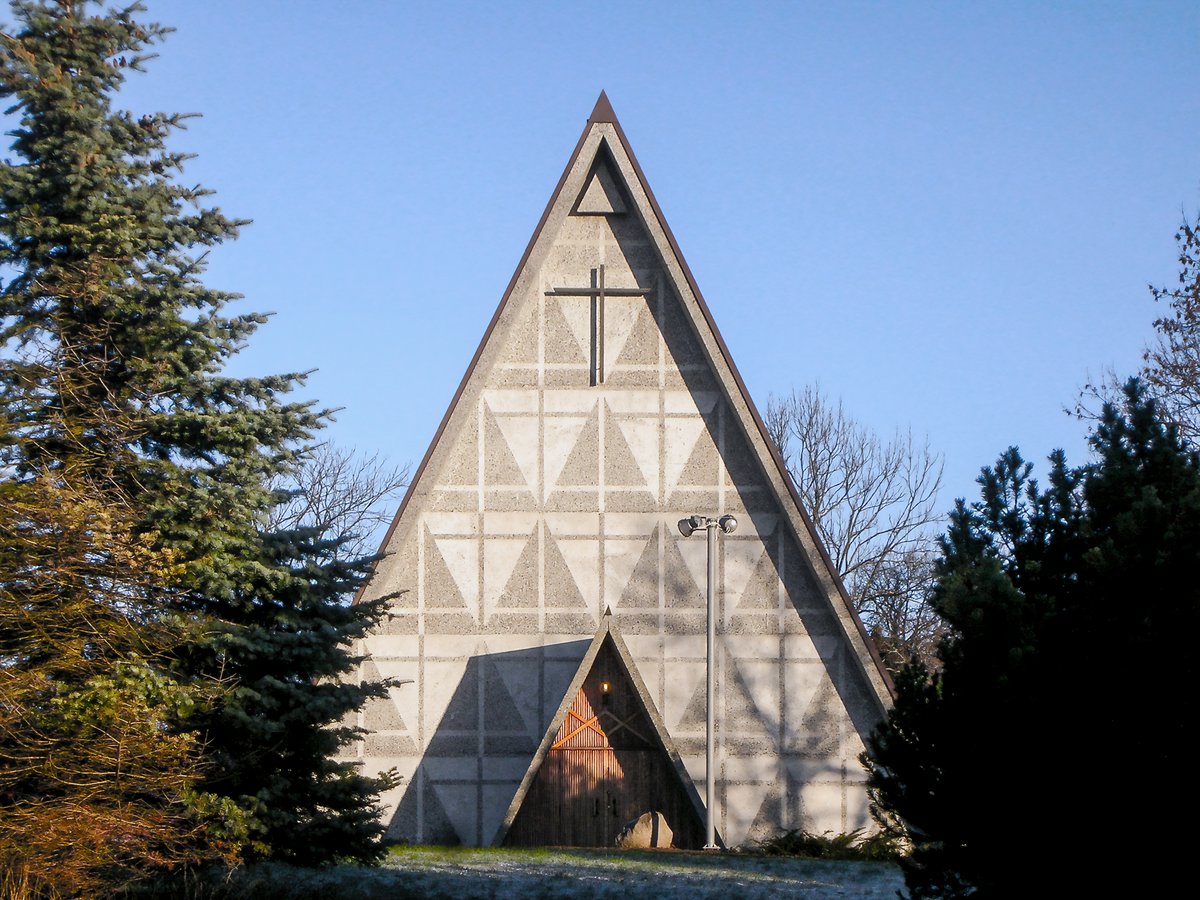
Bakkehaugen Church, located in Oslo’s tranquil Tåsen district, is a celebrated example of Norwegian modernist architecture and a vibrant center for community and culture. Completed in 1959 by architect Erling Viksjø, the church exemplifies a post-war spirit that fused functional design with innovative artistry. Its unique use of “naturbetong” (natural concrete), a technique developed with artist Carl Nesjar, and the collaborative integration of works by Kai Fjell, make Bakkehaugen Church an architectural and cultural landmark in Oslo (Daily Scandinavian; Avontuura; kulturnav.org).
This guide offers essential information on visiting hours, ticket policies, accessibility, architectural highlights, and tips for making the most of your visit to Bakkehaugen Church and Oslo’s historical sites.

Architectural Significance
Modernism and the “Arbeidskirke” Concept
Bakkehaugen Church epitomizes Norwegian modernism, characterized by its bold triangular prism form, exposed concrete surfaces, and thoughtful spatial organization. Architect Erling Viksjø’s vision, realized in 1959, was influenced by the “arbeidskirke” (working church) concept—making the building accessible, multifunctional, and deeply connected to community needs (Daily Scandinavian).
Material Innovation
The church’s signature “naturbetong” technique exposes the concrete’s aggregate, creating organic textures that blend the structure with its natural surroundings. This approach, pioneered by Viksjø and Nesjar, was groundbreaking in Norway and earned Bakkehaugen Church the prestigious Betongtavlen award in 1961 (Avontuura).
Artistic Integration
Noteworthy Norwegian artists, including Kai Fjell and Carl Nesjar, contributed murals, stained glass, and sculptural works. Their creations are harmoniously woven into the building’s architecture, creating a holistic spiritual and sensory experience. The stained glass windows and sandblasted concrete reliefs, particularly the altar wall cross, are highlights for art and architecture enthusiasts (kulturnav.org).
Visiting Hours & Admission
- General Visiting Hours: Monday–Saturday, 10:00 AM–4:00 PM. Hours may vary for religious holidays or special events; check the official parish website for updates.
- Sunday Services: Typically at 11:00 AM.
- Admission: Entry is free. Donations are welcome.
- Special Events: Some concerts or exhibitions may require tickets or advance registration. Event information is posted on the church’s website and local boards.
Accessibility & Facilities
- Wheelchair Access: Main entrance and nave are generally accessible. Some interior areas may have limited access; contact the parish office for specific needs.
- Restrooms: Available during services and events.
- Parking: Limited street parking nearby; Oslo’s public transportation is recommended.
- Public Transport: Easily reached by metro (Tåsen station on Line 5), bus, or tram. The area is also walkable and bike-friendly (VisitOSLO).
How to Get There
Address: Carl Grøndahls vei 27, 0871 Oslo, Norway
- By Metro: Tåsen station (Line 5, Sognsvann Line), 10-minute walk to the church.
- By Bus/Tram: Several lines serve the area; see Ruter’s journey planner.
- By Car: Limited parking; check signage for restrictions.
- On Foot/Bike: The Tåsen area is safe and pleasant for walking or cycling.
Visitor Experience & Etiquette
- Dress Code: Modest attire is appreciated, especially during services.
- Photography: Permitted for personal use outside services. Please ask permission during ceremonies.
- Language: Services are mainly in Norwegian; some events may be in English, particularly those hosted by Oslo International Church (oslointernational.church).
- Community Engagement: Visitors are welcome to join communal meals or events; bringing a dish to share is customary (Kirker i Norge).
Community Events & Guided Tours
Bakkehaugen Church is an active center for worship, music, and community life:
- Services & Ceremonies: Regular Sunday services, baptisms, weddings, and confirmations.
- Concerts & Exhibitions: Occasional musical performances and art events—check the parish calendar.
- Community Meals & Gatherings: Seasonal events such as potluck meals and barbecues, especially on Norwegian Constitution Day (May 17).
- Guided Tours: Available by request for groups interested in architecture, art, or religious life. Contact the parish office to arrange.
Nearby Attractions
- Vigeland Sculpture Park: Norway’s largest sculpture park, a short journey from Bakkehaugen (VisitOSLO).
- Norwegian Folk Museum: Open-air museum showcasing Norwegian cultural heritage.
- Sankthanshaugen Park: Scenic green space with city views (Norway With Pål).
- Local Cafes & Shops: Explore Tåsen and Ullevål neighborhoods for refreshments and shopping.
Frequently Asked Questions (FAQ)
Q: Is there an entrance fee or are tickets required?
A: No, entry is free for general visits and services. Some special events may require tickets.
Q: When is the church open to visitors?
A: Typically Monday–Saturday, 10:00 AM–4:00 PM, and during Sunday services. Confirm current hours via the parish website.
Q: Are guided tours available?
A: Yes, upon request for groups. Contact the parish office in advance.
Q: Is the church accessible for people with disabilities?
A: The main entrance and nave are generally accessible; contact the parish office for special needs.
Q: Can I take photographs?
A: Discreet photography is allowed outside services; please ask for permission during ceremonies.
Q: How do I find out about special events?
A: Visit the parish calendar or check local notice boards.
Contact Information
- Address: Bakkehaugen kirke, Carl Grøndahls vei 27, 0871 Oslo, Norway
- Parish Office: Ullevålsveien 117, 0361 Oslo
- Phone: +47 23 62 93 70 (parish office), +47 23 62 90 00 (Oslo churches central board)
- Email: [email protected]
- Website: Bakkehaugen, Majorstuen og Vestre Aker menighet
Summary & Travel Tips
Bakkehaugen Church stands as a model of Norwegian modernism, fusing innovative architecture with meaningful community engagement. Visitors can enjoy free admission, occasional guided tours, and a warm welcome during services and events. Its Tåsen location is easily accessible, and the church’s proximity to other Oslo attractions makes it an ideal stop for travelers exploring the city’s cultural fabric. For the best experience, plan your visit around a service or community event, and check the official website for the latest updates (Daily Scandinavian; kulturnav.org; VisitOSLO; Avontuura).
Travel Tips:
- Use Oslo’s efficient public transportation.
- Dress appropriately and respect local customs.
- Join community events for an authentic experience.
- Explore nearby parks and museums.
- English is widely spoken; don’t hesitate to ask for help.
For more on Oslo’s historical sites, download the Audiala app or explore our related articles.
Listen to the full story in the app
The whole Bakkehaugen Church,
told well.
Audio guides for 1,100+ cities across 96 countries. History, stories, and local insight — offline ready.
Verified, and shown.
Researched and written by the Audiala editorial team from historical records, architectural archives, and local expertise.
Researched from Wikidata, Wikipedia & official sources · fact-checked · How we make our guides →