directions_boat
Fjords That Dictate Life
Geirangerfjord and Nærøyfjord supply the big views, but the deeper story is practical: boats, ferries, and cliff-edge farms exist because ice carved the country into corridors.
Norway is what happens when geography keeps the upper hand: fjords, weather, and winter light still shape the food, the cities, and the pace of daily life.
 Norway
EntrySchengen; many non-EU travelers can stay 90 days visa-free
NA Norway travel guide starts with a correction: this is not one landscape but many, from Oslo’s harbor saunas to Tromsø’s winter blue and Flåm’s sheer fjord walls.
Norway rewards travelers who like strong contrasts. In a single trip, you can move from the clean lines of Oslo to the Hanseatic waterfront of Bergen, then north to Trondheim, where pilgrimage history still shapes the city plan, or Stavanger, where oil wealth sits beside old wooden streets. The scale is hard to fake: roughly 102,937 kilometers of coastline when islands are counted, fjords cut deep by ice, and mountain country that still decides where roads, farms, and towns can exist. That geography is the point. Norway does not smooth itself out for visitors.
The culture feels just as specific. Records, sagas, and church politics made Trondheim a medieval pilgrimage center; cod, lamb, and cabbage still turn up on tables with the blunt logic of climate; and the national taste for coffee, cabins, and time outdoors says more than any slogan could. You see different versions of that identity in Ålesund’s Art Nouveau streets, in Flåm’s rail-and-fjord theatrics, and in Longyearbyen, where Arctic light rewrites the day itself. Norway can be polished, expensive, and occasionally severe. It is rarely vague, and that is part of its pull.
Before the Kingdom, c. 10000 BCE-872
A reindeer herd moves across wet ground where the ice has only just withdrawn, and behind it come hunters carrying stone blades, bone points, and red ochre. Norway begins like this: not with a throne, but with footsteps on fresh land. At Alta, the rock carvings still show elk, whales, boats, and figures mid-ritual, cut into stone with a patience that feels almost aristocratic in its own way.
Ce que l'on ignore souvent, c'est que the first great Norwegian monuments were not halls or churches but images left in the open air, exposed to weather, tide, and centuries of indifference. On Åmøy, Bronze Age carvers filled the rock with ships and a frankly unabashed male figure; sacred art, one suspects, did not exclude a sense of mischief. Even then, the coast was already the true highway, and the boat already the instrument that decided who could trade, raid, marry, and rule.
By the late Iron Age, chiefs were being buried with extraordinary ceremony. A ship was not just transport. It was prestige in timber. The graves at Borre, the rich finds from Tune, and the ritual destruction of vessels suggest a society that understood power as spectacle long before it wrote laws on parchment. Someone ordered these burials. Someone paid for them. Someone wanted to be remembered.
That appetite for memory becomes political very quickly. Once wealth could move by sea, ambitious men could move with it, from Rogaland to Trøndelag and beyond. The coast knit scattered communities into rival spheres of influence, and from those rivalries came the next act: the age of kings, or at least of men determined to look like kings.
Harald Fairhair may stand at the threshold of legend, but he belongs to a world already shaped by older chiefs who measured authority in ships, feasts, and the loyalty of armed households.
When the Tune ship was found in 1867, farmers reportedly kept plowing until a local schoolmaster grasped that the dark wood in the soil had once been a royal machine for crossing seas.
Viking and Unification Age, 872-1066
Picture a war fleet in Hafrsfjord: shields along the gunwales, salt spray in the beard, and a young ruler gambling everything on one battle. Tradition says Harald Fairhair swore he would not cut or comb his hair until all Norway was his, after Gyda refused to marry a man who ruled only a fragment of it. Whether every word is true is almost beside the point. The insult became a kingdom.
The court that followed was no fairy tale. Harald had sons by several women, and succession turned murderous with depressing speed. Erik Bloodaxe earned his nickname honestly, while his wife Gunnhild, whom later writers painted as a sorceress, maneuvered like a stateswoman with a taste for vengeance. Ce que l'on ignore souvent, c'est que early Norway was shaped as much by formidable women and dynastic resentments as by heroic swordplay.
Then came Olaf Haraldsson, later Saint Olaf, who died at Stiklestad in 1030 trying to win back his throne. His corpse changed more than his army had. Once miracles were reported at his grave and his cult took hold, Trondheim became Nidaros, a city of pilgrimage, relics, and royal legitimacy. A dead king did what a living one had failed to do: he bound faith and power together.
This was also the Norway that pushed outward. Leif Erikson sailed west toward Vinland, Norwegians founded towns in Ireland and England, and ships from the fjords made the North Atlantic feel almost domestic. Yet expansion had a price. The habits of raiding, alliance, and sacred kingship would not vanish; they would simply be folded into a more courtly, more European Norway in the centuries ahead.
Saint Olaf was not a plaster saint in life but an impatient, forceful ruler whose violent death made him more useful to the kingdom than his reign ever had.
A partial solar eclipse darkened the sky around the time of the battle of Stiklestad in 1030, and later chroniclers treated the heavens themselves as witnesses to Olaf's fall.
Medieval Kingdom and Union, 1066-1536
In medieval Trondheim, candles flickered before the shrine of Saint Olaf while pilgrims arrived muddy, exhausted, and hopeful. Nidaros Cathedral was not an ornament at the edge of Europe; it was a machine for sanctity and statecraft. Kings were crowned there. Bishops negotiated there. And all through the 12th and 13th centuries, Norway learned to present itself not as a loose maritime frontier but as a Christian kingdom with ceremony, paperwork, and ambition.
Under Haakon IV, that ambition became almost dazzling. His court imported French romances, commissioned translations of Tristan and Arthurian tales, and dressed power in the language of chivalry. One sees the aspiration clearly: Norway did not want merely to be feared for its ships. It wanted elegance, legitimacy, and the polish of continental monarchy. Bergen, then the great western capital, thrived on trade and royal presence, a city where cod, silver, and courtly ideals met in the same damp air.
Then came the Black Death in 1349, arriving by ship, which feels horribly appropriate for a kingdom built by the sea. It tore through a thinly populated country with savage efficiency, emptied farms, weakened noble lines, and left the crown more vulnerable than any enemy fleet had managed to do. Institutions survived, but the balance had shifted.
That weakness helps explain why the Union of Kalmar in 1397 mattered so much. A dynastic arrangement, sealed under Queen Margaret's formidable hand, joined Denmark, Norway, and Sweden under one monarch. Norway remained a kingdom, yes, but increasingly one whose decisions were made elsewhere. The medieval crown did not fall in one theatrical moment. It was absorbed, almost politely, and that long diminishment set the stage for the Lutheran and Danish centuries to come.
Queen Margaret I never wore the title of king, yet she bent the politics of Scandinavia around her with a steadiness most crowned men could only envy.
Haakon IV had Old French romances translated into Old Norse, which means that in 13th-century Norway, court listeners could hear the sorrows of Tristan in a language shaped by fjords and farmsteads.
Danish Rule, Constitution, and Modern Norway, 1536-1945
Open a ledger in Copenhagen in the 17th century and Norway appears almost like a possession written in ink: timber, fish, taxes, sailors, ore. After the Reformation and the tightening of Danish control, the old Norwegian kingdom was increasingly governed from abroad. Yet this was not a dead country. Kongsberg silver fed the crown's finances, Trondheim remained a northern anchor, and along the coast from Stavanger to Tromsø, wealth and hardship still rose and fell with the sea.
The great rupture came in 1814. Denmark, defeated in the Napoleonic wars, ceded Norway to Sweden, and the Norwegians reacted with astonishing speed. At Eidsvoll, in a manor house thick with debate, delegates wrote a constitution on 17 May that remains one of the emotional centerpieces of national life. They lost full independence in the short term and entered union with Sweden, but they kept the constitution, the memory, and the habit of imagining themselves as a nation apart.
Ce que l'on ignore souvent, c'est que Norway's 19th century was not only patriotic uplift but also departure. Hundreds of thousands left for North America. Painters and writers turned landscape into identity. Henrik Ibsen dissected bourgeois hypocrisies with surgical pleasure, Edvard Grieg gave sound to national longing, and Edvard Munch turned anxiety itself into an image the world could not forget. In Oslo, then Kristiania, modern Norway was being invented in theaters, cafés, newspapers, and arguments.
Then came 1940. German forces invaded, the royal family fled, and King Haakon VII became the moral center of resistance by refusing to legitimize occupation. His answer to Nazi pressure was quiet, constitutional, and devastatingly firm. When liberation came in 1945, the flag was no longer just decoration on 17 May. It had become proof that a country long schooled in unions and compromises could still say no, and from that refusal came the Norway we recognize now.
King Haakon VII, Danish-born yet unmistakably Norwegian in the public imagination, earned his place by choosing duty over safety when the test finally arrived.
In 1905, when Norway needed a new monarch after leaving Sweden, the future Haakon VII insisted that the people should approve the change by referendum before he accepted the crown.
Norwegian does not rush to impress you. It arrives like winter light on a kitchen table: pale, exact, impossible to argue with. People move to first names almost at once, which sounds intimate until you notice the real etiquette lies elsewhere, in the refusal to occupy too much air, too much noise, too much of another person's day.
This is a language culture that mistrusts inflation. A thank you matters. A promise matters more. In Oslo, you hear conversations on the tram that seem built from practical verbs and silences, as if speech were a tool sharpened after use and put back in its drawer. Then someone laughs, and the whole reserve opens for three seconds. Enough.
Three words explain more than a handbook. Dugnad means you show up with your hands. Friluftsliv means weather is not an excuse but a condition of being alive. Kos means candles, coffee, wool socks, a room made smaller against the dark. A country is often a grammar lesson with mountains behind it.
Norwegian politeness is severe in the way clean linen is severe. It does not flatter. It does not perform. It leaves room. On a bus in Bergen, the art is to sit, exist, and avoid converting your existence into a public event. This restraint can feel cold if you come from a culture that sprinkles warmth everywhere like parsley. It is not cold. It is concentration.
People do not crowd you with questions. They do not paw at your biography five minutes after meeting you. The gift is subtler: when they ask, they mean it. Friendship here often begins sideways, during a walk, over coffee, while peeling shrimp, on a ferry deck where the wind does half the conversation and your companion offers a fact so personal it lands like a stone in clear water.
The rule is simple and difficult. Do not make things bigger than they are. Speak plainly. Arrive on time. Remove your shoes when the house asks for it. In Tromsø, in Trondheim, in a village beyond a tunnel drilled through black rock, the highest courtesy is often the same one: let other people keep their shape.
Norwegian food begins with climate and ends with appetite. Fish dried by wind. Lamb slowed by time. Potatoes that understand their duty. You can taste the old argument between land and sea in almost every serious meal, and the winner changes by region, by season, by the mood of the table.
Fårikål is the national character in a pot: mutton, cabbage, peppercorns, patience. Lutefisk is something else entirely, a culinary dare preserved by devotion and butter. And then there is brunost, that caramelized brown cheese sliced thin enough to look like stationery, put on bread and eaten with the calm conviction of people who know sweetness does not need frosting to be dangerous.
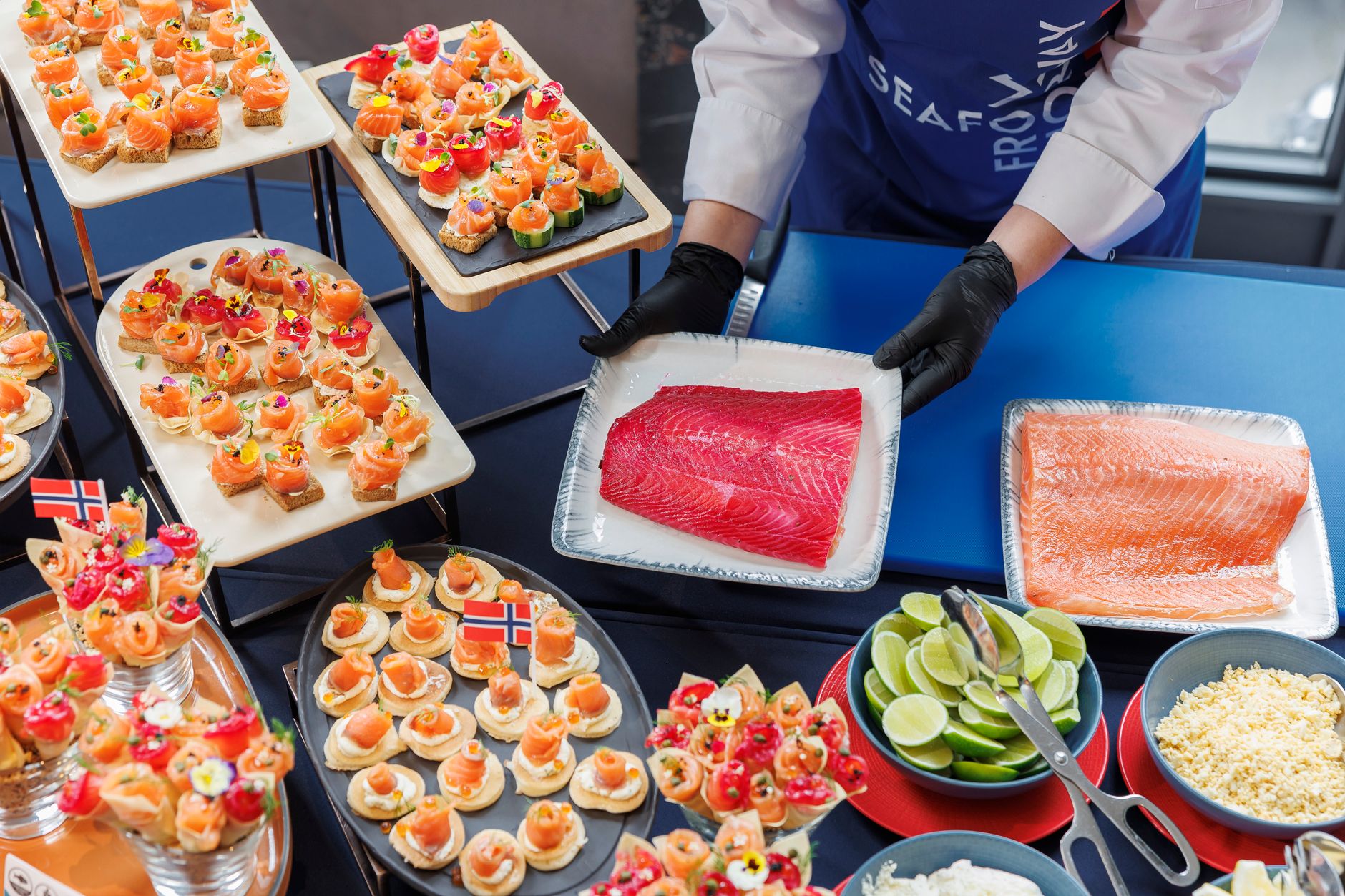
Seafood is not decoration here. In Stavanger and Bodø, in Bergen's fish market when it avoids becoming theatre for outsiders, cod, shrimp, salmon, and shellfish still carry the smell of weather and labor. Coffee appears beside all this with religious persistence. The cup is small, the effect enormous. Norway drinks as if darkness were negotiable.
Norwegian literature has a taste for moral weather. Henrik Ibsen built drawing rooms that behave like crime scenes. Knut Hamsun, for all the ugliness attached to his name, understood hunger as if it were an organ. Sigrid Undset took medieval souls and made them sweat. You read this country and discover that restraint on the surface often hides volcanic interiors. Snow over magma.
Even the sagas refuse decorative heroism. Kings are vain, saints are useful, loyalties shift with the tide, and a corpse can alter national politics more effectively than a speech. The old stories around Harald Fairhair and St. Olaf still pulse beneath the modern state, especially in Trondheim, where the memory of pilgrimage and power remains built into the stones.
What I like most is the lack of perfume. Norwegian writing, at its best, does not seduce by soft focus. It names the room, the hunger, the debt, the humiliation. Then it waits. That patience feels native to the place. In a land of long winters, prose learns how to store heat.
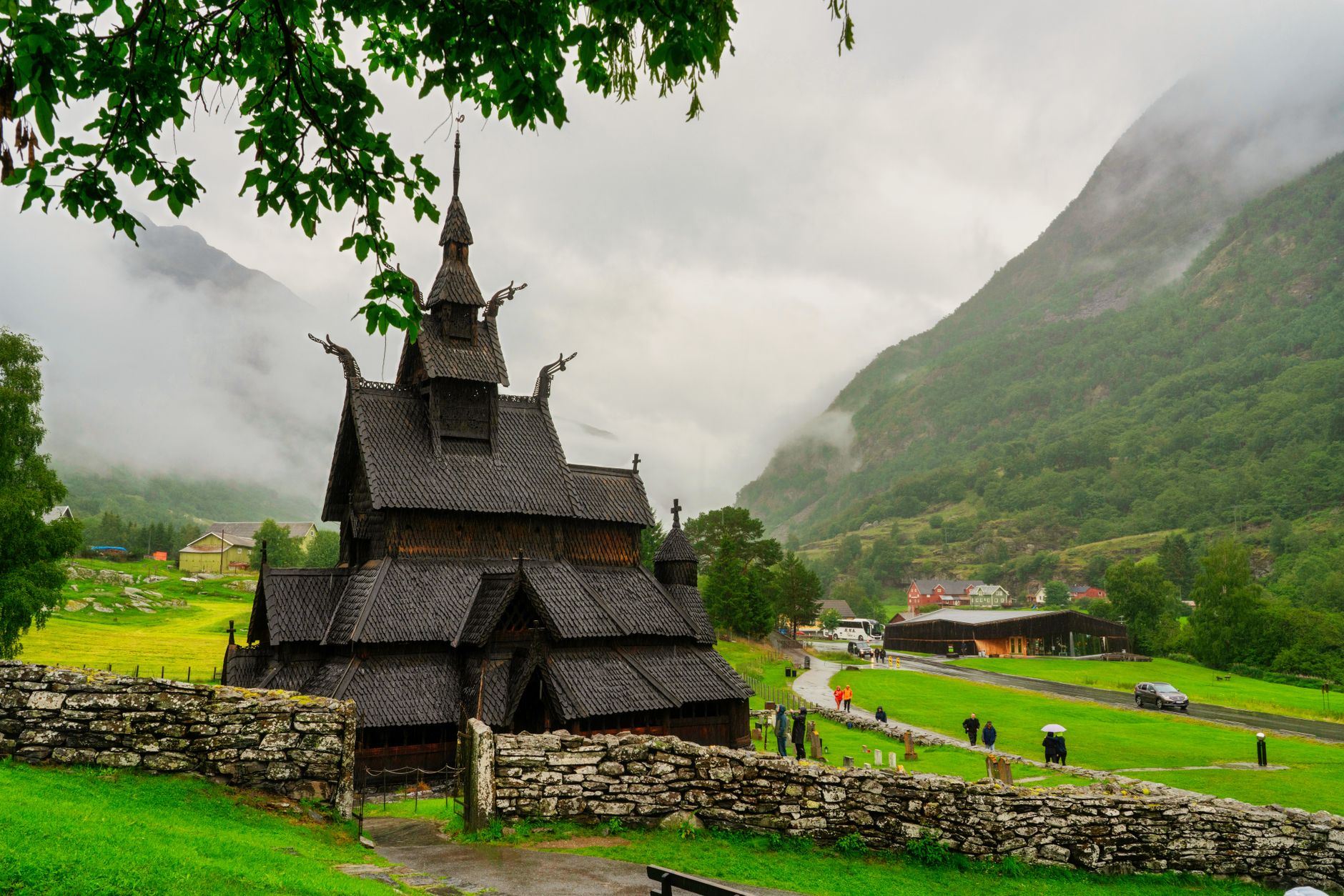
Norwegian architecture is a running duel with water, cold, wind, and grandeur. The miracle is not that houses stand. The miracle is that they stand and still manage elegance. Timber does much of the emotional work, from the stave churches with their dragon-headed shadows to painted wooden facades that brighten a street without pleading for attention.
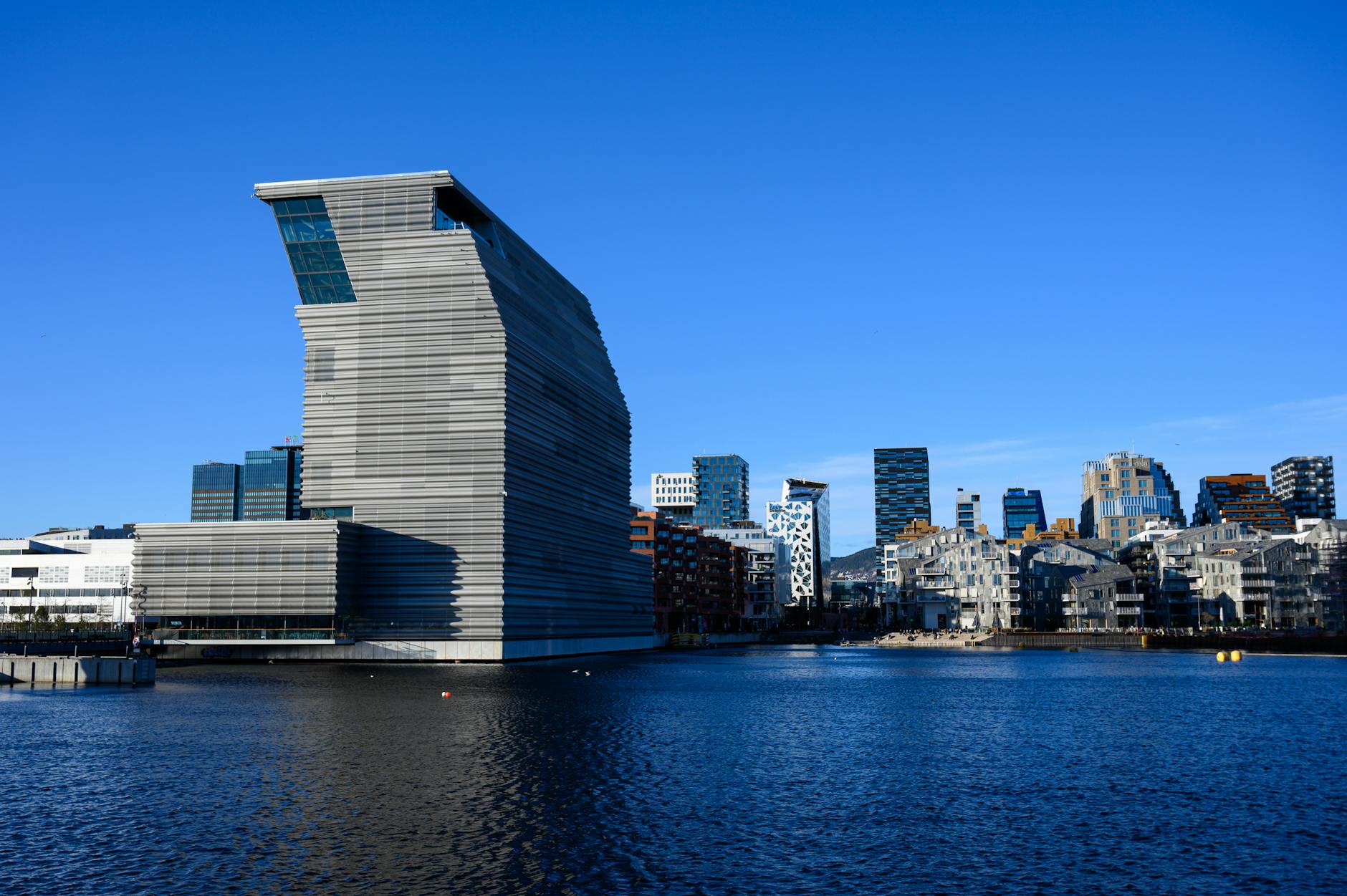
In Bergen, the old Hanseatic rows at Bryggen look as if they have spent centuries leaning into gossip and rain. In Oslo, the Opera House slides into the fjord with the confidence of a public building that knows Norwegians will walk on its roof without asking permission. Trondheim gives you Nidaros Cathedral, dark and intricate, a medieval assertion that even a northern kingdom could think in stone and think magnificently.
What moves me is the scale of the bargain. Nature is immense. Human buildings answer with precision rather than bravado. A cabin. A boathouse. A church of tarred wood smelling faintly of resin and old prayer. Architecture here rarely says, behold me. It says, I have learned the terms.
Norwegian design understands a truth many richer cultures miss: comfort is an ethics before it becomes a style. Chairs are meant for backs. Lamps are meant for darkness, and darkness here is not metaphor but a season with legal rights. Wool, wood, felt, glass, pale ceramics, a line that curves only when it has a reason: this is a country suspicious of ornamental nonsense.
And yet austerity is not the point. The point is tenderness through use. A blanket on a bench. A candle in a window at 16:00 in December. A spoon shaped to sit well in the hand. In Ålesund, the Art Nouveau flourish arrives after the fire of 1904 like an unexpected silk cuff on a practical coat, proof that utility and fantasy can share an address.
Norwegian rooms often look simple until you stay in one long enough to notice the intelligence. Storage where clutter would breed. Light placed low and warm. Textures that absorb the eye when the sky has gone slate gray for the day. Luxury, in this language, means having exactly what the hour requires. No more. No less.
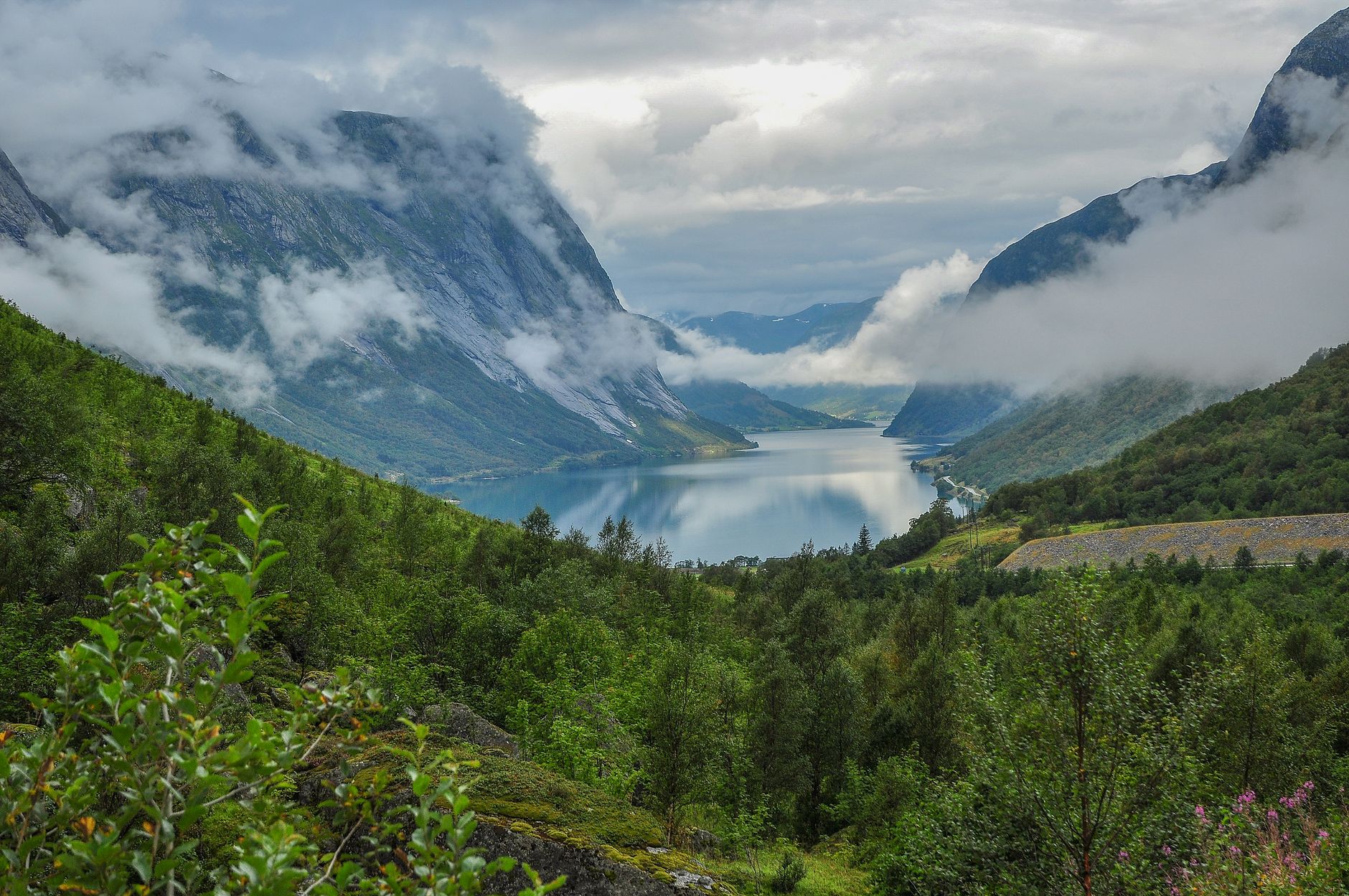
Geirangerfjord and Nærøyfjord supply the big views, but the deeper story is practical: boats, ferries, and cliff-edge farms exist because ice carved the country into corridors.
In Tromsø and Longyearbyen, daylight is not background scenery but the main event. Summer barely gets dark; winter trades long shadows for aurora season and a blue hour that seems to last forever.
The Oslo to Bergen line crosses Hardangervidda, then Flåm drops from mountain plateau to fjord in one of Europe’s most theatrical rail journeys. Norway is a country that turns transit into the view.
This is Viking-age power, medieval pilgrimage, fishing settlements, and 19th-century nation-building in the same frame. Trondheim, Røros, and Kongsberg show how faith, metals, and trade built very different Norways.
Expect skrei cod, salmon, shellfish, brown cheese, and the practical richness of dishes built for winter. The best meals often feel less performative than precise.
Friluftsliv is not marketing language. It is a social habit built around trails, cabins, skis, and weatherproof optimism, whether you are near Stavanger, Bodø, or the ridgelines above Ålesund.
12 cities — start with the ones we'd send you to first.
A capital that spent its oil wealth on architecture instead of monuments — the Nasjonalmuseet, the Munch museum on the waterfront, and Mathallen's stalls of cured reindeer and skrei all within walking distance of each ot
Seven mountains, one UNESCO-listed wharf of tilting Hanseatic warehouses, and a fish market where vendors have been arguing about the price of king crab since the 14th century.
The world's northernmost city of any size sits on an island at 69°N, where the aurora borealis ignites over a cathedral made of angular white concrete and the sun doesn't rise for two months.
Norway's medieval capital holds Nidarosdomen, the northernmost Gothic cathedral on earth, built over the grave of a king who was killed by his own people and then declared a saint.
An oil-boom city whose old quarter — 173 white wooden houses from the 1800s, still inhabited — survived industrialization intact, and whose Preikestolen cliff draws hikers who want to stand on a horizontal slab above a 6
Burned to the ground in 1904, rebuilt in four years in pure Art Nouveau by architects who had trained in Germany — the only city in Norway with a coherent architectural identity that isn't medieval.
A village of 350 people at the end of the Aurlandsfjord that exists almost entirely as the terminus of the Flåmsbana, a railway that drops 863 metres in 20 kilometres through waterfalls and tunnels blasted by hand.
The world's northernmost settlement with a supermarket and a university sits at 78°N on Svalbard, where it is illegal to die (the permafrost won't decompose you) and polar bears outnumber people.
Southern Norway's summer capital is where Oslo families drive their boats on midsummer weekends, but its real texture is the Posebyen quarter — a grid of 17th-century wooden houses that somehow survived every fire that t
Eastern Norway is where many trips begin, but it deserves more than a landing slot. Oslo brings waterfront architecture, major museums, and the country's densest rail network, while the inland valleys and old mining districts show a stricter, quieter Norway shaped by timber, industry, and snow rather than sea spray.
The Skagerrak coast feels lighter than the national stereotype suggests. Kristiansand and the towns east of it trade in summer ferries, small harbors, white wooden houses, and a holiday rhythm that makes more sense in July than in January.
Western Norway is the country people think they already know, right up until the weather closes in and the scale turns strange. Bergen works as the urban anchor, but the real pull lies in corridors of water and rock around Flåm, Nærøyfjord, and the coast north toward Ålesund.
Stavanger sits at the meeting point of old fishing wealth and modern oil money, and you can feel both in the streets. This coast is less ornamental than the fjord belt and more exposed, with open sea, working ports, and some of the country's bluntest landscapes.
Central Norway has more historical weight than many first-time visitors expect. Trondheim carries the memory of St. Olaf and pilgrimage routes, while Røros preserves a mining town so intact that the whole place feels like a hard-earned truce between beauty and climate.
North of Bodø, Norway starts to rearrange your sense of time. Tromsø mixes university life, Arctic tourism, and winter light; Longyearbyen strips things down even further, where logistics, weather, and daylight are not background details but the plot itself.
A Norwegian story of sea routes, saints, unions, constitutions, and stubborn independence
As the glaciers withdrew, hunter groups moved into what is now Norway. The country's history begins not with a palace but with survival on raw, newly opened ground.
Figures of elk, boats, whales, and ritual scenes were carved into stone in northern Norway. These images remain among the most eloquent witnesses to the beliefs and movements of the first Norwegians.
Tradition links this battle near today's Stavanger region to Harald Fairhair's rise over rival chiefs. Whether every saga detail is true, Hafrsfjord became the founding scene of royal Norway.
The king established a trading settlement at the mouth of the Nidelva, later known as Nidaros and now Trondheim. It would become a political and sacred center of the kingdom.
The defeated king died in battle and soon began his second career as a saint. His cult transformed Trondheim into the great pilgrimage city of medieval Norway.
The creation of an independent ecclesiastical province gave Norway stronger religious and political stature. It signaled that the kingdom was no longer a distant mission field but a Christian realm with its own clerical center.
After years of civil strife, Haakon IV brought unusual stability and a new sense of courtly ambition. Under him, Norway reached a medieval high point in power, law, and cultural polish.
Haakon died during a campaign in the west after defending Norwegian interests in the Hebrides. His death marked the close of the kingdom's most expansive medieval chapter.
Plague arrived by ship and cut through a scattered population with terrible force. Farms were abandoned, noble lines weakened, and the kingdom emerged permanently more fragile.
Queen Margaret's union joined Denmark, Norway, and Sweden under one monarch. Norway kept its crown in theory, but power drifted increasingly away from Norwegian hands.
The Lutheran Reformation was also a political reordering. Norway lost much of its ecclesiastical independence and was drawn more tightly into the Danish state.
After a major fire, King Christian IV moved and redesigned the city near Akershus Fortress. The renamed capital carried the stamp of Danish royal authority for centuries.
The discovery of silver turned Kongsberg into one of the crown's most important industrial towns. Underground wealth tied Norway even more closely to the fiscal needs of Copenhagen.
In the upheaval after the Napoleonic wars, Norwegian delegates drafted a constitution on 17 May. Even though Norway soon entered union with Sweden, this document became the emotional and legal core of modern nationhood.
Norway dissolved its union with Sweden peacefully and chose Prince Carl of Denmark as King Haakon VII. Independence arrived not with revolutionary thunder but with rare political discipline.
Nazi Germany invaded Norway in April, forcing the government and royal family into exile. Resistance, occupation, and collaboration would leave deep marks on the country's memory.
When Haakon VII returned after the war, he embodied continuity restored. The monarchy emerged from the occupation not weakened, but morally enlarged.
The discovery of the Ekofisk oil field in the North Sea changed Norway's future. A country long shaped by fish, timber, and shipping now had petroleum wealth to manage, and the challenge became how not to let riches spoil the state.
Norway began building the framework that would become the Government Pension Fund Global. Instead of spending oil wealth in a rush, the state chose long patience, which may be the least dramatic and most consequential royal-quality decision in modern Norwegian history.
In a second referendum, voters said no to joining the European Union. The decision confirmed a national habit visible for centuries: cooperate widely, but keep the final key to the front door.
Before the Kingdom
Harald Fairhair may stand at the threshold of legend, but he belongs to a world already shaped by older chiefs who measured authority in ships, feasts, and the loyalty of armed households.
A reindeer herd moves across wet ground where the ice has only just withdrawn, and behind it come hunters carrying stone blades, bone points, and red ochre. Norway begins like this: not with a throne, but with footsteps on fresh land. At Alta, the rock carvings still show elk, whales, boats, and figures mid-ritual, cut into stone with a patience that feels almost aristocratic in its own way.
Ce que l'on ignore souvent, c'est que the first great Norwegian monuments were not halls or churches but images left in the open air, exposed to weather, tide, and centuries of indifference. On Åmøy, Bronze Age carvers filled the rock with ships and a frankly unabashed male figure; sacred art, one suspects, did not exclude a sense of mischief. Even then, the coast was already the true highway, and the boat already the instrument that decided who could trade, raid, marry, and rule.
By the late Iron Age, chiefs were being buried with extraordinary ceremony. A ship was not just transport. It was prestige in timber. The graves at Borre, the rich finds from Tune, and the ritual destruction of vessels suggest a society that understood power as spectacle long before it wrote laws on parchment. Someone ordered these burials. Someone paid for them. Someone wanted to be remembered.
That appetite for memory becomes political very quickly. Once wealth could move by sea, ambitious men could move with it, from Rogaland to Trøndelag and beyond. The coast knit scattered communities into rival spheres of influence, and from those rivalries came the next act: the age of kings, or at least of men determined to look like kings.
When the Tune ship was found in 1867, farmers reportedly kept plowing until a local schoolmaster grasped that the dark wood in the soil had once been a royal machine for crossing seas.
Viking and Unification Age
Saint Olaf was not a plaster saint in life but an impatient, forceful ruler whose violent death made him more useful to the kingdom than his reign ever had.
Picture a war fleet in Hafrsfjord: shields along the gunwales, salt spray in the beard, and a young ruler gambling everything on one battle. Tradition says Harald Fairhair swore he would not cut or comb his hair until all Norway was his, after Gyda refused to marry a man who ruled only a fragment of it. Whether every word is true is almost beside the point. The insult became a kingdom.
The court that followed was no fairy tale. Harald had sons by several women, and succession turned murderous with depressing speed. Erik Bloodaxe earned his nickname honestly, while his wife Gunnhild, whom later writers painted as a sorceress, maneuvered like a stateswoman with a taste for vengeance. Ce que l'on ignore souvent, c'est que early Norway was shaped as much by formidable women and dynastic resentments as by heroic swordplay.
Then came Olaf Haraldsson, later Saint Olaf, who died at Stiklestad in 1030 trying to win back his throne. His corpse changed more than his army had. Once miracles were reported at his grave and his cult took hold, Trondheim became Nidaros, a city of pilgrimage, relics, and royal legitimacy. A dead king did what a living one had failed to do: he bound faith and power together.
This was also the Norway that pushed outward. Leif Erikson sailed west toward Vinland, Norwegians founded towns in Ireland and England, and ships from the fjords made the North Atlantic feel almost domestic. Yet expansion had a price. The habits of raiding, alliance, and sacred kingship would not vanish; they would simply be folded into a more courtly, more European Norway in the centuries ahead.
A partial solar eclipse darkened the sky around the time of the battle of Stiklestad in 1030, and later chroniclers treated the heavens themselves as witnesses to Olaf's fall.
Medieval Kingdom and Union
Queen Margaret I never wore the title of king, yet she bent the politics of Scandinavia around her with a steadiness most crowned men could only envy.
In medieval Trondheim, candles flickered before the shrine of Saint Olaf while pilgrims arrived muddy, exhausted, and hopeful. Nidaros Cathedral was not an ornament at the edge of Europe; it was a machine for sanctity and statecraft. Kings were crowned there. Bishops negotiated there. And all through the 12th and 13th centuries, Norway learned to present itself not as a loose maritime frontier but as a Christian kingdom with ceremony, paperwork, and ambition.
Under Haakon IV, that ambition became almost dazzling. His court imported French romances, commissioned translations of Tristan and Arthurian tales, and dressed power in the language of chivalry. One sees the aspiration clearly: Norway did not want merely to be feared for its ships. It wanted elegance, legitimacy, and the polish of continental monarchy. Bergen, then the great western capital, thrived on trade and royal presence, a city where cod, silver, and courtly ideals met in the same damp air.
Then came the Black Death in 1349, arriving by ship, which feels horribly appropriate for a kingdom built by the sea. It tore through a thinly populated country with savage efficiency, emptied farms, weakened noble lines, and left the crown more vulnerable than any enemy fleet had managed to do. Institutions survived, but the balance had shifted.
That weakness helps explain why the Union of Kalmar in 1397 mattered so much. A dynastic arrangement, sealed under Queen Margaret's formidable hand, joined Denmark, Norway, and Sweden under one monarch. Norway remained a kingdom, yes, but increasingly one whose decisions were made elsewhere. The medieval crown did not fall in one theatrical moment. It was absorbed, almost politely, and that long diminishment set the stage for the Lutheran and Danish centuries to come.
Haakon IV had Old French romances translated into Old Norse, which means that in 13th-century Norway, court listeners could hear the sorrows of Tristan in a language shaped by fjords and farmsteads.
Danish Rule, Constitution, and Modern Norway
King Haakon VII, Danish-born yet unmistakably Norwegian in the public imagination, earned his place by choosing duty over safety when the test finally arrived.
Open a ledger in Copenhagen in the 17th century and Norway appears almost like a possession written in ink: timber, fish, taxes, sailors, ore. After the Reformation and the tightening of Danish control, the old Norwegian kingdom was increasingly governed from abroad. Yet this was not a dead country. Kongsberg silver fed the crown's finances, Trondheim remained a northern anchor, and along the coast from Stavanger to Tromsø, wealth and hardship still rose and fell with the sea.
The great rupture came in 1814. Denmark, defeated in the Napoleonic wars, ceded Norway to Sweden, and the Norwegians reacted with astonishing speed. At Eidsvoll, in a manor house thick with debate, delegates wrote a constitution on 17 May that remains one of the emotional centerpieces of national life. They lost full independence in the short term and entered union with Sweden, but they kept the constitution, the memory, and the habit of imagining themselves as a nation apart.
Ce que l'on ignore souvent, c'est que Norway's 19th century was not only patriotic uplift but also departure. Hundreds of thousands left for North America. Painters and writers turned landscape into identity. Henrik Ibsen dissected bourgeois hypocrisies with surgical pleasure, Edvard Grieg gave sound to national longing, and Edvard Munch turned anxiety itself into an image the world could not forget. In Oslo, then Kristiania, modern Norway was being invented in theaters, cafés, newspapers, and arguments.
Then came 1940. German forces invaded, the royal family fled, and King Haakon VII became the moral center of resistance by refusing to legitimize occupation. His answer to Nazi pressure was quiet, constitutional, and devastatingly firm. When liberation came in 1945, the flag was no longer just decoration on 17 May. It had become proof that a country long schooled in unions and compromises could still say no, and from that refusal came the Norway we recognize now.
In 1905, when Norway needed a new monarch after leaving Sweden, the future Haakon VII insisted that the people should approve the change by referendum before he accepted the crown.
Norwegian does not rush to impress you. It arrives like winter light on a kitchen table: pale, exact, impossible to argue with. People move to first names almost at once, which sounds intimate until you notice the real etiquette lies elsewhere, in the refusal to occupy too much air, too much noise, too much of another person's day.
This is a language culture that mistrusts inflation. A thank you matters. A promise matters more. In Oslo, you hear conversations on the tram that seem built from practical verbs and silences, as if speech were a tool sharpened after use and put back in its drawer. Then someone laughs, and the whole reserve opens for three seconds. Enough.
Three words explain more than a handbook. Dugnad means you show up with your hands. Friluftsliv means weather is not an excuse but a condition of being alive. Kos means candles, coffee, wool socks, a room made smaller against the dark. A country is often a grammar lesson with mountains behind it.
Norwegian politeness is severe in the way clean linen is severe. It does not flatter. It does not perform. It leaves room. On a bus in Bergen, the art is to sit, exist, and avoid converting your existence into a public event. This restraint can feel cold if you come from a culture that sprinkles warmth everywhere like parsley. It is not cold. It is concentration.
People do not crowd you with questions. They do not paw at your biography five minutes after meeting you. The gift is subtler: when they ask, they mean it. Friendship here often begins sideways, during a walk, over coffee, while peeling shrimp, on a ferry deck where the wind does half the conversation and your companion offers a fact so personal it lands like a stone in clear water.
The rule is simple and difficult. Do not make things bigger than they are. Speak plainly. Arrive on time. Remove your shoes when the house asks for it. In Tromsø, in Trondheim, in a village beyond a tunnel drilled through black rock, the highest courtesy is often the same one: let other people keep their shape.
Norwegian food begins with climate and ends with appetite. Fish dried by wind. Lamb slowed by time. Potatoes that understand their duty. You can taste the old argument between land and sea in almost every serious meal, and the winner changes by region, by season, by the mood of the table.
Fårikål is the national character in a pot: mutton, cabbage, peppercorns, patience. Lutefisk is something else entirely, a culinary dare preserved by devotion and butter. And then there is brunost, that caramelized brown cheese sliced thin enough to look like stationery, put on bread and eaten with the calm conviction of people who know sweetness does not need frosting to be dangerous.
Seafood is not decoration here. In Stavanger and Bodø, in Bergen's fish market when it avoids becoming theatre for outsiders, cod, shrimp, salmon, and shellfish still carry the smell of weather and labor. Coffee appears beside all this with religious persistence. The cup is small, the effect enormous. Norway drinks as if darkness were negotiable.
Norwegian literature has a taste for moral weather. Henrik Ibsen built drawing rooms that behave like crime scenes. Knut Hamsun, for all the ugliness attached to his name, understood hunger as if it were an organ. Sigrid Undset took medieval souls and made them sweat. You read this country and discover that restraint on the surface often hides volcanic interiors. Snow over magma.
Even the sagas refuse decorative heroism. Kings are vain, saints are useful, loyalties shift with the tide, and a corpse can alter national politics more effectively than a speech. The old stories around Harald Fairhair and St. Olaf still pulse beneath the modern state, especially in Trondheim, where the memory of pilgrimage and power remains built into the stones.
What I like most is the lack of perfume. Norwegian writing, at its best, does not seduce by soft focus. It names the room, the hunger, the debt, the humiliation. Then it waits. That patience feels native to the place. In a land of long winters, prose learns how to store heat.
Norwegian architecture is a running duel with water, cold, wind, and grandeur. The miracle is not that houses stand. The miracle is that they stand and still manage elegance. Timber does much of the emotional work, from the stave churches with their dragon-headed shadows to painted wooden facades that brighten a street without pleading for attention.
In Bergen, the old Hanseatic rows at Bryggen look as if they have spent centuries leaning into gossip and rain. In Oslo, the Opera House slides into the fjord with the confidence of a public building that knows Norwegians will walk on its roof without asking permission. Trondheim gives you Nidaros Cathedral, dark and intricate, a medieval assertion that even a northern kingdom could think in stone and think magnificently.
What moves me is the scale of the bargain. Nature is immense. Human buildings answer with precision rather than bravado. A cabin. A boathouse. A church of tarred wood smelling faintly of resin and old prayer. Architecture here rarely says, behold me. It says, I have learned the terms.
Norwegian design understands a truth many richer cultures miss: comfort is an ethics before it becomes a style. Chairs are meant for backs. Lamps are meant for darkness, and darkness here is not metaphor but a season with legal rights. Wool, wood, felt, glass, pale ceramics, a line that curves only when it has a reason: this is a country suspicious of ornamental nonsense.
And yet austerity is not the point. The point is tenderness through use. A blanket on a bench. A candle in a window at 16:00 in December. A spoon shaped to sit well in the hand. In Ålesund, the Art Nouveau flourish arrives after the fire of 1904 like an unexpected silk cuff on a practical coat, proof that utility and fantasy can share an address.
Norwegian rooms often look simple until you stay in one long enough to notice the intelligence. Storage where clutter would breed. Light placed low and warm. Textures that absorb the eye when the sky has gone slate gray for the day. Luxury, in this language, means having exactly what the hour requires. No more. No less.
He enters Norwegian history with famously unwashed hair and a wounded vanity, which is much more memorable than a constitutional paper. Saga tradition says Gyda's refusal pushed him toward conquest; whatever the exact truth, he became the ruler later generations credited with turning scattered coastal lordships into a kingdom.
Later writers called her a witch, which is often what men in chronicles do when a woman proves more politically dangerous than they would like. Gunnhild survived the fall of her husband Erik Bloodaxe and kept her sons in the contest for power, making her one of the most vivid female operators in early Scandinavian history.
In life he was a hard-edged ruler with a missionary's impatience and a king's temper. In death he became Saint Olaf, and that transformation mattered enormously: his shrine at Trondheim turned sanctity into statecraft and gave medieval Norway a sacred center.
Haakon built more than authority; he built style. At his court, French romances were translated into Norse, and Norway briefly looked not like Europe's remote edge but like a courtly kingdom fully aware of continental fashions and determined to join the conversation.
Margaret did not need noisy theatrics. She used dynastic intelligence, timing, and sheer political stamina to bring Denmark, Norway, and Sweden under one crown. For Norway, that union was both protection and eclipse, which is why her achievement still carries an aftertaste of ambivalence.
Ibsen took the respectable sitting room and turned it into a crime scene of lies, debts, vanity, and suffocating duty. He gave Norway something larger than patriotic ornament: a voice willing to expose what polite society preferred not to name.
Grieg understood that nationalism sounds ridiculous if it is all drumroll and posture. His music made Norway intimate instead: mountain light, folk inflection, melancholy, and elegance, all distilled into pieces that carried Bergen and the wider country into drawing rooms across Europe.
Munch did not paint Norway as a postcard. He painted jealousy, illness, desire, dread, and those northern skies that seem to absorb a person's nerves. The result was scandal at first, then immortality, which is a very Norwegian trajectory for difficult art.
Nansen skied Greenland, tried to drift to the North Pole, and then, improbably, became one of Europe's most serious humanitarians. He gave Norway a heroic image that was not only martial or royal: the explorer as scientist, patriot, and public servant.
Chosen after Norway's peaceful break with Sweden, he understood that a modern king must earn affection rather than inherit it automatically. In 1940, by refusing to endorse the occupiers, he turned constitutional restraint into one of the strongest political gestures in Norwegian history.
This is the compact first trip for travelers who want city culture without spending half the holiday in transit. Start in Oslo for museums, waterfront walks, and rail convenience, then move to Kongsberg for Baroque streets and the mining history that once paid for a kingdom's ambitions.
This route keeps the logistics tight and the scenery excessive. Bergen gives you the urban face of western Norway, Flåm delivers the steep valley drama, and Ålesund finishes with sea light, Art Nouveau facades, and easy access to the big-fjord world beyond the postcard clichés.
Begin in Trondheim, where medieval Norway still has a pulse, then work your way north through Bodø to Tromsø for harsher weather, bigger skies, and a very different sense of distance. It is the best route for travelers who want to feel the country stretch out rather than simply tick off famous viewpoints.
This two-week route links Norway's gentler southern coast with its harder-edged southwest. Kristiansand starts with beaches, ferries, and a softer summer mood, Stavanger adds petroleum wealth and access to dramatic landscapes, and Bergen ends the trip with a dense urban core that still smells faintly of rain and salt.
Friends gather in early autumn. Mutton and cabbage simmer for hours. Potatoes follow. Beer pours. Conversation slows.
Families eat it in Advent. Cod, butter, bacon, pea puree, potatoes. Skeptics hesitate. Elders insist.
Breakfast table. Thin slices, crisp bread, black coffee. Children eat it. Adults keep eating it.
Households shop after work. Tortillas, minced meat, cucumber, corn, sour cream cover the table. Children assemble. Parents surrender.
Summer evening in Oslo or Bergen. Bread, mayonnaise, lemon, cold white wine or beer. Hands peel. Napkins fail.
Winter serves it best. Cod arrives poached or pan-fried. Liver, roe, potatoes, melted butter complete the plate. The table grows quiet.
Midday pause. Cinnamon bun, fork or fingers, endless coffee. Colleagues talk little. Everyone revives.








Norway is in Schengen, so many visitors can enter visa-free for up to 90 days in any 180-day period, including travelers with US, UK, Canadian, and Australian passports. Norway is not in the EU, which confuses people, but the border rules still follow Schengen entry logic. Check the Norwegian Directorate of Immigration before booking because ETIAS timing has shifted more than once.
Norway uses the Norwegian krone (NOK), and cards are accepted almost everywhere from Oslo to Tromsø. Cash still works, but most travelers can get through a full week with none at all. Tipping is optional; service is built into the bill, and rounding up or leaving about 10% is enough for genuinely good service.
Oslo Gardermoen is the main international gateway, with smaller international arrivals through Bergen, Stavanger, Trondheim, Tromsø, and Ålesund. From the airport, the fast train to central Oslo takes 19 minutes, while Vy regional trains are slower by only a few minutes and usually much cheaper. If your trip is about fjords rather than museums, flying into Bergen can save a full day of backtracking.
Trains are best for the south and center of the country, especially on routes such as Oslo to Bergen, Oslo to Stavanger, and Oslo to Trondheim. Ferries and buses matter just as much once you move into fjord country, and domestic flights become practical in the north between Bodø, Tromsø, and Longyearbyen. Use Entur for planning across operators, then book long-distance rail early because the cheap fares disappear first.
Norway does not have one climate. Bergen can be wet and mild while inland Oslo is cold and dry, and Tromsø runs on a completely different clock of light and darkness. May, June, and September usually give the best balance of prices, daylight, and manageable crowds; July is the easy month, not the cheap one.
Mobile coverage is strong in cities and along major transport corridors, and hotels, cafés, and trains usually offer reliable Wi-Fi. The weak spots are exactly where you want the dramatic photos: mountain roads, ferries, and remote northern stretches. Download offline maps before leaving Oslo, Bergen, or Trondheim, and keep tickets saved locally rather than relying on signal.
Norway is one of Europe's easier countries for urban safety, but nature causes more trouble than crime. Weather changes fast, sea conditions can cancel ferries, and winter roads demand proper tires and more daylight than your schedule may allow. Check Yr before long drives or hikes, especially around Flåm, Bodø, and Tromsø.
Vy releases cheaper long-distance rail tickets in limited batches, and the best fares on Oslo to Bergen or Oslo to Trondheim go first. If you know your dates, waiting rarely saves money.
July is the expensive month in Oslo, Bergen, Flåm, and Ålesund, especially if you want central hotels. Moving the same trip to late May or September can cut room costs without wrecking daylight.
A supermarket lunch usually lands around NOK 80 to 120, while even a casual sit-down meal can jump far higher. Save restaurant spending for one good dinner rather than three forgettable ones.
Phone signal is good until it suddenly is not. Save maps, boarding passes, and rail tickets before ferry crossings, mountain drives, or rural stretches north of Bodø.
Norway is near-cashless, but card terminals do fail and some foreign banks flag repeated transport purchases. Bring a second Visa or Mastercard rather than relying on cash.
A clear morning in Flåm or Tromsø proves nothing about the afternoon. Build slack into ferry days, scenic drives, and outdoor plans, especially outside June to August.
Norway runs on queues, personal space, and not making yourself the loudest person in the room. First names are normal, and politeness is shown more through calm efficiency than through long verbal rituals.
Explore Norway with a personal guide in your pocket
Audio guides for 1,100+ cities across 96 countries. History, stories, and local insight — offline ready.
Usually no, for stays up to 90 days in any 180-day period. Norway follows Schengen entry rules, so the limit applies across the wider Schengen area, not just inside Norway. Check the Norwegian Directorate of Immigration before departure because entry systems and pre-travel authorization rules can change.
Yes, and pretending otherwise wastes your budget. Coffee often costs NOK 40 to 60, a standard restaurant dinner can run NOK 350 to 600 per person, and hotel prices in Bergen or Oslo jump hard in summer. You can keep costs down with early train booking, supermarket lunches, and shoulder-season travel.
For most travelers, trains, ferries, buses, and a few domestic flights work better than renting a car. Southern and central routes are rail-friendly, while fjord areas depend on boat and bus links, and northern itineraries often make more sense by air. Entur is the best planning tool because it combines multiple operators in one search.
May, June, and September are usually the smartest months. You get long daylight, fewer crowds than July, and better odds of finding rooms in Bergen, Flåm, and Ålesund without paying peak-season prices. If your priority is snow or northern lights, shift north and think February or March instead.
Yes, but a tour improves your odds. Tromsø has enough access and darkness in winter for independent viewing, yet guides help by chasing clear skies away from cloud cover and city light. What matters most is timing, patience, and weather, not wishful thinking.
Bring very little cash. Cards are accepted almost everywhere, from airport trains in Oslo to cafés in Trondheim, and many travelers never use a note all trip. A small backup amount is fine, but the real backup should be a second card.
Seven to ten days is a good minimum if you want more than one region. Three days works for Oslo and Kongsberg, but once you add Bergen, Flåm, Bodø, or Tromsø, distances start dictating the schedule. Norway looks compact on a map and behaves like a much bigger country.
Yes, if you want a high-efficiency first look at western Norway and do not mind company. The rail and ferry sequence around Bergen and Flåm compresses a lot of landscape into a short trip, which is exactly why it gets busy. Independent travelers can piece together a similar route for more flexibility, but not always for less money.
No, not as a rule. Service is included, so locals generally round up or leave a little extra only when the service feels genuinely good. Treat 10% as generous rather than standard.
Last reviewed