Skopje

North Macedonia

Skopje

Skopje rebuilt itself as a neoclassical film set after 1963 earthquake rubble — tour Ottoman bazaars, brutalist blocks and 130 new statues in 48 hours.

location_on 9 attractions
calendar_month Spring (April-May) & early Autumn (Sept)
schedule 2-3 days

Introduction

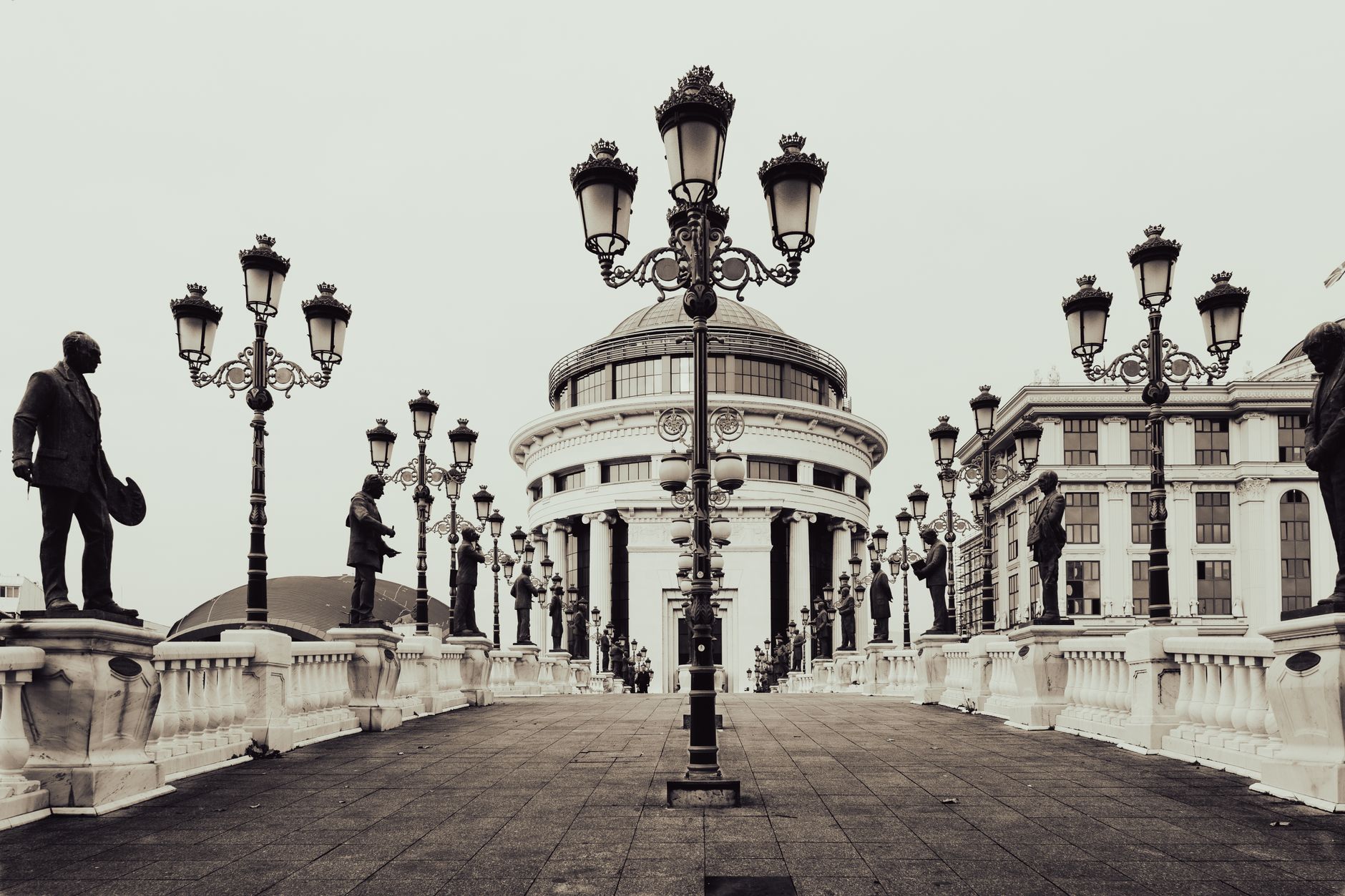
Skopje starts with a shock. One bank of the Vardar looks like a film set designed by a committee that couldn’t agree on the century; the other is a 12th-century Ottoman bazaar where the air is thick with cardamom and coal smoke. North Macedonia’s capital is a city that rebuilt itself twice—once after 1963’s earthquake flattened 80 % of its center, once again after 2010 when the government ordered 130 neoclassical statues dropped on the same streets overnight.

The result is deliberate historical whiplash. You cross the 15th-century Stone Bridge and walk straight into a brand-new triumphal arch, then past a 66-meter cross glowing on the mountain like an airport beacon. Locals call the phenomenon “Skopje 2014—now 2024 and still counting.”

Head north across the river and the marble gives way to cobblestones loud enough to announce tourists in flip-flops two blocks away. Inside the Old Bazaar, copper-beaters still shape coffee pots the way they did for caravans heading to Istanbul; cafés serve Turkish coffee thick enough to stand a spoon in, and the imam’s call slides between washing lines of T-shirts printed with Tito’s face.

Outside the bazaar walls, brutalist university blocks—concrete ribs from the Yugoslav years—stand unaltered, loved only by architecture students and graffiti crews. Between these layers moves a city that refuses to pick a single identity: Balkan, Mediterranean, Ottoman, Yugoslav, and something entirely its own created in the friction.

What Makes This City Special

Ottoman & Neo-Baroque Collision

One minute you're under the 15th-century Daut Pasha Hammam domes, the next you're staring at the 2014 'Warrior on a Horse' — 28 metres of bronze that locals still call Alexander even though the plaque won't. The city itself feels like two centuries arguing across the Vardar.

Colorful Revolution Paint

The 2016 protests left splashes of turquoise and magenta on Skopje 2014's neoclassical façades; the paint is fading now, but the message isn't. Look for the drips above the triumphal arch on Macedonia Square.

Matka Canyon in Morning Light

Fifteen kilometres west, limestone walls rise 300 metres straight from emerald water. Kayak to the 14th-century monastery and you'll have the birds, not the tour buses, for company until about 10 a.m.

Bazaar Breakfast at 7 a.m.

Saturday morning the Old Bazaar smells of cardamom coffee and fresh burek. Shops shutter on Sunday, so the alleyways become echo chambers for your footsteps and the call to prayer from Mustafa Pasha Mosque.

Historical Timeline

A City That Refuses to Stay Quiet

Neolithic hearths, imperial armies, brutalist concrete, and 130 new statues in ten years

castle
c. 6000 BCE

First Farmers Light Hearths

At Tumba Madžari, families stamp clay floors over straw, plant einkorn wheat and keep painted pottery. Their oval huts lie six metres underground today, but the scent of woodsmoke still clings to the excavated daub. The ridge above the Vardar has been coveted ever since.

castle
81–96 CE

Rome Founds Scupi

Emperor Domitian’s veterans measure out insulae on the terrace south of today’s bazaar. A forum of polished limestone goes up beside the military road to Thessaloniki; Latin inscriptions brag about drainage. The settlement will thrive until the earth shrugs.

local_fire_department
518 CE

Earthquake Erases Scupi

At dawn the ground liquefies. Columns snap at the capital, roofs pancake onto mosaics, and survivors abandon the ruins for higher ground. The disaster ends Roman Scupi and seeds the legend that every rebuilding here will be paid in rubble.

castle
527–565 CE

Justinian Rebuilds

The boy from nearby Tauresium, now emperor, sends architects and gold. A new defensive circuit rises on the Kale hill, its brick bands alternating with local stone like a layered cake. Inside the walls, Byzantine administrators collect taxes in solidi stamped with his profile.

swords
c. 1392

Ottomans Enter the Gate

Ottoman sipahis ride through the river gate; the town becomes Üsküp, a sanjak capital. Minarets sprout alongside church bell-towers, and the market smells of saffron and saddle-leather. The Stone Bridge is widened so two loaded camels can pass without touching.

castle
15th C

Stone Bridge Reborn

Sultan Murad’s engineers replace the damaged Roman arch with the 214-metre limestone bridge you still walk at dawn. Its 12 arches count out the hours: the river gurgles louder when the moon drags the Vardar northward. Horse-shoes have scarred every parapet stone.

person
1910

Agnes Is Born

In a two-room house above the market, Drana Bojaxhiu delivers a girl who will become Mother Teresa. The family’s rose-painted icon corner looks onto the same Stone Bridge the child will later cross every morning on her way to the Catholic school. The city teaches her early what need looks like.

swords
1912

Serbian Cannons on the Ridge

Balkan League artillery unseats five centuries of Ottoman rule. Shells chip the minaret of Mustafa Pasha mosque; tricolour flags replace crescents on the Kale walls. Shopkeepers switch from Turkish to Serbian overnight, but the coffee grounds in copper pots taste the same.

swords
1944

Partisans Take the Radio Station

At 03:00 the transmitter on Vodno mountain crackles with the announcement: ‘Skopje is liberated.’ German patrols retreat westward, leaving only graffiti in the train tunnels. The next morning citizens shave beards grown during occupation and repaint shop signs in Cyrillic.

local_fire_department
26 July 1963

The Earthquake Flattens 80%

Twenty seconds, 6.1 magnitude. Entire neighbourhoods sink into dust; the city’s roar is replaced by a high-pitched silence. Survivors mark time by the whistle of the cement factory that still stands—its intact chimney becomes the first aid station’s flagpole.

palette
1965

Kenzo Tange Draws Concrete Wings

The Japanese master walks the rubble, pockets full of broken tiles, and sketches a city of elevated walkways and modular slabs. His City Wall complex rises in raw concrete—part fortress, part spaceship—declaring that Skopje will look forward, not back.

gavel
8 September 1991

Independence Referendum

Voters dip fingers in indelible ink and choose a new flag with a sixteen-point sun. By midnight the parliament building switches from Yugoslav red-blue-white to Macedonian red-yellow. Fireworks echo off Tange’s concrete; older citizens wonder how many constitutions one lifetime can hold.

church
2002

Millennium Cross Erected

A 66-metre steel cross is bolted onto Vodno summit, visible from everywhere at night when its LEDs burn 2,000 watts. Cable cars swing pilgrims up the 1,066-metre slope; the ride takes seven minutes, long enough to notice how the valley’s roofs still show the 1963 grid.

castle
2010–2014

Skopje 2014 Unleashed

Overnight the government installs 130 statues, 29 on a single bridge. A 22-metre warrior on a horse faces north, his sword raised like an invoice for €560 million. Neoclassical façades glue onto socialist blocks; lions sprout from rooftops. The city becomes a stage set nobody auditioned for.

palette
2016

Colorful Revolution Splashes Pink

Protesters armed with buckets of paint turn the new facades into dripping watercolours overnight. The finance ministry ends up pistachio-green; Alexander’s horse wears a tutu of yellow handprints. Police arrest artists for ‘degrading structures of cultural importance’—the court walls still smell of fresh latex.

gavel
12 February 2019

Name Change to North Macedonia

Parliament amends the constitution, adding ‘North’ before every mention of the country. Airport signs flip from ‘Alexander the Great’ to ‘International Airport Skopje’ in 24 hours. The move unlocks NATO accession; outside the assembly, citizens queue for new licence plates that finally fit EU scanners.

schedule
Present Day

Notable Figures

Mother Teresa

1910–1997 · Catholic saint & humanitarian
Born here

Agnes Gonxha Bojaxhiu grew up above the old Catholic cathedral on Macedonia Street; the family house was demolished in the 1963 quake, but the new memorial chapel copies its blue-shuttered façade. She’d recognise the noon church bells, though the riverfront now looks like a theme park she never asked for.

Justinian I

482–565 · Byzantine Emperor
Born near Skopje

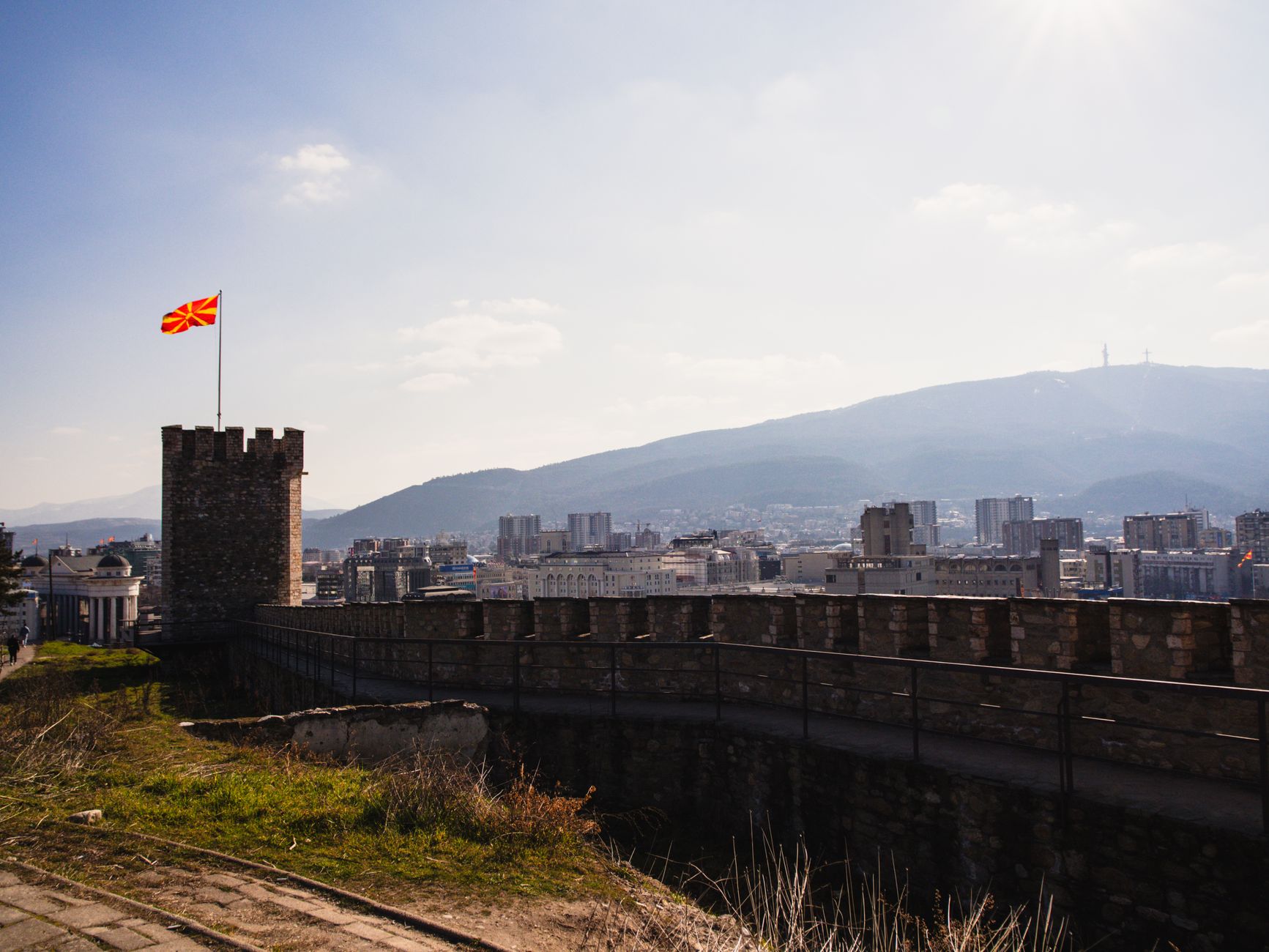
Tauresium, his village ruin 20 km southeast, supplied the stone that rebuilt Constantinople. Walk Kale Fortress at sunset and you’re standing on the same ridge he used to survey the Via Egnatia — the road that moved his laws, his armies, eventually his legacy.

Kenzo Tange

1913–2005 · Japanese architect
Designed 1965 reconstruction masterplan

Tange flew in while rubble still smoked and drew concrete waves on the valley floor. His City Wall still stands — a kilometre of ribbed brutalism locals either love or blame for every wind tunnel. He’d probably retouch the plan, then Instagram the neo-Baroque chaos that landed on top.

Practical Information

flight

Getting There

Skopje International Airport (SKP) sits 17 km east of town. The airport shuttle runs every 30 minutes for MKD 199 (€3.30). By rail, Skopje Train Station links to Belgrade and Thessaloniki; the highway A1 connects Sofia to the north and Thessaloniki to the south.

directions_transit

Getting Around

No metro here — Skopje relies on buses. Single ride is MKD 40; the SkopjeBus app sells 10-ride passes for MKD 250. The Vardar riverfront has a protected cycle path; bikeshare bikes are sparse but rentals exist on Partizanska.

thermostat

Climate & Best Time

Spring (April–May) brings 15–22 °C and lilac scent drifting down from Vodno. Summer peaks at 31 °C and is bone-dry; September settles to a perfect 24 °C. Winter can drop to -3 °C with occasional snow whitening the Kale ramparts.

translate

Language & Currency

Macedonian Cyrillic dominates signs; Albanian is common west of the river. English works in cafés and museums, less so with market vendors. Cash is king in the Bazaar: carry Macedonian denar (MKD); cards are fine in malls and hotels.

shield

Safety

Violent crime is rare; the usual hustle is taxi overcharging at SKP and the main bus station. Insist on the meter or agree MKD 1,500–1,800 before you get in. Pickpockets work crowded Saturday bazaar mornings — keep your phone in front pockets only.

Tips for Visitors

restaurant
Skip English Menus

In the Old Bazaar, walk past places with photo boards. Follow the smell of cumin and paprika two alleys deeper — that clay-lid sizzle is your cue for real tavče gravče.

photo_camera
Dawn on the Bridge

Be on the Stone Bridge at 6 a.m.; the Vardar mirrors gold and you’ll have the 15th-century arch to yourself before tour buses arrive.

hiking
Matka before 10

Catch the 8 a.m. bus to Matka Canyon — kayaks are still available and the limestone walls glow emerald without the midday glare.

volume_off
Coffee Ritual

Order Turkish coffee and expect a 45-minute pause. Rushing the waiter is the fastest way to get ignored.

payments
Round-Up Tipping

Rounding the bill to the nearest 50 denars is plenty; 10% only if service wows you. Cash is still king outside hotels.

wb_sunny
Color Spots

Look for 2016 protest paint splashes on Skopje 2014 façades — they’re fading, but the sherbet-pink courthouse wall is still vivid.

Explore the city with a personal guide in your pocket

Your Personal Curator, in Your Pocket.

Audio guides for 1,100+ cities across 96 countries. History, stories, and local insight — offline ready.

smartphone

Audiala App

Available on iOS & Android

download Download Now

Join 50k+ Curators

Frequently Asked

Is Skopje worth visiting? add

Yes, for the collision of eras alone: Ottoman bazaar lanes dumped beside neoclassical kitsch and brutalist concrete. One bridge span takes you from 1461 to 1963 to 2014 in three steps.

How many days in Skopje do you need? add

Two full days covers the bazaar, fortress, Matka Canyon and the controversial statue scavenger hunt. Add a third if you’re an architecture nerd hunting Yugoslav modernism.

Is Skopje safe to walk at night? add

Center and Debar Maalo are lively until midnight; stick to lit streets after that. Pickpocketing beats violent crime — keep your phone off café tables.

What is the cheapest way from Skopje airport to the city? add

Vardar Express shuttle, 180 denars (€3), drops at the bus station in 35 minutes. Taxis start at €25 — insist on the meter or agree €20 flat before you sit.

Can you drink tap water in Skopje? add

Yes, it’s chlorinated and safe. Bring a bottle; public fountains bubble ice-cold in summer and locals use them without a second thought.

When is the Old Bazaar closed? add

Most craft shops shut Sunday, but cafés and grill joints stay open. Saturday morning is prime — spice vendors lay out paprika pyramids and the lanes smell like roasted peppers.

Sources

Last reviewed: