church
Ohrid's lake and churches
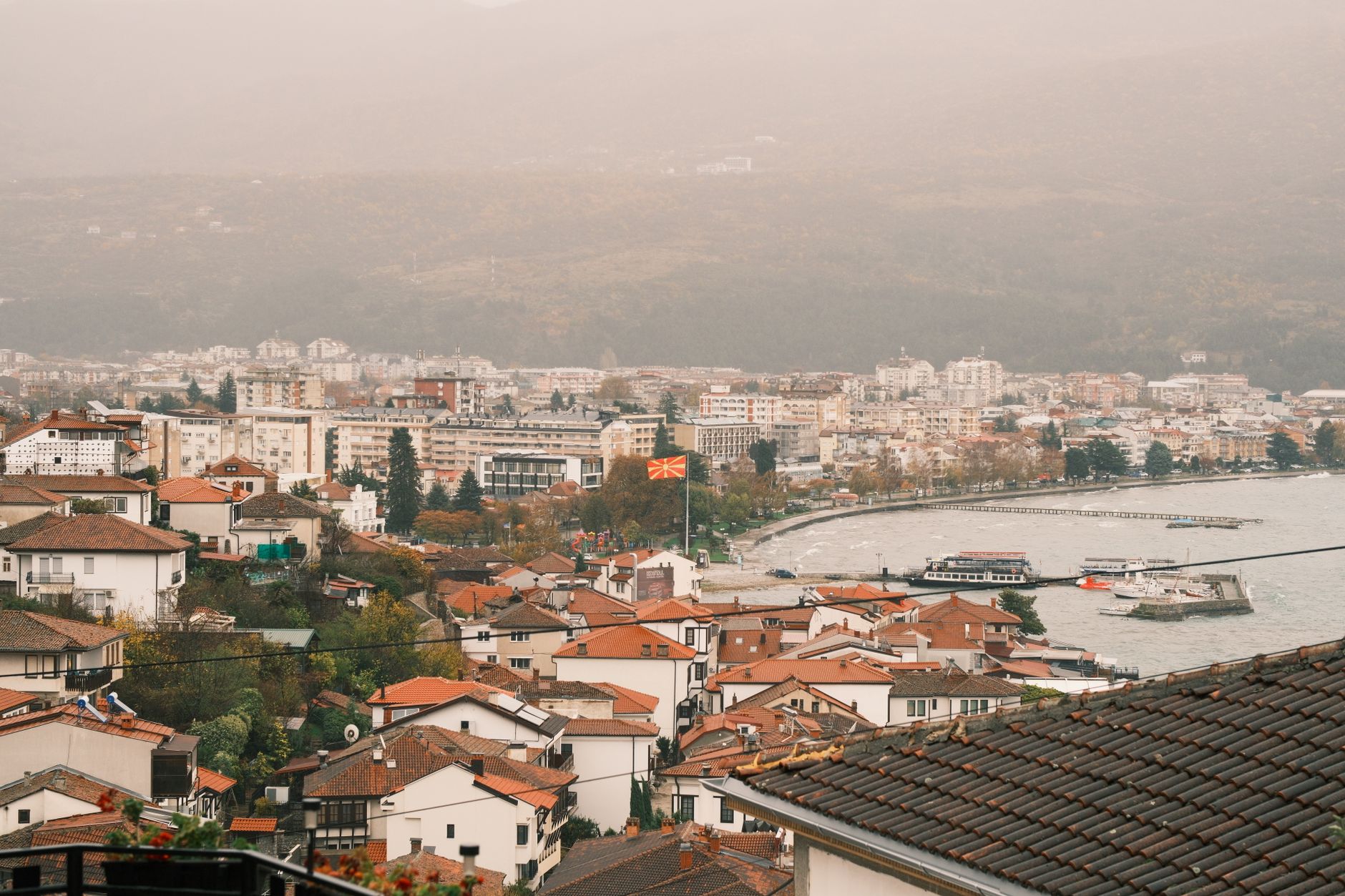
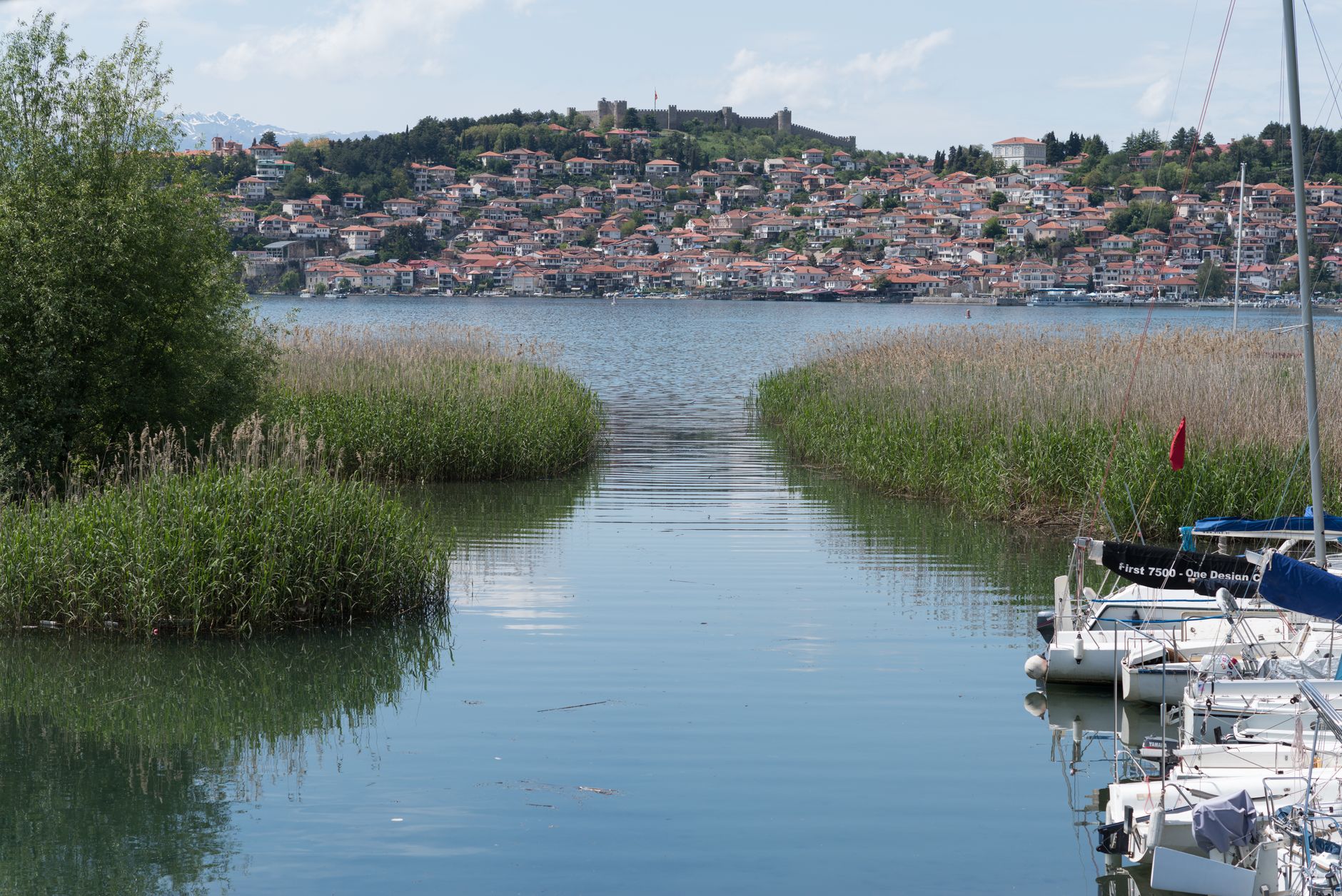
Ohrid pairs one of Europe's oldest lakes with a concentration of medieval churches, fortress walls, and icon traditions that shaped the Orthodox world well beyond the Balkans.
North Macedonia is where a weekend can hold a Roman city, a 3-million-year-old lake, an Ottoman bazaar, and a mountain pass without ever feeling rushed.
 North Macedonia
EntryVisa-free for many EU, UK, US, Canadian and Australian travelers for short stays
NA North Macedonia travel guide starts with a surprise: one of Europe's oldest lakes sits beside Byzantine churches, Ottoman bazaars, and mountain trails that still feel lightly trodden.
North Macedonia packs unusual range into 25,710 square kilometers. In Skopje, the Vardar cuts past the Old Bazaar, Ottoman hammams, and the theatrical neoclassical facades of the Skopje 2014 rebuild. Ninety minutes away, Matka trades traffic for canyon walls, monasteries, and kayak routes below limestone cliffs. Go south and the mood changes again: Ohrid brings lake light, medieval churches, and stone lanes polished by centuries of footsteps, while Bitola keeps its grand consular street, Širok Sokak, and a slower, more elegant rhythm.
This is one of the Balkans' best-value trips, but the appeal is not just price. You come for Roman mosaics at Stobi, painted mosques in Tetovo, ski slopes and hiking trails around Mavrovo, and the vineyard country near Demir Kapija where Vranec thrives in the Vardar heat. Food lands where Slavic, Ottoman, and Mediterranean habits meet: tavce gravce in a clay pot, shopska salad buried under sirenje, rakija before dinner, then wine from Tikves. The distances are short. The shifts in landscape are not.
Bronze Age and Paionian World, c. 1800 BCE-358 BCE
Dawn arrives cold at Kokino, above the Kumanovo valley, and the stone still keeps the shape of the people who sat there nearly four thousand years ago. Around 1800 BCE, a Bronze Age community carved seats and sight-lines into volcanic rhyolite so the summer solstice sun would rise through a notch in the rock with unnerving precision.
Ce que l'on ignore souvent, c'est que this was not some vague cult platform dreamed up later by romantics. It was a working calendar in stone, a way to know when to sow, when to harvest, when the sky itself had kept its appointment.
Long before "Macedonia" became a royal name, these valleys belonged to the Paionians, a people who slip through ancient texts like half-seen shadows. Homer places them among the allies of Troy; later Greek writers could not quite decide whether they were closer to Thracians, Illyrians, or something entirely their own.
That uncertainty matters. North Macedonia begins not with one clean origin story, but with layered peoples, disputed borders, and identities that never fit anyone else's neat categories. When Philip II finally absorbed the Paionian realm around 358 BCE, he did not conquer an empty frontier. He swallowed an older world.
Jovica Stankovski, the archaeologist who brought Kokino to wider attention in 2002, helped turn what locals treated as a picnic hill into one of the country's most haunting ancient sites.
For decades, shepherds used the hollows at Kokino as shelter for cattle without suspecting they were standing inside a Bronze Age observatory.
Macedonian Kingdom and Roman Macedonia, 358 BCE-6th century CE
A wedding ended an empire before the feast had settled. In 336 BCE, at Aegae, Philip II walked into the theatre without his bodyguards, showing the confidence of a king who thought he had already won; Pausanias of Orestis ran at him with a blade, and the man who forged Alexander's future collapsed in ceremonial dress before the whole court.
The scandal was immediate. Pausanias had a grievance, Olympias had ambition, and antiquity never stopped whispering that the queen may have known more than she admitted; the next morning, according to later accounts, she crowned the assassin's corpse with gold.
What belongs to present-day North Macedonia in this story is not simple nationalist mythology but geography, roads, cities, and memory. The ancient kingdom stretched across territories now divided by modern frontiers, and places such as Stobi became the durable inheritance: not a legend, but a city of stone, trade, bishops, merchants, and mosaics.
At Stobi, between today's Vardar corridor and the road south, Roman Macedonia showed its urban polish. A synagogue stood here in the 4th century, later converted into a church, and one donor inscription still gives us a man in full: Claudius Tiberius Polycharmos, also called Achyrios, wealthy enough to fund the building and practical enough to reserve the upper floor for his own household. That, too, is history. Piety, yes. Real estate, also.
Olympias of Epirus hovers over this era like a silk curtain hiding a dagger: mother, queen, strategist, and one of antiquity's least domesticated women.
One ancient tradition claims Olympias honored Philip's killer after the assassination, a gesture so theatrical that it has disturbed historians for more than two millennia.
Slavic Christianity and Samuel's Realm, 9th century-1018
A manuscript, a lake, a political exile: that is how one of the great cultural chapters of the Balkans begins. In 886, Clement arrived in Ohrid with the mission of turning Slavic speech into liturgy, teaching, and identity after the disciples of Cyril and Methodius were pushed out of Moravia.
What rose here was not merely a monastery school but a linguistic revolution. At Plaošnik, above the water, Clement trained priests and teachers by the thousand, and the script that would become Cyrillic found one of its decisive homes in this western corner of the Balkans.
Then came Samuel, who made Ohrid the capital of a powerful medieval realm and turned the city into both fortress and court. His story does not end in triumph but in one of the most terrible scenes of the Middle Ages: after the Battle of Kleidion in 1014, Byzantine emperor Basil II ordered thousands of Samuel's captured soldiers blinded, leaving every hundredth man with one eye to guide the others home.
When the broken column reached Samuel, the sight is said to have shattered him. He died two days later, on 6 October 1014, and whether every number in the chronicles can be trusted or not, the image survived because it feels true to the age: empire, faith, and cruelty marching together down the road to Ohrid.
And yet Ohrid outlived them all. Saints Clement and Naum gave the region a spiritual prestige that no battlefield could erase, which is why the city remained a center of worship, manuscript culture, and memory long after Samuel's crown was dust.
Saint Clement of Ohrid was not a marble saint but a teacher with an administrative genius, the rare holy man who could shape both souls and institutions.
At the monastery of Saint Naum near Ohrid, locals still press an ear to the saint's tomb because tradition says his heartbeat can be heard through the stone.
Ottoman Centuries and the Balkan Awakening, 14th century-1912
Walk into the Old Bazaar of Skopje early, before the shops fully open, and the empire is still there in the geometry of the lanes. The Ottomans did not arrive as a passing episode; from the late 14th century onward, they remade the towns of this land with mosques, hans, hammams, bridges, guild quarters, and a new social order that left marks still visible in Skopje, Tetovo, and Bitola.
Bitola became one of the great Ottoman cities of European Turkey, a consular town where diplomats, merchants, officers, and schemers crossed paths under polished ceilings and tobacco smoke. Tetovo acquired one of the most improbable painted monuments in the Balkans, the Šarena Džamija, whose floral interior refuses the usual austerity and feels instead like someone embroidered a prayer into architecture.
Ce que l'on ignore souvent, c'est que the 19th century here was not only about rebellion against Istanbul. It was also about schools, alphabets, churches, rival propaganda from Sofia, Athens, and Belgrade, and the stubborn question of who the Slavic Christians of this region believed themselves to be.
That question turned intimate, not abstract. Teachers became activists, priests became political actors, and revolution moved through letters, cellars, and provincial rooms rather than only through battlefields. By the time the Ilinden Uprising broke out in 1903, with its brief Krusevo Republic, the region had become one of the most emotionally overburdened corners of the Balkans: every village claimed by memory, every language heard as a political argument.
The Ottoman order did not collapse in a single dramatic curtain fall. It frayed, negotiated, and bled. But when it finally gave way in the Balkan Wars, the people of these towns inherited not freedom alone, but a century of unresolved promises.
Mustafa Kemal Atatürk studied at the military school in Bitola, where a future founder of modern Turkey absorbed discipline in a city that still smelled of empire.
The Painted Mosque in Tetovo was reportedly financed in part by two sisters, an unusual detail in Ottoman architectural patronage and exactly the sort of footnote that changes how one sees a monument.
Yugoslavia, Earthquake, and Independence, 1913-1991 and beyond
Skopje woke on 26 July 1963 to a city breaking apart at 5:17 in the morning. The earthquake killed more than a thousand people, injured several thousand more, and destroyed or damaged so much of the capital that the disaster became a hinge in modern Macedonian history.
The rebuilding was international and oddly intimate. Architects, planners, and relief teams arrived from across the world; Kenzo Tange reimagined parts of the city, Yugoslavia presented reconstruction as a socialist act of solidarity, and a broken provincial capital became a laboratory for modern urban ambition.
But the deeper political transformation had begun earlier, in 1944, when socialist Macedonia was constituted within federal Yugoslavia. This was the decisive moment in which Macedonian statehood, language standardization, and institutional identity were anchored in law rather than only in aspiration.
Independence in 1991 came without the scale of bloodshed seen elsewhere in Yugoslavia, which is no small miracle. Yet peace did not mean simplicity: disputes with Greece over the country's name, tensions between Macedonian and Albanian communities, and the armed conflict of 2001 all forced the young state to negotiate what kind of country it would actually be.
Then came the Prespa Agreement of 2018, and the name North Macedonia in 2019. Some heard compromise, others humiliation, others maturity. History rarely grants cleaner options. It simply asks what a nation is prepared to pay in order to move into its next chapter.
Kiro Gligorov, the republic's first president, had the dry patience of a banker and the historical burden of a man asked to invent calm in the Balkans.
A stopped clock from the 1963 Skopje earthquake, frozen at 5:17, became one of the city's most eloquent relics because no speech could say the hour more clearly.
Macedonian conversation does not advance in lines. It gathers, loops, presses its forehead to yours, then slips a small word under the door and waits for you to understand. You hear "ajde" in Skopje at bus stops, in Ohrid from boatmen, in Tetovo between two old men arguing over nothing and therefore over everything; one syllable, ten meanings, a whole social weather report.
Then comes "bre," which is not a word so much as a hand on the sleeve. It can scold, console, tease, summon. Foreigners look for dictionary entries. A pity. North Macedonia keeps some of its intelligence in particles too small for lexicographers and too alive for tidy translation.
I have a weakness for "merak." The Balkans share it, yes, but here it feels house-trained, seated properly at the table, napkin on its knees. It means taking pains for pleasure: slow coffee, exact peppers, bread torn by hand, the stubborn refusal to hurry when hurry would be an insult to the thing itself.
This is why language here tastes of hospitality before it reaches grammar. Macedonian carries Slavic bone, Ottoman perfume, neighborhood irony. In the Old Bazaar of Skopje, a sentence can cross three empires before the coffee cools.
North Macedonia believes in clay pots more than some countries believe in constitutions. Tavce gravce arrives with its own authority, beans baked until the top catches and darkens, the surface almost scolded by heat, the middle still tender enough to collapse against bread. You do not attack such a dish. You receive it.
Ajvar is less a condiment than an autumn campaign. Whole neighborhoods smell of red peppers blistering over open fire, and the air itself becomes edible. Families in Veles and Strumica make quantities fit for siege warfare, because winter is long and memory needs a jar.
The table begins before the meal admits it has begun. Meze appears, then rakija, then the salad with its hill of grated sirenje, then another plate nobody announced. A country is a table set for strangers.
What seduces me most is the absence of theatricality. In Bitola, in Krusevo, in little dining rooms along the road to Demir Kapija, food is not asked to perform identity; it simply carries it with complete confidence. The pepper, the bean, the cheese, the grape know exactly what they are doing.
Literature in North Macedonia has the unusual dignity of having had to insist on its own existence. Blaze Koneski did not merely write poems; he helped give modern Macedonian its public spine, which is a different order of labor altogether. When a language has had to defend its right to stand in daylight, every noun acquires posture.
This may explain the peculiar gravity of Macedonian prose. Even when it speaks of villages, kitchens, weather, the sentence carries historical pressure, as if somebody had once tried to confiscate its vowels. Slavko Janevski understood that nations are not made only from flags and victories but from mud, pagan residue, gossip, loss.
And then there is Ohrid, which turns literature into topography. Clement and Naum made this lakeside city a place where script itself became an event, where teaching the alphabet was close to founding a civilization. One does not look at Cyrillic here as a neutral instrument. One looks at it as architecture for the soul.
I like countries where letters matter physically. In North Macedonia, they do. The script on a church wall, a street sign in Skopje, a grave inscription near Stobi: each one says the same thing with perfect calm. We were here, and we named ourselves.
Hospitality in North Macedonia is neither decorative nor timid. It comes toward you carrying coffee, bread, insistence. Refusing the first offer may be forgiven as foreign confusion; refusing the second begins to look like a defect of character.
The choreography is exact. You sit. You accept. You do not behave as though five minutes are the natural unit of human contact, because here that would count as a moral failing disguised as efficiency. The host asks if you have eaten, which is not always a question and should not be answered like one.
Age still organizes the room. Elders receive the denser forms of respect, peers relax into banter, children circulate between both worlds learning the script. Watch a family table in Tetovo or a terrace in Bitola and you will see deference without stiffness, warmth without confessional excess.
What I admire is the serious treatment of guests. To be welcomed is to be absorbed, temporarily but completely, into the household rhythm. You are not entertained. You are annexed.
Religion in North Macedonia is audible before it is visible. Bells from an Orthodox church, the call to prayer in Tetovo, candle wax softening in a chapel above Ohrid, all of it entering the same air without asking permission. The country does not present faith as an abstraction. It gives you smoke, stone, water, repetition.
Ohrid is the obvious catechism. Saint Sophia, Plaosnik, Sveti Naum: each site teaches the same lesson in a different accent, namely that devotion likes beauty and has no intention of apologizing for it. At Sveti Naum, local tradition says you can hear the saint's heartbeat if you place your ear against the tomb. Skeptics mention acoustics. Pilgrims keep listening.
Then the map opens. Painted monasteries above valleys, mosques with quiet courtyards in Skopje, the Arabati Baba Tekke in Tetovo with its Bektashi memory, a gentler and more porous form of sanctity. North Macedonia has had too many empires to mistake uniformity for peace.
The result is not a slogan about coexistence. It is more intimate than that, and less neat. Faith here is a daily craft, carried in candles, calendars, feast days, fasts, grave visits, saint names, and the ordinary conviction that the invisible should be given a room.
Skopje is what happens when history loses patience and starts building all at once. Ottoman caravanserais, socialist blocks, heroic neoclassical fantasies from the Skopje 2014 project, the old stone bridge over the Vardar pretending this is all normal. It is not normal. That is its charm, and also its warning.
The city teaches you that architecture can be an argument rather than a style. Walk from the Old Bazaar to Macedonia Square and you pass from hammam logic to imperial theater in minutes, then into the stern clarity of post-earthquake modernism, because the 1963 earthquake killed more than a thousand people and forced the city to imagine itself again. Kenzo Tange left traces here. So did vanity.
Elsewhere, the country changes register without losing nerve. In Ohrid, churches perch above water like concentrated thought. In Kratovo, stone bridges and towers make the town look engineered by someone who distrusted flat land. At Matka, monasteries cling to canyon walls with the unreasonable confidence of swallows.
I distrust places that resolve too neatly. North Macedonia refuses. Its buildings remember Rome at Stobi, Byzantium in Ohrid, the Ottomans in Skopje and Bitola, Yugoslav modernism in concrete silhouettes across the country. The street keeps all its former names under the current one.
Ohrid pairs one of Europe's oldest lakes with a concentration of medieval churches, fortress walls, and icon traditions that shaped the Orthodox world well beyond the Balkans.
From the Roman ruins of Stobi to the Ottoman fabric of Skopje and the nationalist memory of Krusevo, the country reads like a compressed history of the southern Balkans.
Mavrovo, Matka, and the ranges around Pelister and Sar Planina give you ski slopes, glacial lakes, canyon kayaking, and long hikes within easy reach of the main cities.
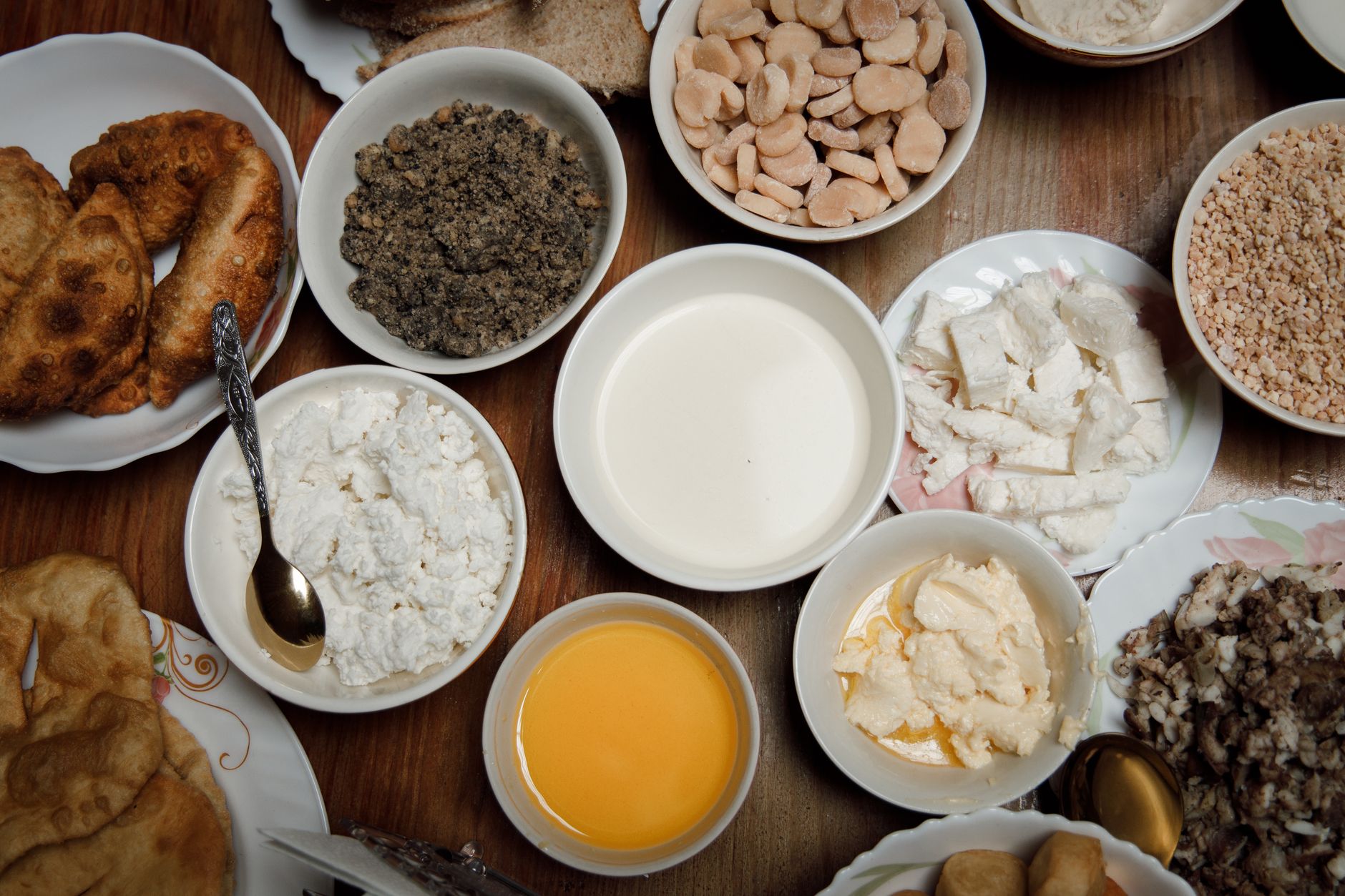
Expect clay-pot beans, wood-fired pastries, grilled meats, lake fish, ajvar, and a table culture that takes its time. Tikves wines and rakija do the rest.
North Macedonia remains one of Europe's more affordable countries for rooms, meals, and transport, which makes it easy to combine city breaks, nature, and heritage in one trip.
You can move from Tetovo's painted mosque to Bitola's belle-epoque boulevard or from Skopje's bazaars to Demir Kapija's vineyards in a few hours. Few countries change scene this quickly.
12 cities — start with the ones we'd send you to first.
A capital that rebuilt itself in marble and bronze after a 1963 earthquake leveled it, then doubled down with a baroque fantasy of statues and triumphal arches that its own citizens argue about daily.
A lakeside town of 42 medieval churches above water older than the Alps, where Byzantine frescoes peel in the humidity and fishermen still pull endemic trout from 288 metres of depth.
The Ottoman empire's last European consul general left Bitola in 1912, and Širok Sokak — its café-lined pedestrian boulevard — still carries the faint posture of a city that once mattered to five empires simultaneously.
The Šarena Džamija (Painted Mosque) on the Pena riverbank is decorated in floral frescoes so dense they look embroidered, a 15th-century building that makes most European churches feel monochrome.
Carnival here runs for three weeks every February, the masks are grotesque and handmade, and the surrounding valley produces the peppers that become half the ajvar on Balkan tables.
Birthplace of Kočo Racin, the poet who wrote the first major work in modern literary Macedonian, in a tobacco town stacked on a gorge where the Vardar narrows and the 19th-century čaršija (bazaar quarter) is largely unre
Built inside the crater of an extinct volcano, its medieval towers were raised by rival merchant families who communicated across the gorge by bridge — a miniature San Gimignano that almost no one outside the Balkans has
The lake swallowed a village church in the 1950s when the dam was built, and on clear days the bell tower still breaks the surface — a drowned landmark visible from the ski slopes above.
Fourteen kilometres from Skopje's ring road, the Treska River carved a canyon deep enough to hide monasteries in its cliff faces and cave systems that speleologists have not yet fully mapped.
This is the country's busiest collision of eras: Ottoman courtyards, socialist blocks, and the theatrical marble overload of the Skopje 2014 project. Base yourself in Skopje, but don't stay put; Matka and Tetovo sit close enough to turn the capital into something wider and stranger.
The southwest moves at lake speed. Ohrid carries the headlines, fairly, but the region gets richer when you pair its Byzantine churches and waterfront light with mountain detours toward Mavrovo and the high roads around Krusevo.
Bitola feels outward-looking in a way few inland Balkan cities do, thanks to its consular history, broad pedestrian axis, and proximity to ancient and mountain landscapes. This is a strong region for travelers who like cities with café life but also want Roman layers and a quick escape uphill.
Central North Macedonia is less photogenic at first glance and more rewarding on the second. Around Veles, Stobi, and Demir Kapija, the country narrows into a corridor of river traffic, archaeological sites, and vineyards where a day can begin with mosaics and end with Vranec in the glass.
The east receives fewer foreign visitors, which is part of the point. Strumica gives you a practical base for monasteries, markets, and borderland food culture, while Kratovo offers one of the country's most unusual urban settings, built into an extinct volcanic crater and stitched together by stone bridges.
From Bronze Age observatories to a modern European republic
On a ridge above today's Kumanovo, a Bronze Age community shapes stone markers and seats aligned with the sun. The site shows that ritual, farming, and astronomy were already bound together in this landscape.
Ancient tradition places the Paionians among the allies of Troy, proof that the peoples of the Vardar basin were known long before later kingdoms claimed them. Their identity would remain tantalizingly hard to pin down.
Philip of Macedon absorbs the Paionian realm and secures the northern approaches to his kingdom. The conquest pulls these valleys more firmly into the orbit of Macedonian royal power.
At his daughter's wedding, the king is stabbed before the court in one of antiquity's most theatrical murders. The shock clears the path for Alexander, while suspicion clings to Olympias and palace intrigue.
After the Roman victory at Pydna, the Macedonian kingdom collapses as an independent great power. The region moves, step by step, into the Roman imperial system.
At the junction of important roads and river routes, Stobi grows into one of the key urban centers of inland Macedonia. Its position will make it thrive under Rome and later Christian rule.
Jewish life at Stobi leaves one of the most vivid inscriptions in the country, naming the benefactor Claudius Tiberius Polycharmos. The building later becomes a church, a stone record of changing worlds.
One of the great seismic shocks of late antiquity destroys the Roman city of Scupi. The disaster helps reorder settlement in the region and belongs to a long Macedonian history of cities broken and rebuilt.
Expelled from Moravia with the wider Slavic mission, Clement begins teaching around Ohrid. His work helps turn the city into a major center of Slavic Christian learning.
On the southern edge of Lake Ohrid, Naum establishes the monastery that still bears his name. It becomes one of the country's most enduring sites of pilgrimage and memory.
Byzantine emperor Basil II defeats Tsar Samuel and blinds thousands of prisoners, sending them back in a ghastly procession. Samuel dies soon after, and the story becomes one of the defining tragedies of the medieval Balkans.
With Samuel's state broken, Byzantine rule returns, though Ohrid keeps immense ecclesiastical importance. Political defeat does not erase the city's spiritual authority.
Ottoman control over Skopje ushers in centuries of new urban forms, markets, mosques, baths, and administrative routines. The Old Bazaar still carries that inheritance in its layout and texture.
What will become Tetovo's most dazzling monument emerges in the Ottoman era, later enriched with painted decoration unlike almost anything else in the region. Faith here arrives in color, not austerity.
Foreign consulates, military schools, merchants, and ambitious families make Bitola one of the Ottoman Empire's most polished provincial cities. Its boulevards and façades still remember that cosmopolitan age.
Revolutionaries launch an insurrection against Ottoman rule, and Krusevo briefly becomes the seat of an improvised republic. The revolt is crushed, but its emotional force shapes Macedonian political memory for generations.
Delcev is killed months before Ilinden, leaving the movement without its most agile organizer. Death turns him into a national martyr with a resonance no ordinary victory could have produced.
After more than five centuries, Ottoman authority collapses in most of the region. Liberation comes tangled with partition, competing claims, and a new round of uncertainty over borders and identity.
In the final phase of the Second World War, socialist Macedonia is established as one of the federal units of Yugoslavia. This gives Macedonian statehood and language a new institutional foundation.
At 5:17 in the morning, an earthquake kills more than a thousand people and devastates Skopje. The rebuilding transforms the city into a modernist experiment with international support.
As Yugoslavia unravels, the republic chooses independence by referendum. North Macedonia begins statehood on its own, with less bloodshed than many neighbors but no shortage of unresolved questions.
Armed clashes between security forces and Albanian insurgents push the country to the brink. The Ohrid Framework Agreement rewrites the balance of rights and power-sharing, shaping political life ever since.
An agreement with Greece opens the way to a new diplomatic chapter after decades of tension. It is a compromise that divides opinion at home even as it clears blocked international paths.
The constitutional name change takes effect, closing one chapter and opening another. A state founded in argument chooses reinvention once again, which is perhaps its oldest historical habit.
Bronze Age and Paionian World
Jovica Stankovski, the archaeologist who brought Kokino to wider attention in 2002, helped turn what locals treated as a picnic hill into one of the country's most haunting ancient sites.
Dawn arrives cold at Kokino, above the Kumanovo valley, and the stone still keeps the shape of the people who sat there nearly four thousand years ago. Around 1800 BCE, a Bronze Age community carved seats and sight-lines into volcanic rhyolite so the summer solstice sun would rise through a notch in the rock with unnerving precision.
Ce que l'on ignore souvent, c'est que this was not some vague cult platform dreamed up later by romantics. It was a working calendar in stone, a way to know when to sow, when to harvest, when the sky itself had kept its appointment.
Long before "Macedonia" became a royal name, these valleys belonged to the Paionians, a people who slip through ancient texts like half-seen shadows. Homer places them among the allies of Troy; later Greek writers could not quite decide whether they were closer to Thracians, Illyrians, or something entirely their own.
That uncertainty matters. North Macedonia begins not with one clean origin story, but with layered peoples, disputed borders, and identities that never fit anyone else's neat categories. When Philip II finally absorbed the Paionian realm around 358 BCE, he did not conquer an empty frontier. He swallowed an older world.
For decades, shepherds used the hollows at Kokino as shelter for cattle without suspecting they were standing inside a Bronze Age observatory.
Macedonian Kingdom and Roman Macedonia
Olympias of Epirus hovers over this era like a silk curtain hiding a dagger: mother, queen, strategist, and one of antiquity's least domesticated women.
A wedding ended an empire before the feast had settled. In 336 BCE, at Aegae, Philip II walked into the theatre without his bodyguards, showing the confidence of a king who thought he had already won; Pausanias of Orestis ran at him with a blade, and the man who forged Alexander's future collapsed in ceremonial dress before the whole court.
The scandal was immediate. Pausanias had a grievance, Olympias had ambition, and antiquity never stopped whispering that the queen may have known more than she admitted; the next morning, according to later accounts, she crowned the assassin's corpse with gold.
What belongs to present-day North Macedonia in this story is not simple nationalist mythology but geography, roads, cities, and memory. The ancient kingdom stretched across territories now divided by modern frontiers, and places such as Stobi became the durable inheritance: not a legend, but a city of stone, trade, bishops, merchants, and mosaics.
At Stobi, between today's Vardar corridor and the road south, Roman Macedonia showed its urban polish. A synagogue stood here in the 4th century, later converted into a church, and one donor inscription still gives us a man in full: Claudius Tiberius Polycharmos, also called Achyrios, wealthy enough to fund the building and practical enough to reserve the upper floor for his own household. That, too, is history. Piety, yes. Real estate, also.
One ancient tradition claims Olympias honored Philip's killer after the assassination, a gesture so theatrical that it has disturbed historians for more than two millennia.
Slavic Christianity and Samuel's Realm
Saint Clement of Ohrid was not a marble saint but a teacher with an administrative genius, the rare holy man who could shape both souls and institutions.
A manuscript, a lake, a political exile: that is how one of the great cultural chapters of the Balkans begins. In 886, Clement arrived in Ohrid with the mission of turning Slavic speech into liturgy, teaching, and identity after the disciples of Cyril and Methodius were pushed out of Moravia.
What rose here was not merely a monastery school but a linguistic revolution. At Plaošnik, above the water, Clement trained priests and teachers by the thousand, and the script that would become Cyrillic found one of its decisive homes in this western corner of the Balkans.
Then came Samuel, who made Ohrid the capital of a powerful medieval realm and turned the city into both fortress and court. His story does not end in triumph but in one of the most terrible scenes of the Middle Ages: after the Battle of Kleidion in 1014, Byzantine emperor Basil II ordered thousands of Samuel's captured soldiers blinded, leaving every hundredth man with one eye to guide the others home.
When the broken column reached Samuel, the sight is said to have shattered him. He died two days later, on 6 October 1014, and whether every number in the chronicles can be trusted or not, the image survived because it feels true to the age: empire, faith, and cruelty marching together down the road to Ohrid.
And yet Ohrid outlived them all. Saints Clement and Naum gave the region a spiritual prestige that no battlefield could erase, which is why the city remained a center of worship, manuscript culture, and memory long after Samuel's crown was dust.
At the monastery of Saint Naum near Ohrid, locals still press an ear to the saint's tomb because tradition says his heartbeat can be heard through the stone.
Ottoman Centuries and the Balkan Awakening
Mustafa Kemal Atatürk studied at the military school in Bitola, where a future founder of modern Turkey absorbed discipline in a city that still smelled of empire.
Walk into the Old Bazaar of Skopje early, before the shops fully open, and the empire is still there in the geometry of the lanes. The Ottomans did not arrive as a passing episode; from the late 14th century onward, they remade the towns of this land with mosques, hans, hammams, bridges, guild quarters, and a new social order that left marks still visible in Skopje, Tetovo, and Bitola.
Bitola became one of the great Ottoman cities of European Turkey, a consular town where diplomats, merchants, officers, and schemers crossed paths under polished ceilings and tobacco smoke. Tetovo acquired one of the most improbable painted monuments in the Balkans, the Šarena Džamija, whose floral interior refuses the usual austerity and feels instead like someone embroidered a prayer into architecture.
Ce que l'on ignore souvent, c'est que the 19th century here was not only about rebellion against Istanbul. It was also about schools, alphabets, churches, rival propaganda from Sofia, Athens, and Belgrade, and the stubborn question of who the Slavic Christians of this region believed themselves to be.
That question turned intimate, not abstract. Teachers became activists, priests became political actors, and revolution moved through letters, cellars, and provincial rooms rather than only through battlefields. By the time the Ilinden Uprising broke out in 1903, with its brief Krusevo Republic, the region had become one of the most emotionally overburdened corners of the Balkans: every village claimed by memory, every language heard as a political argument.
The Ottoman order did not collapse in a single dramatic curtain fall. It frayed, negotiated, and bled. But when it finally gave way in the Balkan Wars, the people of these towns inherited not freedom alone, but a century of unresolved promises.
The Painted Mosque in Tetovo was reportedly financed in part by two sisters, an unusual detail in Ottoman architectural patronage and exactly the sort of footnote that changes how one sees a monument.
Yugoslavia, Earthquake, and Independence
Kiro Gligorov, the republic's first president, had the dry patience of a banker and the historical burden of a man asked to invent calm in the Balkans.
Skopje woke on 26 July 1963 to a city breaking apart at 5:17 in the morning. The earthquake killed more than a thousand people, injured several thousand more, and destroyed or damaged so much of the capital that the disaster became a hinge in modern Macedonian history.
The rebuilding was international and oddly intimate. Architects, planners, and relief teams arrived from across the world; Kenzo Tange reimagined parts of the city, Yugoslavia presented reconstruction as a socialist act of solidarity, and a broken provincial capital became a laboratory for modern urban ambition.
But the deeper political transformation had begun earlier, in 1944, when socialist Macedonia was constituted within federal Yugoslavia. This was the decisive moment in which Macedonian statehood, language standardization, and institutional identity were anchored in law rather than only in aspiration.
Independence in 1991 came without the scale of bloodshed seen elsewhere in Yugoslavia, which is no small miracle. Yet peace did not mean simplicity: disputes with Greece over the country's name, tensions between Macedonian and Albanian communities, and the armed conflict of 2001 all forced the young state to negotiate what kind of country it would actually be.
Then came the Prespa Agreement of 2018, and the name North Macedonia in 2019. Some heard compromise, others humiliation, others maturity. History rarely grants cleaner options. It simply asks what a nation is prepared to pay in order to move into its next chapter.
A stopped clock from the 1963 Skopje earthquake, frozen at 5:17, became one of the city's most eloquent relics because no speech could say the hour more clearly.
Macedonian conversation does not advance in lines. It gathers, loops, presses its forehead to yours, then slips a small word under the door and waits for you to understand. You hear "ajde" in Skopje at bus stops, in Ohrid from boatmen, in Tetovo between two old men arguing over nothing and therefore over everything; one syllable, ten meanings, a whole social weather report.
Then comes "bre," which is not a word so much as a hand on the sleeve. It can scold, console, tease, summon. Foreigners look for dictionary entries. A pity. North Macedonia keeps some of its intelligence in particles too small for lexicographers and too alive for tidy translation.
I have a weakness for "merak." The Balkans share it, yes, but here it feels house-trained, seated properly at the table, napkin on its knees. It means taking pains for pleasure: slow coffee, exact peppers, bread torn by hand, the stubborn refusal to hurry when hurry would be an insult to the thing itself.
This is why language here tastes of hospitality before it reaches grammar. Macedonian carries Slavic bone, Ottoman perfume, neighborhood irony. In the Old Bazaar of Skopje, a sentence can cross three empires before the coffee cools.
North Macedonia believes in clay pots more than some countries believe in constitutions. Tavce gravce arrives with its own authority, beans baked until the top catches and darkens, the surface almost scolded by heat, the middle still tender enough to collapse against bread. You do not attack such a dish. You receive it.
Ajvar is less a condiment than an autumn campaign. Whole neighborhoods smell of red peppers blistering over open fire, and the air itself becomes edible. Families in Veles and Strumica make quantities fit for siege warfare, because winter is long and memory needs a jar.
The table begins before the meal admits it has begun. Meze appears, then rakija, then the salad with its hill of grated sirenje, then another plate nobody announced. A country is a table set for strangers.
What seduces me most is the absence of theatricality. In Bitola, in Krusevo, in little dining rooms along the road to Demir Kapija, food is not asked to perform identity; it simply carries it with complete confidence. The pepper, the bean, the cheese, the grape know exactly what they are doing.
Literature in North Macedonia has the unusual dignity of having had to insist on its own existence. Blaze Koneski did not merely write poems; he helped give modern Macedonian its public spine, which is a different order of labor altogether. When a language has had to defend its right to stand in daylight, every noun acquires posture.
This may explain the peculiar gravity of Macedonian prose. Even when it speaks of villages, kitchens, weather, the sentence carries historical pressure, as if somebody had once tried to confiscate its vowels. Slavko Janevski understood that nations are not made only from flags and victories but from mud, pagan residue, gossip, loss.
And then there is Ohrid, which turns literature into topography. Clement and Naum made this lakeside city a place where script itself became an event, where teaching the alphabet was close to founding a civilization. One does not look at Cyrillic here as a neutral instrument. One looks at it as architecture for the soul.
I like countries where letters matter physically. In North Macedonia, they do. The script on a church wall, a street sign in Skopje, a grave inscription near Stobi: each one says the same thing with perfect calm. We were here, and we named ourselves.
Hospitality in North Macedonia is neither decorative nor timid. It comes toward you carrying coffee, bread, insistence. Refusing the first offer may be forgiven as foreign confusion; refusing the second begins to look like a defect of character.
The choreography is exact. You sit. You accept. You do not behave as though five minutes are the natural unit of human contact, because here that would count as a moral failing disguised as efficiency. The host asks if you have eaten, which is not always a question and should not be answered like one.
Age still organizes the room. Elders receive the denser forms of respect, peers relax into banter, children circulate between both worlds learning the script. Watch a family table in Tetovo or a terrace in Bitola and you will see deference without stiffness, warmth without confessional excess.
What I admire is the serious treatment of guests. To be welcomed is to be absorbed, temporarily but completely, into the household rhythm. You are not entertained. You are annexed.
Religion in North Macedonia is audible before it is visible. Bells from an Orthodox church, the call to prayer in Tetovo, candle wax softening in a chapel above Ohrid, all of it entering the same air without asking permission. The country does not present faith as an abstraction. It gives you smoke, stone, water, repetition.
Ohrid is the obvious catechism. Saint Sophia, Plaosnik, Sveti Naum: each site teaches the same lesson in a different accent, namely that devotion likes beauty and has no intention of apologizing for it. At Sveti Naum, local tradition says you can hear the saint's heartbeat if you place your ear against the tomb. Skeptics mention acoustics. Pilgrims keep listening.
Then the map opens. Painted monasteries above valleys, mosques with quiet courtyards in Skopje, the Arabati Baba Tekke in Tetovo with its Bektashi memory, a gentler and more porous form of sanctity. North Macedonia has had too many empires to mistake uniformity for peace.
The result is not a slogan about coexistence. It is more intimate than that, and less neat. Faith here is a daily craft, carried in candles, calendars, feast days, fasts, grave visits, saint names, and the ordinary conviction that the invisible should be given a room.
Skopje is what happens when history loses patience and starts building all at once. Ottoman caravanserais, socialist blocks, heroic neoclassical fantasies from the Skopje 2014 project, the old stone bridge over the Vardar pretending this is all normal. It is not normal. That is its charm, and also its warning.
The city teaches you that architecture can be an argument rather than a style. Walk from the Old Bazaar to Macedonia Square and you pass from hammam logic to imperial theater in minutes, then into the stern clarity of post-earthquake modernism, because the 1963 earthquake killed more than a thousand people and forced the city to imagine itself again. Kenzo Tange left traces here. So did vanity.
Elsewhere, the country changes register without losing nerve. In Ohrid, churches perch above water like concentrated thought. In Kratovo, stone bridges and towers make the town look engineered by someone who distrusted flat land. At Matka, monasteries cling to canyon walls with the unreasonable confidence of swallows.
I distrust places that resolve too neatly. North Macedonia refuses. Its buildings remember Rome at Stobi, Byzantium in Ohrid, the Ottomans in Skopje and Bitola, Yugoslav modernism in concrete silhouettes across the country. The street keeps all its former names under the current one.
Clement matters here because he turned Ohrid into a workshop of language, faith, and education rather than a remote monastery town. Behind the halo was an organizer of astonishing stamina, credited with training thousands and helping give the Slavic world one of its enduring written traditions.
Naum chose a promontory above Lake Ohrid and gave it the sort of afterlife rulers envy. Pilgrims still lean toward his tomb to listen for the saint's heartbeat, proof that in North Macedonia devotion often survives because it is tied to a place you can touch.
Samuel made Ohrid the seat of a powerful realm, but history remembers him most vividly at the moment of collapse. The sight of his blinded soldiers returning after Kleidion became one of the great tragic images of Balkan memory, and it still hangs over the fortress above the lake.
She was born Anjezë Gonxhe Bojaxhiu in Skopje, in a city then still layered with Ottoman memory and Balkan commerce. The future saint of Calcutta began as the daughter of an Albanian Catholic family on these streets, which gives Skopje one of the most unlikely spiritual genealogies in Europe.
Delcev is not remembered here as a distant bronze patriot but as the restless conspirator of letters, schools, and secret networks. His death a few months before the Ilinden Uprising gave the movement its martyr, which is often more politically durable than a victorious general.
In Krusevo, Karev briefly stood at the head of a republic that lasted barely long enough to become legend. That brevity is precisely why he endures: a revolutionary remembered not for governing long, but for proving that the idea had taken flesh.
Koneski did something less glamorous than war and more lasting than slogans: he gave a state its written voice. His work on the standard Macedonian language turned cultural argument into grammar, dictionary, and schoolroom fact.
Gligorov's gift was composure at a time when the region rewarded theatrics and armed men. North Macedonia emerged from Yugoslavia under his watch with less blood than many feared, which may be the most underrated political achievement in the Balkans of the 1990s.
Bitola claims no small part in his formation. Before he became Ataturk, he was a young cadet in this elegant Ottoman city, learning discipline and modern military thinking in classrooms that belonged to an empire already showing cracks.
This is the fast first-timer route: Ottoman lanes, big-statue absurdity, canyon water, then the painted mosque in Tetovo. You spend more time seeing than moving, and every stop sits within easy reach of the northwest corridor.
Start on the lake in Ohrid, then move through Bitola's consular-era streets, climb to Krusevo's high-altitude history, and finish in Mavrovo for forests, ridgelines, and colder air. It works best for travelers who want churches, mountain roads, and a country that keeps changing tone every two days.
This route follows the country's central spine south and east, where Roman ruins, river towns, wineries, and thermal-country landscapes sit surprisingly close together. Veles, Stobi, Demir Kapija, and Strumica make more sense by road than by brochure, which is exactly why the trip works.
If you have two weeks, don't race. Begin in Kratovo among stone bridges and volcanic terrain, spend real time in Skopje, pause in Veles, then let the final stretch open out in Ohrid, where the lake earns the days you give it.
Lunch arrives. Clay pot lands. Bread tears. Beans yield. Conversation slows.
Peppers char. Skins peel. Jars fill. Families gather. Winter begins in smoke.
Morning counter stop. Pastry burns fingers. Yogurt cools mouth. Standing, eating, leaving.
Small plates spread. Glasses rise. Toasts multiply. Dinner delays itself on purpose.
Late breakfast order. Flatbread steams. Pork glistens. Friends share. Napkins fail.
Tomatoes cut. Cucumbers crunch. Sirenje falls in white drifts. Table opens.
Lake fish grills. Lemon waits. Ohrid evening lengthens. Wine follows water.






North Macedonia is outside both the EU and Schengen, but many visitors enter visa-free. EU citizens can use a valid national ID card, while US, UK, and Australian passport holders can usually stay up to 90 days in a 6-month period; hotels normally handle the required local registration within 48 hours.
The local currency is the Macedonian denar, written MKD or ден. Cards work well in Skopje and Ohrid, but cash still matters in bazaars, village guesthouses, small cafes, and for some taxis, so carry enough for a day or two outside the main cities.
Most travelers arrive through Skopje International Airport, 17 km southeast of the capital, with Ohrid airport serving the lake region in summer and shoulder season. International rail links are the weak point, so cross-border buses and short flights through hubs such as Istanbul, Vienna, Zurich, and Belgrade are usually the practical way in.
Buses do most of the real work here. They connect Skopje, Ohrid, Bitola, Tetovo, Strumica, Veles, and smaller towns far better than the rail network, while a rental car starts making sense if you want Kratovo, Mavrovo, or winery stops around Demir Kapija without watching the clock.
Expect three climates in one small country. Skopje and the Vardar corridor get hot, dry summers and cold winters, Ohrid stays milder thanks to the lake, and mountain areas such as Mavrovo and Pelister can hold snow from November into April.
Mobile coverage is solid on the main travel corridor from Skopje to Veles, Stobi, Demir Kapija, and south toward Bitola and Ohrid. Buy a local SIM or eSIM if you plan to work on the road, because guesthouse Wi-Fi in mountain areas can be fine at breakfast and useless by evening.
North Macedonia is generally easygoing for independent travelers, with petty theft the main nuisance in bus stations, markets, and crowded summer waterfronts. Drive carefully after dark, keep an eye on mountain weather, and use registered taxis or app-based rides in Skopje rather than accepting random offers at the curb.
Keep low-value denar notes for bakeries, market stalls, local buses, and village cafes. A card is useful in Skopje and Ohrid; a 500 or 1,000 MKD note is often more useful elsewhere.
Domestic and international train coverage is thin, and cross-border rail links can be suspended for long stretches. Build your timings around buses or a car, especially if your route includes Mavrovo, Kratovo, or Demir Kapija.
The best-value meals often come at lunch, when grills, taverns, and neighborhood restaurants run through the day's serious cooking. Dinner by the lake or on the main square usually costs more for less character.
In Skopje, agree on the meter or price before the car moves if you are not using an app. At airports and bus stations, ignore anyone offering a ride in the parking lot.
If someone offers coffee in a guesthouse, workshop, or family-run winery, say yes unless you have a real reason not to. The drink matters less than the pause, and rushing it reads badly.
Ohrid fills quickly from June through August, especially on weekends and around local festivals. Reserve lakefront stays early if you want parking, a balcony, or anything with actual shade.
A July afternoon in Skopje can push past 35C, while evenings in Mavrovo or Krusevo can turn cold enough for a fleece. Pack for two seasons, not one.
Explore North Macedonia with a personal guide in your pocket
Audio guides for 1,100+ cities across 96 countries. History, stories, and local insight — offline ready.

Probably not if you hold an EU, US, UK, or Australian passport and you are visiting for tourism. Rules depend on nationality, but many travelers get up to 90 days visa-free; check the North Macedonian foreign ministry before departure and make sure your passport stays valid for at least three months beyond your trip.
Yes, by European standards it is still one of the better-value countries on the continent. Budget travelers can get by on roughly 1,800 to 3,200 MKD a day outside peak summer in Ohrid, while mid-range travel stays comfortable without the kind of damage you would expect in Croatia, Italy, or Austria.
Sometimes, but you should not plan on it. The legal currency is the Macedonian denar, and while some hotels or tourism businesses may quote prices in euros, everyday payments work more smoothly in MKD.
Yes, generally it is a good solo destination with the usual urban precautions. The real issues are petty theft in crowded places, erratic driving, and the extra planning needed if you head into mountain areas without your own transport.
Seven days is a good minimum if you want both city time and the lake. Three days works for Skopje, Matka, and Tetovo, but once you add Ohrid, Bitola, or Mavrovo, a week stops the country from turning into a bus timetable.
They do different jobs. Ohrid is stronger for atmosphere, churches, and slow evenings by the water, while Skopje makes more sense if you want transport links, museums, the Old Bazaar, and easy day trips to Matka or Tetovo.
Yes, on the main routes you can. Buses connect Skopje, Ohrid, Bitola, Tetovo, Strumica, and Veles well enough for independent travel, but a car becomes much more useful for Kratovo, Mavrovo, winery visits, and rural monasteries.
Yes, enough for most travelers in Skopje, Ohrid, and other tourist-facing areas. You will hear less English in smaller towns and among older residents, so learning a few words of Macedonian and carrying cash both make the day easier.
May to June and September to early October are the sweet spots for most routes. Summer is great for swimming in Ohrid but can be brutally hot in the Vardar valley, while winter suits Mavrovo better than it suits a countrywide road trip.
Last reviewed