Lagos
Nigeria Updated Apr 2026
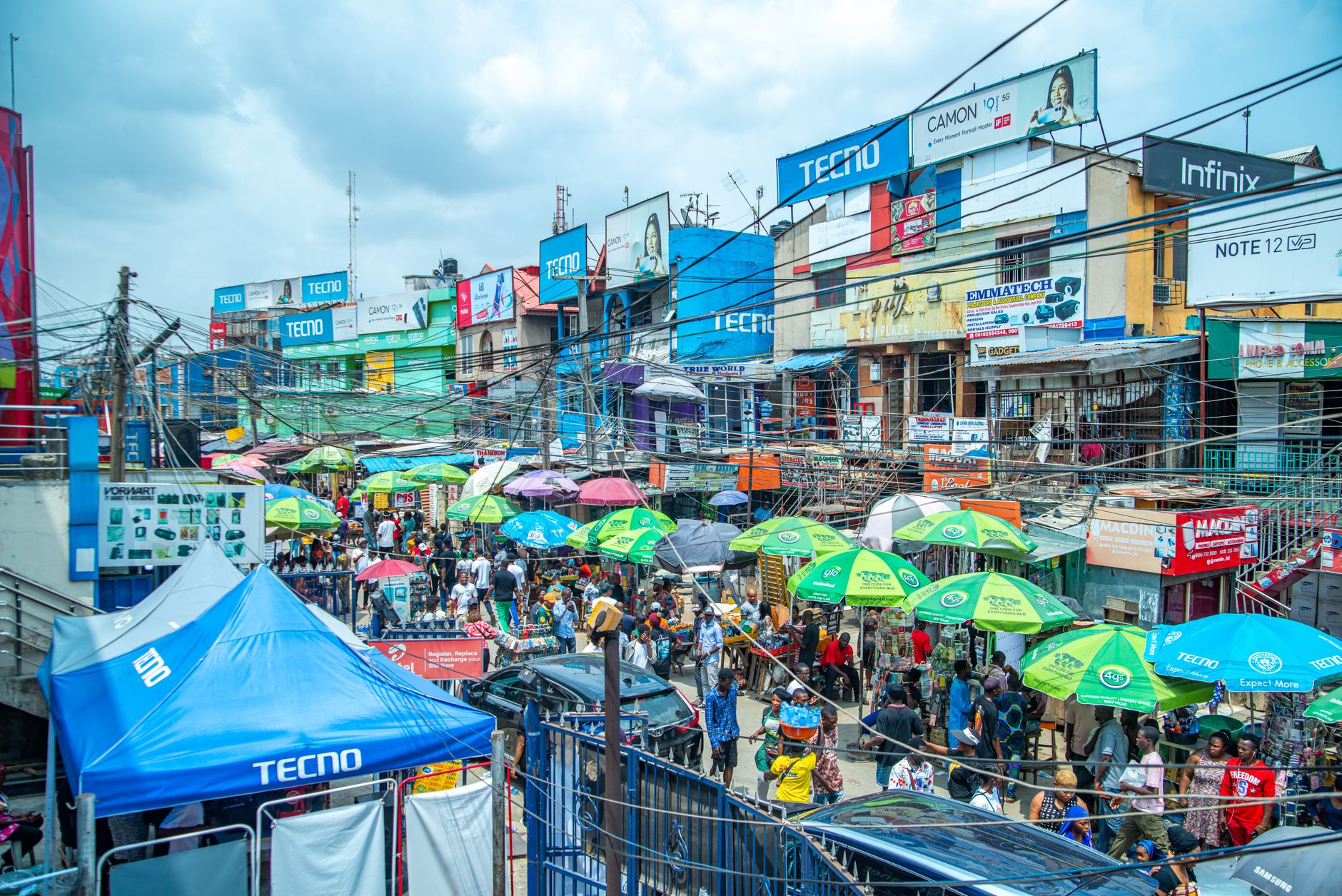
The first thing that hits you in Lagos, Nigeria, is the smell: diesel, sea salt, and roasting plantains braided into one thick rope of air. Then the sound—Afrobeats leaking from tin-roofed bars, okada motorcycles cutting through conversations in Yoruba, Pidgin, and the occasional Oxford English. By the time you see the skyline, a jagged picket of glass towers and half-built high-rises, you realize the city has already started arguing with your senses. And it’s winning.
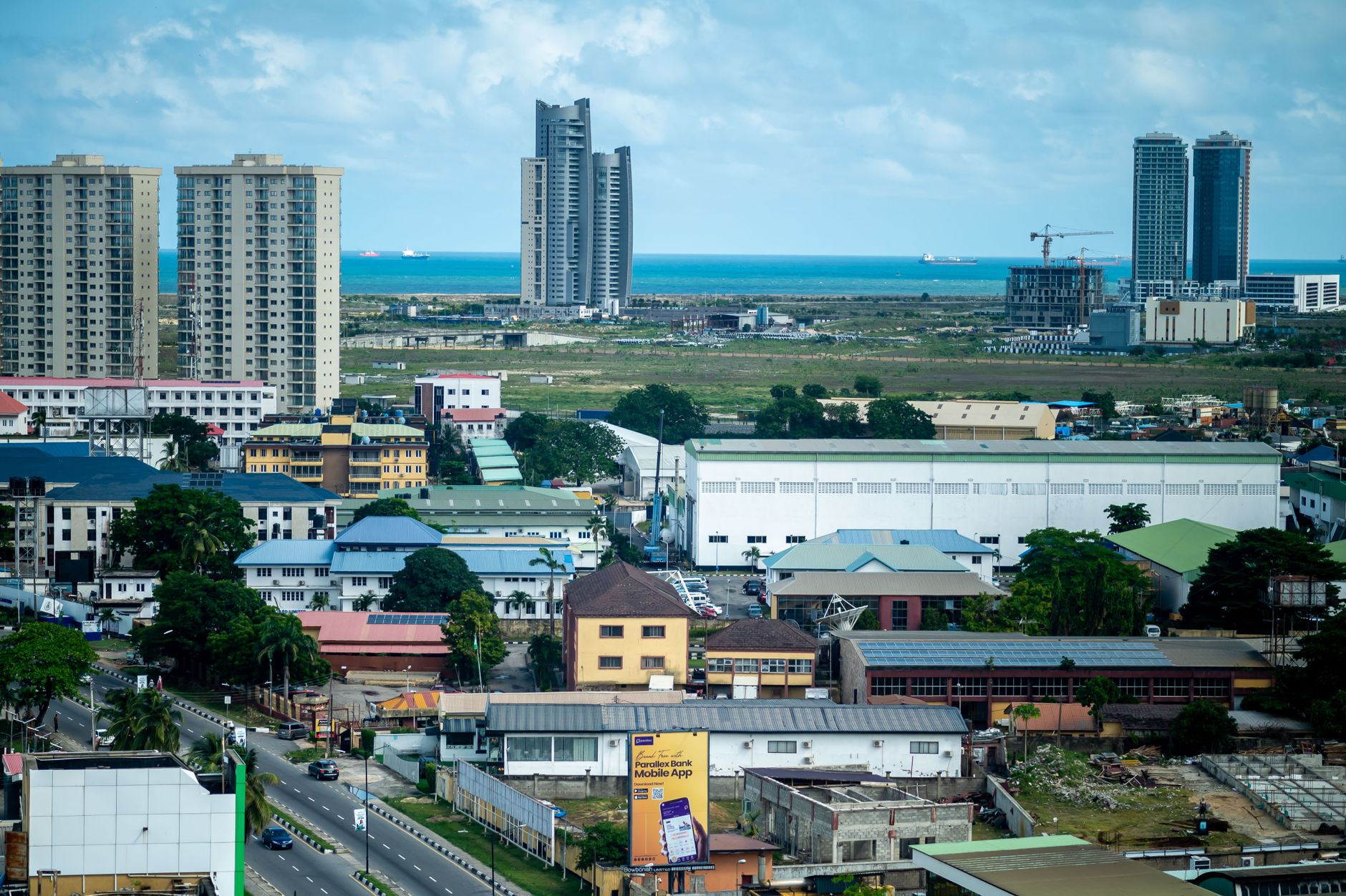 Photo: onaopemipo Rufus / Pexels
- Attractions
- 15
- Trip length
- 4 days
- Best season
- Dry season (Nov-Jan)
Why Lagos
Built from cited sources · see the method · How we make our guides →
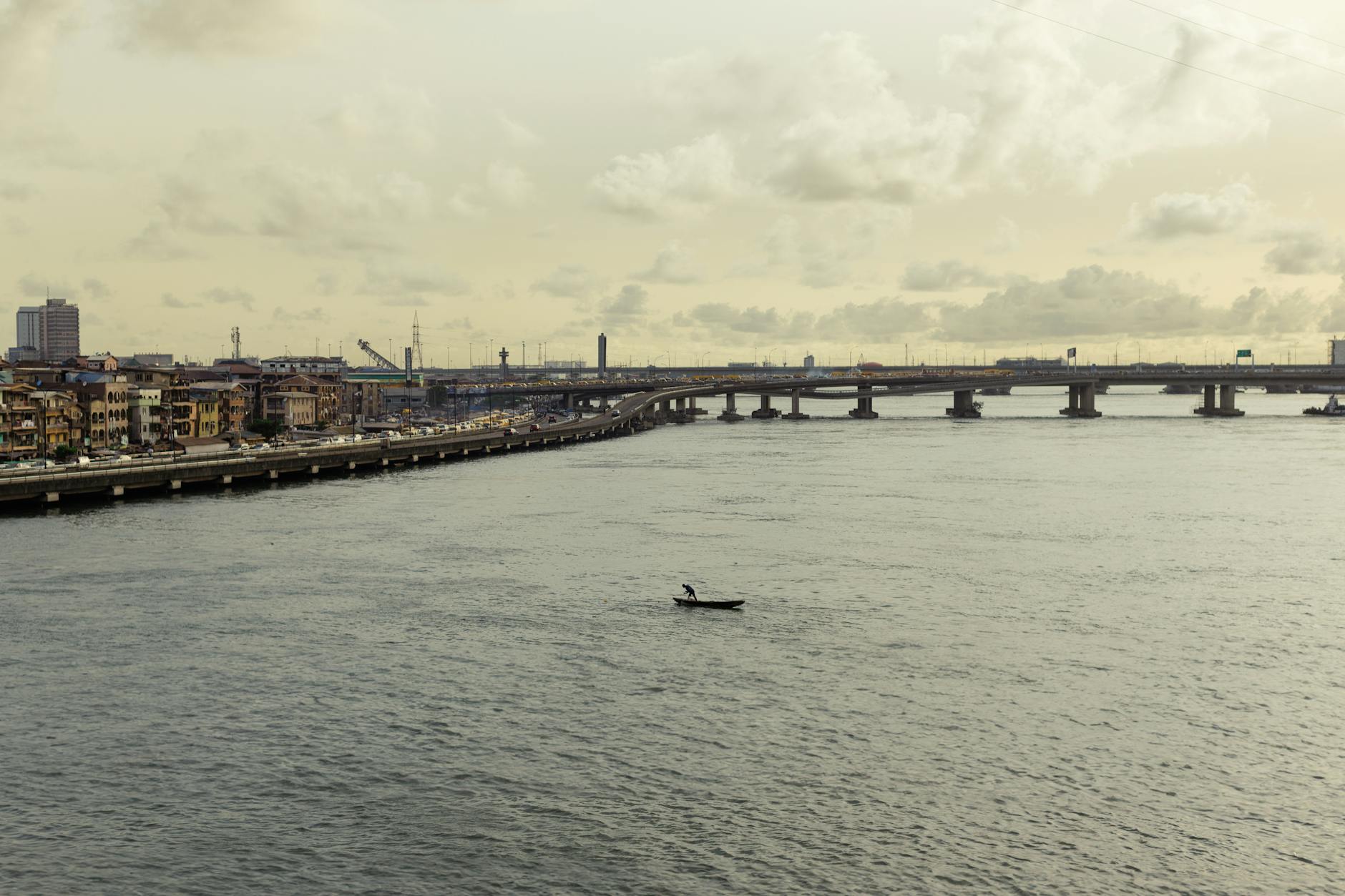
Lagos doesn’t beckon; it shoulder-checks. Twenty-two million people live on a patchwork of islands and lagoons held together by three bridges that double as parking lots. The traffic is a 24-hour piece of performance art: hawkers peddle sunglasses, phone chargers, and live puppies between lanes; a sign advertises “Instant UK Visa—No Story.” Yet inside this kinetic gridlock, time still bends. A 10-minute boat ride from the financial fortress of Victoria Island drops you at Makoko, a stilted village where kids paddle dugouts to school and the postal code is “ask the fishmonger.”
The city’s unofficial motto is “Shine your eye”—stay sharp, count your change, trust the backroad shortcut. Do that and you’ll find the rewards: 2 a.m. pepper-soup joints that cure heartbreak, galleries popping up in former colonial jails, and beaches you reach by haggling with a boatman who moonlights as a DJ. Lagos will short-circuit your itinerary. It prefers lovers who improvise.
Canopy Walk at Lekki
The 401 m suspended walkway hovers 22 m above secondary rainforest—monkeys sprint beneath your feet, peacocks scream from the palms. Early morning is best; the nylon mesh is still cool and the guide hasn't yet run out of facts about the 2016 crocodile relocation.Badagry's Point of No Return
Eight kilometres of crumbling slave route end at a narrow beach where the Atlantic curls like a question mark. The 1845 first-storey building in Nigeria still stands two minutes inland; its hardwood staircase creaks in the same spots that made missionaries seasick.October–December Art Storm
Lagos Biennial (17 Oct–18 Dec 2026) turns abandoned rail yards into installation chambers; ART X Lagos (5–8 Nov) follows at the Civic Centre with $7 000 tickets selling out in 48 hours. Between fairs, Terra Kulture keeps 300 past exhibitions online—ask the guard for the password.Afrobeats Birthplaces
New Afrika Shrine in Ikeja still hands out Fela’s 1981 set-lists printed on brown paper; payment is whatever you drop in the plastic bucket. Across town, Surulere's street-side suya stalls ignite at 21:00 when the first saxophone loops out of open-air studios.
Neighborhoods
Where to wander, by quarter — each with its own rhythm.
Victoria Island
Nigeria’s Wall Street with a beach club attached. Bank towers flash Bloomberg feeds above ground-floor suya stands; at night the same lobbies become clubs with $400 “minimum spend” tables. Come for the stock exchange, stay for the 3 a.m. coconut-rice at The House Lagos.Ikoyi
Embassy row meets urban country club. Wide avenues shaded by iroko trees, joggers in $200 sneakers, and the 18-hole Ikoyi Club golf course where civil servants still wear blazers in 32 °C heat. Slip into the Sunday art auction at Alliance Française for wine, politics, and contemporary Benin bronzes.Lekki
A peninsula that swallowed a traffic jam. Gated estates with names like “Orange Island” sit beside open gutters that flood every August. The reward: Lekki Conservation Centre’s 401-metre canopy walk and after-dark afrobeats lounges where the bouncers know your net worth by your wristwatch.Yaba
Lagos’s answer to Palo Alto, minus the zoning laws. Converted shipping containers house fintech start-ups; roadside tailors sew knock-off hoodies between coding bootcamps. Street-food MVP: the ₦200 “agege” bread sandwich stuffed at 2 a.m. outside the University of Lagos gate.Surulere
The city’s original hip-hop backyard. Low-rise, high-energy blocks where Fela disciples still blast horns from 1970s speakers. Weekends mean street carnivals and outdoor bars serving palm wine from plastic kegs; bring small notes—nobody has change for a ₦1,000 note.Badagry
An hour west, time folds into 1845. Here stands Nigeria’s first two-story building, built by missionaries, next to the “Point of No Return” jetty where 600,000 captives boarded slave ships. Guides will show you the chains, then offer you fresh coconut water. The juxtaposition is brutal and necessary.Banana Island
A man-made sandbank of diplomats, oil billionaires, and generator the size of studio apartments. Security checks every 200 metres; the only public access is the lagoon view from a speeding boat. Peek at the pastel mansions and remember: someone here pays $120,000 a year just to keep the lights on.Lagos Island (Isale Eko)
The original 15th-century core: narrow alleys, Brazilian-style facades, and the Oba’s palace where chiefs still prostrate on white sand. Haggle for Dutch wax print at Balogun Market, then climb three flights of a seemingly abandoned building for a rooftop view of yellow danfo minibuses forming a living Kandinsky painting below.
Plan your trip
Before you go
- Getting There
- Murtala Muhammed International (LOS) is 22 km north of Victoria Island; pre-book a hotel car—official taxi touts quote ₦15 000–₦25 000 for the 45-minute crawl. No passenger rail serves Lagos; instead, the Lagos–Ibadan Expressway (A5) funnels south-bound traffic straight into the Third Mainland Bridge bottleneck.
- Getting Around
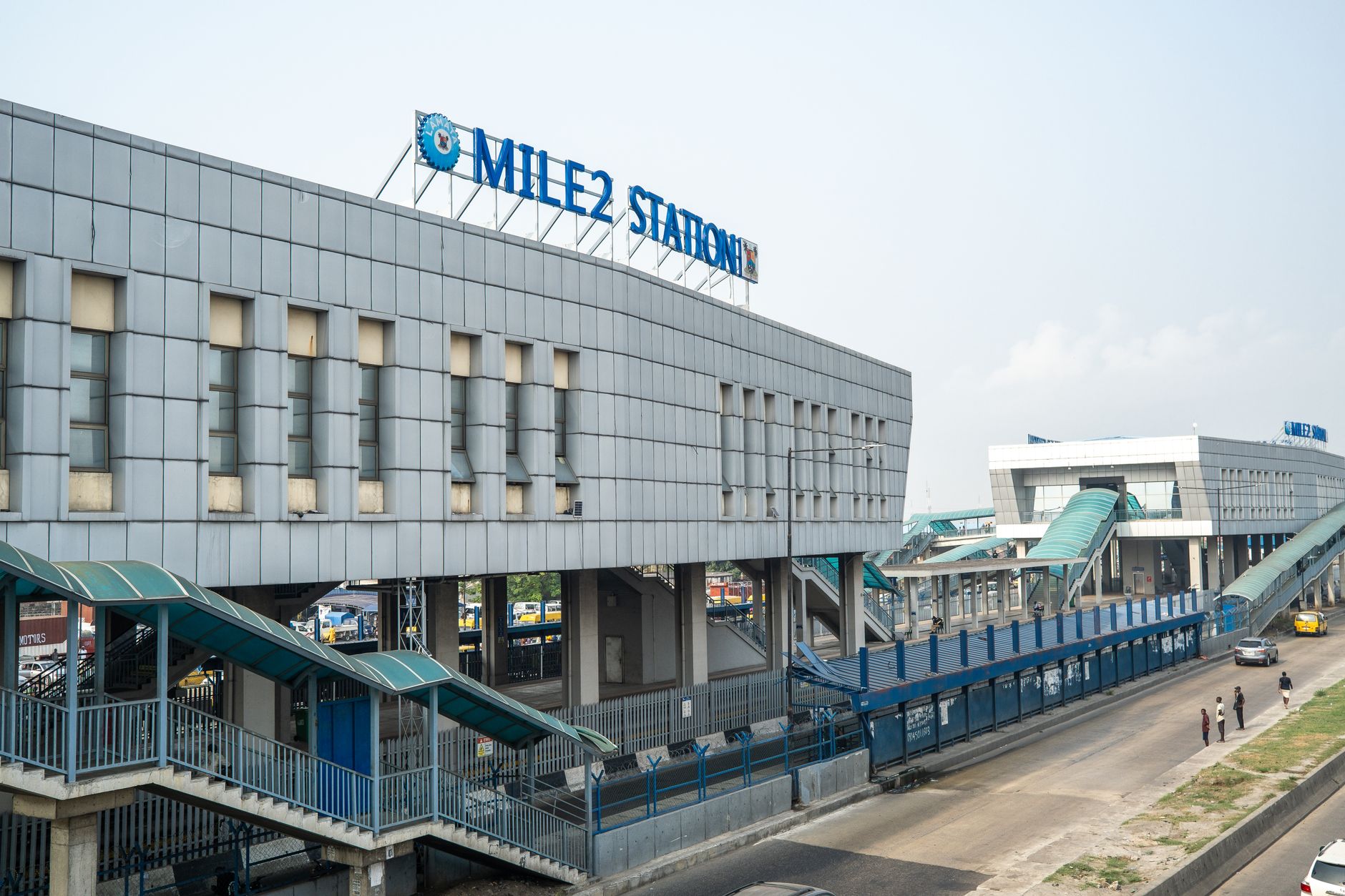
- No metro yet—BRT buses run on segregated lanes: Ikorodu-TBS (₦500), Oshodi-Obalende (₦300). Add a LAGFerry card (₦1 000 deposit) for 18-minute island hops from CMS to Falomo. Uber and Bolt work, but surge multipliers triple after 17:00; keep ₦200 notes for keke hops inside Lekki.
- Climate & Best Time
- Dry-season nights drop to 24 °C in December; February afternoons peak at 34 °C. Rain lashes June–July (300 mm monthly), flooding Victoria Island in under 30 minutes. Visit November–January when humidity dips below 70 % and the Harmattan haze photographs like vintage film.
- Language & Currency
- English is official, but pidgin unlocks faster market prices—try ‘How far?’ instead of ‘Hello’. Naira floats around ₦1 450 to the euro in 2026; change money inside the airport GTBank branch to avoid street rates that shave 8 %.
- Safety
- UK Foreign Office flags VI and Lekki after dark; keep windows up in go-slows to stop phone snatchers on okadas. Registered tour operators (check LSETF licence number) are mandatory for Makoko floating slum visits—solo wanderers pay ₦5 000 ‘camera fees’ to area boys.
From Lagoon Legend to Megacity Mayhem
Five centuries of trade, traffic, and transformation
- 1472
Portuguese Sailors Drop Anchor
Rui de Sequeira’s caravel noses into the creek the Awori call Oko. He renames it Lago de Curamo, scribbles the location onto a chart, and sails off with a cargo of pepper and slaves. The ink is barely dry, but Europe has already started spelling Lagos’ future in salt and blood.
- c. 1550
Benin Establishes War Camp
Oba Orhogbua sends 300 warriors across the lagoon. They build a stockade of palm trunks on the island’s highest point and rename the place Eko—‘war camp’ in Edo. The Awori keep farming the mud flats; the palace drums now answer to Benin City, 300 km east.
- c. 1630
Ashipa Crowned First Oba of Eko
Legend says the Benin king sends his grandson Ashipa west with a bronze sword and a mud plate. The plate sinks where the lagoon meets the sea—here the dynasty begins. The palace, Iga Idunganran, still stands on that spot; its coral-stone walls were hauled up by divers paid in cowries.
- 1821
Brazilian Returnees Land at Oyingbo
Thirty-seven freed slaves step off a Portuguese schooner speaking Yoruba laced with Portuguese curses. They build balconied houses on stilts, open cigar shops, and introduce the city to samba beats that will later tangle with highlife to birth Afrobeats. The street still smells of roasted coffee and cane rum at dusk.
- 1859
CMS Grammar Opens on Broad Street
Thomas Babington Macaulay plants a schoolroom above the swamp. Its first six pupils learn Latin verbs while mosquitoes raid their ankles. The building’s timber frame groans every time a lagoon breeze hits, but the graduates will become editors, lawyers, and the grand conspirators of independence.
- 1861
Union Jack Raised on Dasola Island
Gunboat Prometheus anchors at 9 a.m.; by noon the Oba’s chiefs sign the ‘Treaty of Cession’ with trembling thumbs. The Union Jack replaces the red canoe flag, and Lagos becomes Britain’s smallest but most malarious colony. Customs duties start the same day—£3 per ton of palm oil.
Show the full timeline (19 moments)
- 1864
Herbert Macaulay Born in Broad Street
Grandson of the school founder, baby Herbert screams louder than the cathedral bells. He will grow up to survey Lagos’ first drainage plan, then tear up the blueprints when the colony refuses to let Africans live on Victoria Island. The city’s first true agitator learns early that maps can be weapons.
- 1894
Lagos–Ibadan Railway Reaches Agege
The first locomotive whistles into town at 18 km/h, scattering goats and fortune-tellers. Tickets cost two shillings; third-class passengers ride on the roof. Overnight, yams from the hinterland reach the docks before they rot, and the price of land near the new station triples.
- 1923
Nigerian National Democratic Party Founded
Herbert Macaulay chairs a meeting of 27 clerks, teachers, and printers under a breadfruit tree at King’s College. They draft a manifesto demanding elected councils and a municipal Lagos mayor. The colonial secretary calls it ‘premature’; the crowd outside calls it breakfast.
- 1938
Fela Kuti Born in Abeokuta
The future Afrobeat prophet takes his first breath 100 km north, but Lagos will claim him soon enough. By 1969 he’s blowing sax in Afro-Spot on Victoria Island, serenading soldiers and prostitutes alike. The city’s heartbeat—chaotic, brassy, ungovernable—becomes his backbeat.
- 1944
Alimotu Pelewura Leads Market Women’s Revolt
The 300-pound fish seller blocks Carter Bridge with her stool, daring police to move 5,000 market women protesting a tax on every basket of garri. Authorities back down in 48 hours. From that day, no Lagos government dares ignore the women who keep the city fed.
- 1960
Midnight Fireworks over Tafawa Balewa Square
At 12:00 a.m. on 1 October, the green-white-green flips up the pole and 40,000 Lagosians cheer loud enough to rattle the tin roofs of Ebute Metta. Prisoners in Ikoyi jail bang tin cups in rhythm. The Union Jack is lowered, folded, and shipped back to Liverpool in a mahogany box.
- 1975
Eko Bridge Opens—Traffic Still Stuck
General Gowon cuts a white ribbon at 7:30 a.m.; by 8:00 a.m. the first traffic jam forms on the mainland approach. The 5.5-km bridge halves the drive from Yaba to Lagos Island, but the city responds by doubling its number of second-hand Peugeots. Engineers weep quietly into their slide rules.
- 1977
FESTAC 77 Bathes City in Bronze
Fifty-eight heads of state, 17,000 artists, and one 60-ton bronze ram arrive for the Second World Black Festival. The National Theatre—looking like a general’s cap made of concrete—opens in time for a Sun Ra concert that lasts until 4 a.m. Lagos feels, for one humid month, like the capital of the world.
- 1990
Wizkid Born in Surulere
Ayodeji Balogun enters the world at Lagos University Teaching Hospital while Fela’s ‘Teacher Don’t Teach Me Nonsense’ drifts from a nurse’s radio. Twenty-one years later he’ll sample that same track, exporting Lagos slang to Drake and Beyoncé. The lagoon’s newest voice starts as a church-boy soprano in Ojuelegba.
- 1991
Capital Moves to Abuja—Lagos Shrugs
Civil servants pack filing cabinets into Bedford trucks and head north. Newspapers predict collapse; instead, Ikeja electronics markets boom, and Apapa port handles more cargo than ever. The city discovers it never needed official status to stay alive—just diesel generators and sheer nerve.
- 2007
Babatunde Fashola Becomes Governor
The lawyer from Surulere takes office with a broom in one hand and a traffic law in the other. He plants palms on Ozumba Mbadiwe, clears Oshodi of touts, and dares to tow generals’ cars. Lagosians learn that gridlock is not destiny—it’s policy.
- 2013
Africa’s First BRT Lane Opens
Red buses with doors on both sides glide from Mile 12 to CMS in 45 guaranteed minutes, shaving two hours off the old Danfo crawl. Commuters form orderly queues—something no sociologist thought possible. The city learns that concrete separators can buy back a lifetime spent in traffic.
- 2022
Lekki Conservation Centre Walkway Snaps Instagram
The 401-meter canopy walk—longest in Africa—starts swaying under the weight of influencers in neon sneakers. Below, mona monkeys steal plantain chips while realtors hand out flyers for waterfront condos closing in from every side. The swamp fights back with one hand and cashes in with the other.
Who lived here
-
Afrobeat pioneer · 1938–1997
Fela Anikulapo-Kuti
Lived and performed here
His Shrine in Ikeja still pulses Friday nights; if Fela walked in today he’d grin at the saxophones, curse the same traffic, then light another joint.
-
Global Afrobeats star · born 1990
Wizkid
Born in Surulere
He used to hawk recharge cards on Ojuelegba bridge; now he sells out the 02 Arena yet still returns to secret VI studio sessions at 3 a.m.
-
Nationalist founder · 1864–1946
Herbert Macaulay
Lived on Broad Street
Macaulay’s 1920s pamphlets against colonial tram fares echo today in Lagos protests against fuel subsidies—same street, same fire.
-
NBA Hall-of-Famer · born 1963
Hakeem Olajuwon
Born in Lagos Island
He learned footwork playing barefoot in the cramped courtyard of St. Dominic’s; the Dream Shake started on cracked concrete before it shook the NBA.
-
Governor 2007-2015 · born 1963
Babatunde Raji Fashola
Governed the state
His BRT lanes and midnight road repairs turned a 4-hour commute into two; Lagos drivers still quote ‘Fashola years’ like folklore.
Where to Eat
Where locals actually book dinner — not the tourist menus.
Insider tips
Small things that change how the city treats you.
Beat Traffic by Boat
Pre-book a LAGFerry from CMS to Lekki; it cuts 90-minute bridge jams to 15 minutes and costs ₦500-800.Cash for Keke
Have ₦200 notes ready—tricycles and most street food stalls don’t accept cards or large bills.Right-Hand Rule
Eat only with your right hand; the left is considered unclean and waiters will notice.Visit Nov-Jan
Dry season brings 29°C days, zero downpours and the Lagos Biennial art fair—perfect for outdoor canopy walks and gallery hopping.Lock Doors in Traffic
Keep windows up and bags on the floor at red lights; bag-snatching on Adeola Odeku is common between 5-8 p.m.Haggle at Lekki Market
Start at 40% of the asking price for wood masks; vendors expect a theatrical back-and-forth.
Gallery
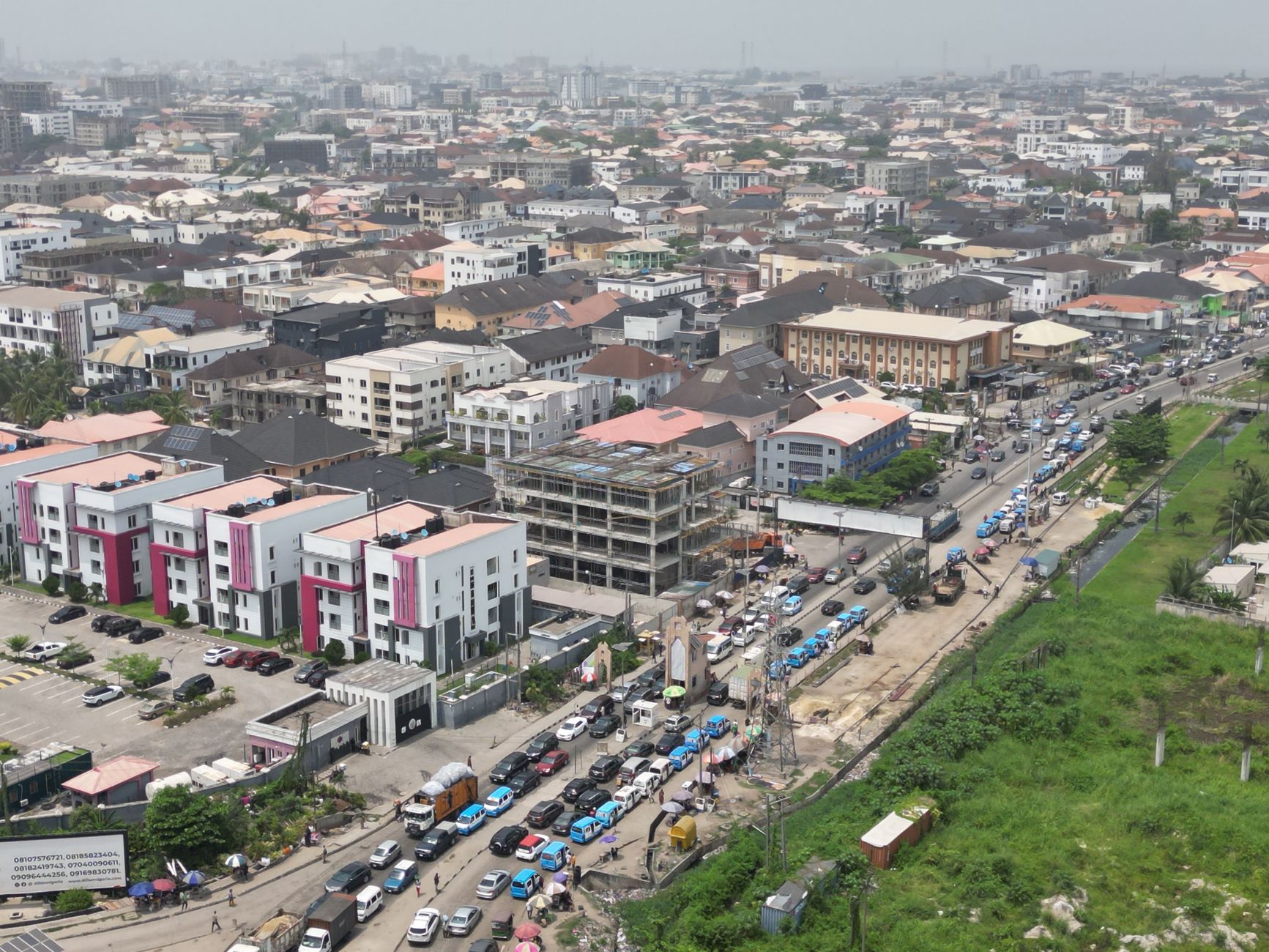
The city, as it actually looks.



Watch
-
Indigo Traveller Lagos, Nigeria is Crazy (Largest City in Africa - 25 Million People)
-
Africa Views Cities Lagos, This Will Change Your Mind About Nigeria
-
Waka Droid Exploring Ikoyi, Lagos – Nigeria’s Beverly Hills in Stunning 4K
-
Olawole Ishola LAGOS Nigeria Is Slowly Becoming a WORLD CLASS CITY (4k Walking Tour) 🇳🇬 #lagos #nigeria


Frequently asked
Is Lagos worth visiting?
Yes—if you want Africa’s biggest urban energy surge. One morning you’ll boat through a floating slum, by night you’re dancing to Afrobeats in a Victoria Island club where Wizkid got his start.
How many days do I need in Lagos?
Plan 4 full days: one for Badagry slave-route history, one for Lekki Conservation canopy walk and Tarkwa Bay beach, one for Yaba tech-hub street art and Terra Kulture theatre, plus a buffer day because traffic will steal hours.
Is Lagos safe for tourists?
Petty theft is common; violent crime spikes after dark on Bar Beach and in Oshodi. Use registered drivers, stay on Victoria Island or Ikoyi at night, and check UK FCDO updates before booking.
What’s the cheapest way to get from the airport?
BRT bus to Ikeja costs ₦300 but lugs no suitcases; shared airport shuttle ₦2,000 is middle ground. Pre-booked Uber/Bolt is ₦6,000-8,000—worth it after an 18-hour flight.
Can I use credit cards in Lagos?
Cards work in VI malls and upscale restaurants like Yellow Chilli; everywhere else—keke rides, Nike Art Gallery entry, street suya—demands cash naira.
When is the worst time to visit?
May-July: daily torrents flood roads within minutes, turning a 30-minute ride into a three-hour wade, and Atlantic surf closes Tarkwa Bay boats.
Pick up where you left off
Saved and recently read places — kept on this device only.
Photo credits (10)
- onaopemipo Rufus — Pexels License (https://www.pexels.com/license/) — Source: https://www.pexels.com/photo/32656347/
- Taiwo Samson — Pexels License (https://www.pexels.com/license/) — Source: https://www.pexels.com/photo/36622171/
- David Iloba — Pexels License (https://www.pexels.com/license/) — Source: https://www.pexels.com/photo/31017117/
- Ben Iwara — Pexels License (https://www.pexels.com/license/) — Source: https://www.pexels.com/photo/22681398/
- David Iloba — Pexels License (https://www.pexels.com/license/) — Source: https://www.pexels.com/photo/31017118/
- Ben Iwara — Pexels License (https://www.pexels.com/license/) — Source: https://www.pexels.com/photo/27741697/
- David Iloba — Pexels License (https://www.pexels.com/license/) — Source: https://www.pexels.com/photo/16155217/
- Ben Iwara — Pexels License (https://www.pexels.com/license/) — Source: https://www.pexels.com/photo/27938899/
- Olarotimi Awolaja — Pexels License (https://www.pexels.com/license/) — Source: https://www.pexels.com/photo/33918218/
- Ademola Adeola — Pexels License (https://www.pexels.com/license/) — Source: https://www.pexels.com/photo/36086895/
Photos may have been resized or cropped.