Abuja
Nigeria Updated Apr 2026
You smell charcoal before you see the city. At 2 a.m. on the Kaduna highway, smoke curls from roadside suya pits and the granite face of Zuma Rock rises 725 meters against the stars like a half-lit stage backdrop. Abuja, Nigeria’s engineered capital, announces itself first to the nose and only later to the eye.
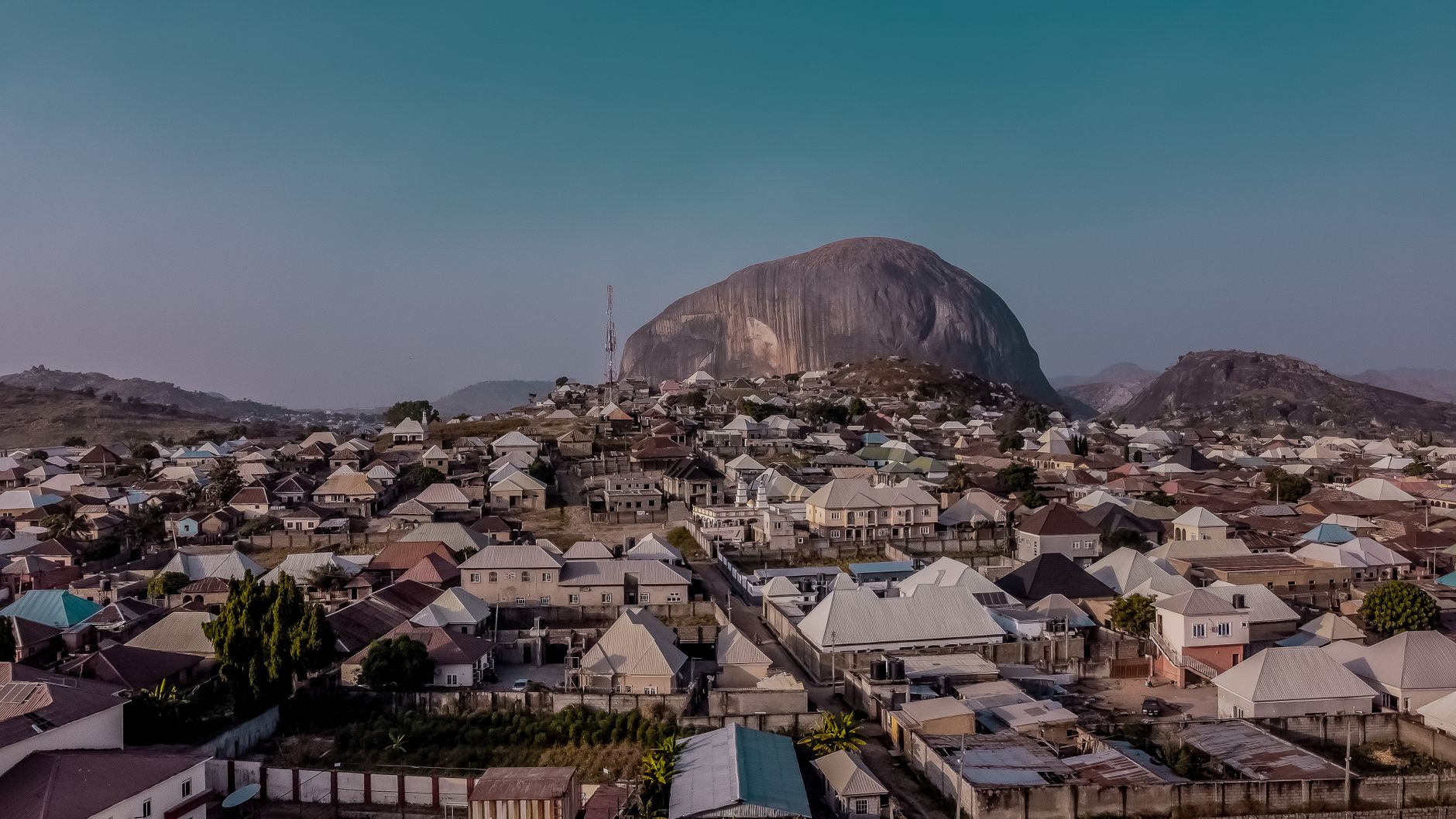 Photo: Mukhtar Shuaib Mukhtar / Pexels
- Attractions
- 13
- Trip length
- 3–4 days
- Best season
- Dry season (Dec–April)
Why Abuja
Built from cited sources · see the method · How we make our guides →
The city was drawn on a map instead of allowed to grow: Kenzo Tange’s 1970s master plan zoned domes, minarets, and brutalist towers into perfect quadrants. You notice it in the silence of Sundays, when traffic circles spin empty except for police checkpoints, and in the sudden roar of Wuse II after 10 p.m., when Kilimanjaro’s Afrobeats leak onto the street and senators in agbada queue next to tech workers in sneakers.
Between the planned avenues, pockets of real life push through. In Gwarinpa, women ladle Fisherman Soup heavy with scent leaf; at Mpape Hills at dawn, okada drivers race the first sunlight to the summit; inside Nike Art Gallery, beadwork clatters like rain against glass. The capital’s secret is that it never quite finished becoming itself—each neighborhood still negotiating whether it belongs to the blueprint or to the people who live there.
Rocks That Own the Sky
Aso Rock rises 400 m behind the Presidential Villa and Zuma Rock looms 725 m over the Kaduna highway like a granite gatekeeper. Both formations glow ochre at dawn and throw long shadows across the planned grid of a capital that didn’t exist fifty years ago.Prayers Face Each Other
The golden-domed National Mosque and the neo-Gothic National Christian Centre stand 400 m apart on the same axis, built deliberately to stare across the city’s central valley. Walk the gap at sunset and you’ll hear the call to prayer echo against church bells.Free Art that Slaps
Nike Art Gallery Abuja lets you wander three floors of Yoruba beadwork and Nok terracotta without paying a naira; Retro Africa in Asokoro shows collectors-grade canvases for the same price. Bring small bills for the guard’s tip, not admission.
Neighborhoods
Where to wander, by quarter — each with its own rhythm.
Wuse II
Abuja’s after-dark engine. Cocktail bars, hookah lounges, and live-music clubs line Aminu Kano Crescent; the scent of grilled catfish drifts from Bukka Hut at 1 a.m. and the sidewalks feel like Lagos compressed into four neon blocks.Maitama
Embassy row meets calm money. Tree-shaded mansions hide behind bougainvillea, Millennium Park’s lawns open at 7 a.m. for tai-chi diplomats, and the Transcorp Hilton lights the skyline like a low-flying aircraft.Gwarinpa
The city’s largest housing estate turned culinary village. Dusk brings open-air “bukas” under tarpaulin roofs, Unbox Foods dishes out smoky jollof ordered by QR code, and children chase footballs between parked SUVs.Jabi
Lakeside suburb built around a man-made lagoon. Families rent pedal boats while mall terraces serve Lebanese sunset views; on weekends the lakeside amphitheater hosts everything from gospel choirs to amateur boxing.Asokoro
Seat of power and quiet privilege. Presidential Villa guards watch joggers circle Aso Rock’s base; side streets hide Retro Africa Gallery and villas where peacocks wander across clipped lawns.Central Business District
Government geometry in concrete. The golden dome of the National Mosque rises 60 meters beside the spired National Christian Centre, both free to enter and exactly 400 meters apart—architectural proof of deliberate balance.Mpape
Former quarry town turned hiker’s launch pad. Motorbikes drop you at the trailhead for granite hills that glow rust-red at dusk; goats wander the roadside and the whole of Abuja spreads below like a circuit board.Ushafa
A village that survived the capital’s sprawl. Gbagyi women still coil clay pots over open fires, crush rock viewpoints give 50-kilometer savanna vistas, and the air smells of woodsmoke and ripening mango.
Plan your trip
Before you go
- Getting There
- Nnamdi Azikiwe International Airport (ABV) sits 25 km west of the CBD. A pilot light-rail spur links the terminal to the city centre, but schedules remain erratic in 2026—pre-book a Bolt or Uber instead (₦4 000–₦6 000). Drivers arriving from the south use the A234 expressway; from Kaduna it’s the A2 that passes under Zuma Rock.
- Getting Around
- Abuja has no metro or tram. Formal red-and-green Abuja Urban Mass Transit buses ply a skeletal network; most residents rely on keke tricycles and unpainted danfo minibuses (cash only, ₦100–₦300 per hop). Ride-hailing apps work reliably in Maitama, Wuse and Garki—expect surge after 8 pm when clubs empty out.
- Climate & Best Time
- Dry-season nights drop to 20 °C from November–February; days hit 34 °C with Saharan dust that turns the sky butter-yellow. Rains arrive April–October, pushing humidity above 80 % and flooding lower districts. Visit December–January for crisp air, clear roads and postcard light on the rocks.
- Safety
- Keep windows up in traffic jams; phone snatching at red lights is common. After dark, stick to lit strips in Wuse 2 or Maitama; the satellite towns beyond the airport road see sporadic incidents. Checkpoints near Aso Rock and the Ship House are routine—carry ID and answer politely.
A Capital Built from Scratch on Ancient Ground
From Gbagyi farming hamlets to a marble-and-glass seat of power in three decades
- c. 7000 BCE
Stone-Age Fire Pits
Hunter-gatherers camp on the granite-studded plateau that will later be called Abuja. Charred baobab seeds and quartz scrapers found at nearby Mpape still feel the heat of their fires. These seasonal visitors are the first to watch harmattan haze settle between the inselbergs.
- c. 1200
Gbagyi Potters Settle
Farming villages appear on the escarpment. Women coil clay into water jars etched with zig-zag moon patterns; men terrace the laterite soil for guinea-corn. Oral lists count ten successive village heads before the first Fulani horseman arrives.
- 1804
Fulani Cavalry Charges South
Usman dan Fodio’s jihad sweeps over the plateau. Emirate officials plant green-and-white flags on the granite outcrops and impose cattle tax. The Gbagyi fight with poisoned arrows, lose, and watch their sacred groves become Friday parade grounds.
- c. 1825
King Abubakar Coins a Name
A Hausa war-camp chief renames his stockaded settlement Abuja, after himself. Caravans from Kano rest here before the climb to the Jos tin mines. The name sticks long after the mud walls crumble.
- 1902
Maxim Guns on the Ridge
British scouts haul a 7-pounder mountain gun up Zuma Rock. After three volleys the caliphate’s flag comes down; red imperial ensign flaps in its place. Indirect rule keeps the emir but ships his taxes to Lokoja.
- 1914
Amalgamation Ripple
The colony’s new governor-general signs a parchment in Lagos, 700 km south. Up here, nothing changes except postage stamps: King George’s profile replaces Queen Victoria’s on the levy notices nailed to baobab trunks.
Show the full timeline (16 moments)
- 1938
Murtala Mohammed Is Born
Future general and coup leader enters the world in Kano, not Abuja. Thirty-seven years later his impatient finger will point at this plateau on a wall map and say “here.” That sentence reroutes a nation.
- 1975
The Finger on the Map
Supreme Military Council, Room 4, Dodan Barracks. Murtala slams a briefing folder: Lagos is choking. Geographers unfurl a 1:250,000 sheet; the room votes for the empty centre. No one in the chamber owns land there—that neutrality is the whole point.
- 1976
Decree 51 Carves Territory
Typewriters clatter through the night; soldiers typeset the gazette. Overnight 8,000 km² of savanna become the Federal Capital Territory. Gbagyi farmers wake up as federal tenants; survey pegs replace boundary trees.
- 1979
Kenzo Tange’s Master-plan
A Japanese architect spreads rice-paper sketches on the floor of Aso Rock’s temporary hut: a radial city like a hand fan, each finger a residential wedge, the palm a ceremonial boulevard. Contractors whistle—no one has told them the site lacks water, power, or asphalt.
- 1982
First Plane Touches Down
A Fokker F-28 banks over elephant grass and lands on red laterite. The terminal is a tent with a plywood counter. Yet the runway points toward a future where ministers will fly in for Tuesday cabinet instead of Monday traffic jams on Lagos Island.
- 12 Dec 1991
Capital Switch-Off
At 11:59 am the naval band in Lagos strikes up “Auld Lang Syne.” By noon the flag on Aso Rock is hoisted; civil servants blink in the harsh savanna sun. Their furniture arrives three weeks later, but the city is officially born.
- 2003
Queen Plants a Park
Elizabeth II slips off a kid glove and presses a ceiba seedling into the red earth of Maitama. Millennium Park opens with lawn sprinklers hissing like rain on corrugated roofs. Abuja finally has a place for Sunday ice-cream other than hotel lobbies.
- 26 Aug 2011
Bomb Shakes UN Gate
A Honda CRV packed with explosives detonates at 10:54 am, shearing off the glass façade of the UN House. Twenty-four desks stay empty that night. Blast walls sprout across the capital like grey mushrooms after rain.
- 2018
Elnathan John Publishes ‘Be(com)ing Nigerian’
The satirist tweets: “Abuja is what happens when you ask civil servants to design paradise.” His column launches from a Wuse café where generators hum louder than patrons. The book launch is standing-room only; the city finally laughs at itself.
- May 2023
Fourth Transfer, Same Rock
Bola Tinubu raises two fingers to the Quran on Aso Rock’s patio, repeating an oath first sworn here in 1999. The granite backdrop hasn’t altered; the city below keeps spreading like spilled mercury, estates pushing against cattle routes drawn by Japanese planners half a century ago.
Who lived here
-
Founder of original Abuja kingdom · UNCONFIRMED
King Abubakar
Founded the settlement
He staked his camp on these grassy hills long before straight lines were drawn on maps. Walk the old Suleja ridge at sunset and you’ll see why he picked the spot—granite sentinels guard every horizon. Today’s traffic circles bear his name, but the goats still own the back roads he once rode.
-
Novelist & satirist · born 1982
Elnathan John
Lives and writes here
His fiction flays Abuja’s political salons with surgical wit, yet he still queues for akara outside Gwarinpa on Saturday mornings. If you spot a lanky figure scribbling beside a roadside Bole stall, that’s probably him stealing dialogue from the vendor’s banter. The city gave him courtyards where gossip becomes literature.
-
Senator for FCT · born 1968
Philip Aduda
Represents Abuja North
He grew up watching surveyors turn millet fields into ministries and now negotiates pothole repairs outside the same schools he once attended. Ask a cabbie about him and you’ll get an earful on traffic lights that actually work—rare praise in a town of endless detours. His constituency office sits opposite a suya spot; constituents bring skewers instead of flowers.
Where to Eat
Where locals actually book dinner — not the tourist menus.
-
Suya from A.Y.A. Junction
Beef haunches baste in peanut-spice rub over open coals until the edges caramelise to black lace. Wrapped in newspaper with raw onion, it costs ₦500 a stick and arrives still spitting.
-
Masa at Wuse Market
These tangy rice cakes ferment overnight, then puff into golden hemispheres on cast-iron pans. Eat them hot with a swipe of peppery yaji—five discs cost less than a dollar.
-
Kilishi on the Airport Road
Think Nigerian biltong: paper-thin sheets of sun-dried beef painted with chili-honey paste and grilled until leathery. Buy a rolled bundle for the flight home; it keeps for weeks.
-
Ofada Rice & Ayamase at Jevinik
The green peppers in the sauce bite first, then the locust-bean funk arrives. Served in wrapped leaves with fatty beef and boiled eggs, it’s the city’s go-to comfort lunch.
-
Bush-bar Catfish Point-and-Kill
Pick your live catfish from a plastic drum; five minutes later it emerges from pepper soup scarlet with Cameroon pepper. Eat with your hands behind Wuse 2’s beer gardens.
Insider tips
Small things that change how the city treats you.
Hike Aso Rock Early
Start the climb by 7 a.m.; the National Children’s Park opens at sunrise and you’ll have the savanna light plus zero soldier hassle near the villa fence.Suya After 9 PM
Good suya stalls only fire up their charcoal after dark—walk to the crowd of taxis outside Wuse II junction and follow the peanut-smoke.Zuma Rock Angle
For the face profile, stop at the exact 33 km road marker on the Kaduna express; step ten metres left and the ‘eyes’ line up perfectly.Dry Season Waterfalls
Gurara is swimmable December–April when the flow drops; taxi drivers will insist it’s fine in July—ignore them, the current then is a killer.Checkpoint Patience
Keep a photo ID in your outer pocket; FCT police posts move daily and wallets slow the line more than bribes ever speed it.Cash Before Sunset
ATMs inside the big hotels work all night; neighbourhood machines empty by 6 p.m. on Fridays—fill up early for weekend street food runs.
Gallery
The city, as it actually looks.


Frequently asked
Is Abuja worth visiting compared to Lagos?
Yes—if you want orderly grids, rock hikes and free museums instead of beach traffic. Abuja delivers Africa’s largest mosque beside a cathedral, lakeside sunsets and day-trip waterfalls all within a 60-minute radius.
How many days do I need in Abuja?
Three full days cover the mosque-park combo, an Aso Rock hike, a suya night in Wuse II and one waterfall or pottery-village excursion. Add two more if you plan to chase every gallery opening.
Is Abuja safe for solo female travellers?
Generally yes inside the central districts after dark—use ride-hailing instead of street bikes and dress modestly near prayer grounds. Avoid the outer satellite towns at night unless you’re with a known local group.
Can I enter the National Mosque as a non-Muslim?
You can—outside the five daily prayer windows, 9 a.m.–9 p.m. Women receive ankle-length gowns at the gate; shoes stay outside and photography is allowed in the courtyard, not inside the prayer hall.
How much does a weekend in Abuja cost?
Budget ₦45 000 (≈ $60) per day: ₦15 k for a new-wave Bole & suya crawl, ₦10 k ride-shares, ₦8 k gallery donations, ₦12 k basic hotel dorms. Double it if you’ll club in Wuse II where cocktails start at ₦4 k.
What’s the quickest way from the airport to town?
The airport train reaches Metro Station in 25 minutes for ₦1 500; it syncs with domestic arrivals until 8 p.m. After that, a taxi coupon is fixed at ₦8 k to Central Area—refuse anything higher.
Pick up where you left off
Saved and recently read places — kept on this device only.
Photo credits (13)
- Mukhtar Shuaib Mukhtar — Pexels License (https://www.pexels.com/license/) — Source: https://www.pexels.com/photo/29539887/
- Abuja Boys (18687704606) — Mark Fischer — CC BY-SA 2.0 (https://creativecommons.org/licenses/by-sa/2.0/) — Source: https://commons.wikimedia.org/wiki/File:Abuja_Boys_(18687704606).jpg
- Abubakar Danladi Umar — Rajoraj — CC BY-SA 4.0 (https://creativecommons.org/licenses/by-sa/4.0/) — Source: https://commons.wikimedia.org/wiki/File:Abubakar_Danladi_Umar.png
- A Rock in Abuja, Dei Dei — Aduragbemio Oladapo — CC BY-SA 4.0 (https://creativecommons.org/licenses/by-sa/4.0/) — Source: https://commons.wikimedia.org/wiki/File:A_Rock_in_Abuja,_Dei_Dei.jpg
- Abuja Monument 01 — Hadassah Photostorie group — CC BY-SA 4.0 (https://creativecommons.org/licenses/by-sa/4.0/) — Source: https://commons.wikimedia.org/wiki/File:Abuja_Monument_01.jpg
- A man frying fish at Jabi fish Market, Abuja — GodwinPaya — CC BY-SA 4.0 (https://creativecommons.org/licenses/by-sa/4.0/) — Source: https://commons.wikimedia.org/wiki/File:A_man_frying_fish_at_Jabi_fish_Market,_Abuja.jpg
- A Brief Picture of Scenery of the Roof of Restaurant B2B in Abuja — Danz okutepa — CC BY-SA 4.0 (https://creativecommons.org/licenses/by-sa/4.0/) — Source: https://commons.wikimedia.org/wiki/File:A_Brief_Picture_of_Scenery_of_the_Roof_of_Restaurant_B2B_in_Abuja.jpg
- Abuja Boy (16520864645) — Mark Fischer — CC BY-SA 2.0 (https://creativecommons.org/licenses/by-sa/2.0/) — Source: https://commons.wikimedia.org/wiki/File:Abuja_Boy_(16520864645).jpg
- Abuja central area — 6th.quan — CC BY-SA 4.0 (https://creativecommons.org/licenses/by-sa/4.0/) — Source: https://commons.wikimedia.org/wiki/File:Abuja_central_area.jpg
- Abuja Monument 03 — Hadassah Photostorie group — CC BY-SA 4.0 (https://creativecommons.org/licenses/by-sa/4.0/) — Source: https://commons.wikimedia.org/wiki/File:Abuja_Monument_03.jpg
- Abuja Evening Sky — AdastralNg22 — CC BY-SA 4.0 (https://creativecommons.org/licenses/by-sa/4.0/) — Source: https://commons.wikimedia.org/wiki/File:Abuja_Evening_Sky.jpg
- Abuja at night +StreetShoot — OtuNwachinemere — CC BY-SA 4.0 (https://creativecommons.org/licenses/by-sa/4.0/) — Source: https://commons.wikimedia.org/wiki/File:Abuja_at_night_+StreetShoot.jpg
- Abuja Carnival — Kalliopik — CC BY-SA 4.0 (https://creativecommons.org/licenses/by-sa/4.0/) — Source: https://commons.wikimedia.org/wiki/File:Abuja_Carnival.jpg
Photos may have been resized or cropped.