restaurant
Jollof to suya
Nigeria eats with confidence. Follow smoky evening suya in Kano, pepper soup in Calabar, akara at breakfast, and party jollof in Lagos to understand the country faster than any museum can teach you.
Nigeria is not a single travel experience but a federation of different worlds: Atlantic megacity, indigo trade hub, sacred grove, plateau archaeology, and royal history still alive in the streets.
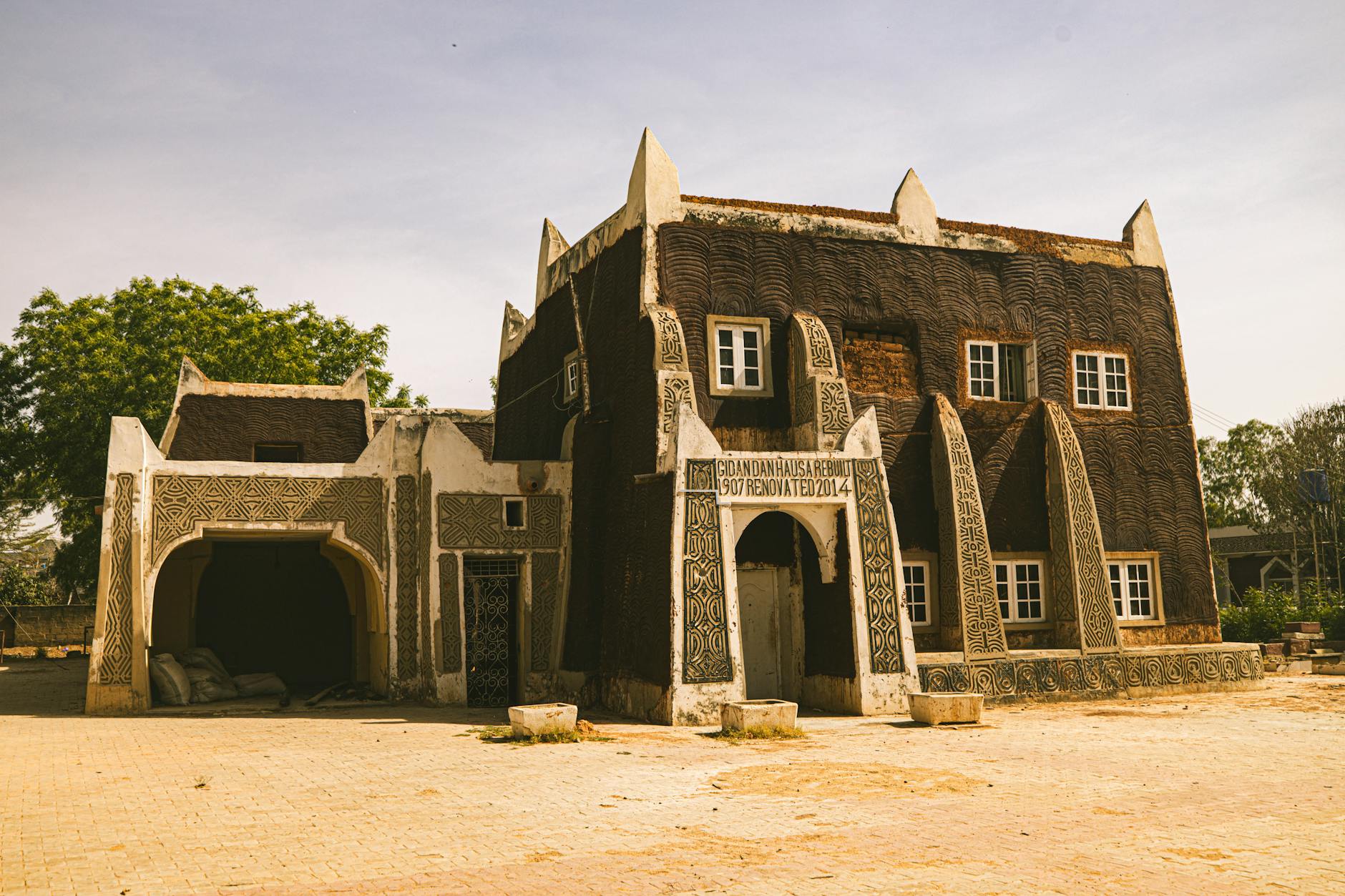 Nigeria
EntryVisa required in advance for EU, US, UK, and Canadian travelers
NNigeria travel guide: come for Lagos and Abuja, stay for a country where indigo dye pits, bronze kingdoms, and suya smoke still shape daily life.
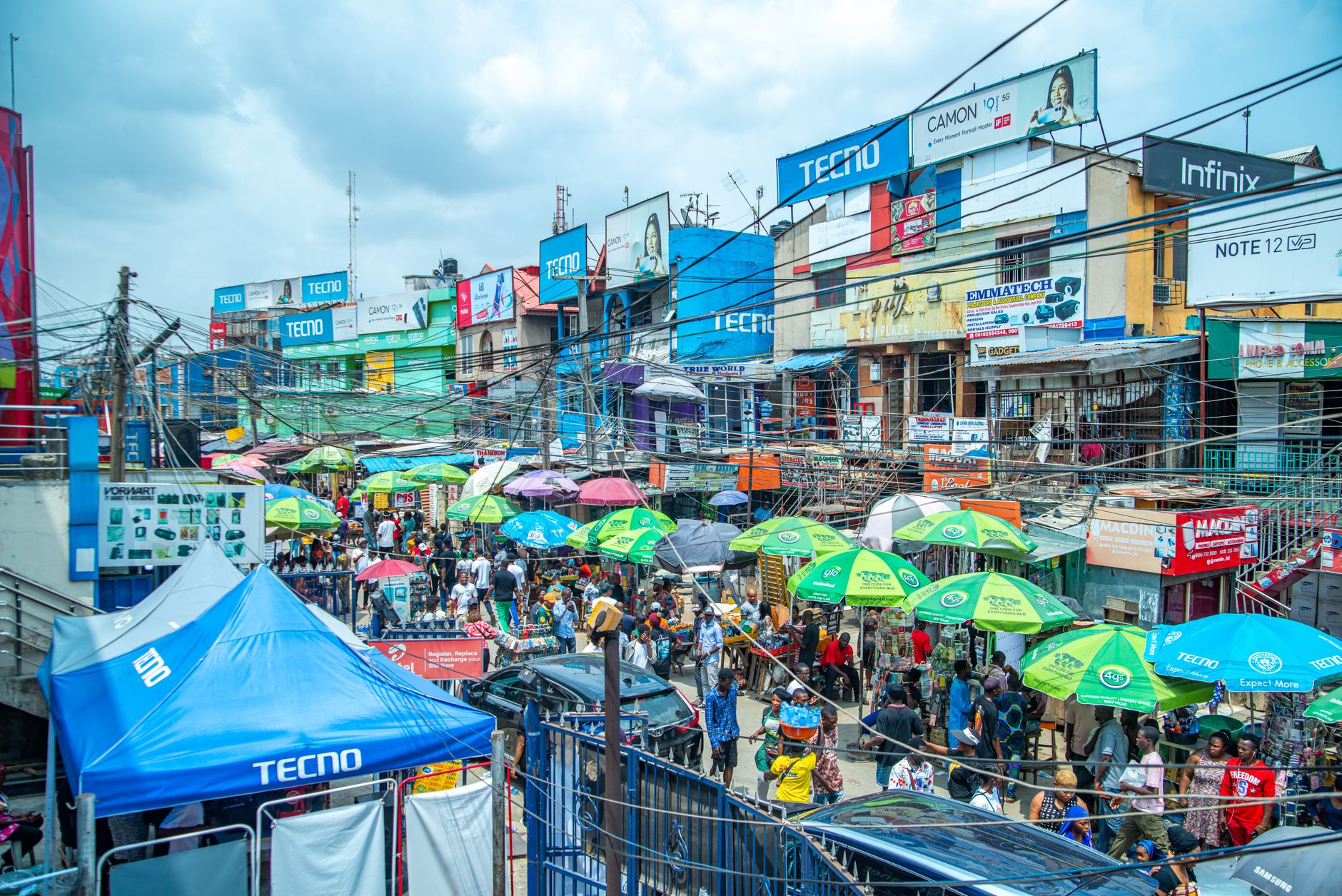
Nigeria rewards travelers who want a place with edges, scale, and real cultural weight. In Lagos, the country moves at full voltage: Atlantic beaches, yellow danfo buses, Afrobeats spilling from car windows, and a food scene that runs from smoky suya stands to polished dining rooms in Victoria Island. Abuja feels different on purpose, built as the federal capital in 1991 with broad avenues and a cooler, more deliberate rhythm. Then the map starts to split open: Kano with its old trading history, Ibadan with its intellectual swagger, and Osogbo, where Yoruba sacred tradition still lives inside the Osun-Osogbo Sacred Grove.
History here does not sit behind glass. Benin City carries the memory of the Kingdom of Benin, where cast bronze plaques once served as royal record-keeping before the British looted thousands in 1897. In Kano, dye pits have worked for roughly a thousand years, the indigo dark as midnight and stubborn as craft itself. Jos reaches further back still, into Nok territory, where terracotta heads with drilled eyes and poised expressions changed what archaeologists thought they knew about early West African art. Nigeria is not one mood. That is the point.
First Fires and Terracotta Faces, c. 9000 BCE-500 CE
A skull lay for millennia in the rock shelter of Iwo Eleru, in the southwest of what is now Nigeria, until archaeologists uncovered it in 1965 and found features that seemed to belong to a far older human world. That is where the story should begin: not with a flag, not with a capital, but with a cave, bone, and silence. Nigeria was inhabited long before anyone called it Nigeria.
Then the earth of the Jos Plateau began to yield faces. Around 1928, near Nok country, a farmer named Danladi Bawo dug up a terracotta head while working tin-bearing soil; it sat like an odd household ornament before anyone grasped what it was. Ce que l'on ignore souvent, c'est que these sculptures, with their drilled pupils, elaborate coiffures, and half-open mouths, were so assured that early Europeans tried to attribute them to anyone but Africans.
They belonged to the Nok culture, which flourished roughly between 1500 BCE and 500 CE. Records do not tell us the names of kings or queens, because no court chronicle survives, yet the art tells another truth: this was a society with specialists, rituals, status, and a striking sense of the human face. You can still feel the steadiness of the gaze.
The other revelation was fire. Nok communities were among the earliest known iron-working societies in sub-Saharan Africa, and iron changed everything that came after: clearing land, making tools, arming warriors, and shifting power toward those who controlled furnaces and ore. From those first fires on the plateau, the later worlds of Kano, Zaria, Benin City, and beyond become easier to imagine.
The unnamed Nok sculptor remains the emblem of this era: no throne, no title, only a hand so sure that a face modeled two thousand years ago still feels personal.
One Nok terracotta appears to show a bound captive with a composed, even defiant expression, a small clue that hierarchy and coercion were already part of social life long before Atlantic slavery.
Chronicles, Queens, and Walled Cities, c. 800-1600
Stand at Dala Hill in Kano at dawn, when the light turns the old rocks the color of warm brass, and you understand why a foundation legend took hold there. Hausa tradition places an early settlement on that hill, and the city that grew below became one of the great commercial engines of the western Sudan. Leather, dyed cloth, kola, salt, horses, news: all of it moved through Kano, and with it came wealth, clerics, scribes, and court intrigue.
Ce que l'on ignore souvent, c'est que some of the famous "Moroccan leather" admired in Europe was worked far to the south of Morocco, in the workshops of Kano, then passed north through Saharan trade. The dyers' pits in old Kano, still remembered for their indigo craft, connect the present city to a line of labor that reaches back almost a thousand years. Empires elsewhere rose, glittered, and collapsed. The dye vats kept working.
To the east, Kanem-Bornu forged something rarer than conquest: duration. Under Mai Idris Alooma in the late 16th century, the state combined cavalry, fortified camps, scholarship, and Islamic law with a discipline that impressed foreign chroniclers. Ibn Fartua, the ruler's imam and biographer, lets us glimpse the man behind the title: a sovereign who campaigned relentlessly, negotiated through pilgrimage, and governed with an eye on both piety and power.
And then comes Queen Amina of Zaria, who strides into the record like someone impatient with male hesitation. Sources do not turn her into pure legend; they place her within Hausa political memory as a war leader who expanded trade routes and ringed towns with defensive walls. In Zaria, her name still carries that particular electricity reserved for women who made states nervous. Her campaigns, whether embroidered by later storytellers or not, belong to the making of northern Nigeria's political map.
Queen Amina of Zaria is remembered not as an ornament of the court but as a ruler who treated marriage offers as a nuisance and logistics as a weapon.
Local tradition claims Amina took a lover in each conquered town and had him killed by morning to prevent entanglement; whether literally true or not, the tale tells you exactly what posterity found unsettling about a woman with unchecked power.
Bronze Courts and Atlantic Shock, c. 1300-1897
Imagine Benin City before the British flames: broad streets, packed red earth, compounds ordered with courtly precision, and a palace whose scale startled Europeans who had expected little and found ceremony everywhere. Portuguese visitors reached the kingdom in the late 15th century and encountered a court that understood hierarchy as theater. The Oba did not chatter for effect; authority was staged, mediated, and watched.
What remains most haunting are the bronzes. They were not decorative trifles. They were archives in metal, recording dynasties, rituals, military triumphs, and the very texture of royal presence with a technical assurance that embarrassed European prejudice. Ce que l'on ignore souvent, c'est que when those objects were scattered after 1897, Benin did not merely lose artworks; it lost shelves of history.
Elsewhere in what is now southern Nigeria, power took other forms. In the Yoruba world, city-states such as Oyo and sacred centers such as Osogbo tied kingship to ritual, trade, and divine sanction, while coastal ports were drawn, slowly and then brutally, into the Atlantic economy. Calabar became one of the most important slave-trading ports in the Bight of Biafra, and the wealth that passed through it was inseparable from human catastrophe. No honest account of Nigeria's past can keep the palace and hide the shackles.
The scandal arrives in January 1897. A British delegation approached Benin during a sacred period when outsiders had been warned not to enter; several members were killed by Benin forces, and London found the pretext it wanted. The Punitive Expedition that followed burned the city, looted thousands of bronzes, deposed Oba Ovonramwen, and turned plunder into museum catalogues. After that fire, the old order did not vanish at once, but it could no longer decide the terms alone.
Oba Ovonramwen appears in the British record as a defeated monarch, yet the tragedy of his reign is that a sovereign trying to hold a kingdom together was swallowed by men who had already priced his palace contents.
British institutions openly sold Benin bronzes to cover the costs of the expedition that stole them, a chilling little piece of bookkeeping in which violence financed its own trophies.
Conquest, Colony, and the Long Argument of Independence, 1861-1967
The colonial story begins, in practical terms, on the coast. Britain annexed Lagos in 1861, tightened its grip inland through chartered companies and military force, then in 1914 joined the Northern and Southern Protectorates into a single entity called Nigeria. Frederick Lugard called it administrative sense. It was also an imperial convenience, stitching together societies with different political rhythms, religious histories, and commercial interests, then expecting the new frame to behave like destiny.
Ce que l'on ignore souvent, c'est that many of the fiercest arguments in colonial Nigeria were not fought only with rifles. They were fought in newspapers, market protests, mission schools, court petitions, tax disputes, and women's organizing. In Abeokuta, Funmilayo Ransome-Kuti and the Abeokuta Women's Union challenged taxation and the abuse of native authority with a ferocity the colonial state had badly underestimated.
By the 1940s and 1950s, the great names of nationalist politics were already competing not just against British rule but against one another's visions of what freedom should look like. Nnamdi Azikiwe spoke the language of broad nationalism; Obafemi Awolowo built disciplined regional politics in the west; Ahmadu Bello anchored northern influence through the structures of the Northern People's Congress. Abuja did not yet exist as capital, but the battle over what kind of country Nigeria would become was already under way in Lagos, Kano, Enugu, Ibadan, and beyond.
Independence came on 1 October 1960 with ceremony, music, and immense expectation. The trouble was not a lack of talent or eloquence. The trouble was that regional distrust, electoral manipulation, and military ambition had entered the room before the champagne was finished. By January 1966, soldiers had overthrown the First Republic; by 1967, the federation had broken into war.
Funmilayo Ransome-Kuti brought a dangerous idea into colonial politics: that market women, taxpayers, and mothers were not background figures but a force that could embarrass chiefs, governors, and empire alike.
The very name "Nigeria" was coined in the 1890s by the British journalist Flora Shaw, later Lady Lugard, before most of the territory had been politically welded into one colony.
Biafra, Oil, and the Restless Giant, 1967-present
The Nigerian Civil War began in 1967 after the Eastern Region declared itself the Republic of Biafra. What followed was not an abstract constitutional crisis but siege, bombardment, hunger, and images of starving children that shocked the world. The war ended in 1970 with the federal slogan "No victor, no vanquished," a noble phrase, though grief rarely obeys official wording.
Oil money then remade the federation with all the elegance of sudden wealth: towers, contracts, patronage, ambition, theft, roads that appeared, roads that failed to appear, and a new political importance for the Niger Delta. Lagos swelled into the commercial giant it remains, while Abuja was planned and then inaugurated as federal capital in 1991, an attempt to place power on more neutral ground. A capital can be designed. Trust cannot.
Through dictatorship and disappointment, Nigerians kept producing culture with astonishing speed. Fela Kuti turned rage into rhythm and made the nightclub Shrine into a political stage; Chinua Achebe had already given the country one of the central novels of the 20th century; Nollywood later built a film industry on hustle, melodrama, and frightening efficiency. Ce que l'on ignore souvent, c'est that the republic has often been easiest to understand not through manifestos but through songs, novels, and jokes.
The return to civilian rule in 1999 did not solve the old arguments. It simply moved them into a new register: elections, courts, corruption scandals, insurgency in the northeast, protest movements, digital entrepreneurship, and a young population too large and too quick-witted to remain quiet forever. Nigeria now moves between Lagos audacity, Abuja calculation, Kano memory, Benin City pride, Calabar grace, and the hard demands of ordinary citizens who keep the state honest by refusing to stop talking back.
Ken Saro-Wiwa stands at the moral center of late 20th-century Nigeria: witty, infuriating to power, and killed in 1995 because he insisted that oil wealth did not excuse poisoned land and broken communities.
Fela Kuti once declared his self-governing Kalakuta Republic independent from the Nigerian state, a gesture at once theatrical and deadly serious that tells you much about the country's long intimacy with improvisation and defiance.
Nigeria speaks in layers. In Lagos, a sentence can begin in English, soften into Pidgin, turn toward Yoruba for respect, then return to English for the bill, the argument, the punchline. Words do not merely carry meaning here. They carry rank, heat, tenderness, distance.
Pidgin is the national solvent. A clerk in Abuja may address you in official English, then murmur "How far?" with a smile that suddenly removes the necktie from the conversation. "Abeg" can plead, tease, negotiate, or accuse. A country is a table set for strangers, and Nigeria lays out cutlery in five hundred languages.
Listen in Kano and you hear another architecture: Hausa courtesy, measured and exact, each greeting like a small carpet rolled out before business begins. Listen in Benin City and the sentence acquires a different weight, older than the state, older than the flag. The miracle is not multilingualism. Millions of places manage that. The miracle is the speed with which Nigerians read the social temperature of a room and choose the right tongue for it.
Greeting in Nigeria is not decorative. It is the first proof that you were raised by human beings. You ask after health, sleep, the road, the family, the work, sometimes all before you approach the matter that brought you here, and this can bewilder visitors from places where efficiency is mistaken for virtue.
In Yoruba country, around Ibadan or Osogbo, respect enters the body before it reaches the mouth. A younger person may bow, lower the head, kneel, even prostrate in more traditional settings. Grammar joins the ceremony: the plural form becomes an honorific for one elder, as if language itself stood up when the older person entered.
Titles matter because society is staged, not improvised. Sir. Ma. Aunty. Uncle. Chief. Doctor. Engineer. Alhaji. Hajia. These are not ornaments. They are keys. In Calabar or Enugu, as in Abuja, first names arrive only after permission, and permission is a form of intimacy.
Then comes the dry little joke at the center of all this ceremony: Nigerians can be exquisitely polite and brutally direct in the same minute. Courtesy does not cancel bluntness. It gives it silverware.
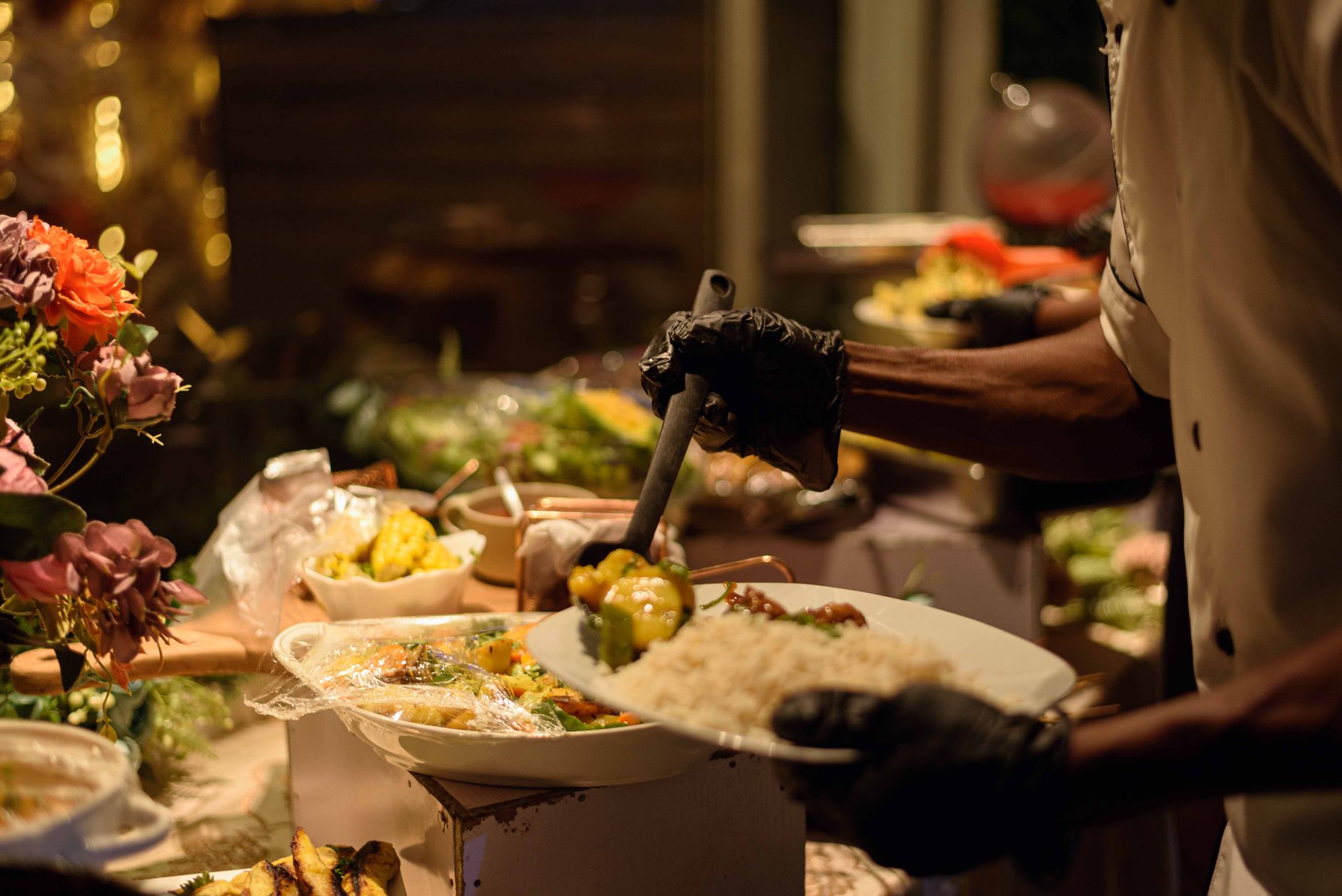
Nigerian food does not flirt. It declares. A plate lands with jollof rice the color of brick after rain, fried plantain dark at the edges, a spoonful of moi moi, a piece of chicken carrying smoke on its skin, and suddenly the table has become a form of parliament in which every element interrupts the others and none apologizes.
Texture governs everything. Egusi with pounded yam is not merely eaten; it is handled, pinched, dipped, swallowed with the right hand and with concentration. Efo riro tastes of leaf, palm oil, stockfish, and patient fire. Ofada rice, especially in the southwest between Lagos and Ibadan, arrives with ayamase whose smell announces the dish before the dish reaches the room. Aroma travels faster than speech.
Suya belongs to evening. The paper wrap grows translucent with oil, the yaji dust catches in the throat, onion slices sting, and someone nearby tells a story that improves with each skewer. Pepper soup performs another rite entirely: first the nose, then the chest, then the forehead. Sweat is part of the grammar.
Food here teaches a hard, useful lesson. Pleasure is rarely neat. The best spoonful of jollof often comes from the bottom of the pot, where smoke has kissed the rice with what any French sauce would call excess and what Nigeria rightly calls flavor.
Nigerian music treats rhythm as public infrastructure. In Lagos traffic, from Danfo windows and shopfront speakers, Afrobeats keeps time with engines, generators, impatience, flirtation, and weather. The bass does not ask permission. It enters the sternum and begins rearranging your posture.
Yet the modern beat sits on older foundations that remain stubbornly audible. Fuji carries Muslim Yoruba street energy and discipline in the same breath. Juju gleams with guitars and talking drums, with praise that can turn sly in an instant. In Kano, praise singing and drumming still bind ceremony to memory; in Calabar, carnival season changes the city into percussion with feathers attached.
Nigerians do not keep music in the concert hall. They give it work. It officiates weddings, campaign rallies, naming ceremonies, funerals, bus rides, beer parlors, church vigils, gym sessions, heartbreak. A song is not background. It is a participant.
This explains why silence can feel suspicious. A quiet Nigerian room is either holy, exhausted, or waiting for electricity to return.
Nollywood does not seek your approval. It seeks your attention, your aunt's attention, your barber's attention, the attention of the woman selling phone credit outside the gate. It built itself with speed, hunger, cheap cameras, impossible schedules, and the serene conviction that if the state would not finance the dream, the market would.
Watch what Nigerians watch and you begin to understand the national appetite for plot. Betrayal, prayer, inheritance, ambition, village return, city temptation, a pastor with too much certainty, a mother with more intelligence than every man in the room combined. The stories move fast because life moves fast and because everyone already knows that delay is expensive.
In Lagos, the industry has money, premieres, fashion, billboards, and a confidence almost indecent in its productivity. Elsewhere, from Enugu to Benin City, the older video-film DNA still lingers: direct address, moral heat, melodrama worn without shame. One senses a country that refuses the false choice between art and appetite.
Cinema here resembles pepper soup. Clear surface. Hidden force. By the time you realize how much has gone in, you are already sweating.
Benin City carries one of the great artistic scandals of modern history. The Benin Bronzes, looted in 1897 by British forces, were not decorative trophies from a distant court. They were records in metal: kings, rituals, wars, diplomatic scenes, the grammar of sovereignty hammered and cast with such assurance that Europe preferred theft to humility.
That violence still shapes the emotional weather of Nigerian art. Memory here is not abstract. It has inventory numbers. Visit Benin City with that fact in mind and every discussion of return, restitution, or museum display stops sounding theoretical and starts sounding familial, almost domestic: when does the house get its heirlooms back?
Nigeria's older visual traditions never vanished beneath the argument over the bronzes. Nok terracottas from the Jos Plateau stare across more than two millennia with drilled eyes and composed mouths that manage the rare feat of appearing both amused and unimpressed. In Osogbo, sacred art still lives beside ritual in the Osun grove, where sculpture and devotion refuse separation.
Art in Nigeria does not sit quietly on the wall. It keeps receipts. It remembers names. And when it smiles, one checks one's pockets.
Nigeria eats with confidence. Follow smoky evening suya in Kano, pepper soup in Calabar, akara at breakfast, and party jollof in Lagos to understand the country faster than any museum can teach you.
Benin City opens the door to one of West Africa's great royal histories. The story of the Kingdom of Benin, its court art, and the 1897 British invasion still shapes how Nigeria talks about memory, power, and restitution.
Osogbo matters because religion here is lived, not staged. The Osun-Osogbo Sacred Grove links forest, river, sculpture, and annual procession in one of the country's most important surviving ritual spaces.
Around Jos, the Nok culture left terracotta figures and early ironworking evidence that reach back more than two millennia. Few travelers arrive expecting some of Africa's oldest known sculpture traditions. They should.
Lagos supplies the headline energy, but Nigeria's urban story is wider than one megacity. Abuja runs on political gravity, Ibadan on scholarship and appetite, and Enugu on coal-era history and southeastern momentum.
Nigeria's geography changes fast: Atlantic coast, rainforest, the Niger-Benue confluence at Lokoja, and the higher air of the Jos Plateau. The shifts in weather, food, and architecture are part of the attraction.
13 cities — start with the ones we'd send you to first.
West Africa's loudest, richest, most exhausting megacity, where a traffic jam on the Third Mainland Bridge can last four hours and a beach party at Elegushi starts at midnight and nobody thinks either is unusual.
Here, history isn't locked in glass cases—it's molten bronze poured into sand molds on a street that has echoed with the same hammers for five hundred years. The past is a living, breathing craft.
A planned capital carved out of the savanna in the 1980s, its wide boulevards and Aso Rock monolith giving it the eerie calm of a city that knows it was invented by committee.
The old city's indigo dye pits on Kurmi Market Road have been in continuous operation for over 500 years, and the leather still sold here is what Europe once called 'Moroccan.'
A vast, rust-roofed Yoruba city that sprawls across seven hills and was, in 1960, the largest city in sub-Saharan Africa — a fact its residents have never quite stopped mentioning.
Capital of the Oba's kingdom whose bronze castings were looted by British troops in 1897 and are now the most contested objects in European museums, while the royal court that made them still functions here.
A colonial port on the Cross River where the slave-trade warehouses still stand along the waterfront and the December Carnival fills the streets with what locals insist is Africa's biggest party.
A plateau city at 1,200 metres where the temperature drops enough at night to need a blanket, the surrounding hills hold Nok terracotta sites, and the tin-mining past left a cratered, otherworldly landscape.
The old coal capital of the southeast, a quieter Igbo city where the Coal Camp neighbourhood preserves a faded colonial-industrial texture and the surrounding escarpment drops into forest that feels genuinely remote.
Lagos sets the tempo: loud traffic, serious money, beach traffic on weekends, and a restaurant scene that can turn from suya smoke to tasting-menu polish in two streets. Inland, Ibadan and Osogbo slow the rhythm and sharpen the cultural focus, with old university neighborhoods, palace politics, workshops, and the sacred grove culture of Yoruba religion still visible in daily life.
Abuja was built to be legible, and after Lagos that can feel almost suspiciously orderly. The surrounding Middle Belt adds the better surprise: Lokoja at the Niger-Benue confluence, Jos with its plateau climate and older mining history, and a patchwork of churches, mosques, barracks, and market towns that explains why central Nigeria matters politically.
Benin City carries one of the heaviest historical loads in West Africa, and Oredo puts you close to the palace, guild traditions, and the afterlife of the 1897 British attack. Farther east, Calabar feels greener, older in a different way, with river air, former colonial offices, and one of the country's most textured festival calendars.
Kano is one of the great commercial cities of the Sahel, and it still feels built around trade, craft, religion, and rank. Zaria gives the region a second register: older Hausa political memory on one side, Ahmadu Bello University and modern intellectual life on the other.
Enugu is greener, more folded, and less performative than Lagos, with roads that climb and dip through neighborhoods built by mining money, church networks, and civil-service expansion. It works well as a base for travelers who want cooler evenings, strong local food, and a southeastern perspective that is urban without being overwhelming.
From Nok terracottas to a young republic that still argues with its own making
On the Jos Plateau, communities later grouped under the name Nok begin producing terracotta sculpture and working iron. The faces they leave behind still look uncannily alive, which is why they changed the history of African art when they were rediscovered.
Furnaces and smithing knowledge reshape everyday power: farming, forest clearance, hunting, and warfare all become easier for those who control metal. This is one of the deep foundations under the later states of the region.
The terracotta tradition disappears from the archaeological record, leaving more questions than answers. No court archive survives, only objects and the silence around them.
Later Hausa traditions place the early formation of Kano's royal line around the era of Bagauda and Dala Hill. Whether every detail is exact matters less than the fact that Kano was already becoming a city that traded, wrote, and remembered.
In the Yoruba world, Ife produces astonishing brass and terracotta heads whose poise still startles modern viewers. They suggest a court culture where artistry and divine kingship were intimately linked.
Under Ewuare, Benin strengthens its courtly order and territorial reach. The capital that later visitors describe with such astonishment owes much of its shape to this era of disciplined grandeur.
European traders and envoys reach the Benin court and discover a political world far more sophisticated than their prejudices had allowed. Trade opens doors, but it also prepares the coast for harder bargains later.
His reign brings military reform, legal administration, and diplomatic reach to one of the great Sahelian states. Through the writing of Ibn Fartua, he becomes one of the rare precolonial rulers in the region who steps into focus as a person.
By this period, Amina of Zaria is remembered as a warrior queen tied to expansion and fortified towns. History and legend blend around her, but the persistence of her name tells its own truth about power in the Hausa world.
What begins as a religious and political revolt becomes a vast reordering of power across much of northern Nigeria. New emirates rise, old rulers fall, and Islamic scholarship becomes even more central to governance.
The annexation gives Britain a permanent and strategic foothold on the coast. From Lagos, empire will extend inward through treaties, commerce, pressure, and force.
British troops burn the capital, depose Oba Ovonramwen, and seize thousands of bronzes. The looting becomes one of the most notorious acts of imperial theft in African history.
Frederick Lugard joins Britain's territories into one colony called Nigeria. Administrative neatness on paper creates a federation of immense internal difference that will shape every later political quarrel.
Thousands of women in southeastern Nigeria rise against taxation and colonial abuses, using protest, song, and collective pressure. It is one of the clearest reminders that anti-colonial politics was never an all-male affair.
Colonial police kill striking miners near Enugu, and the outrage hardens nationalist feeling. Labor protest and constitutional politics now feed each other.
On 1 October, the Union Jack comes down and a new federation steps onto the world stage. The celebration is real, and so are the unresolved tensions packed inside the constitutional settlement.
A military coup in January and a counter-coup in July rip apart the fragile civilian order. Ethnic suspicion, fear, and revenge move from rumor into state power.
The Eastern Region declares itself the Republic of Biafra, and Nigeria enters a brutal war. The conflict becomes one of the defining traumas of modern African history.
Federal victory reunifies the country, at least formally. The phrase "No victor, no vanquished" tries to close the wound, but memory keeps its own ledger.
By the late 1970s, Fela Kuti has made Afrobeat an instrument of accusation against military power and corruption. In Lagos, the nightclub becomes a parliament of a very different sort.
Power shifts from Lagos to the planned city of Abuja, chosen as a more central and symbolically balanced seat of government. It is an architectural answer to a political problem that architecture alone cannot solve.
The writer and activist is hanged after protesting environmental devastation in the Niger Delta. His death stains the regime and fixes global attention on the cost of oil.
Nigeria's Fourth Republic begins after years of military government. Democracy returns, imperfect and quarrelsome, but durable enough to become the longest civilian stretch in the country's history.
Young Nigerians mobilize against police brutality with a speed and confidence born of digital organizing and old frustration. The protests reveal a generation unwilling to inherit silence as a civic duty.
First Fires and Terracotta Faces
The unnamed Nok sculptor remains the emblem of this era: no throne, no title, only a hand so sure that a face modeled two thousand years ago still feels personal.
A skull lay for millennia in the rock shelter of Iwo Eleru, in the southwest of what is now Nigeria, until archaeologists uncovered it in 1965 and found features that seemed to belong to a far older human world. That is where the story should begin: not with a flag, not with a capital, but with a cave, bone, and silence. Nigeria was inhabited long before anyone called it Nigeria.
Then the earth of the Jos Plateau began to yield faces. Around 1928, near Nok country, a farmer named Danladi Bawo dug up a terracotta head while working tin-bearing soil; it sat like an odd household ornament before anyone grasped what it was. Ce que l'on ignore souvent, c'est que these sculptures, with their drilled pupils, elaborate coiffures, and half-open mouths, were so assured that early Europeans tried to attribute them to anyone but Africans.
They belonged to the Nok culture, which flourished roughly between 1500 BCE and 500 CE. Records do not tell us the names of kings or queens, because no court chronicle survives, yet the art tells another truth: this was a society with specialists, rituals, status, and a striking sense of the human face. You can still feel the steadiness of the gaze.
The other revelation was fire. Nok communities were among the earliest known iron-working societies in sub-Saharan Africa, and iron changed everything that came after: clearing land, making tools, arming warriors, and shifting power toward those who controlled furnaces and ore. From those first fires on the plateau, the later worlds of Kano, Zaria, Benin City, and beyond become easier to imagine.
One Nok terracotta appears to show a bound captive with a composed, even defiant expression, a small clue that hierarchy and coercion were already part of social life long before Atlantic slavery.
Chronicles, Queens, and Walled Cities
Queen Amina of Zaria is remembered not as an ornament of the court but as a ruler who treated marriage offers as a nuisance and logistics as a weapon.
Stand at Dala Hill in Kano at dawn, when the light turns the old rocks the color of warm brass, and you understand why a foundation legend took hold there. Hausa tradition places an early settlement on that hill, and the city that grew below became one of the great commercial engines of the western Sudan. Leather, dyed cloth, kola, salt, horses, news: all of it moved through Kano, and with it came wealth, clerics, scribes, and court intrigue.
Ce que l'on ignore souvent, c'est que some of the famous "Moroccan leather" admired in Europe was worked far to the south of Morocco, in the workshops of Kano, then passed north through Saharan trade. The dyers' pits in old Kano, still remembered for their indigo craft, connect the present city to a line of labor that reaches back almost a thousand years. Empires elsewhere rose, glittered, and collapsed. The dye vats kept working.
To the east, Kanem-Bornu forged something rarer than conquest: duration. Under Mai Idris Alooma in the late 16th century, the state combined cavalry, fortified camps, scholarship, and Islamic law with a discipline that impressed foreign chroniclers. Ibn Fartua, the ruler's imam and biographer, lets us glimpse the man behind the title: a sovereign who campaigned relentlessly, negotiated through pilgrimage, and governed with an eye on both piety and power.
And then comes Queen Amina of Zaria, who strides into the record like someone impatient with male hesitation. Sources do not turn her into pure legend; they place her within Hausa political memory as a war leader who expanded trade routes and ringed towns with defensive walls. In Zaria, her name still carries that particular electricity reserved for women who made states nervous. Her campaigns, whether embroidered by later storytellers or not, belong to the making of northern Nigeria's political map.
Local tradition claims Amina took a lover in each conquered town and had him killed by morning to prevent entanglement; whether literally true or not, the tale tells you exactly what posterity found unsettling about a woman with unchecked power.
Bronze Courts and Atlantic Shock
Oba Ovonramwen appears in the British record as a defeated monarch, yet the tragedy of his reign is that a sovereign trying to hold a kingdom together was swallowed by men who had already priced his palace contents.
Imagine Benin City before the British flames: broad streets, packed red earth, compounds ordered with courtly precision, and a palace whose scale startled Europeans who had expected little and found ceremony everywhere. Portuguese visitors reached the kingdom in the late 15th century and encountered a court that understood hierarchy as theater. The Oba did not chatter for effect; authority was staged, mediated, and watched.
What remains most haunting are the bronzes. They were not decorative trifles. They were archives in metal, recording dynasties, rituals, military triumphs, and the very texture of royal presence with a technical assurance that embarrassed European prejudice. Ce que l'on ignore souvent, c'est que when those objects were scattered after 1897, Benin did not merely lose artworks; it lost shelves of history.
Elsewhere in what is now southern Nigeria, power took other forms. In the Yoruba world, city-states such as Oyo and sacred centers such as Osogbo tied kingship to ritual, trade, and divine sanction, while coastal ports were drawn, slowly and then brutally, into the Atlantic economy. Calabar became one of the most important slave-trading ports in the Bight of Biafra, and the wealth that passed through it was inseparable from human catastrophe. No honest account of Nigeria's past can keep the palace and hide the shackles.
The scandal arrives in January 1897. A British delegation approached Benin during a sacred period when outsiders had been warned not to enter; several members were killed by Benin forces, and London found the pretext it wanted. The Punitive Expedition that followed burned the city, looted thousands of bronzes, deposed Oba Ovonramwen, and turned plunder into museum catalogues. After that fire, the old order did not vanish at once, but it could no longer decide the terms alone.
British institutions openly sold Benin bronzes to cover the costs of the expedition that stole them, a chilling little piece of bookkeeping in which violence financed its own trophies.
Conquest, Colony, and the Long Argument of Independence
Funmilayo Ransome-Kuti brought a dangerous idea into colonial politics: that market women, taxpayers, and mothers were not background figures but a force that could embarrass chiefs, governors, and empire alike.
The colonial story begins, in practical terms, on the coast. Britain annexed Lagos in 1861, tightened its grip inland through chartered companies and military force, then in 1914 joined the Northern and Southern Protectorates into a single entity called Nigeria. Frederick Lugard called it administrative sense. It was also an imperial convenience, stitching together societies with different political rhythms, religious histories, and commercial interests, then expecting the new frame to behave like destiny.
Ce que l'on ignore souvent, c'est that many of the fiercest arguments in colonial Nigeria were not fought only with rifles. They were fought in newspapers, market protests, mission schools, court petitions, tax disputes, and women's organizing. In Abeokuta, Funmilayo Ransome-Kuti and the Abeokuta Women's Union challenged taxation and the abuse of native authority with a ferocity the colonial state had badly underestimated.
By the 1940s and 1950s, the great names of nationalist politics were already competing not just against British rule but against one another's visions of what freedom should look like. Nnamdi Azikiwe spoke the language of broad nationalism; Obafemi Awolowo built disciplined regional politics in the west; Ahmadu Bello anchored northern influence through the structures of the Northern People's Congress. Abuja did not yet exist as capital, but the battle over what kind of country Nigeria would become was already under way in Lagos, Kano, Enugu, Ibadan, and beyond.
Independence came on 1 October 1960 with ceremony, music, and immense expectation. The trouble was not a lack of talent or eloquence. The trouble was that regional distrust, electoral manipulation, and military ambition had entered the room before the champagne was finished. By January 1966, soldiers had overthrown the First Republic; by 1967, the federation had broken into war.
The very name "Nigeria" was coined in the 1890s by the British journalist Flora Shaw, later Lady Lugard, before most of the territory had been politically welded into one colony.
Biafra, Oil, and the Restless Giant
Ken Saro-Wiwa stands at the moral center of late 20th-century Nigeria: witty, infuriating to power, and killed in 1995 because he insisted that oil wealth did not excuse poisoned land and broken communities.
The Nigerian Civil War began in 1967 after the Eastern Region declared itself the Republic of Biafra. What followed was not an abstract constitutional crisis but siege, bombardment, hunger, and images of starving children that shocked the world. The war ended in 1970 with the federal slogan "No victor, no vanquished," a noble phrase, though grief rarely obeys official wording.
Oil money then remade the federation with all the elegance of sudden wealth: towers, contracts, patronage, ambition, theft, roads that appeared, roads that failed to appear, and a new political importance for the Niger Delta. Lagos swelled into the commercial giant it remains, while Abuja was planned and then inaugurated as federal capital in 1991, an attempt to place power on more neutral ground. A capital can be designed. Trust cannot.
Through dictatorship and disappointment, Nigerians kept producing culture with astonishing speed. Fela Kuti turned rage into rhythm and made the nightclub Shrine into a political stage; Chinua Achebe had already given the country one of the central novels of the 20th century; Nollywood later built a film industry on hustle, melodrama, and frightening efficiency. Ce que l'on ignore souvent, c'est that the republic has often been easiest to understand not through manifestos but through songs, novels, and jokes.
The return to civilian rule in 1999 did not solve the old arguments. It simply moved them into a new register: elections, courts, corruption scandals, insurgency in the northeast, protest movements, digital entrepreneurship, and a young population too large and too quick-witted to remain quiet forever. Nigeria now moves between Lagos audacity, Abuja calculation, Kano memory, Benin City pride, Calabar grace, and the hard demands of ordinary citizens who keep the state honest by refusing to stop talking back.
Fela Kuti once declared his self-governing Kalakuta Republic independent from the Nigerian state, a gesture at once theatrical and deadly serious that tells you much about the country's long intimacy with improvisation and defiance.
Nigeria speaks in layers. In Lagos, a sentence can begin in English, soften into Pidgin, turn toward Yoruba for respect, then return to English for the bill, the argument, the punchline. Words do not merely carry meaning here. They carry rank, heat, tenderness, distance.
Pidgin is the national solvent. A clerk in Abuja may address you in official English, then murmur "How far?" with a smile that suddenly removes the necktie from the conversation. "Abeg" can plead, tease, negotiate, or accuse. A country is a table set for strangers, and Nigeria lays out cutlery in five hundred languages.
Listen in Kano and you hear another architecture: Hausa courtesy, measured and exact, each greeting like a small carpet rolled out before business begins. Listen in Benin City and the sentence acquires a different weight, older than the state, older than the flag. The miracle is not multilingualism. Millions of places manage that. The miracle is the speed with which Nigerians read the social temperature of a room and choose the right tongue for it.
Greeting in Nigeria is not decorative. It is the first proof that you were raised by human beings. You ask after health, sleep, the road, the family, the work, sometimes all before you approach the matter that brought you here, and this can bewilder visitors from places where efficiency is mistaken for virtue.
In Yoruba country, around Ibadan or Osogbo, respect enters the body before it reaches the mouth. A younger person may bow, lower the head, kneel, even prostrate in more traditional settings. Grammar joins the ceremony: the plural form becomes an honorific for one elder, as if language itself stood up when the older person entered.
Titles matter because society is staged, not improvised. Sir. Ma. Aunty. Uncle. Chief. Doctor. Engineer. Alhaji. Hajia. These are not ornaments. They are keys. In Calabar or Enugu, as in Abuja, first names arrive only after permission, and permission is a form of intimacy.
Then comes the dry little joke at the center of all this ceremony: Nigerians can be exquisitely polite and brutally direct in the same minute. Courtesy does not cancel bluntness. It gives it silverware.
Nigerian food does not flirt. It declares. A plate lands with jollof rice the color of brick after rain, fried plantain dark at the edges, a spoonful of moi moi, a piece of chicken carrying smoke on its skin, and suddenly the table has become a form of parliament in which every element interrupts the others and none apologizes.
Texture governs everything. Egusi with pounded yam is not merely eaten; it is handled, pinched, dipped, swallowed with the right hand and with concentration. Efo riro tastes of leaf, palm oil, stockfish, and patient fire. Ofada rice, especially in the southwest between Lagos and Ibadan, arrives with ayamase whose smell announces the dish before the dish reaches the room. Aroma travels faster than speech.
Suya belongs to evening. The paper wrap grows translucent with oil, the yaji dust catches in the throat, onion slices sting, and someone nearby tells a story that improves with each skewer. Pepper soup performs another rite entirely: first the nose, then the chest, then the forehead. Sweat is part of the grammar.
Food here teaches a hard, useful lesson. Pleasure is rarely neat. The best spoonful of jollof often comes from the bottom of the pot, where smoke has kissed the rice with what any French sauce would call excess and what Nigeria rightly calls flavor.
Nigerian music treats rhythm as public infrastructure. In Lagos traffic, from Danfo windows and shopfront speakers, Afrobeats keeps time with engines, generators, impatience, flirtation, and weather. The bass does not ask permission. It enters the sternum and begins rearranging your posture.
Yet the modern beat sits on older foundations that remain stubbornly audible. Fuji carries Muslim Yoruba street energy and discipline in the same breath. Juju gleams with guitars and talking drums, with praise that can turn sly in an instant. In Kano, praise singing and drumming still bind ceremony to memory; in Calabar, carnival season changes the city into percussion with feathers attached.
Nigerians do not keep music in the concert hall. They give it work. It officiates weddings, campaign rallies, naming ceremonies, funerals, bus rides, beer parlors, church vigils, gym sessions, heartbreak. A song is not background. It is a participant.
This explains why silence can feel suspicious. A quiet Nigerian room is either holy, exhausted, or waiting for electricity to return.
Nollywood does not seek your approval. It seeks your attention, your aunt's attention, your barber's attention, the attention of the woman selling phone credit outside the gate. It built itself with speed, hunger, cheap cameras, impossible schedules, and the serene conviction that if the state would not finance the dream, the market would.
Watch what Nigerians watch and you begin to understand the national appetite for plot. Betrayal, prayer, inheritance, ambition, village return, city temptation, a pastor with too much certainty, a mother with more intelligence than every man in the room combined. The stories move fast because life moves fast and because everyone already knows that delay is expensive.
In Lagos, the industry has money, premieres, fashion, billboards, and a confidence almost indecent in its productivity. Elsewhere, from Enugu to Benin City, the older video-film DNA still lingers: direct address, moral heat, melodrama worn without shame. One senses a country that refuses the false choice between art and appetite.
Cinema here resembles pepper soup. Clear surface. Hidden force. By the time you realize how much has gone in, you are already sweating.
Benin City carries one of the great artistic scandals of modern history. The Benin Bronzes, looted in 1897 by British forces, were not decorative trophies from a distant court. They were records in metal: kings, rituals, wars, diplomatic scenes, the grammar of sovereignty hammered and cast with such assurance that Europe preferred theft to humility.
That violence still shapes the emotional weather of Nigerian art. Memory here is not abstract. It has inventory numbers. Visit Benin City with that fact in mind and every discussion of return, restitution, or museum display stops sounding theoretical and starts sounding familial, almost domestic: when does the house get its heirlooms back?
Nigeria's older visual traditions never vanished beneath the argument over the bronzes. Nok terracottas from the Jos Plateau stare across more than two millennia with drilled eyes and composed mouths that manage the rare feat of appearing both amused and unimpressed. In Osogbo, sacred art still lives beside ritual in the Osun grove, where sculpture and devotion refuse separation.
Art in Nigeria does not sit quietly on the wall. It keeps receipts. It remembers names. And when it smiles, one checks one's pockets.
Amina survives because memory refused to let her go. In the stories attached to Zaria, she is the woman who treated expansion as administration by other means, securing trade routes that enriched the region long after her campaigns ended.
Idris Alooma appears in courtly writing not as a vague medieval sovereign but as a man of habits, campaigns, and reform. He turned pilgrimage into diplomacy, war into statecraft, and left behind the rare gift of a ruler whose own age bothered to describe him.
Ewuare belongs to that class of rulers who alter both a capital and the imagination of kingship. Tradition credits him with strengthening Benin's political machinery and ceremonial order, making the court in Benin City into something foreigners could not forget.
History often freezes Ovonramwen at the instant of defeat, which is convenient for empire and unfair to the man. His reign was trapped between internal strain and British aggression, and his fall became one of the great moral indictments of colonial conquest in West Africa.
She understood before many male politicians that taxation and dignity were part of the same fight. When she led thousands of women against abusive local rule and colonial structures, she changed the terms of politics by forcing power to answer women who had been treated as background noise.
Azikiwe had the gift, and sometimes the burden, of sounding like the future before the future had agreed on its form. He made journalism, party politics, and anti-colonial rhetoric work together, then stepped into a state already full of competing regional ambitions.
Achebe did not merely write a famous novel; he corrected the grammar of how Africa could be written about. With "Things Fall Apart," he restored tragic depth, irony, and interior life to an Igbo world that outsiders had flattened.
Fela made the city audible. He took military hypocrisy, police brutality, sexual politics, and everyday Nigerian absurdity, then drove them through brass, percussion, and sheer nerve until Lagos itself seemed to answer back.
Saro-Wiwa understood that pollution can be a political language. His campaign against the ecological ruin of the Delta made him intolerable to the military regime, and his execution turned him into a witness the state could silence only by amplifying him.
This is the shortest route that still shows three distinct versions of southwest Nigeria: Lagos energy, Ibadan's intellectual sprawl, and Osogbo's ritual and art world. It works well by road or a rail-and-car mix, and it avoids pretending you can understand the country from one city alone.
Start in Abuja for the federal capital's broad avenues and museums, follow the Niger-Benue meeting point at Lokoja, then climb to the cooler air of Jos. The route makes geographic sense, keeps road legs manageable, and gives you a useful cross-section of central Nigeria without racing.
This southern route moves from the royal and colonial layers of Benin City and Oredo to Calabar's river-port history, then finishes in Enugu's hills and old coal-town architecture. It suits travelers who care about museums, food, Christianity's built landscape, and the country's dense historical seams.
Begin in Kano with its trading-city weight and old northern rhythms, continue to Zaria for emirate history and university life, then end in Abuja for easier departure logistics. Two weeks gives you time to move slowly, build in domestic flight flexibility, and avoid the mistake of treating northern Nigeria as a quick stop.
Rice, smoke, pepper, fried plantain, chicken. Weddings, birthdays, December compounds. Cousins argue over the bottom layer and guard the pot.
Beef skewers, yaji, onion, tomato, paper wrap. Night markets, roadside stands, beer with friends, talk that lengthens after the second stick.
Right hand, small pinch, scoop, press, swallow. Lunch with family, Sunday tables, patience and silence for the first mouthful.
Bean fritters, hot oil, fermented porridge, street-side benches. Morning commuters eat standing, schoolchildren wait, sellers count change fast.
Local rice, leaf wrap, green pepper stew, fingers or spoon. Southwest weekends, long lunches, cousins laughing at the person who claims low spice tolerance.
Clear broth, spice, steam, sweating forehead. Late evenings, rainstorms, recovery days, bars where conversation grows honest.
Steamed bean pudding, spoon cuts, soft center. Party plates, office lunches, home kitchens, children bargaining for the larger portion.




Most foreign visitors, including travelers from the EU, UK, US and Canada, need a visa before arrival. Apply through the Nigeria Immigration Service online system, and carry a passport valid for at least 6 months, your visa approval, and the required online landing form. Yellow fever vaccination proof is normally required at entry.
Nigeria uses the naira, written as NGN or ₦, and cash still solves problems faster than cards in much of the country. Rates move hard, so treat any online conversion as a planning figure only, and keep smaller notes for taxis, tips, and everyday meals.
Most international travelers enter through Lagos or Abuja, which have the widest flight choice and the easiest domestic connections. Kano and Enugu also handle international traffic, but for first-time planning, Lagos and Abuja are the cleanest entry points.
For long distances, domestic flights usually save both time and stress. Rail is useful on a short list of corridors, especially Lagos-Ibadan and Abuja-Kaduna, but Nigeria is not a country where you build a whole trip around trains.
Nigeria runs on a north-south weather split: the south is hotter, wetter, and more humid, while the north has a long dry season and Harmattan dust from roughly November to February. Dry-season travel is usually easiest from November to February, especially for road trips and festival timing.
Mobile data works better than many hotel Wi-Fi networks, especially if you buy a local SIM or eSIM with a large data bundle. In Lagos, Abuja, Kano, Enugu, and Benin City you can usually stay connected; outside major cities, expect patchier speeds and occasional power-related interruptions.
Nigeria rewards tight planning and punishes casual improvisation. Use hotel-arranged transfers or verified ride-hailing, avoid night driving, keep valuables out of sight, and check current government travel advisories before fixing any overland route, especially in the far north and some border areas.
ATMs and card machines fail often enough that you should not build a day around them. Keep smaller naira notes for taxis, snacks, market buys, and tips; large bills can be awkward outside hotels and supermarkets.
The Lagos-Ibadan and Abuja-Kaduna lines are useful because they exist and run, not because Nigeria has a dense passenger network. For almost every other long hop, compare domestic flights first.
After a long-haul arrival in Lagos or Abuja, the smartest transfer is usually the one your hotel sends. It costs more than improvising at the curb, but it saves time, arguments, and security headaches.
A Nigerian SIM or eSIM is often more reliable than hotel Wi-Fi for maps, banking alerts, and ride-hailing. Sort it out on day one in Lagos, Abuja, Kano, or Enugu rather than waiting for a smaller city.
In smarter restaurants, 5 to 10 percent is appreciated if service is not already on the bill. In local canteens and street-food spots, rounding up is enough and sometimes more natural than a formal percentage.
Road conditions, checkpoints, and visibility all get worse after dark. If a route looks simple on a map, finish it in daylight anyway.
Christmas and New Year drive a huge domestic travel surge, especially in Lagos, Abuja, and Calabar. Flights rise fast, better hotels fill early, and roads around major family-travel dates move slowly.
A quick greeting matters in Nigeria more than many visitors expect. Starting with 'Good morning', 'Sir', or 'Ma' before a question often gets you better help than charging straight to the point.
Explore Nigeria with a personal guide in your pocket
Audio guides for 1,100+ cities across 96 countries. History, stories, and local insight — offline ready.
Yes, in almost all ordinary tourist cases you need a Nigerian visa before you fly. Apply in advance through the Nigeria Immigration Service system, allow time for processing, and travel with your approval documents, passport, and entry forms rather than expecting visa on arrival.
Nigeria can work for experienced travelers, but only with careful planning. The practical rule is to fly long distances, avoid night driving, use vetted drivers or hotel transfers, and check current advisories before locking in any route beyond the main urban corridors.
Domestic flights are usually the best option for long distances. Trains help on a few specific routes such as Lagos-Ibadan and Abuja-Kaduna, while long road journeys take more time, carry more uncertainty, and need stricter security judgment.
Lagos is better if you want the country's commercial pulse, food scene, music, and coastal energy. Abuja is easier if you want cleaner logistics, shorter internal transfers, and a calmer base for moving onward to places like Lokoja or Jos.
Bring cash and treat cards as a bonus, not a plan. In big hotels, supermarkets, and upscale restaurants in Lagos or Abuja, cards may work fine; outside that lane, cash is often faster and sometimes the only serious option.
November to February is usually the easiest travel window. Roads are drier, the south is less oppressive, and the north is cooler, though Harmattan dust can cut visibility and dry out the air.
Yes, most travelers should expect to show yellow fever vaccination proof on entry. Check your airline and official entry guidance before departure because health-document checks can happen before boarding as well as on arrival.
Nigeria is uneven rather than uniformly expensive. Local food and everyday transport can be cheap, but business-class hotels, private transfers, and last-minute domestic flights in Lagos or Abuja push daily costs up quickly.
Only in parts of the country. Nigeria has a few useful passenger corridors, but it is not a rail-first destination, so you need to build your route around the lines that actually run rather than assuming national coverage.
Last reviewed