mosque
Agadez and Caravan Memory
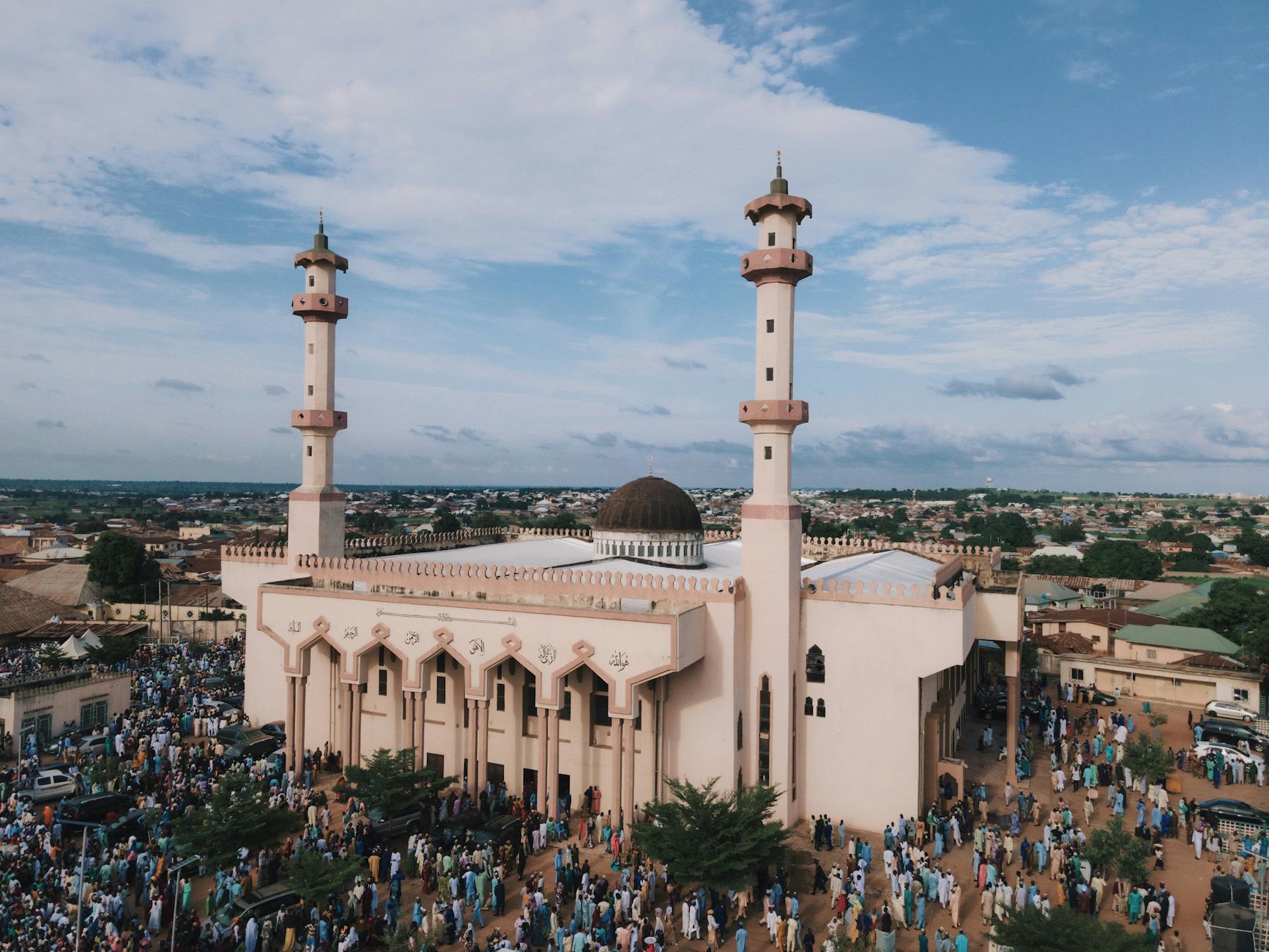
Agadez is one of the Sahel's great historic cities, with a 27-meter mud-brick minaret and a street plan shaped by trans-Saharan trade. It feels built for shade, exchange, and patience.
Niger is where West Africa turns into the Sahara without losing its cities, its trade routes, or its sense of ceremony. The country makes more sense when you follow the river to Niamey, then the caravan road to Agadez.
 Niger
Niger
EntryVisa required in advance for most non-ECOWAS travelers; yellow fever proof required.
NA Niger travel guide starts with a correction: this is not empty desert, but a country where river cities, caravan towns, and the Sahara still argue over every map.
Niger stretches from the Niger River in the southwest to the Ténéré in the north, and that span changes the whole trip. In Niamey, life gathers along the river with fish on the grill, markets thick with Hausa and Zarma, and heat that makes shade feel like architecture. Agadez pulls you into a different register: a former caravan capital where the 16th-century mud-brick mosque still defines the skyline. Zinder adds another layer, with old Hausa quarters, court history, and trade routes that once tied the Sahel to North Africa. This is a country best read through its cities, because each one explains a different climate, language, and rhythm of life.
The landscapes are severe, but the culture is not. Around Tahoua and Maradi, millet, tea, leatherwork, and long greeting rituals shape daily life more than any postcard image of sand ever could. Head toward Tillabéri and Dosso and the Niger River becomes the story, bringing farms, fishing, birds, and the old political geography of the Songhai world into view. Farther north, around Iférouane and Arlit, the ground lifts into the Aïr Mountains, where volcanic rock, rock art, and Tuareg craft traditions make the Sahara feel inhabited rather than vacant.
Green Sahara and Early Peoples, c. 10000 BCE-3000 BCE
Picture a lakeshore where the Ténéré now blinds the eye with white light and dust. Around 7700 BCE, people buried their dead at Gobero beside pale water, with fish bones, harpoons, and the remains of hippos nearby. The most moving grave is still the one that stops scholars cold: a woman and two children laid down with their arms entwined, as if grief itself had arranged them.
Ce que l'on ignore souvent, c'est que Niger begins not with sand but with abundance. In the Aïr Mountains near modern Iférouane, rock shelters preserve giraffes, cattle, hunters, and dancers painted when the Sahara was a grassland stitched with seasonal lakes. Those walls are not decoration. They are a memory of climate, of migration, of a world that vanished.
Then the sky changed. Between roughly 5000 and 3000 BCE, the monsoon belt slipped south, the lakes shrank, pasture failed, and families who had buried their dead in wet ground were forced toward the Niger River bend, the Aïr oases, and the Lake Chad basin near today's Diffa.
That slow catastrophe shaped everything that followed. Niger's later kingdoms, caravan towns, and pastoral worlds all grew from the same old fact: in this country, water decides rank, routes, and survival.
The woman buried at Gobero with two children is not a queen with a name, yet she gives Niger one of its oldest and most intimate human scenes.
At Gobero, archaeologists found a burial with a bracelet carved from hippopotamus ivory in a place where no hippo has lived for thousands of years.
Empires of the River and the Lake, c. 800-1600
Begin at dawn on the Niger River near Tillabéri or Dosso: brown water, low voices, the slap of a pirogue against mud. This southwestern corridor, so easy to underestimate on a map, belonged to the political heartland of Songhai at its height, while farther east the Lake Chad world tied Niger to Kanem-Bornu, one of Africa's longest-lived dynasties.
Askia Mohammed, who seized power in 1493, understood theatre as well as authority. His pilgrimage to Mecca in 1496-97 was not piety alone; it was statecraft on horseback, a procession of cavalry, retainers, and gold that announced Songhai as a power to Cairo and the Hijaz. And yet the old conqueror ended badly. His own sons deposed him, sent him into exile on an island in the Niger, and only years later brought him back to die with his prestige intact but his power gone.
To the east, Kanem-Bornu gave the region a different style of monarchy: older, more durable, more tightly woven into Saharan and Islamic networks. Mai Idris Alooma, ruling in the late 16th century, brought musketeers and legal reform, built mosques, disciplined the army, and corresponded with larger Muslim courts as an equal rather than a provincial petitioner. He appears in the chronicle of Ahmad ibn Fartuwa not as a legend but as a working ruler, relentless, exacting, sometimes pitiless.
What matters here is not only conquest. These courts linked the land that is now Niger to caravan trade, Islamic scholarship, dynastic rivalry, and the great argument over legitimacy: who has the right to rule, and who writes the story afterward? That argument would not end with the empires. It merely changed costume.
Askia Mohammed looks monumental from a distance, but up close he is an old ruler betrayed by his sons and left to watch the river from exile.
According to the chronicles, Askia Mohammed spent his last years after deposition on an island in the Niger River before one of his sons, overcome by remorse, brought him back.
Sultanates, Caravans, and Desert Cities, c. 1400-1890
Stand before the minaret of Agadez in late afternoon, when the mud brick turns the color of baked apricot and every wooden beam throws a thin shadow. Rebuilt in 1515, the great mosque still rises 27 meters above the old quarter, a tower of earth and geometry at the edge of the Sahara. You can feel, almost physically, what made this city powerful: not fertile land, but control of passage.
Agadez was the capital of the Sultanate of Aïr, and the caravans that crossed it carried more than salt and cloth. They carried rumor, law, silverwork, slaves, Qur'anic learning, and the habits of distant courts. Ce que l'on ignore souvent, c'est que a desert city can become aristocratic without marble, without a river, without even permanence in the European sense. Here, prestige lived in lineage, in mediation, in who could guarantee safe passage through impossible distances.
The Tuareg world around Agadez and Iférouane was never the empty stage outsiders imagined. It was coded, hierarchical, exquisitely social. Indigo veils, saddles, swords, camel gear, and silver crosses were not folklore for visitors; they marked rank, confederation, and belonging. The annual repair of the mosque's plaster was part maintenance, part civic rite, part declaration that a city of mud could outlast stone if its people kept faith with it.
By the 19th century, however, the caravan order was under pressure from shifting trade, internal rivalries, and foreign appetites. The old Saharan courts did not collapse in a single dramatic gesture. They frayed. And when Europeans arrived with maps, rifles, and treaties drafted elsewhere, they found not a void, but political worlds already tired from holding the desert together.
Sultan Ilisawan of Aïr survives in memory less as a remote sovereign than as one more desert ruler trying to balance confederations, caravans, and quarrels that never truly ended.
The wooden poles jutting from the Agadez minaret are not ornamental at all; they serve as permanent scaffolding for replastering and as part of the tower's structure.
Colonial Rule, Independence, and the Republic of Coups, 1890-2023
The colonial story opens not in a salon but in dust and gunfire. In 1899, the French Voulet-Chanoine Mission crossed the region in a trail of killings so brutal that Paris itself recoiled; the officers were eventually stopped by their own army, but the conquest went on. In the east, the Sultanate of Damagaram in Zinder resisted before French force prevailed, and by 1926 the colonial capital shifted from Zinder to Niamey, a river town that would become the administrative heart of modern Niger.
Independence came on 3 August 1960, and with it one of those scenes new states know too well: flags, speeches, immaculate promises, and a treasury far thinner than the rhetoric. Hamani Diori, the first president, tried to hold together a country immense in territory and fragile in institutions. Then drought, food stress, and accusations of corruption broke the spell. In 1974, Lieutenant Colonel Seyni Kountché overthrew him, and the republic entered the long Nigerien rhythm of soldiers, constitutions, and interrupted civilian life.
Ce que l'on ignore souvent, c'est that uranium changed the balance of the state as much as any election. Around Arlit in the north, mining tied Niger to French energy policy and global markets, enriching the strategic importance of a region whose local communities often saw less benefit than outsiders imagined. Tuareg rebellions in the 1990s and again after 2007 were not desert romanticism. They were arguments about dignity, neglect, and who gets paid when the ground is valuable.
Niamey kept growing, the river still dictating settlement and ceremony. Democratic transfers did happen, briefly and meaningfully, but coups returned in 1996, 1999, 2010, and again in July 2023, when President Mohamed Bazoum was removed by the presidential guard. The sadness is not that Niger lacks history. Quite the opposite. It has too much statecraft, too much memory, too many promises made in public and unmade in barracks.
Hamani Diori, schoolteacher turned president, wanted to embody calm authority, yet he was undone by drought, scarcity, and the brutal arithmetic of a young state.
The capital of colonial Niger was not always Niamey; the French first ran the territory from Zinder before moving the seat of power west to the river in 1926.
In Niger, speech does not begin where a European thinks it does. The first business is the night: did you sleep, did the household sleep, did the heat spare you, did the children wake calm. In Niamey, a conversation may move through Zarma-Songhai with river softness, then harden into French when a stamp or a form appears; in Maradi or Zinder, Hausa gives trade its tempo, quick and exact, yet never rushed at the beginning. Purpose comes second. Courtesy enters first.
A greeting here is not ornament. It is architecture. You do not walk into a market stall and ask the price as if words were coins; you lay down respect, phrase by phrase, and only then touch the object. The effect is almost liturgical. Even silence has rank.
Certain words refuse translation with the dignity of old aristocrats. Hausa keeps kunya, that mixture of modesty, reserve, and the good sense not to place yourself in the center of the room as if the room belonged to you. Fulani worlds speak of semteende, a discipline of bearing so fine it feels like tailoring for the soul. A country is a grammar of distance. Niger knows exactly how much is elegant.
Nigerien food begins with grains that survive insult. Millet, sorghum, rice, cowpea, baobab leaf, moringa, fermented milk: this is a pantry built for sun, wind, and patience. In Niamey and along the river towns near Dosso and Tillabéri, a platter of dambou arrives looking almost austere, then the moringa speaks, dark green and faintly bitter, against hot grain and oil. Modesty can be theatrical.
The right hand does the real thinking. You pinch tuwo shinkafa or tuwon dawa, make a small hollow, gather sauce, and lift. Miyan kuka, made from powdered baobab leaves, has the sly texture of something between soup and silk; it exists to coat grain, to persuade the mouth to slow down. Then comes kilishi, paper-thin beef lacquered with peanut and spice until it becomes a travel philosophy: light, dry, persistent.
Pastoral culture changes everything it touches. Around Agadez and farther north, milk is not a side note but a worldview. Fura da nono, millet and fermented milk in a calabash, tastes of survival refined into pleasure, the sourness sharp enough to wake the tongue and the body at once. In a hot country, acid is mercy.
Nigerien etiquette is a school for people who mistake speed for honesty. You lower your voice. You greet before asking. You take food from the part of the communal bowl placed in front of you, unless an elder or host serves you otherwise. In a place where shade, water, and social peace are all finite goods, manners are not decorative. They are storage systems.
Watch a tea circle in Niamey or Tahoua. Men sit in a fada, that elastic institution halfway between parliament, waiting room, comedy club, and court of appeal. Small glasses of strong tea pass through several rounds, each sweeter than the last, and time is handled as if it were something to be brewed rather than spent. Nothing appears to happen. Alliances happen.
The foreigner who arrives with cheerful bluntness will not be hated. Worse. He will be understood as a child. Niger prefers discipline in miniature: the hand kept clean, the elder greeted first, the impatience hidden, the request delayed by half a minute of humanity. Civilization can fit inside thirty seconds.
Niger is overwhelmingly Muslim, but the fact matters less as arithmetic than as rhythm. The day bends around prayer with such quiet authority that even the market seems to inhale differently. In Niamey, in Zinder, in the old quarters of Agadez, you hear the call move across concrete, mud brick, tin roofs, satellite dishes, donkey carts, motorbikes, and women balancing bowls with the calm of queens. Sound becomes a form of shade.
Sufi brotherhoods such as the Tijaniyya and Qadiriyya have left their mark not through spectacle but through texture: recitation, teaching, graves visited with restraint, authority carried in lineages and habits rather than in grand declarations. The result is a public piety that often feels more woven than displayed. Faith sits in greetings, in timing, in the vocabulary of respect.
Then the desert adds its own theology. In the north, where distance can make a person feel both absurd and exact, religion loses any taste for abstraction. Water is real. Bread is real. Mercy is real. The rest is commentary.
Agadez settles the matter at once: mud brick can be more majestic than masonry when a city knows what to do with heat. The Great Mosque, rebuilt in 1515, rises 27 meters in adobe, its minaret bristling with wooden beams that serve as scaffolding and skeleton at once. Remove them and you injure the building. Architecture here admits dependence without shame.
That is the lesson of the Sahel. Houses are not sealed boxes but negotiations with climate: thick earthen walls, inner courtyards, shade calculated rather than improvised, doors that understand dust, roofs that accept repair as part of life. A European façade often pretends it is finished. Nigerien architecture expects maintenance the way a garden expects water.
In old quarters of Agadez, and in smaller townscapes from Tahoua to Maradi, the beauty lies in surfaces that record touch: replastering, rain marks, palms against a wall, the yearly labor that keeps a structure alive. Permanence, here, is not hardness. It is ritual.
Clothing in Niger is not merely seen. It alters the air around a person. In the north near Agadez and Iférouane, Tuareg indigo cloth carries its own weather, deep blue with that faint powdery bloom that can mark the skin; silver jewelry catches light without ever becoming gaudy, because the desert has already taught proportion. Excess would look foolish against that much sky.
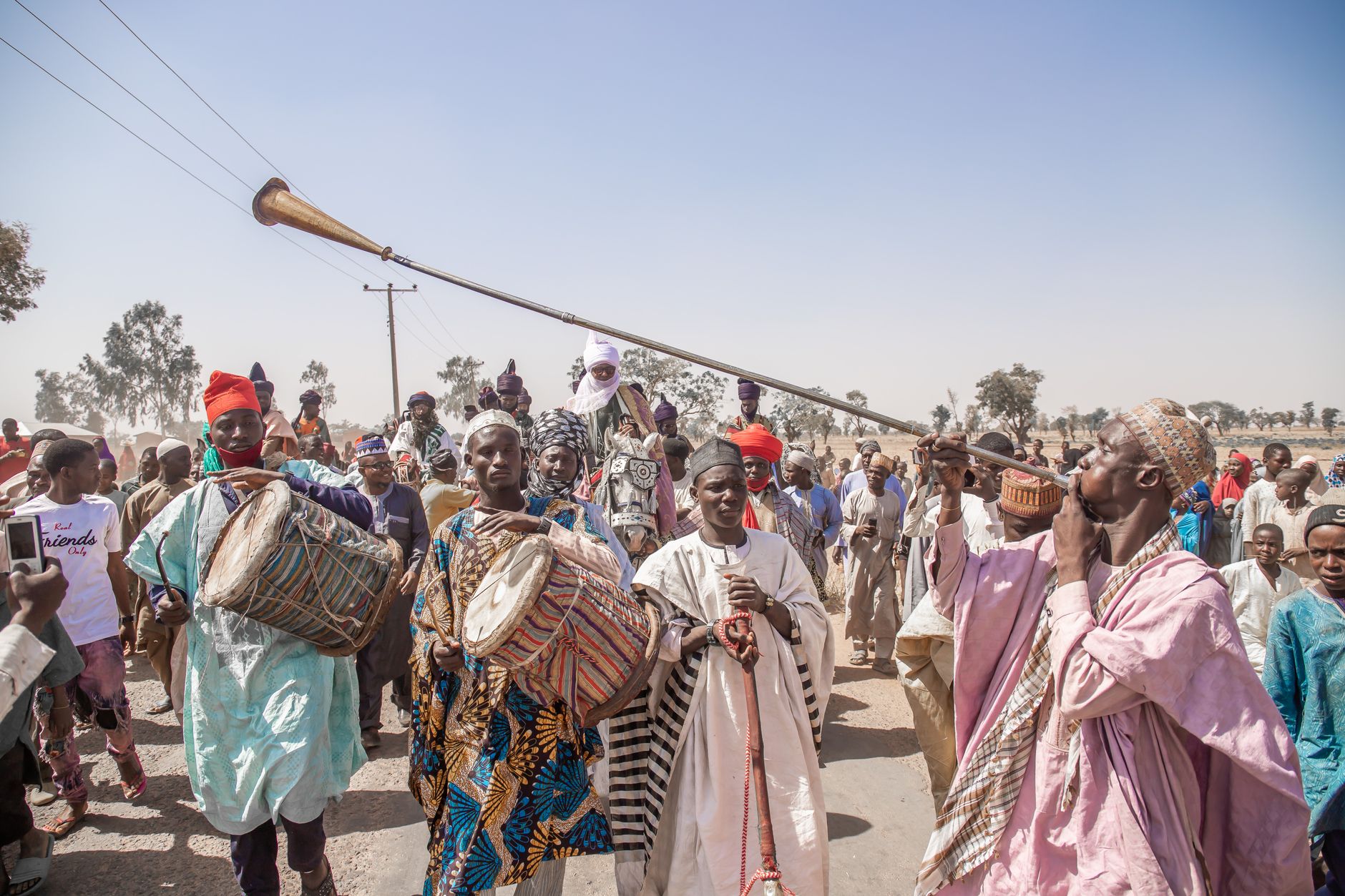
Further south, Hausa and Zarma tailoring sharpens into another register: embroidered boubous, caps worked with geometric patience, wrappers tied with a precision that turns fabric into posture. Ceremony is visible at weddings, naming feasts, Friday prayer, market days when people dress not to impress strangers but to honor the social occasion itself. That difference is everything.
Cloth here speaks before biography does. It can suggest region, trade, age, means, religious seriousness, or a flirtation so discreet that only the intended victim will notice. Fashion, at its best, is coded mischief. Niger understands codes.
Agadez is one of the Sahel's great historic cities, with a 27-meter mud-brick minaret and a street plan shaped by trans-Saharan trade. It feels built for shade, exchange, and patience.
The Aïr Mountains rise from the desert like a geological mistake, then the Ténéré opens into raw distance. Rock art, volcanic massifs, and night skies give northern Niger its force.
Around Niamey, Tillabéri, and Dosso, the river changes everything: food, farming, transport, and birdlife. It is the reason southwest Niger feels greener, denser, and more urban than the map suggests.
Zinder, Dosso, and the river regions carry the afterimage of Songhai, Hausa, and Kanem-Bornu power. This is history you can still read in old quarters, market layouts, and ceremonial architecture.
Silver jewelry, indigo cloth, leatherwork, and saddlery are not souvenir categories here; they come from trading and pastoral cultures with long technical memory. The best pieces look spare until you notice the precision.
Nigerien food is grounded in millet, rice, moringa, fermented milk, grilled meat, and river fish. In Niamey, a plate of fish by the Niger tells you more about the country than any formal restaurant ever could.
12 cities — start with the ones we'd send you to first.
A riverside capital where the Grand Marché sells Tuareg silver beside Chinese motorcycles and the terrace bars above the Niger River fill at dusk with the entire social spectrum of a nation in motion.
The 27-metre minaret of the Grande Mosquée d'Agadez — built in 1515 from mud and palm-wood stakes that protrude like ribs — still anchors a Saharan trading city that once taxed every caravan crossing the Aïr.
Niger's former colonial capital retains a walled Birni quarter of labyrinthine alleys where the Sultan of Damagaram still holds court, and where Hausa architecture reaches an elaborateness you won't find in Niamey.
Positioned where the Sahel thins toward the Sahara, Tahoua hosts one of the most commercially serious livestock markets in the central Sahel — a Thursday spectacle of camels, cattle, and Fulani herders that has nothing t
The economic engine of southern Niger, a Hausa city of dense commerce and groundnut trade sitting 30 kilometres from the Nigerian border, where French-language signage competes with Hausa and the distinction between the
A Zarma-Songhai stronghold on the main road south toward Benin, where the Doso hunters' brotherhood — custodians of a pre-Islamic spiritual tradition — still initiates members and the weekly market draws traders from thr
Strung along the Niger River where hippopotamus pods surface at dusk, Tillabéri is the gateway to W National Park and the place where the river landscape the rest of the country lacks suddenly makes itself felt.
A uranium-mining city carved out of the Sahara in 1969 by French nuclear interests, whose entire existence is a blunt lesson in what the Aïr Mountains sit on top of and who has historically profited from it.
A small oasis town deep in the Aïr Mountains at roughly 1,200 metres, surrounded by volcanic peaks and prehistoric rock engravings, and the last reliable supply point before the Ténéré swallows the track entirely.
This is the easiest part of Niger to read at first glance, then the hardest to simplify. Niamey runs on the river, ministries, embassies, and markets, but a short drive toward Tillabéri or Ayorou shifts the mood toward fishing villages, broad water, and the long flat horizon that explains why the Niger River matters more than any map legend can.
Agadez is the old hinge between West Africa and the Sahara, and it still looks the part in mud brick and dust-toned geometry. Beyond it, Iférouane and Arlit lead into the Aïr massif, where altitude, volcanic rock, and Tuareg culture interrupt the lazy idea that desert always means emptiness.
Southern Niger speaks in commerce here. Maradi and Zinder are market cities first, shaped by cross-border exchange with Nigeria, long bargaining rituals, grilled meat at night, and the kind of practical energy that tells you this part of the country has always been connected to somewhere else.
Diffa feels different because it is different: flatter, more exposed, and pulled toward Lake Chad and the Chad basin rather than the river west. Agadem belongs to the same eastern story, one shaped less by monuments than by distance, logistics, and a landscape where water and access decide everything.
Dosso sits in the greener south, where road travel from Niamey starts to feel agricultural rather than desert-bound. This is millet, fields, market traffic, and the slow shift toward the Sudanian fringe, useful for understanding that Niger is not only sand, nor even mostly sand in the daily lives of its southern population.
Tahoua is the middle register of Niger: neither river capital nor full Sahara, but the dry Sahel in working mode. It is a good place to notice pastoral movement, long road distances, and the way the country shades from Hausa market culture toward the north without a clean frontier between the two.
From the wet Sahara to the coup of 2023
Communities bury their dead at Gobero in the Ténéré when the Sahara is still dotted with lakes and rich in wildlife. The cemetery gives Niger one of the oldest intimate archives of human life in the region.
A woman and two children are buried with arms entwined, one of the most haunting prehistoric burials in the Sahara. It reminds us that tenderness is part of the archaeological record, not just tools and bones.
Climate shifts push populations toward oases, the Niger River corridor, and the Lake Chad basin. Much of Niger's later political geography begins with this environmental rupture.
The Kanem state consolidates in the wider Lake Chad world, shaping the eastern lands that now belong to Niger. The region is tied into Saharan trade and Islamic court culture long before colonial borders exist.
Rulers of Kanem adopt Islam more firmly and connect their authority to wider Muslim networks. Eastern Niger is drawn into a written, legal, and commercial world stretching across the Sahara.
Tuareg confederations consolidate Agadez as a political and caravan center in the Aïr. The city becomes the desert court of what later travelers will call one of the Sahara's great crossroads.
Askia Mohammed seizes the Songhai throne and brings the Niger bend into a new phase of imperial rule. The southwestern lands of present-day Niger stand inside one of early modern Africa's great states.
Askia Mohammed's hajj broadcasts wealth, piety, and political ambition across the Islamic world. His journey helps legitimize rule over the river territories that include modern Tillabéri and Dosso.
The great mud-brick mosque of Agadez takes the form that still defines the city today. Its tapering minaret becomes the visual signature of Saharan urban life in Niger.
Idris Alooma comes to power in Kanem-Bornu and reforms army, administration, and religion with unusual force. His reign affects eastern Niger through trade, warfare, and political discipline around the Lake Chad basin.
French military conquest reaches Niger through a campaign so violent it shocks even authorities in Paris. Colonial rule is not born in paperwork first, but in massacre and coercion.
The French make Zinder the administrative center of the colony, recognizing its strategic weight in the southeast. For a time, colonial Niger is governed from a former sultanate city rather than from the river.
Kaocen Ag Mohammed leads a major Tuareg uprising centered on Agadez and the Aïr. It is one of the most serious anti-colonial rebellions in Saharan West Africa, and the French crush it with severity.
French authorities shift the colonial capital to Niamey on the Niger River. That decision reshapes the future state, giving the river city the political centrality it still holds.
Niger becomes independent from France, with Hamani Diori as its first president. The ceremony is simple on paper, immense in consequence: a colonial territory must now learn to act as a sovereign state.
A military coup topples President Hamani Diori after drought, famine, and anger over governance. The armed forces establish themselves as recurring arbiters of Nigerien politics.
The Aïr and Ténéré Natural Reserves are inscribed on the UNESCO World Heritage List. The listing acknowledges what local people already knew: this is not empty desert, but a rare ecological and cultural world.
A coup led by Ibrahim Baré Maïnassara interrupts the democratic experiment of the early 1990s. Niger's constitutions begin to look less like foundations than like documents forever under revision.
President Baré Maïnassara dies in a military coup at Niamey's airport. The scene is brutally Nigerien in its symbolism: the state undone in transit, before departure, under armed watch.
President Mamadou Tandja is removed by soldiers after trying to extend his hold on power. Once again, constitutional argument ends with troops deciding the matter.
Mohamed Bazoum takes office after a democratic transfer of power, a rare and important moment in Niger's political history. For a brief time, the republic seems capable of continuity without force.
The presidential guard removes Mohamed Bazoum and suspends the constitutional order. Niger enters yet another phase in which power is announced by soldiers before it is explained by politicians.
Green Sahara and Early Peoples
The woman buried at Gobero with two children is not a queen with a name, yet she gives Niger one of its oldest and most intimate human scenes.
Picture a lakeshore where the Ténéré now blinds the eye with white light and dust. Around 7700 BCE, people buried their dead at Gobero beside pale water, with fish bones, harpoons, and the remains of hippos nearby. The most moving grave is still the one that stops scholars cold: a woman and two children laid down with their arms entwined, as if grief itself had arranged them.
Ce que l'on ignore souvent, c'est que Niger begins not with sand but with abundance. In the Aïr Mountains near modern Iférouane, rock shelters preserve giraffes, cattle, hunters, and dancers painted when the Sahara was a grassland stitched with seasonal lakes. Those walls are not decoration. They are a memory of climate, of migration, of a world that vanished.
Then the sky changed. Between roughly 5000 and 3000 BCE, the monsoon belt slipped south, the lakes shrank, pasture failed, and families who had buried their dead in wet ground were forced toward the Niger River bend, the Aïr oases, and the Lake Chad basin near today's Diffa.
That slow catastrophe shaped everything that followed. Niger's later kingdoms, caravan towns, and pastoral worlds all grew from the same old fact: in this country, water decides rank, routes, and survival.
At Gobero, archaeologists found a burial with a bracelet carved from hippopotamus ivory in a place where no hippo has lived for thousands of years.
Empires of the River and the Lake
Askia Mohammed looks monumental from a distance, but up close he is an old ruler betrayed by his sons and left to watch the river from exile.
Begin at dawn on the Niger River near Tillabéri or Dosso: brown water, low voices, the slap of a pirogue against mud. This southwestern corridor, so easy to underestimate on a map, belonged to the political heartland of Songhai at its height, while farther east the Lake Chad world tied Niger to Kanem-Bornu, one of Africa's longest-lived dynasties.
Askia Mohammed, who seized power in 1493, understood theatre as well as authority. His pilgrimage to Mecca in 1496-97 was not piety alone; it was statecraft on horseback, a procession of cavalry, retainers, and gold that announced Songhai as a power to Cairo and the Hijaz. And yet the old conqueror ended badly. His own sons deposed him, sent him into exile on an island in the Niger, and only years later brought him back to die with his prestige intact but his power gone.
To the east, Kanem-Bornu gave the region a different style of monarchy: older, more durable, more tightly woven into Saharan and Islamic networks. Mai Idris Alooma, ruling in the late 16th century, brought musketeers and legal reform, built mosques, disciplined the army, and corresponded with larger Muslim courts as an equal rather than a provincial petitioner. He appears in the chronicle of Ahmad ibn Fartuwa not as a legend but as a working ruler, relentless, exacting, sometimes pitiless.
What matters here is not only conquest. These courts linked the land that is now Niger to caravan trade, Islamic scholarship, dynastic rivalry, and the great argument over legitimacy: who has the right to rule, and who writes the story afterward? That argument would not end with the empires. It merely changed costume.
According to the chronicles, Askia Mohammed spent his last years after deposition on an island in the Niger River before one of his sons, overcome by remorse, brought him back.
Sultanates, Caravans, and Desert Cities
Sultan Ilisawan of Aïr survives in memory less as a remote sovereign than as one more desert ruler trying to balance confederations, caravans, and quarrels that never truly ended.
Stand before the minaret of Agadez in late afternoon, when the mud brick turns the color of baked apricot and every wooden beam throws a thin shadow. Rebuilt in 1515, the great mosque still rises 27 meters above the old quarter, a tower of earth and geometry at the edge of the Sahara. You can feel, almost physically, what made this city powerful: not fertile land, but control of passage.
Agadez was the capital of the Sultanate of Aïr, and the caravans that crossed it carried more than salt and cloth. They carried rumor, law, silverwork, slaves, Qur'anic learning, and the habits of distant courts. Ce que l'on ignore souvent, c'est que a desert city can become aristocratic without marble, without a river, without even permanence in the European sense. Here, prestige lived in lineage, in mediation, in who could guarantee safe passage through impossible distances.
The Tuareg world around Agadez and Iférouane was never the empty stage outsiders imagined. It was coded, hierarchical, exquisitely social. Indigo veils, saddles, swords, camel gear, and silver crosses were not folklore for visitors; they marked rank, confederation, and belonging. The annual repair of the mosque's plaster was part maintenance, part civic rite, part declaration that a city of mud could outlast stone if its people kept faith with it.
By the 19th century, however, the caravan order was under pressure from shifting trade, internal rivalries, and foreign appetites. The old Saharan courts did not collapse in a single dramatic gesture. They frayed. And when Europeans arrived with maps, rifles, and treaties drafted elsewhere, they found not a void, but political worlds already tired from holding the desert together.
The wooden poles jutting from the Agadez minaret are not ornamental at all; they serve as permanent scaffolding for replastering and as part of the tower's structure.
Colonial Rule, Independence, and the Republic of Coups
Hamani Diori, schoolteacher turned president, wanted to embody calm authority, yet he was undone by drought, scarcity, and the brutal arithmetic of a young state.
The colonial story opens not in a salon but in dust and gunfire. In 1899, the French Voulet-Chanoine Mission crossed the region in a trail of killings so brutal that Paris itself recoiled; the officers were eventually stopped by their own army, but the conquest went on. In the east, the Sultanate of Damagaram in Zinder resisted before French force prevailed, and by 1926 the colonial capital shifted from Zinder to Niamey, a river town that would become the administrative heart of modern Niger.
Independence came on 3 August 1960, and with it one of those scenes new states know too well: flags, speeches, immaculate promises, and a treasury far thinner than the rhetoric. Hamani Diori, the first president, tried to hold together a country immense in territory and fragile in institutions. Then drought, food stress, and accusations of corruption broke the spell. In 1974, Lieutenant Colonel Seyni Kountché overthrew him, and the republic entered the long Nigerien rhythm of soldiers, constitutions, and interrupted civilian life.
Ce que l'on ignore souvent, c'est that uranium changed the balance of the state as much as any election. Around Arlit in the north, mining tied Niger to French energy policy and global markets, enriching the strategic importance of a region whose local communities often saw less benefit than outsiders imagined. Tuareg rebellions in the 1990s and again after 2007 were not desert romanticism. They were arguments about dignity, neglect, and who gets paid when the ground is valuable.
Niamey kept growing, the river still dictating settlement and ceremony. Democratic transfers did happen, briefly and meaningfully, but coups returned in 1996, 1999, 2010, and again in July 2023, when President Mohamed Bazoum was removed by the presidential guard. The sadness is not that Niger lacks history. Quite the opposite. It has too much statecraft, too much memory, too many promises made in public and unmade in barracks.
The capital of colonial Niger was not always Niamey; the French first ran the territory from Zinder before moving the seat of power west to the river in 1926.
In Niger, speech does not begin where a European thinks it does. The first business is the night: did you sleep, did the household sleep, did the heat spare you, did the children wake calm. In Niamey, a conversation may move through Zarma-Songhai with river softness, then harden into French when a stamp or a form appears; in Maradi or Zinder, Hausa gives trade its tempo, quick and exact, yet never rushed at the beginning. Purpose comes second. Courtesy enters first.
A greeting here is not ornament. It is architecture. You do not walk into a market stall and ask the price as if words were coins; you lay down respect, phrase by phrase, and only then touch the object. The effect is almost liturgical. Even silence has rank.
Certain words refuse translation with the dignity of old aristocrats. Hausa keeps kunya, that mixture of modesty, reserve, and the good sense not to place yourself in the center of the room as if the room belonged to you. Fulani worlds speak of semteende, a discipline of bearing so fine it feels like tailoring for the soul. A country is a grammar of distance. Niger knows exactly how much is elegant.
Nigerien food begins with grains that survive insult. Millet, sorghum, rice, cowpea, baobab leaf, moringa, fermented milk: this is a pantry built for sun, wind, and patience. In Niamey and along the river towns near Dosso and Tillabéri, a platter of dambou arrives looking almost austere, then the moringa speaks, dark green and faintly bitter, against hot grain and oil. Modesty can be theatrical.
The right hand does the real thinking. You pinch tuwo shinkafa or tuwon dawa, make a small hollow, gather sauce, and lift. Miyan kuka, made from powdered baobab leaves, has the sly texture of something between soup and silk; it exists to coat grain, to persuade the mouth to slow down. Then comes kilishi, paper-thin beef lacquered with peanut and spice until it becomes a travel philosophy: light, dry, persistent.
Pastoral culture changes everything it touches. Around Agadez and farther north, milk is not a side note but a worldview. Fura da nono, millet and fermented milk in a calabash, tastes of survival refined into pleasure, the sourness sharp enough to wake the tongue and the body at once. In a hot country, acid is mercy.
Nigerien etiquette is a school for people who mistake speed for honesty. You lower your voice. You greet before asking. You take food from the part of the communal bowl placed in front of you, unless an elder or host serves you otherwise. In a place where shade, water, and social peace are all finite goods, manners are not decorative. They are storage systems.
Watch a tea circle in Niamey or Tahoua. Men sit in a fada, that elastic institution halfway between parliament, waiting room, comedy club, and court of appeal. Small glasses of strong tea pass through several rounds, each sweeter than the last, and time is handled as if it were something to be brewed rather than spent. Nothing appears to happen. Alliances happen.
The foreigner who arrives with cheerful bluntness will not be hated. Worse. He will be understood as a child. Niger prefers discipline in miniature: the hand kept clean, the elder greeted first, the impatience hidden, the request delayed by half a minute of humanity. Civilization can fit inside thirty seconds.
Niger is overwhelmingly Muslim, but the fact matters less as arithmetic than as rhythm. The day bends around prayer with such quiet authority that even the market seems to inhale differently. In Niamey, in Zinder, in the old quarters of Agadez, you hear the call move across concrete, mud brick, tin roofs, satellite dishes, donkey carts, motorbikes, and women balancing bowls with the calm of queens. Sound becomes a form of shade.
Sufi brotherhoods such as the Tijaniyya and Qadiriyya have left their mark not through spectacle but through texture: recitation, teaching, graves visited with restraint, authority carried in lineages and habits rather than in grand declarations. The result is a public piety that often feels more woven than displayed. Faith sits in greetings, in timing, in the vocabulary of respect.
Then the desert adds its own theology. In the north, where distance can make a person feel both absurd and exact, religion loses any taste for abstraction. Water is real. Bread is real. Mercy is real. The rest is commentary.
Agadez settles the matter at once: mud brick can be more majestic than masonry when a city knows what to do with heat. The Great Mosque, rebuilt in 1515, rises 27 meters in adobe, its minaret bristling with wooden beams that serve as scaffolding and skeleton at once. Remove them and you injure the building. Architecture here admits dependence without shame.
That is the lesson of the Sahel. Houses are not sealed boxes but negotiations with climate: thick earthen walls, inner courtyards, shade calculated rather than improvised, doors that understand dust, roofs that accept repair as part of life. A European façade often pretends it is finished. Nigerien architecture expects maintenance the way a garden expects water.
In old quarters of Agadez, and in smaller townscapes from Tahoua to Maradi, the beauty lies in surfaces that record touch: replastering, rain marks, palms against a wall, the yearly labor that keeps a structure alive. Permanence, here, is not hardness. It is ritual.
Clothing in Niger is not merely seen. It alters the air around a person. In the north near Agadez and Iférouane, Tuareg indigo cloth carries its own weather, deep blue with that faint powdery bloom that can mark the skin; silver jewelry catches light without ever becoming gaudy, because the desert has already taught proportion. Excess would look foolish against that much sky.
Further south, Hausa and Zarma tailoring sharpens into another register: embroidered boubous, caps worked with geometric patience, wrappers tied with a precision that turns fabric into posture. Ceremony is visible at weddings, naming feasts, Friday prayer, market days when people dress not to impress strangers but to honor the social occasion itself. That difference is everything.
Cloth here speaks before biography does. It can suggest region, trade, age, means, religious seriousness, or a flirtation so discreet that only the intended victim will notice. Fashion, at its best, is coded mischief. Niger understands codes.
He understood that a crown is half belief, half logistics. When he crossed the Sahara on pilgrimage with gold and cavalry, the river country around present-day Tillabéri and Dosso became part of a political theatre seen as far away as Cairo; then age and family cruelty reduced him to exile on an island in the very river that had made him great.
Alooma was the sort of ruler who counted muskets, mosques, and enemies with equal care. His authority reached into the lands near modern Diffa, where Niger's eastern history was tied not to Atlantic trade but to the older, tougher politics of the central Sudan and the Sahara.
In Zinder, power wore embroidered robes, dispensed justice, and taxed caravans before it bowed to French conquest. Tanimoun stands for that Damagaram world: courtly, commercial, and very far from the lazy idea that precolonial Niger was politically empty.
He turned Agadez and the Aïr into the center of one of the fiercest anti-colonial uprisings in the Sahara in 1916-1917. The French remembered him as a rebel; many in the north remembered a man who refused to treat conquest as inevitable.
Aouta of Dosso made the kind of compromise history rarely rewards in song. He worked with the French when the balance of force was already shifting, choosing survival and local advantage over a grand defeat; pragmatic men like him often built the bridge on which empires walked in.
Diori had the manners of a teacher and the burdens of a founder. From Niamey he tried to turn a colonial territory into a republic, only to see drought, patronage, and military impatience tear away the composure of the first regime.
He came in uniform and spoke the language of order after famine and scandal had weakened civilian rule. Many Nigeriens remembered him as austere, disciplined, and feared, the sort of ruler who made the state feel more solid even as he narrowed its political life.
If Niger has a grandfather in print, it is Boubou Hama. He collected oral traditions, wrote history with nation-building intent, and tried to give a young republic something harder to seize than a ministry: memory.
Dayak was not just a rebel figure; he was also a guide, a mediator, and a man who knew how foreigners romanticized the Sahara while missing the politics underneath. His death in a plane crash in 1995 froze him in memory as one of the north's unresolved voices.
Bazoum represented a rare civilian succession by election in a country that had seen too many barracks decide the constitution. His removal in July 2023 gave Niger one more abrupt scene of locked gates, military statements, and a republic once again interrupted.
This is the shortest route that still shows how Niger changes once you leave the capital. Start in Niamey for riverfront urban life, then follow the Niger River through Dosso and Tillabéri to Ayorou, where the country feels wider, quieter, and more tied to water and desert at once.
Agadez gives you the old caravan city first, then the route climbs into thinner air and harder light. Iférouane and Arlit are not polished stops; that is the point, because this week is about adobe skylines, volcanic rock, Tuareg country, and distances that still feel earned.
This eastbound route moves through Niger's trading belt rather than its postcard image of emptiness. Maradi and Zinder bring markets, mosques, and old commercial muscle, then Diffa and Agadem push toward the far southeast, where the road starts to feel more strategic than touristic.
This longer southern loop stays away from the far desert and shows the country by grain, trade, and roadside rhythm. Tahoua, Dosso, and Maradi each speak in a different register, and the route makes sense for travelers who want a broader look at Sahelian Niger without repeating the same desert narrative.
Steamed millet or semolina, moringa leaves, onion, oil, peanuts. Shared from one platter at midday in Niamey or Dosso, often with fish or meat placed on top like a final argument.
Soft rice paste, right hand, baobab-leaf sauce. Lunch food, family food, bowl food; grain pinched, sauce gathered, conversation slowed.
Millet or sorghum paste with a darker grain taste than rice. Evening meal, household meal, the sort of food that asks for shade and patience.
Millet balls crumbled into fermented milk in a calabash. Breakfast in the heat, market refreshment, pastoral intelligence you can drink.
Paper-thin dried beef brushed with peanut-spice paste and dried again. Street snack, bus snack, tea-circle companion; torn with the teeth more than chewed.
Beef or goat over charcoal, served straight from the skewer with raw onion, bread, and heat. Night food in Niamey, eaten standing, talking, waiting for the next round.
Grilled or fried fish from the Niger River with rice and sauce. Midday plate in Niamey or Tillabéri, less ceremonial than tuwo, more urban, no less serious.



EU, US, Canadian, UK, and Australian passport holders need a visa in advance for Niger. Do not count on visa on arrival at Niamey; normal entry also requires a yellow fever certificate and, in practice, a passport valid at least six months beyond departure.
Niger uses the West African CFA franc, or XOF, pegged to the euro at 655.957 XOF to 1 EUR. Cash still runs the country: ATMs are limited outside Niamey, cards work only in a handful of top-end hotels, and clean euro or US dollar notes are the safest backup.
Most arrivals come through Diori Hamani International Airport in Niamey. The most practical long-haul connections usually route through Istanbul, Addis Ababa, Casablanca, or West African hubs such as Lomé and Abidjan.
Road travel is the only realistic way to move between Niamey, Dosso, Tahoua, Agadez, Zinder, and Diffa, but conditions are not ordinary travel conditions. Independent overland travel is widely discouraged by official advisories; if movement is unavoidable, use a trusted driver and confirm current escort or checkpoint rules before leaving town.
November to February is the least punishing window, with cooler days and drier air across Niamey, Agadez, and Zinder. From March to May, heat becomes hard work, and June to September brings rain in the south while the north stays harsh, dusty, and logistically difficult.
Mobile coverage is decent in Niamey and the southern corridor, then thins fast toward Arlit, Iférouane, and the desert roads. Buy a local SIM in the capital if you can, download offline maps before departure, and treat hotel Wi-Fi as useful when it works rather than guaranteed.
Niger remains under severe travel warnings from multiple Western governments because of terrorism, kidnapping, crime, and political instability after the 2023 coup. For most travelers, the practical answer is simple: defer non-essential travel, and if travel is unavoidable, verify embassy guidance and local security conditions immediately before booking and again before each overland move.
Bring plenty of XOF in small denominations for taxis, market food, and roadside purchases. Change for a 10,000 XOF note can be awkward outside larger hotels and formal shops.
Do not build an itinerary around trains. Niger has no practical passenger rail network for travelers, so road transport or the occasional domestic flight is the real calculation.
Reserve refundable rooms in Niamey, Agadez, or Zinder, then confirm them again a day or two before arrival. Schedules change, properties go offline, and phone or WhatsApp confirmation matters more here than an automated booking email.
If you are eating from a shared bowl, use your right hand and take food from the section nearest you unless the host serves you differently. That one detail will do more for first impressions than a memorized speech.
Set up offline maps before leaving Niamey, especially if you are heading toward Tahoua, Agadez, Arlit, or Diffa. Data coverage can vanish without warning, and desert roads are a poor place to discover you have no map.
Self-driving is the wrong economy in Niger. A local driver who understands checkpoints, fuel stops, and current restrictions saves more time and trouble than the rental discount ever will.
Read your government's travel advice before booking, then read it again just before departure. Niger's security picture can change faster than a guide page can, and a route that looked possible last month may not be sensible now.
Explore Niger with a personal guide in your pocket
Audio guides for 1,100+ cities across 96 countries. History, stories, and local insight — offline ready.

For most tourists, no. Multiple governments still advise against travel because of terrorism, kidnapping, violent crime, and political instability, so non-essential trips should be postponed unless you have a specific reason, local support, and current security information.
Yes, US citizens need a visa before travel. You should arrange it through the relevant Nigerien embassy or consulate and travel with a yellow fever certificate, a passport with blank pages, and supporting documents for your stay.
Usually no. Visa on arrival is described only as an exceptional process with prior authorization, so ordinary travelers should assume they must arrive with the visa already in their passport.
November to February is the best window for both Niamey and Agadez. Days are still warm, but the heat is less punishing, road travel is easier to manage, and you avoid the worst of the southern rains and late-spring furnace conditions.
Only rarely. In practice you should expect to pay cash almost everywhere, with cards accepted mainly at a few higher-end hotels and formal businesses in Niamey.
By road or, when schedules hold, by a limited domestic flight. The road is the standard option, but current security conditions make independent travel a poor idea, so anyone attempting the route should use local logistical support and verify restrictions immediately before departure.
No, not widely. French is the official language, Hausa is the broad trade language across much of the south, Zarma is common around Niamey, and English is limited outside international organizations and a few hotels.
Bring more cash than you would for a comparable trip in a card-friendly country, and split it between daily XOF spending money and backup euro or US dollar notes. ATMs can be scarce or unreliable outside Niamey, which turns cash planning from convenience into logistics.
Last reviewed