Introduction
The lake smells of petrol and fried yucca at the same time. In Managua, Nicaragua’s capital, that contradiction is the point: a city that rebuilt itself after erasing its own downtown, where the national cathedral is a roofless shell and the freshest coffee is poured from a bicycle cart at 6:15 a.m. under mango shade.
No street follows a straight line for long; addresses are given as references to dead radio stations and vanished trees. Ask for directions and you’ll hear “de donde fue el Hotel Bojórquez” even though the earthquake of 1972 swallowed that hotel whole. The grid broke then and never mended, so the city sprawls like a cracked mirror—each shard reflecting a different decade of concrete, corrugated zinc, and sudden bursts of bougainvillea.
What keeps it from unraveling is sound. From the whistle of the tortilla vendor at dawn to the bass line leaking from a car parked outside a Pentecostal church at midnight, Managua measures distance in decibels. Follow the marimba competing with reggaetón and you’ll find the weekend food court inside Mercado Roberto Huembes, where a nacatamal the size of a hardback book costs forty córdobas and comes wrapped in the same banana leaf the woman’s grandmother used during the Somoza years.
The surprise is how quickly the place lets you in. One ride in a route-110 microbus—door held shut by a shoelace—and you’re part of the argument about baseball lineups. Accept the tiny cup of café chupito offered by the driver and you’ve joined the city’s ongoing negotiation between memory and forward motion. Stay long enough to watch the sun sink behind the Malecón and you’ll understand why locals call the lake “Xolotlán” instead of Managua: names, like buildings, can be replaced, but the water remembers.
What Makes This City Special
Plaza de la Revolución & Ruins
Stand where Sandinistas took the National Palace in 1978 and the old cathedral cracked by the ’72 earthquake still looms like a broken monument. The square smells of street-grilled quesillo and echoes with weekend marimba.
Zip-Line over Laguna Tiscapa
Launch from the former Somoza bunker at Loma de Tiscapa and glide 1 km-plus over a 5,000-year-old crater lake. The view south frames Masaya Volcano; north lies Xolotlán’s shimmering expanse.
Puerto Salvador Allende
Twenty-nine blocks of lakefront playgrounds, Peruvian ceviche kiosks, and Central America’s longest go-kart track. Come at dusk when the rides light up and the lake breeze smells of fried plantain.
Brutalism Meets Baroque
Managua’s skyline is a collage of earthquake resilience: the Brutalist Catedral Nueva with its concrete-grenade roof beside the neoclassical shell of Catedral Vieja. Belgian angels still peer through broken rose windows.
Historical Timeline
The Capital That Refused to Die
Five centuries of conquest, catastrophe and renewal on Lake Managua
Chorotega Villages
Maize fields ripple down to Lake Xolotlán where fishermen haul nets of guapote. The Chorotega build earthen mounds, trade cacao for obsidian, and carve jaguars into stone that still surfaces when foundations are dug.
Spanish Arrival
Gil González Dávila's iron-shod horses clatter through maize fields. His men measure the lake with ropes and rename it after the local cacique. Within two years, 90% of the native population will be dead from smallpox and forced labor.
Birth of the Capital
After decades of civil war between León and Granada, Managua becomes capital by committee vote. A compromise city with no cathedral and barely 5,000 souls, chosen because nobody wanted it.
Zelaya's Iron Horse
José Santos Zelaya's locomotive whistles through the banana plantations. First telegraph lines crackle. Managua grows drunk on coffee money, its wooden houses giving way to brick buildings with iron balconies imported from New Orleans.
Earthquake Shatters City
At 3:08 PM, the ground heaves for 38 seconds. 1,000 dead, every church steeple toppled. Reconstruction follows a Spanish grid - wide plazas, narrow streets, pastel walls. The new National Palace rises with neoclassical pretensions.
Sandino's Murder
Augusto César Sandino leaves the presidential palace after dinner and is gunned down in the street. His blood stains the same stones where Somoza García walks to mass the next morning. The general becomes a ghost that haunts every regime.
The Night Everything Fell
Christmas Eve dinner plates still rattled when the 6.2 earthquake hit. 10,000 dead in 30 seconds. The Old Cathedral split down the middle like a broken heart. Somoza's National Guard looted relief supplies while bodies lay in the streets.
Chamorro's Assassination
Pedro Joaquín Chamorro's blood spreads across his newspaper office floor. His morning editorial lies unfinished: 'Somoza must go.' By nightfall, Managua burns. Strikes paralyze the city for months.
Sandinista Liberation
Tanks roll into Plaza de la Revolución. Sandinistas in green fatigues kiss the ground. Somoza's portrait burns in the National Palace. The city that learned to fear its government now learns to sing in the streets.
Deaf School Opens
In a converted mansion, Nicaragua's first school for deaf children teaches sign language invented by the students themselves. 'Lenguaje de Señas Nicaragüense' spreads across Central America. A revolution that speaks with its hands.
Contra Ceasefire
The guns fall silent after eight years of US-backed war. Managua's streets fill with returning soldiers missing limbs and illusions. The economy lies in ruins, but the city survived.
New Cathedral Rises
Ricardo Legorreta's brutalist concrete cones pierce Managua's skyline. The New Cathedral looks like yellow missiles pointed at heaven. Inside, a glass-encased bleeding Christ watches over weddings and revolutions.
Hurricane Mitch Devastation
Six days of rain turn Managua into an inland sea. 3,000 dead nationwide. The floodwater reaches the second floor of the InterContinental. When it recedes, it leaves behind a city learning to live with catastrophe.
Ortega Returns
The former guerrilla commander wins democratic election. Same face, different decade. Managua watches warily as familiar names return to power. The revolution's children now drive BMWs down the same streets they once barricaded.
Love Island Opens
Puerto Salvador Allende adds Love Island - pools, restaurants, and infinity views where political prisoners once disappeared into Tiscapa lagoon. Families zip-line over a crater while vendors sell craft beer to tourists who don't know the hill's history.
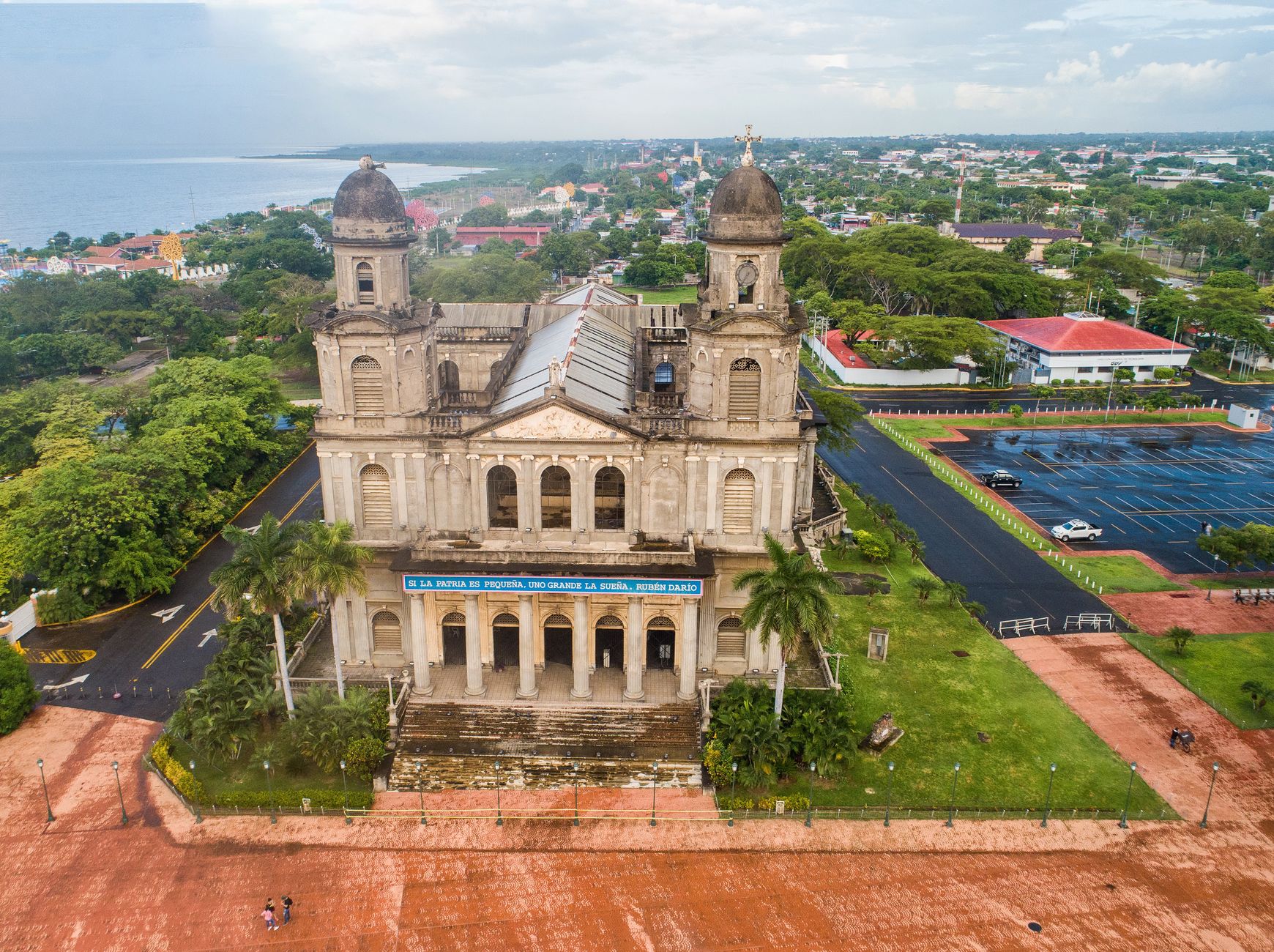
Photo Gallery
Explore Managua in Pictures
An aerial perspective of the historic Immaculate Conception Cathedral, a prominent architectural landmark in the heart of Managua, Nicaragua.
Diego Lopez on Pexels · Pexels License
An aerial perspective captures the intricate neo-Gothic architecture of Parroquia El Calvario standing prominently amidst the urban landscape of Managua, Nicaragua.
Diego Lopez on Pexels · Pexels License
Practical Information
Getting There
Augusto C. Sandino International Airport (MGA) sits 9 km northeast of downtown. Inter-city buses arrive at UCA Terminal for Granada/León routes and Mercado Roberto Huembes for points south.
Getting Around
Metro? None. Managua runs on numbered colectivo buses ($0.25–$0.50 cash only) and plentiful registered taxis. Most routes pivot roundabouts like Rotonda Rubén Darío; MIT’s open-source map helps decode the lines.
Climate & Best Time
Dry season spans December–April with 26–28 °C days and zero rainfall. Wet season (May–November) peaks at 188 mm in October. Visit January–March for cloudless skies and shoulder-season hotel rates.
Language & Currency
Spanish rules; English is thin outside hotels. ATMs dispense córdobas (NIO) or USD—both accepted, change in NIO. Tip 10 % at restaurants; some bills already include it.
Safety
Stick to tourist corridors—Plaza de la Revolución, Metrocentro, Puerto Salvador Allende—after dark. Use hotel-ordered taxis; unlicensed cabs cluster at bus terminals.
Tips for Visitors
Use the Rotonda
Addresses are landmark-based: “from Rotunda Rubén Darío, 200 m west.” Pin the rotunda in your map; every bus and taxi knows it.
Sunset at Tiscapa
The canopy tour stops at 4 pm, but the park gate stays open. Walk the rim path at 5 pm for gold light over the crater lake and the city grid below.
Cash for Nacatamales
Weekend-morning carts sell steam-hot nacatamales for 50 Córdobas—only cash, exact change speeds the queue.
Skip October Rain
October soaks the capital—188 mm across 16 days. Outdoor lakeside food courts flood; plan indoor museums instead.
Quiet Sundays
Managua shuts down on Sundays; buses thin, most markets close. Use the lull for a traffic-free bike ride along Puerto Salvador Allende.
Explore the city with a personal guide in your pocket
Your Personal Curator, in Your Pocket.
Audio guides for 1,100+ cities across 96 countries. History, stories, and local insight — offline ready.
Audiala App
Available on iOS & Android
Join 50k+ Curators
Frequently Asked
Is Managua worth visiting? add
Yes, if you treat it as Nicaragua’s logistical hub with layered stories. One morning you can stand inside the cracked 1930s cathedral, by lunch zip-line over a volcanic crater lake, and end with grilled guapote fish while kites drift over Lake Managua.
How many days in Managua? add
Budget two full days: day one for the historic core—Plaza de la Revolución, Old Cathedral, National Museum—and day two for Puerto Salvador Allende and Loma de Tiscapa. Add a third for crater-lake side trips like Xiloá or Apoyeque.
How to get from Managua airport to the city? add
Pre-book a private transfer or hotel shuttle; it’s 11 km and fixed-price avoids haggling. Public buses exist but require a 15-minute walk from the terminal with luggage—skip them after dark.
Is Managua safe for tourists? add
Stick to daylight activity in Rotonda Rubén Darío, Metrocentro, Puerto Salvador Allende, and hotel zones. Use registered taxis or ride-apps after dusk, leave passports in the hotel safe, and skip street demonstrations.
Do I need cash in Managua? add
Absolutely—city buses, street food, craft kiosks, and small cafés are cash-only. ATMs are plentiful; carry small-cordoba notes and a few $1 USD bills for tips.
Sources
- verified MIT Atlas of Popular Transport – Managua — Interactive map of informal city bus routes and fares; confirms no reloadable cards.
- verified Climate-Data.org – Managua Monthly Averages — Temperature and rainfall tables used for seasonal advice.
- verified Tripadvisor – Puerto Salvador Allende Reviews — Visitor tips on hours, security, and go-kart track details.
Last reviewed: