Plan and listen to Binckhorst Castle with Audiala.
Audio guide in your pocket, itinerary in your browser. Built for the way you actually visit.
Introduction: Binckhorst Castle’s Enduring Legacy
Situated amid the dynamic urban landscape of The Hague, Binckhorst Castle (Kasteel de Binckhorst) is a rare surviving symbol of Dutch medieval heritage and Renaissance architecture. With roots stretching to the 14th century, this moated manor has evolved alongside The Hague itself—from a medieval fortress for the influential Van Binckhorst family, to a Renaissance estate reflecting the Dutch Golden Age, and now, a cultural landmark within a rapidly redeveloping district. Visiting Binckhorst Castle offers a unique window into centuries of history, architectural innovation, and urban transformation (Hague Historical Society, Den Haag).
Today, while the castle’s interior is not generally accessible due to its current function as a kindergarten, its striking exterior, moat, and landscaped grounds remain a serene and evocative destination for visitors. This guide delves into the castle’s origins, architectural evolution, practical visiting advice, and its pivotal role within The Hague’s heritage landscape (ChooseWhere: The Hague Visitor Guide, The Wandering World).
Binckhorst Castle stands as one of The Hague’s oldest inhabited sites. First recorded in the 14th century, the castle began as a defensive residence for the Van Binckhorst family. Built primarily from brick—a hallmark of Dutch medieval construction—it commanded strategic waterways and protected the surrounding polder. Over time, it transitioned from a robust fortress to a stately Renaissance manor, reflecting shifts in both architecture and social order (Hague Historical Society).




Medieval and Renaissance Origins
Medieval Foundation
The earliest references to Binckhorst date to the 14th century, when the area was rural and strategically situated at the edge of The Hague. The castle’s original keep was surrounded by a moat and constructed to guard the vital Trekvliet canal, which linked The Hague with Leiden and Delft. The castle’s defensive role was significant during regional conflicts such as the Hook and Cod Wars, exemplifying the feudal power structures of its era.
Renaissance Transformation
In the 16th and 17th centuries, as feudalism waned and the Dutch Republic rose, Binckhorst Castle evolved into a Renaissance residence. Prominent families, including Van Ruyven and Van Wassenaer, remodeled the estate, adding ornamental gardens and updating the interiors with decorative plasterwork, wood paneling, and larger windows—hallmarks of the Dutch Golden Age (The Wandering World).
Architectural Evolution and Restoration
Site Transformation and Manor House
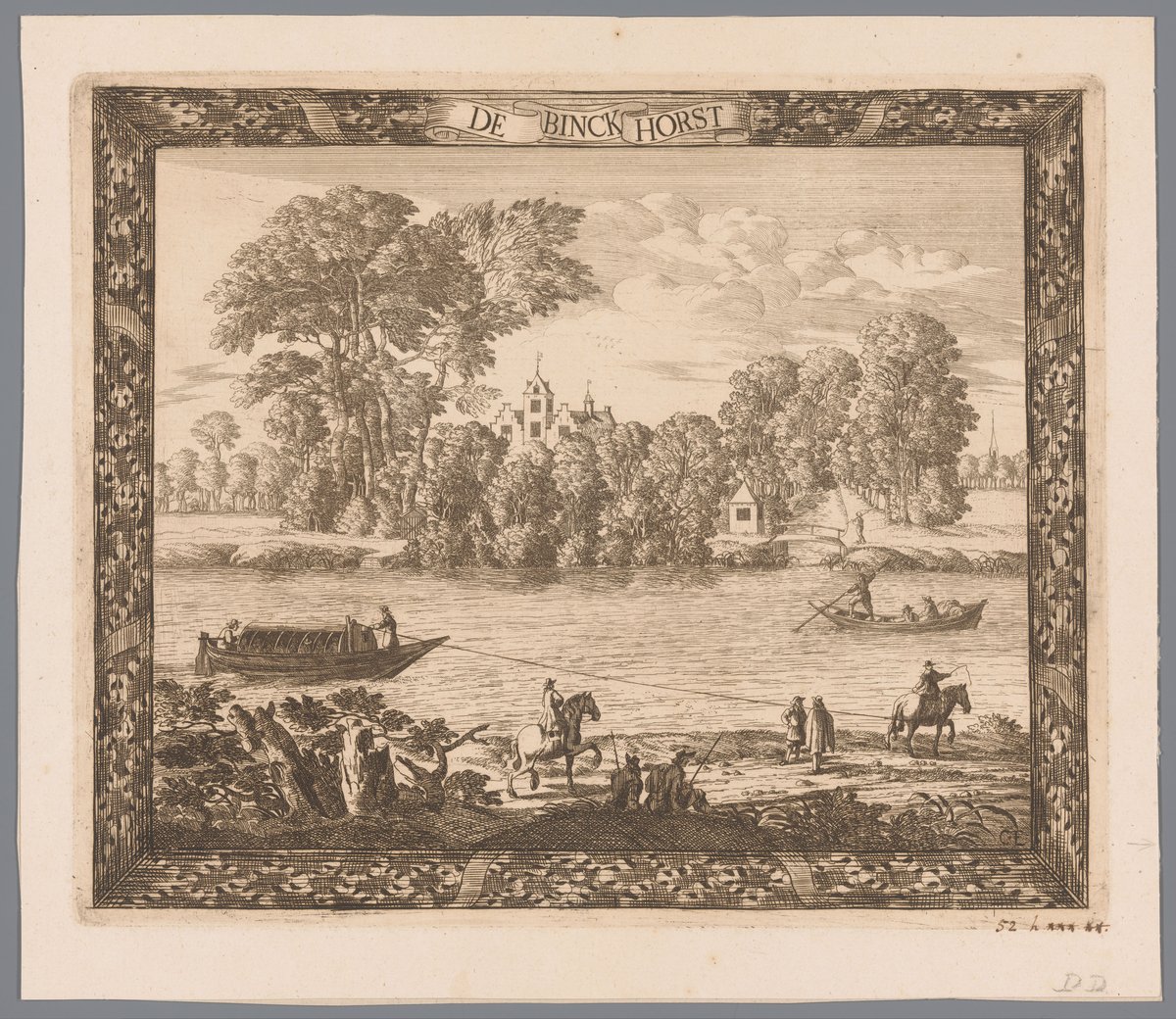
Binckhorst’s transformation from medieval fortress to Renaissance manor is reflected in its architecture. While the oldest foundations date to the 14th century, the current structure largely stems from 16th–17th century renovations. The elongated façade and stair tower, depicted in 17th-century maps, remain defining features (The Hague Historical Society).
20th Century Restoration
By the early 1900s, the castle was in disrepair. The city of The Hague acquired it in 1928 and, in the 1930s, undertook a major restoration. The foundation was rebuilt and the walls reconstructed, preserving the castle’s silhouette but making much of the present building a 20th-century homage rather than an untouched medieval relic. The gardens and moat were also restored, enhancing the castle’s picturesque setting (Wanderboat).
Binckhorst in The Hague’s Urban Development
Binckhorst Castle’s story mirrors The Hague’s evolution. Once a rural outpost, the Binckhorst district became industrialized in the 19th and 20th centuries. In recent decades, it’s undergone a dramatic transformation into a creative, mixed-use urban area. The castle now stands amid modern apartment towers, start-ups, and art spaces, anchoring the district’s history within its ever-changing context (projecten.denhaag.nl).
Visiting Information: Hours, Tickets, and Access
Location
Address: Binckhorstlaan 149, 2516 BA Den Haag, The Hague, Netherlands—about 2km from the city center and close to Den Haag Hollands Spoor station (NS Destinations), Mapcarta.
Opening Hours & Tickets
- Public Access: The castle’s exterior and gardens can be viewed from public paths year-round, free of charge.
- Interior Access: Not regularly open due to its use as a kindergarten. Entry is sometimes possible during special events like Open Monumentendag (Heritage Days).
- Tickets: Not required for external viewing; event tickets are available via local tourism and municipal event websites (The Hague City Guide).
Accessibility
- Paved walkways and flat terrain make the grounds accessible for wheelchairs and strollers.
- Limited on-street parking nearby; public transportation is recommended (tram lines 4 and 6 stop within walking distance).
- Some construction in the area may occasionally affect accessibility.
Events, Cultural Significance, and Modern Use
Evolving Functions
Binckhorst Castle has served diverse purposes: military command post in WWII, orphanage, vocational school, private clinic, and now a kindergarten. These adaptive uses reflect the Dutch approach to heritage—balancing preservation with contemporary needs.
Symbolism and Community
Though not a major tourist attraction, the castle is a symbol of The Hague’s layered past and a focal point for community events. Its gardens host memorials, and the building occasionally participates in local festivals. The surrounding district’s street art, creative spaces, and green initiatives further enhance its cultural role.
Travel Tips and Nearby Attractions
- Best Time to Visit: Spring and summer for gardens in bloom; special events for rare interior access.
- Nearby Sites: Binnenhof, Peace Palace, Mauritshuis Museum, Royal Library, and the redeveloped Binckhaven creative district.
- Amenities: Cafés, breweries, and restaurants nearby; no restrooms on-site, but available in local establishments and Den Haag Hollands Spoor station (Living Nomads).
- Photography: The castle’s exterior, moat, and gardens are photogenic—visit early or late for soft light.
Frequently Asked Questions (FAQ)
Q: Can I tour the inside of Binckhorst Castle?
A: Interior access is not available except during special events.
Q: Are tickets required to visit?
A: No tickets are needed for external viewing; event access may require tickets.
Q: Is the site accessible?
A: Yes, the grounds are accessible for visitors with mobility challenges.
Q: How do I get there?
A: Take tram lines 4 or 6; limited parking is available for cars and bicycles.
Q: Are there guided tours?
A: Occasionally, during special open days and heritage events.
Listen to the full story in the app
The whole Binckhorst Castle,
told well.
Audio guides for 1,100+ cities across 96 countries. History, stories, and local insight — offline ready.
Verified, and shown.
Researched and written by the Audiala editorial team from historical records, architectural archives, and local expertise.
Researched from Wikidata, Wikipedia & official sources · fact-checked · How we make our guides →