Maastricht
LimburgNetherlands 50° N · 5° E Verified May 2026
A Dutch city that barely feels Dutch, Maastricht runs on dialect, relic processions, Roman roads, and a borderland ease that tilts toward Belgium at heart.
 Photo: W. Bulach · CC BY-SA 4.0
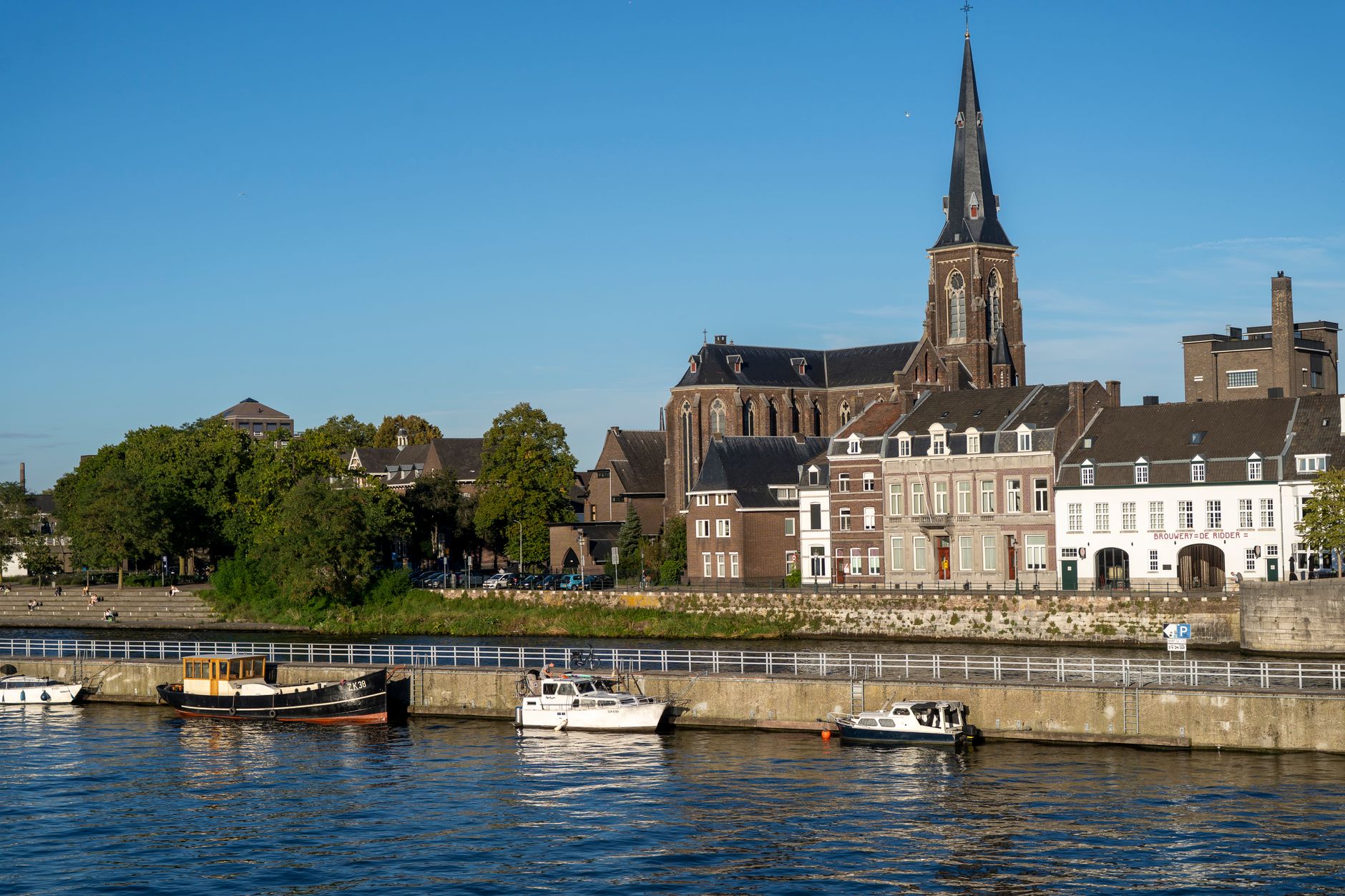
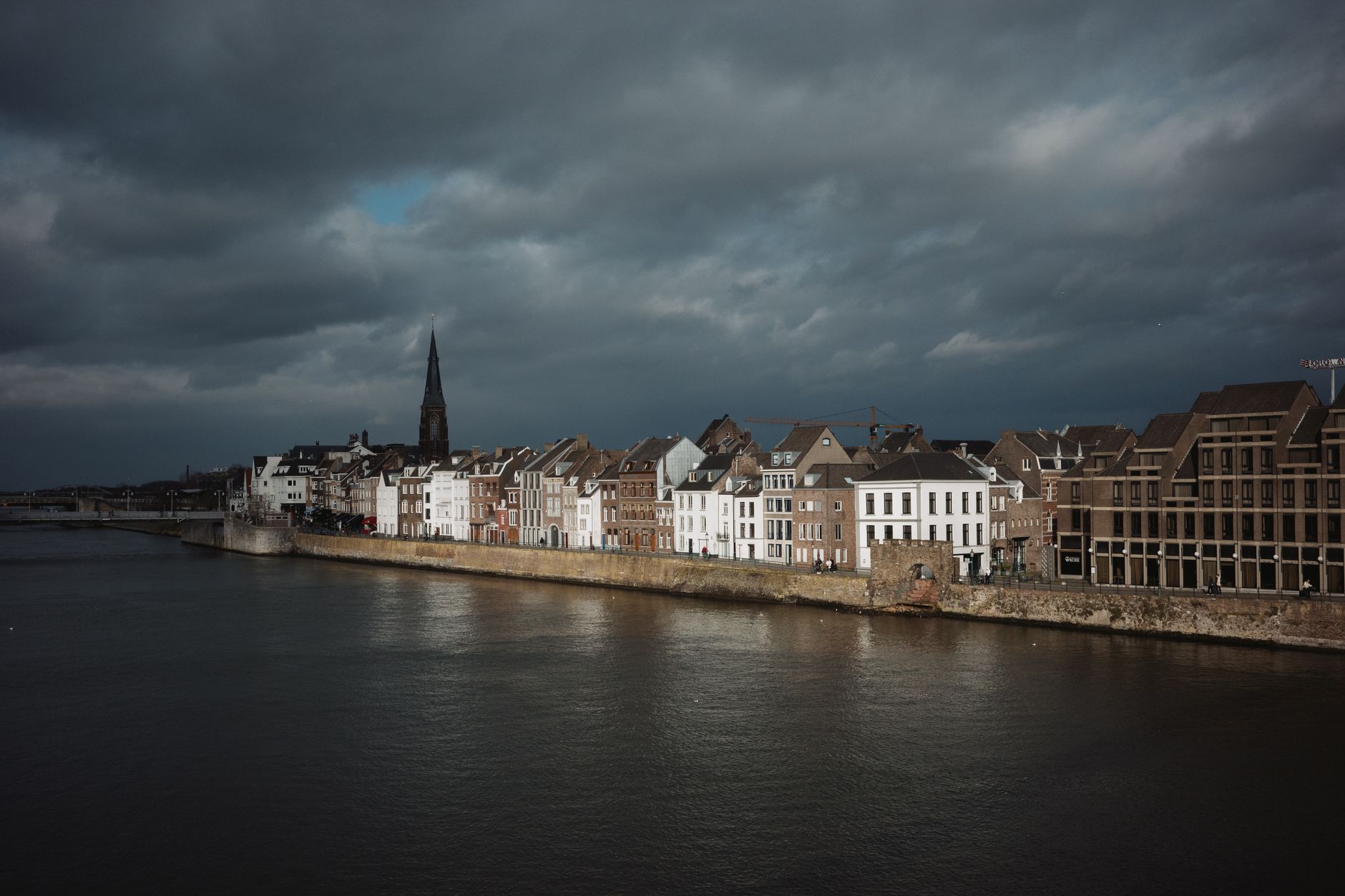
Why does Maastricht, Limburg, Netherlands, feel less like one city than a relay of civilizations handing the same river crossing to the next? Stand on the Meuse today and the answer arrives in layers: bicycle bells over the water, cellar-cool air lifting off old stone, church towers catching a silver wash of light, and café talk ricocheting through streets that still bend around Roman logic. Visit Maastricht because few places let you walk from a first-century bridgehead to a medieval pilgrimage route to the treaty city of modern Europe without ever losing the thread.
The surprise is continuity. Records show Maastricht began as a practical crossing on the Roman road later called the Via Belgica, yet the city never stopped doing the same basic work: bringing people over the river, into the square, and toward a story larger than themselves.
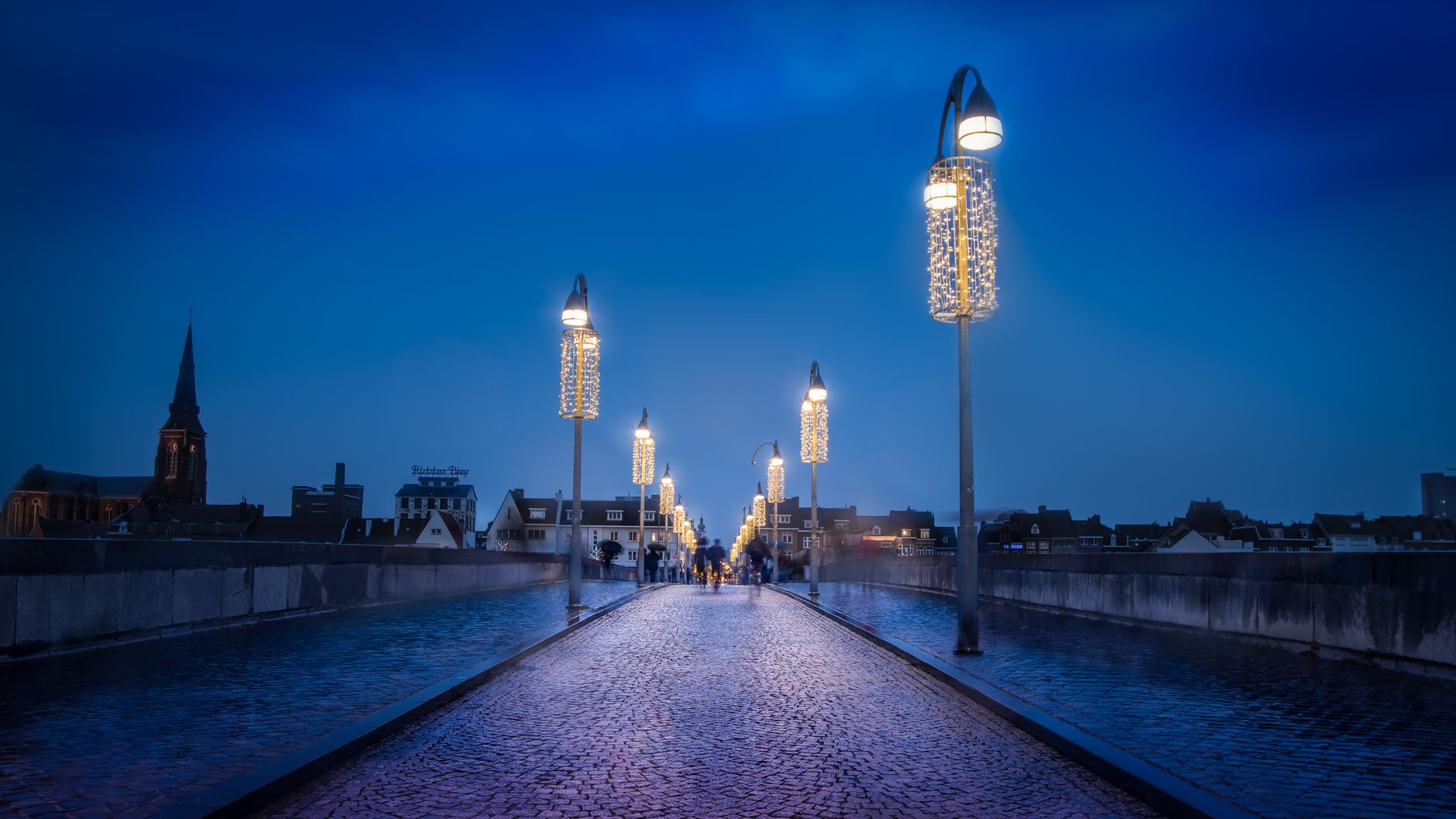
You see that persistence everywhere. Roman stones are still visible in the Basilica of Our Lady, the Sint Servaasbrug still funnels footsteps the way its medieval builders intended, and the Vrijthof still fills for rituals that began as acts of devotion and survival before they became heritage.
Most Dutch cities tell a national story. Maastricht tells a border story, which is better. Liège, Brabant, Spain, the Dutch Republic, France, industry, Europe: each left a mark, but none managed to erase the habit that mattered most, the habit of turning this river crossing into a meeting place.
What to see
-
Basilica of Our Lady and Onze-Lieve-Vrouweplein
Maastricht keeps one of its best tricks in plain sight: the Basilica of Our Lady looks almost fortress-like from the square, a dark Romanesque mass whose oldest roots reach back to a 5th-century predecessor church, and two enormous Roman stones still sit in the base of the westwork like evidence nobody bothered to hide. Step inside and the city drops its voice; candle smoke, worn stone, and the glint of light behind the Marian chapel do the work, and when you come back out onto Onze-Lieve-Vrouweplein you realise this pretty square was once inside the late Roman castellum, with more remains buried under the Derlon hotel cellar a few paces away. -
Saint Servatius Basilica and Vrijthof
Saint Servatius feels older than the calendar. The saint was buried here in 384, and the basilica still carries that gravity in its coal sandstone walls, polished floors worn shiny by centuries of feet, and a dim interior that seems to hold sound rather than release it; compared with Our Lady, this church is heavier, stranger, and more moving for it. Cross Vrijthof afterward and look back at the facade, where the replacement stones sit beside the weathered originals like a visible argument between ages, then climb nearby Sint Janskerk if you want the roofscape spread below you like a box of red and slate tiles. -
From Helpoort to Bisschopsmolen, then out to Sint-Pietersberg
Take Maastricht as a sequence instead of a checklist: start at Helpoort, the surviving city gate built in 1229, where the brick and stone still feel compact and defensive rather than ceremonial, then slip into the Jeker Quarter for the sound of water at Bisschopsmolen and the warm bakery smell that drifts from a working mill many visitors only half notice from the street. Keep walking south. The city walls give way to open air, Fort Sint Pieter lifts you onto the plateau above town, and the final reward is the ENCI quarry, where a former cement pit founded in 1926 opens into chalk cliffs and blue water on a scale that feels almost rude in a country this flat.
Plan your visit
- Getting There
- Maastricht Centraal sits a 15-minute walk from Vrijthof and Markt, crossing the Meuse into the old center. Bus line 3 runs from Maastricht Centraal to Vrijthof in about 6-9 minutes at least three times an hour, and drivers should aim for Sphinx, Mosae Forum, or Onze Lieve Vrouwe parking, then walk roughly 15 level minutes into the core.
- Opening Hours
- As of 2026, Maastricht itself never really closes, but the city runs on venue hours rather than one master clock. Municipal desks open Mon-Wed and Fri 08:30-16:30, Thu 08:30-19:00, the Town Hall opens Mon-Fri 09:00-12:30 and 14:00-17:00, and the ENCI quarry trail keeps daily 08:00-20:00 hours from 1 April to 1 September; expect holiday closures around Carnival, King's Day, Liberation Day, Ascension, Whit Monday, and 25 December.
- Time Needed
- Give Maastricht 3-4 hours if you want the compact version: Vrijthof, Markt, Boekhandel Dominicanen, then a slow riverside walk. A fuller visit takes 2-3 days if you want Wyck, Jekerkwartier, Sint Pieter, the ENCI trail, and at least one museum without rushing past everything that makes the city feel like itself.
- Accessibility
- Most main routes through the center are flat, and major public buildings and MECC have elevators, accessible toilets, and wheelchair-friendly corridors. The catch is the old paving: cobbles in parts of Jekerkwartier and Wyck can shake a chair like a shopping cart on brick, so stick to main streets when possible and use disabled parking near MECC P1 or P4 if you're driving.
- Cost & Tickets
- As of 2026, a single bus trip from Maastricht Centraal into the center usually costs about €1.00-€3.00, while parking at hubs such as MECC runs €4.50 an hour with a daily cap of €21.00. Museum pricing varies by venue, but the current pattern is roughly €10-€18 with timed entry instead of classic skip-the-line tickets, so booking online usually saves more time than turning up hopeful.
Photo Gallery



History
The City That Kept Its Rituals
Records show Maastricht kept changing rulers, walls, and even the meaning of its public squares, yet one function endured: people came here to cross, gather, and mark danger or hope together. The Meuse crossing made the city, but ritual kept it recognizable.
That continuity is clearest around Saint Servatius. Archaeology attests Christianity here by the 5th century, the cult around his grave kept growing, and by 1391 the seven-yearly Heiligdomsvaart was documented in writing; in 2025, the same cycle still sent relics and people through the streets. Different costumes, same impulse.
The turning point
A Pilgrimage That Refused to Become a Museum Piece
At first glance, the Heiligdomsvaart looks like the kind of medieval pageantry cities preserve because tourists enjoy a procession and brass catches the light well. Relics appear, banners move, the Vrijthof fills, and the whole thing can seem like a beautifully staged survival from another age.
But one detail unsettles that easy reading. Why would a city that survived the Spanish sack of 1579, the French siege of 1673, industrial upheaval in the 1830s, and the secular habits of modern Europe keep returning to the same seven-year rite? Records also show that the Noodkist, the reliquary carried in times of plague and siege, was not decorative at all; it was brought out when people were frightened and needed help, fast.
The turning point came in the late 6th century, when Bishop Monulphus, according to long-standing ecclesiastical tradition supported in broad outline by later sources, raised Saint Servatius's remains and built a large memorial church above the grave. His stake was personal as well as civic: control of a saint's cult meant authority, pilgrims, and a reason for Maastricht to matter as power shifted toward Liège. The public story says the city preserved an old devotion; the deeper truth is that Maastricht kept reusing that devotion as social infrastructure whenever ordinary politics failed.
Look at the route now and the gaze changes. The processions are not quaint leftovers but a living mechanism by which Maastricht keeps telling itself who belongs, what danger felt like here, and why a river crossing became a city with memory.
What Changed
What Endured
Tips for visitors
Beat Event Crowds
Carnival from 15-17 February 2026 and TEFAF from 14-19 March 2026 change the city's mood and its walking speed. André Rieu weeks can also close Vrijthof in the evening, so go early or shift your base to Wyck and Jekerkwartier when the center starts to clog.Photo Rules
Street photography is generally fine, but Maastricht Museum bans flash, lamps, tripods, and selfie sticks, and municipal or MECC interiors require permission for photo, video, or audio recording. Drones fall under Dutch national rules, which means no casual flying over crowds, events, rail lines, or restricted urban zones.Watch Your Bag
Maastricht's real nuisance is petty theft, not elaborate scams. The municipality specifically warns about phones in sight while cycling or walking, bags left in bike baskets, and valuables abandoned on café tables around crowded squares and event days.Eat Off-Square
Skip the easy terrace on Vrijthof if you want food that tastes like the city rather than its postcard. Head to De Bisschopsmolen in Jekerkwartier for vlaai and coffee at budget to low-mid prices, Café Sjiek for zoervleis at mid-range, or Beluga Loves You in Céramique if you're in a splurge mood.Church Manners
Sint Servaas and Onze Lieve Vrouw are active religious spaces, not stage sets with candles. Keep your voice down, dress modestly enough for a service, and ask before photographing treasury objects or worshippers; the silence inside can feel almost liquid after the square outside.Pair Neighborhoods
Treat Maastricht as linked districts, not one old-town blob. Arrive through Wyck from the station, cross toward Vrijthof and Markt, then finish in Jekerkwartier or Sint Pieter, where the streets soften and the city starts smelling of stone, bread, and river air instead of shopping lanes.
Frequently asked
Is Maastricht worth visiting?
Yes, especially if you like cities that keep their history above ground and under your feet. Roman remains sit beneath Onze-Lieve-Vrouweplein, the medieval core still funnels you toward the Meuse, and the city shifts fast from candlelit basilicas to the raw chalk edge of Sint-Pietersberg. Few Dutch cities move from polished church floors to quarry views this quickly.
How long do you need in Maastricht?
You need at least one full day, but two to three days gives the city room to work on you. A short visit covers Vrijthof, Onze-Lieve-Vrouweplein, Dominicanen bookshop, and the river in 3 to 4 hours; a deeper stay adds the caves, Frontenpark, Bonnefanten, and Sint-Pietersberg. That contrast matters: the center feels tight as a clenched fist, then the plateau opens wide.
How do I get to Maastricht from Amsterdam?
The easiest way is by train, with Maastricht Centraal as your target. Once you arrive, the center is walkable, and bus line 3 reaches Vrijthof in about 6 to 9 minutes if you do not want the 15-minute walk. The station itself is worth a look, too: a 1916 building with restored tiles and the faint grand-air confidence of a border city.
What is the best time to visit Maastricht?
Late spring and early autumn are the best balance of good walking weather, lighter crowds, and enough daylight to enjoy both the old center and Sint-Pietersberg. If you want the city at full volume, Carnival fell on 15 to 17 February 2026, while André Rieu's Vrijthof concerts are listed for 2 to 19 July 2026; both transform the place, but calm is not part of the deal. Winter also has its own glow when Vrijthof fills with lights and skating rather than terrace chatter.
Can you visit Maastricht for free?
Yes, you can see a lot of Maastricht without paying for a ticket. The bridges, squares, Frontenpark, Sphinxpassage, Onze-Lieve-Vrouweplein, and the walk up toward Sint-Pietersberg cost nothing, though museums, church treasuries, and guided underground tours do charge. Even the free parts feel dense: a 120-meter tile passage, river views, old walls, and facades built with stones older than the churches themselves.
What should I not miss in Maastricht?
Do not miss Onze-Lieve-Vrouwebasiliek, Sint Servaas, Dominicanen, Sphinxpassage, and one underground site on Sint-Pietersberg. That sequence gives you Maastricht's real trick: Roman fragments, dark Romanesque stone, a Gothic church full of books, industrial memory told in nearly 30,000 tiles, then marl tunnels where sound falls flat and time goes missing. Skip the lazy square-hopping and make room for the city edge.
Sources & attribution 9
- Visit Maastricht - Roman settlement — Roman origins of Maastricht, remains near Onze-Lieve-Vrouweplein, Roman bridge location, and the city's earliest layers.
- Visit Maastricht - Experience walk Sint-Pietersberg — Character of Sint-Pietersberg, walking experience, and the contrast between the compact center and the open plateau.
- Visit Maastricht - Basilica of Our Lady — Atmosphere of the basilica, candlelit interior, and the visible Roman stones built into the church fabric.
- Visit Maastricht - Sint Servaasbasiliek — Key visitor appeal of Saint Servatius Basilica and its place in the historic core.
- Visit Maastricht - Dominicanen Bookshop — Adaptive reuse of the Gothic church as a bookstore and why it is one of Maastricht's strongest interior experiences.
- Visit Maastricht - Sphinxpassage — Details on the covered passage, including its 120-meter length and tile-covered industrial storytelling.
- Visit Maastricht - Carnival — Timing and character of Carnival in Maastricht, used for seasonal advice.
- https://www.andrerieu.com/en/vrijthof-2026 — 2026 André Rieu Vrijthof concert dates used to explain peak summer event crowds and atmosphere.
- Visitor logistics research source - transport summary — Maastricht Centraal station context, including the 1916 station building used in the arrival advice.
Built from cited sources · see the method · How we make our guides →
Pick up where you left off
Saved and recently read places — kept on this device only.
Photo credits (16)
- Sint-Janskerk en Sint-Servaasbasiliek, Maastricht-40301 — Raimond Spekking — CC BY-SA 4.0 (https://creativecommons.org/licenses/by-sa/4.0/) — Source: https://commons.wikimedia.org/wiki/File:Sint-Janskerk_en_Sint-Servaasbasiliek,_Maastricht-40301.jpg
- Maastricht Basiliek Onze Lieve Vrouwe ten Tenhemelopneming Apsis 1 — Zairon — CC BY-SA 4.0 (https://creativecommons.org/licenses/by-sa/4.0/) — Source: https://commons.wikimedia.org/wiki/File:Maastricht_Basiliek_Onze_Lieve_Vrouwe_ten_Tenhemelopneming_Apsis_1.jpg
- 2022 Maastricht, Avenue Céramique & Bonnefantenmuseum — Kleon3 — CC BY-SA 4.0 (https://creativecommons.org/licenses/by-sa/4.0/) — Source: https://commons.wikimedia.org/wiki/File:2022_Maastricht,_Avenue_Céramique_&_Bonnefantenmuseum.jpg
- 2023 Fort St. Pieter — ArthurMcGill — CC BY-SA 4.0 (https://creativecommons.org/licenses/by-sa/4.0/) — Source: https://commons.wikimedia.org/wiki/File:2023_Fort_St._Pieter.JPG
- MaastrichtAltstadt — de:Benutzer:Mussklprozz — CC BY-SA 3.0 (https://creativecommons.org/licenses/by-sa/3.0/) — Source: https://commons.wikimedia.org/wiki/File:MaastrichtAltstadt.jpg
- MaastrichtPanorama — Arne Hückelheim — CC BY-SA 3.0 (https://creativecommons.org/licenses/by-sa/3.0/) — Source: https://commons.wikimedia.org/wiki/File:MaastrichtPanorama.JPG
- 00 6191 Maastricht - Niederlande — W. Bulach — CC BY-SA 4.0 (https://creativecommons.org/licenses/by-sa/4.0/) — Source: https://commons.wikimedia.org/wiki/File:00_6191_Maastricht_-_Niederlande.jpg
- Chris Oberman — Pexels License (https://www.pexels.com/license/) — Source: https://www.pexels.com/photo/33353927/
- Lorna Pauli — Pexels License (https://www.pexels.com/license/) — Source: https://www.pexels.com/photo/32678395/
- Lorna Pauli — Pexels License (https://www.pexels.com/license/) — Source: https://www.pexels.com/photo/31399115/
- Lorna Pauli — Pexels License (https://www.pexels.com/license/) — Source: https://www.pexels.com/photo/31415325/
- Bart Ros — Pexels License (https://www.pexels.com/license/) — Source: https://www.pexels.com/photo/17835935/
- George Becker — Pexels License (https://www.pexels.com/license/) — Source: https://www.pexels.com/photo/105599/
- Vadim Braydov — Pexels License (https://www.pexels.com/license/) — Source: https://www.pexels.com/photo/17830217/
- Petrit Nikolli — Pexels License (https://www.pexels.com/license/) — Source: https://www.pexels.com/photo/21935036/
- Sinitta Leunen — Pexels License (https://www.pexels.com/license/) — Source: https://www.pexels.com/photo/6039873/
Photos may have been resized or cropped.