Introduction to Scheepswerf 'T Kromhout and Its Significance
Located at Hoogte Kadijk in the historic core of Amsterdam, Scheepswerf 'T Kromhout is a living monument to the city’s storied maritime and industrial history. Established in the mid-18th century, the shipyard evolved from crafting wooden sailing vessels to building iron ships and manufacturing the renowned Kromhout engines that powered countless Dutch vessels, trucks, and buses. Today, it serves as both a museum and a hub for sustainable maritime innovation, actively restoring historic vessels and promoting electric navigation. Scheepswerf 'T Kromhout’s immersive visitor experience, which includes guided tours, hands-on workshops, and engine demonstrations, makes it a must-see for history lovers, maritime fans, families, and curious travelers.
For those planning a visit, the shipyard provides comprehensive details on opening hours, tickets, accessibility, and transport. Special events and educational initiatives further enhance its reputation as a living heritage site—preserving Amsterdam’s golden age of shipbuilding while steering toward a sustainable future (myntransportblog; Kromhout Museum History; amsterdam.info; Ons Amsterdam).
Photo Gallery
Explore Scheepswerf 'T Kromhout in Pictures

Photograph of the new steel drawbridge for Hoogte Kadijk taken circa 1902 by Gustaaf Oosterhuis. View from Nieuwevaart towards Entrepotdok and Artis gardens, with 't Kromhout shipyard on the left. Part of the Richardus collection.

Historical photo of a floating crane operating on Nieuwevaart near Werf 't Kromhout, Amsterdam, around 1904. The newly built floating crane is hoisting a lighter bound for Argentina. Photo by Gustaaf Oosterhuis, part of the Dutch Dock and Shipbuilding Company Archive collection.

Historic photograph of the new steel drawbridge (Bridge 80) for Hoogte Kadijk in closed position, viewed from Nieuwevaart towards Entrepotdok and Artis gardens, with 't Kromhout shipyard on the left. Taken by Gustaaf Oosterhuis circa 1902, from the Stadsarchief Amsterdam collection.

Historical black and white photo of the new steel drawbridge (Bridge 80) at Hoogte Kadijk in opened position, viewed from Nieuwevaart towards Entrepotdok and Artis gardens, with 't Kromhout shipyard to the left, taken by Gustaaf Oosterhuis circa 1902.

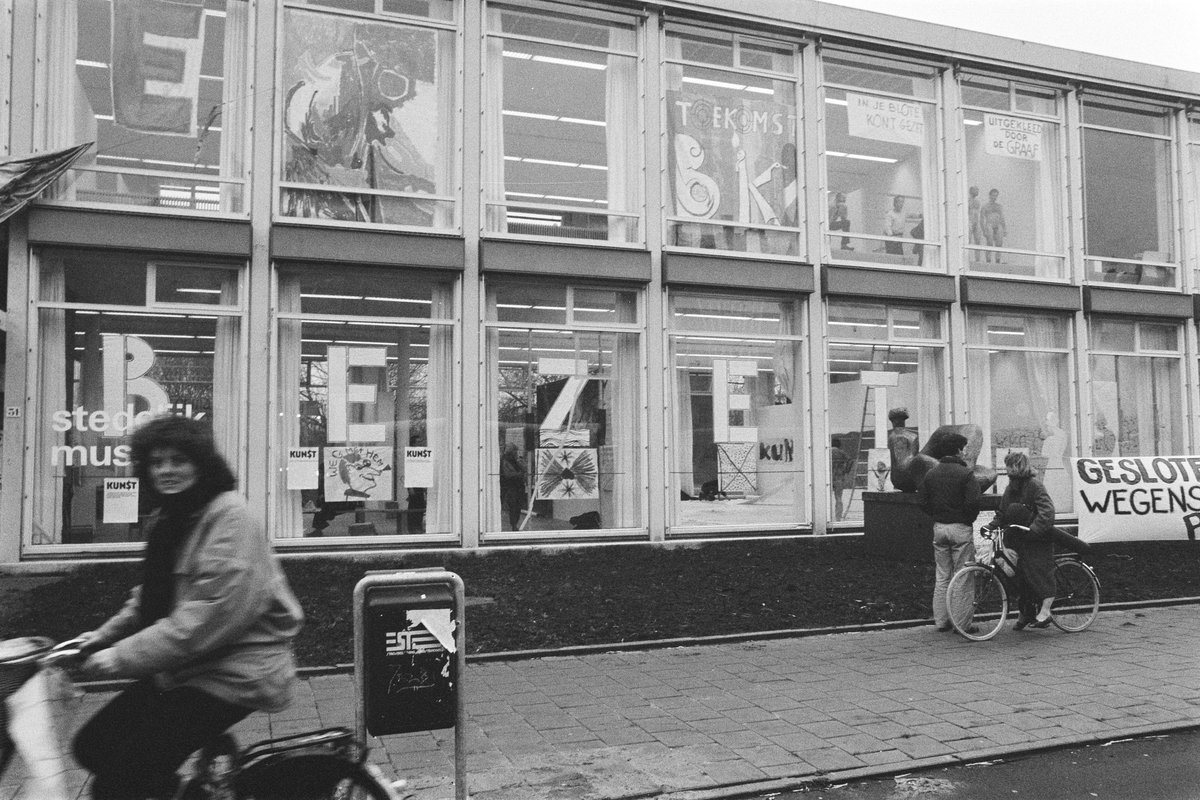
Black and white photograph of the historic shipyard 't Kromhout in Amsterdam, Noord-Holland, taken in 1973 by Rob C. Croes for the Anefo photo collection. The shipyard was set to open next week as a functioning museum, depicting the rich maritime heritage of Amsterdam.

Photograph dated 8 October 1973 showing the historic Kromhout shipyard in Amsterdam being opened as a working museum by chairman Ir. Snijders. Black and white negative from the Anefo photo collection, Dutch National Archive.

Black and white photo from 1973 showing the historical shipyard t Kromhout in Amsterdam being opened as a functioning museum. Features Ir. Snijders, chairman of the t Kromhout foundation, taken by Rob C. Croes for Anefo, part of the Nationaal Archief collection.

View of historical Dutch ship yard De Kromhout featuring boats along the wide Nieuwe Vaart canal under gray skies, with the silhouette of the old mill De Gooyer in the distance in Amsterdam, free photo by Fons Heijnsbroek, January 16, 2022

Black and white photo showing the reconstruction of the Blazer TX 11 vessel being handed over at the Scheepswerf T. Kromhout shipyard in Amsterdam, Netherlands, dated May 17, 1982. Part of Anefo photo collection, preserved by Nationaal Archief.

Black and white photo of the reconstruction of the Blazer TX 11 ship being transferred at Scheepswerf t Kromhout shipyard in Amsterdam on May 17, 1982. Image from the Anefo photo collection at the Nationaal Archief.
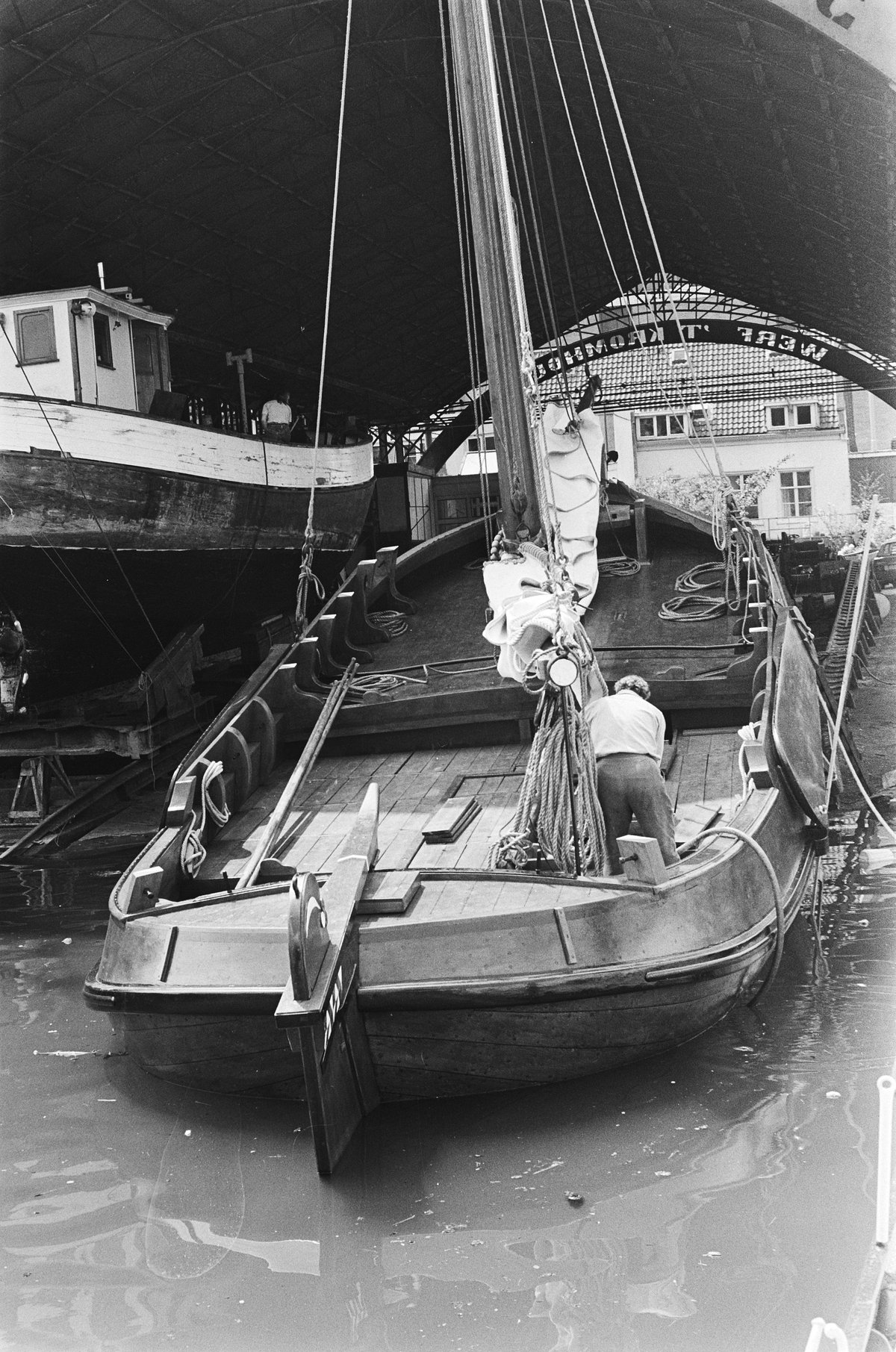
Black and white photo showing the handover of the reconstructed Blazer TX 11 ship replica at Scheepswerf t Kromhout shipyard in Amsterdam, captured on May 17, 1982, part of the Anefo photo collection in the Nationaal Archief.

Black and white photo of the reconstruction of the Blazer TX 11 boat being handed over at Scheepswerf t Kromhout shipyard in Amsterdam on May 17, 1982. Captured by photographer Smirren from Anefo, part of the Nationaal Archief collection.
Origins and Early Development (18th–19th Century)
Scheepswerf 'T Kromhout’s story begins in 1757 when Neeltje Hendrikse de Vries purchased land at Hoogte Kadijk for her husband, shipbuilder Doede Jansen Kromhout. The name “Kromhout” references the “kromme hout” (curved wood) vital for ship frames. During this era, the yard specialized in wooden sailing vessels that dominated Dutch waterways (myntransportblog).
By the mid-19th century, the yard faced obsolescence until Daniël Goedkoop took over in 1867, modernizing and expanding its operations (onsamsterdam).
Industrial Revolution and Innovation
The late 19th century saw seismic changes: iron hulls replaced wood, steam engines outpaced sails, and electric lighting improved working conditions. Scheepswerf 'T Kromhout adopted these technologies early, introducing a steam-powered slipway in 1873 and replacing original sheds with the cast-iron Westhal in 1888—one of Amsterdam’s earliest electrically lit industrial halls (stadsherstel).
The Rise of Kromhout Engines (Late 19th–Early 20th Century)
In 1895, Kromhout produced its first marine engines, quickly earning a reputation for reliability. By the early 20th century, these engines powered not only ships but also early trucks and buses. Workforce numbers soared, and the factory became an engine manufacturing powerhouse (amsterdam.info; myntransportblog).
Expansion and Diversification (1908–1960s)
With demand rising, Kromhout expanded to a larger factory in Amsterdam-Noord in 1908, enabling global engine exports. The yard introduced innovative engines including the famed two-stroke R.O.-Kromhoutmotor, and produced licensed Gardner engines for the Dutch transport industry (myntransportblog).
Decline and Preservation (1960s–Present)
After the cessation of truck and bus production in 1958 and the factory’s closure in 1969, heritage preservationists intervened. The Werfmuseum 'T Kromhout opened in 1973, showcasing operational Kromhout engines and preserving the original smithy (amsterdam.info). Today, volunteers and former employees maintain the museum, ensuring its legacy endures.
Visiting Scheepswerf 'T Kromhout: Practical Information
Location
- Address: Hoogte Kadijk 147, 1018 BJ Amsterdam, Netherlands (Kromhoutmuseum.nl)
Opening Hours
- Regular Days: Tuesday, 10:00–15:30
- Engine Demonstration Days: Third Sunday of each month, 12:00–16:00
- Closed: Mondays and public holidays
- Special Events: Check the official website for event days.
Tickets
- Adults: €10
- Students (technical studies): €5
- Children (6–15): €5
- Children under 6: Free
- Group visits: By appointment
- Note: Admission is sometimes free on specific open days; donations are appreciated (WhichMuseum).
Accessibility
- The site is partially wheelchair accessible; some historic buildings may have limited access.
- Contact the museum in advance for assistance.
Guided Tours
- Available on open days and by appointment.
- Tours cover shipyard history, marine engineering, and current restoration projects.
Getting There
- Public Transport: Tram lines 14 and 26, bus stops at Hoogte Kadijk or Alexanderplein (Locaties.nl).
- By Bicycle: Bike paths lead directly to the museum; parking for bikes is available.
- By Car: Limited street parking nearby; public transport is recommended.
- By Boat: Arrive by water and dock at the museum’s quay (Kromhoutmuseum.nl).
Visitor Experience and Highlights
- Historic Kromhout Engines: Operational engines are demonstrated by volunteers, especially on the third Sunday of the month (Kromhoutmuseum.nl).
- Guided Tours: Learn about the shipyard’s role in Amsterdam’s maritime heyday and the evolution of marine engineering.
- Workshops: Participate in blacksmithing and other hands-on demonstrations, suitable for all ages (DagjeWeg.nl).
- Children’s Activities: Interactive scavenger hunts and the chance to help the blacksmith.
- Special Events: The museum hosts citywide heritage festivals, lectures, and is available for private events (Locaties.nl).
- Atmosphere: The 19th-century industrial halls and working shipyard set a unique, immersive scene for visitors and photographers.
Architectural and Industrial Significance
The shipyard’s cast-iron Westhal (built in 1888) and Oosthal (1899) are rare survivors of Amsterdam’s golden age of shipbuilding. Both retain their original iron roof structures, providing an authentic industrial setting (Amsterdam op de Kaart).
Restoration, Adaptive Reuse & Sustainability
The site’s restoration and adaptive reuse are overseen by Stadsherstel Amsterdam NV, preserving its architectural integrity while introducing modern amenities. Recent investments have expanded facilities for the electrification of historic and modern vessels, including new infrastructure for electric charging, solar panels, and a planned 2-megawatt buffer battery (Ons Amsterdam; Scheepspost).
Nieuw Kromhout BV, the current operator, specializes in electric vessel conversion, making the yard a leader in sustainable maritime practice (Scheepspost).
Community Engagement and Industrial Heritage Education
Scheepswerf 'T Kromhout thrives due to its dedicated volunteers, who provide guided tours, maintain the engines, and lead educational workshops. The museum offers programs for schools and groups, while the Kromhout Motor Archive documents the factory’s historic output and the Goedkoop family legacy (Scheepspost). Collaboration with the Federatie Industrieel Erfgoed Nederland cements its role as a center for industrial heritage.
Facilities and Amenities
- Restrooms: Available onsite.
- Catering: No regular café, but catering is arranged for private events (Locaties.nl).
- Event Hire: Oosthal accommodates up to 200 for lectures, 100 for dinners, or 250 for receptions.
- Nearby Accommodation: Numerous hotels and Airbnb options within walking distance.
Travel Tips and Nearby Attractions
- Nearby Attractions: The National Maritime Museum, Wereldmuseum Amsterdam, H’ART Museum, and the historic Kadijk neighborhood.
- Photography: Encouraged—ask staff before photographing exhibits.
- Languages: Staff and volunteers speak English and Dutch; tours often available in both languages.
- Plan Ahead: Arrive early on engine demonstration days and check the museum website for current events.
Frequently Asked Questions (FAQ)
Q: When is the best time to visit?
A: The third Sunday of the month is ideal for engine demonstrations; Tuesdays are quieter.
Q: Is the museum family-friendly?
A: Yes—children’s activities and interactive experiences are regularly available.
Q: Can I book group tours?
A: Yes, contact the museum in advance for educational and group programs.
Q: Is the site accessible for people with disabilities?
A: Some areas may be challenging due to historic architecture; contact the museum ahead of your visit for assistance.
Q: Where can I buy tickets?
A: Tickets are sold onsite; group bookings via email or phone.
Q: Can I visit without a tour?
A: Yes, self-guided visits are welcome during opening hours.
Discover More
Museum 't Kromhout is a living bridge between Amsterdam’s glorious maritime past and its sustainable future. Whether you’re drawn by the hum of historic engines, the grandeur of 19th-century industrial architecture, or innovative electric vessel projects, a visit here is both memorable and meaningful.
Plan your visit today:
- Check the official website for current hours, ticket info, and event updates.
- Download the Audiala app for guided audio tours and interactive content.
- Follow Scheepswerf 'T Kromhout on social media for the latest news and activities.
Experience firsthand how Amsterdam’s maritime spirit endures and evolves at Scheepswerf 'T Kromhout.
Listen to the full story in the app
Your Personal Curator, in Your Pocket.
Audio guides for 1,100+ cities across 96 countries. History, stories, and local insight — offline ready.
Audiala App
Available on iOS & Android
Join 50k+ Curators
Sources
- verified
- verified
- verified
- verified
Last reviewed: