Introduction
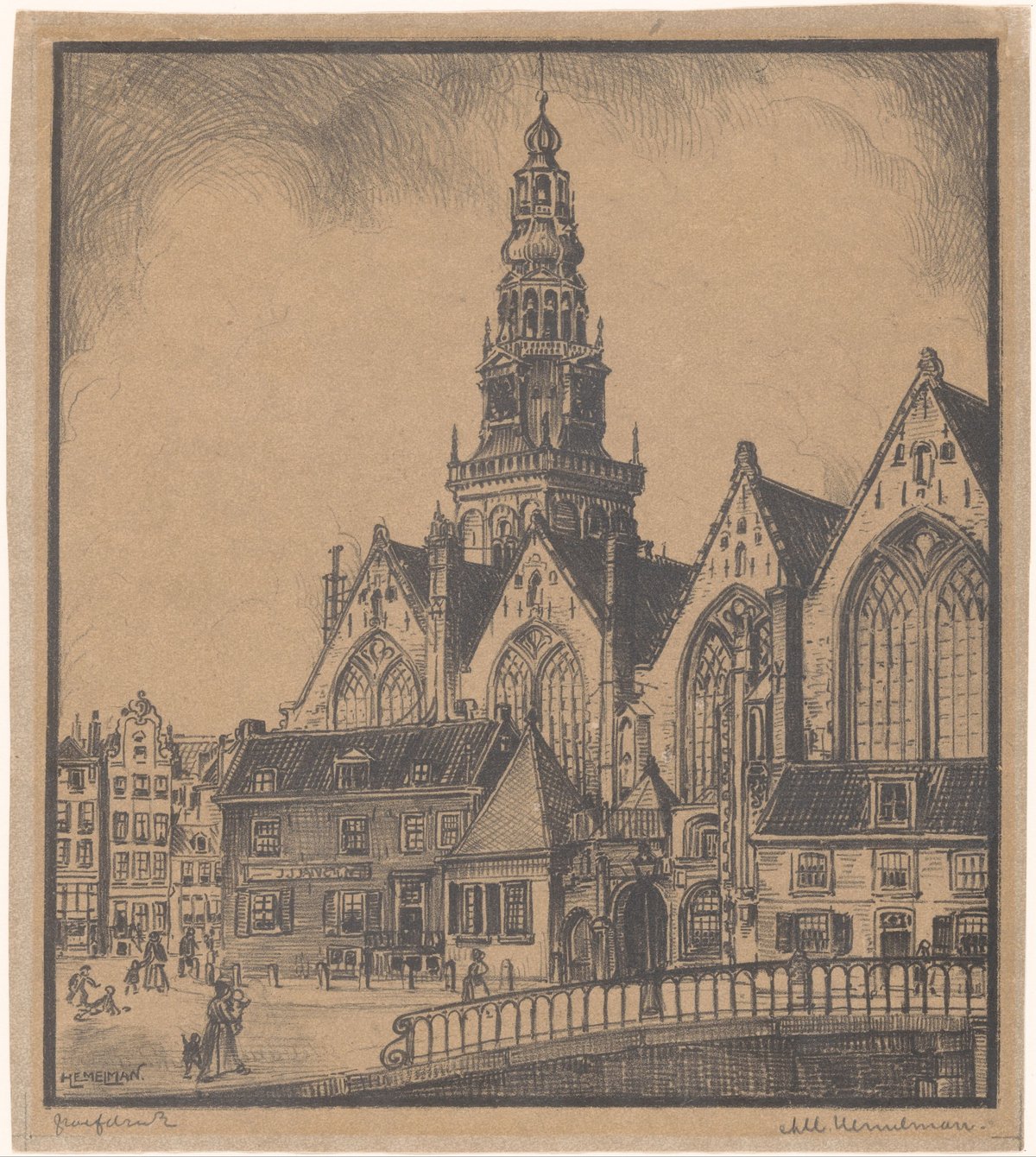
Nestled in the culturally rich Amsterdam-Oost district, Oosterkerk is a landmark that beautifully encapsulates Amsterdam's 17th-century Golden Age. Renowned for its Dutch Renaissance Protestant architecture and unique Greek cross layout, this former church has evolved into a vibrant cultural hub. Visitors can explore its striking design, partake in events such as the acclaimed "Genesis" light show, and immerse themselves in concerts, exhibitions, and community gatherings. With free general entry and accessible facilities, Oosterkerk is a must-see for history enthusiasts, architecture lovers, and cultural explorers visiting Amsterdam. (Spotting History; HollyMelody; Amsterdam City Card; Secret Amsterdam)
Commissioned to serve Amsterdam’s burgeoning Protestant community, Oosterkerk was constructed between 1669 and 1671. The church’s design is attributed to Daniël Stalpaert, with completion by Adriaan Dortsman, and possibly influenced by Hendrick de Keyser (Amsterdam City Card). Its location in the Eastern Islands reflects the district’s historical importance as a hub of maritime trade during Amsterdam's Golden Age. The church was officially inaugurated in 1671, soon becoming a spiritual and communal anchor for the local population.
Photo Gallery
Explore Oosterkerk in Pictures

Close-up urban photograph of the Oosterkerk, a 17th century old brick church in traditional Dutch protestant square-form architecture style, located beside the canal Nieuwe Vaart and water-lock at Wittenburgergracht near Amsterdam city center and Maritime Museum, photo by Fons Heijnsbroek, January 2

Historic photograph showing the Nieuwevaart canal viewed westward from the Dageraadsbrug bridge (bridge number 353) in Amsterdam, featuring ice on the canal and the Oosterkerk church visible in the background.

Early 20th century postcard image depicting several deck barges and a three-masted ship in the Oosterdok harbor, Amsterdam, with the Oosterkerk church visible in the background. Published by Jos Nuss, part of the Stadsarchief Amsterdam postcard collection.

Historical photo from November 1, 1896 showing miller Gerardus Hendrik de Boer with two helpers at the windshaft of the De Gooyer windmill at Funenkade 5. The view is northwards towards Nieuwevaart and features the N.H. Oosterkerk church, Wittenburgerstraat 25, in the background. Photo by Jacob Olie

Historic southeast view of Nieuwevaart featuring the Dutch Reformed Oosterkerk church at Wittenburgergracht 25 and De Gooyer windmill at Funenkade 5 in Amsterdam, captured in a half-stereo photo by Gaston Braun in 1864.

Vintage light print photograph of Nieuwe Vaart and Kattenburgervaart canals seen from Oosterkerk in Amsterdam, circa 1893-1894 by photographer Gerrit Hendricus Heinen showing historic landmarks including Zuiderkerk, Westerkerk, Oude Kerk, St. Nicolaas Church, and Rijks Marinewerf.

Historical view of Oosterkerk and the shipyard 'Het Wapen van Amsterdam' seen over the Kattenburgervaart canal from the west, painted by Hendrik Willebrord Jansen

Historical photograph of Oosterdok in Amsterdam taken between 1865 and 1870, showing 's Lands Zeemagazijn at Kattenburgerplein 1 and the Oosterkerk at Wittenburgergracht 25, part of the Stadsarchief Amsterdam stereo photo collection.

Historical black and white photo taken on May 28, 1895 by Jacob Olie showing Nieuwevaart in Amsterdam looking southeast towards Kattenburgergracht, Oostenburgergracht and Wittenburgergracht canals. Visible are N.H. Oosterkerk church at number 25 and the rear of the Hoogte Kadijk warehouse on the rig

Historic panoramic photo of Nieuwevaart canal taken on November 1, 1896, from De Gooyer windmill in Amsterdam. Foreground shows Dageraadsbrug bridge for Sarphatistraat, with terrains behind Hoogte Kadijk on the left and Oostenburgergracht, Wittenburgergracht, Kattenburgergracht on the right. Photo b

Historic black and white panoramic photograph of Nieuwevaart canal in Amsterdam taken on November 1, 1896 by Jacob Olie; features Dageraadsbrug bridge, Hoogte Kadijk area, Oostenburgergracht, Wittenburgergracht, Kattenburgergracht canals, and the N.H. Oosterkerk church in the background.

Black and white photo of Nieuwevaart canal taken on January 6, 1898, by Jacob Olie, showing the N.H. Oosterkerk church and surrounding area in Amsterdam. Part of the Jacob Olie collection in the Stadsarchief Amsterdam.
Architectural Highlights
Oosterkerk stands out for its rare Greek cross floor plan—four equal arms forming a perfectly symmetrical shape. This layout, unusual in the Netherlands, creates a harmonious and light-filled central space. The octagonal core, crowned by a wooden ceiling, amplifies the sense of openness. Externally, the building features traditional Dutch brickwork, understated ornamentation, and a central tower that once guided sailors along the canals. Large arched windows provide abundant natural light, while the balustrade and cornice add classical touches. The bells, cast by Pieter Hemony, are renowned examples of 17th-century craftsmanship (HollyMelody; Spotting History).
Inside, the heated blue stone floor provides comfort and color. Original wooden beams and supporting columns highlight the building’s historical authenticity, while the minimalist decor accentuates architectural features.
Oosterkerk’s Role in Amsterdam Life
From its opening, Oosterkerk functioned as a Dutch Reformed church, serving as a venue for worship, baptisms, weddings, funerals, and community gatherings. It became a burial site for around 500 notable individuals, including architect Adriaan Dortsman (Spotting History). The church’s central role in religious and social life continued for centuries, hosting royal ceremonies and community events.
As the city's demographics shifted and religious practices changed, regular services ceased in 1939, and the church was decommissioned in 1962 (HollyMelody).
Restoration and Preservation
By the mid-20th century, Oosterkerk faced neglect and the threat of demolition. Community-led efforts in the 1960s and comprehensive restoration in the 1980s safeguarded the church’s future (Spotting History). Restoration focused on structural stabilization, brickwork repair, and the careful integration of modern amenities—such as heating and lighting—without compromising historical integrity.
Cultural Revival and Events
Oosterkerk’s adaptive reuse exemplifies Amsterdam’s approach to heritage preservation. No longer an active church, it now thrives as a cultural venue. Its acoustics and spacious interior make it ideal for classical and contemporary music concerts, art exhibitions, lectures, and community gatherings. Events such as Museumnacht (Museum Night) and Open Monumentendag see Oosterkerk at the center of citywide cultural celebrations.
The church also supports community initiatives, hosting neighborhood meetings, educational workshops, and charitable events, while maintaining its role as a venue for significant life moments like weddings and memorials.
Visitor Information: Hours, Tickets, and Accessibility
Visiting Hours
- Open: Tuesday–Sunday, 10:00 AM–5:00 PM
- Closed: Mondays and public holidays
- Note: Hours may vary for special events. Check the official website for updates.
Tickets
- General Admission: Free
- Special Events (e.g., Genesis): Paid tickets required. Purchase online via the official event or Oosterkerk website.
- Guided Tours: Available on select days, especially during festivals or by prior arrangement. Fees may apply.
Accessibility
- Step-free access at the main entrance
- Wheelchair-accessible restrooms
- Spacious, heated interiors suitable for strollers and mobility aids
- Assistance available on request
Getting There
- By Tram: Lines 7 or 14 to Wittenburgergracht or Oosterkerk stop
- By Bike: Ample bike parking nearby
- By Car: Paid parking in the area
Genesis Light Show: Innovation Meets Heritage
A standout event, "Genesis" transforms Oosterkerk into an immersive 360° light and sound experience. Using advanced projection mapping, the show narrates the biblical creation story across the church’s interior surfaces. The interplay of visuals and acoustics creates a mesmerizing environment suitable for visitors of all ages (Secret Amsterdam; Amsterdam Spotted). Tickets for "Genesis" are available online and often sell out during peak periods.
Nearby Attractions
Enhance your visit by exploring the surrounding Eastern Islands, rich with history and culture:
- National Maritime Museum
- NEMO Science Museum
- Artis Royal Zoo
- De Plantage neighborhood with parks, cafes, and galleries
Frequently Asked Questions (FAQ)
Q: What are Oosterkerk’s opening hours?
A: Tuesday–Sunday, 10:00 AM–5:00 PM; closed Mondays and public holidays.
Q: Is there an entry fee?
A: Entry is free for general visits; tickets are required for special events.
Q: How do I book tickets for Genesis or guided tours?
A: Purchase tickets online via the official event or Oosterkerk website. Guided tour availability is posted online or can be arranged by inquiry.
Q: Is Oosterkerk wheelchair accessible?
A: Yes, with step-free access and accessible facilities.
Q: Can I take photos inside?
A: Photography is permitted for personal use; restrictions may apply during events.
Listen to the full story in the app
Your Personal Curator, in Your Pocket.
Audio guides for 1,100+ cities across 96 countries. History, stories, and local insight — offline ready.
Audiala App
Available on iOS & Android
Join 50k+ Curators
Sources
- verified
- verified
- verified
- verified
- verified
- verified
Last reviewed: