Introduction
The Monument Voor Het Ondergedoken Kind En Beschermer (Monument for the Hidden Child and Protector) in Amsterdam is a poignant memorial dedicated to the thousands of Jewish children who were hidden during World War II and the courageous individuals who protected them. This monument stands as a testament to the resilience and compassion displayed during one of history’s darkest chapters, inviting visitors to reflect on themes of bravery, human dignity, and moral choice.
Located in a tranquil residential area, the monument provides a contemplative space for remembrance and education, accessible year-round and free to all. This guide offers detailed historical context, practical travel advice, accessibility information, visiting tips, and suggestions for nearby attractions—ensuring a meaningful and respectful visit.
Photo Gallery
Explore Monument Voor Het Ondergedoken Kind en Beschermer in Pictures
Historical Context
During the Nazi occupation of the Netherlands (1940–1945), systematic persecution of Jews led to the deportation of approximately 107,000 of the 140,000 Jews living in the country; only about 5,000 survived. Between 4,000 and 6,000 Jewish children survived the Holocaust in the Netherlands by going into hiding, often protected by non-Jewish families who risked their own safety (USHMM; Joods Cultureel Kwartier).
The monument specifically honors both the hidden children and their protectors, acknowledging the extraordinary courage and humanity found within ordinary lives during times of moral crisis (4en5mei.nl).
Artistic Description
Design and Symbolism
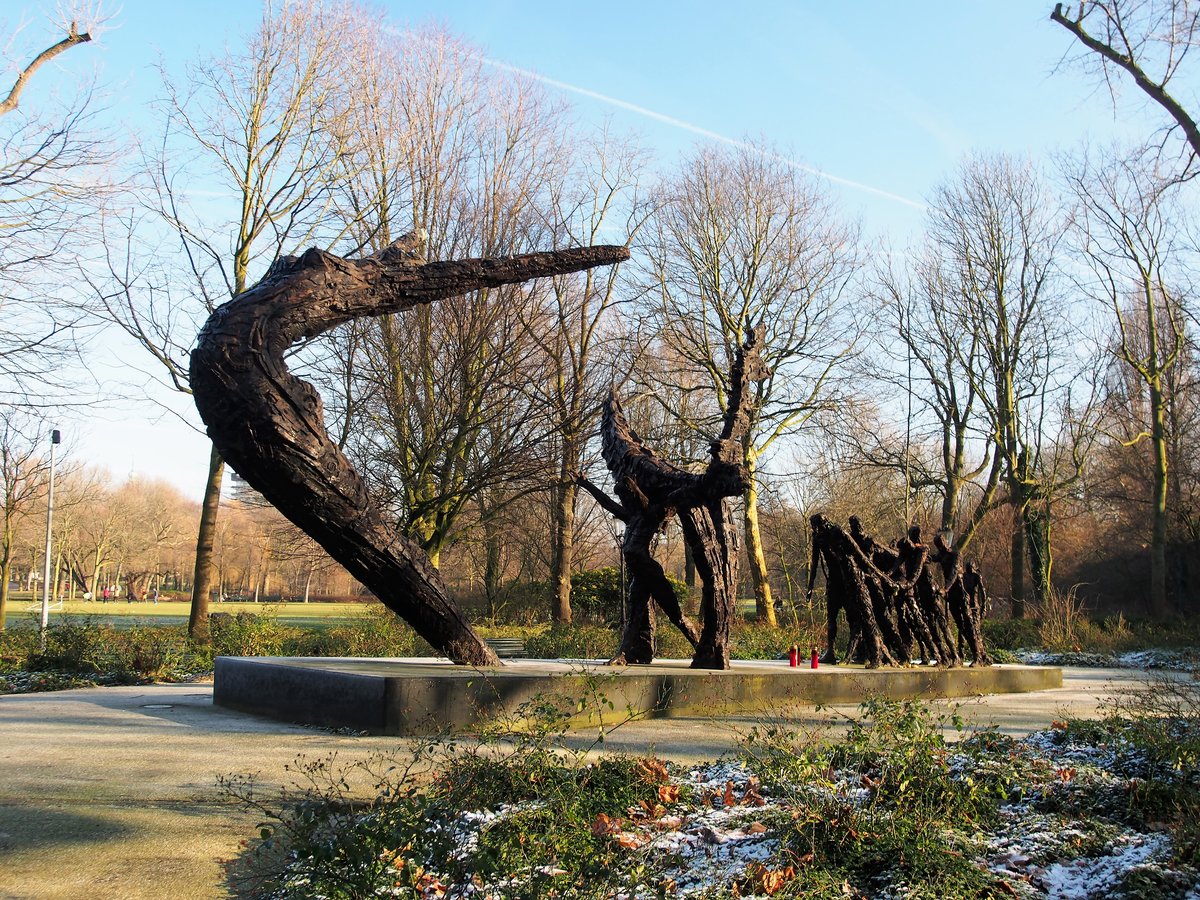
Created by Dutch sculptor Frank Letterie in 2005 to mark the 60th anniversary of the Netherlands' liberation, the monument features two bronze figures: a child and an adult protector. The child’s posture conveys both fear and trust, while the adult’s protective stance embodies shelter and reassurance. The low, inscribed stone pedestal invites intimate engagement and underscores the permanence of memory (joodsmonument.nl).
Visual Impact
Letterie’s use of textured bronze and timeless clothing styles universalizes the monument’s message, making it accessible regardless of background. The figures’ interaction—evocative of vulnerability and protection—tells a silent story of hope amidst persecution.
Location and Setting
Situated at the intersection of Van Boshuizenstraat and Nieuw Herlaer, near the Maimonides Lyceum in the Buitenveldert district, the monument’s peaceful surroundings lend themselves to reflection. The neighborhood’s residential character emphasizes the everyday heroism commemorated here (studiokoning.nl).
Commemorative Purpose and Societal Impact
Honoring Hidden Children and Protectors
The monument is dedicated both to the Jewish children who survived in hiding and to the non-Jewish Dutch citizens who sheltered them. The inscription reads:
“In memory of the hiding of children during the Second World War and as a tribute to those who provided these children with protection.”
(4en5mei.nl)
Educational Role
The monument serves as a living educational resource. School groups, guided tours, and commemorative events—particularly on National Remembrance of the Dead (May 4) and Liberation Day (May 5)—use the site to discuss moral courage, civil responsibility, and the importance of standing against injustice (Joods Cultureel Kwartier).
Community Engagement
Local authorities and Jewish organizations maintain the monument and organize annual ceremonies. Digital initiatives, such as virtual flower-laying, extend commemoration beyond physical visitors (4en5mei.nl).
Integration into National Memory
As part of Amsterdam’s network of over 300 war memorials, the monument complements sites like the Anne Frank House and the Auschwitz Monument, deepening the city’s collective memory and historical dialogue (TracesOfWar.nl).
Practical Visitor Information
Location
- Address: Van Boshuizenstraat & Nieuw Herlaer, 1083 BA Amsterdam, Netherlands
- District: Buitenveldert
Visiting Hours
- Open: 24 hours a day, year-round
Admission
- Entry: Free of charge; no tickets required
Getting There
- Public Transport: Tram line 5 and several bus routes stop at Van Boshuizenstraat, a short walk from the monument.
- Bicycle: Amsterdam’s cycling infrastructure makes biking a convenient option, with ample parking nearby.
- Car: Limited street parking is available; public transport is generally recommended.
Accessibility
- Wheelchair Access: The site is fully accessible, with paved, step-free walkways and nearby benches.
- Service Animals: Guide dogs and service animals are welcome.
Facilities
- On-site amenities: None; the monument is in a public park.
- Nearby facilities: Gelderlandplein shopping center offers restrooms, dining, and shops.
Visitor Tips and Etiquette
- Best Times to Visit: Early morning or late afternoon on weekdays for a quieter atmosphere; spring and early summer for pleasant weather.
- Weather: Amsterdam’s climate is temperate with frequent rain. Bring an umbrella or raincoat.
- Conduct: Maintain a quiet, respectful demeanor. Refrain from eating, drinking, or smoking near the memorial.
- Photography: Allowed for personal use; be mindful of others’ moments of reflection.
- Group Visits: For large groups, coordinate in advance with local organizations.
Nearby Attractions
- Amstelpark: Urban gardens and playgrounds nearby.
- Gelderlandplein: Shopping and dining options.
- Amsterdamse Bos: Large park for outdoor activities.
- Anne Frank House: About 6 km away, a cornerstone of Holocaust remembrance.
- Auschwitz Monument: Another significant WWII memorial in the city.
Special Events and Guided Tours
- Commemorative Ceremonies: Held annually on May 4 and 5.
- Guided Tours: Offered by local Jewish organizations and historical societies; check official websites for details.
Frequently Asked Questions (FAQ)
Q: What are the monument’s visiting hours?
A: The monument is accessible 24 hours a day, seven days a week.
Q: Is there an entry fee?
A: No, visiting the monument is free.
Q: Are guided tours available?
A: Yes, local organizations may offer guided historical tours including this site.
Q: Is the monument wheelchair accessible?
A: Yes, the monument and surrounding park have flat, paved paths.
Q: Are there facilities on-site?
A: No, but nearby shopping centers have public restrooms and cafés.
Q: Can I lay flowers or leave a tribute?
A: Yes, both physical and digital tributes are encouraged.
Visuals and Multimedia

Alt text: Bronze sculpture of a man embracing a young girl holding a suitcase at the Monument voor het Ondergedoken Kind en Beschermer in Amsterdam.
Alt text: Map indicating the monument's location at Van Boshuizenstraat and Nieuw Herlaer, Amsterdam.
Essential Tips for a Meaningful Visit
- Dress for the Weather: Amsterdam’s climate is changeable; plan accordingly.
- Bring Essentials: Water and personal items, as there are no on-site facilities.
- Allow Time for Reflection: Allocate time to contemplate the monument and its message.
- Combine Your Visit: Explore nearby parks, museums, and memorials for a holistic experience.
- Learn Before You Go: A little historical context will deepen your appreciation.
- Respect the Space: Encourage quiet and considerate behavior.
Listen to the full story in the app
Your Personal Curator, in Your Pocket.
Audio guides for 1,100+ cities across 96 countries. History, stories, and local insight — offline ready.
Audiala App
Available on iOS & Android
Join 50k+ Curators
Sources
- verified
- verified
- verified
- verified
- verified
- verified
Last reviewed: