Plan and listen to He Hua Temple with Audiala.
Audio guide in your pocket, itinerary in your browser. Built for the way you actually visit.
Introduction
He Hua Temple (荷華寺), located in the heart of Amsterdam’s Chinatown on Zeedijk street, is the largest traditional Chinese Buddhist temple in Europe. Since its opening in 2000, it has served as a center of Buddhist practice, a hub for cultural exchange, and a symbol of Amsterdam’s multicultural and tolerant spirit. This comprehensive guide provides an in-depth look at He Hua Temple’s history, architectural highlights, visiting hours, ticket information, and practical travel tips to ensure a meaningful visit.

Discovering He Hua Temple: A Spiritual and Cultural Landmark
He Hua Temple is nestled among historic Amsterdam sites such as Nieuwmarkt and the Red Light District. It stands as a vibrant example of cross-cultural harmony, symbolizing the unity of Eastern spiritual traditions and Dutch multiculturalism. Its name, meaning "Lotus Flower," represents purity and enlightenment in Buddhism (He Hua Temple Official Website).
Historical Background and Origins
The site at Zeedijk 106-118 has a rich spiritual legacy. Once home to a 15th-century convent, the area evolved through post-war redevelopment before plans emerged in the 1990s to create a Buddhist temple that would serve Amsterdam’s growing Chinese community. The project reflected the city’s inclusive ethos and its long history of cross-cultural exchange (Amsterdam Tourism – Chinatown).
Founding Vision and International Collaboration
He Hua Temple was established through a partnership between local Chinese community leaders and the Fo Guang Shan Buddhist order from Taiwan, led by Venerable Master Hsing Yun. Dutch architect Fred Greven collaborated closely with artisans and spiritual advisors from Taiwan to realize a temple that authentically reflects Chinese palace-style architecture while integrating harmoniously into Amsterdam’s urban landscape (Wikipedia; noroadbarred.wordpress.com).
Architectural Highlights
Exterior Features
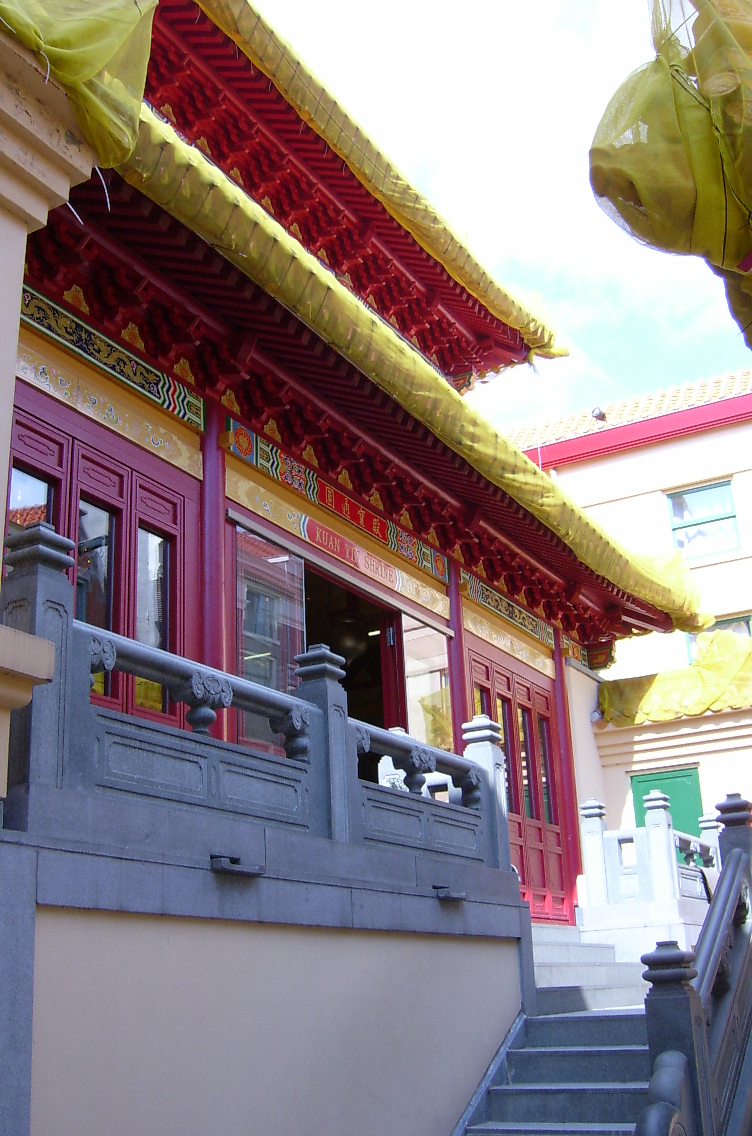
The temple’s pastel-hued facade features a grand “Mountain Gate” with three arched entrances, crowned by dragon motifs and Chinese zodiac animal figures, symbolizing spiritual protection and cosmological harmony (hanslangh.nl). The upturned eaves and intricate roof decorations are hallmark elements of traditional Chinese architecture, adapted for the Dutch climate with custom yellow-glazed tiles (Wikipedia).
Interior Layout and Sacred Spaces
He Hua Temple spans four floors, organized along a central axis leading to the Main Shrine Hall. Here, a rare bronze “Thousand-Hand Guanyin” statue, crafted in Taiwan, is flanked by guardian figures Qie Lan and Wei Tuo. The temple also features a meditation hall, library, classrooms, and living quarters for resident nuns (noroadbarred.wordpress.com; amsterdam-now.com).
Materials and Craftsmanship
Granite stairways, balustrades, and decorative elements were imported from China and meticulously installed by Taiwanese artisans, ensuring the temple’s authenticity. The exterior flanking buildings reflect Dutch architectural styles, symbolizing the blending of cultures (Wikipedia).
Visiting He Hua Temple: Hours, Tickets & Tips
Visiting Hours and Admission
- Tuesday to Friday: 12:00 PM – 5:00 PM
- Saturday and Sunday: 10:00 AM – 5:00 PM
- Closed: Mondays and January 1st
Admission is free; donations are welcome to support the temple’s programs (Travel Shop Girl; Explorial).
Guided Tours
Free guided tours in Dutch and English are offered every Saturday (no booking required), providing insight into Buddhist practices, temple rituals, and the significance of statues and architecture (The Broke Backpacker).
Accessibility
He Hua Temple is accessible to visitors with limited mobility, with ramps and elevators to upper floors. Some areas may have steps; contact the temple for assistance (vanupied.com).
Location & Transportation
- Address: Zeedijk 106-118, 1012 BB Amsterdam
- Getting There: A 5-minute walk from Nieuwmarkt metro station (lines 51, 53, 54), and easily reached from Amsterdam Central Station. Tram lines 14 and 24 also stop nearby (Explorial).
Special Events and Activities
He Hua Temple hosts a variety of cultural and religious events throughout the year, including Chinese New Year celebrations, Mid-Autumn Festival, and Buddhist holidays like Vesak Day. Workshops in calligraphy, tea ceremonies, and Dharma lectures are regularly offered (Chinatownology; IBPS).
Community, Rituals, and Interfaith Engagement
Managed by an abbess and resident nuns, the temple functions as a thriving community center. It promotes Humanistic Buddhism, offering meditation sessions, educational workshops, and actively participating in citywide interfaith dialogues. The library and bookstore further serve educational and cultural outreach (vanupied.com).
Legacy and Cultural Significance
He Hua Temple is a living monument to Amsterdam’s multiculturalism and religious tolerance. Inaugurated by Queen Beatrix in 2000, it stands as a testament to successful cross-cultural collaboration and the enduring presence of the Chinese diaspora in the Netherlands (Amsterdam Tourism – Chinatown).
Nearby Attractions
Located in the Chinatown district, the temple is close to the Red Light District, Nieuwmarkt square, the Amsterdam Museum, and historic canals—making it a convenient cultural stop during your exploration of the city (Chinatownology).
Frequently Asked Questions (FAQ)
Q: What are the opening hours of He Hua Temple?
A: Tuesday–Friday: 12:00 PM–5:00 PM; Saturday–Sunday: 10:00 AM–5:00 PM; Closed Mondays and January 1st.
Q: Is there an admission fee?
A: No, entry is free. Donations are appreciated.
Q: Are guided tours available?
A: Yes, free guided tours are held every Saturday; no booking needed.
Q: Is the temple wheelchair accessible?
A: The temple is mostly accessible; some areas have steps.
Q: What are nearby attractions?
A: Nieuwmarkt, Red Light District, Chinatown eateries, and Amsterdam’s historic canals.
Q: Are there specific visitor guidelines?
A: Dress modestly, maintain silence, remove shoes when required, and refrain from consuming meat, alcohol, or drugs on temple grounds.
Discover More
For the latest information on events, health guidelines, and programs, check the official temple website or inquire at the reception. Download the Audiala app for guided audio tours and up-to-date travel tips on Amsterdam’s historical sites.
Summary and Travel Tips
He Hua Temple is a testament to Amsterdam’s commitment to cultural diversity and religious tolerance. Its free admission, inclusive community programs, and architectural grandeur make it a must-visit for anyone interested in spiritual exploration or cultural heritage. For a peaceful experience, visit on weekday afternoons. Respect temple guidelines, consider joining a guided tour, and check the website for special events.
Listen to the full story in the app
The whole He Hua Temple,
told well.
Audio guides for 1,100+ cities across 96 countries. History, stories, and local insight — offline ready.
Verified, and shown.
Researched and written by the Audiala editorial team from historical records, architectural archives, and local expertise.
Researched from Wikidata, Wikipedia & official sources · fact-checked · How we make our guides →