Plan and listen to Dharahara with Audiala.
Audio guide in your pocket, itinerary in your browser. Built for the way you actually visit.
Introduction
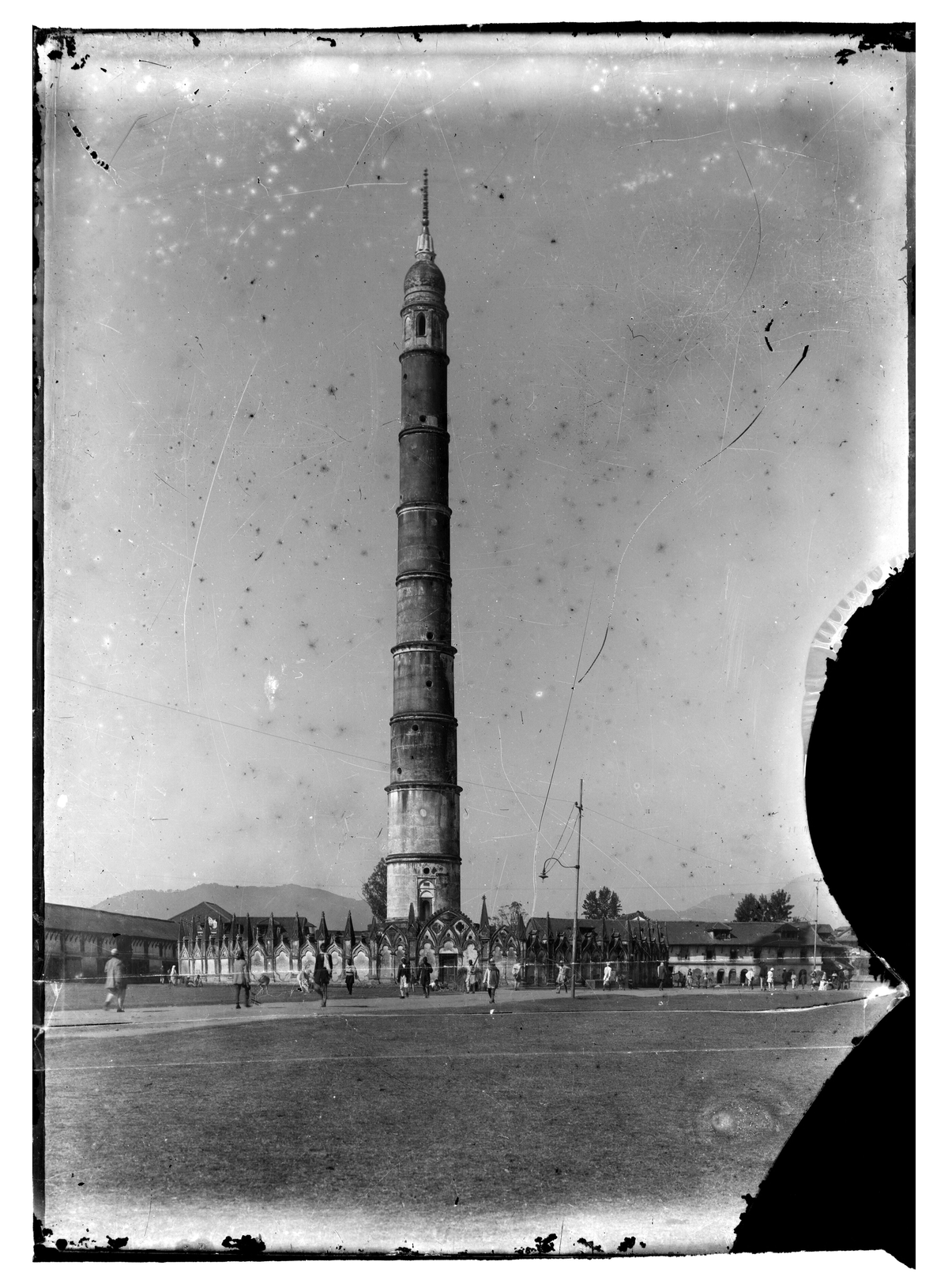
Dharahara, also known as Bhimsen Tower (Nepali: धरहरा), stands as a powerful symbol of Kathmandu’s resilience and cultural heritage. Originally constructed in 1832 by Prime Minister Bhimsen Thapa under the guidance of Queen Lalit Tripurasundari, the tower has served as a watchtower, a marker of unity, and a testament to Nepal’s enduring spirit (Wikipedia; MexicoHistorico). Over nearly two centuries, Dharahara has survived multiple earthquakes, most notably the devastating collapse in 2015, and has been meticulously reconstructed to balance historical authenticity with modern safety and accessibility (Wikiwand; Kathmandu Post).
Today, visitors can experience not only panoramic views of the Kathmandu Valley but also an immersive journey through Nepal’s vibrant history, spirituality, and sense of community. This guide provides detailed, up-to-date information on Dharahara visiting hours, ticket prices, accessibility, practical travel tips, and nearby attractions, ensuring you make the most of your visit to this iconic monument.
- Historical Background and Architectural Evolution
- Visiting Dharahara: Essential Information
- Entry Process and Ticketing
- Visitor Experience
- Nearby Attractions and Itinerary Suggestions
- FAQs
- Conclusion and Key Visiting Tips
- References

Historical Background and Architectural Evolution
Origins and Historical Context
Dharahara was commissioned in 1832 by Bhimsen Thapa, a visionary Prime Minister, during a period that called for strong symbols of national unity (Wikipedia; MexicoHistorico). The first tower, built in 1824, was destroyed in the 1834 earthquake, but the second—erected in Sundhara, Kathmandu—quickly became Nepal’s tallest and most iconic structure. Its function evolved from a military watchtower to a civic landmark, used for public announcements and as a gathering point during national events (Wikiwand; LandNepal).
Architectural Design and Influences
Dharahara’s design is a synthesis of Mughal, European, and traditional Nepali elements. Inspired by minarets such as those of the Taj Mahal and Qutb Minar, it was constructed with innovative materials—Vajra-Surki (brick dust), Chuna (lime), black lentil, and caramel—demonstrating the advanced craftsmanship of the time (Wikipedia). The original structure was nine stories tall, with a spiral staircase of 213 steps and a bronze mast crowning the summit.
Destruction and Reconstruction
The tower suffered destruction in major earthquakes: first in 1834, again in 1934, and most catastrophically in 2015, when its collapse claimed around 180 lives (Wikiwand; Wikipedia). Each time, its reconstruction underscored Nepal’s resilience. The latest rebuilding effort, completed in 2021 and opened to the public in 2024, resulted in a structure 72 meters tall with 22 stories, modern amenities, and robust seismic resistance (Kathmandu Post; New Business Age).
Visiting Dharahara: Essential Information
Visiting Hours
- Open: Daily, 10:00 AM to 4:00 PM
- Closed: Wednesdays (maintenance day)
- Special Note: Hours may be updated during festivals or due to operational adjustments; always confirm via the official site or at the ticket counter (Kathmandu Post).
Ticket Prices
As of November 2024, entry fees are structured as follows (New Business Age):
- Nepali Citizens: NPR 200
- SAARC Country Visitors: NPR 500
- Non-SAARC Foreigners: NPR 1,000
- Premises Only: NPR 50
- Discounts: 50% off for Nepali students, senior citizens, children, and persons with disabilities (ID required)
Tickets are sold on-site, with online ticketing expected soon for convenience (Kathmandu Post).
Accessibility and Facilities
- Elevators: Two modern lifts provide access to the 20th-floor viewing deck; spiral stairs are also available (Dharahara Official Site).
- Restrooms: Modern, clean facilities onsite.
- Food Court: Local and international refreshments available.
- Museum: Exhibitions on Dharahara’s history and Nepalese culture.
- Parking: Four-wheelers (NPR 20/hr), two-wheelers (NPR 10/hr) (New Business Age).
- Security: Standard checks at entry; emergency protocols in place.
Travel Tips
- Best Time to Visit: Early morning or late afternoon for cooler temperatures and clearer views; avoid monsoon season for optimal visibility (Travellers Worldwide).
- Dress Code: Modest, comfortable attire recommended.
- Photography: Allowed for personal use; commercial shoots require permits (see below).
Special Events and Guided Tours
- Guided Tours: Available onsite and through travel agencies; expert guides offer deep historical insights.
- Events: Seasonal festivals, cultural programs, and evening light shows held in the landscaped park (thewondernepal.com).
Entry Process and Ticketing
Upon arrival, proceed to the ticket counter, undergo a security check, and present your ticket at the entrance. Elevators and stairs are clearly marked. Discounts are applied after verification of eligible ID (Kathmandu Post).
Visitor Experience
Crowd Management and Safety
Following its reopening, Dharahara experienced significant crowds, but the introduction of entry fees has regulated visitor flow for safety and comfort. Modern safety features include earthquake-resistant construction and attentive security staff (Kathmandu Post).
Viewing Deck
The 20th-floor viewing deck—2.5 meters wide and encircling the tower—offers unrivaled panoramic views of Kathmandu Valley (Dharahara Official Site). The glass-floored Skywalk is a highlight for thrill-seekers.
Photography and Commercial Use
- Personal Photography: Free, except in restricted areas.
- Commercial Photography: NPR 1,000/hr; videography NPR 5,000/hr; advertising NPR 5,000/hr (New Business Age).
Nearby Attractions and Itinerary Suggestions
Dharahara’s central location makes it ideal for exploring other Kathmandu highlights:
- Kathmandu Durbar Square: UNESCO World Heritage site, 5 minutes’ walk (Jankari Nepal).
- Sundhara (Golden Water Spout): Historic water fountain adjacent to the tower.
- Thamel: Lively tourist hub, 2 km away (Nomadasaurus).
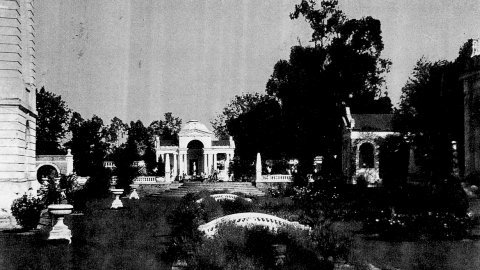
- Keshar Mahal (Garden of Dreams): Serene neoclassical garden.
- Durbar Marg: Shopping, dining, and nightlife.
- Kathmandu Fun Park: Family-friendly amusement.
- Swayambhunath (Monkey Temple): Ancient hilltop stupa (Nomadasaurus).
- Nagarkot: Hill station with Himalayan views, 32 km away.
Sample Itineraries:
- Half-Day: Dharahara + Durbar Square + Thamel
- Full Day: Add Garden of Dreams, Durbar Marg, Skywalk Tower
FAQs
Q: What are the latest Dharahara visiting hours?
A: Open daily 10:00 AM–4:00 PM, closed Wednesdays.
Q: How much are Dharahara tickets?
A: Nepali citizens: NPR 200; SAARC: NPR 500; foreigners: NPR 1,000; with 50% discounts for eligible groups.
Q: Is Dharahara wheelchair accessible?
A: Yes, elevators and ramps provide access to all visitor areas.
Q: Can I take photographs?
A: Yes, for personal use; commercial shoots require a permit.
Q: Are guided tours available?
A: Yes, at the entrance or via local agencies.
Q: What are the best times to visit?
A: Early morning or late afternoon, especially in autumn or spring.
Q: Is there parking?
A: Yes, paid parking for two- and four-wheelers.
Listen to the full story in the app
The whole Dharahara,
told well.
Listen to sourced travel stories with local history and practical context — ready offline.
Verified, and shown.
Researched and written by the Audiala editorial team from historical records, architectural archives, and local expertise.
Built from cited sources · see the method · How we make our guides →