
Introduction
Jet fuel, salt air, and the white facade of Parliament House all arrive at once in Yaren, Nauru, because the airport, the government strip, and the sea sit almost on top of each other. That compression is the first surprise. Yaren does not behave like a capital with grand avenues and ceremonial distance; it feels more like a working shoreline where cabinet offices, coral rock, and corner stores have learned to share 19 square kilometers.
What gives Yaren its pull is the way public life stays visible. You can pass the post office, court buildings, schools, and Parliament in one short run, then drive a few minutes and find yourself staring at Topside, where decades of phosphate mining left jagged limestone pinnacles that look less like a postcard island than the set of a very expensive end-of-the-world film.
History here rarely sits behind glass for long. The Nauru Museum gives the official version in small, human scale, but the sharper lesson comes when you pair it with Command Ridge, Japanese wartime remains, and Aiwo Harbour, where the island's phosphate fortune once moved out by ship. Nauru became independent in 1968, and Yaren still carries that aftertaste of a state built quickly, practically, and under pressure.
Then the island softens. Morning light at Anibare Bay turns the water pale blue and metallic, Buada Lagoon brings back green after all that mined stone, and lunch often means rice, fried corned beef, or grilled fish rather than some polished capital-city ritual. That's the real adjustment Yaren asks of you: stop looking for monumental scale and start noticing how much meaning can fit into a road loop short enough to drive in under an hour.
What Makes This City Special
Government on a Small Scale
Yaren works as Nauru's administrative center, and the surprise is how close everything sits: Parliament House, the airport, government offices, courts, and schools along one narrow coastal strip. You can read the whole state in a short drive.
History With Sharp Edges
The Nauru Museum gives needed context for a place too often reduced to trivia, tying together phosphate wealth, independence in 1968, and the hard afterlife of extraction. Then Command Ridge and the island's wartime remains make that history feel physical.
Topside's Broken Interior
Nauru's central plateau is the island's defining sight: a mined-out interior of coral pinnacles that looks less like a postcard than a warning. Harsh, exposed, unforgettable for reasons that have nothing to do with prettiness.
Coast of Contrasts
Within one short loop from Yaren, the mood shifts fast from civic buildings to Anibare Bay's surf and Buada Lagoon's still green bowl. Salt wind on one side, dense inland quiet on the other.
Historical Timeline
A Tiny District Carrying a Nation
From first settlement on a raised coral island to the de facto capital of an uneasy republic
First Canoes Reach Nauru
Most scholars place Nauru's first settlement somewhere between about 1000 BCE and the early first millennium CE, when Micronesian and Polynesian seafarers reached this uplifted coral island in open canoes. Yaren did not yet exist as an administrative place, but its coastal strip already belonged to a lived island world of fishing grounds, clan ties, salt wind, and paths worn into the limestone.
Pleasant Island Enters Charts
British captain John Fearn sighted Nauru in 1798 and recorded it under the name "Pleasant Island," a label so breezy it almost hides what he saw: a ring of green around a harsh coral interior. For the communities living where Yaren now stands, that sighting opened the door to traders, missionaries, weapons, disease, and every outside appetite that followed.
Whalers and Traders Arrive
Regular European contact thickened in the 1830s as whalers and traders began stopping more often. The beaches that had smelled of fish, smoke, and salt picked up new cargoes too: firearms, liquor, and the kind of disorder that islands seldom ask for and rarely escape quickly.
Civil War Tears the Island
Around 1878, a clan war began that would last roughly ten years, fed by imported guns and alcohol. On an island only 21 square kilometers in area, violence had nowhere to dissipate. Every district, including the coast around present-day Yaren, lived with the pressure of feud, fear, and sudden death.
King Auweyida Faces Annexation
King Auweyida stands at the hinge between old Nauru and colonial rule. During the German annexation of 1888, he was one of the island's best-known leaders, dealing with outsiders who arrived carrying flags, rifles, and paperwork. In Yaren's later government quarter, that older authority still echoes faintly: sovereignty here has never been an abstract word.
Germany Annexes Nauru
German forces annexed Nauru on 16 April 1888, ending the civil war's open phase and folding the island into an imperial system that cared less about reconciliation than control. The move imposed a new order from outside. Yaren's later role as a seat of government begins here, with the habit of power concentrating in one coastal strip.
Phosphate Mining Begins
In 1906, the Pacific Phosphate Company began extracting the phosphate that would remake Nauru and, by extension, Yaren. The island's interior was cut into jagged limestone pinnacles, sharp as broken teeth, while money and administration flowed toward the coast. The smell of coral dust and diesel would define the century.
Albert Fuller Ellis Spots Fortune
Albert Fuller Ellis is the name most tied to phosphate's discovery and commercial start on Nauru, though what he helped unleash was wealth with a fuse already burning. His work shifted the island's fate from remote Pacific outpost to resource colony. Yaren's later ministries, budgets, and political fights all grew in the shadow of that white rock.
Mandate Rule Replaces German Control
After World War I, Nauru passed into a League of Nations mandate administered by Australia with Britain and New Zealand sharing in the phosphate system. Colonial rule changed its paperwork, not its appetite. The island kept exporting mineral wealth while local political power remained tightly rationed.
Ludwig Keke's Yaren Generation
Ludwig Dowong Keke, born around 1935, became Nauru's first university graduate and later represented Yaren in parliament, served as Speaker, and worked as a diplomat. He belongs to the first generation that had to turn a mined colony into a functioning state. In Yaren, that meant making government feel local rather than inherited from foreigners.
Japanese Occupation Begins
Japanese forces occupied Nauru in August 1942, turning the island into a fortified wartime outpost. Yaren's roads and ridges became military ground, and the island's ordinary sounds gave way to engines, orders, and the hard metallic clatter of occupation. Small islands feel war with nowhere to step aside.
Deportations Empty Homes
During the occupation, about 1,200 Nauruans were deported to Truk, now Chuuk, where hunger and disease killed hundreds. Families were ripped out of districts like Yaren and pushed onto ships under guard, leaving behind houses, cooking fires, gardens, and graves. Numbers tell part of the story. Silence tells the rest.
Occupation Ends, Damage Remains
Japanese rule ended in September 1945, but liberation did not bring quick repair. Bombing damage, food shortages, shattered infrastructure, and the long absence of deported families left the island raw. Yaren survived, though like much of Nauru it emerged from war thinned out and wary.
UN Trusteeship Takes Hold
In 1947, Nauru entered the United Nations trusteeship system under Australian administration. The island was now framed in the language of postwar supervision and eventual self-government, though phosphate still sat at the center of outside interest. Yaren's future as an administrative hub became more visible in these years of institutional buildup.
Pres Nimes Ekwona in Yaren
Born in 1948, Pres Nimes Ekwona became one of Yaren's long-serving parliamentary figures, representing the district across multiple terms and serving as Speaker and minister. His career shows what power looks like on Nauru: intimate, hard-fought, and compressed into a handful of streets where everyone knows the stakes and usually the players.
Self-Government Starts to Form
Legislative and executive councils created in 1966 gave Nauru a real path toward self-rule. The shift mattered in Yaren more than anywhere else, because this district would become the place where independence was argued, drafted, and then performed in public. You can feel the scale of it: a tiny coastal settlement learning to behave like a capital.
Nauru Becomes Independent
Nauru gained independence in 1968, ending decades of mandate and trusteeship rule. Yaren was never declared a formal capital in the constitutional sense, yet it became the island's de facto political center by force of practice. On a country this small, precedent can matter as much as marble.
The Mines Pass to Nauruans
Nauruans took control of the phosphate industry in 1970 after buying out the former interests, a moment of real sovereignty measured in contracts and cargo. Revenue surged. In Yaren, government offices and political ambition grew together, both funded by a resource that was already being mined toward exhaustion.
Kieren Keke's Reformist Career
Kieren Keke, born in 1971 and closely tied to Yaren as MP and resident, brought the profile of a physician into Nauruan politics. In a district defined by ministries and parliament rather than boulevards or monuments, figures like Keke matter because they show how Yaren produces national leadership from a very small civic stage.
Parliament House Rises
Parliament House was built in Yaren in 1992, a post-independence building with a plain, functional look that tells the truth about Nauru better than grandeur would. This is not a city of imperial facades. It is a place where sovereignty had to be assembled from concrete, budgets, and hard coastal light.
UN Membership Broadens the Room
Nauru joined the United Nations in 1999, giving the republic a seat in the one chamber where even very small states can speak at full volume. For Yaren, the island's working capital, that meant local politics now reached outward to global diplomacy. Tiny place, long shadow.
Secondary Mining Returns
Secondary phosphate mining resumed in the mid-2000s, drawing value from lower-grade deposits and reminding everyone that old dependencies die slowly. The calcified interior still looked like a quarry after the moon had a bad day. Yaren kept governing a country whose wealth had already been dug out from under it.
David Adeang Leads From Yaren
David Adeang, whose biography links him to Yaren District, became president in October 2023 after years in senior parliamentary and ministerial roles. His rise underlines a plain fact about Yaren: the district is small enough to walk, yet it remains the nerve center where Nauru's arguments over money, justice, and survival are staged.
Photo Gallery
Explore Yaren in Pictures

A view of Yaren, Nauru.
Asad Photo Maldives on Pexels · Pexels License

A view of Yaren, Nauru.
Asad Photo Maldives on Pexels · Pexels License

A view of Yaren, Nauru.
Asad Photo Maldives on Pexels · Pexels License

A view of Yaren, Nauru.
Mohamed Sarim on Pexels · Pexels License

A view of Yaren, Nauru.
SlimMars 13 on Pexels · Pexels License
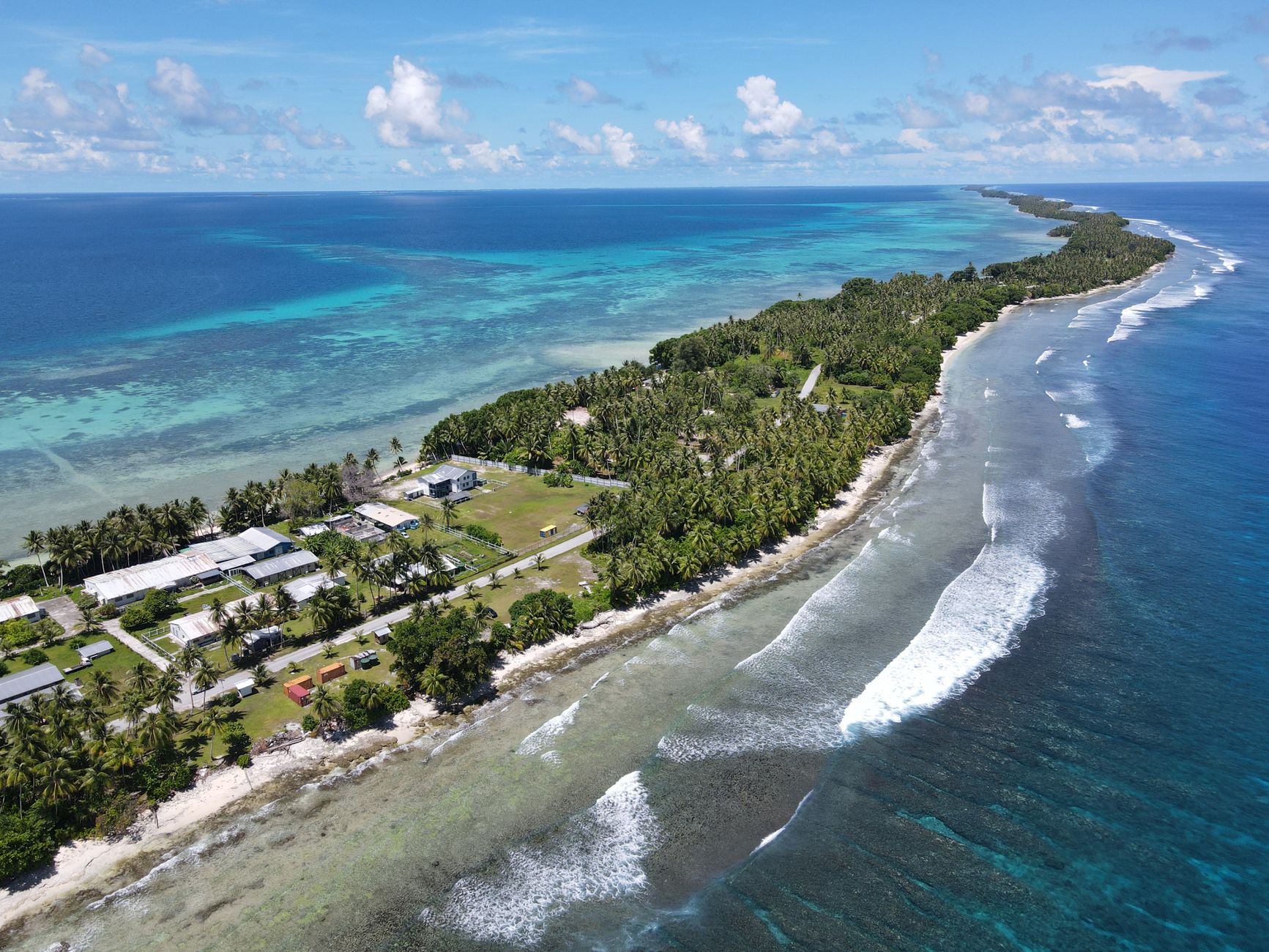
A view of Yaren, Nauru.
志斌 陈 on Pexels · Pexels License

A view of Yaren, Nauru.
SlimMars 13 on Pexels · Pexels License
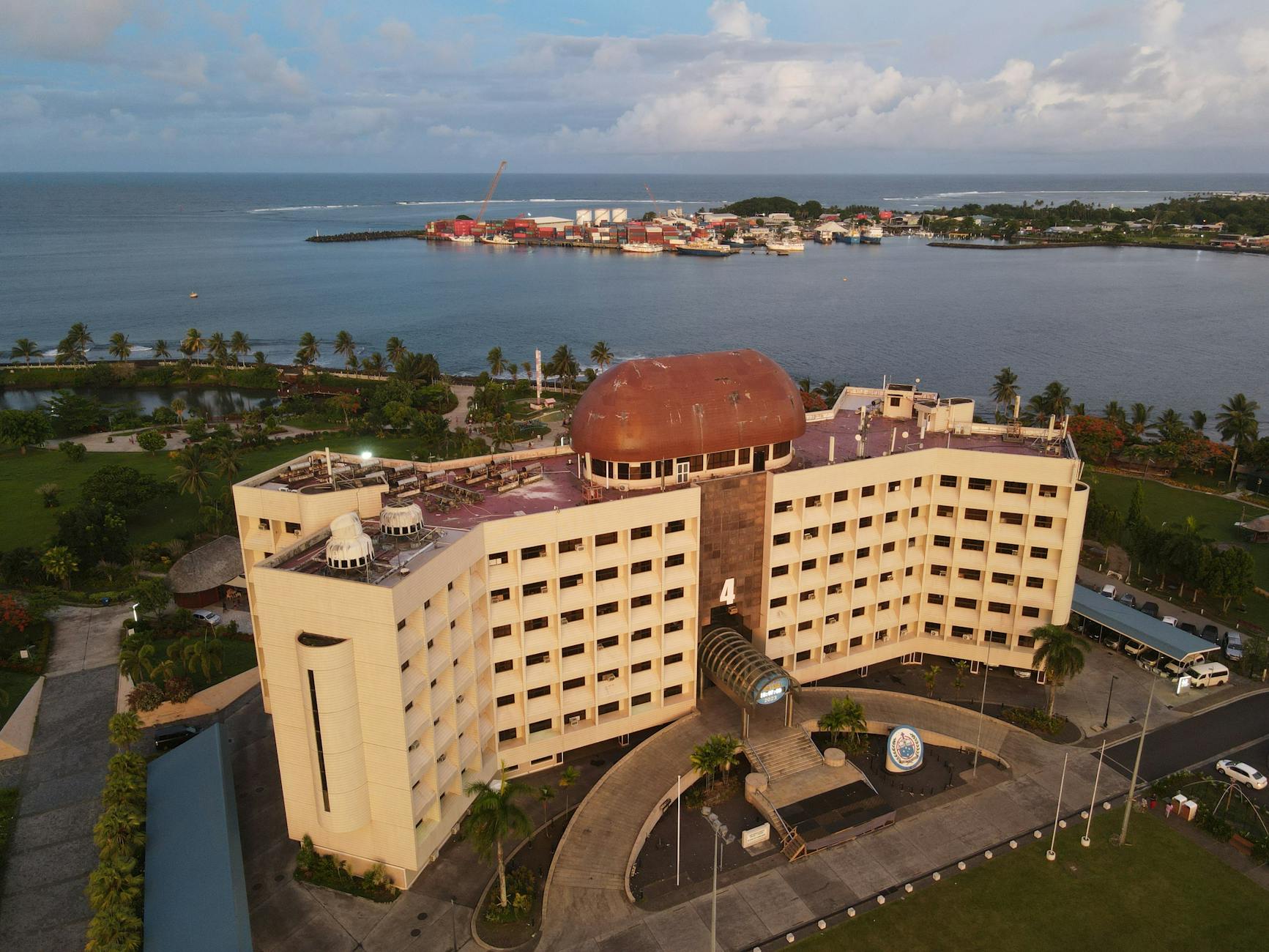
A view of Yaren, Nauru.
Tony Rios on Pexels · Pexels License
Practical Information
Getting There
Yaren is served by Nauru International Airport (INU), which sits in the district itself. In 2026, Nauru Airlines links INU mainly through Brisbane and Nadi, with some schedules continuing via Suva, Tarawa, Kiritimati, and temporary April 2026 routing changes; reconfirm flights because runway works are expected to affect schedules from June 2026. Nauru has no rail network and no intercity highways, just the island's 19 km paved coastal ring road.
Getting Around
Public transport is effectively absent in 2026: the Nauru government states there is no public transport, and outside sources describe only a handful of taxis or informal buses. Most visitors pre-arrange a hire car or airport pickup, then use the ring road for nearly every stop. Walking works for short stretches in Yaren, but there is no metro, no tram, no tourist transport pass, and bike infrastructure is basic at best.
Climate & Best Time
Yaren stays hot year-round, usually around 26 to 33 C, with little seasonal drama in temperature and quite a lot in rain. December to February is typically the wettest stretch, March to May stays humid, June to September is the driest and easiest window, and October to November starts loading the air with rain again. Peak visitor timing tends to fall in June to September; November to May is quieter but brings heavier downpours and cyclone-season risk.
Language & Currency
Nauruan is the national language, but English is widely used in government, hotels, and day-to-day visitor logistics. The currency is the Australian dollar (AUD). Official advice conflicts on card acceptance, so carry enough cash for transport, meals, and backup expenses; the island's lone ATM has a reputation for running dry.
Safety
Travel advisories in 2026 remain relatively low-key, but the practical risks are plain: strong coastal conditions, limited medical depth, and dark roads where pedestrians and animals can appear without warning. Swim only in calm conditions, avoid casual nighttime walking on secondary roads, and check access before heading to places like Moqua Well or cave areas, where local guidance may be necessary.
Tips for Visitors
Carry Cash
Bring Australian dollars in small notes. Research from local-style food guides says card machines can be unreliable, and takeaway stalls often struggle to make change for large bills.
Drive The Loop
Use Yaren as the start for Nauru's 19 km coastal road loop. You can circle the island in under an hour, which makes stop-and-go sightseeing far more practical than treating each district as a separate trip.
Respect The Water
Anibare Bay is one of the island's best-looking stops, but currents can turn rough. Swim only in calm conditions and ask locally before getting in.
Guide For Moqua
Treat Moqua Well and the caves as a guided outing, not a casual detour. Recent travel notes say access can be restricted and some sections may be unstable.
Go In Dry Season
Plan your main outdoor stops in the drier months, when Topside roads and coastal views are easier to enjoy. Morning and late afternoon light are the sweet spots for Command Ridge and Anibare Bay.
Eat What's Offered
If someone shares food, take at least a small portion. One of the stronger food-culture sources notes that refusing shared food can read as rude, especially in community settings.
Explore the city with a personal guide in your pocket
Your Personal Curator, in Your Pocket.
Audio guides for 1,100+ cities across 96 countries. History, stories, and local insight — offline ready.
Audiala App
Available on iOS & Android
Join 50k+ Curators
Frequently Asked
Is Yaren worth visiting? add
Yes, if you want the part of Nauru that explains how the island works. Yaren is less about postcard beauty than civic texture: Parliament House, the museum, war traces, and the short drives that lead out to Topside, Command Ridge, and Anibare Bay. If you only want a beach break, you may find it thin. If you like places that reveal themselves through history and infrastructure, it earns your time.
How many days in Yaren? add
One full day is enough for Yaren itself, and two days gives you breathing room for the wider island loop. The practical reason is scale: Nauru's ring road is only 19 km, so Yaren works best as a base for short stops rather than a city break with separate neighborhoods to tick off.
What can you do in Yaren, Nauru? add
Start with Parliament House and the Nauru Museum, then use Yaren as your launch point for Command Ridge, Topside, Moqua Well, and Anibare Bay. The appeal is the contrast: white government buildings near the airport, then phosphate scars inland, then a strip of blue coast where the island suddenly softens.
Can you walk around Yaren? add
Yes, you can walk the civic strip, but a car makes the day much easier. The island's small size tempts people to think everything feels close on foot; heat, limited shade, and the stop-start nature of sightseeing make a vehicle or local driver the better call.
How do you get around from Yaren? add
Most visitors use a car, taxi, or local driver and turn the island into a loop from Yaren. Research repeatedly points to the coastal ring road as the real transport trick, because nearly every major stop sits on or near that circuit.
Is Yaren safe for travelers? add
Generally yes, but the bigger risks are environmental rather than urban. Watch for rough water at Anibare Bay, and don't enter Moqua caves or unstable Topside areas casually; current access conditions can change and local guidance matters.
Is Yaren expensive? add
Yaren is not a classic budget stop, but you can keep costs down by using simple local eateries and planning one efficient island loop instead of repeated rides. Cash helps, and small notes help even more.
Where should I eat near Yaren? add
For local rhythm, aim for the island's casual takeaway culture rather than expecting a polished dining district in Yaren itself. Research points to Aiwo's roadside food stalls for lunch and the Anibare side for sunset meals and drinks, with Chinese-run family kitchens shaping much of everyday eating.
Sources
- verified IDA Office - Best Places to Visit in Nauru — Used for Yaren civic layout, ring-road logistics, Command Ridge, Buada Lagoon, Anibare Bay, Moqua access notes, and practical day-loop planning.
- verified Tripadvisor - Attractions in Yaren — Used to confirm recurring visitor interest in Parliament House, Government House, and Yaren-area stops.
- verified Dark Tourism - Nauru — Used for historical framing on Topside, WWII remnants, mining scars, and the island's inland atmosphere.
- verified Things to Do in Nauru - Food Culture — Used for cash-first payment habits, shared-food etiquette, meal timing, and practical dining culture.
- verified Take Your Backpack - Visit Yaren — Used for Yaren market mentions, museum context, lighthouse walk, and traveler-facing impressions of the district.
- verified Taste2Travel - Nauru Travel Guide — Used to support Anibare Bay guidance, island history dates, and broader visitor context.
Last reviewed: