Ancestral Settlement
public
c. 1000 BCE
First Canoes Reach Nauru
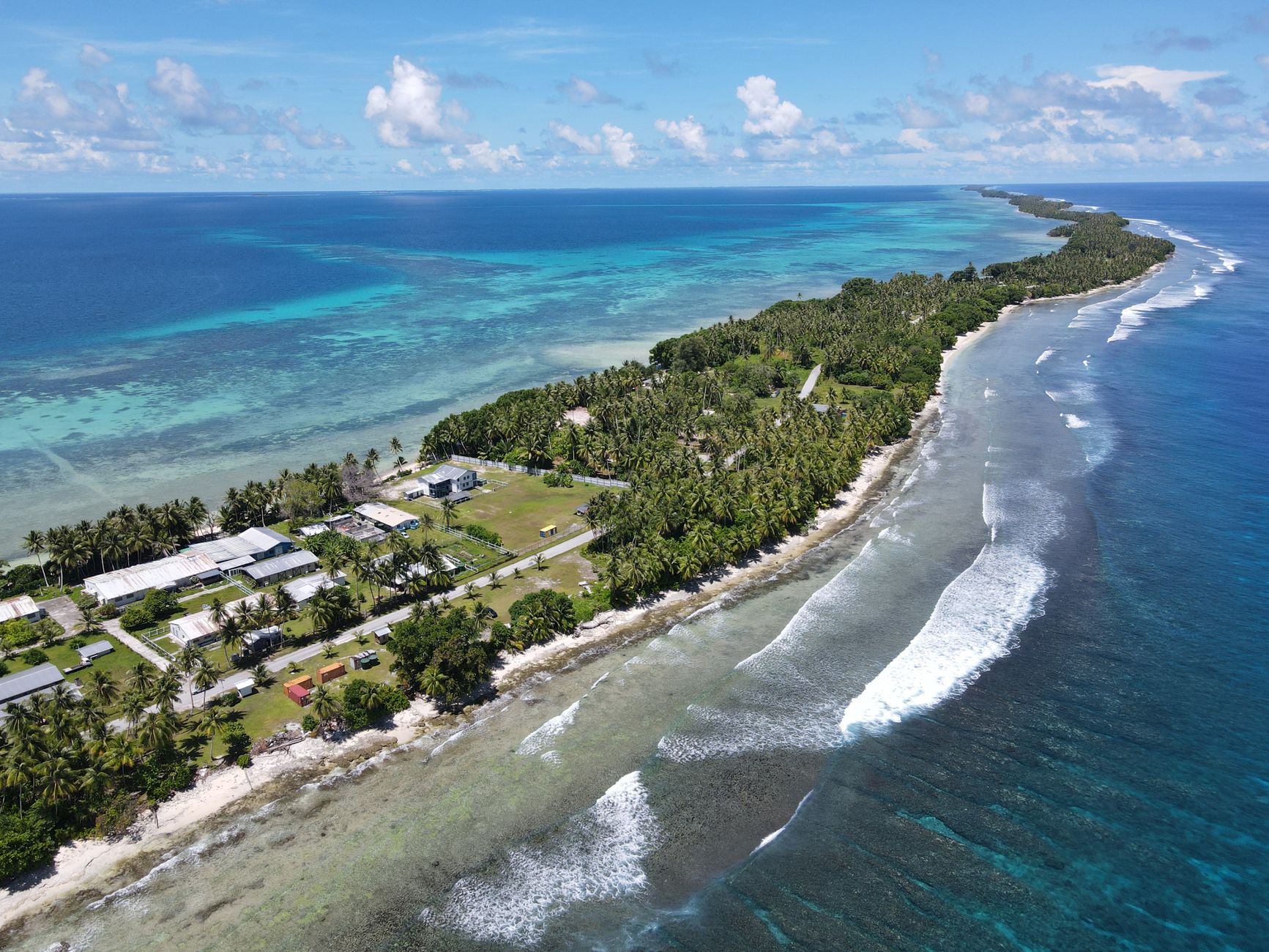
Most scholars place Nauru's first settlement somewhere between about 1000 BCE and the early first millennium CE, when Micronesian and Polynesian seafarers reached this uplifted coral island in open canoes. Yaren did not yet exist as an administrative place, but its coastal strip already belonged to a lived island world of fishing grounds, clan ties, salt wind, and paths worn into the limestone.
Early Contact
public
1798
Pleasant Island Enters Charts
British captain John Fearn sighted Nauru in 1798 and recorded it under the name "Pleasant Island," a label so breezy it almost hides what he saw: a ring of green around a harsh coral interior. For the communities living where Yaren now stands, that sighting opened the door to traders, missionaries, weapons, disease, and every outside appetite that followed.
public
1830s
Whalers and Traders Arrive
Regular European contact thickened in the 1830s as whalers and traders began stopping more often. The beaches that had smelled of fish, smoke, and salt picked up new cargoes too: firearms, liquor, and the kind of disorder that islands seldom ask for and rarely escape quickly.
Clan War and Annexation
swords
1878
Civil War Tears the Island
Around 1878, a clan war began that would last roughly ten years, fed by imported guns and alcohol. On an island only 21 square kilometers in area, violence had nowhere to dissipate. Every district, including the coast around present-day Yaren, lived with the pressure of feud, fear, and sudden death.
person
1888
King Auweyida Faces Annexation
King Auweyida stands at the hinge between old Nauru and colonial rule. During the German annexation of 1888, he was one of the island's best-known leaders, dealing with outsiders who arrived carrying flags, rifles, and paperwork. In Yaren's later government quarter, that older authority still echoes faintly: sovereignty here has never been an abstract word.
gavel
16 Apr 1888
Germany Annexes Nauru
German forces annexed Nauru on 16 April 1888, ending the civil war's open phase and folding the island into an imperial system that cared less about reconciliation than control. The move imposed a new order from outside. Yaren's later role as a seat of government begins here, with the habit of power concentrating in one coastal strip.
Phosphate Colony
factory
1906
Phosphate Mining Begins
In 1906, the Pacific Phosphate Company began extracting the phosphate that would remake Nauru and, by extension, Yaren. The island's interior was cut into jagged limestone pinnacles, sharp as broken teeth, while money and administration flowed toward the coast. The smell of coral dust and diesel would define the century.
person
1906
Albert Fuller Ellis Spots Fortune
Albert Fuller Ellis is the name most tied to phosphate's discovery and commercial start on Nauru, though what he helped unleash was wealth with a fuse already burning. His work shifted the island's fate from remote Pacific outpost to resource colony. Yaren's later ministries, budgets, and political fights all grew in the shadow of that white rock.
gavel
1920
Mandate Rule Replaces German Control
After World War I, Nauru passed into a League of Nations mandate administered by Australia with Britain and New Zealand sharing in the phosphate system. Colonial rule changed its paperwork, not its appetite. The island kept exporting mineral wealth while local political power remained tightly rationed.
Independence and Republic
person
c. 1935
Ludwig Keke's Yaren Generation
Ludwig Dowong Keke, born around 1935, became Nauru's first university graduate and later represented Yaren in parliament, served as Speaker, and worked as a diplomat. He belongs to the first generation that had to turn a mined colony into a functioning state. In Yaren, that meant making government feel local rather than inherited from foreigners.
War and Trusteeship
swords
26 Aug 1942
Japanese Occupation Begins
Japanese forces occupied Nauru in August 1942, turning the island into a fortified wartime outpost. Yaren's roads and ridges became military ground, and the island's ordinary sounds gave way to engines, orders, and the hard metallic clatter of occupation. Small islands feel war with nowhere to step aside.
local_fire_department
1943
Deportations Empty Homes
During the occupation, about 1,200 Nauruans were deported to Truk, now Chuuk, where hunger and disease killed hundreds. Families were ripped out of districts like Yaren and pushed onto ships under guard, leaving behind houses, cooking fires, gardens, and graves. Numbers tell part of the story. Silence tells the rest.
swords
13 Sep 1945
Occupation Ends, Damage Remains
Japanese rule ended in September 1945, but liberation did not bring quick repair. Bombing damage, food shortages, shattered infrastructure, and the long absence of deported families left the island raw. Yaren survived, though like much of Nauru it emerged from war thinned out and wary.
public
1947
UN Trusteeship Takes Hold
In 1947, Nauru entered the United Nations trusteeship system under Australian administration. The island was now framed in the language of postwar supervision and eventual self-government, though phosphate still sat at the center of outside interest. Yaren's future as an administrative hub became more visible in these years of institutional buildup.
Independence and Republic
person
22 Jun 1948
Pres Nimes Ekwona in Yaren
Born in 1948, Pres Nimes Ekwona became one of Yaren's long-serving parliamentary figures, representing the district across multiple terms and serving as Speaker and minister. His career shows what power looks like on Nauru: intimate, hard-fought, and compressed into a handful of streets where everyone knows the stakes and usually the players.
gavel
1966
Self-Government Starts to Form
Legislative and executive councils created in 1966 gave Nauru a real path toward self-rule. The shift mattered in Yaren more than anywhere else, because this district would become the place where independence was argued, drafted, and then performed in public. You can feel the scale of it: a tiny coastal settlement learning to behave like a capital.
gavel
1968
Nauru Becomes Independent
Nauru gained independence in 1968, ending decades of mandate and trusteeship rule. Yaren was never declared a formal capital in the constitutional sense, yet it became the island's de facto political center by force of practice. On a country this small, precedent can matter as much as marble.
factory
1970
The Mines Pass to Nauruans
Nauruans took control of the phosphate industry in 1970 after buying out the former interests, a moment of real sovereignty measured in contracts and cargo. Revenue surged. In Yaren, government offices and political ambition grew together, both funded by a resource that was already being mined toward exhaustion.
person
27 Jun 1971
Kieren Keke's Reformist Career
Kieren Keke, born in 1971 and closely tied to Yaren as MP and resident, brought the profile of a physician into Nauruan politics. In a district defined by ministries and parliament rather than boulevards or monuments, figures like Keke matter because they show how Yaren produces national leadership from a very small civic stage.
Sovereign Yaren
castle
1992
Parliament House Rises
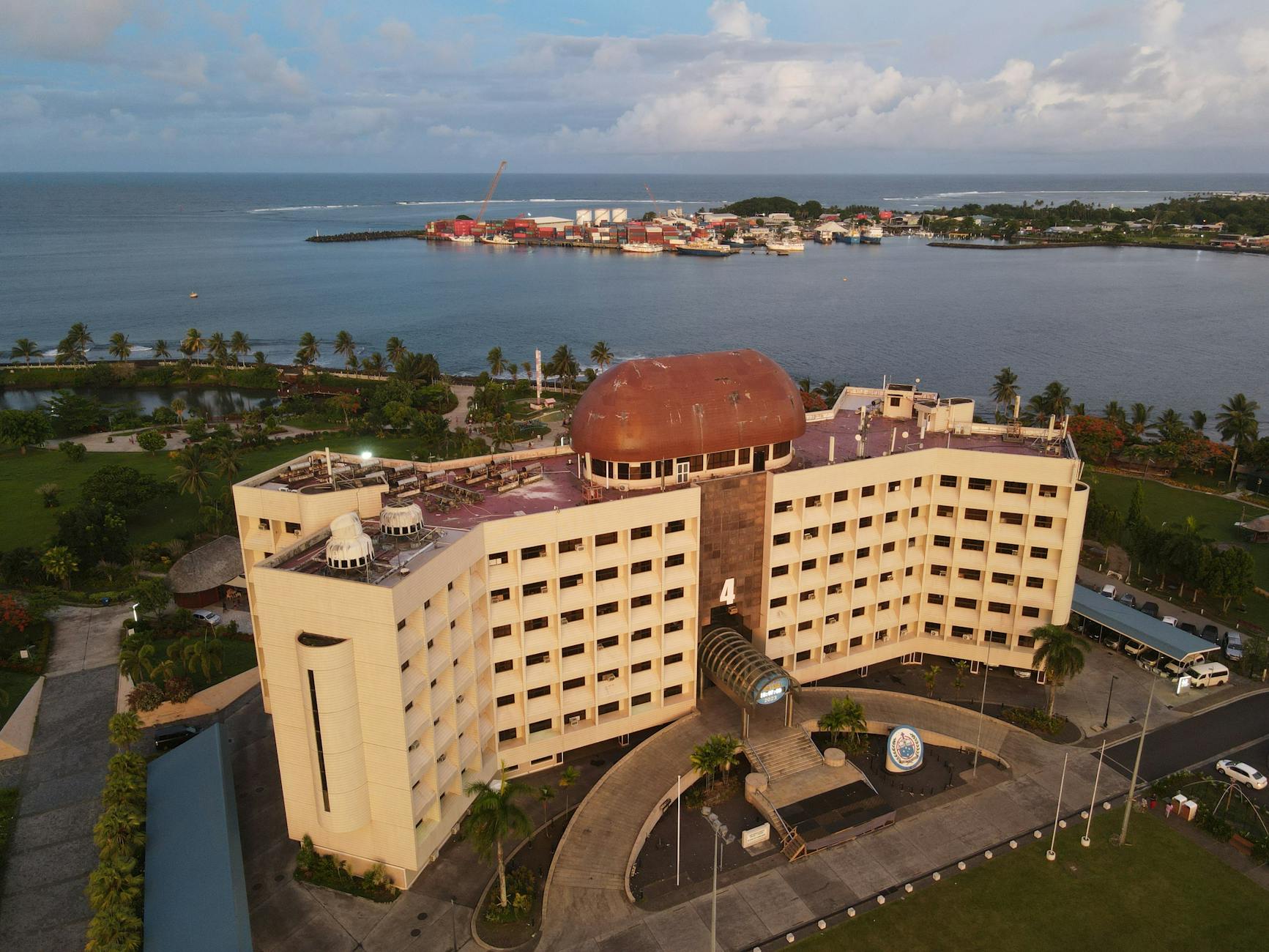
Parliament House was built in Yaren in 1992, a post-independence building with a plain, functional look that tells the truth about Nauru better than grandeur would. This is not a city of imperial facades. It is a place where sovereignty had to be assembled from concrete, budgets, and hard coastal light.
public
1999
UN Membership Broadens the Room
Nauru joined the United Nations in 1999, giving the republic a seat in the one chamber where even very small states can speak at full volume. For Yaren, the island's working capital, that meant local politics now reached outward to global diplomacy. Tiny place, long shadow.
factory
2006
Secondary Mining Returns
Secondary phosphate mining resumed in the mid-2000s, drawing value from lower-grade deposits and reminding everyone that old dependencies die slowly. The calcified interior still looked like a quarry after the moon had a bad day. Yaren kept governing a country whose wealth had already been dug out from under it.
person
30 Oct 2023
David Adeang Leads From Yaren
David Adeang, whose biography links him to Yaren District, became president in October 2023 after years in senior parliamentary and ministerial roles. His rise underlines a plain fact about Yaren: the district is small enough to walk, yet it remains the nerve center where Nauru's arguments over money, justice, and survival are staged.