Historical Background and Early Development
The Windhoek Railway Station is a cornerstone of Namibia’s colonial and infrastructural history. Constructed in 1912 during German South West Africa’s rule, the original station was central to connecting Windhoek to Swakopmund and, later, to the broader southern African region. The first railway line, completed in 1902, linked the city to the Atlantic coast, spurring urban growth and economic development (Adventure Backpack, Namibia Tourism Board).
The station’s establishment marked Windhoek’s transformation into a strategic administrative and commercial center. It played a crucial role in facilitating trade, supporting military logistics during colonial conflicts, and anchoring the expanding transport network.
Architectural Features and Heritage
German Colonial and Cape Dutch Influences
Windhoek Railway Station is widely regarded as a masterpiece of early 20th-century German colonial architecture, with later Cape Dutch style modifications. The building features symmetrical forms, gabled roofs, and a striking red-and-white (or yellow, depending on the restoration phase) façade. Its most distinctive element is the central clock tower, a focal point for both the station’s operations and Windhoek’s cityscape (Wikipedia, EAA, Windhoek City Council).
Key architectural features include:
- Central Clock Tower Imported from Germany, the clock embodies the punctuality and order of railway operations.
- Arched Entrances and Windows Rounded arches provide both structural strength and visual appeal.
- Decorative Gables and Cornices Subtle embellishments add character while maintaining the building’s utilitarian focus.
- Spacious Main Hall High ceilings, natural light, and original woodwork create a welcoming atmosphere.
The 1929 northern wing expansion, carried out under South African administration, matched the original design, reinforcing the building’s heritage value.
The Station’s Role in Namibian History
Throughout the 20th century, Windhoek Railway Station was pivotal in Namibia’s economic and social development. It facilitated troop movements during the colonial period and, after World War I, became a central node for expanding rail links under South African administration (RailwayHero).
Today, the station remains a key operational base for TransNamib, connecting Windhoek with Swakopmund, Walvis Bay, Keetmanshoop, Lüderitz, and Gobabis, among other destinations. It supports both freight and limited passenger services, contributing to regional trade and national integration (TrainzWiki).
Visiting Information: Hours, Tickets, and Accessibility
Station Opening Hours
- General Access Monday to Friday from 8:00 AM to 5:00 PM, Saturday from 9:00 AM to 2:00 PM. Closed Sundays and public holidays.
- Train Services The station is accessible 24 hours for passenger and freight operations, but public facilities follow the above schedule (Windhoek City Council).
Tickets
- Train Tickets Available at the station ticket office or via the TransNamib website. Prices vary by class, destination, and service.
- Desert Express For luxury train experiences, book in advance through the Desert Express website.
- Museum Admission Entry to the station is free. The TransNamib Museum charges a nominal fee (NAD 20–30).
Accessibility
- Facilities The station is equipped with ramps, accessible restrooms, and staff support for visitors with disabilities.
- Guided Tours Available by prior arrangement, often including the museum and highlights of the building’s architecture.
The TransNamib Museum: Exhibits and Hours
Located within the station, the TransNamib Museum is a highlight for history and railway enthusiasts. Its exhibits feature vintage locomotives, historical photographs, and artifacts from both the colonial and post-independence eras (qualitydays.com).
- Museum Hours Monday to Friday, 8:00 AM–1:00 PM and 2:00 PM–5:00 PM; closed on weekends.
- Admission NAD 20 for adults, NAD 10 for children.
- Highlights Southwest African Zwillinge No 154A steam locomotive, Class 32-000 diesel locomotive, and the armored “Bospadda” inspection vehicle.
Nearby Attractions and Photographic Tips
Windhoek Railway Station’s central location makes it an excellent base for exploring:
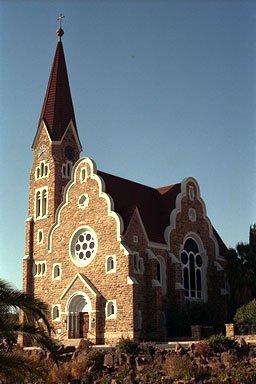
- Christuskirche Iconic German Lutheran church nearby.
- Independence Memorial Museum Insight into Namibia’s journey to nationhood.
- National Botanical Garden Showcasing Namibia’s flora.
- Parliament Gardens Relaxing green space.
- Independence Avenue Main thoroughfare with shops and eateries.
Photography Tips: Early morning and late afternoon provide the best light for capturing the station’s façade, clock tower, and vintage trains. Always request permission before photographing people, especially staff and local vendors.
Contemporary Relevance and Preservation
As Namibia’s only surviving example of its architectural style, Windhoek Railway Station is a protected heritage site (Windhoek City Council). Despite infrastructure challenges, ongoing restoration ensures both operational efficiency and preservation of its historical character. The station continues to serve as a social and cultural hub, hosting events and supporting local commerce (TrainzWiki).
Frequently Asked Questions (FAQ)
Q: What are the Windhoek Railway Station visiting hours?
A: Monday to Friday, 8:00 AM–5:00 PM; Saturday, 9:00 AM–2:00 PM; closed Sundays and public holidays.
Q: How do I buy train tickets?
A: At the station ticket office or via the TransNamib website.
Q: Is the station wheelchair accessible?
A: Yes, with ramps, accessible restrooms, and staff assistance.
Q: Are guided tours available?
A: Yes, by prior arrangement.
Q: What are the best photography spots?
A: The clock tower, façade, and vintage locomotives inside the museum.
Q: How do I book the Desert Express?
A: Reserve via the Desert Express website.