Place
Namibia Updated Apr 2026
The smell hits first: woodsmoke and cumin drifting from a corrugated-iron shack where a woman in leopard-print flip-flops hacks oryx steak with a cleaver. This is Windhoek, Namibia, a city where Bavarian castles cast shadows over townships and the daily bread comes steaming from ovens that still follow 1912 German recipes.
 Photo: Bries · CC BY-SA 2.5
Built from cited sources · see the method · How we make our guides →
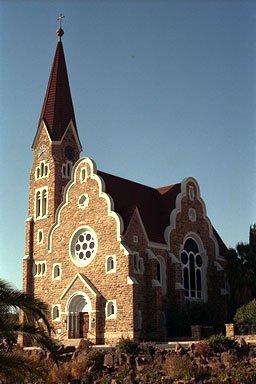
Drive five minutes west and you'll pass Christuskirche, its 24-meter sandstone spire piercing a sky that rarely sees rain. The church bell still rings in German, though the congregation now sings in seven languages. At Heinitzburg, you can sip Riesling in a turret built for Schutztruppe officers while watching lightning fork across the Khomas Highlands.
Windhoek insists on contradictions. Parliament meets in the Tintenpalast—built in 1913 by Herero and Nama laborers under German command—where lawmakers now debate land reform in Afrikaans and Oshiwambo. The city keeps apartheid's street grid but renamed every major road after independence heroes. Even the air tastes layered: jacaranda blossoms over diesel, dust from the Kalahari mixing with roasting coffee from a Klein Windhoek café that imports beans from former East Germany.
This isn't the Africa you expected. It's better. Where else can you breakfast on millet porridge with marula oil, lunch on crocodile carpaccio, and end the night debating Windhoek Lager versus Tafel with a Herero cattle herder who speaks fluent Bavarian dialect? The city shrugs off easy categories—too African for Europe, too German for Africa, too independent for anyone's narrative. That's exactly why you came.
Not every monument, just the ones we'd walk you past ourselves.
Where to wander, by quarter — each with its own rhythm.
Before you go
Windhoek's three lives: indigenous crossroads, colonial barracks, African capital
Nama-Orlam chief Jonker Afrikaner plants himself by the steaming springs the Nama called /Ai-//Gams and the Herero knew as Otjomuise. He builds a stone church that seats 500, lays out irrigation trenches, and names the place Winterhoek after the mountains his people left behind in South Africa. Within four years his settlement is prosperous enough to warrant a written mention in a letter to a Wesleyan missionary.
Rhenish missionaries Carl Hugo Hahn and Franz Heinrich Kleinschmidt arrive to convert the mixed community of Khoekhoe herders and Bantu pastoralists. They find a frontier town where Afrikaans, Otjiherero, and Khoekhoegowab mingle in the dust streets. Their stone church becomes the first European-style building on the highveld.
Nama-Herero fighting burns Windhoek to ash. When Swiss botanist Hans Schinz passes through five years later he finds only jackals drinking from neglected apricot orchards and guinea fowl too hungry to fly. The stone church stands roofless, its walls scarred by fire. The settlement that once buzzed with 800 souls is abandoned to the wind.
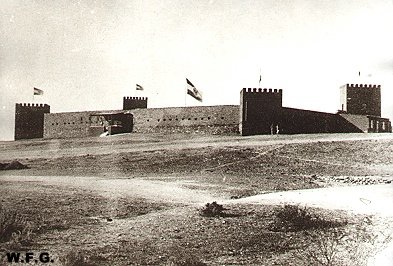
Major Curt von François lays the foundation stone of Alte Feste fort exactly where the old mission church had stood. His 32-man Schutztruppe unit positions the fort as a wedge between Nama and Herero territories. Within weeks they've drilled a 60-meter well and planted vegetable gardens irrigated by the same hot springs that drew Jonker Afrikaner fifty years earlier.
Berlin declares Windhoek the administrative capital of German South West Africa. The decision baffles merchants in Lüderitz who expected the honor. Instead, a dusty frontier post with one general store and a brothel becomes the seat of imperial power. Plans arrive for a railway line that will eventually haul copper and diamonds to the coast.
Following the Herero uprising, the Germans transform Windhoek's military compound into a concentration camp. Surviving Herero women and children are marched 200 kilometers here from the Waterberg. Records list 2,000 prisoners by December; only 500 survive the typhus-infested barracks. The camp commandant requisitions forced labor to build his new residence—what locals will call the Tintenpalast.
Landesmuseum opens in a prefabricated steel structure shipped from Germany. Its first exhibits are Herero skulls sent to Berlin for racial 'research' and now returned as curiosities. The museum becomes a symbol of colonial conquest—German settlers celebrating their dominion over a people they've nearly exterminated.
Christuskirche's sandstone spire pierces the African sky. Kaiser Wilhelm II ships cathedral glass from Munich depicting German saints in Namibian landscapes. Local Herero stone masons carve the foundations; their wages are paid in ration tickets redeemable only at the colonial store. The church becomes the most photographed building in southern Africa.
Heinitzburg castle completes the trio of romantic fortresses overlooking Windhoek. Built for colonial administrators who wanted to pretend they were medieval barons, the castles cost more than the annual education budget for indigenous children. Heinitzburg's 27 rooms command views across the location where Black servants live in tin shacks.
Union Defence Force troops occupy Windhoek without firing a shot. German settlers watch from verandas as Boer horsemen ride up Kaiser Street. The occupation ends 25 years of German rule but begins 75 years of South African control. Overnight, street signs change from German to Afrikaans and English.
Born in a village north of Windhoek, Nujoma would become the city's most famous son. He spends his twenties working at Windhoek railway station while organizing underground resistance. In 1990 he returns as president to the city that once banned him from entering without a pass. His presidential palace overlooks the Old Location where protesters died in 1959.
Windhoek becomes the first city on Earth to drink its own treated sewage. The Goreangab reclamation plant pumps 4,800 cubic meters daily directly into municipal pipes. Residents complain the water 'tastes flat' but drought leaves no alternative. The technology spreads worldwide; Windhoek engineers become unlikely heroes of water-stressed cities.
Police open fire on 3,000 residents protesting forced removal from Windhoek's Old Location to the new township of Katutura. Eleven people die, including a five-year-old child shot while clinging to his mother's skirt. The massacre galvanizes anti-apartheid resistance; 10 December becomes Namibia's Human Rights Day.
South African authorities complete the forced relocation of 7,000 Black Windhoek residents to Katutura, 10 kilometers northwest. The township's name translates from Herero as 'the place where people do not want to live.' Houses are identical concrete blocks without electricity or running water. The distance to white employers' homes forces workers to spend 20% of their wages on bus fares.
South Africa convenes 11 ethnic groups in Windhoek's Turnhalle gymnasium to negotiate 'internal settlement.' The conference drags on for 18 months, producing proposals that satisfy no one. SWAPO leaders reject the process from exile in Angola. The talks collapse but establish patterns for eventual independence negotiations.
At Windhoek's Independence Stadium, the South African flag lowers for the last time. Sam Nujoma raises the blue-red-green tricolor as 30,000 citizens cheer and fighter jets scream overhead. Kaiser Street becomes Independence Avenue overnight. German bakeries stay open late serving beer brewed to Reinheitsgebot standards while Herero women in Victorian dresses dance to liberation songs.
University of Namibia enrolls its first 1,500 students in converted army barracks. Professor Mburumba Kerina, who coined the name 'Namibia' in a 1960 UN speech, teaches political science under a jacaranda tree when classrooms overflow. The campus becomes a symbol of what the liberation struggle achieved—education for children once denied schooling beyond grade seven.
North Korean sculptors unveil a 34-meter obelisk honoring Namibian liberation fighters. The monument's socialist-realist style clashes with Windhoek's German castles below. Critics call it 'Pyongyang on the highveld' but veterans gather each Heroe's Day to remember comrades buried in unmarked graves across the border war.
Glass and concrete wedge opens between Christuskirche and Alte Feste, forcing colonial and post-colonial narratives to face each other. Exhibits include the whip used at Windhoek concentration camp and the pen that signed independence. Schoolchildren walk through chanting 'Never again' while German tourists photograph the Kaiser-era cannon outside.
German colonial commander · 1852–1931
Founded Windhoek 1890
He drove a simple stone into the dust on 18 October 1890 and called it a fort, betting that hot springs could keep soldiers alive long enough to separate warring Nama and Herero factions. Today his statue faces the Independence Museum that celebrates the very resistance his Schutztruppe tried to crush.
Nama-Orlam chief · c. 1820–1861
Settled Windhoek 1840
The warlord-cattle raiser planted apricot trees and built a 500-seat stone church where modern Klein Windhoek suburb now stands; locals still find peach pips in their gardens from his short-lived orchard.
Namibia’s first president · born 1929
Led independence ceremony 1990
He stepped onto Windhoek’s Independence Stadium pitch on 21 March 1990 and renamed Kaiser Street before the confetti settled; today you can drink Windhoek Lager on the same avenue where he swore in a free nation.
Where locals actually book dinner — not the tourist menus.
Small things that change how the city treats you.
The city, as it actually looks.
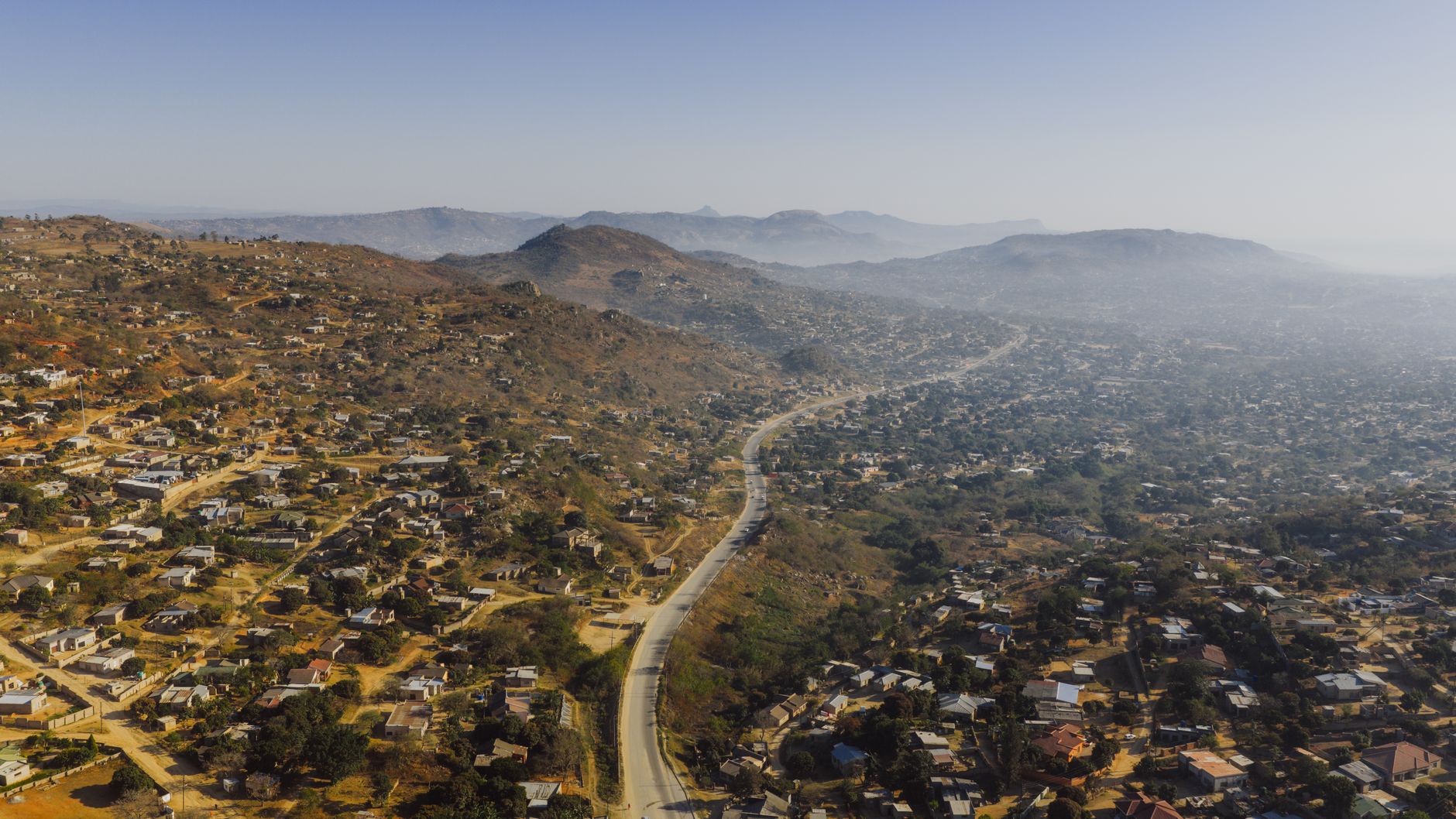
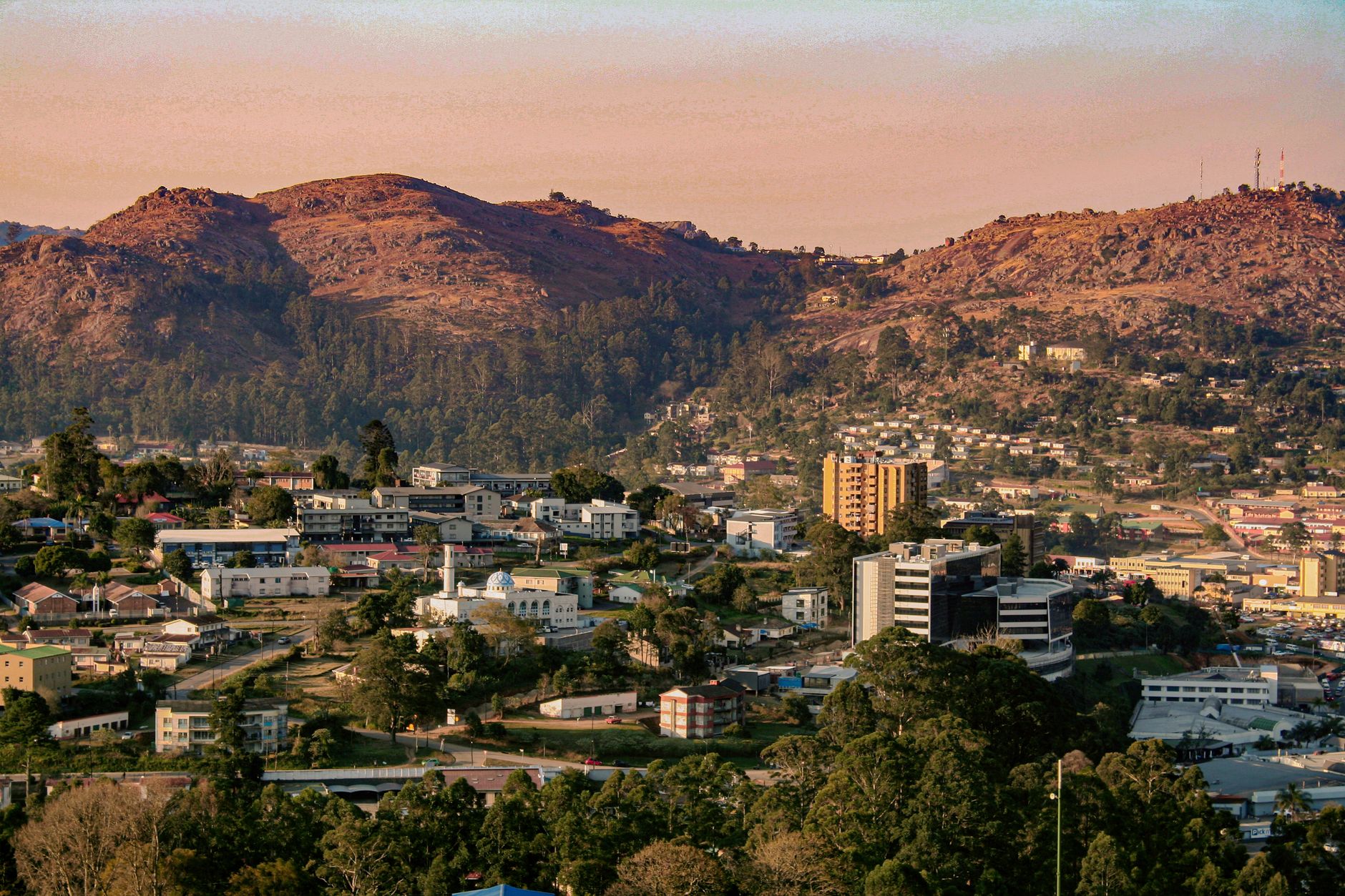


Windhoek rewards a 24-hour pause. In one morning you can breakfast on bratwurst under German stucco, lunch on kapana in Katutura, and watch parliament wrap while kudu roam a city-edge reserve. It’s the only African capital where colonial beer halls and liberation museums share the same street.
Two full days cover the essentials: day-one for downtown architecture, the craft centre and Independence Museum; day-two for Katutura market, Joe’s Beer House and a late-afternoon drive in Daan Viljoen reserve. Add a third night if you’re flying in late or self-driving north the next dawn.
Pre-book a shuttle (US$25 pp) or private transfer (US$55). Metered taxis wait outside but quote similar prices without meter—agree before you load bags. The 43 km ride takes 35–60 min depending on truck traffic on the B6.
Yes—Windhoek has piped recycled sewage since 1958 and meets WHO standards. Locals fill bottles straight from the tap; taste is neutral. Bottled water is still sold everywhere for the cautious.
Book in Eros, Klein Windhoek or Olympia. These uphill suburbs have restaurants within gated blocks and hotels offer free evening shuttles. Avoid the CBD grid between Independence Ave and the train station after 8 p.m.
Cards (Visa/Master) are accepted at most sit-down spots, but Oshetu market, street fat-cake stalls and small bars in Katutura are cash-only. Keep N$200 in small notes for a day of eating your way through town.
5 places to discover
Saved and recently read places — kept on this device only.
Photos may have been resized or cropped.