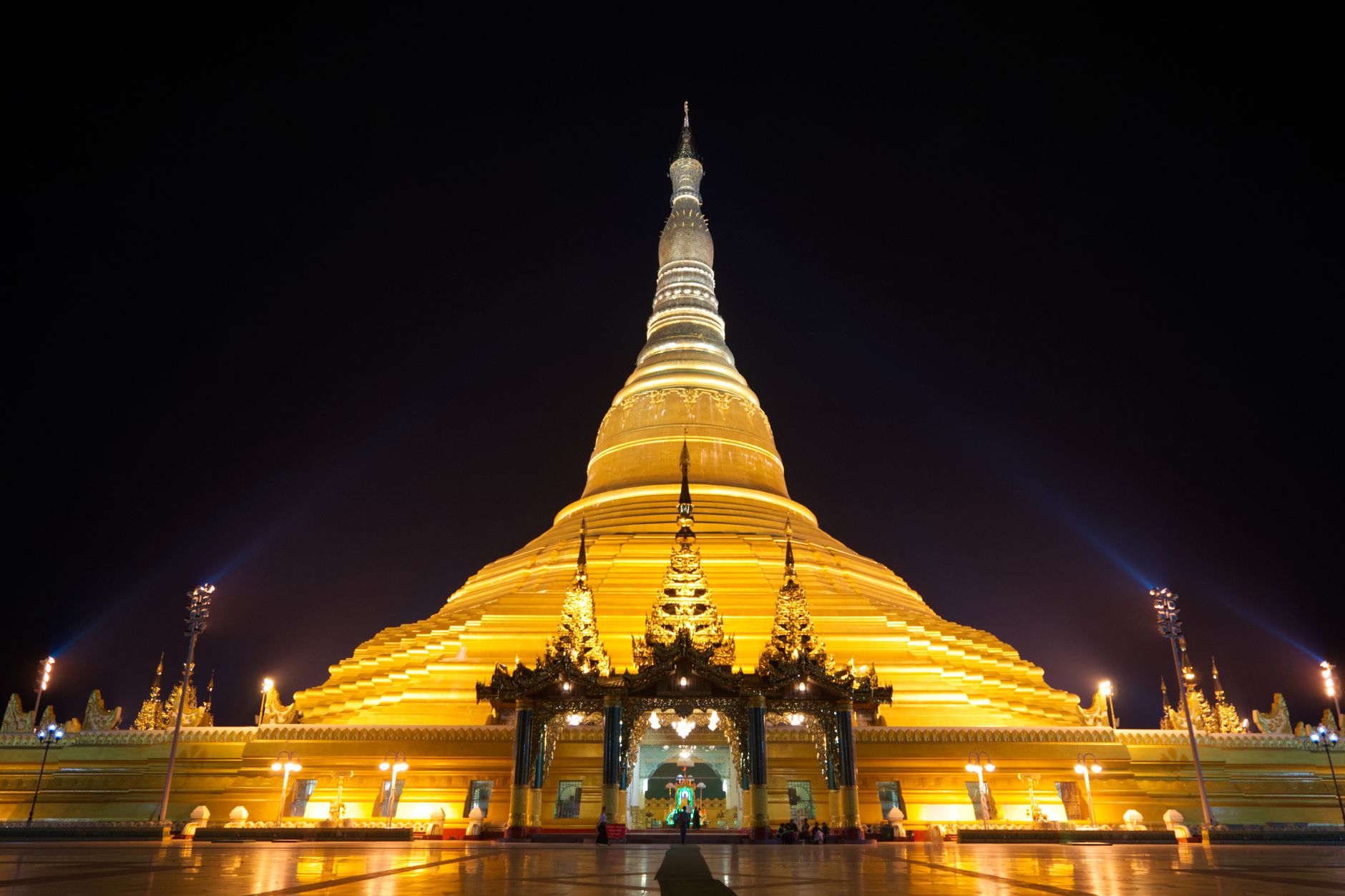
Driving into Naypyidaw feels like approaching a movie set after everyone has gone home. You notice the quiet first—a low hum where there should be a roar, broken only by the whisper of tires on one of the city’s 20-lane highways. This is Myanmar’s capital, a city of monumental scale built for over a million people, yet it moves with the serene pace of a country lane. It defies every expectation you might have of a Southeast Asian metropolis.
Researched from Wikidata, Wikipedia & official sources · fact-checked ·
How we make our guides →
NDriving into Naypyidaw feels like approaching a movie set after everyone has gone home. You notice the quiet first—a low hum where there should be a roar, broken only by the whisper of tires on one of the city’s 20-lane highways. This is Myanmar’s capital, a city of monumental scale built for over a million people, yet it moves with the serene pace of a country lane. It defies every expectation you might have of a Southeast Asian metropolis.
The city was unveiled in 2006, replacing Yangon as the seat of government. Its name means 'Abode of Kings,' and its design reflects that ambition: vast zones for ministries, parliament, and ceremony, separated by distances that require a car. The resulting atmosphere is one of surreal quiet. You won’t find crowded markets spilling onto the street or the frantic energy of Mandalay. Naypyidaw is calm, ordered, and almost meditative.
Culture here is expressed through faith and architecture, not nightlife. The 99-meter Uppatasanti Pagoda, a near-exact replica of Yangon’s Shwedagon, dominates the skyline with a hush that its crowded twin could never achieve. Across the road, white elephants graze in a garden. The city’s appeal lies precisely in this contrast—the chance to witness modern nation-building on a colossal, empty stage, and to find profound peace in a place built for power.
Family Friendly
02
Why Naypyidaw.
What makes this place worth slowing down for.
landscape
The Surreal Silence
Naypyidaw is a planned capital of monumental scale built for 1.1 million, yet its 20-lane highways are often deserted. This quietness, punctuated only by the rustle of pagoda flags, creates an atmosphere of suspended animation you won't find anywhere else in Southeast Asia.
temple_buddhist
A New Sacred Center
The 99-meter Uppatasanti Pagoda is a near-perfect replica of Yangon's Shwedagon, but without the crowds. It houses a sacred Buddha tooth relic and stands across from a garden of rare white elephants, making it a peaceful, modern focal point for devotion.
museum
Curious Collections
From the Defense Services Museum, which requires a passport and involves 5km of walking past aircraft and tanks, to the Gem Museum's glittering, no-photography halls of jade, the city's institutions are as vast and idiosyncratic as the capital itself.
04
Neighborhoods.
Where to wander, by quarter — each with its own rhythm.
01
Zabuthiri Township
This is the spiritual and governmental heart. You’ll find the gleaming Uppatasanti Pagoda here, its golden stupa visible for miles across the flat basin. Just west sits the Pyidaungsu Hluttaw, the largest parliamentary building in ASEAN—a fortress of modern Burmese ambition where you can only observe from beyond the gates. The air smells of incense and cut grass.
02
Dekkhinathiri Township
Home to the sprawling Defense Services Museum, a half-day commitment requiring your passport. You walk nearly five kilometers past decommissioned aircraft and tanks in air-conditioned halls. The scale is militaristic and absolute. Nearby, the Gem Museum glitters with uncut jade and rubies under strict no-photography rules—a safer bet for authentic purchases than Yangon’s markets.
03
Ottarathiri Township
A zone of curated nature and family leisure. The Naypyidaw Zoological Garden sprawls here, one of the largest in Southeast Asia, with a safari park and an incongruous penguin house. The Water Fountain Garden is its evening counterpoint, where families gather to watch colored lights play across synchronized jets and artificial waterfalls. It’s cheerful, orderly, and meticulously maintained.
04
Pobbathiri Township
Seek out the Thatta Thattaha Maha Bawdi Pagoda here, a precise replica of the temple at Bodh Gaya. It’s smaller, quieter, and attached to a meditation center run by a renowned monk. The atmosphere is one of deep concentration, a world away from the city’s empty boulevards. This is where Naypyidaw’s planned silence turns spiritual.
05
The Junction Area
The closest thing to a downtown. Junction Naypyidaw mall anchors it, a clean, quiet complex with a cinema, restaurants, and souvenir shops frequented by civil servants and diplomats. It’s not bustling, but it’s functional. You come here for a coffee, a meal, or a reminder that people do live and work in this city of echoes.
09
Insider tips.
Small things that change how the city treats you.
directions_car
Hire a driver
Attractions are separated by vast distances in this planned city. You'll need private transport to get between them efficiently. Taxis are scarce; arrange a car and driver for the day through your hotel.
photo_camera
Respect drone bans
The Parliament Complex and other government zones are strict no-fly zones for drones. You can photograph the 20-lane highway on foot, but keep your equipment pointed at the ground near official buildings.
account_balance_wallet
Carry cash & passport
Bring cash for museums and smaller shops. The Defense Services Museum requires your passport for entry, and the Gem Museum has a ~7,000 kyat fee. ATMs exist but aren't on every corner.
schedule
Visit fountains at night
The Water Fountain Garden's main attraction is its evening light and music display. Go after sunset to see it transformed. It's a popular local family spot then.
no_food
Plan your meals
Restaurants are clustered in specific zones like the Junction Mall. Don't expect to find a casual eatery next to every attraction. Pack water and snacks for long sightseeing stretches.
access_time
Allocate museum time
The Defense Services Museum alone requires half a day and involves 4–5 km of walking. Start early, wear good shoes, and don't try to combine it with too many other distant sites.
11
Gallery.
The city, as it actually looks.
A view of a quiet, expansive road in Naypyidaw, Myanmar, lined with distinctive bridge pillars topped with golden, fruit-shaped ornaments.
Sanjeed Quazi on Pexels
A peaceful, tree-lined boulevard stretches into the distance in the quiet capital city of Naypyidaw, Myanmar.
Trường Nguyễn Thanh on Pexels
12
Frequently asked
Is Naypyidaw worth visiting?
Only for a specific kind of traveler. If you're fascinated by surreal urban planning, vast empty spaces, and modern history, it's compelling. If you seek traditional Burmese culture or a bustling city life, you'll find more in Yangon or Mandalay.
How many days should I spend in Naypyidaw?
Two to three days is sufficient. One for the major pagodas and the 20-lane highway, another for the large museums and the zoo. The scale of the city means you'll spend more time in transit than a typical capital.
How do I get around Naypyidaw?
You need a private car. Distances between zones are enormous, public transport is minimal, and taxis are not readily hailed. Hotels can arrange a car and driver for the day, which is the most practical option.
Is Naypyidaw safe for tourists?
It is generally very safe in terms of crime, thanks to its planned, orderly nature and significant security presence. The primary concerns are related to the country's political situation, so check current travel advisories before planning your trip.
What is the cost of visiting Naypyidaw?
Accommodation and food can be moderately priced, but your major cost will be private transport. Museum entry fees are low (e.g., ~7,000 kyat for the Gem Museum). It's not a budget backpacker destination due to the required logistics.
Can I visit the Parliament building?
No. The Pyidaungsu Hluttaw complex is strictly off-limits for public entry. You can view and photograph the exterior from a distance, but that's all. Drones are prohibited in the area.
Ready to book?
13Before you go
Practical Information
Flight
Getting There
Naypyidaw International Airport (NYT) receives flights from Yangon and Mandalay. The main railway station is Naypyidaw Central, on the Yangon-Mandalay line. The city is connected by the Yangon-Mandalay Expressway, about a 4-hour drive from either major city.
Directions transit
Getting Around
There is no metro or tram. The city's vast, zone-based layout makes a private car with a driver essential for tourists. Taxis are scarce. The empty, sprawling boulevards are not designed for walking or cycling between attractions.
Thermostat
Climate & Best Time
Temperatures peak from March to May, often hitting 38°C (100°F). The rainy monsoon runs May to October. The cool, dry period from November to February is ideal, with daytime temps around 28°C (82°F) and minimal rainfall.
Translate
Language & Currency
Burmese is the official language. English is understood in major hotels and some government circles, but less so than in Yangon. The currency is the Myanmar Kyat (MMK). Carry crisp, unmarked US dollar bills for easy exchange; credit cards are rarely accepted.
Shield
Safety
The city is orderly and safe regarding street crime. Be aware that photographing government buildings, military installations, or using drones near the Parliament complex is prohibited. Always carry your passport, as it may be required for museum entry.
Take Naypyidaw with you
All of Naypyidaw, downloaded once.
0 places, one continuous walking route. Free with your first city.
Strictly necessary cookies keep navigation working. Analytics cookies (PostHog, Google Analytics) help us learn which pages work — aggregate only, no ads, no selling. You can change this any time from the footer.
Privacy
Cookie preferences
Pick what you're okay with. You can change this any time from the footer.
Strictly necessary
Always on
Sign-in, language, navigation. Always on.
Product analytics
PostHog and Google Analytics, aggregate usage only. Helps us see which pages work and which need fixing. No selling, no ads.
Marketing
Off today. Reserved if we ever run paid acquisition. We will ask again before turning it on.