Plan and listen to Sidi Bou Abid Mosque with Audiala.
Audio guide in your pocket, itinerary in your browser. Built for the way you actually visit.
Introduction
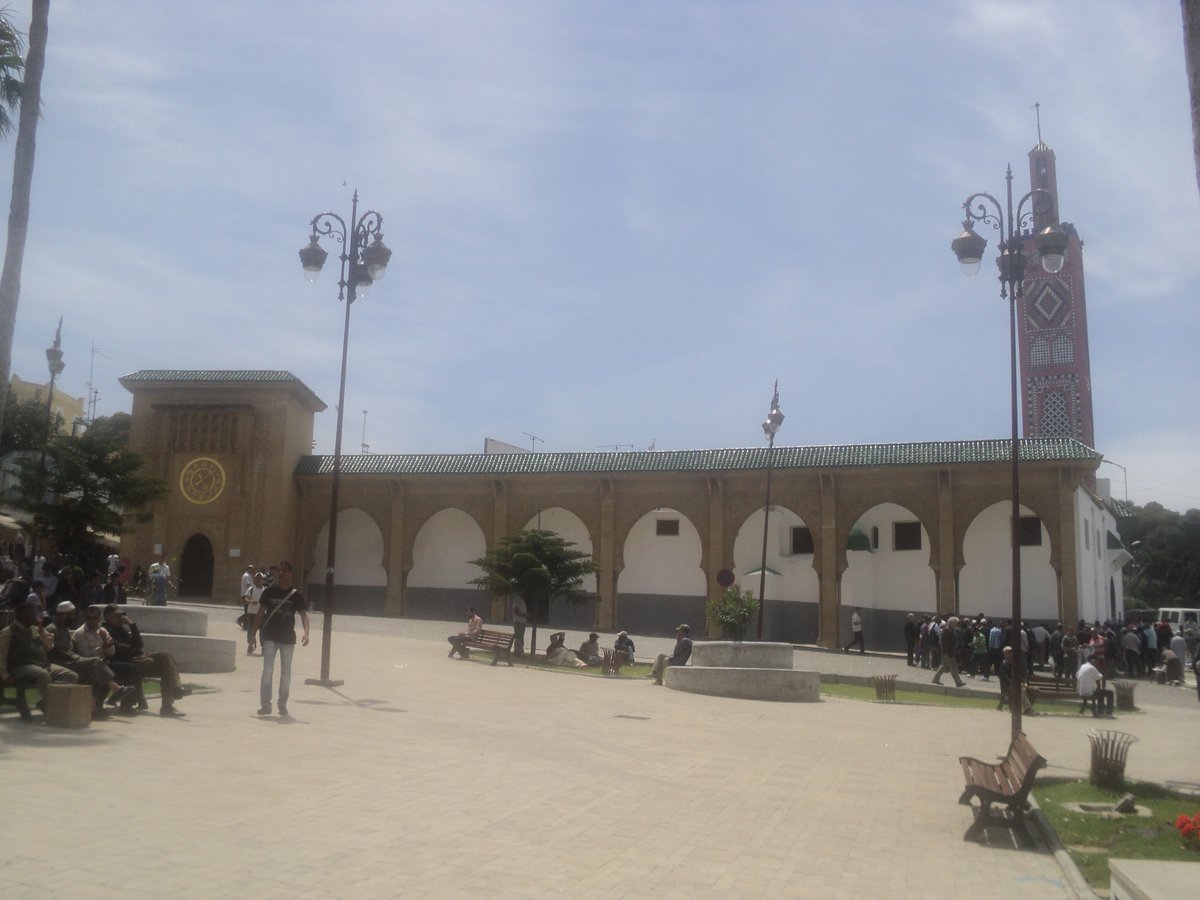
Perched on a hill overlooking Tangier's bustling Grand Socco and the historic medina, the Sidi Bou Abid Mosque is a striking emblem of Moroccan religious architecture and the city's vibrant spiritual life. Constructed in 1917, this landmark blends traditional Moroccan Islamic design elements—including intricate zellij tilework, horseshoe arches, and a commanding minaret—with the cosmopolitan influences that defined early 20th-century Tangier. Although non-Muslim visitors are not permitted to enter the prayer hall, the mosque's exterior and surrounding urban landscape offer a rewarding experience for travelers interested in history, culture, and architecture. This guide provides detailed information about the mosque’s origins, visiting hours, accessibility, etiquette, nearby attractions, and practical travel tips to help you plan a respectful and memorable visit (Wiki2; Hertz Morocco; Petit Futé).

Origins and Construction
The Sidi Bou Abid Mosque was built in 1917, at a time when Tangier was evolving into a global crossroads. Named after the revered local saint Sidi Bou Abid, the mosque was designed to serve both as a spiritual hub and as a symbol of Tangier’s enduring Islamic identity during a period of significant modernization and international influence (Wiki2). Funded by local families and merchants, the mosque stands as a testament to the city’s religious and communal resilience.
Historical Significance
During Tangier's international zone era (1923–1956), the mosque played a crucial role in anchoring the city’s Islamic traditions amid diverse foreign influences. Its strategic position above the Grand Socco made it a focal point for religious gatherings and community affairs, a legacy that persists to this day.
Architectural Features and Urban Setting
Design and Decorative Elements
The mosque’s architecture exemplifies early 20th-century Moroccan style, characterized by:
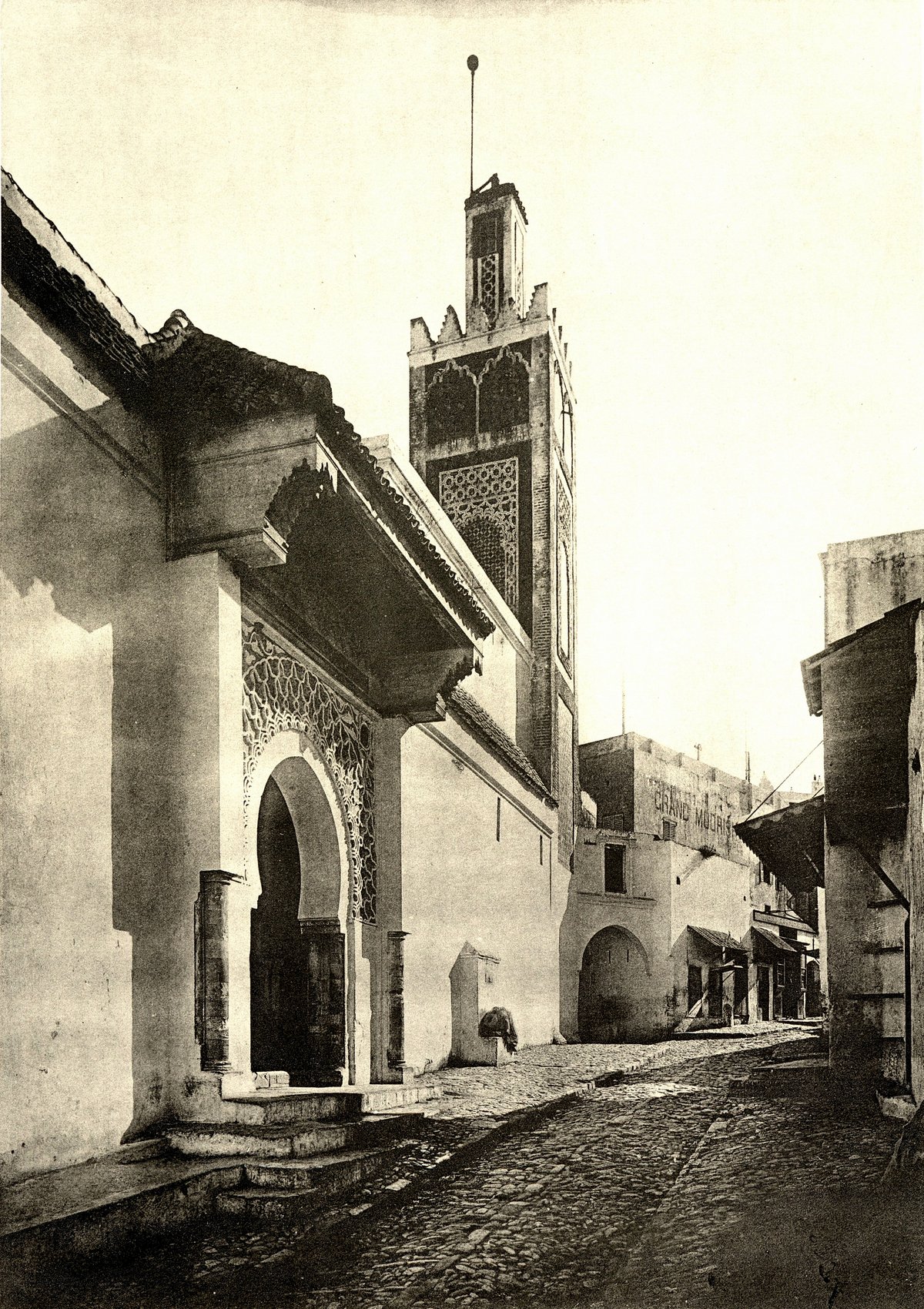
- Minaret: A tall, square tower adorned with polychrome zellij (mosaic tilework) in green, blue, and white, serving as a prominent city landmark visible from many central vantage points.
- Façade and Entrances: Classic horseshoe arches, carved stucco, and intricately crafted wooden doors reflect Morocco’s artisanal excellence.
- Zellij Tilework: Geometric mosaics on the exterior and courtyard, showcasing centuries-old craftsmanship.
- Courtyard: A peaceful space shaded by an ancient olive tree, with a marble fountain for ritual ablutions (Must Visit Morocco; Away With The Steiners).
Urban Context
Situated near Bab Fahs, the main gateway to the medina, and overlooking the dynamic Grand Socco square, the mosque’s location places it at the heart of Tangier’s historical, cultural, and social life.
Visiting Information: Hours, Tickets, and Accessibility
Visiting Hours
- Exterior Viewing: The mosque’s exterior can be admired at any time during daylight hours. The most favorable times for photography and a tranquil experience are early morning and late afternoon.
- Interior Access: Entry is reserved for Muslim worshippers only; there are no official visiting hours for tourists inside the prayer hall.
Admission and Tickets
- Fees: There are no entrance fees or tickets required for viewing the mosque’s exterior or courtyard.
Accessibility
- The mosque is accessible via the medina’s streets and from the Grand Socco; however, some paths may be uneven and hilly.
- Visitors with limited mobility should be aware of possible challenges due to the terrain.
Etiquette and Practical Tips
Dress Code
- Modest clothing is recommended. Both men and women should cover shoulders and knees. Women may consider carrying a scarf for additional coverage.
Behavior
- Maintain a respectful and quiet demeanor near the mosque, especially during prayer times.
- Photography is permitted for the exterior and courtyard, but always avoid photographing worshippers without consent (Tangerine Show).
Travel Tips
- Best Times to Visit: Early mornings and late afternoons provide the best light and fewer crowds.
- Guided Tours: Many local operators offer walking tours that include the mosque and surrounding historical sites.
- Language: Arabic is primary, French widely spoken, and English is common in tourist areas.
Accessibility for All
- The mosque’s surroundings are generally accessible, though some medina streets may be challenging due to uneven paving.
Cultural and Social Significance
The Sidi Bou Abid Mosque remains a vibrant center for Tangier’s Muslim community, hosting daily prayers, Friday Jumu’ah, and religious festivals. Its image is a frequent subject in art and local tourism, symbolizing the city’s unique blend of tradition and modernity.
Nearby Attractions
- Grand Socco (Place du 9 Avril 1947): A lively market square with shops, cafés, and local vendors.
- Mendoubia Gardens: A tranquil green space ideal for relaxation.
- Tangier Medina: Explore winding alleys, traditional crafts, and bustling markets.
- Kasbah of Tangier: Offers panoramic views and insight into the city’s historical defenses.
Preservation and Contemporary Role
Ongoing restoration efforts have preserved the mosque’s vibrant tilework and wood carvings, ensuring its continued role as both a place of worship and a cultural landmark. The mosque’s careful maintenance amid Tangier’s coastal climate is a testament to its enduring spiritual and architectural significance.
Frequently Asked Questions (FAQ)
Q: Can non-Muslims enter Sidi Bou Abid Mosque?
A: No, only Muslim worshippers may enter the prayer hall. Non-Muslims are welcome to admire the exterior and courtyard.
Q: Are there entrance fees or tickets?
A: No, there are no tickets or fees to visit the mosque’s exterior.
Q: What are the best visiting hours?
A: Early morning or late afternoon for optimal lighting and fewer crowds.
Q: Is the mosque accessible for people with disabilities?
A: The main square is generally accessible, but some nearby medina streets may be uneven.
Q: Are guided tours available?
A: Yes, local tour operators often include the mosque in city walks.
Summary Table: Key Visitor Information
| Aspect | Details |
|---|---|
| Location | Overlooking Grand Socco, central Tangier (Official Tangier Tourism) |
| Access | Exterior and courtyard only for non-Muslims; no tickets required |
| Dress Code | Modest attire; shoulders and knees covered |
| Best Time to Visit | Early morning or late afternoon; avoid prayer times and Fridays |
| Nearby Attractions | Mendoubia Gardens, Grand Socco, Medina, Kasbah, local markets |
| Facilities | Cafés, restrooms, shaded gardens nearby |
| Safety | Generally safe; stay vigilant for belongings |
| Language | Arabic, French, some English |
| Special Events | Increased activity during Ramadan and Fridays |
Listen to the full story in the app
The whole Sidi Bou Abid Mosque,
told well.
Audio guides for 1,100+ cities across 96 countries. History, stories, and local insight — offline ready.
Verified, and shown.
Researched and written by the Audiala editorial team from historical records, architectural archives, and local expertise.
Researched from Wikidata, Wikipedia & official sources · fact-checked · How we make our guides →