Plan and listen to Bab Er-Robb with Audiala.
Audio guide in your pocket, itinerary in your browser. Built for the way you actually visit.
Introduction
Bab Er-Robb, located at the southern edge of Marrakesh’s medina, is a historic city gate that epitomizes the city’s medieval legacy and living heritage. Built during the Almohad dynasty, this gate functioned as a crucial commercial and defensive entryway, facilitating the movement of goods—particularly the grape syrup “robb”—and people between Marrakesh and the fertile southern plains. Unlike the more ornate city gates, Bab Er-Robb’s utilitarian design highlights its practical role in daily urban life. Today, the gate remains freely accessible, inviting visitors to explore its authentic ambiance and proximity to major attractions like the Kasbah, Saadian Tombs, and Agdal Gardens. This guide provides a comprehensive look at Bab Er-Robb’s history, architecture, visiting logistics, and cultural significance, ensuring a rewarding experience for travelers and history enthusiasts alike. (Our World Heritage Blog) (Marrakech Riad) (Lonely Planet)
Origins and Construction of Bab Er-Robb
Bab Er-Robb is one of Marrakesh’s original 19 city gates, constructed as part of the 12th-century Almohad ramparts. The Almohads, known for their military prowess and urban planning, fortified Marrakesh with thick walls and strategically placed gates to regulate commerce and protect the city. Bab Er-Robb, specifically, served as the main southern entrance, welcoming caravans and traders from the fertile Haouz plain and Atlas Mountains. Its name, “Er-Robb,” derives from the grape syrup that was historically brought into the city through this gate.
The gate’s structure utilized traditional rammed earth (pisé) mixed with lime and straw, a technique that provided both strength and insulation against Marrakesh’s temperature extremes. The reddish hue of the walls has contributed to Marrakesh’s nickname, “The Red City.” (Moroccan Vacations) (Morocco Photo Tours) (Marrakech Tricks)
Architectural Features and Defensive Elements
Bab Er-Robb is defined by its robust, functional design rather than elaborate decoration. The gate’s passage is set at a right angle to the city wall—a classic defensive feature in medieval Islamic architecture—forcing entrants to slow down and making the gate easier to defend. The thick ramparts, lack of ornate motifs, and solid arches all reflect Almohad military priorities.
Additional defensive features along the walls included:
- Watchtowers for surveillance
- Crenellated parapets for protection
- Arrow slits for archers
Though less imposing than ceremonial gates like Bab Agnaou, Bab Er-Robb’s architecture embodies the practical urban planning of its era. (Porte Bab Er Robb)
Urban and Cultural Significance
Bab Er-Robb’s location made it vital for the city’s commercial and agricultural exchange. It served as the gateway for merchants bringing produce, especially grape syrup, into Marrakesh. The gate’s plain design and continuous use have ensured its enduring relevance as both an architectural relic and a living part of the medina’s daily rhythm.
Culturally, Bab Er-Robb is significant for its connection to local traditions. The area around the gate hosts vibrant markets and is a hub for community gatherings during religious festivals and public holidays. The gate also features in Moroccan art, literature, and music, symbolizing resilience and the city’s rich past. (Marrakech Travel Guide 2024-2025) (Lonely Planet)
Visiting Hours, Tickets, and Accessibility
Visiting Hours:
Bab Er-Robb is an open public gate, accessible 24/7. For safety and the best experience, visits are recommended during daylight hours, typically from 8:00 AM to sunset.
Tickets:
There are no entrance fees or tickets required to visit Bab Er-Robb. Some guided tours of the medina may include the gate in their itineraries.
Accessibility:
The area surrounding Bab Er-Robb is mostly pedestrian-friendly and relatively flat, but the medina’s narrow and uneven cobblestone streets may present challenges for those with mobility impairments. Assistance may be needed for wheelchair users. Grand Taxi ranks and bus stops are located nearby, making the site easily reachable. (Visit Marrakech) (Marrakech Riad)
Nearby Attractions
Bab Er-Robb’s position makes it an excellent starting point for exploring the southern medina. Notable nearby sites include:
- Saadian Tombs: A 16th-century necropolis, just a short walk from the gate
- El Badii Palace: The evocative ruins of a former royal palace
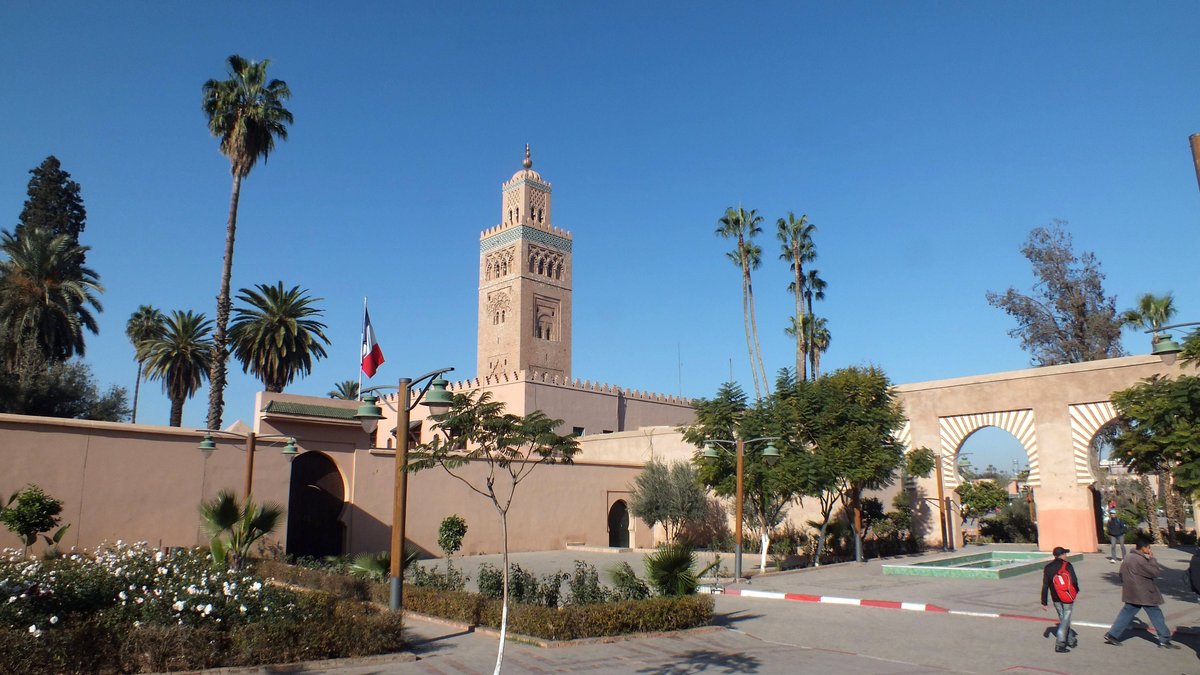
- Kutubiyya Mosque: The city’s largest mosque, famous for its minaret
- Agdal Gardens: Lush historical gardens highlighting Marrakesh’s irrigation heritage
- Jemaa el-Fnaa: The city’s central square, bustling with food stalls and performers
These attractions can be easily combined into a walking tour, offering a comprehensive glimpse into Marrakesh’s historical and cultural landscape. (Trek Zone)
Practical Travel Tips
- Best Visiting Times: Early morning or late afternoon for cooler weather and optimal lighting for photography
- Dress Code: Wear modest clothing that covers shoulders and knees; light, breathable fabrics are recommended in summer
- Language: Arabic and French are widely spoken; English is common in tourist areas
- Amenities: No facilities at the gate itself, but cafés and restrooms are nearby
- Safety: Keep valuables secure, avoid isolated streets after dark, and be respectful of local customs
- Photography: Permitted at the gate, but always ask permission before photographing people
- Guided Tours: Highly recommended for historical context; available both in-person and virtually (thecrazytourist.com)
Frequently Asked Questions (FAQ)
Q: What are Bab Er-Robb’s visiting hours?
A: Bab Er-Robb is accessible at all hours, but daytime visits are best for safety and appreciation.
Q: Is there an entrance fee or ticket required?
A: No, Bab Er-Robb is a public gate with no ticket required.
Q: How do I get to Bab Er-Robb?
A: The gate is easily reached on foot from the Kasbah and central medina, or by taxi/bus.
Q: Are guided tours available?
A: Yes, many local operators offer guided walks that include Bab Er-Robb.
Q: Is it accessible for people with disabilities?
A: The area is mostly flat, but some uneven surfaces may require assistance.
Listen to the full story in the app
The whole Bab Er-Robb,
told well.
Audio guides for 1,100+ cities across 96 countries. History, stories, and local insight — offline ready.

Verified, and shown.
Researched and written by the Audiala editorial team from historical records, architectural archives, and local expertise.
Researched from Wikidata, Wikipedia & official sources · fact-checked · How we make our guides →