Plan and listen to Al-Shorafaa Mosque with Audiala.
Audio guide in your pocket, itinerary in your browser. Built for the way you actually visit.
Introduction
Al-Shorafaa Mosque, located in the heart of Marrakesh's UNESCO-listed medina, is a remarkable testament to Morocco’s spiritual and architectural legacy. While overshadowed by the famed Koutoubia Mosque, Al-Shorafaa is deeply woven into the city’s religious and communal life, reflecting Marrakesh’s long history as a center for Islamic scholarship, Sufi mysticism, and dynastic patronage. Rooted in the tradition of honoring the shurafa—descendants of the Prophet Muhammad—the mosque stands as a living symbol of Morocco’s unique blend of religious reverence, architectural artistry, and cultural vibrancy (Nomads Travel Guide; Morocco Travel Blog).
This comprehensive guide explores the historical and religious significance of Al-Shorafaa Mosque, its architectural highlights, practical visitor information—including visiting hours and ticket policies—and essential tips for a respectful and enriching experience.
Historical Origins and Dynastic Patronage
Al-Shorafaa Mosque’s name, meaning “the Nobles” or “the Honored,” signals its association with the shurafa—the descendants of the Prophet Muhammad. This connection imbues the mosque with spiritual prestige and links it to a longstanding Moroccan tradition of venerating holy lineages and Sufi saints. Established during the city’s formative era under the Almoravid dynasty (11th–12th centuries), Al-Shorafaa’s foundations coincide with Marrakesh’s emergence as a hub for Islamic learning and Sufi brotherhoods (Nomads Travel Guide).
Over subsequent centuries, the mosque benefited from dynastic patronage, particularly during the Saadian and Alaouite periods, which saw extensive restoration and embellishment. Such royal support not only reinforced the mosque’s spiritual authority but also contributed to its architectural refinement (Moroccan Diaspora).
Architectural Features and Artistic Highlights
Al-Shorafaa Mosque exemplifies the fusion of Moroccan and Andalusian Islamic architecture, characterized by:
- Horseshoe Arches and Rectilinear Prayer Hall: The mosque’s rectangular prayer space, oriented toward Mecca, is supported by rows of horseshoe arches and robust columns.
- Central Courtyard (Sahn): A tranquil sahn, often shaded by arcades and featuring a marble fountain for ablutions, offers a peaceful oasis for reflection.
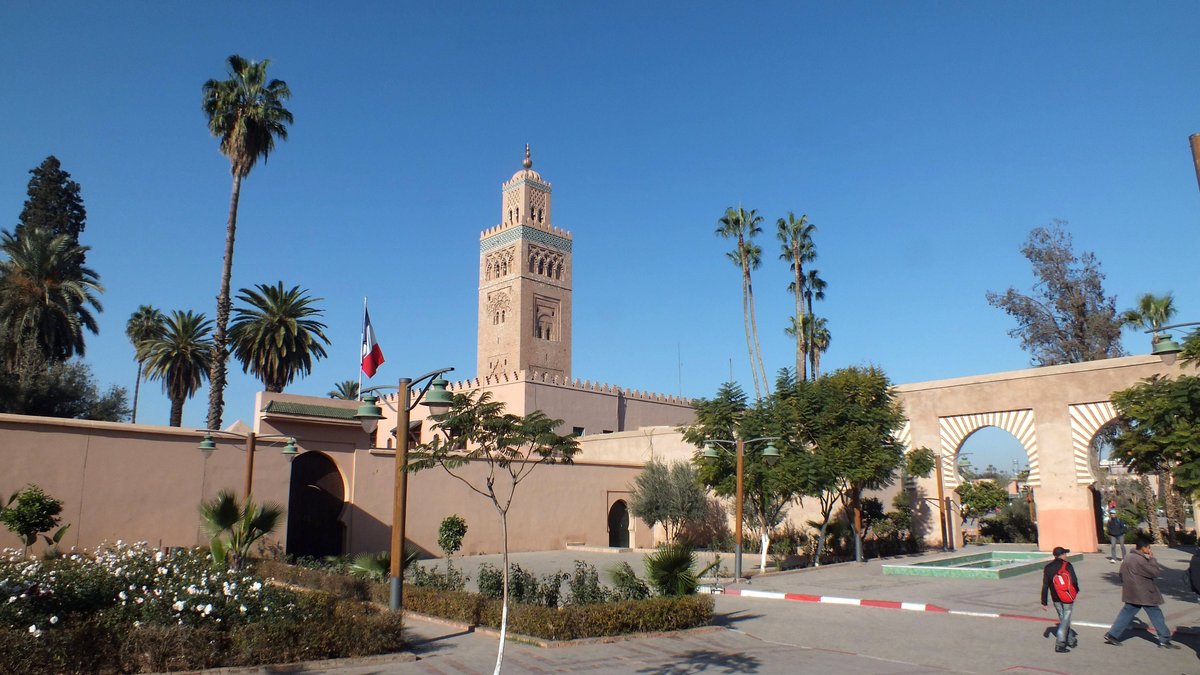
- Red Sandstone Facade: Marrakesh’s signature red sandstone gives the mosque its distinctive hue, complemented by carved stucco and geometric reliefs (Parametric Architecture).
- Zellige Tilework and Cedar Woodwork: The mosque is adorned with intricate zellige mosaics, detailed stucco arabesques, and finely carved cedar wood elements—hallmarks of Moroccan craftsmanship (Morocco Trail Finders).
- Minaret: While more modest than the Koutoubia’s towering minaret, Al-Shorafaa’s square minaret is a neighborhood landmark, richly decorated with zellige and calligraphic inscriptions (Yazmag).
- Mausoleums and Shrines: Proximity to tombs of local saints (marabouts) and shurafa reinforces the mosque’s significance as a pilgrimage and commemorative site (GPSmyCity).
Community Role and Spiritual Traditions
Beyond its architectural beauty, Al-Shorafaa Mosque is a cornerstone of community life in the medina. Historically, it served as:
- Center for Worship and Religious Education: Hosting daily prayers, Quranic instruction, and legal arbitration.
- Sufi Gatherings and Festivals: Key site during Mawlid (the Prophet’s birthday) and other religious celebrations, attracting pilgrims and locals alike (Morocco Travel Blog).
- Social Welfare: Supported by waqf endowments, the mosque offered aid to the needy and shelter to travelers.
- Life-Cycle Ceremonies: Venue for funerals, commemorations, and blessings sought by families connected to the shurafa lineage.
The mosque’s enduring role as a spiritual and social anchor is especially evident during Ramadan and Eid, when communal prayers and charitable acts intensify (El Fenn).
Visiting Information and Practical Tips
Location and Access
Al-Shorafaa Mosque is centrally located within Marrakesh’s medina, close to landmarks like the Saadian Tombs and Jemaa el-Fnaa. The narrow, labyrinthine streets are best navigated on foot, though local taxis are available for longer distances (Visit Marrakech).
Guided tours are highly recommended, providing historical context and facilitating access to less-known corners of the medina (Grumpy Camel).
Visiting Hours and Tickets
- Worship Times: Open to Muslims during the five daily prayers.
- Non-Muslim Access: Non-Muslims are generally not permitted inside the prayer hall but may view the mosque’s exterior and, where allowed, the courtyard or gardens (Take Me To Travel).
- Entry Fee: There is no ticket required for exterior visits. Guided tours may include the mosque in broader itineraries with bundled entry to nearby attractions.
- Peak Times: Fridays and religious holidays (especially during Ramadan) attract larger crowds—visit outside these periods for a quieter experience (Sahara Morocco Tours).
Dress Code and Etiquette
- Dress Modestly: Long trousers and sleeves for men; long skirts or trousers and covered arms/chest for women. Women should carry a scarf in case head covering is required (The Lady Who Travels).
- Shoes: Remove shoes before entering any prayer or interior space if permitted.
- Behavior: Remain quiet; silence mobile phones; avoid eating, drinking, or public displays of affection in or near the mosque (The Islamic Information).
- Photography: Do not photograph inside the mosque without explicit permission, and be respectful when photographing the exterior or people.
Accessibility
The medina’s uneven pavements and narrow streets may pose mobility challenges. There are typically no on-site public restrooms or modern accessibility features, so plan accordingly.
Best Time to Visit
Early mornings and late afternoons are ideal for a tranquil atmosphere and optimal lighting for photography. Avoid Friday prayers and peak festival times for a more peaceful visit (Grumpy Camel).
Nearby Attractions
- Saadian Tombs: Ornate royal burial site.
- Jemaa el-Fnaa: Lively market square.
- Ben Youssef Madrasa: Historic Islamic college.
- Local Cafés and Souks: Perfect for refreshments and shopping.
These sites are within easy walking distance and offer a fuller picture of Marrakesh’s heritage (Express; Tours 360 Morocco).
Frequently Asked Questions (FAQ)
Can non-Muslims enter Al-Shorafaa Mosque?
Non-Muslims are generally not permitted inside the main prayer hall, but the exterior and, occasionally, the courtyard are accessible.
What are the mosque’s visiting hours?
Open to worshippers for the five daily prayers; exterior can be admired at any daylight hour.
Is there an entry fee?
No, visiting the mosque’s exterior is free of charge.
Is photography allowed?
Exterior photography is permitted; interior photography is generally prohibited without permission.
How can I best experience the mosque and area?
Hire a certified guide, visit during off-peak times, dress respectfully, and combine your visit with nearby historical attractions.
Listen to the full story in the app
The whole Al-Shorafaa Mosque,
told well.
Audio guides for 1,100+ cities across 96 countries. History, stories, and local insight — offline ready.

Verified, and shown.
Researched and written by the Audiala editorial team from historical records, architectural archives, and local expertise.
Researched from Wikidata, Wikipedia & official sources · fact-checked · How we make our guides →