Podgorica
Montenegro Updated Apr 2026
The first thing that throws you is the silence. Podgorica, capital of Montenegro, feels like a city that forgot to wake up—until a café owner rolls up his shutters at 10 a.m., slams a tiny copper pot on hot sand, and the smell of Turkish coffee ricochets off a 173-metre cable-stayed bridge built in 2005. Between the brutalist apartment blocks and the 18th-century Ottoman clock tower, the place keeps folding time in on itself.
 Photo: Alexander Nadrilyanski / Pexels
- Attractions
- 12
- Trip length
- 2-3 days
- Best season
- May, late-September
Why Podgorica
Built from cited sources · see the method · How we make our guides →
Locals call it ‘PG’ and treat it like an open secret. They’ll meet you under the Millennium Bridge at sunset, walk you across the Moscow footbridge, then duck into Stara Varoš where stone houses lean so close you can hear your neighbour light a cigarette. Dinner is lamb baked for three hours under a metal lid covered in embers; you order at lunch and hope they saved you a portion.
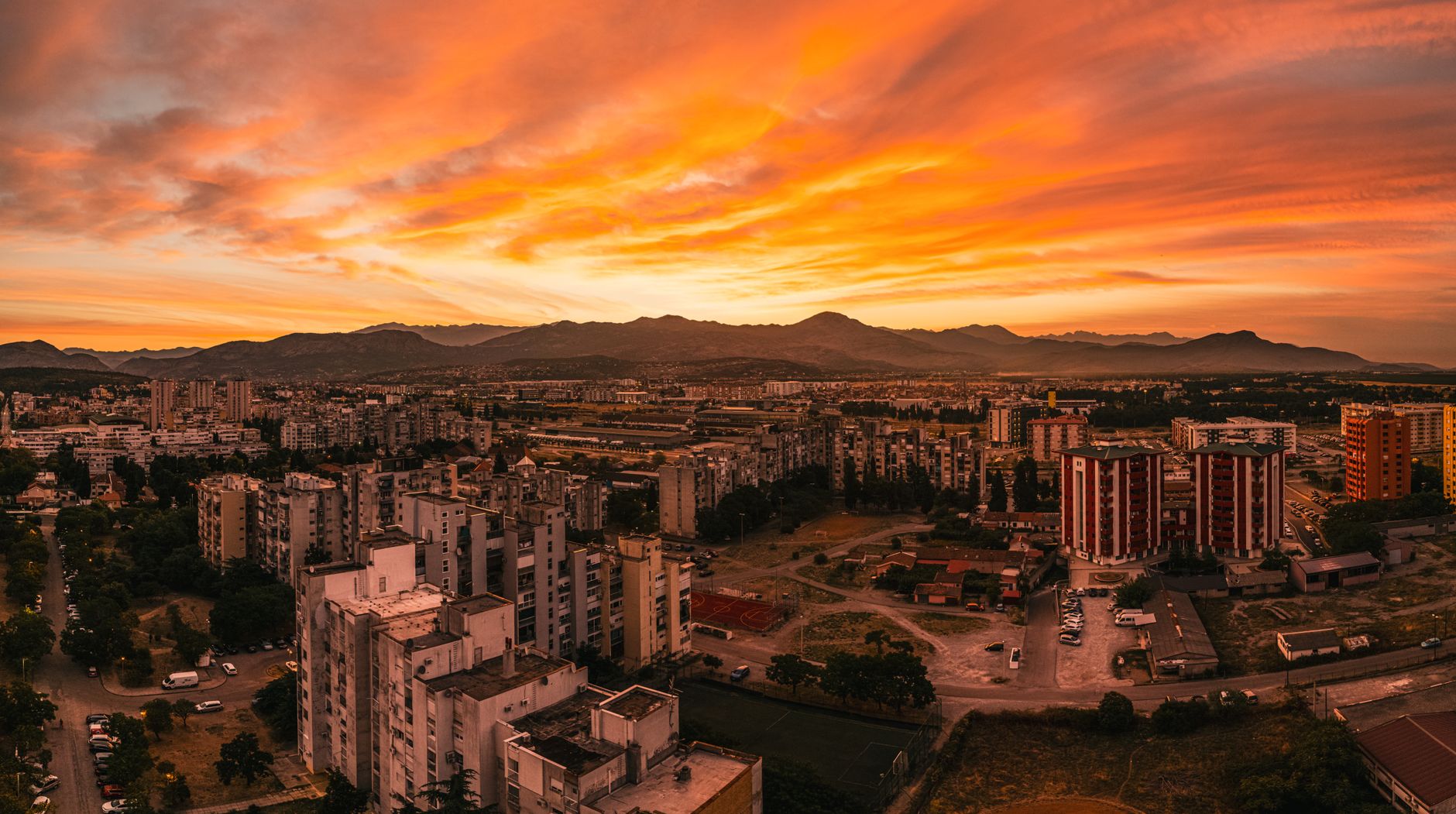
The city was bombed flat in 1943–44, so most of what you see is post-war concrete stitched together by rivers—Morača, Ribnica, Sitnica—each carrying snowmelt from mountains you can reach in 30 minutes. That proximity means the evening corso drifts from espresso cups to vineyard cellars within a single conversation; someone always knows a cousin with a boat on Lake Skadar.
Cathedral with Marx in Hell
The 1993 Cathedral of the Resurrection hides a fresco of Karl Marx roasting in the underworld—look up past the 47-metre dome. Two bell towers at 25 m each frame the marble façade, casting shadows that shift like sundials across the plaza.Concrete Poetry of the 2000s
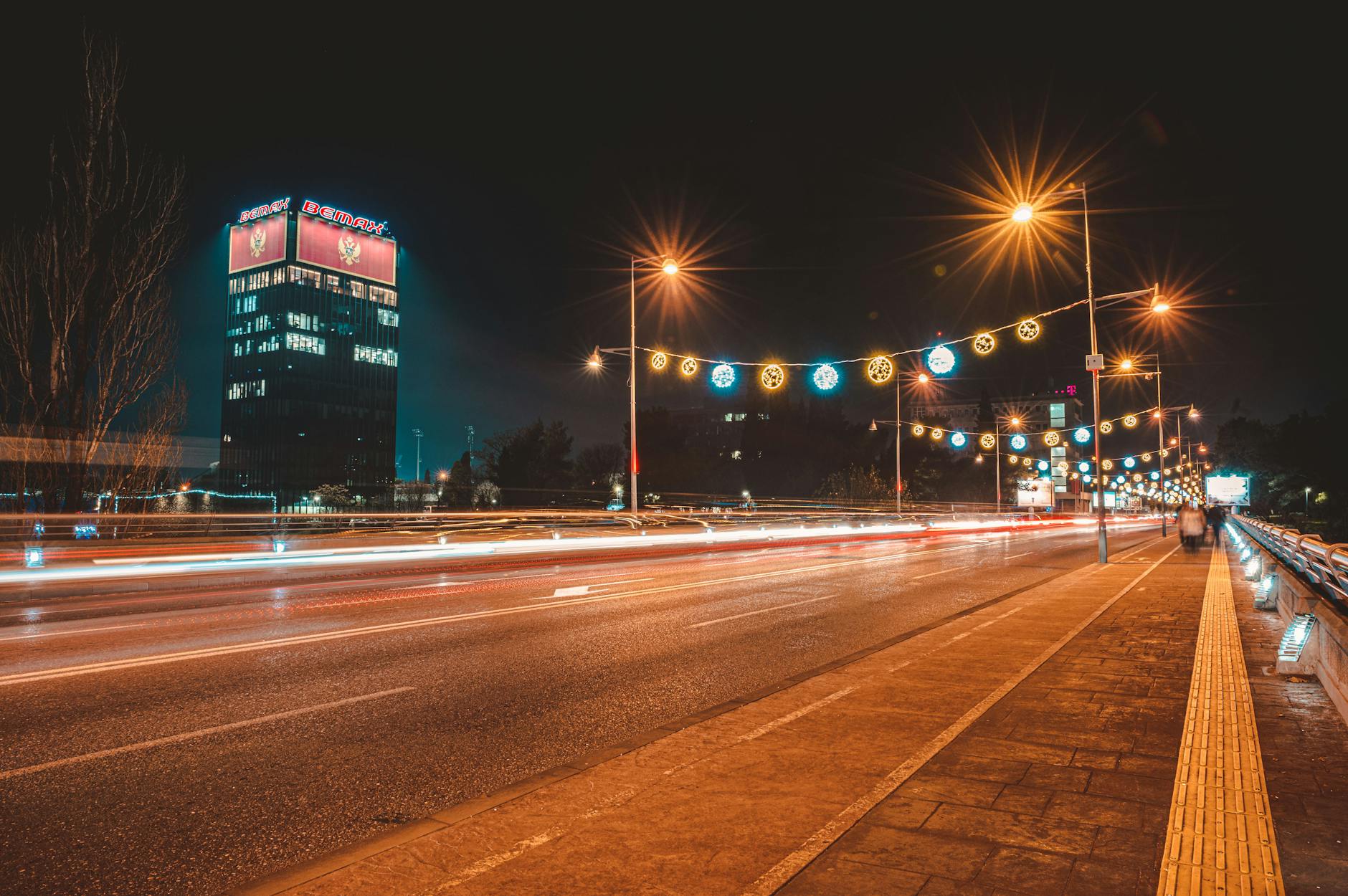
Millennium Bridge’s 173-metre cable-stay slices the Morača River at a 42-degree angle; at night, LEDs turn the deck into a runway. Walk the parallel Moscow footbridge for the perfect reflection shot without tripod elbows.Hill That Gave the City Its Name
Gorica Hill rises 130 m above downtown; pine needles muffle traffic noise so completely you can hear river pebbles shift. Locals time sunset jogs to catch the city lights flickering on like spilled coins.
Neighborhoods
Where to wander, by quarter — each with its own rhythm.
Stara Varoš
Ottoman grid of stone alleys that survived the Allied bombing. Inside the walls: two working mosques, the 16-metre Clock Tower you can’t enter, and courtyard restaurants where the cook will personally walk you to the butcher if you arrive too late for sač.City Centre / Slobode Street
Post-war commercial spine lined with brutalist towers, boutiques, and espresso bars that stay full all day. At night the ground floors flip into clubs; bass leaks onto the pavement until 3 a.m. and nobody seems to mind.Ribnica Riverbank
Graffiti-splashed embankment under the old stone bridge. Itaka Library Café occupies a concrete ledge above the water—no food, just good beans and paperback exchanges. Students come for the Wi-Fi; everyone else comes for the shade.Gorica Hill
Pine-covered rise that gave the city its name. Five minutes from the parliament, trails switchback to a clearing where you can watch the sunset polish the aluminium roof of the cathedral you just visited.King’s Park / Petrović Palace
Formal gardens around the former royal manor, now the Contemporary Art Center. Locals use the benches for chess and rakija refills; the mansion hosts rotating exhibitions that close promptly at 6, so time your visit.
Plan your trip
Before you go
- Getting There
- Fly into Podgorica Airport (TGD), 11 km south, served by Ryanair, Air Serbia and Austrian. Direct trains terminate at Podgorica Glavna station from Belgrade (9 hrs) and Bar (1 hr). Highway M-2 connects to Croatia via Debeli Brijeg and to Serbia via Čemerno pass.
- Getting Around
- No metro; 18 city bus lines run 05:00–00:00 for €0.90 cash to the driver. Bike lanes are sketchy but rentals €8/day at Green Bikes on Svetog Petra Cetinjskog. No tourist pass exists—single tickets only, exact change essential.
- Climate & Best Time
- July peaks at 32 °C and bone-dry; January hovers at 4 °C with 230 mm of rain falling mainly in November. May and September-October offer 22 °C days, half the precipitation, and half the hotel rates.
- Language & Currency
- Montenegrin in Latin script; English spoken by anyone under 40 in hospitality. Euro is the currency—cash only on buses and at the Zelena Pijaca market; cards fine elsewhere.
Fourteen Centuries of Wipeouts and Comebacks
Where rivers meet, empires collide
- c. 50 CE
Doclea Becomes Roman Municipium
Emperor Vespasian grants the settlement on the Zeta-Morača confluence full city rights. Stone-paved cardo and decumanus are laid, marble baths fed by a 13 km aqueduct, and the forum buzzes with Latin, Greek, and Illyrian traders arguing over wine prices.
- 518 CE
Earthquake Shatters Doclea
Morning prayers in the temple of Diana stop mid-sentence as columns buckle. The tremor topples the triumphal arch, cracks the basilica dome, and sends citizens scrambling toward the river. Rebuilding is slow; the city never recovers its former size.
- 1042
Stefan Vojislav Breaks Free
At Tudjemili, the Slavic prince crushes a Byzantine army and plants the banner of independent Duklja. Doclea’s ruined acropolis becomes the seat of a new Slavic state. The riverbanks echo with Serbian hymns for the first time.
- c. 1117
Stefan Nemanja Born
In a timber house near the Ribnica mills, the future founder of Serbia’s Nemanjić dynasty draws his first breath. The boy will later write the city’s name—Ribnica—into every Serbian chronicle, ensuring its memory survives conquerors.
- 1326
First Record of 'Podgorica'
A Ragusan merchant’s ledger mentions trading cloth in ‘Podgorica sub monte Gorica.’ The new name sticks. Below Gorica Hill, narrow lanes replace Roman grid lines; smoke rises from blacksmiths who repair Balkan chain mail.
- 1496
Ottoman Flags Over the Town
Sultan Bayezid II’s sipahis ride through the old gates. Mosques rise where churches once stood, and the call to prayer drifts across red-tiled roofs. The population swells with Muslim settlers, Sephardic Jews, and Orthodox merchants trading salt and silver.
Show the full timeline (16 moments)
- 1667
Clock Tower Rises
Master-builder Hasan Aga sets the final stone on a 16-meter square tower above Stara Varoš. The Italian clock inside strikes the hour for the first time, echoing through bazaar alleys where coffee steam mixes with the scent of roasted sesame.
- 1833
Marko Miljanov Born
In a highland tower near Podgorica, the future warrior-writer arrives screaming. His chronicles of clan feuds and Ottoman taxes will later immortalize the city’s mountain hinterland, teaching generations what freedom tastes like.
- 1878
Congress of Berlin Liberates City
When European diplomats redraw the map, Ottoman officials hand the keys to Prince Nikola’s officers. Guns fire in celebration; for the first time in 382 years, church bells ring without a muezzin’s call answering back.
- 1916
Austrian Troops March In
K.u.k. soldiers parade past the clock tower after shelling the royal palace. King Nikola watches the occupation from exile in France. Food runs short, and the black market trades coffee beans like gold.
- 1941
Titograd, Target Number One
Luftwaffe squadrons turn the city into rubble. Of 13,000 residents, more than 4,000 die under the bombs. By war’s end, only Stara Varoš and the clock tower still stand among miles of ash and twisted tram rails.
- 1946
City Renamed Titograd
Tito signs the decree himself. Overnight, Podgorica disappears from maps, replaced by the leader’s name. Concrete apartment blocks rise from the ruins; slogans shout from freshly painted facades.
- 1966
Dejan Savićević Born
In a new high-rise above the Moraca, the boy who will nutmeg Arrigo Sacchi at the San Siro learns his first feints on a cracked asphalt pitch. The city’s concrete courtyards breed the Balkans’ most elegant left foot.
- 1993
Cathedral of Resurrection Begins
Construction crews lay foundations for a Serbian Orthodox giant: 60-meter dome, twin bell towers, and frescoes that include Karl Marx burning in hell. Every stone is paid for by diaspora donations mailed from Detroit to Sydney.
- 2005
Millennium Bridge Opens
At dusk, the 173-meter cable-stayed span lights up like a harp over the Morača. Locals walk the pedestrian deck, still surprised their capital finally looks like a capital. Traffic noise mixes with café chatter from the riverbanks below.
- 3 June 2006
Independence Day
Fireworks burst above the new cathedral dome as Montenegro votes 55.5 % to leave Serbia. In Republic Square, strangers hug while the old Yugoslav flag is lowered for the last time. The city’s name—Podgorica—returns to official maps after 60 years.
Who lived here
-
Founder of the Nemanjić dynasty · c. 1113–1199
Stefan Nemanja
Born in Ribnica (medieval Podgorica)
The grand prince who forged medieval Serbia started here, in a town called Ribnica before it took the name Podgorica. Today his fortress footprint is gone, but his Cyrillic letters still echo in church chants drifting over the Morača river.
-
First President of Montenegro · 1907–1976
Blažo Jovanović
Born in Podgorica
Partisan commander turned head of state, Jovanović signed the papers that changed Titograd back to Podgorica in 1946. Walk the boulevard that still bears his name and you’ll pass the courthouse where he once declared the city’s post-war rebirth.
-
Novelist · 1930–1992
Borislav Pekić
Born in Podgorica
His dark satires were born in a city that had just lost 4,000 people to Allied bombs. Pekić left for Belgrade, but the absurdist edge in his writing still smells of Podgorica’s post-war concrete dust.
-
Football legend · born 1966
Dejan Savićević
Born in Podgorica
The magician who dribbled past entire defenses for AC Milan learned his first step-overs on cracked asphalt near the old train station. Watch a local match and you’ll see kids still copying the feint he invented here.
Where to Eat
Where locals actually book dinner — not the tourist menus.
-
Njeguški pršut
Aged 18 months in mountain air, the ham arrives paper-thin, sweet with smoke. Pair with peppery local olives at Kod Radonjića kafana.
-
Kačamak
Potato-cornmeal mash beaten until it strings like melted cheese, topped with sour kajmak. Mountain comfort in a cast-iron skillet at Stara Kuća.
-
Rakija tasting flight
Try honey-medovača and juniper-kleka side by side; 40–50 % firewater served in 0.03 L glasses at Pod Volat bar. Locals sip, don’t shoot.
-
Lake Skadar carp
Grilled whole over vine embers, skin blistered to crackling. Weekend special at Restoran Skadar, 30 min drive toward Virpazar.
-
Green Market (Zelena Pijaca)
Morning market at Vuk Karadžića offers fig jam, raw sheep cheese, and pepper-stuffed sauerkraut. Bring cash and a tote; vendors close by noon.
Insider tips
Small things that change how the city treats you.
Cross Like a Local
Drivers rarely yield at crosswalks. Wait, make eye contact, then step confidently. Locals treat it like a negotiation.Cash Only Tips
Card machines can't add tips. Keep €1 coins for cafés and round taxi fares up. Servers remember the gesture.Order Lamb Early
Authentic veal or lamb under the iron dome (sač) needs two hours' notice. Ask when you sit down.Skip the Bus Pass
No tourist cards exist. Pay €0.90 per ride to the driver—exact change only. Most sights cluster within 20 minutes' walk anyway.Visit May or September
July hits 32 °C and feels like a parking lot. May and late-September give you 24 °C days and café terraces without sweat.
Gallery
The city, as it actually looks.




Frequently asked
Is Podgorica worth visiting?
Yes—if you like peeling back layers. WWII erased almost everything, so what you see is deliberate reconstruction: a 1993 Orthodox cathedral with Karl Marx in hell, a 2005 cable bridge lit like theater, Ottoman alleys that somehow survived. Three days is plenty to taste how a city rebuilds identity.
How do I get from Podgorica Airport to the city?
Take the Airport City Express shuttle for €2.50–€3; it leaves when your flight lands and drops near the main station in 20 minutes. Taxis cost €10–€15—stick with Red Taxi or Royal Taxi and insist on the meter.
Is Podgorica safe for solo travelers?
Statistically very safe. Violent crime is rare, but watch your bag at the bus station after dark and don’t flash cash at riverfront bars. The real danger is traffic—drivers treat pedestrian crossings as decoration.
How many days should I spend in Podgorica?
Two full days covers the compact center: Ottoman Stara Varoš in the morning, post-war brutalism walk at lunch, sunset from Gorica Hill, then bar-hop until 1 a.m. Add a third day for the Roman ruins at Duklja, four kilometers west.
Can I pay with card everywhere?
Visa and Mastercard work in hotels, supermarkets, and mid-range restaurants, but buses, bakeries, and the best grill kiosks are cash-only. Withdraw euros from any downtown ATM—no local currency tricks needed.
Pick up where you left off
Saved and recently read places — kept on this device only.
Photo credits (10)
- Alexander Nadrilyanski — Pexels License (https://www.pexels.com/license/) — Source: https://www.pexels.com/photo/4347264/
- Mikhail Nilov — Pexels License (https://www.pexels.com/license/) — Source: https://www.pexels.com/photo/8431629/
- Alexander Nadrilyanski — Pexels License (https://www.pexels.com/license/) — Source: https://www.pexels.com/photo/10622370/
- Alexander Nadrilyanski — Pexels License (https://www.pexels.com/license/) — Source: https://www.pexels.com/photo/9526646/
- Alexander Nadrilyanski — Pexels License (https://www.pexels.com/license/) — Source: https://www.pexels.com/photo/4264817/
- Alexander Nadrilyanski — Pexels License (https://www.pexels.com/license/) — Source: https://www.pexels.com/photo/10622368/
- Alexander Nadrilyanski — Pexels License (https://www.pexels.com/license/) — Source: https://www.pexels.com/photo/10622367/
- Muamer Ramovic — Pexels License (https://www.pexels.com/license/) — Source: https://www.pexels.com/photo/7238319/
- Alexander Nadrilyanski — Pexels License (https://www.pexels.com/license/) — Source: https://www.pexels.com/photo/10622369/
- Alexander Nadrilyanski — Pexels License (https://www.pexels.com/license/) — Source: https://www.pexels.com/photo/4264815/
Photos may have been resized or cropped.