Budva
Montenegro Updated Apr 2026
Step off the polished promenade in Budva, Montenegro, and you will find seventh-century Greek gate pylons resting directly beneath a modern jewelry display. The 1979 earthquake cracked the limestone peninsula open. History here refuses to stay neatly underground.
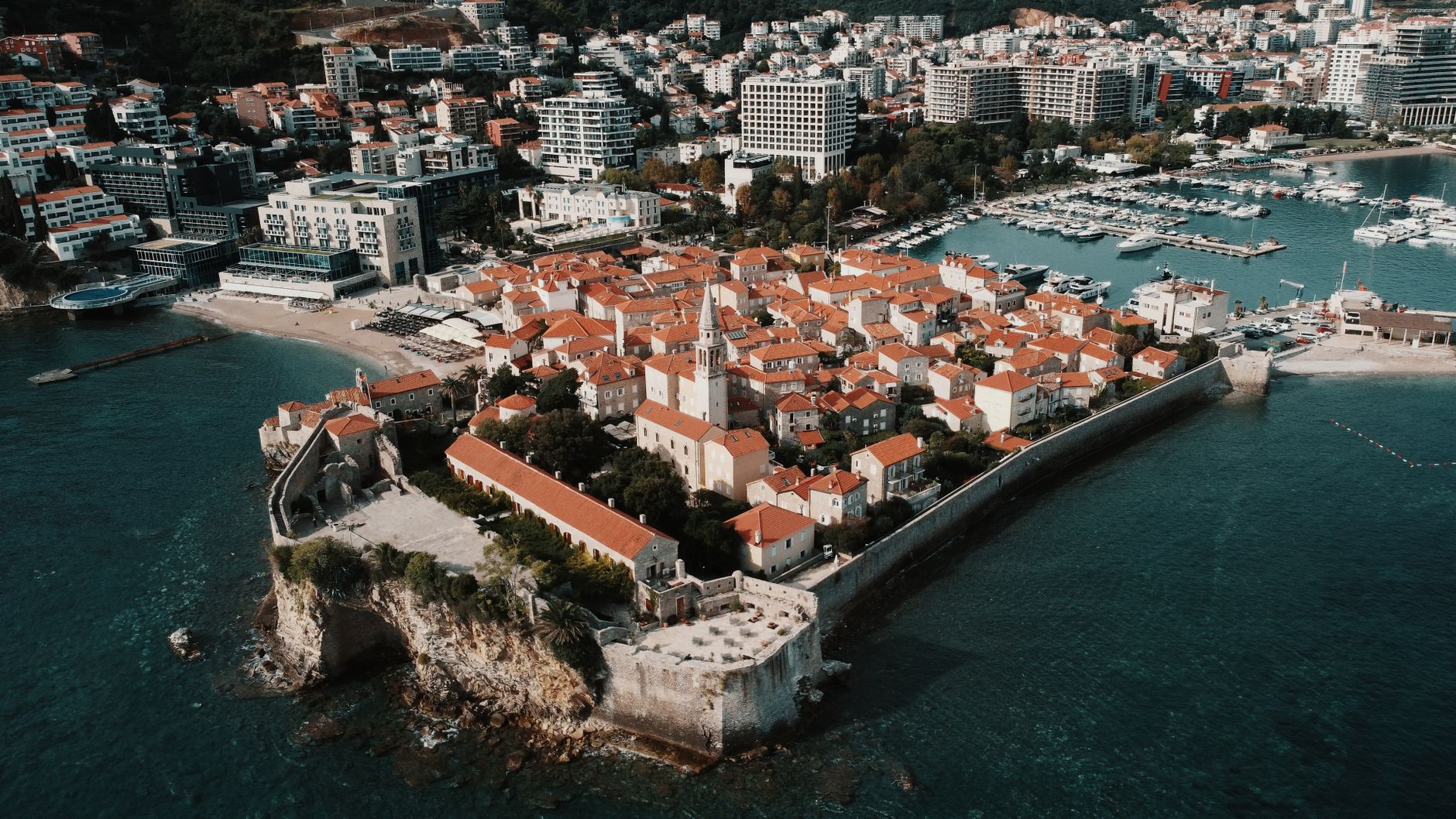 Photo: Julien Goettelmann / Pexels
- Attractions
- 8
- Trip length
- 2-3 days
- Best season
- May-June or September-October
Why Budva
Built from cited sources · see the method · How we make our guides →
The walled Stari Grad compresses two and a half millennia of occupation into a peninsula barely wider than a city bus is long, and the resulting density forces every courtyard to double as a living room. Venetian defensive walls trap evening bells. The air carries roasted coffee, Adriatic salt, and the damp scent of ancient mortar.
Summer turns these alleys into an open-air stage for Theatre City Budva, and the resulting festival calendar rewrites the entire evening schedule. You will hear classical actors project across the Citadel terrace. Locals shift their dinner reservations past nine and let the courtyard concerts run until midnight.
Walk two blocks inland from Slovenska Obala and the laminated tourist menus vanish. Family-run konobas serve makarule sa pašticadom in heavy ceramic bowls. House wine costs two euros.
Venetian Walls & Roman Bones
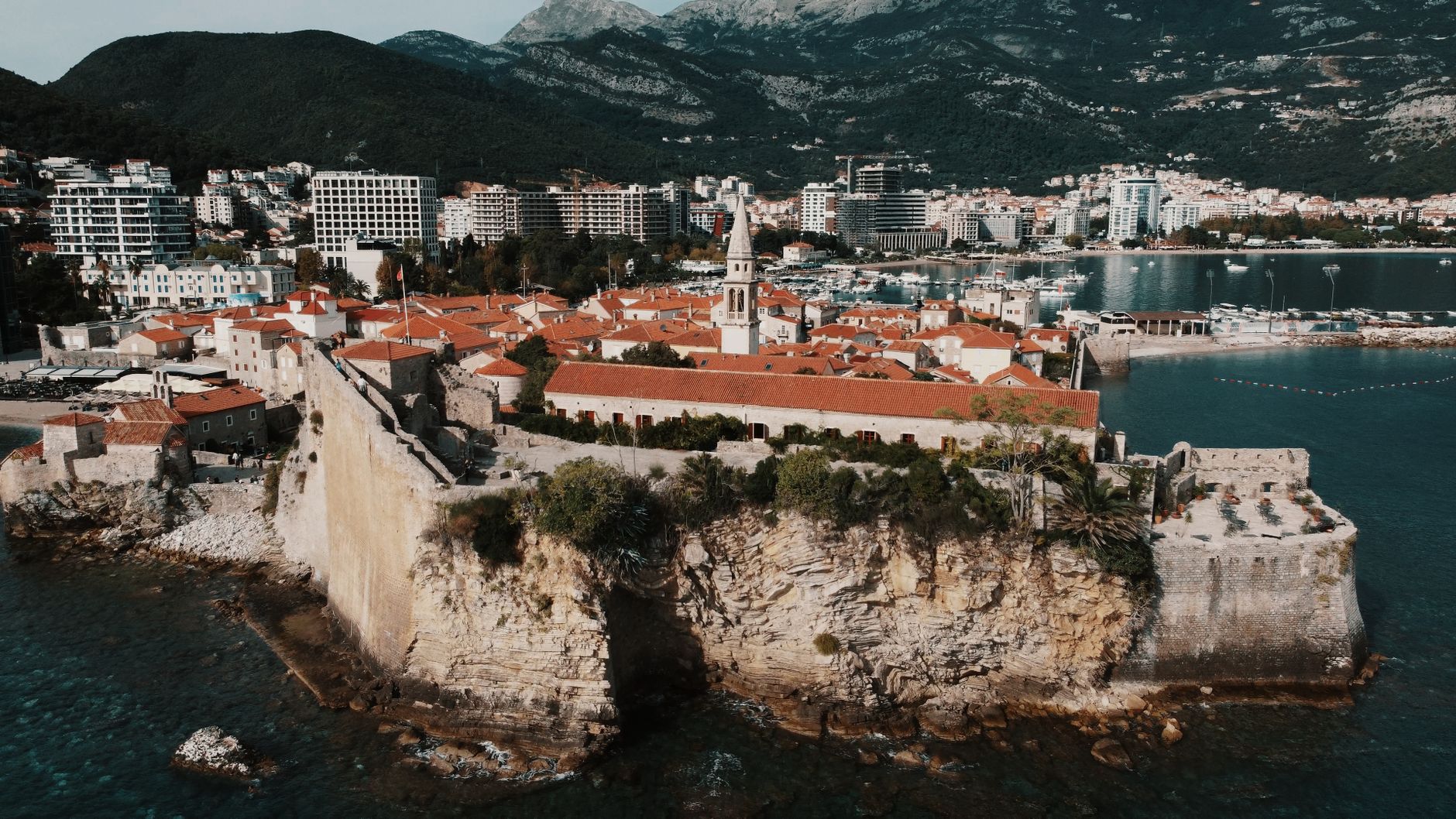
The Old Town’s 9th-to-17th century limestone ramparts hide a 1st-century altar dedicated to Vinicia Pavlina, unearthed after the 1979 earthquake cracked the peninsula open. Walk the tight alleys at dawn to hear your footsteps echo off stone that survived Ottoman sieges.Mogren’s Limestone Passage
A narrow cliffside trail drops from the western fortress wall into a carved tunnel that opens onto two sheltered coves. The water here clears faster than the central beach. Skip the midday sun and arrive before noon.Citadel Overlook
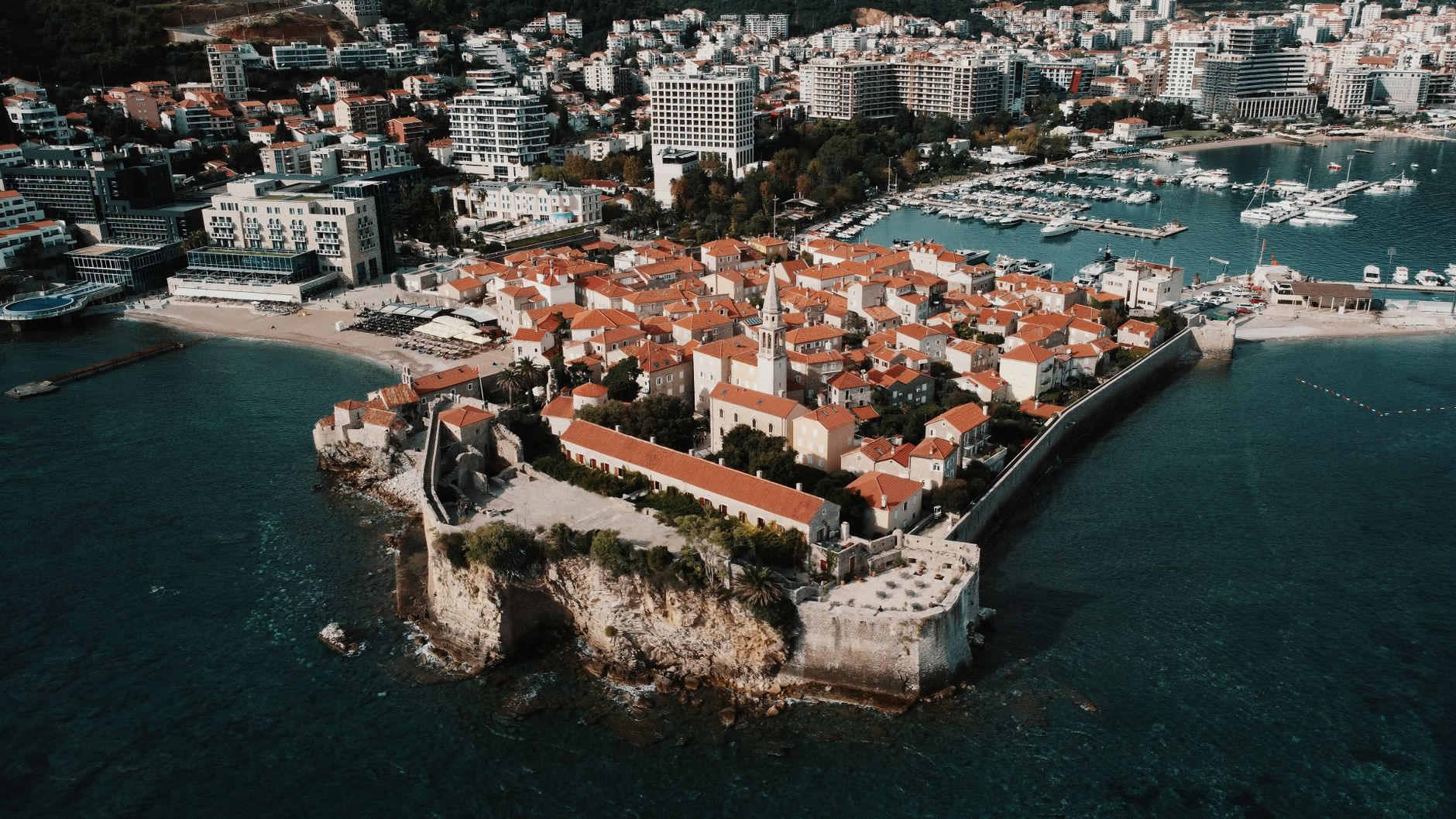
Perched at the southern tip, the 15th-century fortress frames a grid of terracotta roofs, the marina, and Sveti Nikola island. Summer evenings bring open-air concerts to the courtyard, turning thick battlements into an acoustic bowl.
Neighborhoods
Where to wander, by quarter — each with its own rhythm.
Stari Grad
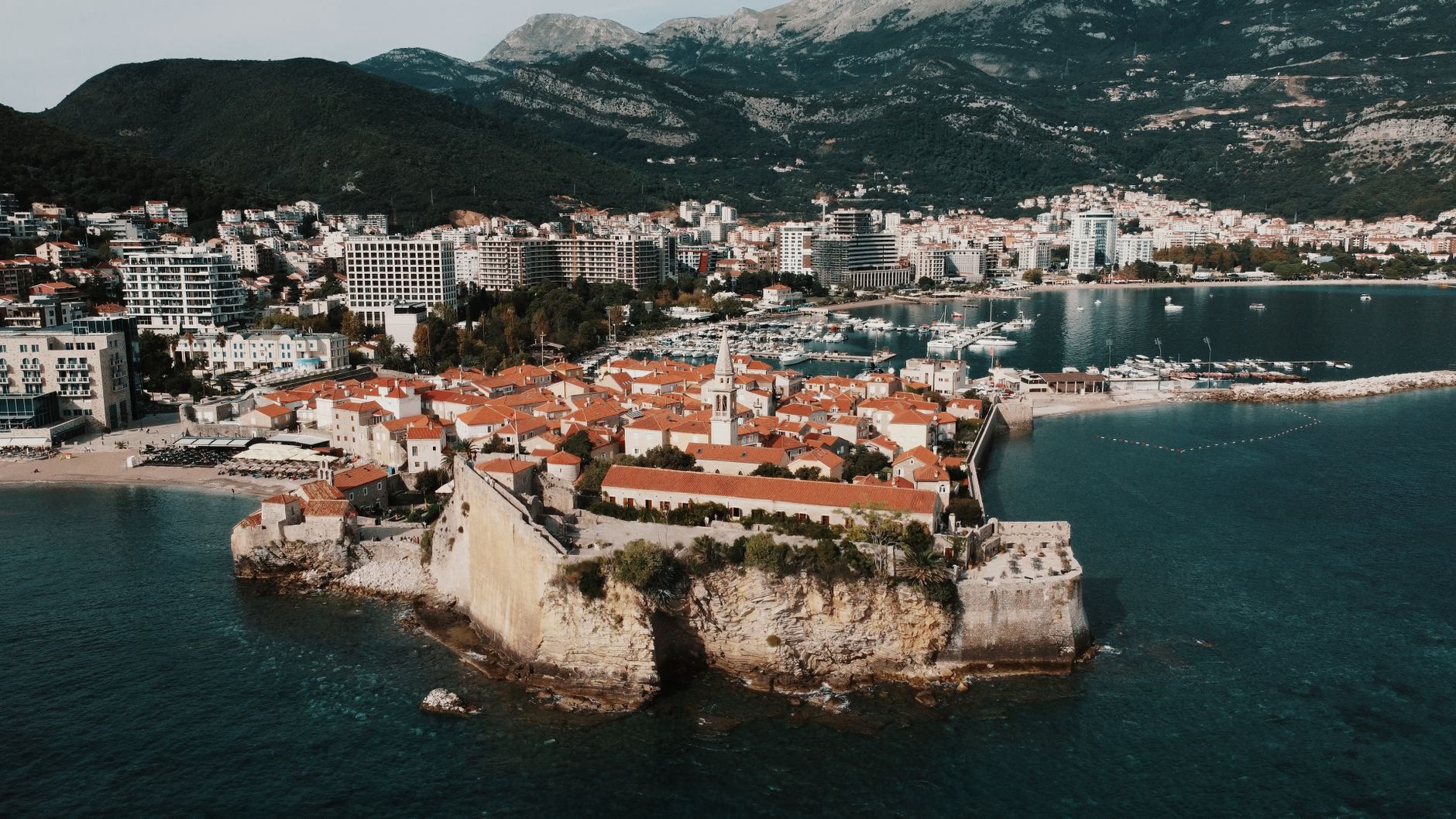
The walled peninsula functions as a compact archive of Adriatic history. Narrow limestone lanes connect early church foundations to Venetian gates that still bear the winged lion of St. Mark. Evening crowds thin out after midnight, leaving only the sound of footsteps on worn stone.Marina & Riviera Promenade
This polished waterfront strip caters to yacht traffic and sunset cocktails. You will pay a premium for the view, but the Adriatic light hitting the water justifies the markup.Slovenska Obala
The inland streets two blocks back from the coast house the actual residential rhythm of the city. Family-run bakeries sell burek before noon.Mogren Peninsula
Access the beach only by a carved cliffside path from the western Old Town wall. Two separate coves share a single limestone tunnel, and the water runs noticeably clearer than the central strip.Jaz Beach & Talas Zone
A wide strip of sand and pebble hosts summer electronic festivals. The eastern cove stays quiet, offering a buffer from the main stage speakers. Locals drive here for room to spread out.Buljarica
Montenegro’s longest continuous beach sits far enough from Budva to escape the summer congestion. You will drive twenty minutes south to find pine trees lining a shallow, fifty-meter shelf of sand.
Plan your trip
Before you go
- Getting There
- Fly into Tivat Airport (TIV) for the quickest transfer, roughly 20 kilometers southwest of Budva. Podgorica Airport (TGD) sits 70 km inland. The drive takes an hour to ninety minutes on winding coastal roads. Budget carriers also route through Dubrovnik (DBV) in Croatia and Tirana (TIA) in Albania, with pre-booked shuttles handling the cross-border runs. Book early. As of 2026, licensed operators like Red Taxi remain the standard for reliable transfers, since unverified drivers still quote inflated flat rates at the curb.
- Getting Around
- Budva runs on regional buses rather than a metro or tram system. Operators like Lasta and Blue Line run frequent routes north to Kotor and south to Bar. Tickets are purchased at the main station or via busticket4.me. The Old Town is strictly pedestrian. Dedicated cycling lanes barely exist along the Jadranski Put highway, so stick to quiet residential streets if you rent a bike. Watch the traffic.
- Climate & Best Time
- The Adriatic coast bakes in July and August, with daytime highs pushing 28–32°C and near-zero rainfall. May and September hover around 20–25°C. You get swimmable water without the peak-season crush. November through February brings mild 10–13°C days but heavy rain, prompting many seasonal venues to shutter. Book for late spring or early autumn.
- Language & Currency
- Montenegrin uses both Latin and Cyrillic scripts, though Latin dominates coastal signage. The Euro operates as the sole legal tender. Smaller family-run spots often cite broken card terminals, so keep €20–50 in small bills on hand. Tipping hovers around 10% at sit-down tables. Round up cafe tabs. English works fine everywhere.
A Coast Carved by Illyrians, Empires, and Earthquakes
From fortified peninsula to independent Adriatic jewel
- c. 500 BCE
Illyrian Fortresses Guard the Coast
Enchelean tribes carve a defensive settlement into the rocky peninsula overlooking the Adriatic. Limestone walls follow the headland’s natural contours. Greek merchants trade salt and olive oil through narrow stone gates.
- 168 BCE
Roman Legions Claim the Peninsula
Following the Illyro-Roman Wars, a Roman garrison marches into the settlement and renames it Butua. Veterans build stone villas. Merchants haggle in Latin and Greek beneath newly raised colonnades. The province of Dalmatia absorbs the coast, leaving mosaic fragments buried in the soil.
- c. 650
Slavic Migrations Reshape the Coast
Slavic tribes descend from the Balkan highlands, settling among the remaining Romanized population. Their language slowly blends with surviving Illyrian and Latin dialects. The coastal rhythm shifts.
- 1042
Prince Vojislav Breaks Byzantine Chains
Prince Stefan Vojislav defeats Byzantine strategoi near Bar. Imperial control over the Duklja region fractures immediately. Budva’s merchants pay taxes to the Vojislavljević dynasty instead of Constantinople. The victory seeds a century of relative autonomy for coastal towns.
- 1189
Stefan Nemanja Absorbs the Coast
The Grand Župan of Raška conquers Zeta, folding Budva into the expanding Serbian Nemanjić state. Orthodox monasteries receive land grants while Catholic parishes continue their liturgies in stone chapels. This dual religious layer still defines the Old Town’s architectural fabric.
- 1442
Venice Raises Its Lion Over Budva
The Republic of Venice secures direct control. Stonemasons from Dalmatia begin laying the massive defensive walls that still encircle the peninsula today. The city’s Statute is codified. Merchants gain civic autonomy under Venetian governors.
Show the full timeline (20 moments)
- 1572
Ottoman Janissaries Breach the Walls
Ottoman forces briefly capture the town during a wider Mediterranean campaign. Flags fly over the citadel for exactly twelve months. Venice negotiates a swift return through the Treaty of Constantinople. The brief occupation leaves behind scattered military supply caches and heightened coastal vigilance.
- c. 1620
Cristoforo Ivanovich Is Born in Budva
Born to a local merchant family, Ivanovich leaves the Adriatic for Venice and Verona. He becomes the first chronicler of Venetian opera. His librettos bridge the gap between Dalmatian provincial life and the cultural heart of the Serenissima. The city claims him as proof that its artistic pulse reached far beyond its seawalls.
- 1667
Fire and Quake Shatter the Old Town
A devastating earthquake strikes the coast. A sweeping fire follows immediately. Venetian engineers rush to reinforce the Gradenigo and Repeno gates with thicker limestone blocks. The rebuilt walls take on the heavier, more austere profile visitors still see today.
- 1751
The Adventurer Stefano Zannowich Arrives
Born into a prominent Budva family, Zannowich grows into a master of self-invention and multilingual correspondence. He travels across Europe, posing as a prince. Scandalous letters entertain Parisian salons. His flamboyant life exposes how a small Adriatic port could produce figures who manipulated continental courts.
- 1797
Napoleon Dismantles Venetian Rule
French troops dissolve the Republic of Venice. Budva falls under temporary military administration. The Treaty of Campo Formio redraws Adriatic borders, leaving the town in limbo until Austrian forces arrive. The sudden power shift strips local nobles of their privileges.
- 1813
Habsburg Administrators Take Command
Austrian engineers repurpose the southern Citadel into an ammunition depot. Bureaucrats from Vienna impose German-language schools. The town’s architecture adopts a more utilitarian edge under imperial oversight. Stone barracks swallow the old military courtyards.
- 1824
Stefan Mitrov Ljubiša Takes His First Steps
Born in the Old Town, Ljubiša grows into a writer whose prose captures the moral complexities of the Adriatic littoral. His memorial house stands on a narrow lane. Manuscripts and early printing presses fill the quiet rooms. The city remembers him as the voice that translated coastal folklore into modern literature.
- 1918
The Podgorica Assembly Unites the South Slavs
Delegates vote to merge Montenegro with Serbia, dissolving centuries of separate dynastic rule. Budva transitions from an imperial military outpost to a quiet municipality. Austro-Hungarian officers pack their trunks. Local custodians take the citadel keys.
- 1944
Partisan Forces Liberate the Coast
Yugoslav Partisan battalions push Italian and German units out of the coastal corridor. Street fighting leaves bullet scars on limestone facades. The victory integrates Budva into the new socialist federation. An economy built on fishing shifts toward state-run hospitality.
- 1967
Ita Rina Seeks Refuge in Budva
The celebrated Slovenian actress and European cinema star relocates to the Adriatic coast. She spends her final decade walking the same stone paths where Venetian merchants once traded. Her presence bridges 1920s film glamour with the unhurried rhythm of a Montenegrin fishing town. Quiet coves replace bustling film sets.
- 1979
Earthquake Levels the Medieval Quarter
A massive tremor on April 15 collapses roofs. Residents flee into temporary camps as ancient walls fracture down the middle. Archaeologists seize the reconstruction phase to excavate buried Roman necropolises beneath the streets. The modern City Museum opens in the wake of the ruins, housing centuries of recovered artifacts.
- 2006
Independence Reshapes the Adriatic Coast
Montenegro votes for sovereignty. Real estate developers and marina projects rapidly transform the shoreline. Heritage commissions race to preserve Venetian stonework. The town pivots from a regional retreat to a Mediterranean tourism hub.
- 2012
Modern Gallery Revives Contemporary Arts
Curators convert a restored stone warehouse into a dedicated space for regional painters. Rotating exhibitions challenge the town’s resort image with avant-garde installations. Visitors trade beach chairs for gallery benches. An artistic pulse outlives summer crowds.
- 2018
Citadela Becomes a Summer Stage
The southern fortress opens its courtyard to theater companies. Acoustics bounce off restored limestone walls as jazz and folk performances draw international audiences. The citadel’s cannons fall silent. Applause echoes over the Adriatic.
Who lived here
-
Writer and Politician · 1824–1878
Stefan Mitrov Ljubiša
Born and buried in Budva
His childhood inside these cramped Venetian walls shaped the short stories that captured the Adriatic littoral's stubborn independence long before he entered Dalmatian politics. His grave rests quietly in the Holy Trinity churchyard, a short walk from the sea winds that taught him to read the coast. He would likely scoff at the summer nightclubs, though he would instantly recognize the same fierce local pride in today's fishermen mending nets at dawn.
-
Opera Historian and Librettist · c.1620–1689
Cristoforo Ivanovich
Born in Budva
He left this fortified peninsula to document the very first history of Venetian opera, essentially inventing music criticism two centuries before the term existed. Modern cultural programmers now use his legacy to justify summer classical concerts inside the Citadel courtyard. He probably viewed the Adriatic as a theatrical stage long before tourists arrived to watch the sunset.
-
Film Actress · 1907–1979
Ita Rina
Lived in Budva 1967–1979
After dominating Weimar-era cinema screens across Germany and Czechoslovakia, she retreated to this quiet Montenegrin town to recover from a life lived under relentless studio lights. She spent her final decade watching the same coastal light that once illuminated her face in early black-and-white film reels. The quietness of her final years contrasts sharply with the roaring nightlife that now fills her old neighborhood.
Where to Eat
Where locals actually book dinner — not the tourist menus.
-
Njeguški Pršut
Smoked ham cured in the dry mountain air of the Njeguši plateau, then sliced thick and served with local cheese and olives. You will find it on nearly every coastal menu, but the best bites come from konobas that source directly from inland producers.
-
Crni Rižot
Squid-ink risotto that stains the rice a deep matte black and carries a sharp brine from the Adriatic. The dish relies on fresh cuttlefish and a long simmer that leaves the grains firm rather than mushy.
-
Grilled Adriatic Fish
Daily catch like brancin or orada simply grilled over olive wood and dressed with lemon. Restaurants along the Old Town marina often display the whole catch on ice before cooking, so ask for the exact weight and price upfront.
-
Burek & Pita
Flaky phyllo pastries filled with minced meat, spinach, or cheese, baked in heavy circular pans and sold warm from morning kiosks. Grab a slice at a local pekara before heading to the Citadel.
Insider tips
Small things that change how the city treats you.
Book Licensed Transfers
Tivat Airport sits only 20 km away, but unmetered cabs at the rank routinely overcharge. Pre-book Red Taxi or Transfers-Montenegro.me to lock in a fixed summer rate.Carry Small Cash
Visa and Mastercard work at hotels, but many Old Town konobas and beach bars claim their card terminals are broken. Keep €30 in small bills to avoid awkward checkout moments.Visit Mogren Early
The cliffside path from the Old Town's western wall fills by 10am. Arrive at 8am to secure a quiet patch of limestone before the lounger reservations begin.Order Sač Ahead
Brav Ispod Sač requires 48 hours notice because the lamb roasts slowly under a heavy iron bell. Walk into a family-run kitchen outside the main tourist strip and ask the waiter directly.Explore Museum Late
The Budva City Museum sits quietly past 4pm. You will see the 1979 earthquake artifacts and Hellenistic gold jewelry without the midday tour groups blocking the display cases.Look Down Closely
Near Villa Urbana Piazzetta, exposed Roman villa capitals and a 1st-century architrave sit directly underfoot. Most visitors walk right past them while chasing the main square.
Gallery
The city, as it actually looks.



Frequently asked
Is Budva worth visiting in Montenegro?
Yes, if you want a dense, walkable historic core paired with immediate Adriatic swimming. The 2,500-year-old walled peninsula packs Illyrian pylons, Venetian fortifications, and three working churches into a space you can cross in fifteen minutes. Pair it with a single day trip to Kotor for a complete coastal picture.
How many days do you need in Budva?
Two full days comfortably cover the Old Town, the City Museum, and Mogren Beach. Add a third day for a water taxi to Sveti Nikola island or a drive down to the quieter Buljarica coastline. Rushing through in one afternoon leaves the medieval layers completely flat.
How do you get from Tivat Airport to Budva?
The coastal drive takes roughly 25 minutes. Pre-book a licensed transfer service to bypass the airport taxi rank, where unmetered drivers frequently quote inflated summer fares. Your driver will drop you directly at your hotel or the Old Town perimeter.
Is Budva safe for solo travelers?
Violent crime is virtually nonexistent, and the stone alleys feel secure well past midnight. Petty theft spikes near the bus station and crowded beaches in July, so keep your passport in a hotel safe and stick to verified transport after dark.
Can you pay by credit card everywhere in Budva?
Larger hotels and established restaurants process Visa and Mastercard without issue, but cash remains essential for smaller venues. Independent bars and family-run eateries regularly report malfunctioning payment machines, so carrying euros prevents checkout delays.
Pick up where you left off
Saved and recently read places — kept on this device only.
Photo credits (11)
- Julien Goettelmann — Pexels License (https://www.pexels.com/license/) — Source: https://www.pexels.com/photo/27151471/
- Julien Goettelmann — Pexels License (https://www.pexels.com/license/) — Source: https://www.pexels.com/photo/26753896/
- Julien Goettelmann — Pexels License (https://www.pexels.com/license/) — Source: https://www.pexels.com/photo/26161072/
- Anton Vasilev — Pexels License (https://www.pexels.com/license/) — Source: https://www.pexels.com/photo/28986995/
- Julien Goettelmann — Pexels License (https://www.pexels.com/license/) — Source: https://www.pexels.com/photo/26161071/
- Magic K — Pexels License (https://www.pexels.com/license/) — Source: https://www.pexels.com/photo/6727235/
- Julien Goettelmann — Pexels License (https://www.pexels.com/license/) — Source: https://www.pexels.com/photo/26161073/
- Julien Goettelmann — Pexels License (https://www.pexels.com/license/) — Source: https://www.pexels.com/photo/26753895/
- Julien Goettelmann — Pexels License (https://www.pexels.com/license/) — Source: https://www.pexels.com/photo/27151472/
- Julien Goettelmann — Pexels License (https://www.pexels.com/license/) — Source: https://www.pexels.com/photo/26753897/
- Julien Goettelmann — Pexels License (https://www.pexels.com/license/) — Source: https://www.pexels.com/photo/27151473/
Photos may have been resized or cropped.