Introduction
This Montenegro travel guide starts with a useful shock: you can swim in the Adriatic at breakfast and stand above a 1,300-meter canyon by afternoon.
Montenegro works best for travelers who hate wasting days in transit. The Bay of Kotor folds medieval stone towns into a tight curve of water, so Kotor, Perast, Risan, and Herceg Novi can feel like chapters of one long waterfront story rather than separate destinations. South along the coast, Budva brings walled lanes and beach traffic, while Bar and Ulcinj open into a looser, sunnier shoreline with longer sands and a stronger Albanian influence in speech and food. Podgorica, often skipped, makes more sense as a base than a spectacle: practical flights, fast road access, and easy jumps toward monasteries, wine country, and Skadar Lake.
The country gets more interesting once you leave the postcard angle. Cetinje, the old royal capital, still carries the weight of statehood in its monasteries, embassies, and stubborn little streets under Lovćen. Drive north and the limestone coast gives way to river canyons, high pastures, and proper mountain weather: Žabljak is the door into Durmitor, while Kolašin is the easier launch point for Biogradska Gora and winter slopes. Farther east, Plav edges toward the Prokletije range, where Montenegro stops posing for photos and turns raw. Distances stay short. The change in terrain does not.
Food follows geography with almost comic clarity. On the coast, order black risotto, grilled squid, or brodet in Kotor, Budva, or Herceg Novi and you taste the old Venetian trade routes without needing a lecture. In the uplands around Cetinje and toward Kolašin, the table shifts to Njeguški pršut, mountain cheese, kačamak, lamb under the sač, and a glass of Vranac dark enough to stain the evening. That contrast is the country's real trick. Montenegro is not one trip style. It is three or four, compressed into a drive short enough to make improvisation part of the plan.
A History Told Through Its Eras
A Queen in Risan, and Rome at the Gates
Illyrian and Roman Montenegro, c. 231 BCE-5th century CE
A royal court once looked out over the water at Risan, not from a marble palace but from a hard Adriatic stronghold where ships mattered more than ceremony. Around 231 BCE, Queen Teuta inherited power after her husband Agron drank himself to death celebrating victory, and she ruled with the kind of nerve Rome found intolerable.
When Roman envoys demanded she stop Illyrian piracy, ancient writers say she answered that Rome had no right to police what private captains did at sea. One envoy pressed too far, was killed on the return journey, and the republic responded as republics do when insulted: with war.
Ce que l'on ignore souvent, c'est que Montenegro's first great political heroine is tied not to Kotor or Budva but to Risan, ancient Rhizon, where Teuta is believed to have taken refuge after defeat in 228 BCE. The place still keeps one of the country's most delicate survivals, the Roman mosaic of Hypnos, god of sleep, a strange and tender afterimage of a world built on violence.
Then Rome stayed. Near modern Podgorica, the city of Doclea rose in stone streets, forums, baths, and tombs, and its name echoed forward into Duklja, the medieval state that would one day claim continuity from this provincial Roman grid. Empires leave armies, yes, but they also leave names, and names are stubborn things.
Queen Teuta emerges as the first unmistakable Montenegrin character: proud, reckless, politically cornered, and remembered because she refused to speak to Rome as a subordinate.
The Hypnos mosaic at Risan is the only known ancient depiction of the god of sleep in the Balkans.
Crowns, Coastal Cities, and a Printing Press in the Mountains
Duklja, Zeta, and the Adriatic Lords, 7th century-1499
A crown arrived by diplomacy, not by miracle. In 1077, Pope Gregory VII recognized Mihailo of Duklja as king, and for a brief moment this rugged corner of the Adriatic became the only papally recognized Slavic kingdom on the coast, a reminder that even mountain states are made in chancelleries as much as on battlefields.
The coast followed another rhythm. Kotor submitted to Venice in 1420 and kept its walls, churches, and urban manners for nearly four centuries, while Ulcinj changed hands in the anxious bargaining of late medieval power, and Bar watched the frontier slide closer year by year.
Ce que l'on ignore souvent, c'est que one of Montenegro's most decisive cultural acts happened not on the shore but in Cetinje. In 1494, under Ivan Crnojević, a printing press began producing Cyrillic books there, with the Oktoih among its earliest works, giving the Balkans one of its first South Slavic printed monuments.
Picture the contrast: Venetian merchants counting contracts in Kotor, while in Cetinje a hieromonk named Makarije arranged type by hand in a mountain monastery. One coast looked west by sea, the other inward toward faith and survival, and that split would shape Montenegro for centuries.
Ivan Crnojević is remembered as a founder, but behind the bronze image stands an exhausted ruler trying to save a shrinking state by moving its center uphill into Cetinje.
The Cetinje printing press began work before many parts of Europe had any stable local print tradition at all.
Theocracy, Blood Feuds, and the Mountain Crown
The Prince-Bishops of Cetinje, 1696-1852
In Cetinje, power put on vestments. From 1696, the Petrović-Njegoš line ruled Montenegro through a strange European invention: prince-bishops who were monks in theory, statesmen in practice, and tribal arbitrators every morning before breakfast.
Danilo I tried to turn quarrelsome clans into something like a state. He used blessing, threat, and kinship all at once, and around his name hangs the darkest disputed memory in Montenegrin history, the so-called Istraga poturica, later transformed by literature into a founding wound.
Then came Petar I Petrović-Njegoš, tougher in the flesh than in iconography. At the Battle of Krusi in 1796, his forces defeated Kara Mahmud Pasha of Shkodër; the severed head was carried to Cetinje as proof of victory, grim by modern standards but fully legible in the politics of the time.
His successor, Petar II Petrović-Njegoš, inherited rule at seventeen and wrote as if the mountain itself had found a voice. Sick with tuberculosis, negotiating with Russia, Vienna, and the Ottomans while composing The Mountain Wreath, he turned Montenegro's tribal endurance into literature, and then into destiny.
Petar II Petrović-Njegoš was no marble sage in life but a young ruler under unbearable pressure, coughing blood and writing some of the South Slavic world's most quoted lines between diplomatic crises.
Petar I was later canonized as Saint Peter of Cetinje, and pilgrims still venerate his relics in the Cetinje Monastery.
From a Mountain Principality to a State of Its Own
Kingdom, Yugoslavia, and Independence Again, 1852-2006
A ruler in a military coat replaced the bishop on the throne. In 1852, Danilo II secularized the state, ending the prince-bishopric, and Montenegro entered modern Europe not by becoming gentler but by becoming legible to diplomats who preferred princes to prelates.
His successor, Nikola I, understood theatre as well as sovereignty. He married his daughters into European dynasties, turned Cetinje into a miniature royal capital, and after the Congress of Berlin in 1878 won full international recognition for Montenegro; the court was small, but its ambitions were not.
Then the 20th century brought the usual Balkan punishment for ambition: war, union, resentment, war again. In 1918 the Podgorica Assembly voted for unification with Serbia and the deposition of Nikola, a decision still argued over with real feeling, because some saw liberation and others saw annexation.
Yugoslavia gave Montenegro industry, roads, and a socialist capital in Podgorica, while the old royal memory lingered in Cetinje and the coast carried on under its layered stone. The referendum of 21 May 2006, passed by 55.5 percent, restored independence by the narrowest margin one can imagine in a modern state, which feels fitting for a country that has always preferred hard-won existence to easy consensus.
Nikola I liked to present himself as a patriarch king, yet behind the medals stood a patient dynast who married family into Europe while watching the ground shift under his own throne.
The 2006 independence referendum cleared the required threshold by a fraction of a point, making Montenegro's return to statehood both legal and almost painfully suspenseful.
The Cultural Soul
A Tongue That Refuses to Kneel
Montenegro speaks the way its mountains stand: without apology. In Podgorica, in Cetinje, in Kotor, you hear a South Slavic language so close to Serbian, Bosnian, and Croatian that politics had to invent fresh borders for the alphabet. In 2007 the state added two letters, ś and ź, as if sovereignty could be pinned to the page with diacritics. Sometimes it can.
The real drama lives in pronouns. "Vi" is respect given a spine; "ti" is the moment the room warms and nobody announces it. Miss that shift and you remain outside the door, politely smiling. Catch it and dinner changes temperature.
Then come the words that refuse export. Inat is not stubbornness. It is the art of continuing because someone preferred that you stop. Komšiluk is not neighborhood; it is the moral debt produced by borrowing salt, a ladder, or a cousin's van. A country is a grammar of obligations.
The Table Begins Before Hunger
Montenegro eats according to altitude. The coast brings olive oil, squid ink, and the Venetian habit of turning fish into velvet; the mountains answer with smoke, milk, lamb, and cornmeal thick enough to silence philosophy. Between Kotor and Njeguši, one road teaches the entire doctrine. Below, brujet and crni rižot. Above, pršut, cheese, and air that tastes faintly of beech smoke.
A meal here does not begin with food. It begins with rakija, the small glass that arrives before choice and before argument. Then Njeguški pršut, sliced so thin it seems to have renounced matter, and kajmak, which is dairy after it has acquired ambition. The host watches. You eat.
The mountain dishes tell the older truth. Kačamak, cicvara, popara: names that sound like kitchen tools dropped on stone. Peasant food, if one insists on the category. Royal food, if one has eaten it in January after a road of sleet and switchbacks. Civilization may be a fragile concept; hot cornmeal with kajmak is not.
Hospitality With Command Verbs
Montenegrin politeness does not curtsey. It instructs. A host says "jedi, jedi" and your plate fills again before your answer has found its shoes. Foreigners sometimes mistake this for pressure. They are wrong. It is affection wearing military boots.
Coffee is the great softening agent. One tiny cup on a table in Herceg Novi or Bar can suspend an afternoon with almost liturgical authority. People do not "grab" coffee. They sit, lean back, smoke if they smoke, and allow time to become expensive for everyone else. This is not laziness. This is rank.
The useful rule is simple: accept the first offering unless you have a real reason not to. Bread, coffee, rakija, figs, a chair dragged from somewhere impossible. Refusal can sound like self-protection; acceptance sounds like trust. Trust matters here more than efficiency ever will.
Incense, Stone, and the Politics of Kneeling
Religion in Montenegro smells of wax, damp rock, and old wood polished by generations of fingers. The Orthodox world dominates the symbolic stage, especially in Cetinje, where monastery walls carry not serenity but memory, and memory here always arrives armed. Relics matter. Processions matter. The difference between a saint and an ancestor can become very small.
Yet this is a country of crossings, not single notes. In Ulcinj, the call to prayer belongs naturally to the air; on the coast, Catholic bell towers still hold their Venetian posture; inland, monasteries cling to cliffs as if geology itself had taken vows. One faith does not erase the next. They accumulate, like candle smoke on a painted ceiling.
Visitors often expect piety to be soft. Montenegro offers the opposite. Faith here has tribal history, dynastic scars, border work. And still, in the middle of all that argument, someone lights a candle with the concentration of a surgeon. The flame steadies. So does the room.
Houses Built Between Siege and Salt
Montenegro builds as though beauty and danger were old business partners. In Kotor and Perast, Venetian stone facades face water that once carried merchants, admirals, pirates, and plague. Palaces rise on streets so narrow that laundry could almost negotiate between windows. The Bay of Kotor looks theatrical from a distance. Up close, it is practical theater: shutters, cisterns, church steps, defensive walls climbing the mountain like a sentence that refused to end.
Then the country changes register. Cetinje lowers the volume with embassies, monasteries, and royal buildings that look less imperial than stubborn. Podgorica, rebuilt and interrupted by the twentieth century, offers a different lesson: not continuity, but survival through replacement. Cities also scar.
What fascinates me most is the use of stone. Limestone everywhere, pale and severe, absorbing noon and giving it back at dusk. On the coast it frames baroque altars and cats asleep on warm thresholds. In the mountains it becomes walls, churches, terraces, and grave markers. Stone is the national handwriting.
The Country That Wrote Itself in the Mountains
Montenegro has the rare audacity to place a poet near the center of state mythology and mean it. Petar II Petrović-Njegoš was prince-bishop, ruler, and author, which sounds excessive until you read the country around him and realize one profession would never have been enough. His "Mountain Wreath" still hangs over conversation like weather: admired, quoted, disputed, impossible to ignore.
This is not literature as drawing-room ornament. It is literature as verdict, as wound, as tribal archive with meter. The old rulers printed books in Cetinje in 1494, at the Crnojević press, while much of Europe still behaved as though manuscripts were eternal. A mountain polity with a printing press before it had peace: one has to admire the order of priorities.
Modern Montenegrin writing keeps that same appetite for compression. Pride in a single line. Grief in a proverb. A joke so dry it takes a second to bleed. Even ordinary speech can sound drafted by someone who has spent centuries defending a cliff and still found time to choose the exact noun.
What Makes Montenegro Unmissable
Bay Towns and Water
Kotor, Perast, Risan, and Herceg Novi sit around one of the Adriatic's most dramatic inlets, where bell towers rise straight from the water and mountain walls close in behind them.
Canyons and Peaks
Durmitor, Tara Canyon, and the Prokletije range give Montenegro an alpine scale that feels out of proportion to the map. Rafting, ridge walks, and high passes start within a few hours of the coast.
Built for Road Trips
Few European countries reward a short self-drive this well. You can move from Budva beaches to Cetinje switchbacks, then on to Žabljak or Kolašin, without losing whole days to transport.
History With Teeth
This is a place of prince-bishops, Venetian walls, Ottoman frontiers, and a printing press founded in Cetinje in 1494. Even the quiet towns tend to come with a power struggle attached.
Coast-to-Mountain Table
The menus change fast and for good reason. Seafood stews and black risotto dominate by the bay, while inland kitchens lean on smoked ham, kajmak, lamb, and sturdy mountain dishes built for cold weather.
Cities
Cities in Montenegro
Kotor
"A Venetian-walled medieval town wedged between a fjord-like bay and a vertical limestone cliff, where the cats outnumber the tourists only in shoulder season."
Budva
"Montenegro's party coast in summer, a 2,500-year-old walled old town by morning — both reputations are accurate and neither cancels the other."
Cetinje
"The former royal capital sits on a karst plateau at 670 metres, its 19th-century embassies now half-empty and its monastery still holding what believers call the hand of John the Baptist."
Podgorica
"The working capital that most visitors skip is also the place where Roman Doclea lies in a field on the city's edge and the best grilled lamb in the country costs almost nothing."
Herceg Novi
"Stacked up a steep hillside at the bay's mouth, this town trades the crowds of Kotor for bougainvillea-draped staircases and a fortress the Spanish briefly held in 1538."
Ulcinj
"The southernmost town on the Adriatic has a medieval old town built on a cliff above a beach, an Albanian-majority population, and a muezzin call that drifts over the sea wall at dawn."
Perast
"Seventeen baroque palaces and two island churches in a village of 350 people — one of those islands was built entirely by hand over three centuries, stone by stone, by sailors fulfilling a vow."
Žabljak
"The highest town in the Balkans sits at the rim of Durmitor's glacial lakes and is the staging point for the Tara River Canyon, which drops 1,333 metres and is rafted from April to October."
Kolašin
"A mountain town that functions as a genuine four-season base — ski lifts in winter, Biogradska Gora's old-growth forest in summer, and a high street short enough to walk end-to-end in four minutes."
Bar
"Montenegro's main port and rail terminus is unglamorous on purpose, but the ruins of Stari Bar — an abandoned medieval city in the hills above — reward the twenty-minute drive with almost no other visitors."
Risan
"The oldest continuously inhabited town on the Bay of Kotor holds a Roman mosaic of Hypnos, the god of sleep, under a corrugated tin shelter in someone's backyard, unannounced and almost entirely unvisited."
Plav
"A small lakeside town at the foot of the Prokletije mountains near the Albanian border, where the road effectively ends and the trail into one of Europe's last true wildernesses begins."
Regions
Kotor
Bay Of Kotor
This is Montenegro's best-known postcard, but the bay is more than scenery. Kotor brings Venetian walls and stone lanes, Perast feels staged by a baroque set designer, Risan carries far older layers, and Herceg Novi guards the western entrance with stairs, fortresses, and a more lived-in rhythm than the cruise crowd expects.
Budva
Budva Riviera And Central Coast
The central coast is where Montenegro shows its beach economy without apology. Budva runs on old walls, beach clubs, and summer traffic jams; Bar feels more workaday and maritime; the stretch between them mixes pebble coves, apartment blocks, pine-backed swims, and some of the country's easiest warm-water days.
Cetinje
Royal Heartland And Capital Basin
Away from the coast, Montenegro becomes more political and more revealing. Cetinje still carries royal gravity in a town you can cross on foot, while Podgorica works less as a beauty contest than as the country's transport, business, and everyday-life center, useful precisely because it shows what Montenegro looks like when the camera is off.
Žabljak
Northern Mountains And Canyons
Up north, Montenegro stops pretending to be only an Adriatic country. Žabljak is the Durmitor base for black pine, glacial lakes, and rafting country, while Kolašin offers a softer entry into mountain travel and better rail access; this is where road distances look short on paper and take longer than they should.
Ulcinj
Eastern Highlands And The Far South
This region holds two Montenegros that rarely get sold together. Ulcinj faces the Adriatic with a clear Albanian imprint, long sandy beaches, and a different food vocabulary from Kotor or Budva, while Plav sits deep inland beneath the Prokletije range, where the country turns greener, steeper, and more borderland than Riviera.
Suggested Itineraries
3 days
3 Days: Bay Of Kotor By Water And Stone
This is the short trip for travelers who want church domes, old walls, and the strange calm of the inner bay without sitting in a car all week. Start in Herceg Novi, move inward through Risan and Perast, and finish in Kotor, where the medieval street plan still makes more sense on foot than on a map.
Best for: first-timers, short breaks, architecture lovers
7 days
7 Days: South Coast To Royal Montenegro
This route begins with long beaches and an Albanian-Mediterranean edge in Ulcinj, then moves north through Bar and Budva before climbing to Cetinje. You get four versions of Montenegro in one week: Ottoman traces, port-city grit, Riviera energy, and the old royal capital sitting in its limestone bowl.
Best for: summer travelers, coast-and-culture trips, food-focused travelers
10 days
10 Days: Capital To Peaks And Borderlands
Use this route if beaches are optional and mountain space is the point. Podgorica is your transport hinge, Kolašin opens the central highlands, Žabljak brings Durmitor and the Tara canyon, and Plav takes you into Montenegro's far east, where the landscape starts to feel more alpine than Adriatic.
Best for: hikers, drivers, repeat visitors
14 days
14 Days: Slow Montenegro Without Constant Packing
Two weeks gives you permission to stop rushing. Base first in Herceg Novi for the western bay, then Budva for the central coast, and finish in Podgorica for day trips toward Lake Skadar, monasteries, and the rail line north; the route cuts down on hotel changes while still showing three different Montenegros.
Best for: slow travelers, mixed-interest couples, shoulder-season trips
Notable Figures
Queen Teuta
fl. 3rd century BCE · Illyrian rulerTeuta gives Montenegro its first grand scene: a widow-regent on the Adriatic, facing Roman envoys with more pride than caution. Her connection to Risan turns that quiet bay into the stage for one of the ancient world's sharpest collisions between local power and imperial appetite.
Stefan Vojislav
d. c. 1043 · Medieval ruler of DukljaVojislav matters because he set the pattern. He beat back Byzantine authority from mountain terrain that favored ambush over spectacle, and later generations treated him as the first man who proved this land could outlast stronger neighbors by refusing the obvious odds.
King Mihailo of Duklja
c. 1010-1081 · King of DukljaMihailo turned geopolitics into prestige when Pope Gregory VII recognized him as king in 1077. It was not romance but calculation, and that is precisely why it mattered: Montenegro entered European diplomacy through a deal, not a legend.
Ivan Crnojević
d. c. 1490 · Lord of ZetaIvan Crnojević chose Cetinje when the lowlands became too exposed, and that decision changed the country's emotional geography. He is also tied to the 1494 printing press, which means his legacy is not only defensive stone but the printed word.
Makarije
fl. 1490s · Hieromonk and printerMakarije is one of those figures history nearly loses because he worked with ink rather than armies. Yet in Cetinje he helped print liturgical books that placed Montenegro astonishingly early in the story of South Slavic print culture.
Petar I Petrović-Njegoš
1748-1830 · Prince-bishop and saintPetar I united tribes that preferred their own authority to anyone else's, which was a political miracle by local standards. His victory at Krusi made him a war leader, but his later canonization turned him into something harder to argue with: a ruler folded into devotion.
Petar II Petrović-Njegoš
1813-1851 · Prince-bishop, poet, and rulerNjegoš is the rare national figure who can dominate both a library and a battlefield memory. He governed, negotiated with great powers, and wrote lines that still shape how Montenegrins speak about honor, sacrifice, and the burden of history.
Danilo II Petrović-Njegoš
1826-1860 · Prince of MontenegroDanilo II broke with the old order by shedding the ecclesiastical model and making Montenegro a secular principality in 1852. It was a bold, risky move, the kind that looks obvious only after it works.
Nikola I Petrović-Njegoš
1841-1921 · Prince and later king of MontenegroNikola I loved ceremony, marriage diplomacy, and the language of dynasties, and he used all three with skill. Under him Montenegro gained international recognition in 1878, but he also lived long enough to watch his crown fall, which gives his story the sadness of a late act played before a half-empty court.
Milovan Djilas
1911-1995 · Writer and dissidentDjilas carried Montenegro into the 20th century's ideological battles, first as a communist insider, then as one of communism's most famous critics. He wrote with the authority of a man who had seen power from the banquet table and then described the bill.
Photo Gallery
Explore Montenegro in Pictures

Bustling Kotor old town square with historic clock tower and stone buildings, framed by mountains.
Photo by Muhammed Fatih Beki on Pexels · Pexels License

Stone church on Montenegro coast with stunning bay view, ideal for travel and landscape enthusiasts.
Photo by Onur Burak Akın on Pexels · Pexels License

Church on a lush coast with boats speeding by, under a mountain backdrop.
Photo by Boris Hamer on Pexels · Pexels License
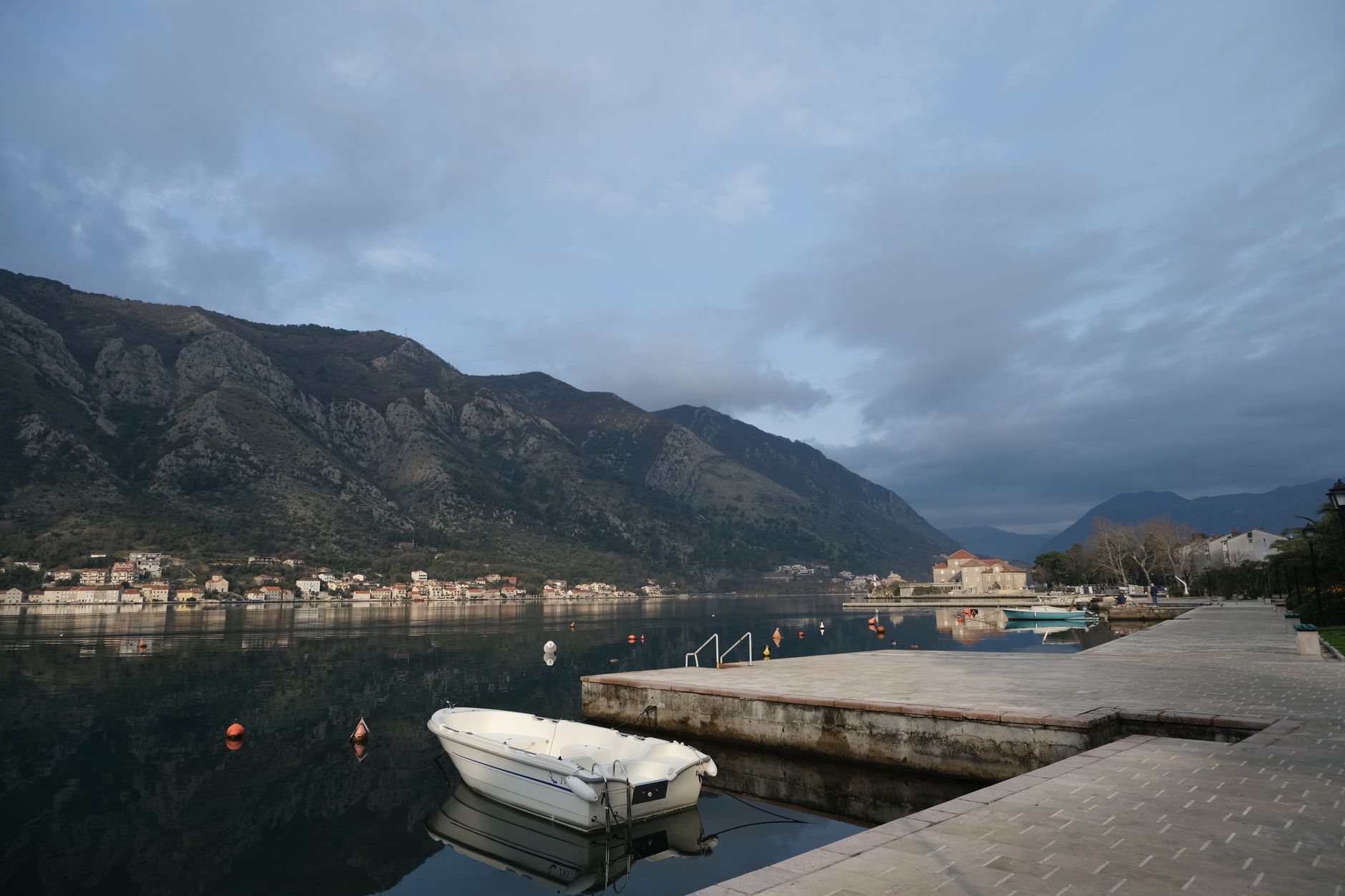
Peaceful morning view of Kotor Bay in Montenegro, showcasing calm waters and mountainous backdrop.
Photo by Muhammed Fatih Beki on Pexels · Pexels License

Explore the majestic Kotor fortress basking in sunlight, framed by mountains.
Photo by Muhammed Fatih Beki on Pexels · Pexels License

A breathtaking aerial view of Kotor's old town and marina in Montenegro under a clear blue sky.
Photo by Sebastien Devocelle on Pexels · Pexels License
Top Monuments in Montenegro
Practical Information
Visa And Entry
EU, UK, US, Canadian, and Australian passport holders can usually enter Montenegro visa-free for up to 90 days, but Montenegro is not in Schengen, so its clock runs separately. One rule catches people out: you must be registered within 24 hours of arrival if your hotel or host has not already done it.
Currency
Montenegro uses the euro even though it is not an EU member. Cards work in Kotor, Budva, Podgorica, and most hotels, but cash still matters for bus stations, beach kiosks, village cafes, and apartment hosts; restaurant tipping is usually a 5-10% gesture for good service, while taxi and cafe bills are often just rounded up.
Getting There
Most travelers fly into Podgorica or Tivat. Podgorica works better year-round and gives easier access to Podgorica, Bar, Kolašin, and the north, while Tivat is the coast airport for Kotor, Budva, Perast, and Herceg Novi and gets far busier in summer.
Getting Around
Buses are the backbone of public transport and work well along the coast between Herceg Novi, Kotor, Budva, Bar, and Ulcinj, with Cetinje and Podgorica also well connected. Trains are useful on the Bar-Podgorica-Kolašin-Bijelo Polje line, but a rental car saves serious time once you head into Durmitor, Prokletije, monastery country, or Lake Skadar villages.
Climate
Think in three zones, not one forecast: the coast is hot and dry in summer, Podgorica and the central basin get hotter than many visitors expect, and the northern mountains stay cooler with a real snow season. May, June, and September are the sweet spot for mixed trips; August is excellent for swimming but rough on prices, parking, and traffic around Kotor and Budva.
Connectivity
Mobile coverage is solid in towns and on main roads, and cafes, apartments, and hotels almost always offer Wi-Fi. Speeds are usually fine for remote work in Podgorica, Budva, and Kotor, but mountain roads, canyon areas, and some lake villages still produce dead zones, so download offline maps before long drives or hikes.
Safety
Montenegro is generally an easy, low-hassle country for independent travelers, with violent crime against visitors uncommon. The real risks are practical ones: summer traffic on the coast, narrow mountain roads without much margin, afternoon heat in Podgorica, and careless swimming or boat choices when the Adriatic turns rough.
Taste the Country
restaurantNjeguški pršut and cheese
Rakija arrives. Pršut follows at room temperature. Bread tears. Conversation slows.
restaurantKačamak
Cornmeal cooks with potato. Kajmak melts in. Spoons dip from one bowl after fieldwork, snow, or a long drive down from Žabljak.
restaurantCicvara
Breakfast, pan, cornmeal, kajmak. Stirring continues until fat shines. Family gathers and eats before words fully wake.
restaurantCrni rižot
Rice takes squid ink and cuttlefish. Lips blacken. Sea towns from Kotor to Budva treat the evidence as good manners.
restaurantJagnjetina ispod sača
Lamb goes under iron and embers for hours. Hands pull meat from bone. Sundays, baptisms, and stubborn reunions require it.
restaurantPriganice with honey
Dough hits oil. Honey pours. Coffee lands beside the plate and refuses haste.
restaurantCoffee and rakija ritual
Morning asks for coffee. Noon permits another coffee. Rakija opens visits, seals toasts, and tests your ability to say yes with dignity.
Tips for Visitors
Cash First
Bring some cash from day one. Cards are normal in Kotor, Budva, and Podgorica, but bus stations, bakery counters, beach bars, and private hosts often work faster with notes and coins.
Bus Beats Train
For most travelers, buses matter more than trains. Use them for coastal hops between Herceg Novi, Kotor, Budva, Bar, and Ulcinj; save rail for the scenic Bar-Podgorica-Kolašin line.
Book Summer Early
Reserve coast accommodation and rental cars well ahead for July and August, especially around Kotor, Perast, and Budva. Prices jump hardest in August, and the better small places disappear first.
Road Time Lies
A 70-kilometer drive in Montenegro can take much longer than it looks. Bay traffic, canyon roads, border checks, and slow overtaking all distort the timetable, so plan by daylight, not by optimistic map estimates.
Order Regionally
Eat by geography. Choose black risotto, grilled fish, and olive oil on the coast, then switch to kačamak, lamb under the sač, and Njeguški pršut once you move inland or up into the mountains.
Registration Check
Ask your hotel or host if they have registered you with the local tourism office. Most proper accommodation does this automatically, but if they do not, the obligation still lands on you.
Offline Maps
Download offline maps before heading toward Durmitor, Prokletije, or small Lake Skadar villages. Signal usually returns, but not always when you want it.
Explore Montenegro with a personal guide in your pocket
Your Personal Curator, in Your Pocket.
Audio guides for 1,100+ cities across 96 countries. History, stories, and local insight — offline ready.
Audiala App
Available on iOS & Android
Join 50k+ Curators
Frequently Asked
Do I need a visa for Montenegro if I have a US, UK, EU, Canadian, or Australian passport? add
Usually no for short trips. Travelers from those countries can generally enter Montenegro visa-free for up to 90 days, but you should still check the current visa regime before departure and make sure your accommodation registers you within 24 hours if they have not already done so.
Is Montenegro in the Schengen Area? add
No, Montenegro is not in Schengen. Time spent in Kotor, Budva, Podgorica, or anywhere else in Montenegro does not count against your Schengen 90/180 allowance, which makes it useful for longer Balkan or southern Europe trips.
Do I need a car in Montenegro? add
Not always, but it depends on where you are going. You can manage the coast and the main intercity routes by bus, yet a car becomes the better tool for Durmitor, Plav, monastery detours, Lake Skadar villages, and any trip built around viewpoints rather than bus stations.
Is Kotor or Budva a better base in Montenegro? add
Kotor is the better base for the Bay of Kotor, Perast, and a quieter evening atmosphere once day-trippers thin out. Budva works better if swimming, nightlife, and faster bus links south toward Bar and Ulcinj matter more than medieval mood.
Can you use euros in Montenegro? add
Yes, the euro is the everyday currency across Montenegro. That makes prices easy to read for European travelers, but small cash payments still smooth out buses, bakeries, market buys, and beach services.
Is Montenegro expensive in summer? add
Yes on the coast in July and August, less so inland. Kotor, Budva, Perast, and resort areas around the bay can price like southern Europe in peak season, while Podgorica, Bar, and much of the north remain more forgiving.
When is the best time to visit Montenegro for beaches and hiking? add
May, June, and September are the best compromise months for doing both. The sea is warm enough by early summer, mountain trails are more comfortable than in August heat, and you avoid the worst of the coastal traffic and price spikes.
Is the train in Montenegro worth taking? add
Yes, but for scenery and specific routes, not for everything. The Bar-Podgorica-Kolašin line is the useful one for travelers, while the coast between Herceg Novi, Kotor, Budva, and Ulcinj is a bus-and-road world.
Is Montenegro safe for solo travelers? add
Generally yes, including for solo women in the main travel circuits. The bigger issues are practical rather than criminal: aggressive summer driving, narrow roads, unreliable sidewalks, strong sun, and the temptation to underestimate mountain weather because the country looks small on a map.
Sources
- verified Ministry of Foreign Affairs of Montenegro - Visa Regime — Official entry and visa rules by nationality, including visa-free stays and document requirements.
- verified National Tourism Organisation of Montenegro — Official tourism information used for country logistics, climate framing, and national travel infrastructure context.
- verified MONSTAT - Tourism Statistics — Official arrivals and overnight-stay data used to judge seasonality and peak travel months.
- verified Airports of Montenegro — Official airport operator information for Podgorica and Tivat.
- verified UK Foreign, Commonwealth & Development Office - Montenegro Travel Advice — Practical government guidance covering entry rules, registration, safety, and transport conditions.
Last reviewed: