camping
The Gobi by Road
From Dalanzadgad, the south opens into dinosaur beds, saxaul scrub, and dunes that sing when the wind hits them right. This is desert travel measured in fuel stops, cold nights, and distance, not postcard mirages.
Mongolia is what happens when a country keeps hold of silence, distance, and memory at full scale. You don't just see the steppe here; you feel how small a road, a city, even an empire can be inside it.
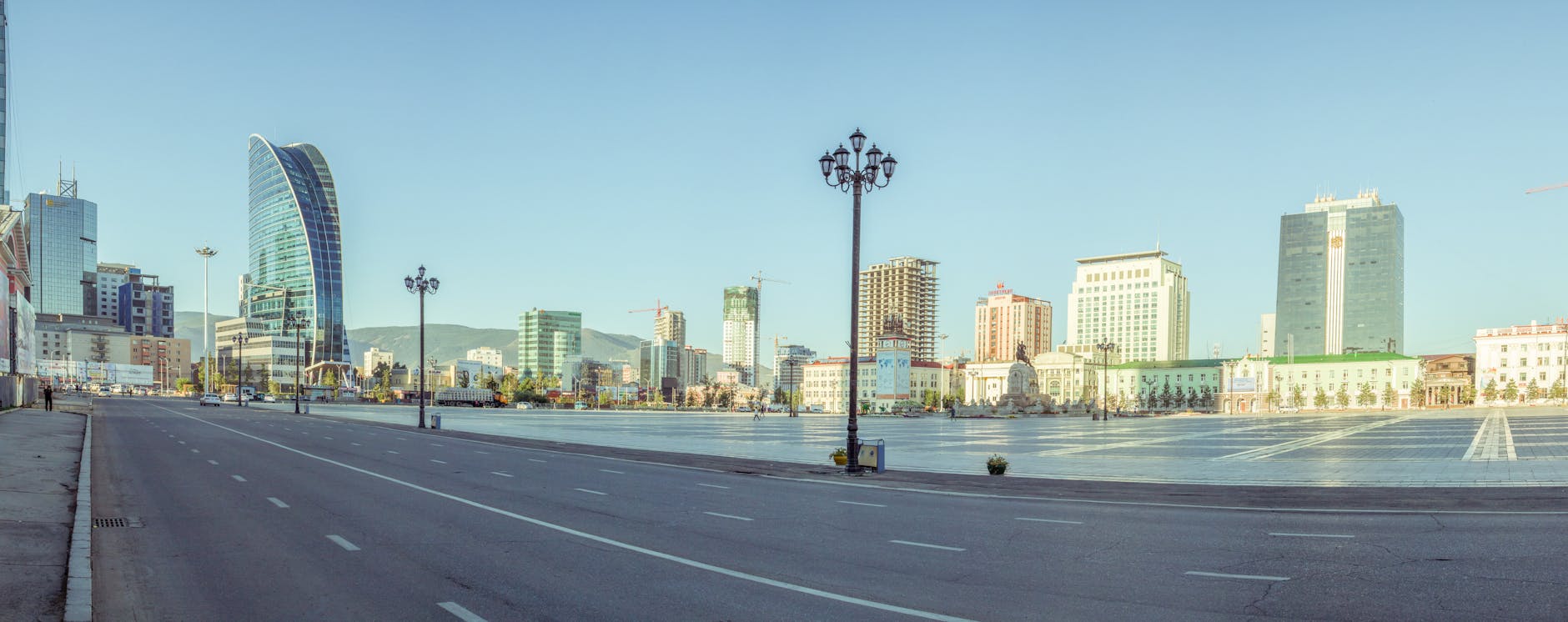 Mongolia
EntryMany nationalities get visa-free entry; passport should be valid for 6 months.
MMongolia travel rewards people who want space, silence, and history with dust on it: one country, 3.4 million people, and a steppe that can swallow the horizon.
Start in Ulaanbaatar, because Mongolia makes more sense once you've seen how the capital compresses half the country into one high-altitude basin. Soviet apartment blocks, Buddhist monasteries, cashmere shops, and traffic jams sit under a sky that can swing from hard blue to snow in a day. Then the road opens. South, Dalanzadgad leads into the Gobi, where Bayanzag's Flaming Cliffs gave the world dinosaur eggs and Khongoryn Els throws up sand dunes 300 meters high. West, Oelgii brings you into Kazakh eagle-hunter country. North, Khatgal is the usual launch point for Khovsgol Nuur, 136 kilometers of cold freshwater near the Russian border.
What sets Mongolia apart is scale. Distances that look modest on a map turn into full travel days, and that is part of the point. Karakorum and Kharkhorin anchor the Orkhon Valley, where the Mongol Empire once staged its power before Kublai Khan shifted the center south into China. Tsetserleg and Arvaikheer work well as gateways into the greener Khangai, with volcanic terrain, monasteries, and river valleys that feel almost implausible after the dry central steppe. Mörön gives access to reindeer country and lake routes in the north; Zuunmod sits just outside the capital near Khustai, where Przewalski's horses were brought back from the edge of disappearance.
The First Steppe Empires, c. 12000 BCE-120 CE
A wind-scoured cliff in the Mongolian Altai is where this story ought to begin: ibex cut into dark stone, hunters with bows, chariots, masks, bodies in motion. The petroglyphs near today's Ölgii are older than any palace in Europe and franker than most royal memoirs. One panel appears to show a man joined to a deer-goddess. Ritual, joke, shamanic vision? Nobody can prove it. That uncertainty is part of Mongolia's oldest elegance.
By 209 BCE, the steppe had found a ruler with colder instincts. Modu Chanyu, founder of the Xiongnu confederacy, tested his nobles by ordering them to shoot what he loved most: first his horse, then his favored wife, then his father. Those who hesitated died. Brutal, yes, but effective. What followed mattered far beyond the grasslands, because the newly unified Han empire discovered that the people it called barbarians could organize, negotiate, and extort with unnerving discipline.
Ce que l'on ignore souvent, c'est que China paid north. Silk, grain, and imperial brides moved toward the steppe under the heqin agreements because war cost more. One surviving letter attributed to Modu to the empress dowager Lü is almost insolent in its intimacy, a political message disguised as a marriage proposition. She was furious. She did not attack.
So the first great imperial lesson of Mongolia is not conquest but leverage of distance, speed, and nerve. Long before Karakorum existed, the steppe had already taught sedentary empires a humiliating truth: walls matter less when the horseman chooses the horizon. That lesson would return, with far greater force, in the 13th century.
Modu Chanyu emerges less as a mythic horse-lord than as a chilling political technician who understood that fear, once staged properly, can become statecraft.
According to Chinese annals, Modu proposed marriage to the widowed empress Lü herself, an insult so calculated that the court considered war and chose tribute instead.
The Mongol Century, 1206-1368
Picture a felt tent on the Onon steppe in 1206, horse sweat in the air, commanders assembled, white standards lifted. Temüjin was proclaimed Chinggis Khan, and the world tilted. He came from a childhood of hunger, kidnapping, and family betrayal, which may explain why he trusted loyalty proved in hardship more than noble birth. The empire he built moved with terrifying speed, but its heart was never marble or throne room. It was a camp that could vanish by dawn.
The family at the center of that empire was far less tidy than schoolbook legend suggests. The Secret History of the Mongols preserves the whisper nobody in a royal court likes to hear: Jochi, Chinggis Khan's eldest son, may not have been his biological child, because Börte had been abducted by the Merkit and returned pregnant. Chinggis acknowledged him. Others did not. Dynasties have cracked over less.
Then comes the death, in 1227, during the campaign against the Tangut kingdom. A fall from a horse, say some sources. A murdered bride with a hidden blade, says later tradition. Horses trampled the burial ground until it looked like ordinary earth, and the cortege reportedly killed those who crossed its path. Ce que l'on ignore souvent, c'est que the greatest conqueror in Eurasian history asked for no mausoleum, no pyramid of vanity, only disappearance. Mongolia still keeps that secret.
And after the conqueror? The women. Töregene Khatun governed after Ögedei's death and kept the empire from splintering while princes glared and plotted. Sorkhokhtani Beki, widow of Tolui, refused a politically useful remarriage and instead raised four sons who would shape half the known world. Karakorum, later the imperial capital in the Orkhon Valley near today's Kharkhorin, was not simply a camp grown large; it was the hinge between nomadic sovereignty and world administration. From that hinge came the Yuan in China, the Ilkhanate in Persia, and centuries of argument over who had the truest inheritance.
Sorkhokhtani Beki is the rare dynastic strategist who changed world history without ever needing the formal title at the top.
A surviving order issued in Töregene's name shows a widow ruling the largest contiguous empire on earth while Europe still imagined power almost exclusively in male hands.
Buddhas, Banners, and Foreign Thrones, 1368-1911
After the Yuan court lost China in 1368, Mongolia did not fall silent; it fractured, argued, remembered, and reinvented itself. Power shifted among khans, nobles, and confederations, with glory always close enough to invoke and too distant to restore whole. In the 16th century a new force entered the political bloodstream: Tibetan Buddhism. Altan Khan, who could raid like a steppe prince and think like a founder, invited the Tibetan hierarch Sonam Gyatso and helped give the title Dalai Lama to the line that still bears it.
That choice changed Mongolia's texture. Monasteries multiplied across the grasslands. Scriptures traveled where armies once had. By the 17th century the first Jebtsundamba Khutuktu, Zanabazar, had become not only a religious leader but one of the finest artists in Inner Asia. His bronze Tara figures are all poise and inward light, but his life was deeply political, caught between Mongol rivalries and the rising Qing empire.
Ce que l'on ignore souvent, c'est que Ulaanbaatar began as a moving monastery. Founded in 1639 as Örgöö, it shifted location more than a dozen times before settling permanently on the Tuul River. Imagine a capital that spent decades behaving like a court on migration: temples, craftsmen, herds, treasuries, and liturgy all on the move. Europe built capitals in stone to defy time. Mongolia built one in motion because motion was the older truth.
By the time Qing power tightened in the 18th century, Mongolian princes kept their banners and rank but not their full freedom. Trade, debt, and imperial oversight crept in with the patient logic of empire. Yet the monasteries held memory, and memory held identity. So when the Qing dynasty began to collapse in 1911, the road toward independence did not open from nowhere. It opened from centuries of compromise that had finally become intolerable.
Zanabazar looks, at first glance, like a serene sculptor-prince; in reality he spent a lifetime balancing devotion, diplomacy, and survival between stronger neighbors.
Ulaanbaatar was once a portable capital, a monastic city that packed up and moved across the steppe before finally choosing its present site.
Revolution, Republic, and Democratic Reckoning, 1911-present
In December 1911, with the Qing dynasty collapsing, Mongolia declared independence and raised the Eighth Jebtsundamba as Bogd Khan. The scene has the theater Stéphane Bern adores: robes, incense, exhausted nobles, a throne built from urgency as much as conviction. Yet this was no operetta. A weak monarchy stood between two hard neighbors and a century that had little patience for fragile courts.
The next act came fast. In 1921, with Russian Civil War forces and Chinese troops entangled on Mongolian soil, Damdin Sükhbaatar and Soviet-backed revolutionaries took Urga, the city now called Ulaanbaatar. Three years later the Mongolian People's Republic was proclaimed. The Bogd Khan was dead, the old order formally buried, and a new one marched in under red banners, schools, party cells, and a promise to make the steppe modern whether the steppe agreed or not.
The 1930s were the darkest chapter. Under Khorloogiin Choibalsan, often called Mongolia's Stalin, monasteries were destroyed, lamas executed in the tens of thousands, and fear entered households as a daily habit. Ce que l'on ignore souvent, c'est how much stone and silence in modern Mongolia are products of absence. When you stand at Gandan Monastery in Ulaanbaatar today, what you feel is not only survival. It is the scale of what did not survive.
Then came another reinvention. In the winter of 1989-1990, students and reformers gathered in Sükhbaatar Square demanding pluralism, and the one-party system cracked without the bloodbath many feared. Since then Mongolia has lived a difficult, fascinating double life: democratic and mineral-rich, proud of Chinggis Khan yet marked by Soviet memory, urbanizing fast while the herding world still defines the national imagination. From Ulaanbaatar's glass façades to Kharkhorin's ruins, from the dinosaur beds near Dalanzadgad to eagle-hunting country around Ölgii, the country keeps asking the same old question in a modern accent: how do you remain yourself between larger powers and larger appetites?
Khorloogiin Choibalsan was no marble ideologue but a man of insecurity and obedience whose rule left Mongolia modernized, terrorized, and permanently scarred.
When protesters fasted in Ulaanbaatar in 1990, the democratic turn hinged not on a battlefield but on a square, a hunger strike, and a leadership that finally chose not to fire.
Mongolian begins in the body. The vowels ask the jaw to open wider than French manners permit, then the consonants pull the sound back into the throat as if speech had to cross a plain before reaching another human being. In Ulaanbaatar, you hear Cyrillic on shop signs and the older vertical script on seals, monuments, bank façades, each line dropping downward like a private rain.
One word changes everything: nutag. It means homeland, if homeland had a smell, a slope, a family grave, a patch of grass remembered by horses. People speak of it with the seriousness others reserve for theology. A nation is an argument; nutag is a wound.
Then silence enters. A host can pour suutei tsai, set down the bowl, and say almost nothing for a long minute. No panic follows. The pause does the work. European conversation tries to prove intelligence by filling space; Mongolia grants dignity to the person who can leave space intact.
Mongolian food has the decency to tell the truth. Winter exists. Altitude exists. Hunger exists. A plate of buuz does not flirt with you; it hands you hot broth, mutton, onion, steam, and asks whether you intend to live.
The first lesson is practical and almost erotic in its precision: take the dumpling in your palm, bite a small hole, drink the juice, then eat. Impatience burns the lips. Khuushuur follows at Naadam stalls, blistered with oil, folded like a private letter from sheep fat to the human soul. Airag arrives in summer, sour and faintly alcoholic, the taste of a field deciding to ferment.
Outside the capital, meals still obey climate more than fashion. Khorkhog cooks with hot stones sealed among the meat; afterward those same stones pass from hand to hand, a form of theology I respect. In Ulaanbaatar, cafés now offer espresso and cheesecake, and yet the country keeps returning to broth, curd, tea, bone, flour. Civilizations reveal themselves by dessert. Mongolia reveals itself by stock.
Hospitality here is not charm. It is law. A guest enters the ger, and the room rearranges its gravity around that fact. Suutei tsai appears before biography, before business, before the reason for arrival. Refusal is possible in theory, as execution is possible in theory.
The gestures matter because they are small. Receive the bowl with the right hand, support the wrist or elbow with the left, and you have already said more than any speech could manage. Step carefully around the threshold. Do not point your feet at the stove. Do not lean on a support column as if architecture existed for your laziness. Etiquette in Mongolia is choreography for surviving together in a place where weather kills the careless.
What moved me most was the lack of fuss. No servile smiles. No theatrical warmth. You are fed because feeding the traveler confirms the host's standing in the universe. A country is a table set for strangers.
The morin khuur looks like a joke devised by a metaphysician: a fiddle crowned with a carved horse, played in a land where the horse is transport, dowry, companion, and afterlife. Then the bow touches the strings and the joke becomes impossible. The sound is raw, nasal, tender, a little windblown, as if someone had taught distance to sing.
Khoomii, the throat singing of western regions, performs an even stranger miracle. One body releases two notes at once: the drone below, the whistle above. Listening in Ölgii or farther west near the Altai, you understand that harmony is not always social; sometimes it is geological. Rock, air, chest cavity, mountain valley. The singer becomes a landscape without metaphor.
Even urban Mongolia keeps this old acoustic nerve. In Ulaanbaatar, concert halls stage long-song, folk ensembles, and modern acts that borrow from steppe timbre without smoothing it into polite world music. Good. Politeness would ruin it. Some sounds should keep their dust.
Mongolia believes in height. Eternal Blue Sky, old shamanic practice, mountain worship, Tibetan Buddhism, ovoo cairns wrapped in blue khadag scarves: none of these erased the others. They learned coexistence the way nomads learn weather, by accepting that one force never rules the whole horizon.
At Gandan Monastery in Ulaanbaatar, butter lamps flicker below gilded images while prayer wheels turn under practical hands that may later answer a phone, hail a taxi, or negotiate rent. Religion here is rarely posed as purity. It survives through use. Incense, murmured sutras, a quick clockwise circuit, then back into traffic.
An ovoo on a pass teaches the same lesson with more wind. Travelers stop, circle three times, add a stone, tie a scarf, pour a little milk or vodka if they have it. Call it offering, habit, insurance, respect. Human beings are sensible when the sky is this large.
Mongolia's founding book, The Secret History of the Mongols, has the indecency to be alive. It contains births, kidnappings, insults, loyalties, rivalries, maternal cunning, and the kind of family grievance from which empires are made. One reads it and remembers that history did not begin in marble halls; it began in felt tents with wet horses outside.
Later literature carries that same tension between immensity and intimacy. Galsan Tschinag writes from the edge of worlds, with exile in the sentence itself. Modern Mongolian poets and novelists often return to migration, socialist memory, ecological grief, and the insult of apartment life after generations of mobile space. A ger can be dismantled in under an hour. Trauma travels faster.
Even the capitals of the old empire remain a literary argument. Karakorum and Kharkhorin are not interchangeable names; they are layers of ruin, monastery, reconstruction, ambition, loss. The page in Mongolia behaves like the steppe: empty to the impatient, crowded to the trained eye.
From Dalanzadgad, the south opens into dinosaur beds, saxaul scrub, and dunes that sing when the wind hits them right. This is desert travel measured in fuel stops, cold nights, and distance, not postcard mirages.
Mongolia's Buddhist revival is visible in prayer halls, rebuilt monasteries, and ritual life that survived the 20th century by going quiet rather than disappearing. Ulaanbaatar, Kharkhorin, and Tsetserleg all carry that story differently.
Karakorum and the Orkhon Valley turn schoolbook history into physical ground: this was the administrative center of the Mongol Empire before the court moved south. The afterlife of that power still shapes how travelers read the country.
Few countries change this fast without crossing a border. South of Ulaanbaatar you get dry grasslands and desert light; around Khatgal and Mörön the air cools, forests thicken, and water starts to dominate the map.
Animals are not background detail here. Horses structure movement, status, and summer life across the steppe, while Oelgii's eagle-hunting traditions tie western Mongolia to a distinct Kazakh identity.
Mongolia rewards anyone who notices weather and light. Afternoon storms over the steppe, blue-hour smoke above a ger camp, and the raw width of the horizon make it one of Asia's strongest photography trips.
12 cities — start with the ones we'd send you to first.
Nearly half the country lives here, in a city where Soviet brutalist blocks back up against ger districts and the National Museum holds a 13th-century saddle that once moved faster than any army on earth.
Ögedei Khan's 13th-century imperial capital is mostly rubble now, but the four stone turtles that once marked its corners still squat in the grass outside Erdene Zuu monastery's whitewashed walls.
The modern town beside the ruins of Karakorum is where you eat khuushuur from a roadside stall and realize the greatest empire in history left almost no skyline.
Gateway to Khövsgöl Nuur, this aimag capital is where the paved road ends and the 136-kilometer lake — second deepest freshwater body in Asia — begins.
The westernmost city in Mongolia is majority Kazakh, its bazaar stacked with eagle-hunting gear and embroidered felt, closer culturally to Almaty than to Ulaanbaatar.
The capital of South Gobi aimag is the staging post for the Flaming Cliffs at Bayanzag, where Roy Chapman Andrews pulled dinosaur eggs from red sandstone in 1923 and rewrote paleontology.
A quiet Övörkhangai provincial center that most travelers pass through without stopping — which is exactly why its unrestored monastery and local market show you Mongolian town life without a single tourist lens pointed
Arkhangai's capital wraps around a hillside monastery-turned-museum where butter lamps still burn in rooms that smell of juniper and old lacquer, and the surrounding valley is green enough to make you question everything
Named after Mongolia's own Stalin, this eastern city sits at the edge of the great Mongolian steppe where gazelle herds of a million animals still move across grassland that has no fence for 600 kilometers.
Ulaanbaatar is where Mongolia stops being an idea and turns into a city with traffic, Soviet facades, glass towers, monastery drums, and very decent coffee. The valley south toward Zuunmod gives you the fastest escape hatch from the capital: Buddhist sites, mountain air, and the first reminder that half the country lives just beyond the ring roads of the other half.
Kharkhorin matters because this is the road to Mongolia's imperial memory. The ground around Kharkhorin and Karakorum still carries the weight of the Mongol Empire, but the mood is not grandiose; it is wind, monastery walls, and a river valley that stayed useful long after the court moved on.
The Khangai feels softer than the Gobi and less theatrical than the far west, which is exactly why many travelers end up liking it more. Around Tsetserleg the country folds into wooded ridges, volcanic fields, hot springs, and pastureland where the distances are still large but the land has more shade, more water, and more room to linger.
Khatgal is the practical door to Khövsgöl Nuur, and the lake earns the fuss. This is Mongolia at its greenest and clearest: pine forest, cold freshwater, horse trails, and evenings that smell less of dust than of wood smoke and wet earth. Mörön is the working supply town, not the postcard, but you will likely pass through it.
Dalanzadgad is not pretty in a polished way, but it is the right launch point for the country's hardest light and biggest geology. From here you reach Yolyn Am's ice-cold gorge, the red fossil beds of Bayanzag, and dune systems that sound theatrical because they are. Distances are punishing, which is why logistics matter more here than almost anywhere else in Mongolia.
Ölgii gives Mongolia a different vocabulary: Kazakh voices, eagle-hunting families, mosque domes, and mountain weather that changes its mind by the hour. This is the region for travelers who care as much about people as panoramas, because the culture is as strong a draw as the snow lines of the Altai.
From Xiongnu horsemen to democratic Ulaanbaatar, the country's history is a sequence of sharp reinventions rather than a single uninterrupted line.
A steppe confederation forms under Modu Chanyu, creating the first large imperial power centered in what is now Mongolia. Han China soon discovers that tribute can be cheaper than war.
Silk, grain, and royal marriages move north under agreements meant to buy peace. The arrangement reverses the usual civilizational story: the empire in the fields pays the empire on horseback.
A new nomadic power dominates the eastern steppe and helps shape the title of khagan used by later rulers. Steppe politics remain mobile, unstable, and deeply connected to events far beyond Mongolia.
The Göktürks overthrow the Rouran and redraw the political map of Inner Asia. Mongolia remains the cockpit of empires long before the Mongol name rules the continent.
At a great assembly, the tribal leader Temüjin is proclaimed Chinggis Khan. A confederation of clans becomes a state with world-changing ambition.
The conqueror dies during the campaign against the Tangut kingdom. His burial place is hidden so carefully that it remains one of history's most persistent mysteries.
In the Orkhon Valley, near today's Kharkhorin, the Mongols establish Karakorum as a political center. Artisans, envoys, clerics, and merchants gather in a city that links steppe power to global administration.
After Ögedei Khan dies, his widow Töregene governs the empire from Mongolia. Her regency proves how central elite women were to Mongol statecraft.
A succession struggle ends with Kublai's rise, pulling the empire's center of gravity toward China. Mongolia remains symbolically essential even as the imperial court becomes more sedentary.
The Mongol Yuan dynasty falls to the Ming, and the court retreats north. The imperial dream survives in memory, title, and rivalry, but no longer rules China.
This encounter helps establish the title Dalai Lama and anchors Tibetan Buddhism in Mongol politics. Religion becomes one of the great organizing forces of later Mongolian life.
A mobile monastic center is established for the Jebtsundamba Khutuktu. It will wander across the steppe before becoming the permanent capital city.
Facing military pressure and internal weakness, Khalkha princes accept Qing overlordship. Mongolia keeps aristocratic forms, but sovereignty narrows sharply.
As the Qing dynasty collapses, Mongolia proclaims independence and enthrones the Bogd Khan. The old sacred order returns for a final, fragile act.
Damdin Sükhbaatar and Soviet-backed forces take the capital, opening the road to a new political system. Mongolia's fate is now tied closely to revolutionary Russia.
After the Bogd Khan dies, monarchy ends and a socialist republic is founded. Ulaanbaatar becomes the capital of a state being rebuilt in the Soviet image.
Thousands of monks are executed, monasteries destroyed, and religious life broken by force. Modern Mongolia carries this wound in both memory and architecture.
At the end of World War II, a referendum and diplomatic shifts reinforce Mongolia's path apart from China. External recognition catches up, unevenly, with political reality.
The republic enters the UN after years of Cold War obstruction. This is more than protocol: it confirms Mongolia as a sovereign actor on the global stage.
Protests and hunger strikes in Sükhbaatar Square push the one-party system to yield. Mongolia begins its democratic era without the violent rupture many had feared.
A new constitution establishes parliamentary democracy, civil liberties, and a market transition. The country enters a difficult freedom: more open, less protected, and unmistakably changed.
The rock art of western Mongolia receives international recognition, reminding the world that Mongolia's story did not begin with Chinggis Khan. Its first archives were carved in stone.
The First Steppe Empires
Modu Chanyu emerges less as a mythic horse-lord than as a chilling political technician who understood that fear, once staged properly, can become statecraft.
A wind-scoured cliff in the Mongolian Altai is where this story ought to begin: ibex cut into dark stone, hunters with bows, chariots, masks, bodies in motion. The petroglyphs near today's Ölgii are older than any palace in Europe and franker than most royal memoirs. One panel appears to show a man joined to a deer-goddess. Ritual, joke, shamanic vision? Nobody can prove it. That uncertainty is part of Mongolia's oldest elegance.
By 209 BCE, the steppe had found a ruler with colder instincts. Modu Chanyu, founder of the Xiongnu confederacy, tested his nobles by ordering them to shoot what he loved most: first his horse, then his favored wife, then his father. Those who hesitated died. Brutal, yes, but effective. What followed mattered far beyond the grasslands, because the newly unified Han empire discovered that the people it called barbarians could organize, negotiate, and extort with unnerving discipline.
Ce que l'on ignore souvent, c'est que China paid north. Silk, grain, and imperial brides moved toward the steppe under the heqin agreements because war cost more. One surviving letter attributed to Modu to the empress dowager Lü is almost insolent in its intimacy, a political message disguised as a marriage proposition. She was furious. She did not attack.
So the first great imperial lesson of Mongolia is not conquest but leverage of distance, speed, and nerve. Long before Karakorum existed, the steppe had already taught sedentary empires a humiliating truth: walls matter less when the horseman chooses the horizon. That lesson would return, with far greater force, in the 13th century.
According to Chinese annals, Modu proposed marriage to the widowed empress Lü herself, an insult so calculated that the court considered war and chose tribute instead.
The Mongol Century
Sorkhokhtani Beki is the rare dynastic strategist who changed world history without ever needing the formal title at the top.
Picture a felt tent on the Onon steppe in 1206, horse sweat in the air, commanders assembled, white standards lifted. Temüjin was proclaimed Chinggis Khan, and the world tilted. He came from a childhood of hunger, kidnapping, and family betrayal, which may explain why he trusted loyalty proved in hardship more than noble birth. The empire he built moved with terrifying speed, but its heart was never marble or throne room. It was a camp that could vanish by dawn.
The family at the center of that empire was far less tidy than schoolbook legend suggests. The Secret History of the Mongols preserves the whisper nobody in a royal court likes to hear: Jochi, Chinggis Khan's eldest son, may not have been his biological child, because Börte had been abducted by the Merkit and returned pregnant. Chinggis acknowledged him. Others did not. Dynasties have cracked over less.
Then comes the death, in 1227, during the campaign against the Tangut kingdom. A fall from a horse, say some sources. A murdered bride with a hidden blade, says later tradition. Horses trampled the burial ground until it looked like ordinary earth, and the cortege reportedly killed those who crossed its path. Ce que l'on ignore souvent, c'est que the greatest conqueror in Eurasian history asked for no mausoleum, no pyramid of vanity, only disappearance. Mongolia still keeps that secret.
And after the conqueror? The women. Töregene Khatun governed after Ögedei's death and kept the empire from splintering while princes glared and plotted. Sorkhokhtani Beki, widow of Tolui, refused a politically useful remarriage and instead raised four sons who would shape half the known world. Karakorum, later the imperial capital in the Orkhon Valley near today's Kharkhorin, was not simply a camp grown large; it was the hinge between nomadic sovereignty and world administration. From that hinge came the Yuan in China, the Ilkhanate in Persia, and centuries of argument over who had the truest inheritance.
A surviving order issued in Töregene's name shows a widow ruling the largest contiguous empire on earth while Europe still imagined power almost exclusively in male hands.
Buddhas, Banners, and Foreign Thrones
Zanabazar looks, at first glance, like a serene sculptor-prince; in reality he spent a lifetime balancing devotion, diplomacy, and survival between stronger neighbors.
After the Yuan court lost China in 1368, Mongolia did not fall silent; it fractured, argued, remembered, and reinvented itself. Power shifted among khans, nobles, and confederations, with glory always close enough to invoke and too distant to restore whole. In the 16th century a new force entered the political bloodstream: Tibetan Buddhism. Altan Khan, who could raid like a steppe prince and think like a founder, invited the Tibetan hierarch Sonam Gyatso and helped give the title Dalai Lama to the line that still bears it.
That choice changed Mongolia's texture. Monasteries multiplied across the grasslands. Scriptures traveled where armies once had. By the 17th century the first Jebtsundamba Khutuktu, Zanabazar, had become not only a religious leader but one of the finest artists in Inner Asia. His bronze Tara figures are all poise and inward light, but his life was deeply political, caught between Mongol rivalries and the rising Qing empire.
Ce que l'on ignore souvent, c'est que Ulaanbaatar began as a moving monastery. Founded in 1639 as Örgöö, it shifted location more than a dozen times before settling permanently on the Tuul River. Imagine a capital that spent decades behaving like a court on migration: temples, craftsmen, herds, treasuries, and liturgy all on the move. Europe built capitals in stone to defy time. Mongolia built one in motion because motion was the older truth.
By the time Qing power tightened in the 18th century, Mongolian princes kept their banners and rank but not their full freedom. Trade, debt, and imperial oversight crept in with the patient logic of empire. Yet the monasteries held memory, and memory held identity. So when the Qing dynasty began to collapse in 1911, the road toward independence did not open from nowhere. It opened from centuries of compromise that had finally become intolerable.
Ulaanbaatar was once a portable capital, a monastic city that packed up and moved across the steppe before finally choosing its present site.
Revolution, Republic, and Democratic Reckoning
Khorloogiin Choibalsan was no marble ideologue but a man of insecurity and obedience whose rule left Mongolia modernized, terrorized, and permanently scarred.
In December 1911, with the Qing dynasty collapsing, Mongolia declared independence and raised the Eighth Jebtsundamba as Bogd Khan. The scene has the theater Stéphane Bern adores: robes, incense, exhausted nobles, a throne built from urgency as much as conviction. Yet this was no operetta. A weak monarchy stood between two hard neighbors and a century that had little patience for fragile courts.
The next act came fast. In 1921, with Russian Civil War forces and Chinese troops entangled on Mongolian soil, Damdin Sükhbaatar and Soviet-backed revolutionaries took Urga, the city now called Ulaanbaatar. Three years later the Mongolian People's Republic was proclaimed. The Bogd Khan was dead, the old order formally buried, and a new one marched in under red banners, schools, party cells, and a promise to make the steppe modern whether the steppe agreed or not.
The 1930s were the darkest chapter. Under Khorloogiin Choibalsan, often called Mongolia's Stalin, monasteries were destroyed, lamas executed in the tens of thousands, and fear entered households as a daily habit. Ce que l'on ignore souvent, c'est how much stone and silence in modern Mongolia are products of absence. When you stand at Gandan Monastery in Ulaanbaatar today, what you feel is not only survival. It is the scale of what did not survive.
Then came another reinvention. In the winter of 1989-1990, students and reformers gathered in Sükhbaatar Square demanding pluralism, and the one-party system cracked without the bloodbath many feared. Since then Mongolia has lived a difficult, fascinating double life: democratic and mineral-rich, proud of Chinggis Khan yet marked by Soviet memory, urbanizing fast while the herding world still defines the national imagination. From Ulaanbaatar's glass façades to Kharkhorin's ruins, from the dinosaur beds near Dalanzadgad to eagle-hunting country around Ölgii, the country keeps asking the same old question in a modern accent: how do you remain yourself between larger powers and larger appetites?
When protesters fasted in Ulaanbaatar in 1990, the democratic turn hinged not on a battlefield but on a square, a hunger strike, and a leadership that finally chose not to fire.
Mongolian begins in the body. The vowels ask the jaw to open wider than French manners permit, then the consonants pull the sound back into the throat as if speech had to cross a plain before reaching another human being. In Ulaanbaatar, you hear Cyrillic on shop signs and the older vertical script on seals, monuments, bank façades, each line dropping downward like a private rain.
One word changes everything: nutag. It means homeland, if homeland had a smell, a slope, a family grave, a patch of grass remembered by horses. People speak of it with the seriousness others reserve for theology. A nation is an argument; nutag is a wound.
Then silence enters. A host can pour suutei tsai, set down the bowl, and say almost nothing for a long minute. No panic follows. The pause does the work. European conversation tries to prove intelligence by filling space; Mongolia grants dignity to the person who can leave space intact.
Mongolian food has the decency to tell the truth. Winter exists. Altitude exists. Hunger exists. A plate of buuz does not flirt with you; it hands you hot broth, mutton, onion, steam, and asks whether you intend to live.
The first lesson is practical and almost erotic in its precision: take the dumpling in your palm, bite a small hole, drink the juice, then eat. Impatience burns the lips. Khuushuur follows at Naadam stalls, blistered with oil, folded like a private letter from sheep fat to the human soul. Airag arrives in summer, sour and faintly alcoholic, the taste of a field deciding to ferment.
Outside the capital, meals still obey climate more than fashion. Khorkhog cooks with hot stones sealed among the meat; afterward those same stones pass from hand to hand, a form of theology I respect. In Ulaanbaatar, cafés now offer espresso and cheesecake, and yet the country keeps returning to broth, curd, tea, bone, flour. Civilizations reveal themselves by dessert. Mongolia reveals itself by stock.
Hospitality here is not charm. It is law. A guest enters the ger, and the room rearranges its gravity around that fact. Suutei tsai appears before biography, before business, before the reason for arrival. Refusal is possible in theory, as execution is possible in theory.
The gestures matter because they are small. Receive the bowl with the right hand, support the wrist or elbow with the left, and you have already said more than any speech could manage. Step carefully around the threshold. Do not point your feet at the stove. Do not lean on a support column as if architecture existed for your laziness. Etiquette in Mongolia is choreography for surviving together in a place where weather kills the careless.
What moved me most was the lack of fuss. No servile smiles. No theatrical warmth. You are fed because feeding the traveler confirms the host's standing in the universe. A country is a table set for strangers.
The morin khuur looks like a joke devised by a metaphysician: a fiddle crowned with a carved horse, played in a land where the horse is transport, dowry, companion, and afterlife. Then the bow touches the strings and the joke becomes impossible. The sound is raw, nasal, tender, a little windblown, as if someone had taught distance to sing.
Khoomii, the throat singing of western regions, performs an even stranger miracle. One body releases two notes at once: the drone below, the whistle above. Listening in Ölgii or farther west near the Altai, you understand that harmony is not always social; sometimes it is geological. Rock, air, chest cavity, mountain valley. The singer becomes a landscape without metaphor.
Even urban Mongolia keeps this old acoustic nerve. In Ulaanbaatar, concert halls stage long-song, folk ensembles, and modern acts that borrow from steppe timbre without smoothing it into polite world music. Good. Politeness would ruin it. Some sounds should keep their dust.
Mongolia believes in height. Eternal Blue Sky, old shamanic practice, mountain worship, Tibetan Buddhism, ovoo cairns wrapped in blue khadag scarves: none of these erased the others. They learned coexistence the way nomads learn weather, by accepting that one force never rules the whole horizon.
At Gandan Monastery in Ulaanbaatar, butter lamps flicker below gilded images while prayer wheels turn under practical hands that may later answer a phone, hail a taxi, or negotiate rent. Religion here is rarely posed as purity. It survives through use. Incense, murmured sutras, a quick clockwise circuit, then back into traffic.
An ovoo on a pass teaches the same lesson with more wind. Travelers stop, circle three times, add a stone, tie a scarf, pour a little milk or vodka if they have it. Call it offering, habit, insurance, respect. Human beings are sensible when the sky is this large.
Mongolia's founding book, The Secret History of the Mongols, has the indecency to be alive. It contains births, kidnappings, insults, loyalties, rivalries, maternal cunning, and the kind of family grievance from which empires are made. One reads it and remembers that history did not begin in marble halls; it began in felt tents with wet horses outside.
Later literature carries that same tension between immensity and intimacy. Galsan Tschinag writes from the edge of worlds, with exile in the sentence itself. Modern Mongolian poets and novelists often return to migration, socialist memory, ecological grief, and the insult of apartment life after generations of mobile space. A ger can be dismantled in under an hour. Trauma travels faster.
Even the capitals of the old empire remain a literary argument. Karakorum and Kharkhorin are not interchangeable names; they are layers of ruin, monastery, reconstruction, ambition, loss. The page in Mongolia behaves like the steppe: empty to the impatient, crowded to the trained eye.
He began as Temüjin, a boy abandoned to hardship, and ended as the ruler who made Mongolia the axis of Eurasia. The legend is immense, but the more revealing detail is private: he never fully escaped the family betrayals of his youth, and those old wounds shaped the empire's fiercest succession quarrels.
History often leaves her in the doorway while men ride through it. That is absurd. Her abduction by the Merkit and return to Temüjin set in motion the dynastic ambiguity around Jochi, which shadowed Mongol politics for generations.
Widowed in a court full of suspicious princes, she held the empire together from 1241 to 1246 with appointments, patronage, and formidable nerve. Hostile chroniclers tried to reduce her to intrigue; that is what men often call female government when it works.
She declined remarriage, kept her political footing, and invested in her sons with the patience of someone who understood history as a long game. Persian chroniclers admired her mind for good reason: four of the 13th century's most consequential rulers came out of her household.
He is often remembered as the man of palaces and paper bureaucracy, but he remained a Mongol ruler shaped by steppe legitimacy. His career shows the unresolved tension that still fascinates historians: how far can a nomadic empire settle before it becomes something else?
He raided, negotiated, and thought theatrically, which is why he matters. By meeting Sonam Gyatso in 1578 and backing Tibetan Buddhism, he gave Mongolia a spiritual grammar that outlasted many khans with stronger cavalry.
He could cast a bronze figure with extraordinary delicacy and still spend his life in the rough machinery of politics. His art is serene. His biography is not. Between rival Mongol factions and the Qing court, every gesture of sanctity carried a diplomatic cost.
The last great sacral sovereign of Mongolia sat on a throne already threatened by modern geopolitics. His palace in Ulaanbaatar still conveys that twilight mood: ritual splendor, private fragility, and the unmistakable sense that the old world knew its time was short.
He died young enough to become a monument before age could complicate the legend. Yet behind the bronze horseman was a man improvising under impossible pressure, caught between Mongolian nationalism and Soviet power that would soon grow far larger than the revolution's original promises.
He helped build the modern state and helped terrorize it. The roads, ministries, and army reforms are real; so are the purges, executions, and shattered monasteries. Mongolia still lives with both halves of his inheritance.
This is the short break that makes sense if you have one long weekend and no appetite for heroic road hours. Base yourself in Ulaanbaatar, then head to Zuunmod for the Bogd Khan mountain edge and a quick taste of the open country without committing to a full expedition.
This central route moves at the right pace for Mongolia: long horizons, one proper historic anchor, then greener country. Start in Arvaikheer, continue to Kharkhorin for the old imperial ground around Karakorum and Erdene Zuu, and finish in Tsetserleg where the steppe starts climbing into forested hills.
Ten days gives you enough time to leave the capital properly and feel the country change under the wheels. Begin in Ulaanbaatar, fly or drive to Dalanzadgad for the South Gobi's cliffs, dunes, and cold canyon floors, then swing west toward Bayankhongor if you want a rougher, less packaged look at south-central Mongolia.
This is a two-region trip built around domestic flights, not romance about endless driving. Start in Ölgii for Kazakh culture and eagle-hunter country, connect through Ulaanbaatar, then continue north via Mörön to Khatgal and the shore of Khövsgöl Nuur, where Mongolia swaps dust and stone for pine, lake light, and cold air.
Palm. Small bite. Broth first. Lunar New Year tables. Family assembly lines. Steam and laughter.
Fried half-moons. Naadam stalls. Fingers, paper napkins, standing crowds. Hot oil, onion, mutton.
Mutton and hot stones in a sealed metal can. Long summer meals. Friends, drivers, hosts. Stones passed hand to hand after eating.
Shared bowl. Summer only. Mare's milk, fermentation, sour foam. Guests drink. Hosts refill.
Salted milk tea before talk. Morning, noon, arrival, departure. Right hand offers. Left hand supports.
Dried curd in a wooden bowl. Ger hospitality. Children gnaw. Adults soften pieces in tea.
Hand-pulled noodles, mutton, carrot, potato, cabbage. Weeknight comfort. Families, canteens, road stops. Forks or chopsticks.

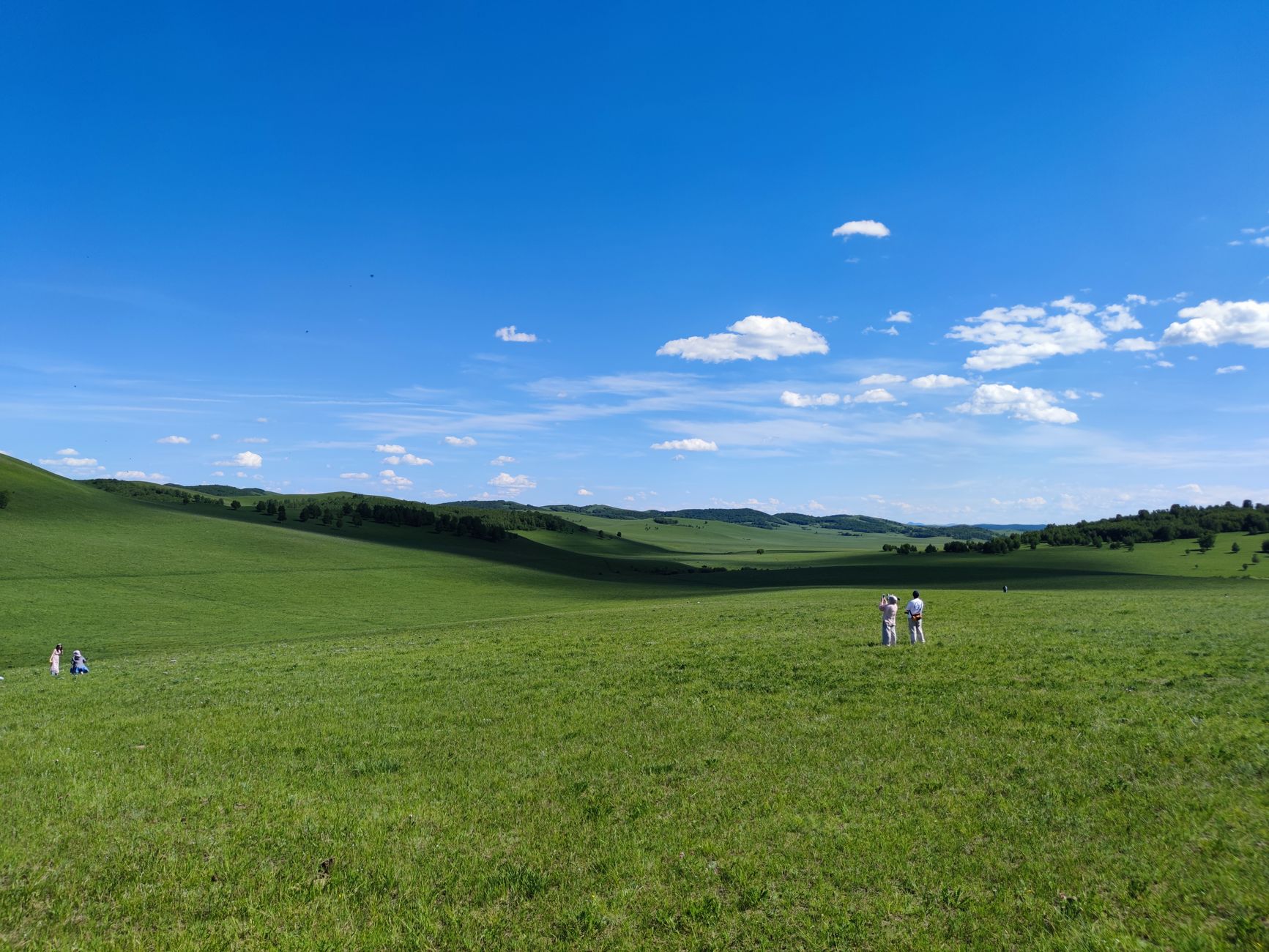
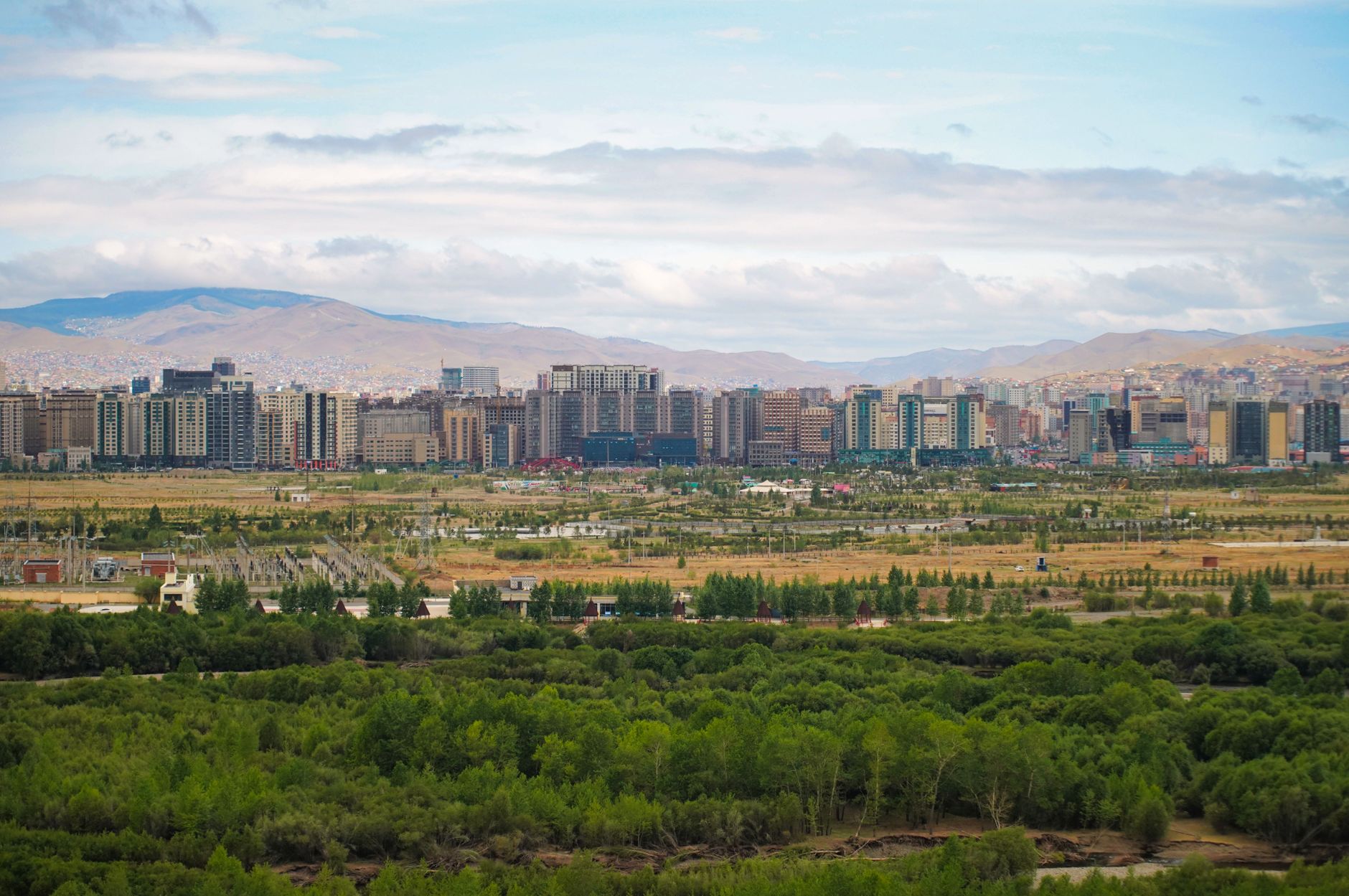

Mongolia's entry rules are generous for many passports, but they are not one-size-fits-all. In 2026, the Immigration Agency says nationals of 34 countries, including the UK, Australia, New Zealand, and much of Europe, can enter visa-free for 30 days, while other travelers may need an e-visa; check the official list before you book. Your passport should be valid for at least 6 months after arrival, and your hotel or host must register you within 48 hours.
The local currency is the Mongolian tugrik, written as MNT or ₮. Cards work well in Ulaanbaatar, especially in hotels, supermarkets, and mid-range restaurants, but cash still runs the show once you head toward the Gobi, the Altai, or smaller aimag centers. Tipping is light by North American standards: nothing at simple local places, around 5% to 10% in smarter Ulaanbaatar restaurants if service was good.
Most travelers arrive through Chinggis Khaan International Airport outside Ulaanbaatar. Mongolia also sits on the Trans-Mongolian rail line, so you can come overland from Russia or China, though rail crossings take patience and the China side adds a gauge-change delay. If you are building a longer trip, Ulaanbaatar is the only sensible international gateway.
Inside Ulaanbaatar, buses and trolleybuses are cheap and useful, but you need a U Money card because cash is not accepted on board. For longer distances, domestic flights save days on routes to places like Dalanzadgad and Ölgii, while the train works only on a narrow spine of the country. Outside the capital, roads thin out fast, fuel stops get sparse, and a driver with a 4x4 often buys back more time than the fare suggests.
Mongolia has one of the harshest continental climates on the map. Summer, from June to August, usually brings 15C to 30C and the easiest travel conditions, while winter can drop to -30C or lower with road closures, frozen plumbing, and air that hurts your face. Shoulder months, especially May and September, suit travelers who want lower prices and fewer people without testing their lungs.
Buying a local SIM is easy at the airport and in Ulaanbaatar shopping centers; Mobicom, Unitel, and Skytel are the names you will see most often. Hotel and cafe Wi-Fi is common in Ulaanbaatar, Kharkhorin, and other larger stops, but coverage fades once you are deep in the steppe or driving between ger camps. Download maps, cash-transfer screenshots, and tickets before you leave town.
Mongolia is usually a low-crime destination for travelers, but the real risks are distance, weather, driving, and getting stranded with no signal. Emergency numbers are 101 for fire, 102 for police, and 103 for ambulance. Border zones can be restricted, sometimes as much as 100 kilometers inland, so do not improvise near Russia or China without checking permit rules first.
Withdraw or exchange enough tugrik in Ulaanbaatar before you leave for Kharkhorin, Dalanzadgad, or Ölgii. Rural ATMs are patchy, card machines fail, and the expensive mistake is discovering that your driver only takes cash after six hours on the road.
Naadam week in mid-July and the Golden Eagle Festival in early October push up prices fast. Lock in flights, drivers, and ger camps before you chase restaurant reservations; transport sells out first.
The train is good value on the Trans-Mongolian spine, especially if you like slow travel and do not mind giving up speed for atmosphere. It is a bad tool for reaching most national-park circuits, where a driver or flight saves a full day.
A ger camp room can look fine online and still be miserable in May or September if the stove setup is weak. Before you confirm, ask whether the price includes heating, hot showers at fixed hours, and power after dark.
When you are offered suutei tsai, accept it with your right hand supported by the left if you can. You do not need to empty every bowl, but refusing the first gesture of hospitality lands badly in a country where guesthood still means something.
Mobile data in Ulaanbaatar is easy; between Bayankhongor and the next fuel stop, less so. Save maps, translation screenshots, hotel addresses, and your passport copy to your phone before every long transfer.
On the map, Mongolia invites fantasy driving. On the ground, 250 kilometers can mean dust tracks, livestock on the road, and no reliable fuel for hours, so keep water, layers, and a charger in the car even for what looks like a simple transfer.
Explore Mongolia with a personal guide in your pocket
Audio guides for 1,100+ cities across 96 countries. History, stories, and local insight — offline ready.

Maybe, but not always. Mongolia waives visas for some passports and lets many others apply online through the official e-visa system, so the smart move is to check the Immigration Agency's current list before you book a flight; entry rules are generous, but they change by nationality and travel purpose.
Ulaanbaatar can be moderate; remote Mongolia can get expensive fast. You can travel the capital and a few nearby stops on a modest budget, but once you add a driver, fuel, flights, or ger-camp logistics for the Gobi or the Altai, daily costs jump sharply.
Yes, in Ulaanbaatar and on a few clear routes, but not every part of the country rewards independence equally. City travel is simple enough, trains are manageable, and buses exist, yet the best desert, mountain, and lake itineraries usually work better with a driver because roads, signage, and fuel stops are unreliable.
June to September is the easiest window for most travelers. Roads are more workable, ger camps are open, lake and steppe regions are green, and you avoid the brutal cold that turns winter into a specialist trip rather than a general holiday.
Seven days is the minimum for a satisfying first trip, and 10 to 14 days is better. Mongolia is huge, road travel is slow, and the places people dream about, from Khövsgöl Nuur to the South Gobi, sit far enough apart that rushing them defeats the point.
Yes in Ulaanbaatar, not reliably once you are far from it. Hotels, supermarkets, and many restaurants in the capital take cards, but cash is still the safer bet in Kharkhorin, Dalanzadgad, smaller towns, roadside stops, and almost all rural camps.
It is decent in Ulaanbaatar and inconsistent almost everywhere else. Hotels and cafes usually have usable connections in the capital and larger towns, but once you are out in the steppe, treat signal as a bonus rather than an entitlement.
Yes, if you want the journey as much as the destination. It is slow, practical on only a slice of the country, and not the fastest way to reach Mongolia's headline landscapes, but the line into and out of Ulaanbaatar still gives you one of Asia's great overland arrivals.
Last reviewed