Monaco-Ville
Monaco Updated Apr 2026
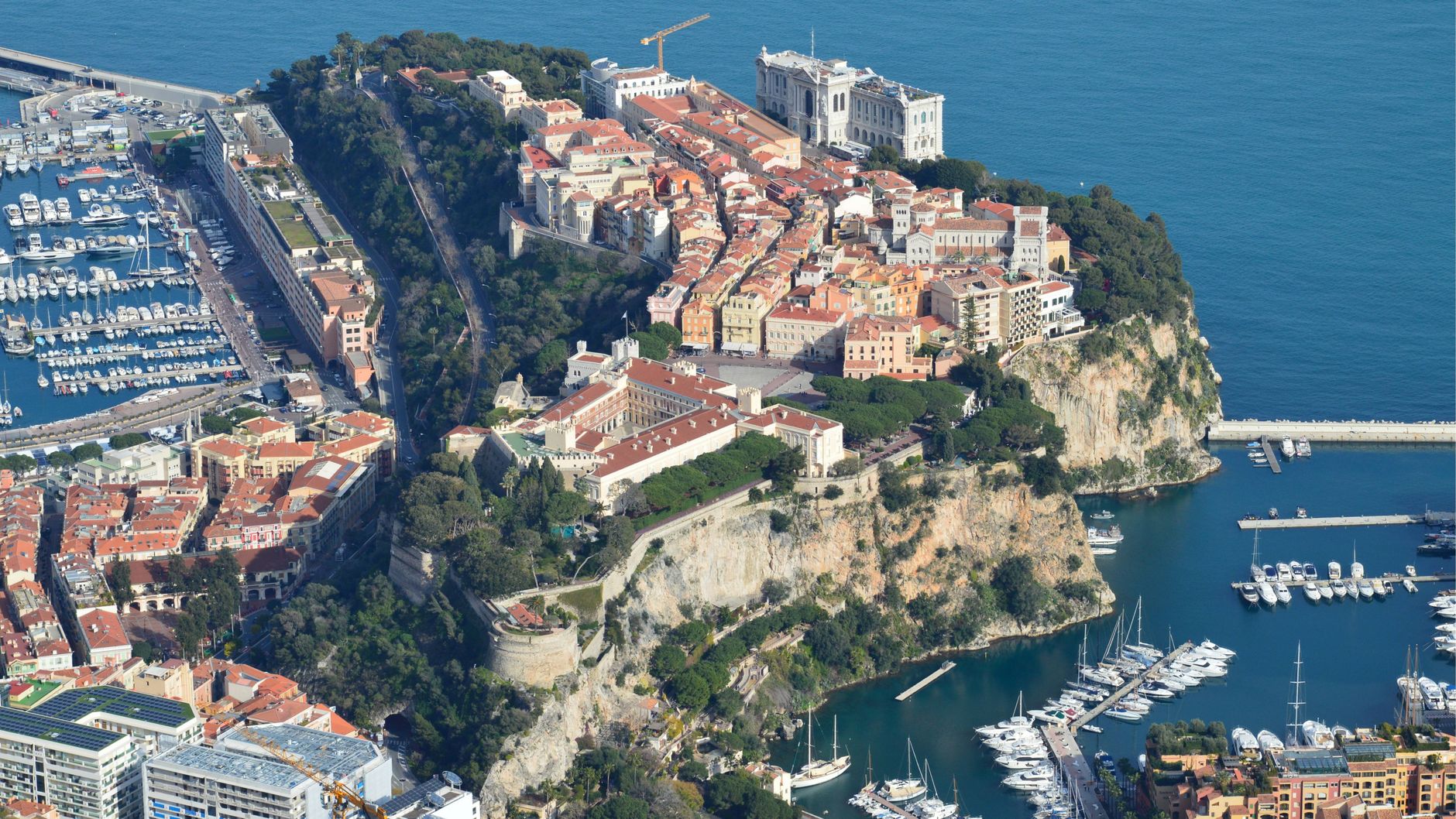
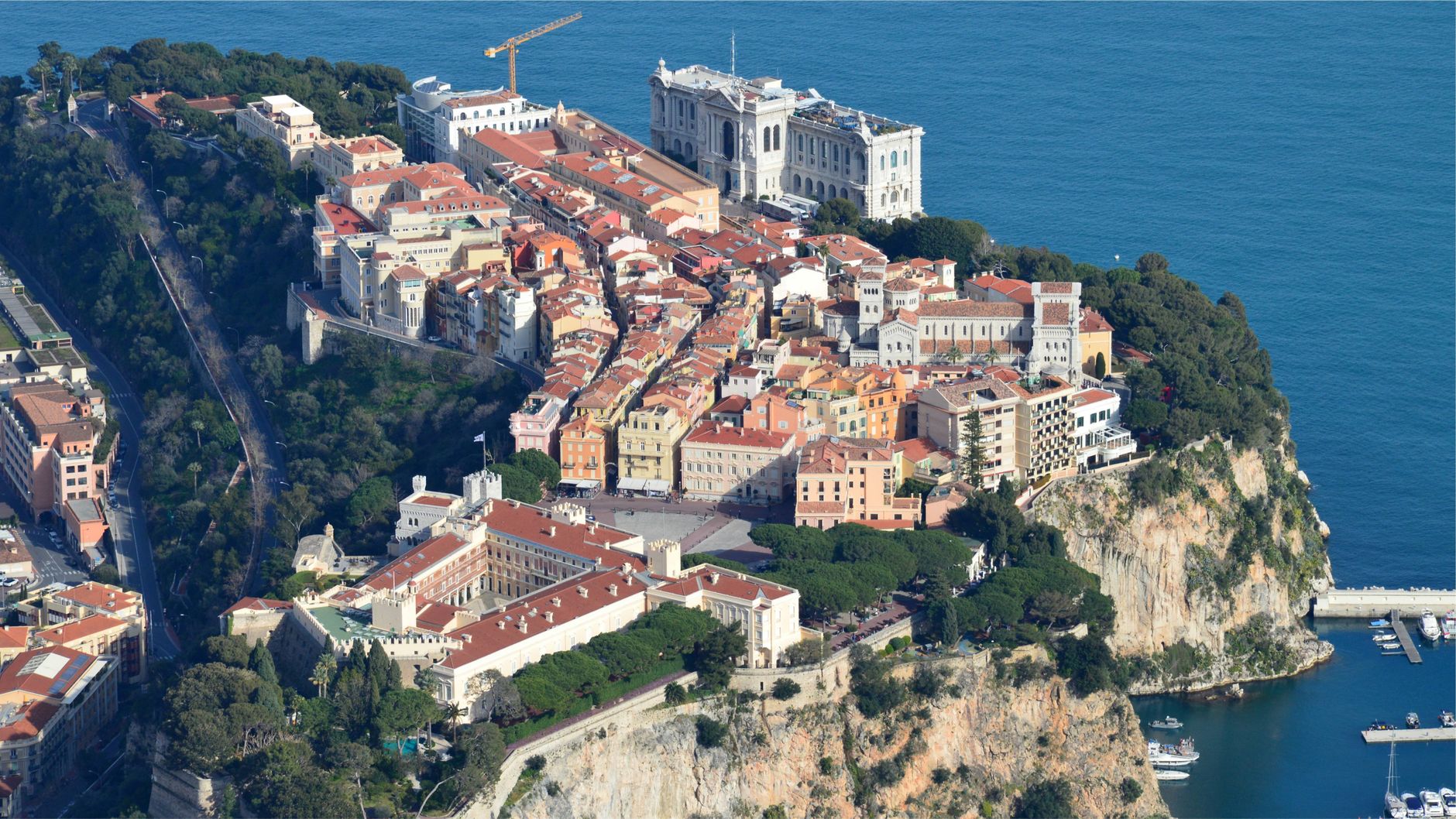
The smell of warm barbajuan hits you first, drifting from a half-hidden bakery window just steps from the Prince's Palace. Monaco-Ville surprises in its refusal to shout. Perched on a 62-metre rock that once held nothing but a Genoese fortress, this pocket principality feels less like a tax-haven postcard and more like an eccentric Mediterranean village that happens to own a navy and several Renoirs.
 Photo: SlimMars 13 / Pexels
- Attractions
- 7
- Trip length
- 1-2 days
- Best season
- May–June & September–October
Why Monaco-Ville
Built from cited sources · see the method · How we make our guides →
The Grimaldis have called the Palais Princier home since the late 13th century. Yet the real pleasure lies in the quiet contradictions. Renaissance frescoes of Hercules and Odysseus are still being coaxed back to life with eco-friendly solvents while, outside, the Carabiniers change guard at 11:55am in uniforms so white they hurt to look at. Arrive right after the ceremony ends and you’ll often have the staterooms almost to yourself.
Narrow medieval alleys like Rue des Chapeliers run parallel to the palace, smelling of citrus peel and old stone. Locals slip into La Maison du Limoncello for a tasting or carry market picnic supplies up to Jardin Saint-Martin, where the only sounds are pine needles underfoot and the distant clink of halyards from Port Hercule below. The contrast with Monte-Carlo’s casino glamour is deliberate and absolute.
Spend a morning here and your understanding shifts. This isn’t a theme park for the wealthy. It’s a lived-in rock with 800 years of layered history, where the light off the sea still hits the Cathedral’s Carrara marble tombs exactly as it did when Princess Grace was laid to rest in 1982.
The Rock’s Quiet Power
Monaco-Ville sits on a 135-metre limestone outcrop that the Grimaldi family has called home since 1297. Walk the ramparts at golden hour and you’ll understand why this 500-metre-long fortress-rock still feels like a private kingdom rather than a theme park.Prince’s Palace Secrets
The Changing of the Guard at 11:55am draws the crowds, yet the real move is to slip inside the Grand Apartments the moment the ceremony ends. Renaissance frescoes of Hercules and Odysseus, uncovered with eco-friendly solvents, glow under filtered sea light while everyone else is still outside.Clifftop Gardens
Jardin Saint-Martin offers shaded benches among agaves and pines with unbroken views over the Mediterranean. Further west, the Exotic Garden’s 7,000 cacti cling to the cliff edge above the Grotte de l’Observatoire, where stalactites have watched human footsteps for 250,000 years.Fort Antoine Open-Air Theatre
A 18th-century military bastion was quietly turned into a 350-seat amphitheatre. Cannonballs still pyramid beside the stage; in July the only sound is actors’ voices against the sound of waves below. Few tourists ever find it.
Neighborhoods
Where to wander, by quarter — each with its own rhythm.
Monaco-Ville (Le Rocher)
The medieval heart of the principality sits atop its limestone outcrop. Wander the quiet alleys behind the Prince’s Palace and you’ll find independent artisans, the 19th-century Romanesque-Byzantine Cathedral holding the tombs of Rainier III and Grace Kelly, and the clifftop Jardin Saint-Martin with its bronze sculptures and unobstructed sea views. This is where the city slows down.La Condamine
Tucked at the base of the Rock, this working harbour district supplies the real lifeblood. The Marché de la Condamine opens early with stalls of fresh seafood, local cheese and fougasse. Residents shop here before heading to unpretentious bistros like Huit & Demi. Far more grounded than the casino quarter and all the better for it.Monte-Carlo
Ten minutes’ walk east and the tone changes completely. The Belle Époque Opéra de Monte-Carlo, Charles Garnier’s gilded masterpiece, sits beside the legendary casino. Expect smart-casual dress codes after dark, terrace bars with Mediterranean views, and the high-octane energy that vanishes the moment you climb back up to the Rock.Fontvieille
Reclaimed from the sea in the 1970s, this southern district feels unexpectedly residential. Modern apartment blocks house the Stade Louis II and a clutch of relaxed cafés popular with locals. The view back toward the illuminated Rock at night is worth the detour.Larvotto
Monaco’s beach and nightlife zone centres on the man-made Larvotto beach. Come evening the energy migrates here to places like Jimmy’z and Sass Café. By day it’s the closest the principality gets to actual sand and seawater swimming.
Plan your trip
Before you go
- Getting There
- Nice Côte d’Azur Airport (NCE) lies 30 km west. In 2026 the fastest route is Tram Line 2 to Nice-Ville then TER train to Monaco-Monte-Carlo station (€5.60, roughly one hour). Express Bus 110 runs direct from the airport in 45 minutes for €22. Taxis cost €100–150.
- Getting Around
- Monaco has no metro or tram system. The Compagnie des Autobus de Monaco (CAM) runs six lines plus the on-demand ClicBus and the Bateaubus ferry across Port Hercule. Public elevators and escalators link the Rock to lower districts. MonaBike e-bikes suit the steep gradients; buy 10-ride bus tickets or 24h passes via the CAM app.
- Climate & Best Time
- Mediterranean climate brings January daytime highs of 11–17 °C and July–August averages above 25 °C. Rain falls mainly October–December; summers stay dry. May–June and September–October deliver mild temperatures and thinner crowds. January offers the lowest hotel rates and near-empty palace square.
- Safety
- Monaco remains one of Europe’s safest destinations with almost no violent crime. Pickpockets target palace guard-change crowds and Oceanographic Museum queues. Keep valuables zipped. Police are highly visible and most speak English. Dial 112 for any emergency.
A Rock Seized by a Monk and Held by One Family
From ancient anchorage to sovereign principality
- 6th century BCE
Greek Anchor at Monoikos
Phocaean sailors carved a harbor stop on this sheer limestone outcrop and named it Monoikos after their temple to Hercules. The rock offered the only natural shelter between Genoa and Marseille. For centuries the smell of pine resin and fish smoke hung over its small stone quay.
- 1191
Genoa Claims the Rock
Holy Roman Emperor Henry VI handed suzerainty of the harbor and promontory to the Republic of Genoa. Within two decades the Genoese began building a fortress with four towers and thirty-seven sections of rampart. The walls rose so fast that local limestone dust still clouded the air months later.
- 1215
Fortress Rises on the Rock
Under Fulco del Cassello the Genoese completed their citadel. The structure could hold a thousand men and a 15,000-cubic-metre cistern. Its shadow fell across the harbor each afternoon like a permanent claim.
- 1297
François Grimaldi Takes the Gate
On a freezing January night François Grimaldi, dressed as a Franciscan monk, knocked at the fortress gate. Once inside he drew his sword. The Grimaldi family has ruled from that same rock ever since. Locals still call him Malizia — the Cunning One.
- 1331
Charles I Claims Lordship
Charles I Grimaldi formally assumed lordship of the Rock. He secured Menton in 1346 and Roquebrune in 1355, creating the tiny territory that still exists. The family would never again be mere pirates.
- 1523
Honoré I Builds the Cistern
Honoré I expanded the ramparts and carved an enormous cistern beneath the palace. Its 15,000 cubic metres of rainwater could sustain the garrison through long sieges. Engineers still marvel at the engineering; the water ran clear four centuries later.
Show the full timeline (19 moments)
- 1604
Honoré II Becomes Sovereign Prince
Honoré II transformed the grim fortress into a Renaissance palace with Italian loggias and frescoes of Hercules, Odysseus and Europa. In 1633 he received the formal title of Sovereign Prince. The building has worn that title ever since.
- 1662
Horseshoe Staircase Completed
Louis I added the grand horseshoe staircase to the Cour d'Honneur, modelled on Fontainebleau. Its pale stone steps still echo with the boots of the Prince's Carabiniers every morning.
- 1793
Revolutionaries Loot the Palace
French Revolutionary forces seized Monaco, looted the palace and turned it into a military hospital. The Grimaldi family fled. For twenty years the rock smelled of carbolic and wet wool instead of beeswax and incense.
- 1817
Prince's Carabiniers Founded
On 8 December the Compagnie des Carabiniers du Prince was formally established. Their white summer uniforms have changed little in two centuries. They still mount guard at the same palace gate seized by a monk in 1297.
- 1875
Cathedral Construction Begins
Builders started work on the new cathedral using white stone from La Turbie. The Romanesque-Byzantine structure rose on the site of the demolished 13th-century church of Saint-Nicolas. Its cool marble interior still carries the faint scent of candle smoke and lilies.
- 1910
Oceanographic Museum Opens
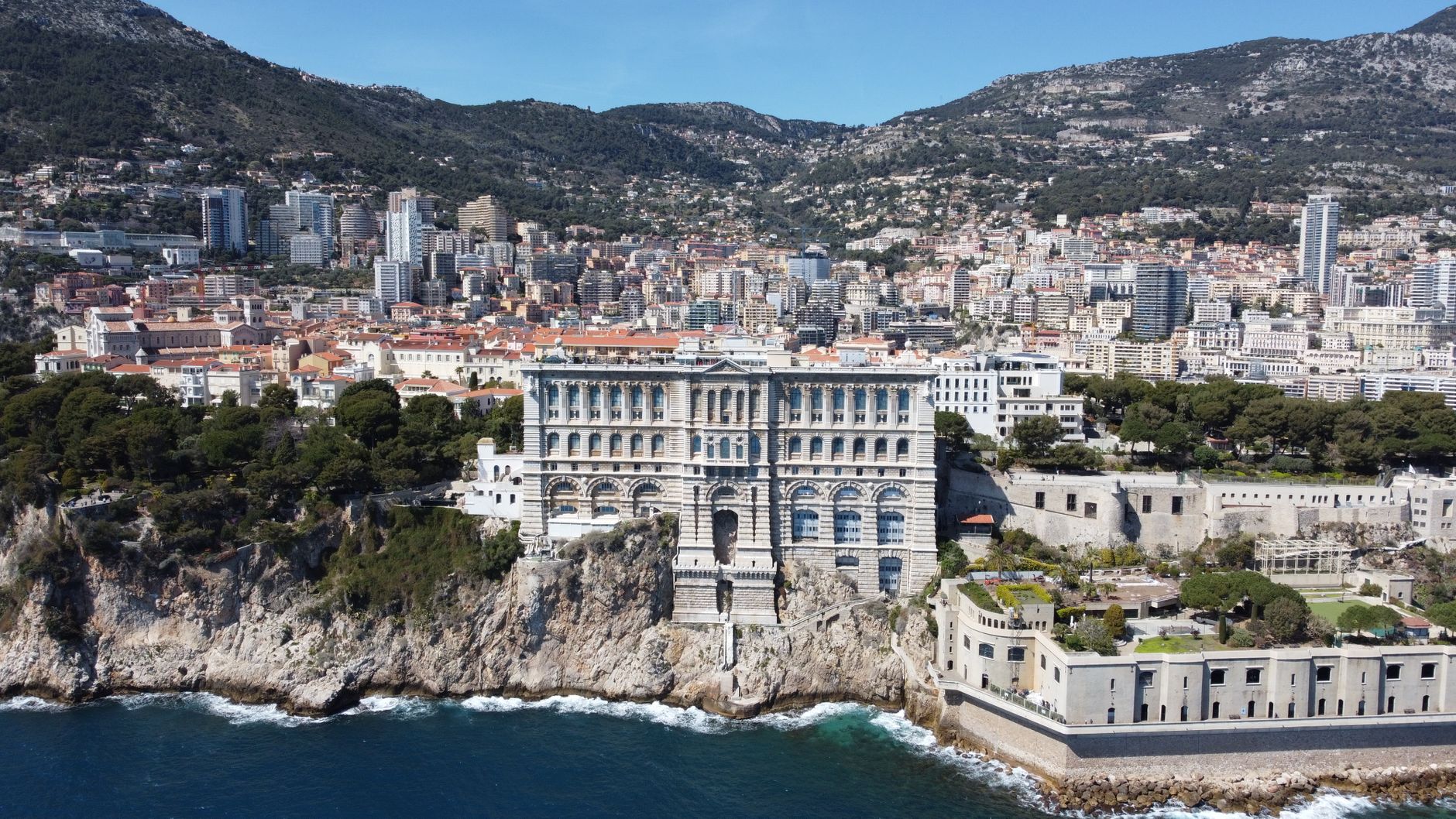
Prince Albert I inaugurated the grand neoclassical museum that appears to grow straight from the cliff face. Its aquarium tanks and whale-skeleton hall drew scientists and curious visitors from across Europe. The building still dominates the rock like a stone ship.
- 1929
First Monaco Grand Prix
The inaugural race roared through the narrow streets below the Rock. Drivers battled brakes and balustrades while spectators leaned from palace windows. The circuit remains one of the most dangerous and glamorous on earth.
- 1930
Palais de Justice Built
Prince Louis II commissioned the circular courthouse of sea-tufa stone. Tiny mollusc shells and pebbles are still visible in its porous walls. Judges have walked beneath its arches for nearly a century.
- 1956
Grace Kelly Marries at the Cathedral
On 19 April Grace Kelly married Prince Rainier III inside the cathedral she would later be buried in. The nave glowed with candles and camera flashes. The union turned a sleepy principality into a global fairy tale.
- 1982
Princess Grace Dies
Grace Kelly's car plunged off a mountain road above Monaco. She was interred beside her husband in the cathedral crypt. The Rock lost its most famous voice; the silence that followed felt heavier than any siege.
- 2005
Albert II Ascends the Throne
Born in the Prince's Palace in 1958, Albert II succeeded his father. He continued the family's seven-century residence on the Rock while steering the principality toward environmental diplomacy. The palace frescoes he restored still gleam with Renaissance pigments.
- 2014
Palace Frescoes Restored
Conservators began cleaning 600 square metres of 16th- and 17th-century frescoes using eco-friendly solvents. Hercules, Odysseus and Europa slowly re-emerged from centuries of candle smoke and sea air. The work finished in 2022.
- 2025
World Capital of Sport
Monaco received official designation as World Capital of Sport. The title sits oddly well on a rock once taken by a monk with a sword. From battlements to racetrack, the place has always understood spectacle.
Who lived here
-
Princess of Monaco · 1929–1982
Grace Kelly
Lived here 1956–1982
The Hollywood star stepped off the Constitution in 1956 and straight into a life few understood. She raised her children in the Palace apartments whose frescoes she personally helped restore. Today her tomb in the Cathedral draws more visitors than any state ceremony — the quiet American who became the Rock's most watched resident.
-
Prince of Monaco · 1923–2005
Rainier III
Ruled here 1949–2005
He inherited a sleepy tax haven and turned it into a modern state while refusing to let it lose its soul. The man who married Grace spent decades restoring the Prince's Palace brick by brick. Walk the ramparts at night and you still feel his stubborn belief that this 2km² patch of rock should remain a real country, not just a playground.
Where to Eat
Where locals actually book dinner — not the tourist menus.
-
La Maison du Limoncello
Tucked into a medieval lane near the palace, this boutique pours small glasses of handcrafted limoncello alongside jars of regional preserves. The citrus hits bright and clean against the stone walls. Worth the €9 tasting flight.
-
Seaside Juicery Bowls
Plant-based café steps from the cliff path serves matcha bowls layered with local fruit and house-made granola. The morning light off the harbor turns the whole plate neon. Locals actually eat here.
-
Bar à Vins de Monaco
Small wine bars on Rue des Chapeliers pour glasses of Bandol and Bellet from €8. Order a plate of socca straight from the oven — crisp chickpea pancake dusted with pepper. The combination never fails.
Insider tips
Small things that change how the city treats you.
Guard Change Timing
Arrive at the Prince's Palace around noon. Enter the Grand Apartments right before the 11:55am ceremony ends — the crowds stay outside while the interior empties.Use the Elevators
Monaco-Ville's medieval alleys have steep climbs. Public elevators and escalators are integrated into the rock — use them to reach Jardin Saint-Martin without exhaustion.Combo Ticket Value
Buy the combined Prince's Palace and Oceanographic Museum ticket. At €10 and €19 separately, the bundle saves money and includes the audio tour.Skip Palace Square
Avoid the overpriced cafés ringing Place du Palais. Walk five minutes into Rue des Chapeliers for local bakeries selling fresh barbajuan at half the price.Best Visiting Months
Come in May–June or September–October. You'll get 22°C days with far fewer cruise passengers than July and August.Carry ID
Even though the France-Monaco border is open, keep your passport or national ID. Random checks happen during Grand Prix week and major events.Low-Angle Views
Take the bateaubus across Port Hercule then walk the cliff terraces. The perspective on the Rock's tufa walls and prehistoric layers beats the standard palace viewpoint.
Gallery
The city, as it actually looks.


Frequently asked
Is Monaco-Ville worth visiting?
Yes, if you want to see the real Monaco beyond the casino lights. The Rock holds the 13th-century Grimaldi fortress core, Renaissance frescoes uncovered only recently, and the quiet medieval streets locals actually use. One full day here changes how you see the entire principality.
How many days do you need in Monaco-Ville?
One full day is enough for the Palace, Cathedral, Oceanographic Museum and a slow wander through the back alleys. Add a second morning if you want to visit the Exotic Garden cave and Jardin Saint-Martin without rushing. The compact size of the Rock makes it very walkable.
How do you get from Nice Airport to Monaco-Ville?
The TER train via Nice-Ville station costs €5.60 and takes about an hour. Express Bus 110 is faster at 45 minutes but costs €22. The underground Monaco-Monte-Carlo station sits directly below the Rock — from there, elevators bring you straight up to the Old Town.
Is Monaco-Ville safe for tourists?
It has one of Europe's lowest crime rates. Pickpockets only appear around the 11:55am guard change and museum queues. The Carabiniers in white uniforms are highly visible. Standard city precautions are enough.
How expensive is Monaco-Ville compared to the rest of the French Riviera?
The Palace gift shop charges €59.50 for a baseball cap. Yet the Cathedral is free, public gardens cost nothing, and market picnic ingredients from Marché de la Condamine remain reasonable. You can easily balance the splurge attractions with free ones.
When is the best time to visit Monaco-Ville?
May–June and September–October deliver comfortable temperatures and thinner crowds. Avoid Formula 1 weekend in May unless you have tickets. January offers the cheapest hotel rates and near-empty palace square.
Pick up where you left off
Saved and recently read places — kept on this device only.
Photo credits (6)
- SlimMars 13 — Pexels License (https://www.pexels.com/license/) — Source: https://www.pexels.com/photo/11892592/
- SlimMars 13 — Pexels License (https://www.pexels.com/license/) — Source: https://www.pexels.com/photo/11892586/
- Raouf Meftah — Pexels License (https://www.pexels.com/license/) — Source: https://www.pexels.com/photo/31292718/
- SlimMars 13 — Pexels License (https://www.pexels.com/license/) — Source: https://www.pexels.com/photo/11892583/
- Lazar Krstić — Pexels License (https://www.pexels.com/license/) — Source: https://www.pexels.com/photo/11956746/
- SlimMars 13 — Pexels License (https://www.pexels.com/license/) — Source: https://www.pexels.com/photo/11892577/
Photos may have been resized or cropped.