Plan and listen to Palacio De Minería with Audiala.
Audio guide in your pocket, itinerary in your browser. Built for the way you actually visit.
Introduction: History and Cultural Significance
Located in the heart of Mexico City’s historic center, the Palacio de Minería is an architectural and cultural landmark that reflects the city’s colonial past and ongoing legacy in education and the sciences. Constructed between 1797 and 1813 under the direction of Valencian architect Manuel Tolsá, the palace was designed to house the Royal College of Mines—the first technical school in the Americas dedicated to mining and metallurgy. Its Neoclassical style, symmetrical façades, and grand interiors embody Enlightenment ideals of reason and progress, while its storied halls have played a pivotal role in Mexico’s scientific and educational development (Wikipedia; MexicoCity.cdmx.gob.mx).
Today, the Palacio de Minería is managed by the Faculty of Engineering of the National Autonomous University of Mexico (UNAM) and serves as a vibrant center for culture, hosting exhibitions, academic events, and the renowned International Book Fair. Its strategic location on Tacuba Street, adjacent to the National Art Museum (MUNAL) and Palacio de Bellas Artes, makes it an essential stop for anyone exploring Mexico City’s architectural and historical treasures (Posta; Time Out Mexico City).

Architectural Style and Historical Context
The Palacio de Minería exemplifies Neoclassical architecture, distinguished by its balance, rational layout, and restrained ornamentation. Designed by Manuel Tolsá, the palace’s construction was spurred by the economic and technological priorities of New Spain, particularly the demand for scientific expertise in mining—a cornerstone of the colonial economy. The Royal College of Mines, for which the palace was built, became the first technical school of its kind in the Americas (Wikipedia; Espacio Arquitectónico en México).
The palace’s design reflects Enlightenment values, with a focus on symmetry, proportion, and the use of light. Its enduring structural and aesthetic qualities have made it a reference point for Neoclassical architecture in Mexico.
Exterior Design and Urban Setting
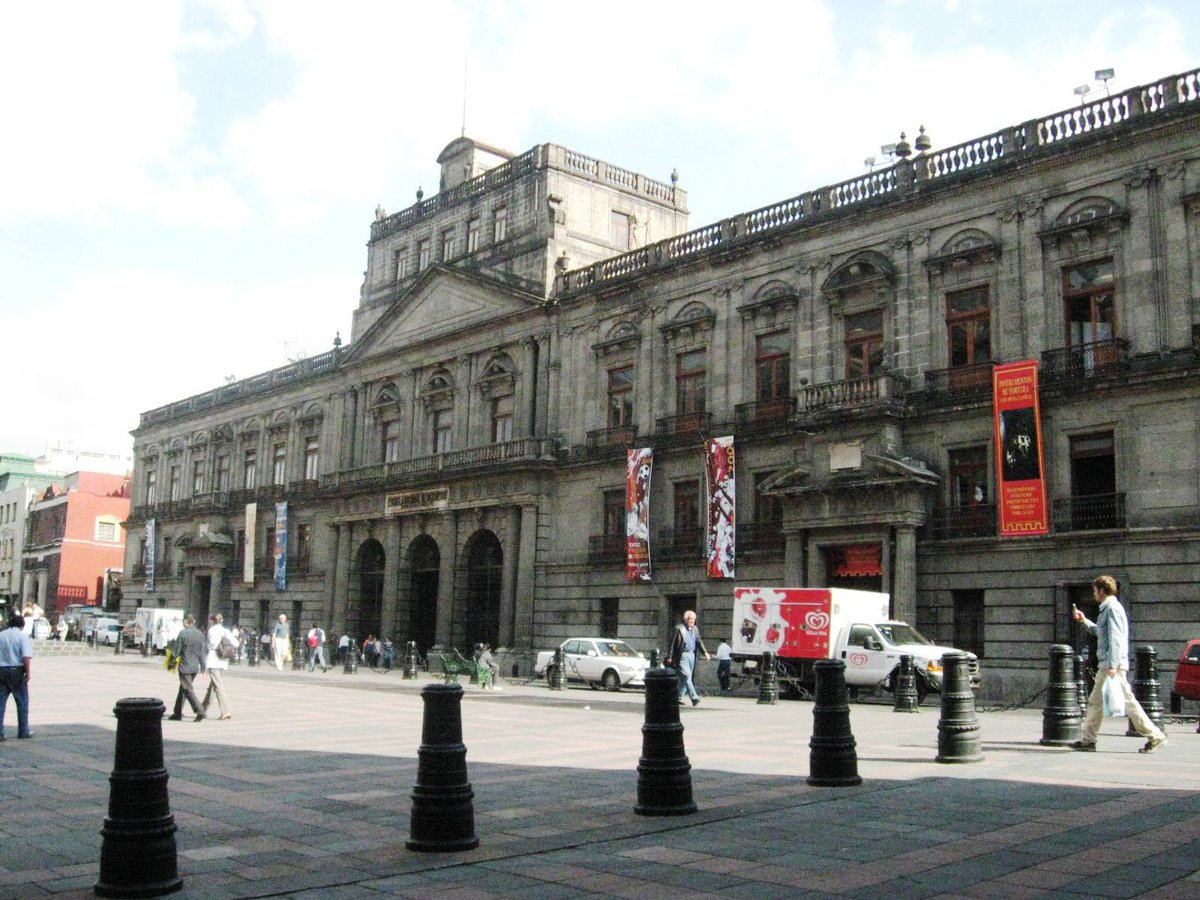
Fronting Plaza Manuel Tolsá, the palace’s main façade is an exercise in Neoclassical restraint, with pilasters, balanced windows, and finely crafted stonework. The equestrian statue of Charles IV (“El Caballito”), also by Tolsá, stands just outside, establishing a dialogue between architecture and public art (MexicoCity.cdmx.gob.mx).
Its location on Tacuba Street places it at the heart of the Centro Histórico, surrounded by major landmarks including MUNAL and Palacio de Bellas Artes—creating a cultural corridor of architectural significance (Posta).
Interior Layout and Notable Spaces
Central Courtyard
The palace’s central courtyard is a hallmark of Neoclassical palatial design, with arcaded galleries and robust columns. This luminous, open space provides an ideal setting for events and is a favorite spot for visitors and photographers (WhichMuseum).
Aula Magna
The main lecture hall, or Aula Magna, was conceived for academic ceremonies and gatherings. Its proportions and acoustics highlight the Enlightenment approach to rational design and continue to serve as a venue for conferences and cultural activities (Posta).
Grand Staircase
The sweeping grand staircase is a celebrated architectural feature, admired for its elegance and craftsmanship. It is often featured in artistic representations and is one of the palace’s most photogenic interiors (WhichMuseum).
Chapel of the Virgin of Guadalupe
The palace also contains a chapel dedicated to the Virgin of Guadalupe, illustrating the historical blending of secular and sacred spaces. Its decorative elements and elegant steps are notable within the building’s overall design (WhichMuseum).
Construction Techniques and Conservation
Building on the soft soils of Mexico City posed significant engineering challenges. The palace’s foundations required reinforcement due to the city’s subsidence, and conservation efforts have included foundation stabilization and careful restoration to preserve its historical integrity (Espacio Arquitectónico en México).
Despite these challenges, the structure remains largely original, thanks to Tolsá’s innovative design and the quality of materials used.
Manuel Tolsá’s Influence
Manuel Tolsá was the leading exponent of Neoclassicism in Mexico, leaving an indelible mark on the city’s architectural landscape through works such as the Palacio de Minería, the finishing of the Metropolitan Cathedral, and the equestrian statue of Charles IV. His approach—emphasizing clarity, order, and adaptation of classical motifs—helped define the architectural identity of late colonial Mexico (Espacio Arquitectónico en México; MexicoCity.cdmx.gob.mx).
Modern Use and Cultural Programming
Beyond its academic origins, the Palacio de Minería has served as the home of the National University, the School of Engineering, and the Physics Institute of UNAM. Today, it is a museum and cultural center under the Faculty of Engineering, hosting major events such as the International Book Fair of the Mining Palace (Posta; Wikipedia; FIL Minería). Its flexible spaces accommodate exhibitions, lectures, and community outreach, ensuring the building remains relevant and accessible.
Visiting Information: Hours, Tickets, and Accessibility
- Visiting Hours: Typically open Tuesday to Sunday, 10:00 AM–5:00 PM. Hours may change during special events or holidays.
- Ticket Prices: General admission is approximately 50 MXN (~$3 USD), with discounts for students, teachers, and seniors. Children under 12 enter free.
- Where to Buy: Tickets can be purchased onsite or through the official website.
- Accessibility: The palace is equipped with ramps, elevators, and accessible restrooms. Wheelchair access is available at the main entrance.
- Language Support: Guided tours are available in Spanish and English, and most informational materials are bilingual. For further assistance, staff are available to help non-Spanish speakers (UNAM Turismo).
Events, Tours, and Photographic Highlights
- Guided Tours: Available by appointment in Spanish and English, offering detailed insights into the palace’s architecture and history.
- Annual Events: The International Book Fair is a major highlight, drawing over 150,000 visitors annually (FIL Minería).
- Photographic Spots: The central courtyard, grand staircase, and Aula Magna are highly recommended for photography.
- Workshops and Conferences: Regularly scheduled, often free or low-cost, expanding the palace’s role as a center of learning and culture (UNAM Eventos).
Urban Integration and Nearby Attractions
The palace’s location in the Centro Histórico places visitors within walking distance of numerous landmarks, including Palacio de Bellas Artes, Museo Nacional de Arte, Alameda Central, and Casa de los Azulejos. Its adjacency to other historic sites enables rich cultural itineraries (CDMX Tourism). Public transit via Metro (Bellas Artes and Allende stations) and city buses offers convenient access.
Visitor Experience
Visitors are drawn by the palace’s harmonious architecture, luminous interiors, and the quality of its temporary and permanent exhibitions. The building welcomes a diverse audience—students, families, tourists, and scholars. Visitor amenities include a cloakroom, gift shop, accessible restrooms, and resting areas. Photography (without flash or tripod) is allowed in most areas.
Heritage Status and Preservation
The Palacio de Minería is a protected historical monument, benefitting from ongoing preservation and adaptive reuse that balances respect for its original design with contemporary needs. Its continued function as a center for education and culture exemplifies successful heritage management (MexicoCity.cdmx.gob.mx).
Frequently Asked Questions (FAQs)
Q: What are the Palacio de Minería visiting hours?
A: Tuesday to Sunday, 10:00 AM–5:00 PM; closed Mondays and certain holidays.
Q: How much are tickets?
A: Approximately 50 MXN for adults; discounts for students, teachers, and seniors; free for children under 12.
Q: Are guided tours available?
A: Yes, in Spanish and English, by appointment.
Q: Is the palace accessible for people with disabilities?
A: Yes, with ramps, elevators, and accessible restrooms.
Q: Can I take photographs inside?
A: Photography is allowed in most areas, except where otherwise indicated.
Q: What other attractions are nearby?
A: Palacio de Bellas Artes, Museo Nacional de Arte, Alameda Central, Casa de los Azulejos, and more.
Summary
The Palacio de Minería stands as a symbol of Mexico City's architectural brilliance, scientific advancement, and cultural vibrancy. From its Neoclassical façade and luminous interiors to its role as an educational and cultural hub, the palace offers visitors a comprehensive experience of Mexico’s historical and artistic legacy. Its ongoing preservation and dynamic programming ensure that the Palacio de Minería remains a must-visit destination for travelers, students, and anyone interested in the history of Mexico City.
Plan your visit by checking official resources and consider downloading the Audiala app for up-to-date information on tickets, events, and tours. Discover why the Palacio de Minería is a cornerstone of Mexico’s national story and an essential stop among Mexico City’s historical sites.
Tickets & tours.
These are guided options from our partners — same price as booking direct.
Prices are indicative — final pricing and availability are confirmed at checkout. Audiala may earn a commission from bookings made through these links.
Listen to the full story in the app
The whole Palacio De Minería,
told well.
Audio guides for 1,100+ cities across 96 countries. History, stories, and local insight — offline ready.
Verified, and shown.
Researched and written by the Audiala editorial team from historical records, architectural archives, and local expertise.
Researched from Wikidata, Wikipedia & official sources · fact-checked · How we make our guides →