Plan and listen to Palace Of The Inquisition with Audiala.
Audio guide in your pocket, itinerary in your browser. Built for the way you actually visit.
Introduction
The Palace of the Inquisition (Palacio de la Inquisición) in Mexico City is a landmark that encapsulates the city’s colonial history, architectural grandeur, and scientific evolution. Originally constructed as the headquarters for the Tribunal del Santo Oficio—the infamous Spanish Inquisition—in New Spain, this Baroque masterpiece has transformed over centuries from a symbol of religious and judicial power to a beacon of medical education. Today, it houses the Museum of Mexican Medicine, offering a fascinating juxtaposition between its somber past and Mexico’s medical heritage. This guide provides comprehensive information on the palace’s history, architectural highlights, museum exhibits, visiting hours, tickets, accessibility, nearby attractions, and travel tips to ensure a memorable visit.
For further details and planning, consult official and trusted resources like Relatos e Historias en México, Travel by Mexico, and Atlas Obscura.

Origins and Colonial Role
Commissioned between 1732 and 1736, the Palace of the Inquisition was designed by Pedro de Arrieta, a luminary of Mexican Baroque architecture (Relatos e Historias en México). Strategically situated on Plaza de Santo Domingo, the palace was the epicenter of the Spanish Inquisition’s activities in New Spain. Its imposing presence, adjacent to the church of Santo Domingo, reinforced the authority of the Catholic Church and the Spanish Crown.
The palace was more than a court; it contained administrative offices, living quarters, and notoriously, the secretive prison cells known as "La Perpetua." These dungeons became a symbol of repression, where accused heretics, blasphemers, and political prisoners awaited their fate. The Inquisition’s reach extended into all aspects of colonial life, instilling both fear and a strict social order (Relatos e Historias en México).
Abolition and Transformation
The Inquisition was officially abolished in Mexico in 1820, marking a significant societal shift toward liberal ideals and justice reform. Afterward, the palace served diverse functions: a dance hall, military barracks, and eventually, from 1854, the National School of Medicine under UNAM (Travel by Mexico). Its educational purpose preserved the building and recontextualized its legacy. In 1980, it was inaugurated as the Museum of Mexican Medicine, which it remains today.
Architectural Features
Baroque Facade and Layout
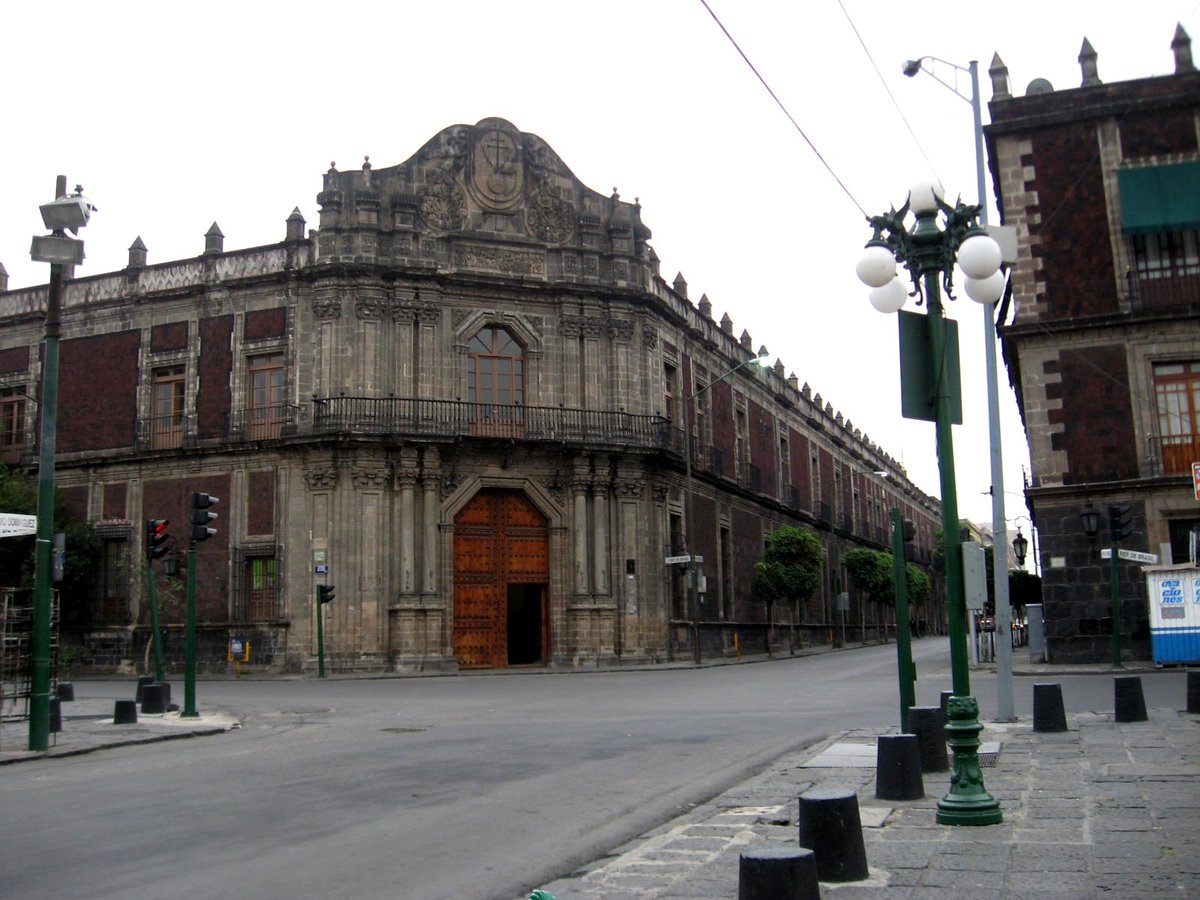
The palace is celebrated for its striking Baroque architecture. The diagonally oriented facade, constructed from tezontle and cantera stone, features elaborate pilasters, cornices, and decorative reliefs, creating a dramatic visual impact (Relatos e Historias en México). The building’s layout includes:
- Central Courtyard: Surrounded by arcades, with unique corner arches that appear suspended without columns—a technical marvel of the era.
- Grand Staircase: A monumental double-ramp staircase, one of the palace’s most photographed features.
- Hidden Dungeons: Original prison cells along the north facade of the Patio de los Naranjos, preserved as a testament to the building’s original function.
Preservation and Adaptation
Despite centuries of changing uses, the palace’s essential Baroque elements have been meticulously preserved. During its time as the National School of Medicine, classrooms and laboratories were integrated without compromising the building’s historical character. Today, the palace’s careful restoration allows visitors to appreciate its architectural and historical legacy (Travel by Mexico).
Museum of Mexican Medicine
Permanent and Temporary Exhibits
The museum spans 24 exhibition halls, tracing the evolution of medicine in Mexico from pre-Hispanic healing practices to 20th-century scientific advancements. Highlights include:
- Pre-Columbian Medicine: Artifacts and displays on indigenous healing, herbal remedies, and the role of shamans.
- Colonial and Modern Medicine: European influences, surgical instruments, pharmacy reconstructions, and the development of hospitals.
- Anatomical Collections: Wax models, rare medical texts, and early X-ray machines (National Geographic).
Notable Collections
Several rooms are dedicated to the history of the Inquisition, featuring:
- Tribunal Artifacts: Documents, portraits, and trial records.
- Torture and Justice: Instruments of punishment, with interpretive context on colonial justice and human rights.
- Notable Prisoners: Information on figures like Stephen F. Austin, whose imprisonment is documented in museum exhibits.
The museum’s educational approach encourages critical reflection on both the advances and abuses of the past.
Visitor Information
Location & Getting There
- Address: República de Brasil 33, Centro Histórico, Mexico City, Mexico.
- Metro: Bellas Artes (Lines 2 and 8) or Allende (Line 2) are the closest stations—about a 10-minute walk.
- Bus: Numerous city buses and trolleybuses serve the area.
- By Foot/Taxi: Easily accessible from the Zócalo and surrounding historic landmarks (Atlas Obscura).
Visiting Hours & Admission
- Typical Hours: Tuesday–Sunday, 9:00 AM–6:00 PM. Closed Mondays and public holidays (WhichMuseum).
- Admission: General entry is modestly priced, often around 50 MXN, with discounts for students, teachers, and seniors. Free admission on Sundays for all visitors, following Mexico City’s museum policy (CDMX Secreta).
- Tickets: Purchase at the entrance; advance booking recommended for group tours or special events.
Facilities & Accessibility
- Restrooms: Available on-site.
- Wheelchair Access: Most public spaces are accessible, though some historic areas (like dungeons) may have limitations. Elevators and ramps are installed where possible.
- Gift Shop: Books, replicas, and souvenirs related to Mexican medicine and the Inquisition.
- Café: Nearby, ideal for a break during your visit.
Travel Tips
- Photography: Non-flash photography allowed in most areas; restrictions may apply for certain exhibits.
- Time Required: Plan for 1–2 hours to explore the museum thoroughly.
- Language: Most exhibits are in Spanish; English-language brochures or audio guides may be available. Translation apps are helpful for non-Spanish speakers.
- Best Time to Visit: Weekday mornings are least crowded. Avoid public holidays and UNAM vacation periods, when the museum may be closed.
Nearby Attractions
The palace’s location in the historic center makes it an excellent base for further exploration:
- Templo Mayor: Major Aztec temple and archaeological museum—7-minute walk (WideWorldTrips).
- Metropolitan Cathedral: Largest cathedral in the Americas—8-minute walk.
- Plaza Santo Domingo: Right outside the palace, with a tranquil atmosphere.
- Antiguo Colegio de San Ildefonso: Famous for its murals—a 10-minute walk (Lonely Planet).
Frequently Asked Questions (FAQ)
Q: What are the Palace of the Inquisition visiting hours?
A: Typically open Tuesday–Sunday, 9:00 AM–6:00 PM. Closed Mondays and holidays.
Q: How can I purchase tickets?
A: Tickets are available at the entrance. Advance booking is recommended for group tours and special events.
Q: Is the palace wheelchair accessible?
A: Most public areas are accessible. Some historic dungeons may have limited access—contact the museum in advance for details.
Q: Are guided tours available?
A: Guided tours are offered primarily in Spanish; group tours in English can be arranged with advance notice.
Q: Can I take photographs inside?
A: Non-flash photography is generally permitted. Ask staff about restrictions in certain exhibits.
Q: What nearby sites should I visit?
A: Templo Mayor, Metropolitan Cathedral, Plaza Santo Domingo, and Antiguo Colegio de San Ildefonso are all within walking distance.
Summary and Recommendations
The Palace of the Inquisition is a multifaceted landmark that offers a layered experience—part architectural wonder, part contemplative museum. Its Baroque design, preserved dungeons, and extensive medical collections provide insight into Mexico City’s evolution from colonial stronghold to modern metropolis. The museum’s accessible facilities, central location, and proximity to other historic sites make it an essential stop for visitors interested in history, architecture, or medicine.
Tips for Your Visit:
- Visit on weekday mornings for a quieter experience.
- Use a translation app if you don’t speak Spanish.
- Allow 1–2 hours for your visit and consider combining it with other nearby attractions.
- Download the Audiala app for audio guides and up-to-date information.
For the latest details on visiting hours, special exhibitions, and events, consult the Museum of Mexican Medicine’s official website.
Listen to the full story in the app
The whole Palace Of The Inquisition,
told well.
Audio guides for 1,100+ cities across 96 countries. History, stories, and local insight — offline ready.
Verified, and shown.
Researched and written by the Audiala editorial team from historical records, architectural archives, and local expertise.
Researched from Wikidata, Wikipedia & official sources · fact-checked · How we make our guides →