Plan and listen to National Autonomous University Of Mexico with Audiala.
Audio guide in your pocket, itinerary in your browser. Built for the way you actually visit.
Introduction: UNAM’s Legacy and Visitor Experience
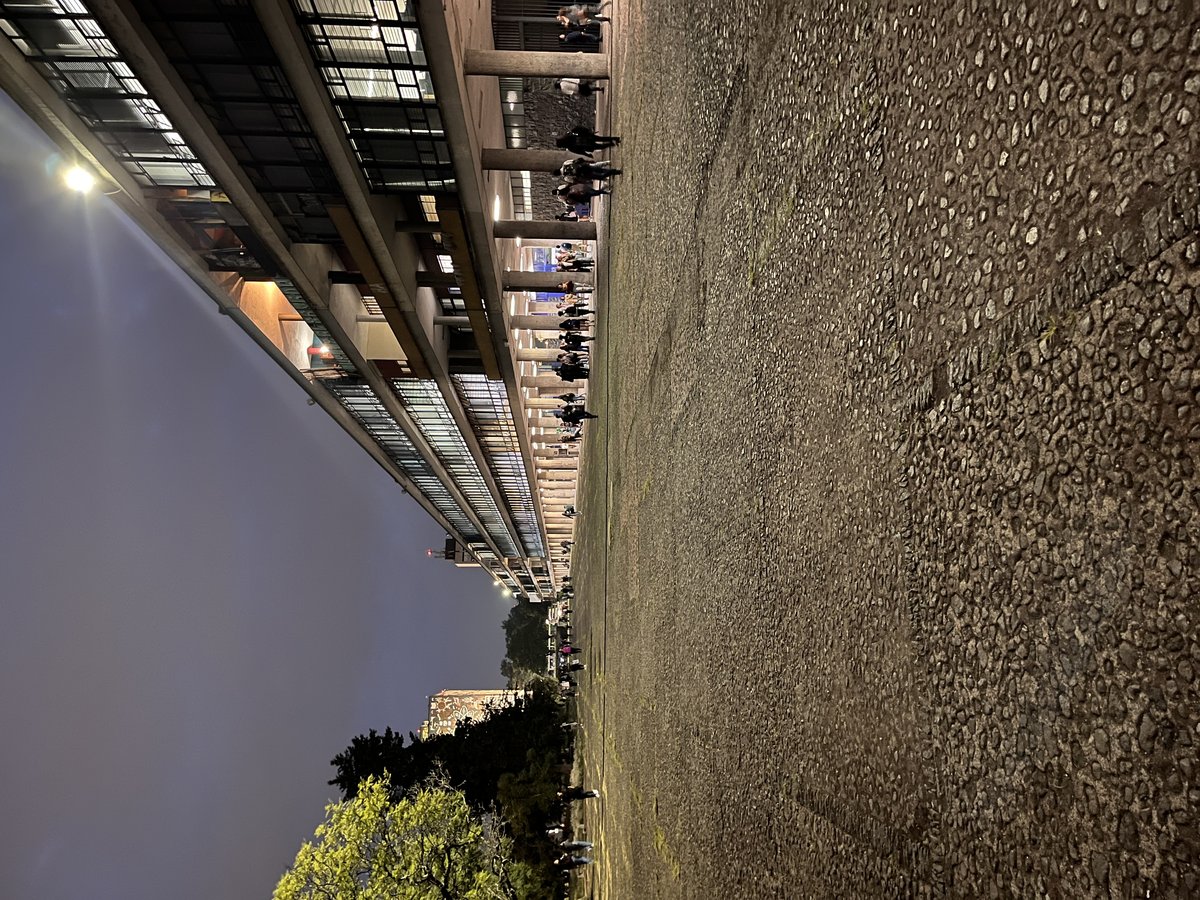
The National Autonomous University of Mexico (UNAM) is not only Latin America’s largest and most influential university but also a UNESCO World Heritage Site and a living testament to Mexico’s educational, cultural, and architectural legacy. Nestled in the Coyoacán borough of Mexico City, UNAM’s main campus, Ciudad Universitaria, invites visitors to explore its expansive grounds, admire world-renowned murals, and immerse themselves in a vibrant academic and artistic atmosphere. Originally established in 1551 as the Royal and Pontifical University of Mexico, UNAM has shaped Mexico’s intellectual, political, and cultural landscape for centuries. Today, visitors can enjoy guided tours, botanical gardens, museums, and historic modernist architecture that together tell the story of Mexico’s evolution. For up-to-date visitor information, consult the official UNAM website, along with detailed guides from Encyclopedia.com and UNESCO.

Colonial Origins
UNAM traces its beginnings to the Royal and Pontifical University of Mexico, founded by royal decree in 1551 and inaugurated in 1553. Modeled after Spain’s University of Salamanca, it was one of the Americas' first universities, predating Harvard by over 80 years. Initial curricula focused on theology, law, arts, and languages, with later expansion into medicine and astronomy. By the 17th century, the university had already awarded thousands of degrees, establishing itself as a central institution in colonial society (Encyclopedia.com).
Modern Transformation
In 1910, the modern incarnation of UNAM was established by Minister of Education Justo Sierra Méndez, bringing together several professional schools. The university became “autonomous” in 1929, and by 1933, it achieved full academic freedom, setting a precedent for Latin American higher education (Encyclopedia.com).
Expansion and Reforms
Significant expansion occurred in the 1940s and 1950s, with the development of Ciudad Universitaria. Designed by prominent architects Mario Pani and Enrique del Moral, with contributions from artists like Diego Rivera and Juan O’Gorman, the campus opened in 1952 and became a UNESCO World Heritage Site in 2007. The campus’s modernist design integrates Mexican identity and pre-Hispanic motifs with functional urban planning (UNESCO, Amusing Planet).
Social Movements
UNAM has played a pivotal role in Mexico’s social and political history. The 1968 student movement and the Tlatelolco massacre underscored its importance as a center of activism and intellectual freedom. Throughout recent decades, the university has continued to be a platform for dialogue and social change (Encyclopedia.com).
Academic Excellence
Today, UNAM serves over 350,000 students across numerous disciplines and is a leader in research, science, and the arts. Its faculty and alumni have shaped Mexico’s cultural and scientific landscape, and the campus continues to be a symbol of national pride (Encyclopedia.com).
Visiting UNAM: Essential Information
Location and Transportation
Ciudad Universitaria is located in the south of Mexico City, in the Coyoacán borough. It is accessible via Metro Line 3 (Universidad or Copilco stations). Free university buses (Pumabús) circulate on campus and are suitable for visitors. Taxis and ride-sharing services are also available (Wikipedia).
Visiting Hours and Ticketing
- Campus Grounds: Open daily from dawn to dusk (typically 8:00 am – 6:00 pm).
- Central Library and Museums: Generally open from 9:00 am – 6:00 pm, Tuesday to Sunday. Some venues close on Mondays and during holidays.
- Botanical Garden: Open daily, 9:00 am – 4:00 pm.
- Admission Fees: Entry to the campus and most outdoor spaces is free. Museums and exhibitions may charge modest fees (20–50 MXN). Check specific sites for details.
Guided Tours
Guided tours of the campus’s architectural and artistic highlights are available through university departments and cultural offices. Tours generally last 1.5 to 2 hours and are available in Spanish and English. Advance booking is recommended, especially for groups. For schedules, check the official UNAM website or Mexico Tourist Information.
Accessibility and Safety
- Accessibility: Most main walkways and buildings are wheelchair accessible, though older structures may present challenges. The Pumabús system accommodates visitors with mobility needs.
- Safety: The campus is generally safe during daytime hours. Standard urban precautions apply.
- Amenities: Cafeterias, restrooms, bookstores, and souvenir shops are located throughout the campus.
Main Attractions and Photo Spots
Central Library (Biblioteca Central)
Adorned with Juan O’Gorman’s massive stone mosaic murals depicting Mexico’s history, the Central Library is a visual highlight and a symbol of the university (UNESCO, Amusing Planet).
Rectoría (Rectory Building)
David Alfaro Siqueiros’s murals grace this administrative hub, which exemplifies the campus’s blend of modernist architecture and Mexican artistry (UNESCO).
Olympic Stadium (Estadio Olímpico Universitario)
Designed for the 1968 Olympics, the stadium is decorated with a Diego Rivera mural and remains a key site for sports and events (Wikipedia).
University Cultural Center (Centro Cultural Universitario)
This complex houses:
- MUAC (Museo Universitario Arte Contemporáneo): Mexico’s foremost contemporary art museum (Lonely Planet).
- Sala Nezahualcóyotl: Celebrated for acoustics, home to the UNAM Philharmonic Orchestra.
Botanic Garden
Showcasing Mexico’s native flora, the garden offers a tranquil escape and is ideal for nature photography (Where Goes Rose).
Espacio Escultórico (Sculptural Space)
An open-air installation with monumental sculptures by leading artists, set against the dramatic volcanic landscape (UNESCO).
Cultural Events and Activities
UNAM hosts concerts, exhibitions, theater performances, and festivals throughout the year, primarily at the University Cultural Center. These events highlight both Mexican and international talent. For up-to-date schedules, check the UNAM events calendar.
Visitor Tips and Frequently Asked Questions
Tips for a Memorable Visit
- Plan Your Route: The campus is extensive; prioritize must-see sites and allow time for walking.
- Photography: Most outdoor areas allow photography; check signage in museums.
- Combine Visits: Pair your trip to UNAM with nearby Coyoacán or Xochimilco (Mexico Tourist Information).
- Weather: Carry rain gear during summer months (Let’s Travel to Mexico).
- Language: Basic Spanish is helpful, but English signage is available at most attractions.
Frequently Asked Questions (FAQ)
Q: What are Ciudad Universitaria’s visiting hours?
A: The campus grounds are open from dawn until dusk. Most museums and libraries operate from 9:00 am to 6:00 pm, Tuesday to Sunday.
Q: Is there an entrance fee?
A: Access to outdoor spaces is free. Some museums and exhibitions charge a modest fee.
Q: Are guided tours available?
A: Yes, in Spanish and English. Book in advance via the university or tour operator websites.
Q: How can I get to UNAM by public transport?
A: Take Metro Line 3 to “Universidad” or “Copilco” stations, then use the free Pumabús shuttle.
Q: Is the campus accessible for visitors with disabilities?
A: Most major buildings and pathways are accessible; the Pumabús accommodates mobility needs.
Listen to the full story in the app
The whole National Autonomous University Of Mexico,
told well.
Audio guides for 1,100+ cities across 96 countries. History, stories, and local insight — offline ready.
Verified, and shown.
Researched and written by the Audiala editorial team from historical records, architectural archives, and local expertise.
Researched from Wikidata, Wikipedia & official sources · fact-checked · How we make our guides →