Plan and listen to Museum Of Light, Mexico City with Audiala.
Audio guide in your pocket, itinerary in your browser. Built for the way you actually visit.
Introduction
Nestled in the heart of Mexico City’s historic center, the Museum of Light (Museo de la Luz) once offered a captivating fusion of colonial architecture and scientific exploration. As a pioneering institution in Latin America dedicated exclusively to the science of light, the museum provided interactive exhibits that delved into optics, color, vision, and their applications in art, culture, and technology. Housed in the former church of the San Pedro y San Pablo College and later relocated to the San Ildefonso College’s "Colegio Chico" section, it stood as a testament to the harmonious coexistence of tradition and innovation.
This comprehensive guide outlines the significance of the Museum of Light, its visitor experience, essential information on hours and tickets (historically), and the best ways to explore Mexico City’s surrounding historical sites. Please note, however, that the Museum of Light is now permanently closed. Alternative science museums and local attractions are recommended for those seeking similar experiences.
For more detailed information, consult the official Museum of Light website, as well as resources on other major Mexico City museums like the National Museum of Art and Templo Mayor.

Historical Background and Significance
Colonial Origins and Adaptive Reuse
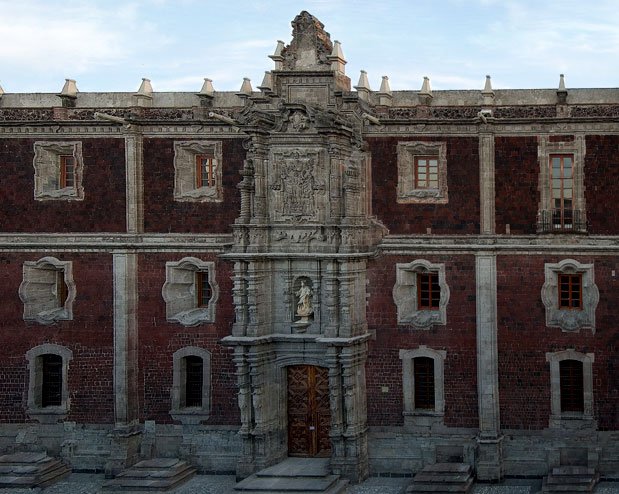
Founded in the late 16th century by Jesuits, the San Pedro y San Pablo College was one of the earliest educational centers in New Spain. The church, a prime example of colonial baroque architecture, became home to the Museum of Light in 1996 after restoration by the National Autonomous University of Mexico (UNAM). The transformation from sacred space to science museum reflected Mexico City’s dedication to preserving its historical heritage while fostering educational innovation.
National Impact
As an extension of UNAM’s Universum Science Museum, the Museum of Light played a vital role in science communication throughout Mexico and Latin America (Wikipedia). Its focus on light, optics, and perception made it unique among regional museums, supporting scientific literacy and inspiring curiosity in visitors of all ages (Museos de México).
Museum Architecture and Restoration
The museum’s setting within a colonial baroque church provided a dramatic backdrop for its scientific mission. Restoration efforts preserved stone facades, vaulted ceilings, and intricate details, while modern lighting systems and exhibit installations highlighted both historic and educational elements. This architectural blend created a unique ambiance for exploring light’s scientific and cultural significance.
Exhibitions and Educational Programs
Permanent Exhibitions
The Museum of Light featured interactive exhibits designed to demystify the science of light:
- The Nature of Light: Covered wave-particle duality, the electromagnetic spectrum, and optical phenomena.
- Light and Life: Explored photosynthesis, bioluminescence, and human vision.
- Light and Technology: Demonstrated applications such as lasers, fiber optics, and imaging.
- Light in Art and Culture: Showcased the use of light in Mexican art, architecture, and traditions.
- Light in the Universe: Examined cosmic light and astronomical discoveries.
- Vision and Perception: Explained how humans and animals perceive light and color.
Temporary Exhibitions and Workshops
Rotating exhibitions introduced topics like bioluminescence, urban lighting, and interactive light art. Hands-on workshops and guided tours catered to families, school groups, and lifelong learners, reinforcing the museum’s educational mission (Journal of Museum Education).
Visitor Information (Historical)
Hours and Tickets
Note: The Museum of Light is now permanently closed. The following information reflects operations prior to closure:
- Hours: Tuesday to Sunday, 10:00 AM – 5:00 PM; closed Mondays and major holidays.
- Tickets: General admission was typically 35–60 MXN, with discounts for students, teachers, seniors, and free entry for children under 6.
Accessibility
The building offered ramps and accessible pathways, though some areas of the historic structure posed challenges for mobility. Bilingual signage and staff supported visitors of all backgrounds.
Guided Tours and Group Visits
Guided tours in Spanish and English were available for groups of 10 or more, providing in-depth exploration of exhibits and the building’s history.
Getting There and Visitor Tips
- Location: San Ildefonso College, "Colegio Chico" section, Justo Sierra 16, Centro Histórico, Mexico City.
- Public Transport: Easily accessible via Metro stations Allende (Line 2), Zócalo (Line 2), and Bellas Artes (Lines 2 and 8).
- Travel Tips: Visit on weekday mornings for smaller crowds; wear comfortable shoes; check official sources for updates on museum status and nearby attractions.
Nearby Attractions and Historical Sites
With its central location, visitors frequently combined trips to the Museum of Light with other historical landmarks:
- Templo Mayor
- Palacio de Bellas Artes
- Museo Nacional de Arte
- House of Tiles (Casa de los Azulejos)
- Diego Rivera Mural Museum
These sites offer a comprehensive cultural itinerary in Mexico City’s Centro Histórico.
Alternative Science Museums in Mexico City
Since the permanent closure of the Museum of Light, visitors can enjoy these highly recommended alternatives:
- Universum, UNAM’s Science Museum: Extensive interactive exhibits on physics, biology, environment, and technology.
- Papalote Children’s Museum: Hands-on science and art activities designed for younger audiences.
Both museums feature dynamic programs and are accessible by public transportation.
Frequently Asked Questions (FAQ)
Q: Is the Museum of Light open?
A: No, the Museum of Light is permanently closed.
Q: Where can I visit science museums in Mexico City?
A: Universum at UNAM and Papalote Children’s Museum are excellent alternatives.
Q: What are some must-visit historical sites nearby?
A: Templo Mayor, Palacio de Bellas Artes, House of Tiles, and Museo Nacional de Arte.
Q: How do I get tickets to other museums?
A: Most major museums recommend booking tickets online in advance, especially for popular destinations.
Listen to the full story in the app
The whole Museum Of Light, Mexico City,
told well.
Audio guides for 1,100+ cities across 96 countries. History, stories, and local insight — offline ready.
Verified, and shown.
Researched and written by the Audiala editorial team from historical records, architectural archives, and local expertise.
Researched from Wikidata, Wikipedia & official sources · fact-checked · How we make our guides →