Plan and listen to Monument To Enrico Martínez with Audiala.
Audio guide in your pocket, itinerary in your browser. Built for the way you actually visit.
Introduction
In the heart of Mexico City's Centro Histórico, the Monument to Enrico Martínez—also known as the Monumento Hipsográfico—stands as a compelling tribute to the ingenuity and resilience that have shaped the city’s history. This unique monument not only honors a visionary 16th-century cosmographer and hydraulic engineer but also embodies Mexico City’s ongoing dialogue with water management, urban development, and scientific progress. This guide provides detailed insights into the monument’s origins, artistic and scientific features, visiting hours, accessibility, and practical travel tips, ensuring you can fully appreciate one of Mexico City’s most emblematic historical sites (mexicocity.cdmx.gob.mx; es.wikipedia.org; en.travelbymexico.com).

Origins and Purpose of the Monument
The Monument to Enrico Martínez was originally conceived in 1877 and completed in 1881 at the initiative of Vicente Riva Palacio, a prominent Mexican intellectual and politician. Its primary purpose was twofold: to honor Enrico Martínez for his pivotal role in draining the Valley of Mexico’s lakes and to serve as a scientific marker recording historical water levels. The monument was initially installed at the intersection of Seminario and Arzobispado streets and later relocated in 1925 to its current site beside the Metropolitan Cathedral in Plaza del Marqués (mexicocity.cdmx.gob.mx; waymarking.com).
The monument’s hypsographic indicators were used to measure and record the water levels of the Valley’s principal lakes, notably Texcoco, which frequently threatened the city with floods. This scientific function exemplifies the era’s integration of public art and urban engineering.
Enrico Martínez: The Visionary Engineer
Enrico Martínez (c. 1550–1632), born Heinrich Martin in Hamburg, Germany, arrived in New Spain in 1590. He became royal cosmographer, printer, and, most notably, a hydraulic engineer. Martínez’s legacy is defined by his leadership in the monumental project to drain the Valley of Mexico, a feat aimed at protecting the city from devastating floods. His work on the Desagüe de Huehuetoca, begun in 1607, laid the foundation for centuries of urban water management (en.travelbymexico.com; es.wikipedia.org).
Although only partially successful in his time, Martínez’s innovations established principles that would guide future hydraulic projects and urban planning in Mexico City.
Artistic and Scientific Features
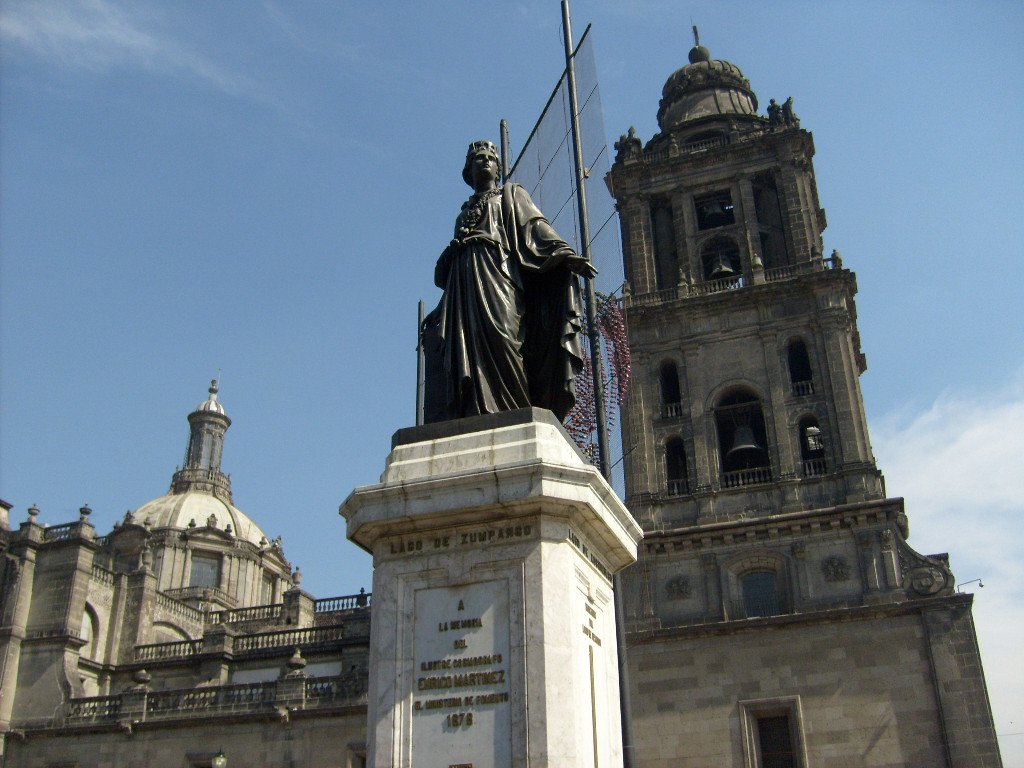
The monument is a collaborative work by architect Francisco Jiménez and sculptor Miguel Noreña, with bronze elements cast in France. It features:
- Allegorical Figure: A bronze female figure, crowned with ramparts and garlands, symbolizes Mexico City’s resilience and strength.
- Pedestal Inscriptions: The stone base lists the names and elevations of the four principal lakes—Xochimilco, San Cristóbal, Xaltocan, and Zumpango—alongside engraved scientific measurement standards (meter, yard, vara).
- Hypsographic Markers: Originally, the monument included water level indicators, transforming it into a practical reference for engineers and surveyors (mexicocity.cdmx.gob.mx).
These features weave together commemorative art, scientific reference, and urban history, making the monument both a cultural and technical landmark (waymarking.com; Godín Chilango).
Relocation and Urban Context
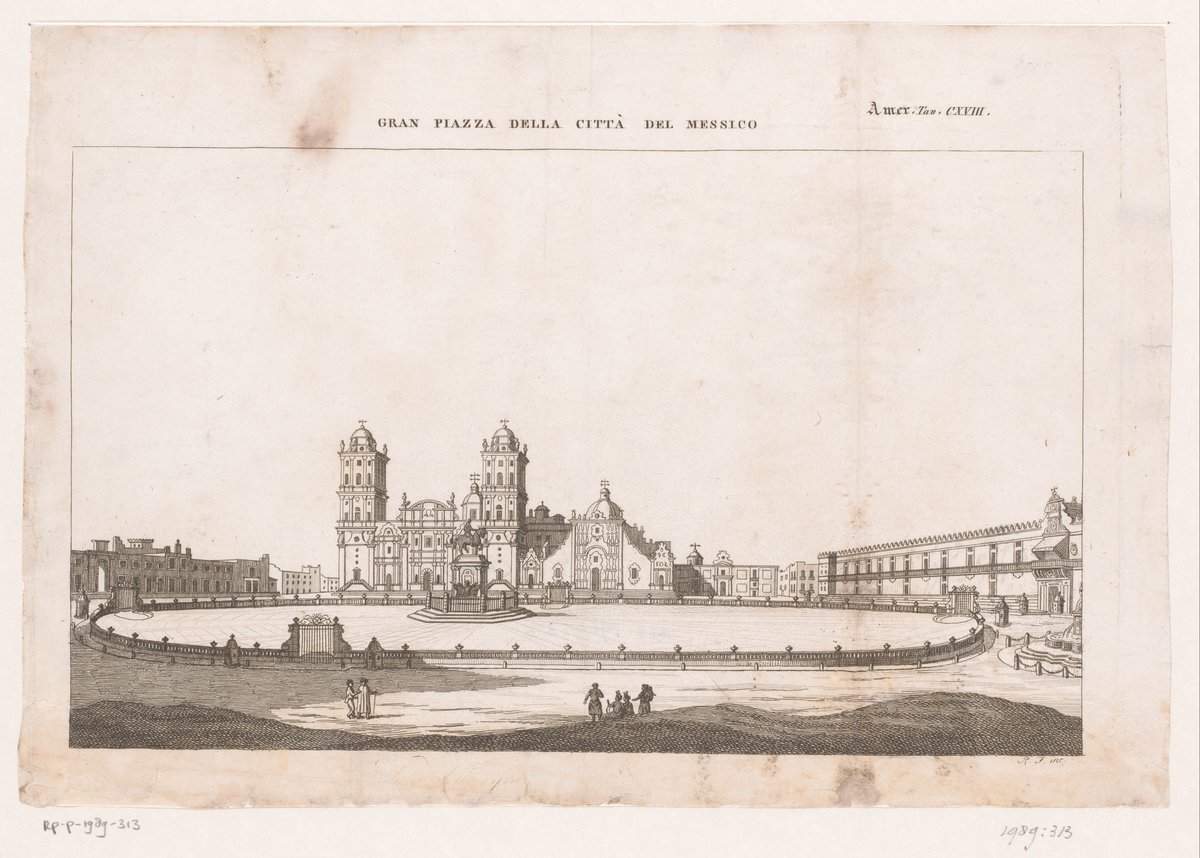
The monument’s original site marked “Kilometer Zero” for Mexico City's cartography, a symbolic starting point for the nation’s road network. Its relocation in 1925 to its current position beside the Metropolitan Cathedral placed it at the nexus of the city’s religious, political, and cultural life. Today, it stands as a prominent feature of the Centro Histórico, surrounded by major landmarks such as the Zócalo, Templo Mayor, and Palacio Nacional (en.wikipedia.org; Evendo).
The monument remains a vital reference point for urban orientation and a springboard for exploring Mexico City’s layered history.
Visiting Information
Location and Access
- Address: Calle Monte de Piedad #7, Centro Histórico, Mexico City
- Nearest Metro: Zócalo/Tenochtitlán (Line 2); also accessible from Pino Suárez and Bellas Artes stations
- On Foot: Steps from the Metropolitan Cathedral and the Zócalo, within easy reach of other major attractions (Travel By Mexico; Evendo)
Visiting Hours and Tickets
- Hours: Open 24 hours a day, year-round
- Tickets: No entrance fee; the monument is in a public plaza and freely accessible at all times
Accessibility
- Wheelchair Access: The plaza and surrounding sidewalks are generally accessible, though some areas have uneven paving typical of historic districts. Metro stations nearby have elevators and ramps.
- Amenities: Public restrooms are available in nearby museums and commercial establishments. The area is well-served by ATMs, currency exchange offices, and cafés.
Travel Tips and Etiquette
- Best Times to Visit: Early mornings or late afternoons provide the best lighting for photography and a more tranquil atmosphere. Weekdays are less crowded.
- Dress: Wear comfortable shoes for walking on cobblestone and bring rain gear during the wet season (June–September).
- Safety: The area is well-patrolled, but remain aware of your belongings, especially during festivals or large public events.
- Respect the Monument: Refrain from climbing or sitting on the monument and handle engravings carefully.
Photographic Opportunities
- Capture the monument with the Metropolitan Cathedral in the background, especially during sunrise or sunset for dramatic lighting.
- Take close-up shots of the scientific markers and inscriptions for a unique perspective on its historical function.
Cultural and Historical Significance
The Monument to Enrico Martínez is more than a commemorative statue. It symbolizes Mexico City’s enduring relationship with its environment and the persistent challenges of managing water in a city built on a former lakebed. The monument’s scientific and artistic features highlight the city’s tradition of integrating art, science, and public memory. Its central location and prominence in civic life make it a focal point for educational tours, cultural events, and urban exploration (Godín Chilango; es.wikipedia.org).
Frequently Asked Questions (FAQ)
Q: What are the monument’s visiting hours?
A: The monument is outdoors and accessible 24 hours a day, seven days a week.
Q: Is there an entry fee?
A: No, visiting the monument is free of charge.
Q: How do I reach the monument by public transport?
A: Take Metro Line 2 to Zócalo/Tenochtitlán, or Lines 2 and 8 to Bellas Artes; the monument is a short walk from these stations.
Q: Is the monument wheelchair accessible?
A: Yes, though some uneven surfaces exist; assistance may be required in certain areas.
Q: Are guided tours available?
A: Many walking tours of the Centro Histórico include the monument. Check with local tour operators or the Secretaría de Cultura CDMX for schedules.
Q: Can I take photos at the monument?
A: Yes, photography is encouraged.
Listen to the full story in the app
The whole Monument To Enrico Martínez,
told well.
Audio guides for 1,100+ cities across 96 countries. History, stories, and local insight — offline ready.
Verified, and shown.
Researched and written by the Audiala editorial team from historical records, architectural archives, and local expertise.
Researched from Wikidata, Wikipedia & official sources · fact-checked · How we make our guides →