Plan and listen to Library Of México (Ciudadela) with Audiala.
Audio guide in your pocket, itinerary in your browser. Built for the way you actually visit.
Introduction
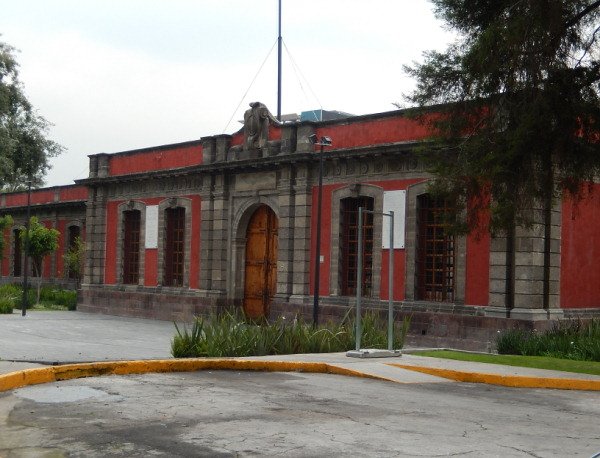
Nestled in Mexico City's Historic Center, the Library of México at La Ciudadela stands as a living testament to Mexico's layered history, architectural ingenuity, and dynamic cultural scene. Originally built as the Real Fábrica de Puros y Cigarros de México in the late 18th century, its imposing neoclassical structure has witnessed the nation's colonial ambitions, revolutionary upheavals, and its remarkable transformation into a vibrant hub of literature and the arts. Today, La Ciudadela not only preserves a rich historical legacy but also offers visitors immersive experiences through its extensive collections, personal libraries of renowned intellectuals, and diverse cultural programming. This guide provides comprehensive information on the library’s history, architecture, visiting hours, ticketing, accessibility, and surrounding attractions, making it an essential resource for anyone planning a visit to one of Mexico City’s most significant cultural landmarks (Biblioteca de México, Visit La Ciudadela, ArchDaily).

Mesoamerican Roots and Colonial Beginnings
The site of today’s La Ciudadela is steeped in history, dating back to the Mesoamerican era near the Moyotlan-Teocaltitlan district of ancient México-Tenochtitlan. Archaeological discoveries, such as a pre-Hispanic ball court found in 1989, highlight its deep indigenous roots. Construction of the neoclassical building began in 1793, commissioned as the Real Fábrica de Puros y Cigarros de México. Designed by architects Miguel Mascaró, José Antonio González Velázquez, and Ignacio Castera, the structure’s thick stone walls and symmetrical courtyards reflected the era’s industrial and military priorities (Wikipedia).
19th Century Transformation
During the War of Independence, the building was converted into a military fortress and prison, famously holding revolutionary leader José María Morelos in 1815. By 1816, it became known as the Parque General de Artillería, or General Artillery Park, and was further expanded under presidents Guadalupe Victoria and Vicente Guerrero to bolster its defensive capabilities.
Revolutionary Period and Decena Trágica
La Ciudadela played a pivotal role in the Decena Trágica of 1913, a ten-day coup that marked a turning point in the Mexican Revolution. Rebel forces led by Félix Díaz occupied the fortress, and the site became the stage for intense conflict and political intrigue, including the assassination of Gustavo Adolfo Madero.
Conversion to a Library and Modern Evolution
In 1944, President Manuel Ávila Camacho decreed the building’s conversion into the Biblioteca de México, which opened in 1946 under José Vasconcelos’ directorship. Major renovations in 1987 by Abraham Zabludovsky introduced translucent canopies over the central courtyards, creating luminous reading spaces while respecting the historic fabric. The 21st-century transformation, led by architects Alejandro Sánchez and Bernardo Gómez-Pimienta, culminated in the 2012 opening of “La Ciudadela: Ciudad de los Libros y la Imagen,” integrating technology, specialized libraries, and new cultural spaces (ArchDaily, thomasguignard.photo).
Architectural Significance
La Ciudadela’s neoclassical design is characterized by its fortress-like massing, thick stone walls, and interconnected patios—features that reflect both its industrial origins and defensive adaptations. The 1987 and 2012 renovations respectfully layered modern amenities onto the historic structure, incorporating natural light, digital technology, and specialized spaces such as the Library for the Visually Impaired. The result is a harmonious blend of historical preservation and contemporary functionality, acknowledged as a model for adaptive reuse in Mexico (mexicocity.cdmx.gob.mx, Lonely Planet).
Signature spaces include:
- Jan Hendrix’s Monumental Sculpture: A striking centerpiece in the main courtyard, symbolizing the library’s embrace of both tradition and modernity.
- Five Personal Libraries: Each designed by a different architect, these spaces honor prominent Mexican intellectuals and display their personal collections in distinctive settings (ArchDaily – Jaime García Terrés Library).
- Children’s and Accessibility Libraries: Designed for inclusivity, these spaces feature tactile signage, enhanced lighting, and playful architecture (Architectural Review).
Visiting Information
Location and Access
- Address: Plaza de la Ciudadela 4, Centro Histórico, Mexico City
- Metro: Balderas (Lines 1 and 3) is directly across the street; Salto del Agua (Lines 1 and 8) is also nearby.
- Bus and Taxi: Multiple bus routes and ride-sharing services serve the area.
Hours and Admission
- General Hours: Tuesday to Sunday, 10:00 AM – 6:00 PM
- Closed: Mondays and public holidays
- Admission: Free for all visitors. Some special exhibitions or events may require tickets—check the official website for details (Biblioteca de México).
Accessibility and Visitor Services
- Wheelchair Access: Ramps, elevators, and accessible restrooms are available.
- Library for the Visually Impaired: Features tactile signage, improved lighting, and proximity to a sensory garden.
- Information Desks and Lockers: Staff provide assistance with catalog searches and visitor orientation; lockers are available for personal belongings.
Guided Tours and Photography
- Tours: Offered on weekends and by appointment. Tours cover the building's history, architecture, and special collections.
- Photography: Allowed in most public areas, but restrictions may apply in special exhibitions. Flash and tripods may be limited.
Collections and Cultural Programming
General Holdings and Special Collections
With over 500,000 volumes, the Library of México’s collection spans Mexican history, literature, the sciences, and the arts. Special features include:
- Personal Libraries: "La Ciudad de los Libros" displays the collections of José Luis Martínez, Antonio Castro Leal, Jaime García Terrés, Alí Chumacero, and Carlos Monsiváis in dedicated, museum-like settings.
- Rare Manuscripts and Maps: Essential resources for researchers and historians.
- Children’s and Family Areas: The Ludoteca and Bebeteca foster early literacy through interactive activities.
Cultural Programming
- Exhibitions: Three halls host rotating visual art and photography shows.
- Theater and Film: Regular performances and screenings enrich the library’s cultural calendar.
- Workshops and Outreach: Literature, writing, and interdisciplinary workshops are available for all ages, with a focus on inclusivity and educational outreach.
- Literary Magazine and Awards: The library publishes a bimonthly magazine and hosts prestigious literary awards, celebrating Mexico’s literary heritage.
Nearby Attractions
- Parque de la Ciudadela: A European-style garden adjacent to the library.
- Mercado de Artesanías La Ciudadela: Renowned crafts market.
- Centro de la Imagen: Photography museum located within the complex.
- Museo Nacional de Arte and Palacio de Bellas Artes: Within walking distance, offering a full day of cultural exploration.
Frequently Asked Questions (FAQ)
Q: What are the library’s opening hours?
A: Tuesday to Sunday, 10:00 AM–6:00 PM. Closed Mondays and public holidays.
Q: Is admission free?
A: Yes, general entry is free. Some events or exhibitions may require tickets.
Q: Is the facility accessible to people with disabilities?
A: Yes, with ramps, elevators, and specialized spaces for visually impaired visitors.
Q: Are guided tours available?
A: Yes, on weekends and by appointment. Check the website or ask at the information desk.
Q: Can I take photos inside?
A: Photography is allowed in most public areas. Flash and tripods may be restricted.
Q: How do I get to La Ciudadela?
A: Balderas metro station is across the street; the site is also accessible by bus, taxi, and rideshare.
Listen to the full story in the app
The whole Library Of México (Ciudadela),
told well.
Audio guides for 1,100+ cities across 96 countries. History, stories, and local insight — offline ready.
Verified, and shown.
Researched and written by the Audiala editorial team from historical records, architectural archives, and local expertise.
Researched from Wikidata, Wikipedia & official sources · fact-checked · How we make our guides →