Plan and listen to Edificio Miguel E. Abed with Audiala.
Audio guide in your pocket, itinerary in your browser. Built for the way you actually visit.
Introduction
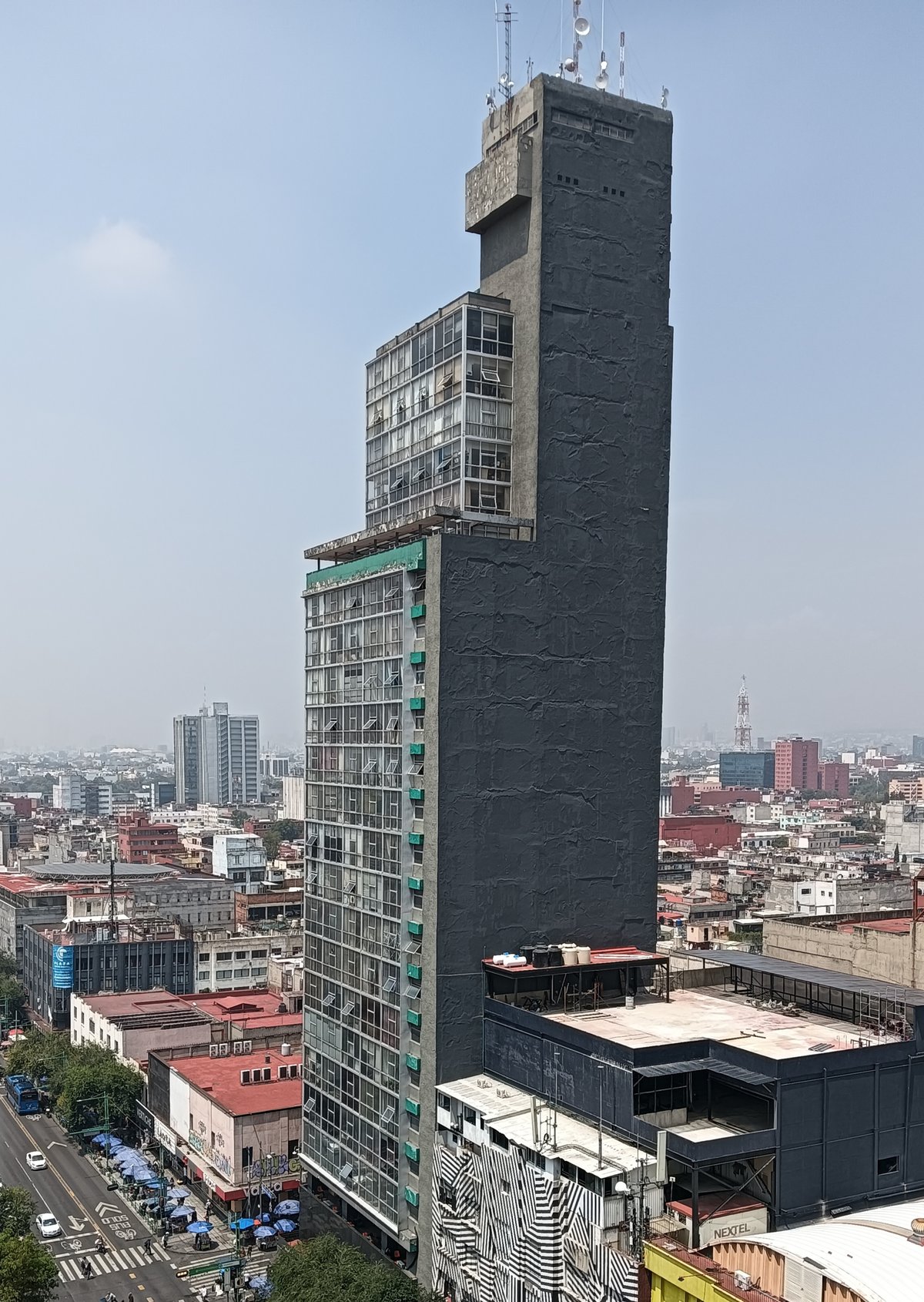
Edificio Miguel E. Abed is a landmark of modernist architecture and seismic engineering in the heart of Mexico City’s Historic Center. Built during the city’s post-war boom, it represents both a technical marvel and a symbol of urban modernization. This detailed guide covers the building’s history, architectural highlights, practical visitor information, surrounding attractions, and essential tips for experiencing one of Mexico City’s most significant skyscrapers.

A Modernist Beacon Amidst Mexico City’s Growth
Constructed between 1949 and 1952, Edificio Miguel E. Abed emerged as a response to Mexico City’s rapid urban and economic growth after World War II. Commissioned by Miguel E. Abed, a Mexican-Lebanese entrepreneur, the building was envisioned as a cutting-edge office tower to address the city’s growing demand for vertical workspace (Wikipedia; Everything Explained Today). Upon completion, it was the tallest building in Mexico and set new standards for skyscraper construction in Latin America.
Location and Urban Context
Standing at Eje Central Lázaro Cárdenas #13, the building is centrally positioned in Centro Histórico, a UNESCO World Heritage Site. Its proximity to Torre Latinoamericana, Palacio de Bellas Artes, and other landmarks makes it a prominent fixture in the city’s skyline (Edemx; Trek Zone).
Cultural Legacy
Beyond its function as an office tower, Edificio Miguel E. Abed reflects the city’s multicultural heritage and innovative spirit. Its creation marked the beginning of Mexico City’s vertical expansion, and its resilience in the face of multiple earthquakes has made it an enduring symbol of the city’s adaptability and engineering prowess.
Engineering Innovations and Architectural Features
Seismic Engineering
Mexico City’s soft subsoil and seismic activity have shaped its architectural evolution. Edificio Miguel E. Abed was among the first skyscrapers globally to incorporate advanced anti-seismic measures, including:
- Deep Foundation: 195 reinforced concrete piles, each reaching 60 meters below ground, anchor the building to the bedrock (Wikipedia).
- Seismic Dampers: 40 shock-absorbing devices dissipate earthquake energy, ensuring structural stability (Everything Explained Today).
- Robust Core and Windowless North Wall: The windowless north façade enhances rigidity, while the steel-concrete core provides additional strength.
The building has survived major earthquakes, including the devastating events of 1957, 1985, and 2017, with minimal damage, solidifying its reputation as one of the safest skyscrapers in the region.
Architectural Style
Edificio Miguel E. Abed exemplifies the International Style, with:
- Clean Lines and Minimalist Design: Horizontal bands of windows, reinforced concrete, and a stepped silhouette reflect modernist aesthetics (Arquitectura Moderna en México).
- Functional Layout: Open-plan office spaces, high-speed elevators, and ground-level arcades that integrate with the urban streetscape.
- Material Innovations: Use of local stone, imported glass, and pioneering curtain wall systems.
Modernization
In the late 1980s, the building underwent technological upgrades, including intelligent lighting and energy management systems, ensuring its continued relevance as a commercial hub (Everything Explained Today).
Visiting Information: Hours, Tickets, and Accessibility
Visiting Hours
- Exterior Viewing: The building’s exterior can be admired at any time.
- Interior Access: Edificio Miguel E. Abed is an office building; public interior access is generally restricted. Entry is allowed for business purposes or by appointment.
- Guided Tours: Occasionally, specialized guided tours are offered through local agencies; these must be arranged in advance (Touristlink).
Tickets
- No Tickets Required: For viewing the exterior and surrounding public areas, no tickets are needed.
- Special Events: Fees and ticketing for guided tours or events are determined by the organizers.
Accessibility
- Wheelchair Access: Sidewalks and the building’s main entrance are accessible for those with limited mobility.
- Transport: The site is conveniently served by Metro (Bellas Artes and San Juan de Letrán stations), bus lines, and EcoBici bike-share stations (The Unconventional Route).
Nearby Attractions and Suggested Itineraries
Leverage Edificio Miguel E. Abed’s central location to explore Mexico City’s historic and cultural treasures:
- Torre Latinoamericana: Observation deck with panoramic city views (across the street).
- Palacio de Bellas Artes: Renowned for its architecture and cultural events (5-minute walk).
- Casa de los Azulejos: Historic tiled palace and restaurant (4-minute walk).
- Mercado de San Juan: Culinary hotspot for local and international foods (7-minute walk).
- Museo Nacional de Arte, Alameda Central, Templo Mayor: All within a 10-minute stroll (Trek Zone).
Suggested Itinerary:
Morning: Stroll along Eje Central, admiring the building and nearby landmarks.
Midday: Visit Torre Latinoamericana and Palacio de Bellas Artes.
Lunch: Try Casa de los Azulejos or Mercado de San Juan.
Afternoon: Explore museums and public plazas.
Architectural Appreciation and Photography
- Best Viewing Times: Early morning and late afternoon offer optimal lighting for photography.
- Photographic Highlights: The contrast between Edificio Miguel E. Abed’s modernist facade and the ornate architecture of neighboring buildings provides compelling compositions. Best vantage points are from Eje Central and Torre Latinoamericana’s observation deck.
- Photography Policy: Exterior photography is unrestricted. Interior photography is not permitted without authorization.
Safety, Etiquette, and Practical Tips
- Safety: Centro Histórico is generally safe by day; exercise caution after dark and secure valuables.
- Local Etiquette: Be respectful of office workers and tenants. Avoid obstructing entrances and always seek permission before attempting to enter the building.
- Dining: Enjoy a range of dining options nearby, from historic restaurants like Casa de los Azulejos to local street food and markets (Trek Zone; The Unconventional Route).
- Transport: Metro and EcoBici are efficient; expect some traffic congestion in the city center.
- Weather: Mild year-round; bring rain gear in summer.
- Cash: Have small bills on hand; many small vendors are cash-only.
Frequently Asked Questions (FAQ)
Can I enter Edificio Miguel E. Abed as a tourist?
Public access is limited; entry is for business or appointment only. Occasionally, guided tours are available by prior arrangement.
Are tickets required to visit?
No tickets are needed to view the building from outside.
What are the official visiting hours?
There are no official sightseeing hours. The exterior can be viewed at any time.
Is the building accessible?
The exterior and surrounding sidewalks are wheelchair accessible.
What nearby sites can I visit?
Torre Latinoamericana, Palacio de Bellas Artes, Casa de los Azulejos, Mercado de San Juan, and more.
For further visuals and virtual tours, consult the building's and local tourism websites.
Discover More
Edificio Miguel E. Abed is a testament to Mexico City’s resilience, innovation, and spirited modernization. Though its interior is not open to the public, its architectural and engineering achievements can be appreciated from the vibrant streets of Centro Histórico. Make it a reference point during your exploration of the city’s rich historical and cultural heritage.
For the latest updates, guided tours, and insider tips, download the Audiala app, follow us on social media, and explore our related guides to Mexico City’s most fascinating landmarks.
Listen to the full story in the app
The whole Edificio Miguel E. Abed,
told well.
Audio guides for 1,100+ cities across 96 countries. History, stories, and local insight — offline ready.
Verified, and shown.
Researched and written by the Audiala editorial team from historical records, architectural archives, and local expertise.
Abed, 2025, Wikipedia
Abed, 2025, Everything Explained Today
Abed, 2025, Arquitectura Moderna en México
Abed, 2025, Edemx
Abed, 2025, Trek Zone
Abed, 2025, Touristlink
Abed, 2025, Skyscraper Center
Researched from Wikidata, Wikipedia & official sources · fact-checked · How we make our guides →