Plan and listen to Central Library Unam with Audiala.
Audio guide in your pocket, itinerary in your browser. Built for the way you actually visit.
Introduction
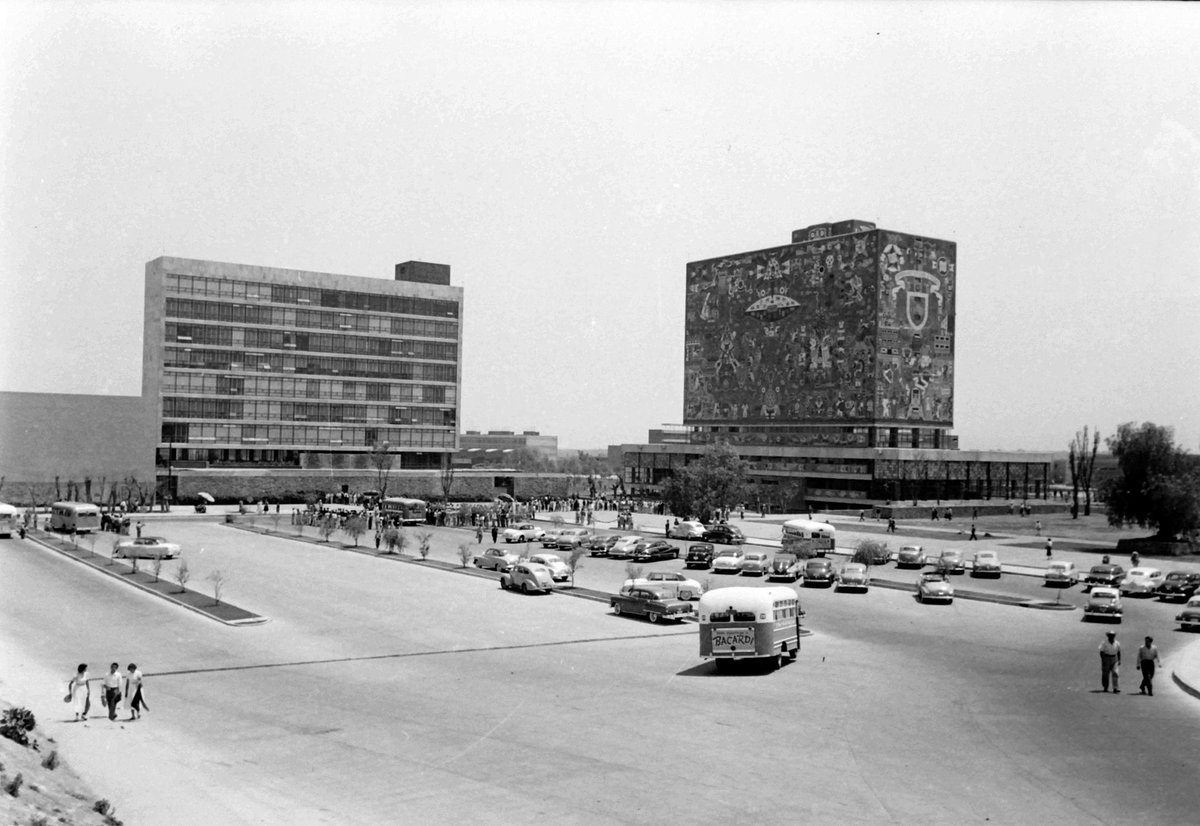
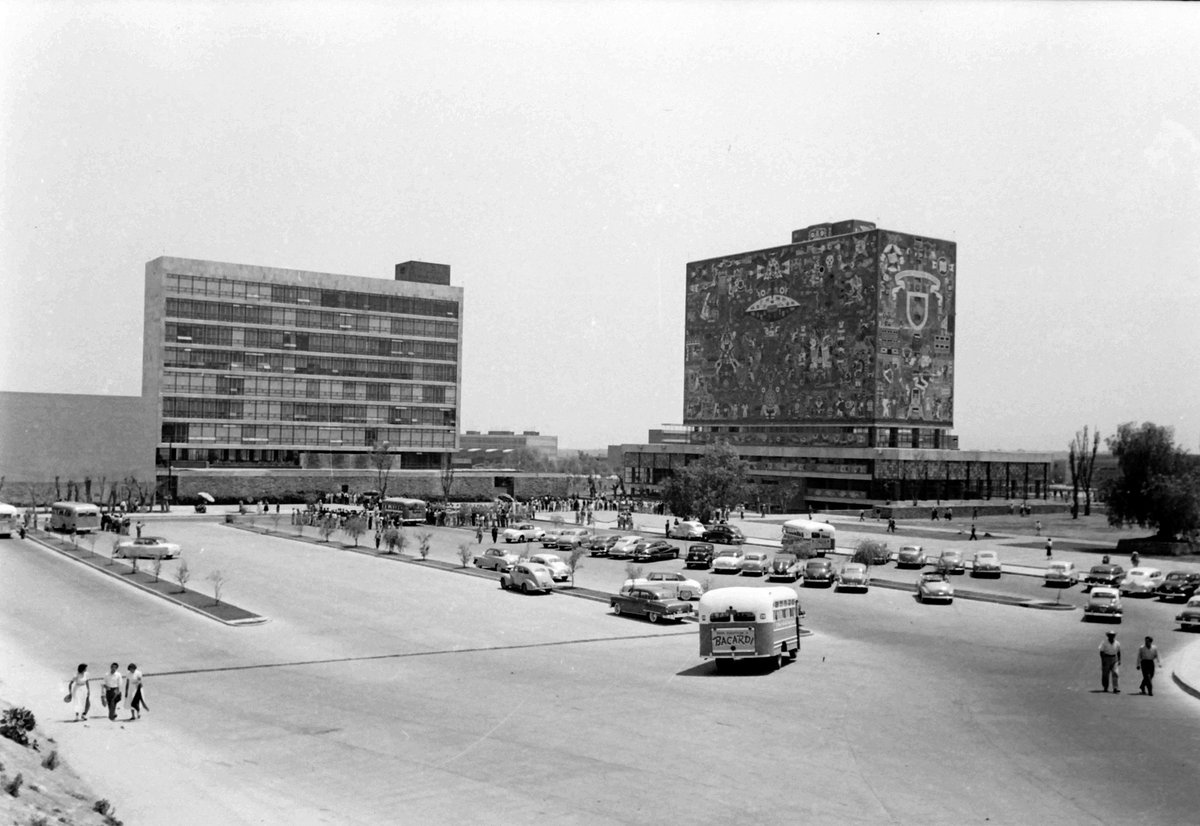
The Central Library of the National Autonomous University of Mexico (UNAM) is an architectural and cultural landmark located within the UNESCO World Heritage-listed Ciudad Universitaria campus in Mexico City. Designed by renowned architect and painter Juan O’Gorman, the library is famed for its monumental mosaic murals, which visually narrate the nation’s history using thousands of colored stones sourced from across Mexico. As both a hub of academic resources and a beacon of Mexican identity, the Central Library is a must-visit for those interested in art, architecture, history, and education (The History Hub; Architectuul; Timeout).
This guide provides an in-depth overview of the library’s origins, architectural vision, artistic significance, and practical visitor information, including hours, accessibility, and nearby attractions.

Origins and Vision for University City
Historical Background
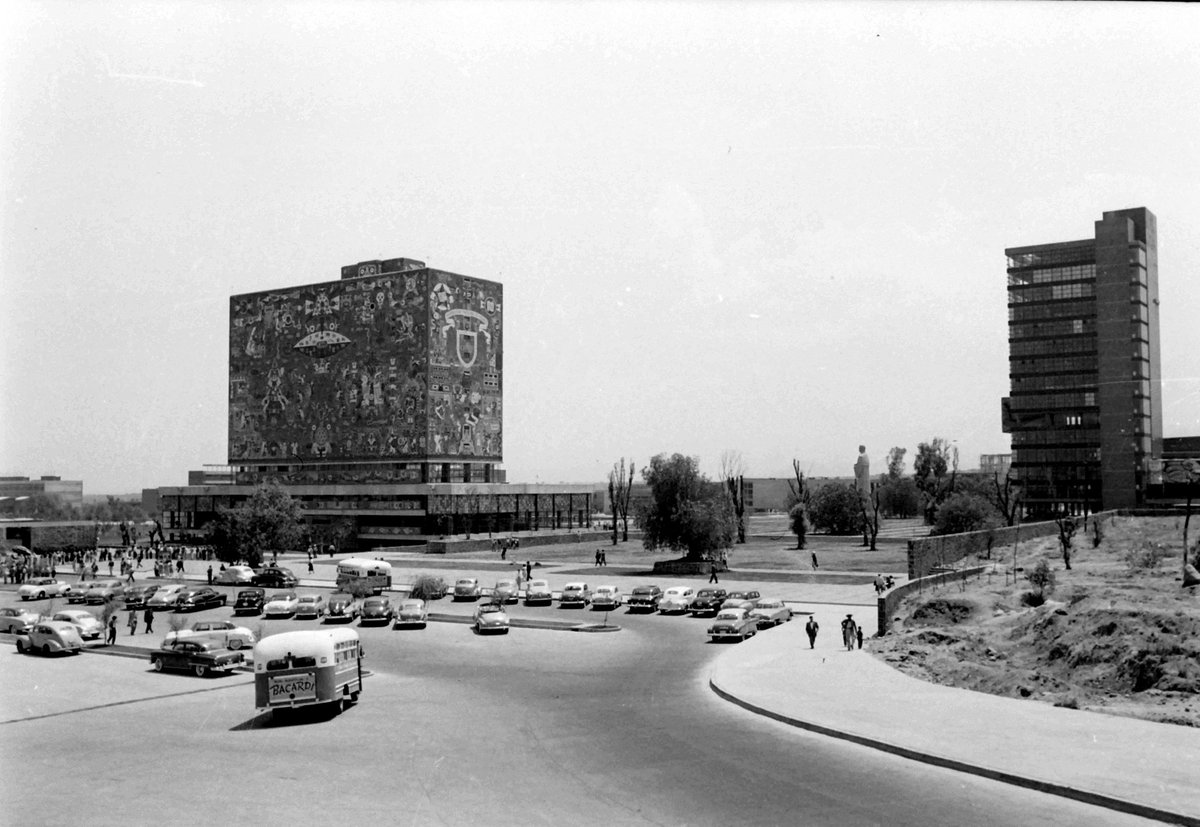
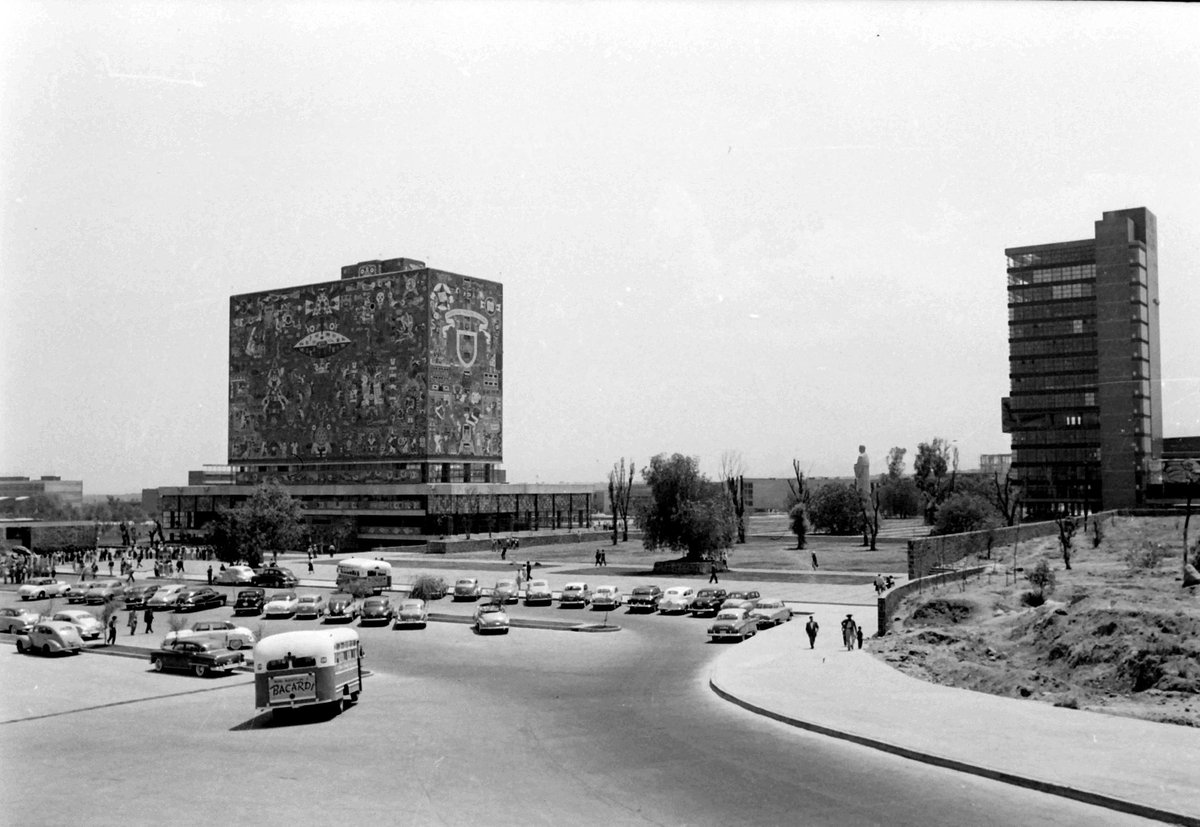
The Central Library is a product of UNAM’s ambitious expansion in the mid-20th century. Seeking to accommodate a rapidly growing student population and embody a modern Mexican identity, the university moved from downtown Mexico City to a new campus, Ciudad Universitaria, built on the volcanic landscape of Pedregal de San Ángel. This site, shaped by the ancient Xitle volcano, is also of archaeological importance (The History Hub; Postwar Campus).
Campus Master Plan
The master plan, led by Mario Pani and Enrique del Moral, called on over 60 architects and artists to create a “city of the future” that blended modernist urbanism with inspiration from pre-Hispanic cities like Teotihuacán (Postwar Campus). The vision was to create a campus that was not only functional but also a national symbol of education and progress.
Conception and Construction of the Central Library
Design and Inauguration
Construction of the Central Library began in 1950 under the direction of Juan O’Gorman, Gustavo María Saavedra, and Juan Martínez de Velasco (Biblioteca Central UNAM). The library officially opened on April 5, 1956.
Originally envisioned as the home of the National Library and National Newspaper Archive, the Central Library instead became the university’s principal academic library, open to the public and the academic community (Biblioteca Central UNAM).
Architectural and Artistic Significance
Building Design
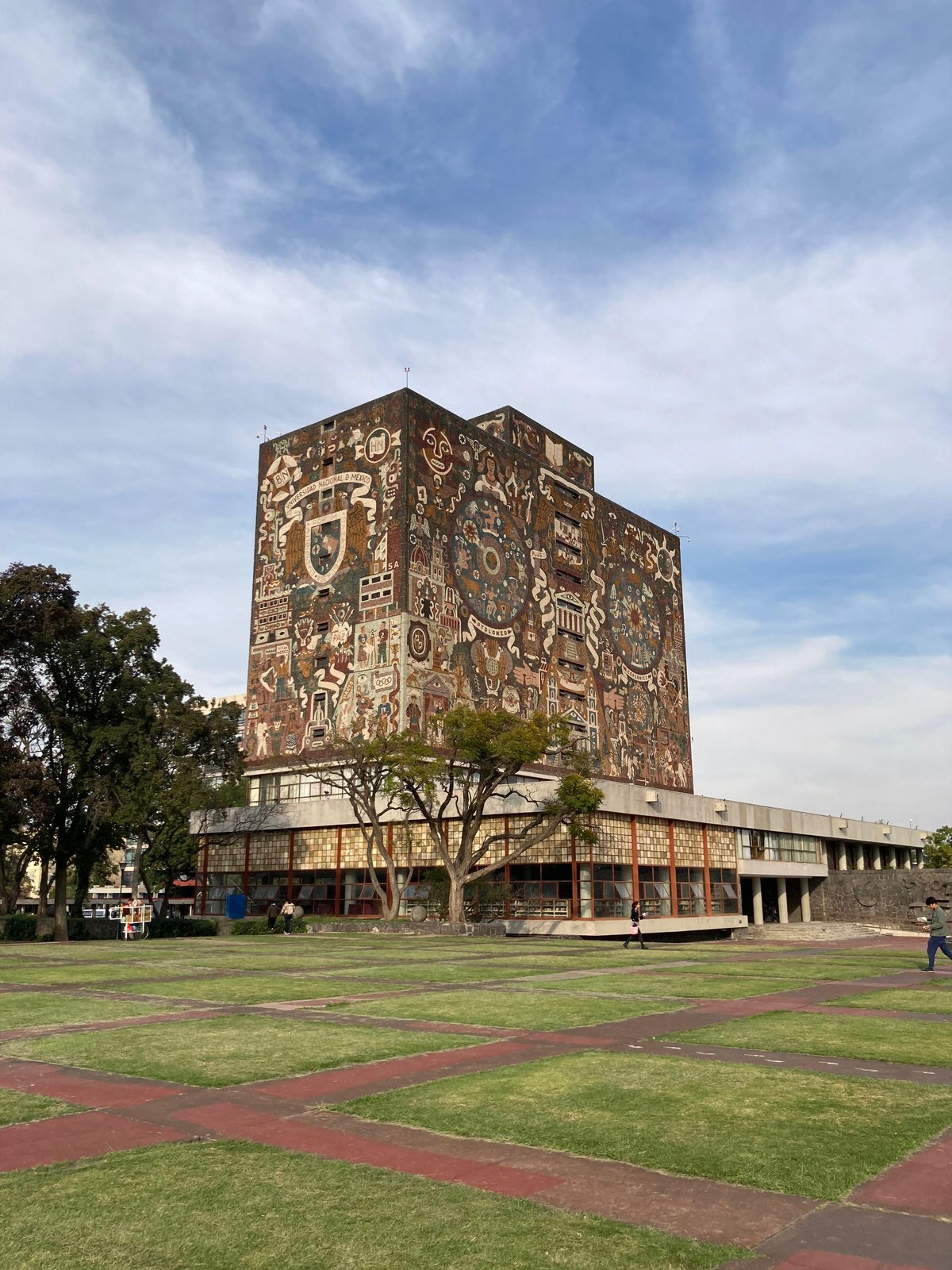
The Central Library is a striking example of functionalist Mexican modernism. Its rectilinear, mostly windowless form protects its vast collections from sun damage. To transform the structure from a plain concrete box to a visual landmark, Juan O’Gorman designed an extraordinary exterior mural using natural stones in over 200 colors, sourced from across Mexico (The Architect’s Take; The Creative Adventurer).
The Mosaic Murals
The murals, covering about 4,000 square meters, make the library one of the world’s largest mosaic artworks (Timeout). Each of the four facades presents a chapter in Mexico’s history:
- North Facade: Pre-Hispanic Mexico, with indigenous symbols and cosmology.
- South Facade: Colonial era, depicting Spanish conquest and cultural fusion.
- East Facade: Modern Mexico, highlighting science, technology, and global integration.
- West Facade: The university’s mission and the future, including the UNAM crest (Architectuul; Let’s Travel to Mexico).
By integrating architecture, painting, and sculpture, O’Gorman’s mural is a prime example of the “synthesis of the arts” movement (bibliotecauniversitaria.dgb.unam.mx).
The Library’s Role in Academic and Cultural Life
The Central Library holds over 620,000 volumes—including more than 358,000 unique titles—and is the main repository of UNAM theses and dissertations (Biblioteca Central UNAM). It pioneered Mexico’s first automated library system (LIBRUNAM) and continues to digitize its vast holdings for broader access.
The library also serves as the administrative heart of UNAM’s General Libraries Directorate and regularly hosts exhibitions, lectures, and cultural events (mexicocity.cdmx.gob.mx).
Preservation, Accessibility, and Visitor Information
Conservation and Accessibility
Since opening Mexico’s first book and document restoration workshop in 1956, the Central Library has been dedicated to preservation. Accessibility has been enhanced with ramps, elevators, and adapted workstations for visitors with disabilities (Biblioteca Central UNAM).
Visiting Hours and Admission
- Weekdays: 8:00 AM – 8:00 PM
- Saturday: 9:00 AM – 2:00 PM
- Sunday/Public Holidays: Closed
- Entry: Free for all visitors; special reading rooms may require university credentials (UNAM Central Library; Biblioteca Central UNAM).
Guided Tours and Photography
Guided tours are available by appointment and cover the murals, architecture, and collections. Photography is permitted on the exterior; interior photography may be restricted in some areas. For commercial shoots or use of tripods, prior permission is required (Biblioteca Central UNAM).
Getting There
The library is easily accessible via Metro Line 3 (stations: Copilco or Universidad) and several bus lines. Ample parking is available for drivers (mexicocity.cdmx.gob.mx).
Nearby Attractions
- Estadio Olímpico Universitario
- Museo Universitario de Arte Contemporáneo (MUAC)
- University museums and gardens
Frequently Asked Questions (FAQ)
Q: What are the Central Library UNAM visiting hours?
A: Monday–Friday: 8:00 AM–8:00 PM; Saturday: 9:00 AM–2:00 PM; Closed Sundays/public holidays.
Q: Is there an entrance fee?
A: Entry is free for all visitors.
Q: Are guided tours available?
A: Yes, by appointment via the library’s website.
Q: Is the library accessible to people with disabilities?
A: Yes, it has ramps, elevators, and assistive technologies.
Q: Can I take photographs?
A: Photography is allowed outside; ask about restrictions for interior spaces.
Q: What is the best time to visit?
A: Weekday mornings or late afternoons are quieter and offer better light for photography.
Listen to the full story in the app
The whole Central Library Unam,
told well.
Audio guides for 1,100+ cities across 96 countries. History, stories, and local insight — offline ready.
Verified, and shown.
Researched and written by the Audiala editorial team from historical records, architectural archives, and local expertise.
Researched from Wikidata, Wikipedia & official sources · fact-checked · How we make our guides →