Introduction
Why does Cabo San Lucas, in Los Cabos Municipality, Mexico, feel like a place invented for postcards when its real story is ambush, survival, and return? You visit for the shock of geography at Land's End: El Arco rising from the water, the Pacific colliding with the Sea of Cortez, and a resort town that still carries the muscle memory of pirates, fishers, and saints. Salt hangs in the air. Water taxis buzz below granite the color of old iron while sea lions bark from the rocks.
Most beach towns ask you to relax. Cabo asks you to look twice. The marina gleams with sport-fishing boats and champagne cruises, yet the shape of the coast still explains everything: a final shelter at the tip of the peninsula, where crews once watched the horizon for Manila galleons heavy with silk and silver.
Records show Pericú communities knew this shore long before any Spanish chart named it. The same rocky edge that now frames honeymoon photos was, according to local tradition, sacred ground, and later a place where sailors prayed, raiders waited, and storm seasons could reorder a life in one night.
That layered feeling is why Cabo is worth your time. Come for the famous arch if you like, but stay long enough to hear what the place has been saying for centuries: land ends here, and whatever arrives by sea can change everything.
Don't Book CABO Cruise Excursions-DO THIS! | Exploring Cabo San Lucas Mexico Lovers Beach Lands End
NotLostNomadWhat to See
El Arco and Land’s End
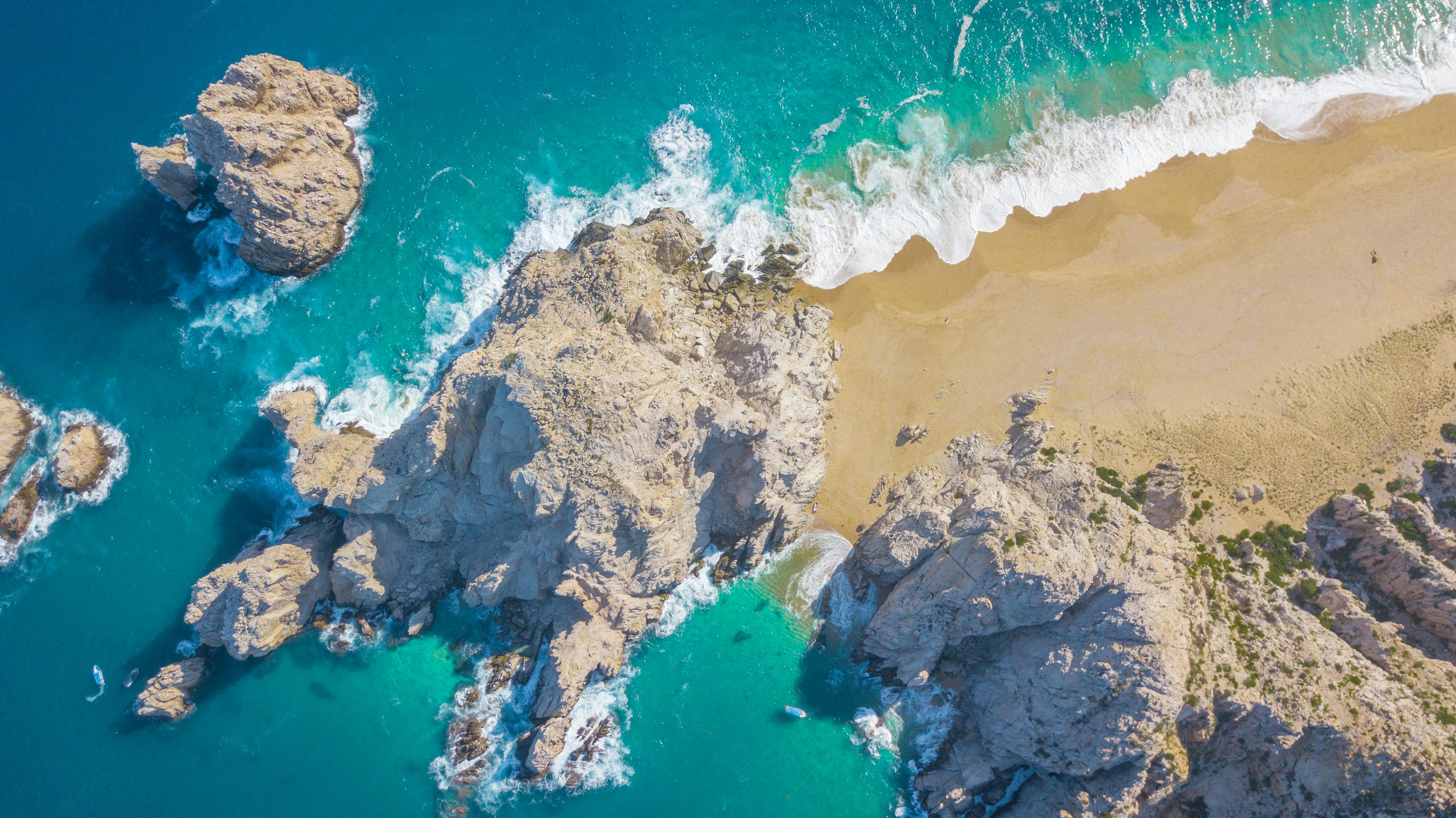
Cabo’s signature arch looks almost too theatrical to be real: a granite gate about three stories high, lifted out of the sea at the exact hinge where the Sea of Cortez meets the Pacific. Go by water taxi early, before the outboards start growling in convoy, and you’ll hear the sea lions first, then the slap of calm water against polished rock on one side and the heavier Pacific surge on the other; the old pirate stories suddenly stop sounding like souvenir-shop fiction.
Lover’s Beach and Divorce Beach
A few steps across the narrow strip of rock between these two beaches, roughly 200 meters from one mood to another, changes the whole town. Lover’s Beach faces the Sea of Cortez and feels almost sheltered, with pale sand, kayak wakes, and water clear enough to catch fish flickering over the bottom, while Divorce Beach takes the full Pacific hit with a deep roar, wind-blown salt, and surf that makes the no-swimming warnings sound less like bureaucracy and more like common sense.
Dawn Route from the Marina to Medano Beach
Start at the marina around 6:30, when yacht masts click in the breeze and the water still holds the soft yellow light from the first cafés opening along the boardwalk. Then walk east toward Medano before the vendors set up and the beach clubs start broadcasting their ambitions; two blocks inland, family-run panaderías and low stucco houses remind you that Cabo was a fishing village long before it learned to pose, and by the time you reach the sand, the town makes more sense.
Videos
Watch & Explore Cabo San Lucas
Cabo San Lucas: TOP 10 Things to Do (for first timers)
The History & What to See & Do in Cabo San Lucas?
Best Things To Do in Cabo San Lucas Mexico 4K
Visitor Logistics
Getting There
Cabo works best in layers: walk the marina and El Centro, then use boats or buses for the pieces the desert and sea keep apart. From Los Cabos International Airport, Ruta 1 buses run toward Marina/Centro every 15-20 minutes for about 15-20 MXN, while the downtown loop from the marina along Calle Miguel Hidalgo and Boulevard Lázaro Cardenas takes about 45 minutes on foot; Medano Beach is roughly 10 minutes south from the boardwalk, and boats to El Arco usually leave from the marina between 08:00 and late afternoon.
Opening Hours
As of 2026, El Arco itself has no gate and can be seen any time from shore, but boat access effectively runs on daylight and sea conditions. Most water taxis and sightseeing boats operate daily around 08:00-17:30, with last departures near 16:30; August through October can bring same-day suspensions for wind, swell, or tropical systems, while December through April brings longer queues around 11:00-14:00.
Time Needed
A quick Cabo hit takes about 90 minutes: marina transfer, a 30-40 minute boat ride past the Arch, then back before the vendors wake up fully. Give it 3 hours for the version most people actually want, with Lover's Beach if tides allow, or 4-5 hours if you add Medano Beach, lunch, and a slow wander through the old center where the town still feels like a port instead of a postcard.
Accessibility
The marina and the newer parts of downtown are the easiest stretch, with paved walks, curb cuts, and ramps at modern hotels and shopping areas; older blocks near Miguel Hidalgo can turn uneven under wheels. El Arco is the problem point: access is boat-only, most water taxis involve 3-4 steep steps, and Lover's Beach means soft sand and rock scrambling, while Medano's firmer waterline and beach clubs such as The Office or Mango Deck can sometimes arrange beach wheelchairs with advance notice.
Cost & Tickets
As of 2026, seeing El Arco from shore costs nothing; paying starts when you want the water under you. Marina water taxis usually run about 12-15 USD roundtrip per person, though recent traveler reports suggest Spanish speakers sometimes bargain lower, while pre-booked cruises range from about 45-75 USD for sightseeing and 70-110 USD for sunset boats; paid parking near the marina usually lands around 50-100 MXN per day.
Tips for Visitors
Church Respect
Parroquia de San Lucas Arcangel still expects actual church manners, not beach-town improvisation: covered shoulders, hats off, and no shorts above the knee. Sunday morning mass changes the mood completely; the air smells of wax and incense, and flash photography will make you unpopular fast.
Drone Reality
Phone and camera shots around the marina, Medano, and the Arch are generally fine for personal use, but drones are where Cabo stops smiling. Coastal and marine zones near El Arco face permit rules and active enforcement, and resorts, cruise areas, and military-sensitive airspace can shut you down without much debate.
Price First
The classic Cabo tax starts with unmetered taxis, marina hustlers, and bars that get vague when you ask what a drink costs. Agree on taxi fares before the door closes, ask for itemized receipts in nightlife spots, and walk away from any 'free tour' or 'welcome gift' that smells like a timeshare pitch.
Eat Off-Marina
Skip the first row of marina menus unless you want to pay for the view twice. Tacos El Frances is the budget move for late-night tacos at about 5-10 USD per person, Los Tres Magueyes does honest Baja staples around 10-15 USD, and The Office on the Beach works for a mid-range sunset meal in the 15-30 USD range if you book ahead.
Beat The Crowds
The best boat window is 08:00-09:00, when the light hits the granite cleanly and the marina hasn't yet turned into a floating sales floor. Midday, especially from December through April, the docks get clogged and the heat starts bouncing off the pavement like an open oven door.
Pair It Well
Cabo makes more sense when you stop treating the Arch as the whole story. Pair a morning boat ride with the marina-to-Medano walk and then drift inland through Plaza Amilcar C. Wilkes and Calle Miguel Hidalgo, where the town sounds different: fewer DJ speakers, more bus brakes, shop radios, and the clatter of a working port getting on with it.
History
The Edge That Never Stopped Calling People In
Cabo San Lucas has changed jobs many times, but one function has held. This has long been a threshold at the end of the Baja peninsula, a place where people scan the water, make landfall, bless a season's work, and measure their luck against the sea.
Records show that pattern survives in new clothes. Pericú fishers, English privateers, tuna crews, marlin captains, and October crowds honoring San Lucas all used the same coast for different reasons, yet the ritual is familiar: gather at the edge, watch what comes in, and build a community around arrival.
The Myth of the Sleepy Village
At first glance, Cabo's history looks easy to tell. A small fishing settlement, a few Hollywood dreamers, then hotels, tournaments, and the polished marina you see today.
But that version leaves awkward facts lying around like ballast stones on the beach. Records show Thomas Cavendish captured the Manila galleon Santa Ana off Cabo on 19 November 1587, and local memory still ties October's feast of San Lucas to a civic rhythm older than the resort era. Paradise, clearly, was not empty.
The hidden truth is less innocent and more interesting: Cabo was already a maritime choke point, a dangerous refuge, and a worked coastline long before developers sold it as escape. In the 1960s, Abelardo Rodríguez Montijo staked personal wealth and political legacy on turning that harsh, strategic edge into a profitable destination, and the turning point came when federal backing and the Transpeninsular Highway's completion in 1973 made the southern tip reachable by road instead of rumor.
Once you know that, the marina looks different. The yachts sit where raiders once waited, tournament boats inherit techniques shaped by tuna crews and local fishers, and even the town's festival calendar feels less decorative than necessary: one more way Cabo keeps proving that people still come here to meet the sea on terms that matter.
What Changed
Almost everything visible is recent. Scholars date Cabo's leap into mass tourism to the decades after World War II, when sport fishermen began chasing marlin weighing more than 200 kilograms, a mass roughly equal to three adult mastiffs, and promoters turned that offshore abundance into spectacle. The 1973 highway and the municipality's creation in 1980 tied the town to national planning, money, and growth on a scale the old fishing camp could never have produced.
What Endured
The old habits stayed put. People still gather by the water to mark the year, whether for the feast of San Lucas on 18 October, a fishing tournament, or a simple sunset launch toward El Arco. Records and local tradition both point to the same continuity: Cabo's identity is still made at the shoreline, with salt on the skin, engines or paddles in the ear, and everyone's attention fixed on what the sea might bring back.
The fate of Cavendish's overloaded companion ship, the Content, still nags at Cabo's history. Treasure hunters place its cargo in coastal caves, while maritime archaeologists argue it vanished into deep Pacific water, and no verified wreck has settled the argument.
If you were standing on this exact spot on 19 November 1587, you would hear the crack of rigging and the ugly thud of close-range gunfire as the Santa Ana struggles into the bay under English pursuit. Smoke drifts across the water. The air smells of salt, burnt hemp, and wet timber while Cavendish's men swarm a treasure ship loaded with silver, silk, and porcelain.
Listen to the full story in the app
Your Personal Curator, in Your Pocket.
Audio guides for 1,100+ cities across 96 countries. History, stories, and local insight — offline ready.
Audiala App
Available on iOS & Android
Join 50k+ Curators
Frequently Asked
Is Cabo San Lucas worth visiting? add
Yes, especially if you want a place where raw geology still steals the show from the resorts. El Arco marks the meeting of the Pacific and the Sea of Cortez, and the boat ride lets you hear sea lions barking off the rock shelves while the marina flashes by behind you. The stranger twist is historical: the headland that now frames vacation photos watched Thomas Cavendish raid the Manila galleon Santa Ana in 1587.
How long do you need in Cabo San Lucas? add
Three days is the sweet spot for Cabo San Lucas. One day covers the Arch, the marina, and a swim at Medano Beach, but a second and third day let you catch the early light, take a boat out before the docks clog up, and feel the place shift from quiet fishing port to polished resort strip. If you only want the classic Land's End loop, set aside about 1.5 to 3 hours.
How do I get to El Arco in Cabo San Lucas? add
Go to the Marina Cabo San Lucas and take a water taxi, glass-bottom boat, or small sightseeing cruise, because El Arco is boat-only. Most rides run about 30 to 45 minutes, and the first departures, usually around 8:00 or 9:00 a.m., give you softer light and less engine noise. Lover's Beach sits just beside it, so many boats will drop you there if the sea is calm.
What is the best time to visit Cabo San Lucas? add
November through April is the best window for most travelers. Days are warm instead of punishing, mornings feel cleaner, and whale season adds real drama offshore when humpbacks breach against a horizon that already looks exaggerated. Skip March and early April if you want quiet, because spring-break crowds can turn the waterfront into a bass-heavy traffic jam.
Can you visit Cabo San Lucas for free? add
Yes, you can enjoy plenty of Cabo San Lucas without paying an entry fee. The marina promenade, downtown streets, and views toward Land's End cost nothing, and sunrise on Medano Beach is one of the best bargains in Baja. The paid part is getting out on the water, with basic boat transfers to the Arch usually running around the price of lunch.
What should I not miss in Cabo San Lucas? add
Don't miss El Arco from the water, then the short crossing between Lover's Beach and Divorce Beach. That narrow strip of rock changes the whole soundtrack: one side gets the gentler slap of the Sea of Cortez, the other answers with the Pacific's heavier roar. Also make time for an early walk along the marina before the tour hawkers warm up and the yachts start to look too polished to be real.
Sources
-
verified
Visit Los Cabos - The Arch of Cabo San Lucas
Used for El Arco access details, Land's End geography, and the relationship between the Arch, Lover's Beach, and surrounding coastal features.
-
verified
Visita Los Cabos - Playa del Amor
Used for the contrast between Lover's Beach and the Pacific-facing side, including swimming conditions and the physical split between the two beaches.
-
verified
Viator - Lands End Sightseeing Boat Tour in Los Cabos
Used for realistic boat-tour timing and the usual length of a quick Land's End visit.
-
verified
CaboTrek - El Arco Tour
Used for boat-only access, marina departure context, and practical expectations for visiting El Arco.
-
verified
Booked by Iman - Cabo San Lucas Travel Guide
Used for practical visitor costs, marina context, and free-versus-paid aspects of a Cabo visit.
-
verified
Random Trip - Cabo Travel Guide BCS Mexico
Used for seasonality, crowd patterns, and the difference between quieter mornings and louder peak periods such as spring break.
-
verified
Los Cabos Guide - Timeline of Los Cabos History 13000 BCE to 1900
Used for the 1587 Thomas Cavendish raid on the Santa Ana, which adds historical context to Land's End.
Last reviewed: