Introduction
The Arcos del Milenio (Millennium Arches) are among Guadalajara’s most distinctive contemporary landmarks, standing as a testament to the city’s artistic ambition and ongoing transformation at the turn of the millennium. Designed by renowned Mexican sculptor Enrique Carbajal González, known as Sebastián, these monumental steel arches are both a symbol of modernity and a reflection of the city’s complex urban narrative. Located at the intersection of Avenida Mariano Otero and Avenida Lázaro Cárdenas, near the bustling Mercado de Abastos, the arches invite locals and visitors alike to engage with Guadalajara’s evolving identity, vibrant culture, and public art scene (mex4you.net; Visit Guadalajara).
This comprehensive guide offers insights into the history, artistic significance, controversies, visitor information, and practical tips for making the most of your visit to this iconic site. Whether you’re interested in architecture, photography, or the social history of Guadalajara, the Arcos del Milenio should be on your itinerary.
Historical Background
Origins and Conceptualization
Commissioned to mark the dawn of the third millennium, the Arcos del Milenio were conceived as a bold public art project, symbolizing Guadalajara’s aspirations for innovation, creativity, and urban renewal. The city entrusted Sebastián, famed for his monumental geometric sculptures, to design a work that would bridge Guadalajara’s historical legacy with its forward-looking vision (mex4you.net).
The original plan called for six interlocking arches, each representing progress and resilience, but also paying homage to the city's rich cultural heritage.
Design and Construction
Construction began in 2000 at the prominent junction of Avenida Mariano Otero and Avenida Lázaro Cárdenas. Sebastián’s design featured bold, sweeping steel arches painted in a vibrant yellow—chosen for its visibility and positive symbolism. The arches rise up to 52 meters (171 feet), making the structure Mexico’s largest steel public sculpture by surface area (spanning 17,000 square meters and weighing over 1,500 tons).
However, due to financial and political constraints, only four of the six planned arches were completed. The incomplete status of the project has become an integral part of the monument’s story (mex4you.net).
Artistic and Urban Significance
Unlike Guadalajara’s colonial-era monuments, the Arcos del Milenio reflect a deliberate embrace of contemporary art and urbanism. Their geometric abstraction and striking color distinguish them from other landmarks, symbolizing the city’s leap into the 21st century and its desire to stand out on the national and international stage.
The monument has become an important point of reference in local navigation, a backdrop for photographs and city events, and an enduring topic in discussions about the role of public art in urban identity (mex4you.net).
Controversies and Public Reception
The arches have been the subject of debate since their unveiling. Criticisms have focused on the project’s high cost (overruns from an initial 12 million pesos to 70 million), incomplete construction, and divisive aesthetics. Some residents have humorously compared the design to the “M” of McDonald’s, while others see the arches as a bold statement of civic pride.
The monument is also associated with a tragic event in 2011, when 26 murder victims were discovered at the site. This incident, attributed to organized crime, has added a somber layer to the monument’s public perception (SDP Noticias; Alerta Jalisco).
Despite these controversies, the Arcos del Milenio have become ingrained in Guadalajara’s cultural landscape, featured in city branding and local lore. They continue to inspire debate about public art, governance, and urban development (Reddit discussion).
Visiting the Arcos del Milenio: Practical Information
Location and Accessibility
Address: Intersection of Avenida Mariano Otero and Avenida Lázaro Cárdenas, near Mercado de Abastos, Guadalajara.
- Accessibility: The monument is in a busy traffic area with sidewalks and pedestrian paths. While most areas are accessible, visitors with mobility challenges should be cautious due to heavy traffic and limited formal accessibility features.
Visiting Hours and Admission
- Hours: The Arcos del Milenio are outdoors and accessible 24 hours a day, seven days a week.
- Admission: Free and open to the public; no tickets are required.
Transportation and Directions
- By Bus: Several city bus routes pass near the site; consult Guadalajara transit maps for details.
- By Car: Limited parking is available nearby; plan accordingly, especially during peak hours.
- Taxi/Ride-share: Widely available throughout Guadalajara for convenient access.
Safety and Visitor Tips
- Best Time to Visit: Daytime for optimal visibility, safety, and photography. At night, the arches are beautifully illuminated, but visitors should stay in well-lit, populated areas.
- Flooding: The area is known for flooding during the rainy season; check local weather and avoid visiting during storms.
- Guided Tours: Some city tours include the arches as a stop, offering historical and artistic context.
- Photography: The surrounding sidewalks, crosswalks, and pedestrian bridges provide excellent vantage points for photos.
Nearby Attractions
- Mercado de Abastos: One of Guadalajara’s largest markets, offering local foods and crafts.
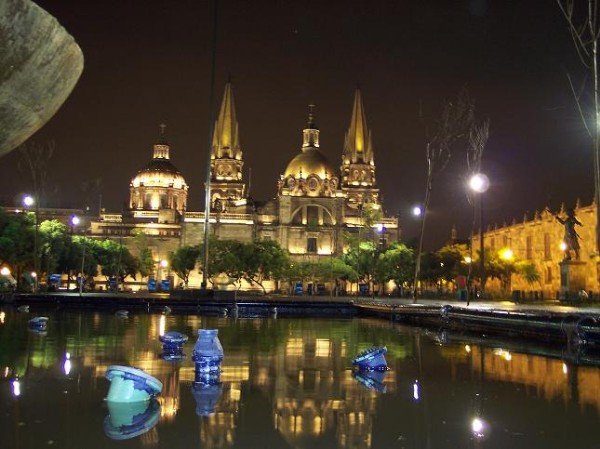
- Guadalajara Cathedral: A short drive away, this architectural gem anchors the city’s historic center.
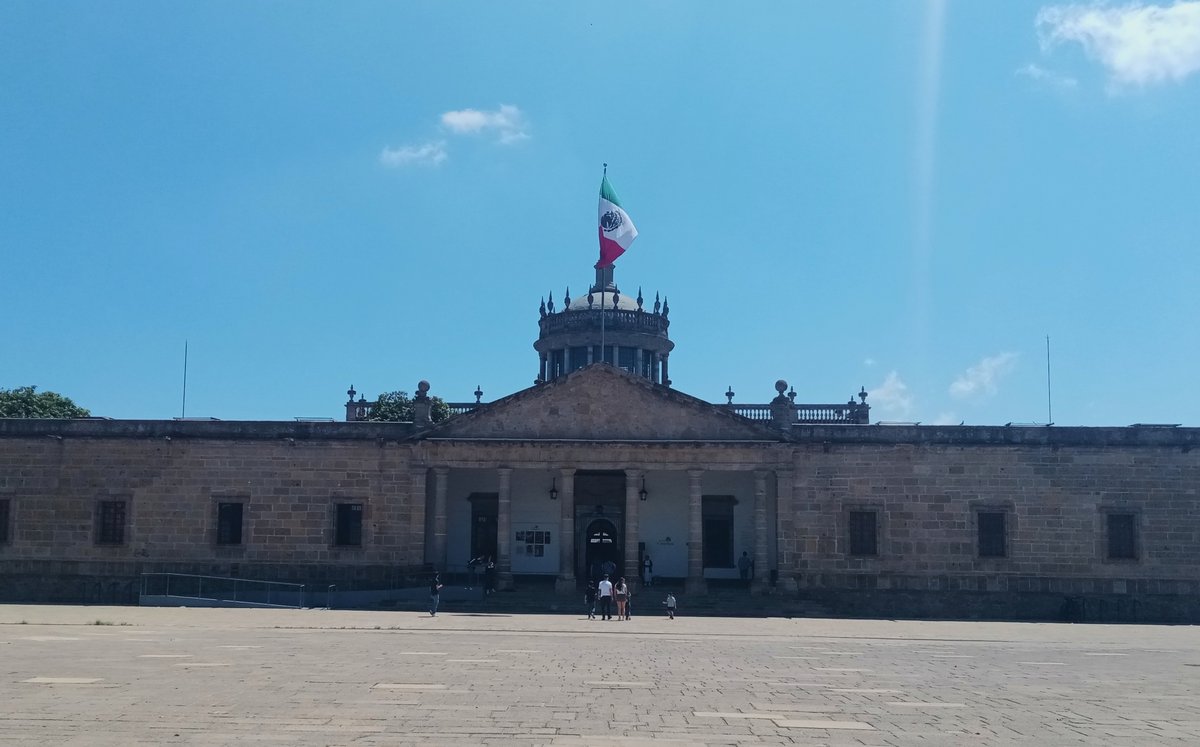
- Hospicio Cabañas: A UNESCO World Heritage Site featuring murals by José Clemente Orozco.
- Jardines del Bosque Neighborhood: Parks, cafes, and cultural venues complement a visit to the arches.
FAQ
Q: What are the visiting hours for Arcos del Milenio?
A: The monument is accessible 24/7 as an open public space.
Q: Is there an entrance fee to visit Arcos del Milenio?
A: No, visiting is free of charge.
Q: Are guided tours available?
A: Some city tours include the monument; inquire with local operators or the tourism office.
Q: Is the site accessible for people with disabilities?
A: There are pedestrian paths, but limited formal accessibility features; plan accordingly.
Q: Is the monument complete?
A: No, only four of the six planned arches have been built.
Q: What are nearby attractions?
A: Mercado de Abastos, Guadalajara Cathedral, Hospicio Cabañas, and Jardines del Bosque.
Listen to the full story in the app
Your Personal Curator, in Your Pocket.
Audio guides for 1,100+ cities across 96 countries. History, stories, and local insight — offline ready.
Audiala App
Available on iOS & Android
Join 50k+ Curators
Sources
- verified
- verified
- verified
- verified
- verified
- verified
- verified
- verified
- verified
Last reviewed: