Chihuahua
Messico Updated Apr 2026
Chihuahua, Mexico’s northern capital, whispers its stories in the cool, dry air of the high desert. The sound of a tour guide explaining the last moments of a revolutionary priest in a government courtyard mixes with the scent of slow-cooked meat from a nearby street stall. About 200,000 visitors each month come to listen, to eat, and to trace the fault lines where colonial ambition, Porfirian wealth, and revolutionary violence collided.
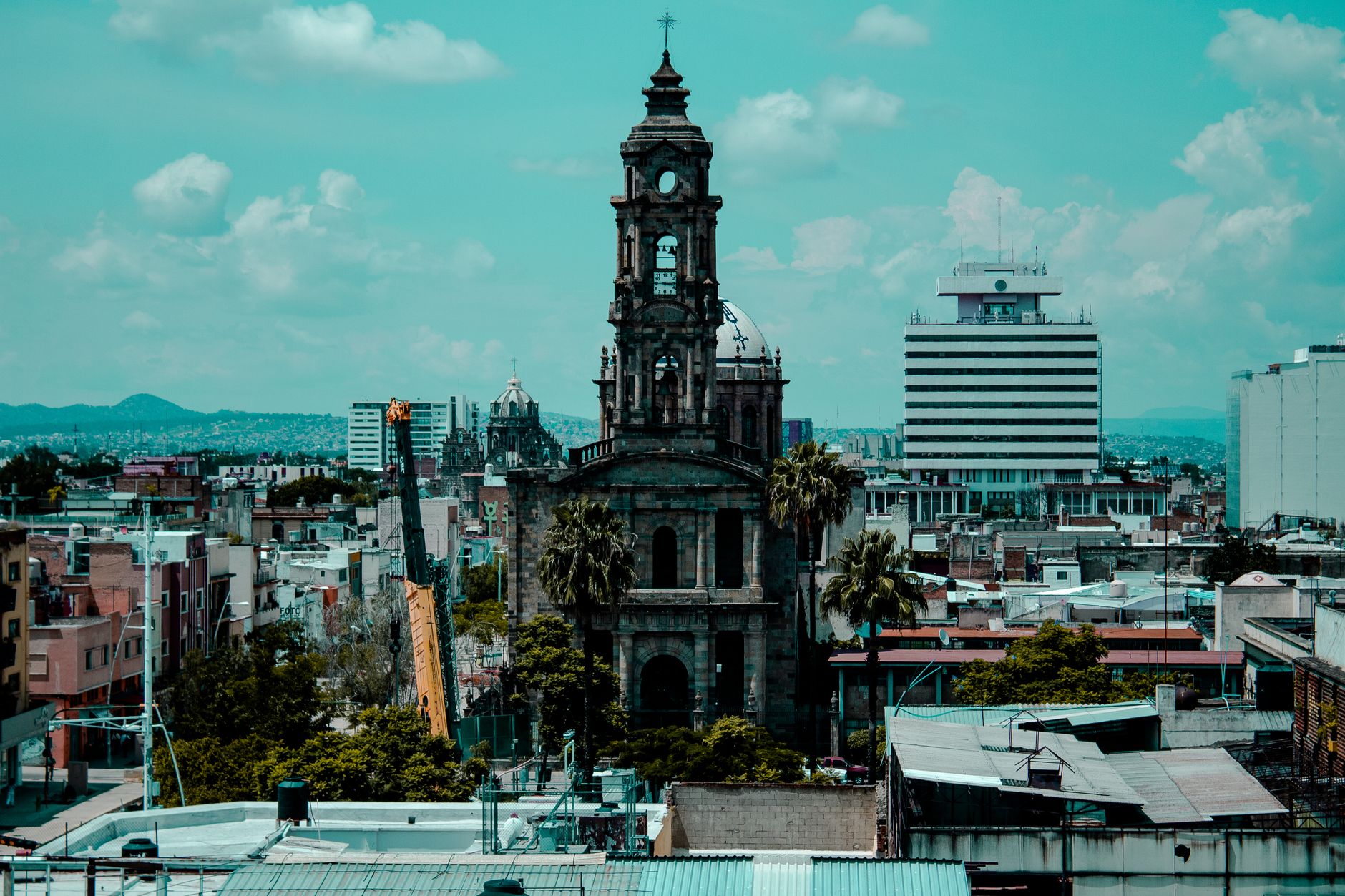 Photo: Daryl Parada / Pexels
- Attractions
- 7
- Trip length
- 2-3 days
- Best season
- Spring (March-May) or Autumn (September-November)
Why Chihuahua
Built from cited sources · see the method · How we make our guides →
This city works on layers. The deepest is colonial, anchored by the Metropolitan Cathedral. Its Baroque façade, begun in the 1720s, is the color of sun-bleached bone. Step inside, and the air changes—it’s cool and carries the faint, waxy smell of candles lit for centuries.
The 19th and early 20th centuries left more dramatic marks. You can stand in the exact spot in the Government Palace where Miguel Hidalgo was executed, marked by an Altar a la Patria, then walk a few blocks to see where Benito Juárez plotted resistance from a modest house. The real hinge point is 1910. Quinta Gameros, a French-style mansion completed that year, is a perfect monument to the opulence that sparked a revolution. Its owner fled before he could move in.
That revolution has its own shrine: the Museo Histórico de la Revolución, housed in Pancho Villa’s former estate, Quinta Luz. The artifacts there—his bullet-riddled car, personal weapons—feel immediate, almost tactile. This density of history is Chihuahua’s offer. It’s a compact, walkable primer on Mexico’s turbulent birth, served with a side of robust northern cuisine, before you head deeper into the canyons and deserts of the vast state that shares its name.
Revolutionary Echoes
Pancho Villa's ghost still walks the halls of Quinta Luz, his former estate turned museum. The city's entire center feels like a stage where Mexico's revolutionary drama played out, from Hidalgo's execution site in the Government Palace to the bullet holes in old walls.Dense Museum Quarter
Within three blocks of Plaza de Armas, you can see Miguel Hidalgo's actual dungeon cell at Casa Chihuahua, Benito Juárez's 1860s residence, and the lavish 1910 Porfirian mansion Quinta Gameros. The historic center draws 200,000 visitors monthly for good reason.Desert Baroque
The Metropolitan Cathedral took nearly a century to build, starting in the 1720s. Its twin bell towers and intricate facade stand as the city's colonial anchor, a monument of pink cantera stone that glows in the late afternoon sun.
Neighborhoods
Where to wander, by quarter — each with its own rhythm.
Centro Histórico
This is the city’s living archive and its undisputed heart, drawing those 200,000 monthly visitors for good reason. Designated a 'Barrio Mágico' in 2023, it’s a grid of sun-drenched plazas and portales where history isn’t behind glass but in the walls themselves. You’ll find the Cathedral, the Government Palace with its murals by Aarón Piña Mora, and Casa Chihuahua, where you can descend into the dungeon cell that held Miguel Hidalgo. The light here is sharp and clear, bouncing off pastel facades and the worn cobblestones of Calle Libertad.
Plan your trip
Before you go
- Getting There
- General Roberto Fierro Villalobos International Airport (CUU) is the primary gateway, 20 km northeast of the center. The city connects to the US border via Federal Highway 45 and to central Mexico via the Chihuahua-Pacific Highway. No major passenger train station serves the city directly in 2026.
- Getting Around
- Chihuahua has no metro or tram system. Local buses cover most routes, but the historic center is compact and walkable. Taxis and ride-sharing services are reliable for longer distances. The Barrio Mágico designation means the core area has improved pedestrian infrastructure.
- Climate & Best Time
- Expect desert extremes: summer highs hit 35°C (95°F), winter nights drop to freezing. Spring (March-May) offers the sweet spot with mild days and minimal rain. October through November is also pleasant. July and August bring monsoon rains that can flood streets briefly.
- Language & Currency
- Spanish dominates, though you'll find English in major hotels and some restaurants. The Mexican peso (MXN) is the currency. Credit cards work in established businesses, but carry cash for markets, smaller eateries, and museum admissions.
Who lived here
-
Father of Mexican Independence · 1753–1811
Miguel Hidalgo y Costilla
Imprisoned and executed here
He never saw the independent Mexico he sparked. The revolutionary priest spent his final months in a cell at the Federal Palace, now Casa Chihuahua, before his execution in 1811. The city's Government Palace marks the spot with an Altar a la Patria—a quiet, sobering counterpoint to the bustling plaza outside.
-
Revolutionary General · 1878–1923
Francisco 'Pancho' Villa
Lived and operated from his estate here
Villa wasn't just a visitor; he made Chihuahua his strategic headquarters. His sprawling estate, Quinta Luz, now houses the Museo Histórico de la Revolución, filled with everything from his weapons to the bullet-riddled car he was driving when assassinated. He'd probably recognize the city's stubborn, independent spirit, if not its traffic circles.
-
President of Mexico · 1806–1872
Benito Juárez
Used the city as the seat of government during the French Intervention
When French forces occupied Mexico City, Juárez moved his republican government north. He governed from a modest house in Chihuahua City from 1864 to 1866, a period preserved in the Museo Casa Juárez. The city became a symbol of national resistance, a role it would reprise during the next revolution.
-
Mining Magnate, Landowner · 1872–1950s?
Manuel Gameros Ronquillo
Built and briefly lived in Quinta Gameros
He commissioned an art nouveau palace so extravagant it became a symbol of Porfirian excess. He barely lived in it before the Revolution forced him to flee. His unfinished mansion, Quinta Gameros, stands as his legacy—a frozen moment of opulence that the revolutionary era abruptly ended. He’d be shocked to find it open to the public, owned by a university.
Where to Eat
Where locals actually book dinner — not the tourist menus.
Insider tips
Small things that change how the city treats you.
Anchor at Centro
Start at the Centro Histórico, a designated 'Barrio Mágico' that draws 200,000 visitors a month. Everything you need—museums, the cathedral, and local eateries—is within a few blocks of Plaza de Armas.Follow the Villa Trail
Pancho Villa's presence is everywhere. Visit his former estate, the Museo Histórico de la Revolución, to see artifacts from his life and understand the city's revolutionary role.Walk or Ride
Chihuahua has no metro or tram. The historic center is best explored on foot. For longer trips, use local buses or taxis; Uber also operates here.Plan for Heat
Summer afternoons are punishing. Visit museums and indoor sites like Casa Chihuahua or Quinta Gameros between 11 a.m. and 4 p.m. to escape the desert sun.Eat Like a Norteño
Skip generic menus. Look for burritos de machaca (shredded beef), cortes de carne (grilled steaks), and asado de puerco. The local cheese, queso menonita, is a must-try.
Gallery
The city, as it actually looks.


Watch


Frequently asked
Is Chihuahua worth visiting?
Yes, if you want a real northern Mexican city with layered history. It’s not a beach resort. It’s a place to walk colonial streets, stand in Pancho Villa’s house, and eat serious desert cuisine before heading to Copper Canyon.
How many days do I need in Chihuahua?
Two full days. Spend one day in the Centro Histórico hitting the major museums and cathedral. Use the second for Villa’s museum and Quinta Gameros, or a day trip to the Mennonite communities near Cuauhtémoc.
Is Chihuahua safe for tourists?
The historic center is generally safe for visitors during the day. Exercise standard city precautions: don’t flash valuables, use official taxis or Uber at night, and stay aware of your surroundings, especially after dark.
What is the best way to get around Chihuahua?
Walking is best in the compact historic center. For sights further out, like the Francisco Villa Museum, use taxis or ride-sharing apps. The city lacks a metro, so renting a car is an option if you plan to explore the state.
Is Chihuahua expensive?
It’s mid-range for Mexico. Street food and local buses are cheap. Museum entry fees are modest, usually under $5 USD. Mid-range hotels and sit-down restaurants in the center are affordable compared to major tourist destinations.
What is Chihuahua most famous for?
Three things: its namesake tiny dog breed, its pivotal role in the Mexican Revolution (Pancho Villa’s base), and as the gateway to the massive Copper Canyon railway system. The city itself is the capital of Mexico’s largest state.
Pick up where you left off
Saved and recently read places — kept on this device only.
Photo credits (8)
- Daryl Parada — Pexels License (https://www.pexels.com/license/) — Source: https://www.pexels.com/photo/4673308/
- Casa Chihuahua Interior — Levi bernardo — CC BY-SA 3.0 (https://creativecommons.org/licenses/by-sa/3.0/) — Source: https://commons.wikimedia.org/wiki/File:Casa_Chihuahua_Interior.jpg
- Caravana por la Paz con Justicia y Dignidad en Chihuahua - panoramio — Drejtinm — CC BY 3.0 (https://creativecommons.org/licenses/by/3.0/) — Source: https://commons.wikimedia.org/wiki/File:Caravana_por_la_Paz_con_Justicia_y_Dignidad_en_Chihuahua_-_panoramio.jpg
- Casa Chihuahua interior1 — Levi bernardo — CC BY-SA 3.0 (https://creativecommons.org/licenses/by-sa/3.0/) — Source: https://commons.wikimedia.org/wiki/File:Casa_Chihuahua_interior1.jpg
- Chihuahua-Cerro Grande — Miggbaylon — CC BY-SA 4.0 (https://creativecommons.org/licenses/by-sa/4.0/) — Source: https://commons.wikimedia.org/wiki/File:Chihuahua-Cerro_Grande.jpg
- Centro de la ciudad de chihuhua — Haziel — CC BY-SA 3.0 (https://creativecommons.org/licenses/by-sa/3.0/) — Source: https://commons.wikimedia.org/wiki/File:Centro_de_la_ciudad_de_chihuhua.jpg
- Chihuahua - panoramio (1) — eurimaco — CC BY-SA 3.0 (https://creativecommons.org/licenses/by-sa/3.0/) — Source: https://commons.wikimedia.org/wiki/File:Chihuahua_-_panoramio_(1).jpg
- Chihuahua (11968128493) — Comisión Mexicana de Filmaciones from México D. F., México — CC BY-SA 2.0 (https://creativecommons.org/licenses/by-sa/2.0/) — Source: https://commons.wikimedia.org/wiki/File:Chihuahua_(11968128493).jpg
Photos may have been resized or cropped.