
An introduction.
Researched by the Audiala editorial team from historical records, architectural archives, and local expertise.
MMore than 470 human figures stand on the seabed off Cancún, Mexico, where Cancun Underwater Museum turns a snorkel trip into an argument about how art might save a reef. People come for the eerie sight of stone faces under clear Caribbean water, but the real draw is sharper than that: this place lets you watch sculpture become coral habitat in real time. MUSA feels strange in the best way. Few museums ask you to listen for parrotfish while you look at the collection.
MUSA sits inside the marine park west of Isla Mujeres and south of the hotel zone, in the same coastal world that shaped modern Cancún. Records show the park itself was decreed on July 19, 1996, then recategorized on June 7, 2000, which matters because the museum only makes sense as part of a protected reef, not as a piece of seaside whimsy.
Jason deCaires Taylor's figures were installed on previously bare seabed, using marine-grade cement designed to welcome algae, sponges, and coral growth. The water changes the whole experience: one morning the statues look pale and ghostly, by afternoon they read like ruins from a civilization that never existed. That's the hook.
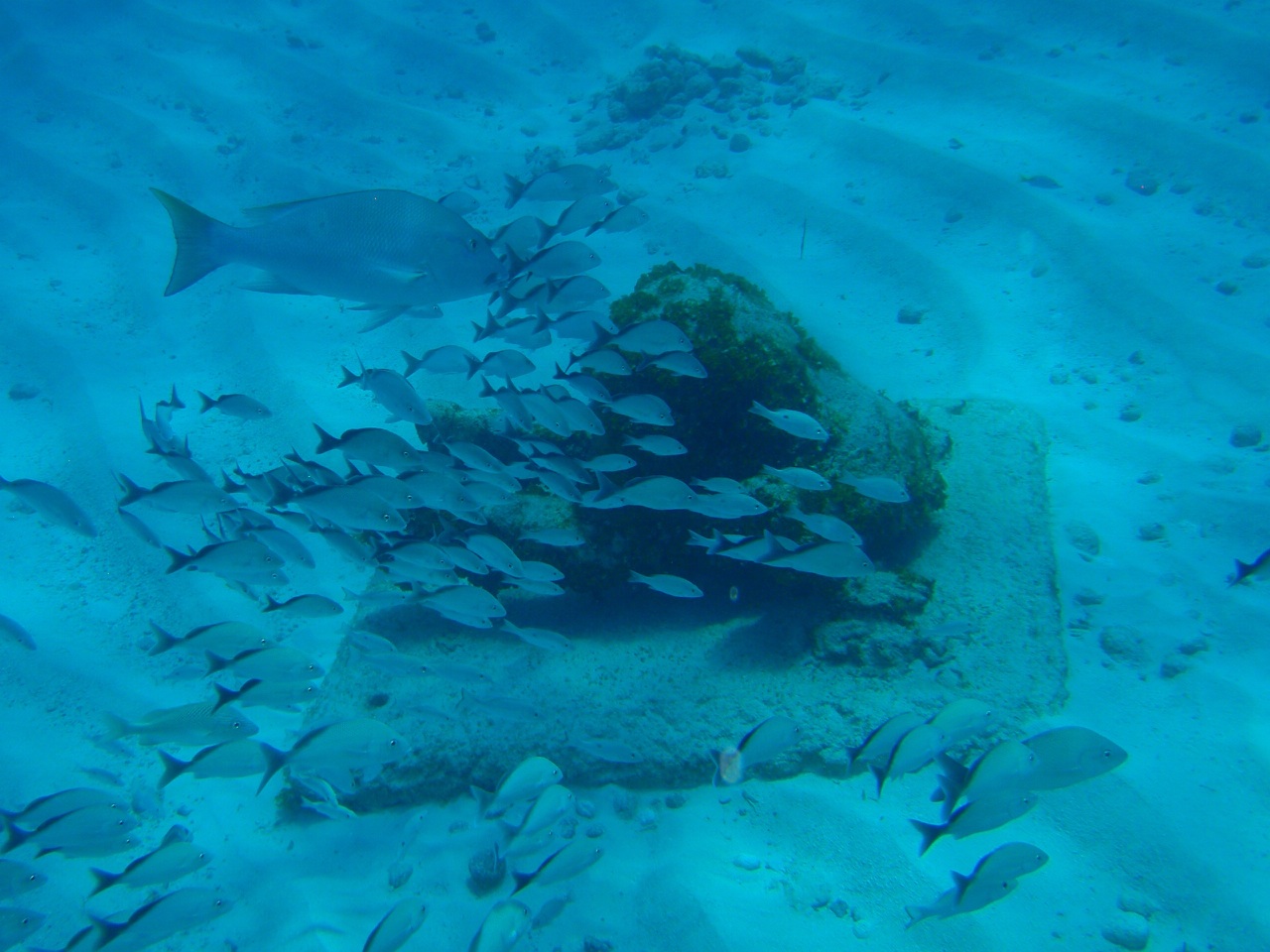
Visitors often think they are booking an underwater gallery. They're really entering a conservation experiment with fish moving through the exhibits, sea fans brushing past blank faces, and visibility that can shift from aquarium-clear to milky blue within a single hour.
01 What to see.
Manchones and The Silent Evolution
Punta Nizuc Gallery
Best Combined Experience: Villa Roda, then Punta Sam
02 In pictures.




Plan and listen to Cancun Underwater Museum with Audiala.
Audio guide in your pocket, itinerary in your browser. Built for the way you actually visit.
03 Visitor logistics.
The practical scaffolding for a good visit — kept short.
Getting There
Most Cancún-side MUSA trips leave from Marina Aquaworld, Blvd. Kukulcan Km 15.3 in the Hotel Zone, directly opposite Hotel Paradisus Cancún. As of 2026, the simplest public route is the R1 or R2 bus into the Hotel Zone, then a short walk of about 5 minutes from the boulevard stop; by car, use the Aquaworld marina rather than trying to reach the sculptures from shore, because MUSA sits offshore inside the marine park.
Opening Hours
As of 2026, MUSA works more like a timed boat departure than a walk-in museum. Official water tours run daily, with many Punta Nizuc snorkel departures at 10:00, 12:00, and 14:00, while some Manchones snorkel trips leave at 09:00 and 14:00; tours pause when the port closes for weather, and some Isla Mujeres departures do not run on December 25 or January 1.
Time Needed
Give the quick Punta Nizuc visit about 3 hours from check-in to return, which makes it the best half-light option if you want the statues without turning the day into a project. Manchones snorkeling takes about 4 hours, beginner dive outings usually take 5 to 6 hours with briefing and practice, and the dry-land Villa Roda gallery in Bonfil needs about 1 hour.
Accessibility
Boat boarding, wet docks, ladders, and sea entry make the underwater museum a poor fit for wheelchair users unless you confirm assistance directly with the operator first. The gentlest option is the glass-bottom boat at Punta Nizuc, and Aquaworld describes that area as shallow and protected, with a floating platform and shaded rest space, but this still is not a true barrier-free setup.
Cost & Tickets
As of 2026, official prices start around US$58 for the Punta Nizuc snorkel plus a separate US$15 marine park or dock fee, and about US$65 plus US$20 for Manchones snorkeling; certified dives begin around US$115 from Cancún. The dry-land Villa Roda gallery costs US$35 and is free if you already bought a MUSA water tour, so book online through the official site and check the extra park-fee line before you pay.
05 Tips for visitors.
Small things that change the day.
Pick Your Gallery
Book Punta Nizuc if you want the easiest version: shallower water, shorter outing, calmer conditions. Choose Manchones only if you care more about the big underwater spectacle and are happy to spend a longer half day getting it.
Use Real Operators
Skip any cash-only seller who says you do not need the reef bracelet or wants to launch from a random beach. Authorized operators board from proper marinas, issue receipts, and work inside the park rules; the cheap deal can leave you with no insurance and no legal access.
Ask About Cameras
Personal underwater photos are common, but official MUSA listings often treat photos and video as extras rather than included services. If you want to bring a GoPro or housing, ask before booking; commercial filming inside the national park needs a permit, and drones are a bad bet here unless a licensed Mexican operator has written approval.
Bring Reef Gear
Come in swimwear, bring a towel, and swap chemical sunscreen for a rash guard or mineral formula because this is a reef site before it is an art stop. Lockers are usually available on MUSA tours, sometimes free and sometimes against an ID, so pack light and do not count on storing a full suitcase.
Eat Nearby
After the boat, stay in the south Hotel Zone instead of racing back north for lunch. El Galeón del Caribe is the budget seafood move, Xkat-Ik does a better regional-Yucatán table at mid-range, and Navíos works if you want a polished sea-view meal without sliding into full resort pricing.
Weather Matters
Old guidebook photos lie a little: coral growth, chop, wind, and visibility change what you see, sometimes by a lot. Morning trips usually give you the better shot at calmer water, and if the port closes, reschedule rather than forcing a rough-day visit that turns the museum into a blur under moving water.
Where to Eat
Don't Leave Without Trying
Dining Tips
- check Cancún’s food identity mixes Yucatecan cooking with Caribbean seafood, so look for achiote, sour orange, habanero, black beans, banana leaves, and corn on the menu.
- check Breakfast usually runs roughly 7:00 AM to 10:00 AM, lunch or comida from about 2:00 PM to 5:00 PM, and dinner from around 7:00 PM onward.
- check The main meal is often la comida rather than dinner, so market and fonda-style places tend to shine at breakfast and lunch.
- check Hotel Zone dinner spots, sunset-facing restaurants, and special-occasion places are more likely to need reservations, especially on weekends and in peak season.
- check Tips are voluntary in Mexico; in Cancún, 10% to 15% is standard, with 15% common in tourist-heavy areas.
- check Check the bill before tipping again if you see servicio or any service charge already listed.
- check Major cards are widely accepted in the Hotel Zone and larger restaurants, but cash still matters for tips, markets, and smaller vendors.
- check Don’t assume one universal restaurant closing day in Cancún; some independent places may close on Monday or Tuesday, so verify the day before if one meal really matters.
Restaurant data powered by Google
04 A history of reinvention.
The Reef Needed A Decoy
Cancun Underwater Museum is young, but the pressure that produced it is not. Cancún was built as a planned resort city beginning in January 1970, and the success of that project sent divers, boats, anchors, and beginner snorkelers onto the nearby reef in numbers the reef could not politely absorb.
Records show MUSA was founded in 2009 inside the Parque Nacional Costa Occidental de Isla Mujeres, Punta Cancún y Punta Nizuc. That official frame matters. The museum was conceived less as a cultural luxury than as a practical answer to a bad question: how do you protect a reef without picking a public fight with the tourism economy that pays the city's bills?
Jaime González Cano Changes The Pitch
The key figure here is Dr. Jaime Manuel González Cano, a marine biologist and director of the national park. What was at stake for him was personal as well as professional: if he failed to reduce traffic on the natural reef, stricter closures could follow, and those would put him on a collision course with tour operators who saw the sea as their livelihood.
Scientific American's reporting describes his first idea as bluntly functional: artificial reef balls set out to pull visitors away from damaged coral. Tour operators hated the pitch. Empty concrete, they argued, would never persuade tourists to pay for a boat ride in water this blue.
That was the turning point. González Cano shifted from pure restoration hardware to spectacle with a purpose, working with Jason deCaires Taylor and nautical businessman Roberto Díaz Abraham to create an underwater museum that people might actually choose over the natural reef. By November 2010, when The Silent Evolution was completed and MUSA opened, a patch of sandy seabed had become a submerged crowd of cast local faces, fixed in place while angelfish and algae began the slow work of taking the art away.
A Protected Park First
Art That Was Meant To Get Messy
Listen to the full story in the app
The whole Cancun Underwater Museum,
told well.
Audio guides for 1,100+ cities across 96 countries. History, stories, and local insight — offline ready.

06 Frequently asked.
The questions travellers send us most about Cancun Underwater Museum.
Is Cancun Underwater Museum worth visiting?
Yes, if you want something stranger and more thoughtful than another reef boat trip. MUSA works best when you understand what it is: a conservation project founded in 2009 inside a protected marine park, with more than 500 sculptures placed to pull pressure off natural reef. Book Punta Nizuc if you want the easiest first visit, or Manchones if you want the bigger, eerier sculpture field.
How long do you need at Cancun Underwater Museum?
Most visitors need half a day for the real underwater visit. The shortest official Punta Nizuc snorkel runs about 2.5 hours, Manchones is about 4 hours, and beginner dive options can take 5 to 6 hours once briefing and practice are included. The land gallery is much shorter, around 1 hour.
How do I get to Cancun Underwater Museum from Cancún?
Most Cancún-side visits start at Marina Aquaworld on Boulevard Kukulcán Km 15.3 in the Hotel Zone, opposite Paradisus Cancún. The simplest public route is the R1 or R2 bus into the Hotel Zone, then get off near Aquaworld or Punta Nizuc and walk about 5 minutes. You do not usually reach the underwater galleries from shore; you go by authorized boat.
What is the best time to visit Cancun Underwater Museum?
Morning on a calm-weather day is the best bet, especially from late spring through September. Water conditions matter more than the calendar, because port closures, wind, chop, and visibility can change the whole visit. If the harbor closes, official operators usually let you reschedule or request a refund.
Can you visit Cancun Underwater Museum for free?
No, the underwater museum is not a free attraction. Official 2026 prices start around US$58 plus marine park fees for the Punta Nizuc snorkel, while the reservation-only land gallery costs US$35 and is free only if you already bought a MUSA water tour. I found no official free-entry day.
What should I not miss at Cancun Underwater Museum?
Do not miss The Silent Evolution at Manchones if you want the signature MUSA image: hundreds of human figures standing on the seabed like a drowned assembly. Also watch for The Listener, a sculpture built from casts of children's ears that hides a hydrophone recording reef sound. And pay attention to the marine growth itself, because the algae, coral, and fish are part of the work now.
Verified, and shown.
Researched and written by the Audiala editorial team from historical records, architectural archives, and local expertise.
Used to confirm nearby UNESCO context through Sian Ka’an rather than any UNESCO listing for MUSA itself.
Used to verify that MUSA and the Cancún reef park do not appear as direct UNESCO World Heritage listings in the research set.
Provided background chronology and secondary context for the marine park.
Confirmed the marine protected area's decree date in 1996 and recategorization in 2000.
Used as secondary context on Jason deCaires Taylor and the project's commissioning phase.
Used for MUSA registry details and the exact founding date listed by Mexico's cultural registry.
Used as a Mexican tourism source confirming MUSA's 2009 founding.
Used for secondary confirmation of MUSA's establishment and visitor framing.
Used for current beginner-dive pricing, exclusions, meeting details, and the note about early sculpture placement.
Used for a secondary report on the museum's late November 2010 opening.
Key source for the conservation backstory, Jaime González Cano's role, reef-ball dispute, algae episode, and the unresolved question of reef-pressure diversion.
Used for official Mexican cultural framing, founding year, and collection scale.
Used for official Mexican cultural details on MUSA's founding year and collection description.
Used for secondary reporting on the November 2010 opening and installation process.
Used for reporting on The Silent Evolution, installation timing, and underwater viewing qualities.
Used for secondary context on the underwater sculpture park and its early reception.
Used for secondary context on The Silent Evolution and MUSA's purpose as an artificial reef.
Used to confirm official federal legal status and recategorization details for the protected area.
Used to confirm the original July 19, 1996 decree date for the protected marine area.
Used to place MUSA in the larger story of Cancún's planned tourism growth beginning in January 1970.
Used as a second NASA source on Cancún's origin as a state-built resort city.
Used for artist and founder profiles, including Roberto Díaz Abraham and local casting details.
Used for materials, design intent, local casting, sculpture descriptions, and project framing by Jason deCaires Taylor.
Used for secondary confirmation that MUSA opened in November 2010 and for tourism framing.
Used to place MUSA's opening in the timing of COP16 in Cancún.
Used for The Listener, the reef hydrophone, and documented reef soundscape details.
Used for the 2019 report that MUSA's expansion stalled because of funding and permit issues.
Used for later scientific discussion of uncertainty over how much MUSA relieved pressure on natural reef.
Used for regional myth and geography context around Isla Mujeres.
Used for background on the older Ixchel tradition sometimes loosely associated with the broader area.
Used as the Cultura-domain version of the Mexican cultural registry entry for MUSA.
Used for a 2013 report on sculpture count and claims of conservation impact.
Used for official Punta Nizuc snorkel price, schedule, check-in timing, and daily operation details.
Used for Manchones snorkel departures, duration, pricing, and Silent Evolution visit details.
Used for current beginner two-dive pricing, duration, and operating-day information.
Used for certified-dive pricing and holiday closure notes from Isla Mujeres departures.
Used for beginner-dive departure details and closure notes from Isla Mujeres.
Used for current land-gallery location, hours, reservation policy, price, and rescheduling terms.
Used as a lower-priority reference for generic museum-hour listings.
Used as a secondary reference for generic public hour listings and traveler expectations.
Used for combo tour pricing, duration, fees, and Punta Nizuc/Punta Sam outing details.
Used for secondary information on the older visitor-center listing and duration estimates.
Used to confirm marina operator identity and departure-point context for many Cancún-side MUSA tours.
Used for practical bus guidance in the Hotel Zone, including R1 and R2 routes.
Used for nearby stop data around Boulevard Kukulcán and Punta Nizuc access.
Used as a second stop reference for nearby Boulevard Kukulcán transit access.
Used as a secondary reference for Aquaworld business listing and parking context.
Used as a secondary map reference for Aquaworld location context.
Used to confirm that MUSA still offers a glass-bottom boat option.
Used for accessibility-related details on Punta Nizuc's shallow, calmer water and floating platform.
Used for accessibility and amenities at the mall linked to the older visitor-center listing.
Used for on-site restaurant and amenity information at Aquaworld.
Used for Spanish-language confirmation of Aquaworld amenities and restaurants.
Used as an alternate URL variant cited in the research for Aquaworld amenities.
Used for Spanish-language snorkel details and safety requirements like mandatory life jackets.
Used for official Manchones depth, sculpture count, and key works.
Used for official Punta Nizuc depth, sculpture list, and snorkel-friendly framing.
Used for official Punta Sam depth, sculpture list, and sea-grass setting.
Used for marine-life observations around specific sculptures and habitat-use details.
Used for photographer and beginner comparisons between MUSA areas and nearby reef options.
Used for secondary detail on sculpture design and habitat features.
Used for collection scale, service notes, and details on individual sculptures such as Diego and Blessings.
Used for the full current menu of MUSA water tours.
Used for the combined speedboat and snorkeling experience in Punta Nizuc.
Used for regional diver guidance on visibility ranges and seasonal conditions.
Used for secondary local context on visibility and diving conditions.
Used for seasonal guidance on calmer water and better comfort windows for beginners.
Used for weather context and the relative effect of rain versus sea conditions.
Used for current regional sargassum-monitoring context affecting Cancún waters.
Used to confirm current official guided snorkeling options.
Used for local-style practical framing, ecological etiquette, and common traveler expectations.
Used for local tourism framing of MUSA as a conservation-minded Cancún signature attraction.
Used for marine-park visitor guidance, ecological behavior rules, and legal-operator context.
Used for recent local coverage describing MUSA's role in Cancún's identity and conservation pride.
Used for anecdotal local skepticism and jokes about MUSA's reputation.
Used for anecdotal remarks about snorkeling conditions and when visitors may feel underwhelmed.
Used for anecdotal local opinions about MUSA compared with other reef experiences.
Used for secondary context on opening timing, COP16 linkage, and institutional history.
Used for secondary Spanish-language background on MUSA and its inauguration context.
Used for neighborhood context around the south Hotel Zone and Punta Nizuc.
Used for local tourism framing of Punta Nizuc's identity and surroundings.
Used for area context around Punta Nizuc and nearby attractions.
Used for anecdotal notes on awkward shore access near Punta Nizuc.
Used for anecdotal context on snorkeling access near resort-front shoreline.
Used for the latest U.S. advisory level applying to Quintana Roo.
Used for warnings about illegal boat operators and how to spot authorized tours.
Used for wider Cancún scam context that can affect a MUSA day.
Used for recent reporting on tourism-package scams affecting Cancún.
Used for protected-area management guidance, including reef-safe behavior and sunscreen advice.
Used for protected-area rules, including permit requirements for commercial photography and park management details.
Used for conservative guidance on drone use in Cancún.
Used as a second source on drone restrictions affecting foreign visitors in Cancún.
Used for the local-food angle around tikin xic fish in the Isla Mujeres and Cancún area.
Used for background on tikin xic as a regional seafood specialty.
Used for recent local coverage of tikin xic as an emblematic Cancún-area dish.
Used for nearby restaurant context with a stronger Yucatecan angle.
Used for reference to local Yucatecan dishes in the wider Cancún dining scene.
Used for wider environmental context around Cancún's lagoon and mangrove systems.
Used for broader marine-life context in the protected area around MUSA.
Used for recent reporting on 2026 sargassum pressure along the Cancún coast.
Used for secondary traveler framing and caution that conditions and gallery choice affect the experience.
Used for nearby food recommendations around the south Hotel Zone.
Used for nearby restaurant context at Km 19.5 Restaurant & Bar.
Used for supplementary menu and price context for Km 19.5 Restaurant & Bar.
Used for nearby dining references around Punta Nizuc.
Used for the higher-end nearby dining option at NIZUC Resort.
Last reviewed


