
An introduction.
Researched by the Audiala editorial team from historical records, architectural archives, and local expertise.
EExactly 29.345 million passengers passed through Cancún International Airport in 2025, a human tide large enough to outnumber many countries, and that absurd scale is precisely why this place matters. In Cancún, Mexico, Cancún International Airport is worth visiting if you want to understand how a planned resort city became a machine for moving whole seasons of sun-seekers toward the Caribbean shore. Most airports blur into fluorescent anonymity. This one tells the secret history of modern Cancún before you even reach the beach.
The drive in from the terminals feels more like entering an industrial backstage than arriving at paradise: lanes of buses, rental shuttles, heat rising off the asphalt, palms pushed to the edges. But that contrast is the point. Cancún was built to receive people at scale, and this airport was one of the tools that made the city real.
Records show the airport was operating in 1975, when Cancún itself was still a state-made experiment cut into mangroves and low forest. Visit with that in mind and the terminals change shape: they stop being mere waiting rooms and start reading like the front door to one of Mexico's boldest development gambles, the same gamble that still sends travelers onward to the Cancún hotel strip, ferry docks, and the Caribbean coast beyond.
01 What to see.
Terminal 4 Departures Hall
The Mexican Retail Layer in Terminal 4
A Terminal 4 Slow Walk: Gate 54 to Gate 76A
02 In pictures.


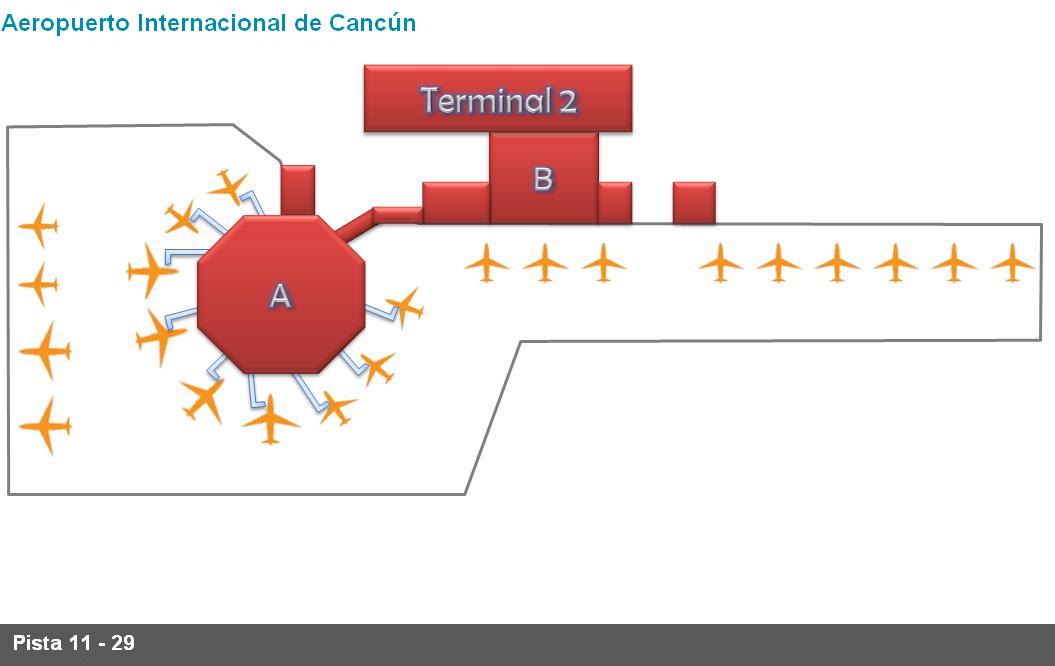

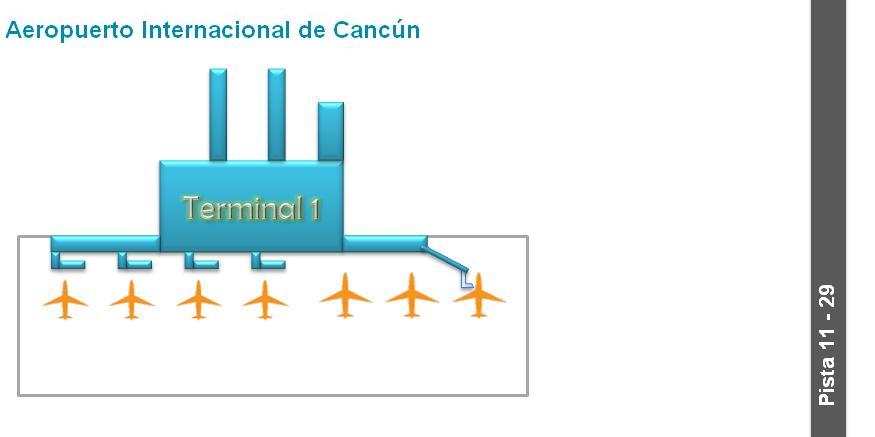


Plan and listen to Cancún International Airport with Audiala.
Audio guide in your pocket, itinerary in your browser. Built for the way you actually visit.
03 Visitor logistics.
The practical scaffolding for a good visit — kept short.
Getting There
Cancún International Airport sits on Carretera Cancún-Chetumal Km 22, right on Federal Highway 307, about 12 miles from the Hotel Zone, which usually means around 20 minutes by car when traffic behaves. ADO buses run from Terminals 2, 3, and 4 to Cancún downtown from 00:19 to 23:10, while Playa del Carmen service starts at 08:20; walking only makes sense for the Hilton Garden Inn across the road from Terminals 2 and 3.
Opening Hours
As of 2026, the airport operates around the clock for flights, and parking also runs 24/7 every day of the year. Food is less constant: one airport information sheet lists restaurants and cafeterias from 6 am to 10 pm, and no standing seasonal closure pattern was confirmed, though Terminal 1 remodeling and Terminal 4 expansion may shift operations by terminal.
Time Needed
For a quick pass through arrivals, cash, and onward transport, give it 20 to 40 minutes if your ride is already sorted. A more realistic buffer is 45 to 90 minutes landside, and 2 to 3 hours if you're departing internationally, using a lounge, or gambling on inter-terminal transfers that can take up to 20 to 30 minutes between shuttles and waits.
Accessibility
The terminals are paved, indoor, and built for wheeled movement rather than rough terrain, with accessible and family toilets confirmed in Terminals 2 and 4 and free wheelchair service available through airport staff or your airline. Distance is the real obstacle here: the complex sprawls like a small highway town under one roof, so travelers with limited mobility should use the free terminal shuttle instead of trying to move between terminals on foot.
Cost & Tickets
As of 2026, this is not a ticketed attraction, so general entry is free; you pay for transport, parking, lounges, and whatever airport pricing does to your appetite. Parking is MXN 36 for the first hour, MXN 12 for each extra 20 minutes, and MXN 215 for 24 hours, while ADO fares listed online start at MXN 98 to downtown Cancún and private transfers to Cancún Centro or the Hotel Zone start at MXN 456.96 when prebooked.
05 Tips for visitors.
Small things that change the day.
Beat The Shark Tank
After customs, keep walking through the arrivals corridor locals call the Shark Tank, where transport sellers and timeshare pitches pile on fast. If someone says your hotel shuttle changed, needs validation, or suddenly vanished, assume sales tactic first and only deal with your prebooked provider or official counters.
Camera Limits
Phone photos in public terminal areas are usually tolerated, but customs, immigration desks, security screening, and staff-controlled zones are the wrong places to test that theory. Drones are effectively out of the question here: Mexican guidance keeps them more than 9.2 km from any airport, which covers the whole CUN area like a wide no-fly lid.
Eat Smarter
Don't confuse airport chains with Yucatán cooking. Inside the terminals, Hacienda Montejo in Terminal 4 is the closest thing to a local-leaning meal at mid-range prices, Guacamole Grill in Terminals 2 and 4 is a decent sit-down fallback, and Starbucks is the reliable budget-to-mid coffee stop when you just need caffeine and surrender.
Choose Your Hour
As of 2026, flights run all day, but food service is far more dependable from morning to late evening than at 2 am under fluorescent light. During hurricane season and holiday peaks, build extra time into any transfer because the airport's bottlenecks show up in weather disruptions, migration lines, and ground transport chaos before they show up anywhere scenic.
Watch Transport Prices
Taxi overcharging remains one of the airport's oldest bad habits; a 2025 complaint described MXN 1,800 for a 9-minute ride, which tells you enough. ADO is the cheaper fixed-price option, and prebooked private transfer is the calmer one if you have luggage, kids, or no patience left after the flight.
Don't Count On Lockers
Luggage storage is the airport's murkiest service in 2026, with one airport guide flatly saying no lockers or storage area exist while other non-official pages still suggest limited options. Treat left-luggage service as unconfirmed and call ahead before you build an itinerary around it, especially if you planned to kill time in Cancún before check-in.
Where to Eat
Don't Leave Without Trying
Dining Tips
- check Cancún's local food identity is tied to the wider Yucatán Peninsula, so look for achiote, sour orange, habanero, pumpkin seeds, and banana-leaf cooking.
- check If you want more regional Yucatecan cooking, downtown and local markets are usually a better bet than the Hotel Zone.
- check Seafood is central to Cancún eating, so ceviche, grilled fish, octopus, shrimp, and Yucatán-style fish are strong local choices.
- check Breakfast usually runs about 7:00 AM to 10:00 AM, lunch or comida about 2:00 PM to 5:00 PM, and dinner from around 7:00 PM onward.
- check If you want to eat on a more local rhythm, make your main meal la comida between 2:00 PM and 4:00 PM.
- check Some places close after lunch and reopen for dinner, so hours can split around the afternoon lull.
- check Monday is a common off-day for independent restaurants in Cancún, but not a rule. Hotel Zone places are more likely to operate daily.
- check Mercado 28 is commonly listed around 9:00 AM to 7:00 PM, but weekend hours conflict across sources, so same-day checking matters.
Restaurant data powered by Google
04 A history of reinvention.
The Runway That Made a City
Cancún International Airport has no medieval bones to admire and no old stones polished by centuries of footsteps. Its history is modern, documented, and oddly more revealing for that. Records show the airport entered operation in 1975 as part of the federal push to build Cancún almost from scratch, turning a thinly settled stretch of Quintana Roo into a hard-currency engine tied firmly to the rest of Mexico.
That makes the airport larger than infrastructure. José Antonio Enríquez Savignac and the planners around FONATUR were not just trying to move tourists efficiently; they were trying to prove that a government-designed resort city could earn foreign exchange, create jobs, and give political weight to a territory officials had long feared was too empty for comfort.
José Antonio Enríquez Savignac's Concrete Bet
José Antonio Enríquez Savignac is the person to keep in view here. Quintana Roo's official chronicle and later tourism histories identify him as one of the central minds behind the Cancún project, and what was at stake for him was personal as well as technocratic: if the airport failed, Cancún risked remaining a paper scheme in the jungle, an expensive embarrassment rather than proof that the state could will a city into existence.
The turning point came in 1975, when records show the airport was already operating by March, before Cancún even had its own municipal government in April. That sequence matters. The runway came first, almost like a declaration that arrivals would create the city before local politics had fully caught up.
You can still feel the logic in the place. Jet fuel, air-conditioning, salt in the damp air when the doors slide open, buses revving outside: this was the soundscape of a national experiment becoming real, one landing at a time.
Wilma and the Scar Called Terminal 1
Before the Airport, a Runway Became a Street
Listen to the full story in the app
The whole Cancún International Airport,
told well.
Audio guides for 1,100+ cities across 96 countries. History, stories, and local insight — offline ready.

06 Frequently asked.
The questions travellers send us most about Cancún International Airport.
Is Cancún International Airport worth visiting?
Yes, if you treat it as a gateway worth reading rather than a place worth lingering in. Cancún exists because this airport made the whole state-planned resort project viable in 1975, and the airport still functions as the front door to Cancún, the Hotel Zone, Playa del Carmen, Puerto Morelos, and much of the Riviera Maya. For architecture and atmosphere, Terminal 4 is the part to pay attention to: broad daylight, long roof spans, and that abrupt slap of cold air after the wet Caribbean heat outside.
How long do you need at Cancún International Airport?
For a normal arrival or departure, give yourself 2 to 3 hours. A quick landside pass can take 20 to 40 minutes if you already know your transport plan, but this airport gets slow where it matters: immigration lines, baggage waits, terminal transfers, and the arrivals corridor known for aggressive transport pitches. If you are flying internationally, 3 hours is the safer number in peak season.
How do I get to Cancún International Airport from Cancún?
The cheapest reliable option is the ADO bus, and the least stressful option is a pre-booked transfer. The airport sits on Carretera Cancún-Chetumal Km 22, about 12 miles from the Hotel Zone, which sounds close until traffic and terminal sprawl stretch the trip. If you are staying elsewhere in Cancún, booking transport before you land saves you from the arrivals gauntlet locals call the Shark Tank.
What is the best time to visit Cancún International Airport?
Late October through mid-May gives you the clearest weather and the least oppressive humidity, though winter also brings heavier holiday traffic. Summer and early autumn feel thicker in every sense: wetter air, more storm risk, and a sharper contrast between the muggy curbside heat and the refrigerated terminal interior. Hurricane season does not shut the airport by rule, but it can turn plans brittle fast.
Can you visit Cancún International Airport for free?
Yes, general access to the airport is free; you only pay for transport, parking, lounges, or optional services. Parking starts at MXN 36 for the first hour and MXN 215 for 24 hours, while the ADO bus to downtown Cancún is listed at MXN 98. This is not a ticketed attraction, just a very expensive piece of infrastructure once you start adding convenience.
What should I not miss at Cancún International Airport?
Terminal 4 is the one part worth actually looking at, especially the upper departures level where the building's double-height volume finally makes sense. Also notice what most travelers ignore: Terminal 1 as the airport's scar tissue after Hurricane Wilma in October 2005, and the small pockets of Mexican design in shops like Los Cinco Soles and Pineda Covalin that keep the place from feeling like any other global terminal. And if someone in arrivals tries to redirect you before you reach your confirmed transport, keep walking.
Verified, and shown.
Researched and written by the Audiala editorial team from historical records, architectural archives, and local expertise.
Provided 2025 passenger totals for Cancún airport and current corporate context for its scale and role in the region.
Used for the airport's place in the creation of Cancún, the March 1975 operational timing, and the broader state-planned development story.
Confirmed that Cancún airport entered operation in 1975 and supported the early chronology.
Used for Terminal 3 and Terminal 4 development details, runway history, and layout information for the modern airport.
Provided detailed timeline items including Terminal 1 closures, Terminal 3 construction and reopening history, and post-Wilma operational changes.
Documented Hurricane Wilma's October 2005 damage to the airport complex.
Used for the limited reopening and evacuation chaos after Hurricane Wilma.
Used for airport privatization context and ASUR's role after the 1998 concession period began.
Confirmed ASUR concession history and ownership context after privatization.
Confirmed the October 20, 2009 inauguration ceremony for the second runway.
Corroborated the 2009 second runway inauguration and expansion milestone.
Used for airport address, 24/7 operating context, and general practical visitor information.
Provided current parking prices and 24/7 parking availability.
Used for ADO routes, sample fares, and first/last departure times from the airport.
Supported the availability of pre-booked private transfers from the airport.
Used for lounge availability and the airport's non-essential paid comfort services.
Confirmed the walkable Hilton Garden Inn option near Terminals 2 and 3.
Used for the warning that luggage storage is not reliably available at the airport.
Provided Terminal 4 design character, daylight emphasis, and user-flow descriptions.
Used for structural and material details on Terminal 4, including steel, concrete, long spans, and engineering scale.
Used for Terminal 4 services, retail, lounges, and practical orientation inside the terminal.
Provided seasonal weather patterns, clear-season timing, humidity context, and storm-season implications.
Used for the recurring problem of aggressive transport and arrivals-area scams.
Supported the local nickname for the arrivals gauntlet and its practical meaning for travelers.
Used for the continuing 2026 remodeling context around Terminal 1.
Provided current upgrade context and practical expectations around terminal works.
Supported the airport's ongoing role as the main international gateway into the region.
Added recent local context on traffic cooling after record passenger years.
Confirmed the October 31, 2017 inauguration ceremony for Terminal 4.
Used for the 1969-1970 planning and early works behind Cancún as a state-built tourism pole.
Added context on the older Puerto Juárez airstrip that predated the current airport.
Last reviewed


