Introduction
Mauritius travel guide starts with a surprise: this island is less about lying still on a beach than moving between reefs, rainforests, market stalls, and volcanic peaks in a single day.
Mauritius works because it fits so much into a small map. You can wake in Grand Baie to flat lagoon water, eat street-food lunch in Port Louis, then drive inland to Curepipe or Pamplemousses where the air cools and the landscape turns green. The island is only about 61 kilometers north to south, yet the shift from reef-sheltered coast to plateau and basalt peaks feels larger than the numbers suggest. That compactness answers the real traveler question fast: yes, you can combine beaches, food, hikes, history, and short road trips without wasting half your holiday in transit.
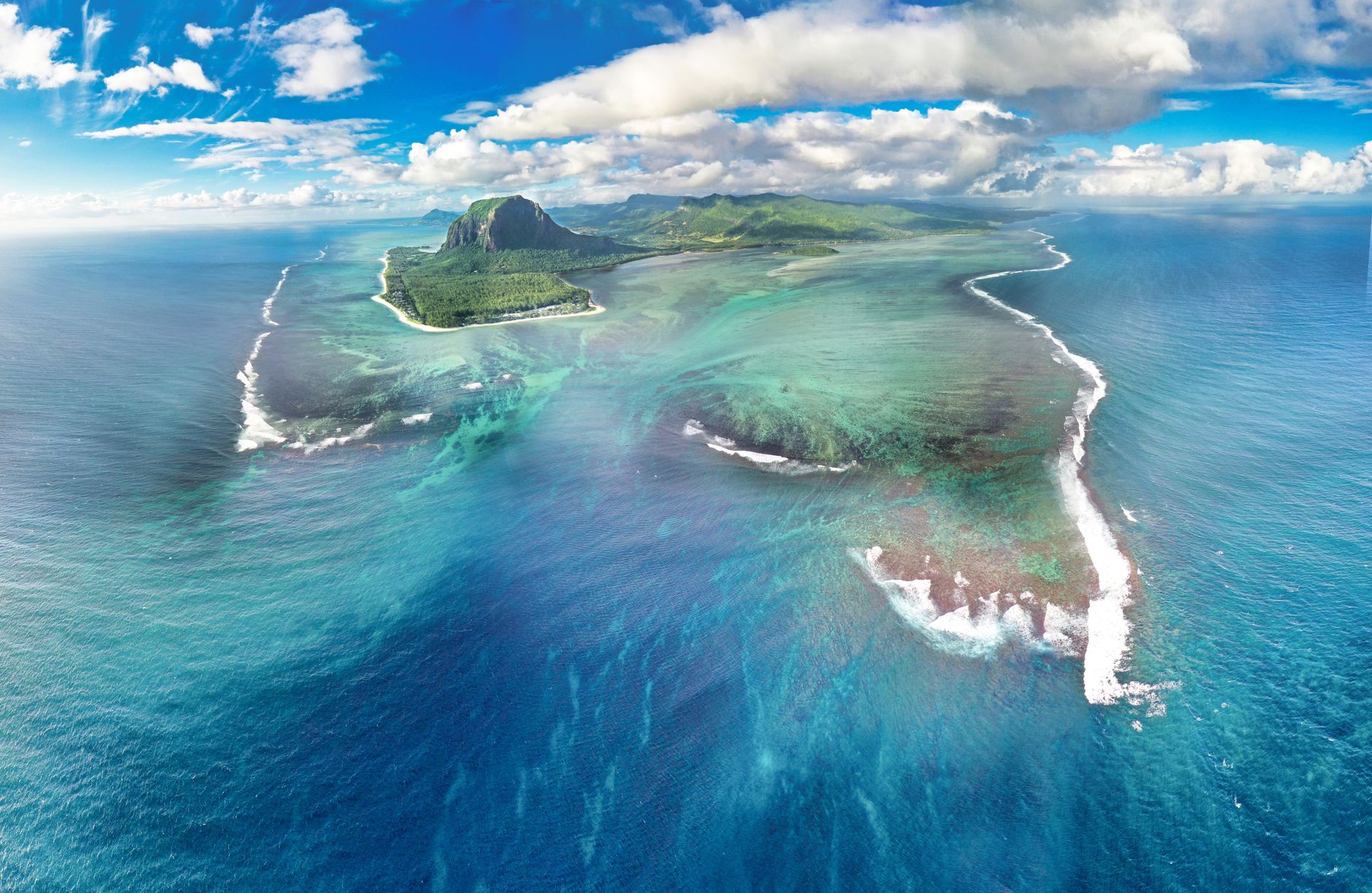
The west and north draw first-timers for good reason. Flic en Flac and Tamarin have easier beach days, calmer winter conditions, and quick access to the Black River Gorges side of the island, while Chamarel and Le Morne bring the scenery Mauritius is secretly best at: waterfall lookouts, colored earth, hard volcanic relief, and one of the Indian Ocean's most charged cultural landscapes. Le Morne Brabant is not background decoration. It is a mountain tied to the history of slavery and resistance, which changes the way the coast looks once you know what happened there.
Then the island shifts register again. Mahébourg keeps traces of old port life on the southeast coast, Rodrigues offers a rougher and more remote version of the republic, and Quatre Bornes and Flacq show the everyday Mauritius many resort itineraries edit out. This is what makes the country memorable. Not a single postcard view, but the way Creole, French, Indian, Chinese, and British histories sit side by side in food stalls, street names, prayer sites, and market chatter. Mauritius is beautiful, obviously. It is the density of lived culture that gives it weight.
A History Told Through Its Eras
An Empty Island, and the Creatures That Did Not Fear Men
Isle Before Empire, c. 900-1598
Arab and Malay sailors knew the island long before any governor claimed it. On old routes across the Indian Ocean, it appeared as Dina Arobi, the deserted island, a green mass east of Madagascar where no court glittered, no spice market waited, no king sent envoys to the shore. That is precisely what makes the beginning so moving: Mauritius entered history not with a trumpet blast, but with absence.
Picture the scene. Ebony forest, giant tortoises pushing through leaf litter, seabirds breeding without alarm, and the dodo walking where it pleased because nothing on the island had taught it fear. Ce que l'on ignore souvent, c'est que this famous bird was not born ridiculous; isolation made it calm, and calm would prove fatal.
When the Portuguese passed through in the early 16th century, they did what sailors did. They took water, seized tortoises as living provisions, marked the Mascarene islands on their charts, and moved on. They did not build a fort, they did not found a town, and they did not imagine that this neglected stop would one day produce Port Louis, Pamplemousses, and the grand creole dramas of a plantation colony.
That first contact matters because it set the pattern. Mauritius was desired less for what it was than for where it stood: on the road, between powers, between monsoons, between appetites. The island had not yet found its masters, but the sea had already chosen its fate.
Pero de Mascarenhas appears only in passing, yet this fleeting navigator gave his name to an entire archipelago without ever truly possessing it.
The Portuguese treated giant tortoises as shipboard meat lockers: living cargo that stayed fresh because it could survive for weeks without much care.
Maurice of Nassau, Rats in the Hold, and the Death of the Dodo
Dutch Mauritius, 1598-1710
In September 1598, Dutch sailors came ashore through rough weather and named the island after Prince Maurice of Nassau. A prince gave his name; hunger shaped the reality. The men found ebony, fresh water, and birds that walked toward them instead of away. One can almost hear the creak of the hulls, the snap of wet canvas, the clumsy astonishment of Europeans stepping into a world that had never prepared for them.
The colony that followed was hesitant, then miserable. Settlements were attempted from 1638, abandoned, resumed, and abandoned again, with storms, insects, failing crops, and isolation wearing down each burst of resolve. Ce que l'on ignore souvent, c'est que the great destroyer was not only the musket. It was the stowaway. Rats poured from ships, pigs rooted through nests, monkeys raided crops, and the island's balance collapsed under animals the Dutch had brought almost as an afterthought.
The dodo became the emblem of this tragedy, though the story is crueler than the caricature. Sailors called it coarse meat, yet they ate it anyway; later centuries mocked its shape, though modern research suggests a stronger, more capable bird than Victorian drawings allowed. The dodo did not die because it was foolish. It died because men arrived with an entire floating zoo of predators.
By 1710 the Dutch gave up. No glorious last stand, no enemy fleet at anchor. Just attrition, bad luck, and despair. Yet their failure transformed the island forever: sugar cane remained, deer remained, invasive animals remained, and the silence left behind prepared Mauritius for a more ambitious empire under another name.
Admiral Wybrand van Warwyck gave Mauritius its enduring name, but he could not give the colony the one thing it needed more than ceremony: stability.
The Dutch called the dodo walgvogel, the 'disgusting bird,' a memorable insult from men who kept boiling and eating it anyway.
Corsairs, Botanists, and a Colonial Capital with Manners
Ile de France, 1715-1810
The French arrived in 1715, renamed the island Ile de France, and understood at once what the Dutch had only half grasped. This was not merely a place to survive. It could become a staging post, an arsenal, a garden, a society. Under Mahé de La Bourdonnais from 1735, Port Louis began to look like a capital rather than a camp: roads laid out, warehouses raised, a hospital organized, the port tightened into a serious instrument of empire.
La Bourdonnais is one of those colonial builders history treats too quickly. He was energetic, vain, capable, and unlucky in the way ambitious men often are. After capturing Madras in 1746, he returned not to triumph but to rivalry, accusation, and a cell in the Bastille. Imagine the bitterness: the man who had strengthened Mauritius writing his defense behind bars, while the port he shaped kept serving the empire that had humiliated him.
Then comes Pierre Poivre, and here the story becomes delicious. A botanist with the instincts of a smuggler, he set out to break the Dutch monopoly on cloves and nutmeg by stealing seedlings and moving them across the ocean under false pretenses. At Pamplemousses, he built not just a garden but a statement of power. Plants were politics. A cinnamon sapling could be as strategic as a cannon.
Yet French Mauritius was never only elegance and botany. Enslaved people cut cane, hauled stone, cooked in great houses, fled to the interior, and paid for every polished salon in Port Louis. Even the island's most famous novel, Paul et Virginie, wraps its innocence in a plantation world. And so the chapter closes exactly as it should: refined on the surface, brutal underneath, prosperous enough to tempt Britain, too divided to resist forever.
Mahé de La Bourdonnais built Port Louis with a sailor's discipline and died in Paris after prison had broken his health, a founder punished by his own side.
Pierre Poivre's botanical triumph began as a spice heist: cloves and nutmeg reached Mauritius through bribery, false cargoes, and a good deal of colonial espionage.
From Mahébourg's Guns to Independence, with Sugar, Exile, and Votes
British Rule to Republic, 1810-1992
The British took the island in 1810, but not before a sharp naval drama off Mahébourg gave the French one of their rare victories in the Napoleonic wars. Cannon smoke over Grand Port, shattered masts, officers writing dispatches in the heat of battle: Mauritius entered the British Empire through a fight the French remembered with pride even in defeat. The terms that followed were unusually revealing. Britain kept the island, but allowed French law, language, and customs to survive. That compromise still echoes in every conversation that slips between English, French, and Creole.
Then came the 19th century's great upheaval. Slavery was abolished in 1835, and planters, desperate for labor, turned to indentured workers from India on a vast scale. At Aapravasi Ghat in Port Louis, men and women stepped ashore carrying bundles, contracts, fears, and often very little idea of the life awaiting them. Ce que l'on ignore souvent, c'est que modern Mauritius was born as much on that immigration depot's stone steps as in any governor's office.
The island that emerged was richer in sugar and more complex in identity. Franco-Mauritian estates kept power; Indo-Mauritian communities grew in number and political weight; Creole families bore the long afterlife of slavery; Chinese traders added another thread. By the time the light rail would one day connect Port Louis to Curepipe, the real line binding the country had already been laid through labor camps, cane fields, chapels, mosques, temples, and market towns.
Independence arrived on 12 March 1968, not as a theatrical break with the past, but as a negotiated and uneasy birth. Seewoosagur Ramgoolam became the central statesman of the new nation; communal tension, economic fragility, and the memory of empire did not vanish at midnight. The republic followed in 1992. Mauritius had changed flags, constitutions, and elites, but its deepest story remained the same: people from elsewhere forced to invent a common home on a small volcanic island.
Seewoosagur Ramgoolam had the patience of a doctor and the instincts of a politician, which is sometimes the more useful bedside manner in a young nation.
When Britain seized Mauritius, it did something rare for an empire at war: it let the French settler elite keep their civil law, property arrangements, and much of their language.
The Cultural Soul
A Tongue Changes Shoes Mid-Sentence
Mauritius speaks in costume changes. A clerk in Port Louis begins in French, softens into Creole when the matter becomes human, then pulls one English word from a drawer for the invoice, as if paper itself required a different species of breath. You hear the island thinking out loud.
Mauritian Creole is the language of appetite, teasing, irritation, and mercy. French still carries starch and sheen. English sits in offices and parliamentary minutes like a well-ironed guest who leaves early. Add Bhojpuri, Hindi, Urdu, Tamil, Hakka, Mandarin. A country is a table set for strangers.
The pleasure lies in the speed of the crossings. One greeting changes the temperature of a room: Bonzour in a tabagie, Madame in a municipal office, Ki manyer? at a stall where the oil is still singing around gato pima. Speech here is less a system than a choreography, and anyone who insists on one language only has missed the point with touching efficiency.
History Wrapped in Warm Dough
Mauritian food has the elegance of a crowd that refuses to queue. Indian flatbreads, Chinese broths, Creole tomato gravies, Muslim briani, French bread, pickles sharp enough to wake the dead: each keeps its passport and still shares the same plate. Fusion is too tidy a word. This is adjacency with sauce.
The island’s truest social contract may be a dholl puri folded around butter beans, rougaille, and chili chutney. You eat it standing near a stall in Port Louis, or on a pavement in Quatre Bornes, leaning forward with the concentration of a jeweler. One drop on the shirt. Tragedy.
Then come the other grammars. Mine bouillie in a Sino-Mauritian bowl that asks for slurping, not shame. Fish vindaye whose vinegar and mustard arrive before your thoughts do. Alouda, pink and cold and faintly absurd, which is why it works. Mauritius does not cook to impress. It cooks to prove that memory survives heat.
The Courtesy Before the Question
The island believes in greetings the way some countries believe in fences. You do not enter a shop in Mahébourg and begin with your need. You begin with the person. Bonzour first, then the matter at hand. This takes two seconds and saves you from sounding like a machine that has learned to point.
Mauritian politeness is light, never syrupy. Elders are greeted first. Titles still matter in the right rooms. A smile can say yes, not yet, or absolutely not, and the difference lives in tone. If someone tells you “we’ll see,” hear the velvet around the refusal.
This restraint does not mean coldness. Quite the reverse. The warmth appears once the ritual has been honored, like steam escaping from a covered pot. Sit long enough and somebody will ask whether you have eaten. That question is never about calories. It is about whether the world has treated you properly today.
Incense, Camphor, and Salt Wind
Mauritius handles religion with a practical grandeur. Temples, churches, mosques, and shrines do not glare at one another across doctrinal trenches; they stand in the same humid light, each attended by flowers, shoes, schedules, aunties, and memory. The sacred here smells less like abstraction than like camphor, coconut oil, jasmine, wax, and wet stone.
At Grand Bassin, pilgrims carry offerings with the patience of those who know that devotion includes traffic. In Port Louis, a church bell can drift across a neighborhood where incense has just burned before a Hindu altar and Friday prayer will soon gather men into clean lines. The island is not naïve. It remembers slavery, indenture, hierarchy, empire. Yet ritual has taught it one expensive lesson: people can keep their gods and still share a road.
Le Morne gives the matter a darker gravity. Memory there is not decorative. The mountain stands over the lagoon like a sentence no one has finished, tied to the history of enslavement and maroon resistance, and any visit that treats it as scenery alone has arrived with insufficient organs.
A Drumline for the Living and the Dead
Mauritius does not merely listen to rhythm. It inherits it. Sega was born from enslaved people who used the body as archive when paper belonged to others, and the ravanne still sounds like skin arguing with history. One beat, then another, then the hips answer before the mind files an objection.
The old image of sega as a cheerful beach performance is convenient and false. Listen properly in Rodrigues or at a local gathering away from resort choreography and you hear lament, mockery, flirtation, survival. The triangle cuts through. The maravanne rattles like dry seeds in a warning hand. Someone sings of love, work, absence, rum, or all four at once.
Seggae, with its braid of sega and reggae, added another current: protest with sway. That feels Mauritian too. Even rebellion here knows how to dance. Or perhaps dancing is the rebellion.
Verandas Against the Sun
Mauritian architecture understands climate better than vanity does. Verandas, shutters, deep eaves, courtyards, corrugated roofs, thick walls: these are not ornaments but negotiations with glare, rain, and heat. The island’s buildings know that survival begins with shade.
In Port Louis, colonial facades still carry French proportion and British administration in uneasy partnership, while market halls and shopfronts announce the more persuasive authority of commerce. In Curepipe, the upland air changes the mood; houses seem to inhale more slowly there. In Pamplemousses, old estates and botanical spaces reveal how power once staged itself among trees, axes, imported species, and long sight lines.
Then Mauritius does something I admire: it refuses purity. A house may borrow a French balcony, a Creole veranda, an Indian domestic rhythm, Chinese practical additions, and whatever material happened to be available after the last cyclone. Good taste is one thing. Shelter is another. The island, being intelligent, chose both when possible and shelter when not.
What Makes Mauritius Unmissable
Reef-Lagoon Coast
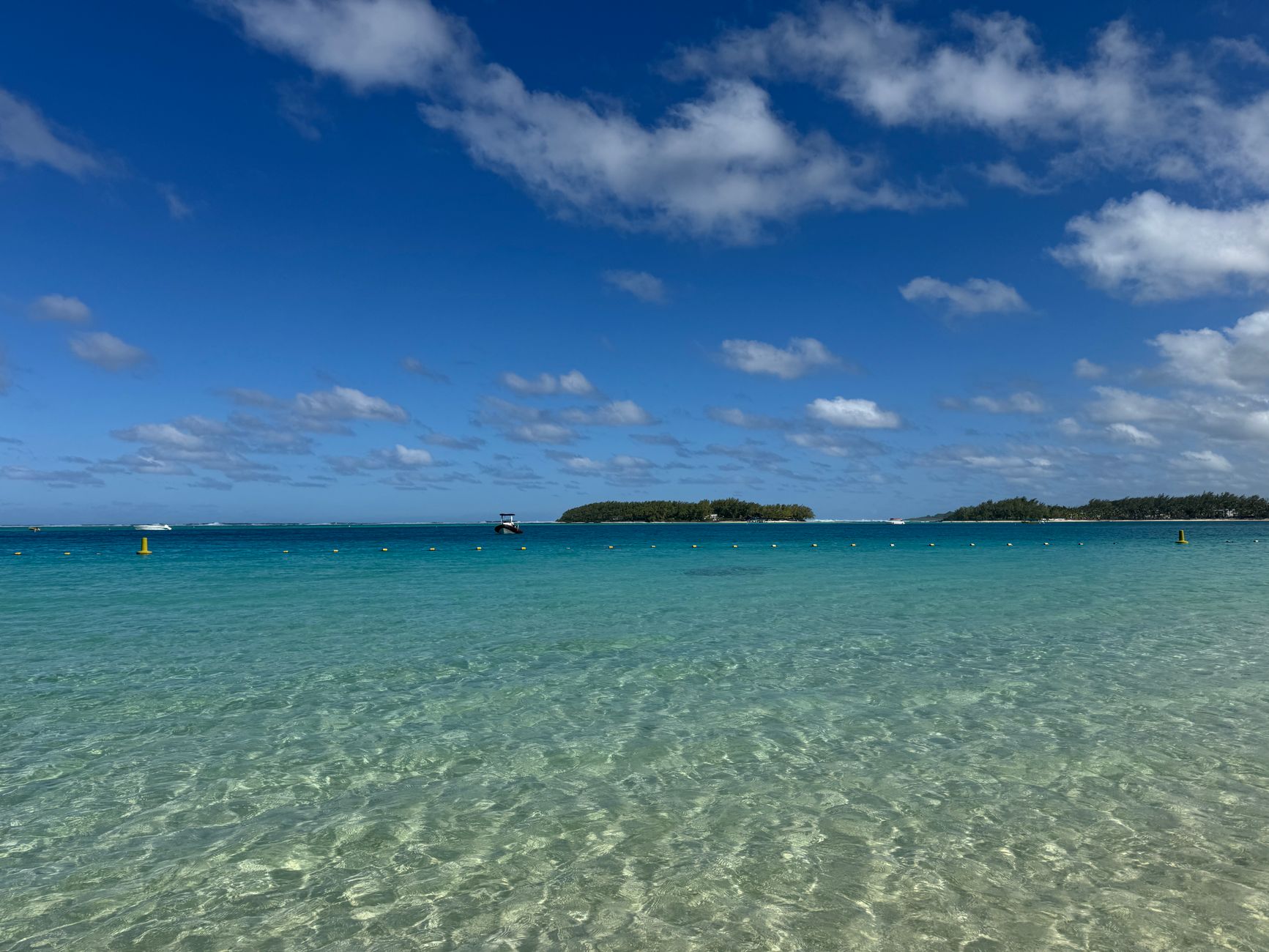
Much of Mauritius is edged by fringing reef, which creates shallow lagoons in electric shades of blue. That means easier swimming, beginner-friendly snorkeling, and beach days that feel gentler than the open Indian Ocean suggests.
Volcanic Interior
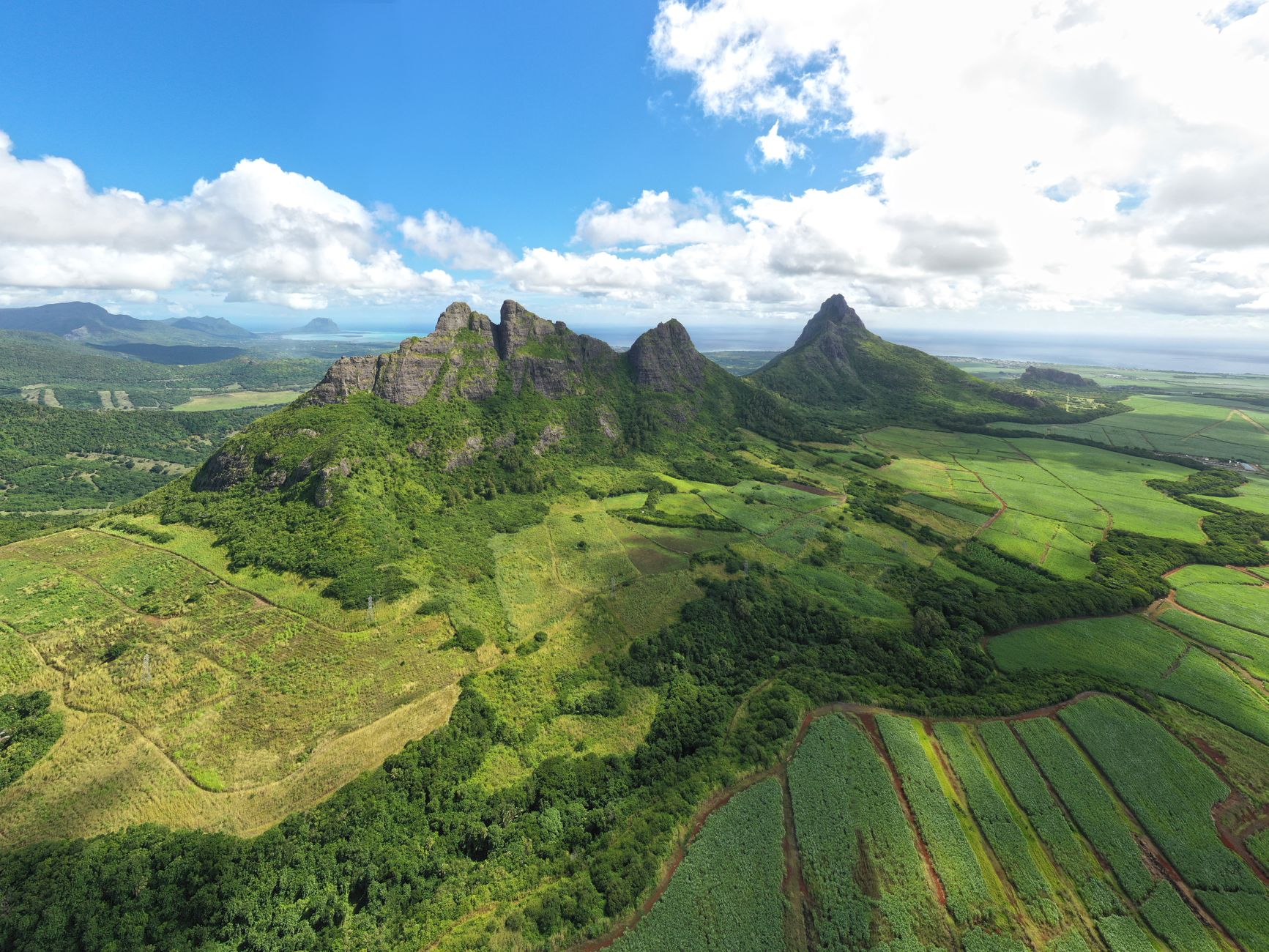
The island's center rises into a cooler plateau and a ring of basalt peaks, with trails, viewpoints, waterfalls, and forest drives packed into a small footprint. Mauritius rewards travelers who leave the sand for a day.
Le Morne Legacy
Le Morne is one of the country's defining places because the mountain carries the memory of resistance to slavery as well as postcard beauty. The view is magnificent, but the history is what stays with you.
Street Food Mix
Mauritian food tastes like several migrations meeting at one stall: dholl puri, gato pima, fried noodles, rougaille, vindaye. Port Louis, Quatre Bornes, and Flacq are where the island stops being an idea and starts tasting real.
Culture In Layers
English runs the paperwork, French fills media and conversation, and Mauritian Creole carries daily life. Add Hindu temples, Catholic churches, mosques, Chinese pagodas, and market slang, and the island reads less like fusion than vivid coexistence.
Small Island, Big Variety
You can pair Grand Baie, Chamarel, Pamplemousses, and Mahébourg in one trip without heroic logistics. Few beach destinations give you this much visual and cultural range in such short driving distances.
Cities
Cities in Mauritius
Port Louis
"The capital's Central Market sells octopus curry, saffron, and second-hand French novels within thirty metres of each other, and the waterfront Caudan district has replaced colonial decay with a working harbour that stil"
Grand Baie
"Mauritius's busiest resort town trades on a sheltered north-coast lagoon, a strip of dive operators and catamaran charters, and a nightlife scene that runs considerably later than the rest of the island expects."
Flic en Flac
"The west-coast beach here stretches nearly eight kilometres of uninterrupted white sand backed by casuarina trees, with the Black River mountains rising behind it and visibility in the water good enough to spot octopus f"
Mahébourg
"This quietly proud southeast town sits at the edge of the Grand Port lagoon where the French and British fought the only Napoleonic naval battle in which France won, and the National History Museum on the waterfront hold"
Curepipe
"Sitting at roughly 550 metres on the central plateau, Curepipe is cooler and cloudier than the coast, has a genuine town-centre bookshop culture, and sits at the rim of the Trou aux Cerfs volcanic crater, which you can w"
Chamarel
"The Seven Coloured Earths here — volcanic soil that separates into bands of red, brown, violet, and green — sound like a postcard gimmick until you stand at the edge of the gully and realise the colours are geological fa"
Le Morne
"The basalt peninsula in the far southwest is where enslaved people sought refuge in the mountains above, and the UNESCO-listed Le Morne Brabant peak still carries that history in its silhouette against the turquoise lago"
Rodrigues
"Six hundred kilometres northeast of the main island, this self-governing dependency moves at a pace Mauritius itself abandoned decades ago — octopus dries on lines above the lagoon, and the reef here is in better health "
Pamplemousses
"The Sir Seewoosagur Ramgoolam Botanical Garden here has been cultivating plants since 1770, and the giant Victoria amazonica water lilies in the central pond are large enough to support the weight of a small child."
Quatre Bornes
"Known locally as 'la ville des fleurs,' this plateau town runs a twice-weekly textile and clothing market where Mauritians actually shop, making it one of the few places on the island where a visitor sees commerce unmedi"
Tamarin
"Once a quiet fishing village on the west coast, Tamarin still has a left-hand surf break that draws serious surfers in winter, a salt-pan estuary where flamingos occasionally appear, and a pace that Grand Baie lost somet"
Flacq
"The east-coast town hosts the island's largest open-air market every Wednesday and Sunday, where vendors sell everything from live chickens to handmade rougaille paste, and the surrounding coast offers some of the least-"
Regions
Grand Baie
North Coast
The north is where Mauritius looks most legible to a first-time traveler: dry season light, easy beaches, short drives, and enough restaurants that you do not need to plan dinner like a military exercise. Grand Baie is the social anchor, while nearby Pamplemousses adds older layers of colonial botany and estate history that keep the region from feeling like a resort strip.
Flic en Flac
West Coast
The west is the practical favorite for many repeat visitors because it solves several problems at once: calmer seas, good sunsets, straightforward road access, and fast reach into the interior. Flic en Flac is the easy-going base, while Tamarin feels more local and surf-shaped, with a rougher edge that some travelers actively seek out.
Chamarel
Southwest Highlands and Peninsula
This is the part of Mauritius that corrects the beach-only stereotype. Chamarel brings waterfalls, forest roads, and the Seven Coloured Earths, then Le Morne turns the coast into something sharper and more serious, where landscape and the history of resistance to slavery sit in the same frame.
Mahébourg
South and Airport Quarter
The southeast feels older, windier, and less staged than the north coast. Mahébourg still carries the memory of a port town rather than a purpose-built holiday zone, so the rhythm is slower and the sea less manicured, which is exactly why some travelers prefer to start or end here.
Curepipe
Central Plateau
The plateau is cooler, cloudier, and far more everyday than the brochures suggest, which makes it useful if you want to understand how Mauritius actually functions beyond the hotel wall. Curepipe and Quatre Bornes sit on the urban spine with Port Louis, linked by Metro Express and commuter life rather than lagoon fantasy.
Rodrigues
Outer Island Escape
Rodrigues belongs to the Republic of Mauritius, but it changes the tone of a trip completely. The island is smaller, drier, and more self-contained, with less polish and less traffic, which is another way of saying it still feels governed by weather, distance, and local routine rather than by package tourism.
Suggested Itineraries
3 days
3 Days: Capital, Garden, North Coast
This is the short, efficient Mauritius that still feels like a holiday. Start in Port Louis for markets and street food, pause in Pamplemousses for the old botanical imagination of the island, then finish in Grand Baie where the coast turns easy and social.
Best for: first-timers with limited time
7 days
7 Days: West Coast and the Mountain Edge
This route works if you want beach mornings and inland drama without long transfer days. Flic en Flac gives you an easy base, Tamarin adds surf-town energy, Chamarel brings waterfalls and volcanic color, and Le Morne closes the week on the island's most loaded landscape.
Best for: couples, drivers, and travelers who want beaches plus hikes
10 days
10 Days: South, East, and Rodrigues
Begin where the island still remembers ships and departures in Mahébourg, then move to Flacq for the breezier east-coast lagoon. Finish in Rodrigues, which feels slower, barer, and less polished than mainland Mauritius in a way many repeat visitors prefer.
Best for: repeat visitors and travelers who want a quieter Indian Ocean trip
14 days
14 Days: Plateau Towns to the Sea
This slower loop suits travelers who do not want to spend two weeks checking in and out of hotels every night. Curepipe and Quatre Bornes show the cooler, workaday plateau; Port Louis restores the historical scale; Rodrigues gives the final stretch a clean break from the main island.
Best for: slow travelers, remote workers, and second-time visitors
Notable Figures
Mahé de La Bourdonnais
1699-1753 · Governor and naval commanderHe gave Port Louis its backbone: roads, warehouses, a hospital, and the hard administrative habits of a real colonial port. Then, in one of history's favorite cruelties, the builder of Mauritius returned to France and ended up in the Bastille, disgraced by rivals after military success.
Pierre Poivre
1719-1786 · Botanist and colonial administratorPoivre turned Pamplemousses into a botanical command center and broke the Dutch spice monopoly with the nerve of a gardener and the methods of a smuggler. He also wrote against slavery, which gives his memory a moral complication rare in 18th-century colonial officials.
Paul et Virginie
1788 (novel publication) · Literary lovers turned island mythThey are not historical persons, yet they have marked Mauritius as deeply as some governors. Bernardin de Saint-Pierre made the island famous in Europe through innocence, shipwreck, and tears, while the plantation world surrounding the lovers remained far less innocent than the novel liked to admit.
Seewoosagur Ramgoolam
1900-1985 · Statesman and first Prime MinisterMauritians still speak of him with the familiarity reserved for founding fathers who also knew how to wait. A doctor by training, he understood that the island's survival depended less on grand speeches than on balancing communities that history had placed side by side, not always gently.
Gaëtan Duval
1930-1996 · Politician and opposition leaderDuval was elegant, combative, and impossible to ignore, the sort of politician who could make a rally feel like opening night. He defended minority interests with real force, but he also embodied the theatrical, deeply personal style of politics that Mauritius never entirely abandoned.
Sir Anerood Jugnauth
1930-2021 · Prime Minister and PresidentFew men shaped independent Mauritius over as many decades. He moved through office with the cool endurance of someone who knew that on this island, power belongs not just to charisma, but to the patient management of alliances, institutions, and family legacies.
Malcolm de Chazal
1902-1981 · Writer and painterDe Chazal saw Mauritius less as a colony or a resort than as a strange, symbolic theater of rocks, plants, and human vanity. His writing about places such as Chamarel and the island's volcanic forms gave local landscape a metaphysical edge that still feels delightfully unruly.
Kaya
1960-1999 · Singer and creator of seggaeKaya fused sega and reggae into seggae and gave the island a voice that was tender, political, and unmistakably Mauritian. His death in police custody in 1999 shook the country because he had become more than a musician; he was one of the few figures who made Mauritius hear itself across class and community lines.
Photo Gallery
Explore Mauritius in Pictures
Crystal clear waters at Blue Bay, Grand Port District, Mauritius under a vibrant blue sky.
Photo by Jyoti Pur on Pexels · Pexels License
Explore the breathtaking Le Morne Peninsula, a UNESCO World Heritage site in Mauritius, from above.
Photo by Dominik Ruhl on Pexels · Pexels License
Explore the stunning aerial landscape of Rivière Noire, Mauritius with lush greenery and mountainous views.
Photo by Dominik Ruhl on Pexels · Pexels License
Practical Information
Visa
Mauritius is visa-free for many travelers, including passport holders from the EU, the US, Canada, the UK, and Australia for short tourist stays. You still need a passport valid for the stay, proof of onward travel, accommodation details, and enough funds. Complete the Mauritius All-in-One Travel Digital Form within 72 hours of arrival and keep a copy on your phone.
Currency
The local currency is the Mauritian rupee, written as MUR or Rs. Cards work in resorts, supermarkets, and larger restaurants in Port Louis, Grand Baie, and Flic en Flac, but cash still matters for taxis, beach stalls, and small snack shops. Since 1 October 2025, registered tourist accommodation also adds a 3 euro per person per night tourist fee for guests aged 12 and up.
Getting There
Most international arrivals land at Sir Seewoosagur Ramgoolam International Airport in Plaine Magnien, near Mahébourg. The airport has no rail link, so you leave by taxi, hotel transfer, or rental car. Rodrigues is the main domestic add-on, usually reached by Air Mauritius from the main island.
Getting Around
Buses are the cheapest way to move between towns, though rural services thin out early and timetables can be uneven. Metro Express links Port Louis, Quatre Bornes, and Curepipe, which helps on the urban corridor but not on the coasts. Taxis are easy to find, yet fares are not tightly regulated, so agree the price before the car moves.
Climate
Mauritius runs warm and humid from November to April, then cooler and drier from June to September. The north and west, including Grand Baie and Flic en Flac, are usually sunnier and more sheltered in winter, while the east and south feel windier. Cyclone season officially runs from 1 November to 15 May, with the highest risk usually from January to March.
Connectivity
Mobile coverage is good on the main island, and hotels, guesthouses, and cafes usually offer workable Wi-Fi. A local SIM from my.t or Emtel is the sensible move if you plan to drive, use maps, or book taxis on the go. Coverage in Rodrigues is serviceable rather than fast, so download maps before you fly.
Safety
Mauritius is generally an easy country to travel in, with lower day-to-day stress than many long-haul beach destinations. The common problems are practical ones: petty theft on unattended beaches, strong sun, reef cuts, and rougher seas on exposed coasts. Swim where locals are swimming, lock valuables out of sight, and treat mountain and waterfall trails near Chamarel or Le Morne with more respect than the postcard suggests.
Taste the Country
restaurantDholl puri
Street stall. Paper wrap. Butter bean curry, rougaille, chili chutney. Fingers, walking, noon.
restaurantFarata with curry
Home table or snack counter. Hand tears layers. Curry, pickles, sauce. Silence during first bites.
restaurantMine bouillie
Lunch bowl. Broth, noodles, chili paste, spoon, slurp. Office workers, market regulars, rain outside.
restaurantFish vindaye
Family meal, next-day lunch, beach picnic. Fried fish, mustard seeds, vinegar, bread or rice. Sharpness first, hunger after.
restaurantGato pima and tea
Morning ritual. Hot fritters, bread, butter, sweet tea. Sunday newspaper, plastic chair, gossip.
restaurantBriani
Celebration food. Rice, meat, potato, fried onion, pickles. Weddings, Eid tables, long afternoons.
restaurantAlouda
Heat cure. Milk, basil seeds, agar strands, syrup, ice. Port Louis errands, sugar rush, pink moustache.
Tips for Visitors
Budget by coast
North and west coast resorts usually price above the south and plateau, especially from December to January. If you want lower room rates without giving up easy driving, look at Mahébourg or the inland belt around Curepipe and Quatre Bornes.
Use the metro smartly
Metro Express is useful for moving between Port Louis, Quatre Bornes, and Curepipe without traffic stress. It is not an island-wide solution, so pair it with taxis or a rental car rather than building your whole trip around it.
Price taxis first
Taxi fares are often negotiated, not metered in the way visitors expect. Set the total before departure, and for longer half-day or full-day outings ask for the waiting time price as well, not just the ride out.
Eat street food early
The best dholl puri, gato pima, and noodle stalls often sell hardest at lunch, not at dinner. In Port Louis and Mahébourg, go before the crowd thins and before the griddle starts looking tired.
Book December early
Christmas, New Year, and the first half of January are the hardest weeks for room prices and flight availability. If that is your window, reserve hotels and a rental car well ahead instead of assuming Mauritius always has spare beach inventory.
Greet first
A quick hello matters in Mauritius more than many visitors expect. Start with a simple greeting before asking for directions, prices, or help, especially in small shops and family-run guesthouses.
Watch the sea
A calm lagoon and an exposed south-coast beach can sit within a short drive of each other, yet behave like different countries. Check local conditions before swimming or snorkeling, and do not assume every photogenic beach is safe for a casual dip.
Explore Mauritius with a personal guide in your pocket
Your Personal Curator, in Your Pocket.
Audio guides for 1,100+ cities across 96 countries. History, stories, and local insight — offline ready.
Audiala App
Available on iOS & Android
Join 50k+ Curators
Frequently Asked
Do I need a visa for Mauritius? add
Probably not, if you hold an EU, US, UK, Canadian, or Australian passport and you are visiting as a tourist for a short stay. You still need a passport valid for the trip, proof of onward travel, accommodation details, and the Mauritius All-in-One Travel Digital Form completed within 72 hours before arrival.
Is Mauritius part of Schengen? add
No, Mauritius is not in the Schengen Area. It runs its own entry rules, so a Schengen visa does not define your right to enter Mauritius, and time spent in Mauritius does not count as Schengen time.
What is the best month to go to Mauritius? add
October is one of the safest bets if you want drier weather, lower humidity, and fewer storm worries. May to September is also good for hiking and road trips, while December to January brings stronger beach demand, higher prices, and more heat.
Is Mauritius expensive for tourists? add
It can be, but it does not have to be. Budget travelers can manage on roughly MUR 2,500 to 4,500 a day excluding international flights, while mid-range trips often land around MUR 5,500 to 10,000 depending on where you sleep and how often you use taxis.
Can you get around Mauritius without a car? add
Yes, but only if you accept slower days and some planning. Buses and Metro Express work well enough for Port Louis, Curepipe, and Quatre Bornes, yet coastal hopping and national park days are much easier with a rental car or pre-booked driver.
Is Uber available in Mauritius? add
No, not in the usual sense. Travelers generally use local taxis, hotel dispatch, or the Yugo app, and you should still confirm the fare or booking terms before the ride starts.
Which side of the road do they drive on in Mauritius? add
They drive on the left. That matters most at roundabouts, on narrow rural roads, and after dark, when road markings and lighting can be weaker than visitors from Europe expect.
How many days do you need in Mauritius? add
Seven days is enough to understand one side of the island properly and still rest. Ten to fourteen days makes more sense if you want beach time, inland drives, Port Louis, and a side trip to Rodrigues without turning the whole holiday into logistics.
Sources
- verified Mauritius Tourism Promotion Authority — Official destination information used for seasonal framing and general visitor planning.
- verified Mauritius Meteorological Services — Climate normals, rainfall patterns, and official cyclone season dates.
- verified Passport and Immigration Office, Mauritius — Visa exemptions, entry conditions, and the Mauritius All-in-One Travel Digital Form requirement.
- verified U.S. Department of State - Mauritius Travel Advisory and Country Information — Practical checks on entry rules, local transport realities, metro hours, and driving conditions.
- verified Airports of Mauritius — Primary airport information for Sir Seewoosagur Ramgoolam International Airport and arrival logistics.
Last reviewed: