sailing
Wave-Read Ocean Culture
Marshallese seafaring was built on stick charts and the reading of swell patterns through the body. Arno Atoll is one of the clearest places to understand that this was technical knowledge, not folklore.
The Marshall Islands are not a beach escape dressed up as a country. They are a nation of atolls where ocean knowledge, nuclear history, and climate reality meet on strips of land barely higher than the tide.
EntryUS visa-free; many other nationalities visa-free or visa on arrival
MMarshall Islands travel guide: 29 coral atolls spread across 2 million square kilometers of ocean, with no mountains, no rivers, and one of the world's largest lagoons.
The Marshall Islands suit travelers who want the Pacific without the usual fantasy script. Start in Majuro, the capital atoll, where church services, tuna boats, roadside stores, and lagoon light all share the same narrow strip of land. Then look outward: Ebeye compresses thousands of lives into less than half a square kilometer, while Kwajalein opens onto a lagoon so large it feels like inland sea rather than reef. This is a country built from edges, where every road runs between ocean on one side and lagoon on the other.
History here is not background scenery. Bikini Atoll and Enewetak Atoll carry the physical afterlife of the nuclear age, and the names still land hard because the story is not finished. Jaluit Atoll recalls the German trading era, Arno Atoll preserves one of the most intricate atoll systems in the Pacific, and Wotje Atoll and Mili Atoll still hold Japanese wartime ruins half-claimed by roots and salt. Few places ask you to think at this scale: ancestral wave navigation, colonial copra, Cold War fallout, and sea-level rise in the same line of sight.
Wave Pilots and Chiefly Seas, c. 2000 BCE-1529
Night on a canoe begins with the body, not the eye. A navigator lies flat on woven mats, his spine reading the swell while the stars turn above the black Pacific, and somewhere ahead an atoll announces itself by the way it bends water rather than by any visible shore. That is how the first settlers reached what are now the Marshall Islands, building a civilization across 29 atolls and a sea territory so wide it still unsettles modern maps.
Ce que l'on ignore souvent, c'est que the famous stick charts were never really deck instruments in the European sense. They were teaching devices made from coconut ribs and shells, memorized on land, then left behind; the real chart lived in the pilot's ribs, in the learned feel of crossing swells, reflected waves, and currents. A master ri-meto could sense land long before sunrise, as if the lagoon had sent a whisper ahead of itself.
From that maritime intelligence grew a strict social order. The Ratak chain, the sunrise islands, and the Ralik chain, the sunset islands, were ruled by iroij, high chiefs whose authority ran through land, reef, labor, and kinship, while inheritance passed through the mother's line. It sounds orderly. It rarely was. A chief's son, a chief's sister's son, rival claims, old grudges, long canoe voyages for revenge: politics here had the intimacy of family and the range of open ocean.
And then there are the women, too often blurred into the background by later chroniclers. Oral tradition keeps the memory of figures such as Leroij Meram, who is said to have negotiated peace not by force but by kinship and sacrifice, offering what no man wanted to offer and turning blood feud into alliance. In the Marshall Islands, power wore shell ornaments, but it also sat quietly in the matrilineal line, deciding who belonged and who would inherit the future.
Leroij Meram survives in chant rather than archive, a female chief remembered less for conquest than for the cold courage of making rival men keep the peace.
Some navigators refused to explain stick charts to foreign researchers because they believed sea knowledge spoken in the wrong setting could lose its force.
Strangers, Traders, and the Copra Bargain, 1529-1914
A sail on the horizon meant danger long before it meant empire. Spanish explorers likely sighted the islands in 1529, British captains John Marshall and Thomas Gilbert passed through in 1788, and Russian officer Otto von Kotzebue lingered long enough in the early 19th century to realize he was looking at a society Europeans barely understood. His hosts received him on finely woven mats, with ceremony, calculation, and more than a little amusement.
Ce que l'on ignore souvent, c'est que Marshallese chiefs did not meet outsiders as dazzled innocents. They bargained, misled, tested, and judged. Kotzebue tried to obtain a stick chart; one navigator seems to have sold him a misleading version, pocketed the payment, and left the foreign visitor pleased with a lesson that was not the one he thought he had bought.
The deeper transformation arrived with traders and missionaries in the 19th century. Copra, dried coconut meat, turned palms into export columns and atolls into ledger lines. Protestant missions attacked tattooing, ritual sites, and older forms of authority, while German imperial power formalized what commerce had already begun. In 1885 the German Empire declared a protectorate, and the Jaluit Company, based in Jaluit Atoll, became the real court of the archipelago: a mercantile palace made of contracts, shipping schedules, and debt.
But empire in the Marshalls never looked like stone forts and grand avenues. It looked like warehouses by the shore, schooners, account books, and chiefs forced into new forms of dependence while still guarding local prestige. The old order was not erased in a single stroke. It was translated, taxed, baptized, and bent. By the time German rule had settled into routine, the islands had already entered a harder century in which outside powers would no longer be passing visitors but permanent claimants.
Otto von Kotzebue comes off in his journals as curious and observant, yet even he never fully grasped how politely his Marshallese hosts were withholding the real secrets.
The German colonial foothold depended less on soldiers than on the Jaluit Company, which controlled trade so thoroughly that copra could shape politics from one lagoon to the next.
Mandate, War, and the Nuclear Kingdom, 1914-1958
The school bell, the military parade, the registry book: Japanese rule entered the Marshall Islands through routine. Japan seized the islands in 1914 and governed them under a League of Nations mandate after the First World War, building schools, ports, shops, and administrative systems that tied atolls such as Jaluit Atoll, Wotje Atoll, and Kwajalein more tightly to an imperial network stretching to Tokyo. Settlers arrived. So did a new discipline of names, schedules, and allegiances.
Then came the war, and the lagoon became a battlefield. By 1944 American forces assaulted Kwajalein and Enewetak Atoll, while Japanese garrisons on places like Wotje Atoll and Mili Atoll were cut off, starved, and left to the insects, the heat, and the slow humiliation of defeat. Across the islands, civilians paid for strategies devised an ocean away.
Nothing, though, prepared the country for what followed in 1946. At Bikini Atoll, people were asked to leave for what American officials described as the good of mankind and the end of all world wars; one elder, Juda, agreed under pressure with words that history has not forgiven. Twenty-three nuclear tests were carried out at Bikini Atoll and Enewetak Atoll between 1946 and 1958, including Castle Bravo in 1954, the largest nuclear device the United States ever exploded, a blast so violent that it dusted Rongelap Atoll with radioactive ash like a false snowfall.
Ce que l'on ignore souvent, c'est que the bomb did not only poison bodies and soil. It rewrote memory. Places became uninhabitable, kin networks were broken by relocation, and words such as Bikini entered global fashion while the people of Bikini Atoll were still looking for somewhere safe to live. The Marshall Islands had become famous in the most indecent way possible: as a laboratory.
The consequence ran far beyond the test years. Radiation illness, miscarriages, displacement, and mistrust turned the American trusteeship into something more intimate than colonial rule and more brutal than wartime occupation. A country of low coral islands, with no mountains to hide behind, had been made to carry the weight of the atomic age.
Juda, the leader of Bikini Atoll at the time of the first relocation, is often reduced to a quotation, but behind it stood a man trying to protect his people while facing the full theater of American power.
The global swimsuit called the bikini was named in 1946 after Bikini Atoll, turning a site of forced exile into a joke of postwar fashion.
Independence, Memory, and the Rising Tide, 1958-present
The modern Marshall Islands begin in meeting halls, not on battlefields. After the testing era, Marshallese leaders, church figures, teachers, and survivors began turning grief into evidence, and evidence into politics. Majuro became the capital of that effort, a narrow atoll city where government offices, churches, cargo yards, and family compounds sit almost shoulder to shoulder, as if the state itself had been assembled from persistence.
Self-government came in 1979. Full sovereignty followed in 1986 under the Compact of Free Association with the United States, negotiated by Amata Kabua, the country's first president and a man who understood both chiefly lineage and modern diplomacy. He gave the new republic a formal voice, but the moral force of the era often came from others: women such as Darlene Keju, who spoke publicly about nuclear harm with a precision that made officials squirm, and island communities that refused to let compensation paperwork replace truth.
Ce que l'on ignore souvent, c'est que the Marshall Islands helped change the language of global climate politics before many larger states had even found the nerve. Foreign minister Tony deBrum, grandson of Likiep Atoll and witness to the Bravo fallout as a child, became one of the sharpest diplomats in the Pacific, reminding the world that for the Marshall Islands sea-level rise is not a metaphor but a tide entering homes in Majuro and washing graves on outer atolls.
The country now lives inside two clocks at once. One measures decolonization, compensation cases, migration to the United States, and the long afterlife of the bomb; the other measures king tides, drought, saltwater intrusion, and the frightening arithmetic of low elevation. Walk in Ebeye, or stand on the road in Majuro with lagoon on one side and ocean on the other, and the entire national story becomes visible at a glance: sovereignty here has always meant surviving decisions made elsewhere.
Yet survival is too small a word. Marshallese history is also invention, law, eloquence, memory, and the refusal to vanish quietly. That is the bridge into the present era, where the old skill of reading subtle shifts in water has become, once again, a matter of national destiny.
Tony deBrum brought the voice of a small atoll nation into climate negotiations with the quiet authority of someone who had seen the sky turned white by a bomb.
When Majuro floods during king tides, the spectacle is not dramatic in the cinematic sense; seawater simply enters roads and yards, which is precisely what makes it so unnerving.
Marshallese begins with a disarming economy. You hear "yokwe" in Majuro and think you have learned hello; five minutes later you realize you have also learned goodbye, affection, and a small theory of human relations. A language that places greeting and love in the same vessel is not being vague. It is being exact about what contact costs and what it gives.
The words sit close to the body. "Jouj" softens a request with kindness rather than ceremony, as if politeness were not a social varnish but a moral temperature. English works perfectly well in offices, schools, airport counters. Kajin M̧ajeļ does something else. It measures belonging, lineage, the difference between "we including you" and "we without you," which is a distinction any atoll society would need if it wanted to remain sane.
On Arno Atoll, where navigation knowledge once moved between kin like an heirloom too precious for daylight, language still feels tidal: who speaks first, who answers, which names are spoken plainly and which are carried with care. A country is a grammar of distance. The Marshall Islands make distance intimate.
Marshallese cuisine tastes of intelligence under pressure. Breadfruit, pandanus, reef fish, coconut cream, swamp taro from hand-dug pits: none of this flatters laziness. The plate tells you, without self-pity, that low coral atolls do not forgive waste and that appetite must learn manners before it earns pleasure.
Bwiro says this best. Fermented breadfruit paste, wrapped in leaves, baked until it becomes dense and faintly sour, it belongs to the ancient category of foods invented because a season ends and people intend to survive it. Then someone adds coconut cream and the survival food becomes feast food. Scarcity has exquisite table manners.
In Majuro, imported rice and corned beef sit beside roasted breadfruit and raw fish folded into coconut milk with lime and onion. The juxtaposition is not confusion. It is history served warm. Colonial trade, U.S. military presence, cash economy, church feast, fishing morning, all of them arrive on the same table and behave as though they had always known one another.
Pandanus keys demand labor from the mouth. Fresh green coconut cools the hands before it cools the throat. Fish arrives whole, bones included, because food that comes from a reef has no reason to pretend it came from a supermarket. The cuisine is frank. So is hunger.
Marshallese etiquette does not waste time on empty elegance. It watches rank, age, kin, church standing, land ties, and the invisible geometry of obligation with the concentration other societies reserve for finance. In Majuro, the room may look relaxed. The order of greeting is not relaxed. The order of serving is not relaxed. Precision wears a calm face.
This makes sense on islands where land rights pass through matrilineal groups, where a bwij is not just family but inheritance, reef access, memory, and the right to stand somewhere without explanation. An outsider who blunders in with democratic enthusiasm will miss the point. Equality is a lovely slogan; sequence feeds the table.
Kemem, the first-birthday feast, reveals the social machine in full dress. Food moves in quantity, relatives assemble, obligations are counted and repaid in public, and affection takes the form of labor, money, mats, fish, rice, coconut, attendance. Celebration becomes accounting with music. That is not cold. It is tenderness with receipts.
Even ordinary courtesy has muscle. Ask softly. Wait. Let the elder answer first. Shoes off when the house suggests it. Church clothes on Sunday are pressed with an almost military devotion, because respect in the Marshall Islands is not an emotion one declares. It is a garment one bothers to iron.
Christianity in the Marshall Islands does not float above daily life. It enters the week like weather. Sunday in Majuro changes the visual order of the street: white shirts, dresses held crisp against the salt air, Bibles carried with the authority of things touched often and believed entirely. Religion here is not decorative belief. It is timetable, choir practice, kin gathering, grief protocol, public morality, and often the most reliable architecture of community.
The churches can be simple from the outside, concrete and corrugated practicality under a hard sun. Inside, the atmosphere changes. Fans turn. Hymns lift. Children shift on benches. A Pacific congregation has its own acoustics, and in an atoll country the human voice acquires a particular dignity because so much else is low, flat, exposed, provisional.
This Christianity did not erase older understandings of sea, lineage, taboo, and place so much as settle on top of them, sometimes uneasily. A navigator’s respect for swell patterns and a deacon’s respect for Scripture are not the same habit, yet both require discipline, memory, and obedience to something larger than appetite. Islands make theologians of practical people.
Then the service ends and the social world resumes at full force: greetings, food, errands, family negotiations, children in polished shoes stepping back into coral light. Ritual is never only ritual. It is a way of keeping the country assembled.
Marshallese art dislikes the category of ornament. A woven pandanus mat is useful, yes, but utility alone does not explain the exactness of the patterns, the patience of dyed strips, the authority with which geometry occupies space on a floor or wall. These are not idle decorations. They are arrangements of knowledge, labor, and taste made visible with plant fiber and time.
Stick charts carry the same severity. Outsiders love them as beautiful objects, which is a little like admiring a violin for its wood grain and ignoring Bach. On Arno Atoll and elsewhere, the chart was not a map in the European sense but a lesson in swell, reflection, interference, route memory. Coconut ribs and shells became a theory of the ocean. The artwork could save your life. Few museums manage that.
Tattoo once did similar work on skin. Missionaries suppressed much of it in the nineteenth century, which is a familiar imperial habit: first misunderstand the code, then ban the script. What remains in memory and revival tells you that the body was not merely adorned but archived. Lineage, puberty, protection, status: all of it written where salt and sunlight could read it.
In Jaluit Atoll or Wotje Atoll, even wartime ruins now participate in this severe aesthetic education. A rusted gun, a collapsed bunker, a mat woven for a family event, a canoe hull cut for swell rather than display: each object refuses the difference between beauty and necessity. That refusal feels refreshing. Also slightly humiliating.
The Marshall Islands propose a philosophical correction so obvious that most continental minds miss it. Land is the interruption. Water is the continuity. An atoll is a brief sentence written on a page of moving blue, and the people who learned to live here built a worldview in which relation matters more than mass, sequence more than monument, attention more than possession.
Traditional navigation makes this plain with almost offensive elegance. The ri-meto did not stare at instruments; he learned the pressure of intersecting swells through canoe and body, often lying low to feel what others would call nothing. That is a metaphysics of humility. The world does not present itself as labels. It arrives as pattern, repetition, disturbance, clue.
Climate change gives this philosophy a brutal modern edge. When king tides flood parts of Majuro, abstraction becomes wet flooring, salt in groundwater, roads under water, family calculations about migration to Arkansas or Hawai'i or somewhere else with higher ground and less memory. A low nation cannot indulge in the fantasy that nature is elsewhere. It steps through your door.
So the cultural lesson is stern and oddly tender: permanence is overrated, relationship is not. The Marshall Islands know this in their bones. Bikini Atoll and Enewetak Atoll know it with special ferocity, because nuclear history turned the ocean into witness, archive, graveyard, and courtroom all at once.
Marshallese seafaring was built on stick charts and the reading of swell patterns through the body. Arno Atoll is one of the clearest places to understand that this was technical knowledge, not folklore.
Kwajalein's lagoon is the largest on Earth by area, and Bikini Atoll holds some of the Pacific's most storied wreck dives. Warm water runs around 28 to 30C year-round, so the sea is usable in every season.
Bikini Atoll and Enewetak Atoll turn abstract history into geography you can point at on a map. The nuclear testing story is central to understanding the Marshall Islands, not an optional detour.
Local food starts with breadfruit, pandanus, coconut, swamp taro, and fish pulled from the reef or lagoon. In Majuro, the contrast between older island staples and imported pantry foods tells its own story about the modern Pacific.
This is one of the Pacific's most remote countries, and that remoteness shapes everything from flight planning to island time. Outer atolls such as Jaluit Atoll and Likiep Atoll reward travelers who can handle thin schedules and real distance.
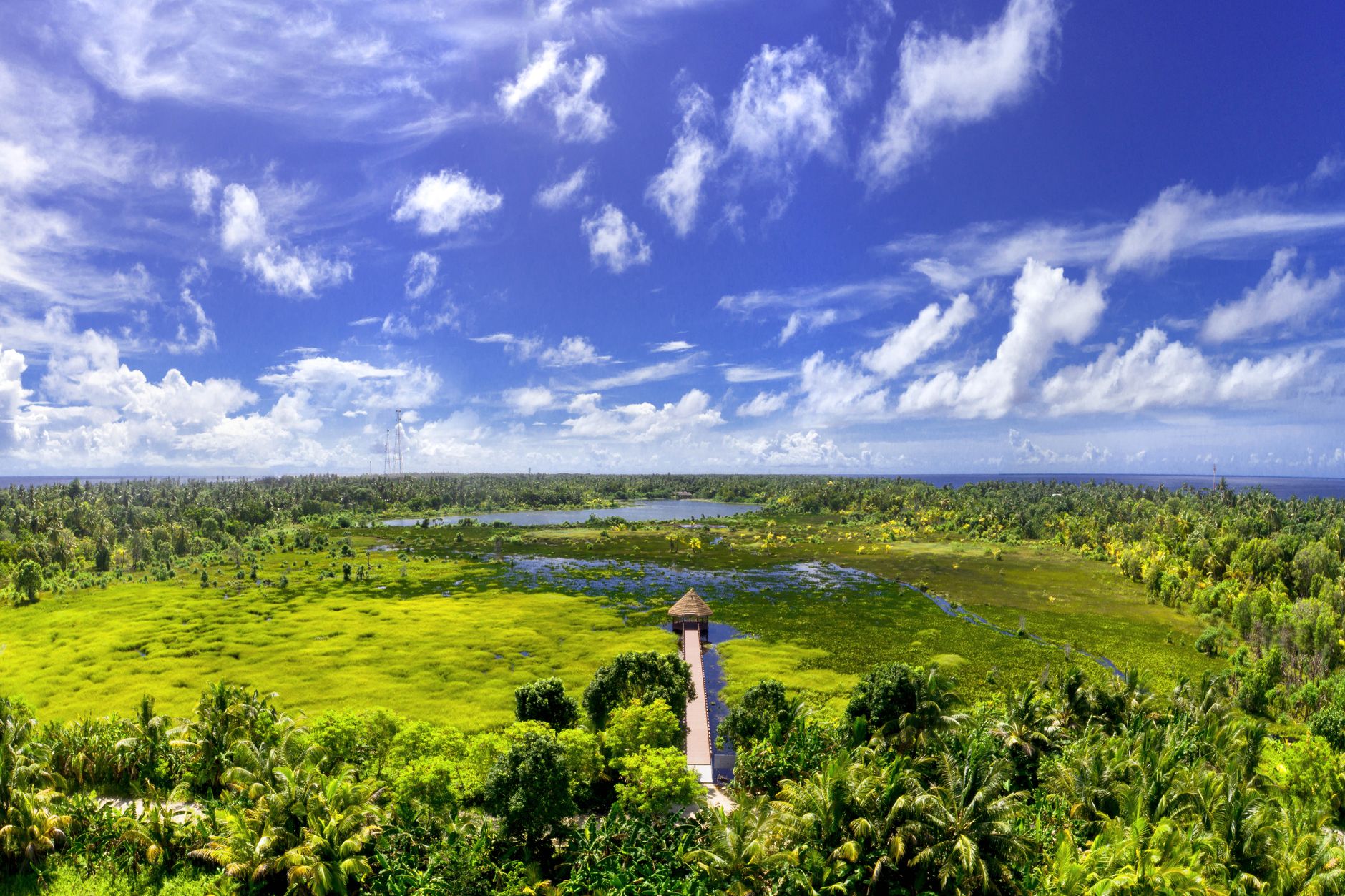
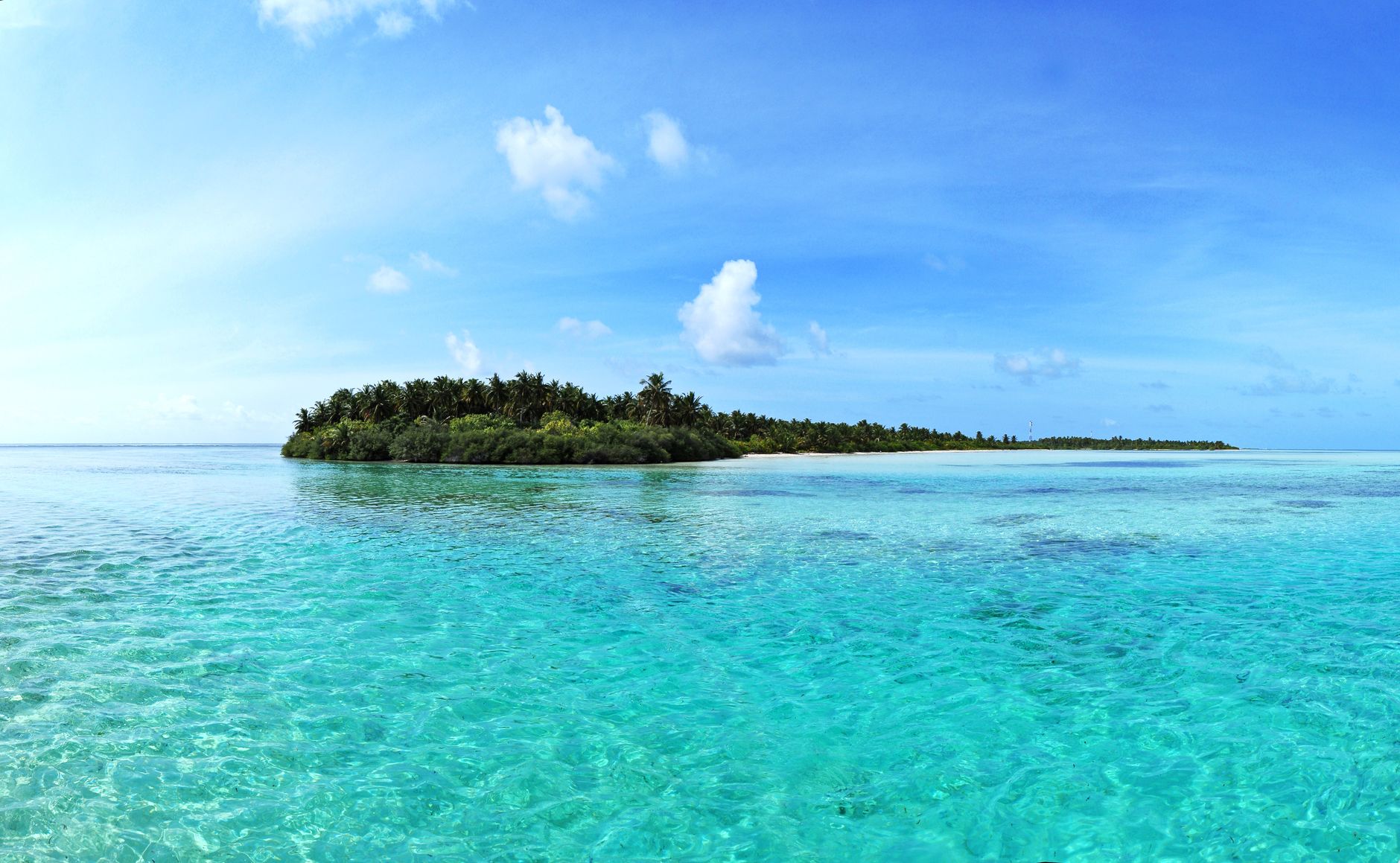
The islands are almost entirely flat, so sky and water do most of the visual work. Dawn over Ratak-chain lagoons and late light on Majuro's ocean road give photographers the kind of horizon cities can't fake.
12 cities — start with the ones we'd send you to first.
A coral-ribbon capital where the entire city is a single road running between lagoon and ocean, never more than a few hundred metres wide, lined with churches, Chinese shops, and the slow bureaucratic hum of a nation dec
Roughly 15,000 people compressed onto 0.36 square kilometres of Kwajalein Atoll — one of the most densely inhabited places on Earth, existing in the shadow of the US military base across the water.
Home to the largest lagoon on Earth by area and a US Army installation that has made this atoll simultaneously the most strategically surveilled and least tourist-visited place in the Pacific.
Between 1946 and 1958 the United States detonated 23 nuclear devices here, including the first hydrogen bomb test; the lagoon is now a UNESCO World Heritage Site where divers swim through the wrecks of the target fleet.
Site of 43 additional US nuclear tests, where a concrete dome built in 1980 entombs radioactive soil scraped from contaminated islands — a Cold War burial mound sitting at sea level in a warming ocean.
The former administrative capital of German and Japanese colonial rule, where a deep lagoon once sheltered Imperial Navy seaplanes and where the overgrown concrete ruins of that occupation still sit among the pandanus tr
The closest outer atoll to Majuro, with a reputation among the few travellers who reach it for the clearest lagoon water in the chain and a traditional love-school tradition — the *irooj* — that anthropologists documente
A remote southeastern atoll where a Japanese garrison held out until 1945, leaving behind rusting gun emplacements and the persistent, unresolved legend that Amelia Earhart's Electra came down somewhere in these waters.
At roughly 10 metres above sea level it holds the closest thing the Marshall Islands has to high ground, and it carries the unusual history of a 19th-century German-Marshallese trading family whose descendants still live
Majuro is the country's working front door: government offices, hotels, cargo yards, churches, tuna businesses, and the airport all stretched along a thin coral road. Nearby Arno Atoll changes the mood completely, with a shorter horizon of village life and lagoon travel that makes the capital feel even more improvised by comparison.
Jaluit Atoll and Ailinglaplap Atoll belong to the old commercial and administrative geography of the islands, when copra and colonial companies mattered more than airport schedules. Mili Atoll adds reefs, wreck history, and a sense of distance that still defines the southern Ratak chain.
Nowhere in the Marshall Islands is the modern political arrangement more visible than on Kwajalein Atoll. Kwajalein and Ebeye sit side by side but not remotely in the same world: one shaped by U.S. military control, the other by extreme density, ferry commutes, and the pressure of ordinary Marshallese urban life.
Bikini Atoll, Enewetak Atoll, and Rongelap Atoll carry some of the heaviest historical weight in the Pacific. The lagoons are visually serene, almost rude in their beauty, but every visit here is filtered through relocation, fallout, and the long afterlife of nuclear testing.
Likiep Atoll and Wotje Atoll feel closer to the older rhythm of the country: long boat logic, sparse services, and a daily life measured against weather and freight. They are good places to understand how little land the Marshall Islands actually has, and how much culture had to be built on that narrow margin.
A Marshall Islands timeline shaped by navigation, empire, war, and survival
Micronesian seafarers begin settling the low coral atolls that will become the Marshall Islands. They arrive without maps in the modern sense, carrying a navigational science based on swell, stars, and memory.
Matrilineal clans, land rights, and the authority of iroij become more defined across Ratak and Ralik. Politics grows out of kinship, reef access, and control of labor rather than stone capitals or fixed frontiers.
Spanish navigator Álvaro de Saavedra Cerón likely sights islands in the chain during a Pacific voyage. Contact remains fleeting, but the islands have entered imperial geography.
British captains John Marshall and Thomas Gilbert sail through parts of the archipelago. The later English name of the islands will come from this passage, though the visitors leave only a thin human trace.
Russian explorer Otto von Kotzebue spends time in the islands and produces one of the earliest detailed outsider accounts. His journals catch ceremony, hierarchy, and maritime skill, even when they fail to grasp the deeper logic behind them.
American Protestant missionaries begin reshaping religious and social life. Tattooing, sacred practice, and older ritual authority come under pressure as conversion spreads through the atolls.
The German Empire formally claims the Marshall Islands. Colonial rule works through trade monopolies, company power, and deals with local chiefs rather than through a heavy settler state.
The Jaluit Company becomes the commercial engine of German rule, turning copra into the currency of influence. Jaluit Atoll functions as the archipelago's colonial nerve center.
At the start of the First World War, Japan occupies the Marshall Islands from Germany. A new imperial chapter begins, one that will alter administration, settlement, and military planning across the atolls.
Japan receives a formal mandate over the islands after the war. Schools, ports, and commercial systems expand, but so does strategic control of places such as Jaluit Atoll, Wotje Atoll, and Kwajalein.
American forces capture Kwajalein in one of the key Central Pacific campaigns of the Second World War. The battle shatters Japanese control and opens the way to further U.S. dominance in the Marshalls.
The people of Bikini Atoll are relocated so the United States can begin atomic tests. Officials speak of science and peace; islanders lose home, graves, and the continuity of daily life.
The largest nuclear explosion in U.S. history spreads radioactive fallout across Rongelap Atoll and other communities. The white ash looks almost harmless at first, which is part of the horror.
A constitutional government for the Republic of the Marshall Islands is created, with Majuro as the political center. The shift marks the start of self-rule after decades of trusteeship.
The Marshall Islands becomes a sovereign state in free association with the United States. Independence arrives with a continuing American military and financial relationship built into the new order.
The United Nations Security Council terminates the trusteeship for the Marshall Islands. On paper, a chapter closes; in practice, the nuclear legacy remains painfully open.
By the time of her death, Darlene Keju has become one of the clearest voices explaining nuclear harm to the world. She leaves behind not just testimony but a standard of moral exactness others must now match.
Bikini Atoll is inscribed as a World Heritage Site for its role in the nuclear age. The designation recognizes global significance, though it cannot restore ordinary life to the displaced community.
Marshallese diplomacy helps push a stronger climate outcome ahead of the Paris talks. A low-lying atoll nation, long forced to endure other powers' experiments, now forces bigger states to hear an inconvenient truth.
Wave Pilots and Chiefly Seas
Leroij Meram survives in chant rather than archive, a female chief remembered less for conquest than for the cold courage of making rival men keep the peace.
Night on a canoe begins with the body, not the eye. A navigator lies flat on woven mats, his spine reading the swell while the stars turn above the black Pacific, and somewhere ahead an atoll announces itself by the way it bends water rather than by any visible shore. That is how the first settlers reached what are now the Marshall Islands, building a civilization across 29 atolls and a sea territory so wide it still unsettles modern maps.
Ce que l'on ignore souvent, c'est que the famous stick charts were never really deck instruments in the European sense. They were teaching devices made from coconut ribs and shells, memorized on land, then left behind; the real chart lived in the pilot's ribs, in the learned feel of crossing swells, reflected waves, and currents. A master ri-meto could sense land long before sunrise, as if the lagoon had sent a whisper ahead of itself.
From that maritime intelligence grew a strict social order. The Ratak chain, the sunrise islands, and the Ralik chain, the sunset islands, were ruled by iroij, high chiefs whose authority ran through land, reef, labor, and kinship, while inheritance passed through the mother's line. It sounds orderly. It rarely was. A chief's son, a chief's sister's son, rival claims, old grudges, long canoe voyages for revenge: politics here had the intimacy of family and the range of open ocean.
And then there are the women, too often blurred into the background by later chroniclers. Oral tradition keeps the memory of figures such as Leroij Meram, who is said to have negotiated peace not by force but by kinship and sacrifice, offering what no man wanted to offer and turning blood feud into alliance. In the Marshall Islands, power wore shell ornaments, but it also sat quietly in the matrilineal line, deciding who belonged and who would inherit the future.
Some navigators refused to explain stick charts to foreign researchers because they believed sea knowledge spoken in the wrong setting could lose its force.
Strangers, Traders, and the Copra Bargain
Otto von Kotzebue comes off in his journals as curious and observant, yet even he never fully grasped how politely his Marshallese hosts were withholding the real secrets.
A sail on the horizon meant danger long before it meant empire. Spanish explorers likely sighted the islands in 1529, British captains John Marshall and Thomas Gilbert passed through in 1788, and Russian officer Otto von Kotzebue lingered long enough in the early 19th century to realize he was looking at a society Europeans barely understood. His hosts received him on finely woven mats, with ceremony, calculation, and more than a little amusement.
Ce que l'on ignore souvent, c'est que Marshallese chiefs did not meet outsiders as dazzled innocents. They bargained, misled, tested, and judged. Kotzebue tried to obtain a stick chart; one navigator seems to have sold him a misleading version, pocketed the payment, and left the foreign visitor pleased with a lesson that was not the one he thought he had bought.
The deeper transformation arrived with traders and missionaries in the 19th century. Copra, dried coconut meat, turned palms into export columns and atolls into ledger lines. Protestant missions attacked tattooing, ritual sites, and older forms of authority, while German imperial power formalized what commerce had already begun. In 1885 the German Empire declared a protectorate, and the Jaluit Company, based in Jaluit Atoll, became the real court of the archipelago: a mercantile palace made of contracts, shipping schedules, and debt.
But empire in the Marshalls never looked like stone forts and grand avenues. It looked like warehouses by the shore, schooners, account books, and chiefs forced into new forms of dependence while still guarding local prestige. The old order was not erased in a single stroke. It was translated, taxed, baptized, and bent. By the time German rule had settled into routine, the islands had already entered a harder century in which outside powers would no longer be passing visitors but permanent claimants.
The German colonial foothold depended less on soldiers than on the Jaluit Company, which controlled trade so thoroughly that copra could shape politics from one lagoon to the next.
Mandate, War, and the Nuclear Kingdom
Juda, the leader of Bikini Atoll at the time of the first relocation, is often reduced to a quotation, but behind it stood a man trying to protect his people while facing the full theater of American power.
The school bell, the military parade, the registry book: Japanese rule entered the Marshall Islands through routine. Japan seized the islands in 1914 and governed them under a League of Nations mandate after the First World War, building schools, ports, shops, and administrative systems that tied atolls such as Jaluit Atoll, Wotje Atoll, and Kwajalein more tightly to an imperial network stretching to Tokyo. Settlers arrived. So did a new discipline of names, schedules, and allegiances.
Then came the war, and the lagoon became a battlefield. By 1944 American forces assaulted Kwajalein and Enewetak Atoll, while Japanese garrisons on places like Wotje Atoll and Mili Atoll were cut off, starved, and left to the insects, the heat, and the slow humiliation of defeat. Across the islands, civilians paid for strategies devised an ocean away.
Nothing, though, prepared the country for what followed in 1946. At Bikini Atoll, people were asked to leave for what American officials described as the good of mankind and the end of all world wars; one elder, Juda, agreed under pressure with words that history has not forgiven. Twenty-three nuclear tests were carried out at Bikini Atoll and Enewetak Atoll between 1946 and 1958, including Castle Bravo in 1954, the largest nuclear device the United States ever exploded, a blast so violent that it dusted Rongelap Atoll with radioactive ash like a false snowfall.
Ce que l'on ignore souvent, c'est que the bomb did not only poison bodies and soil. It rewrote memory. Places became uninhabitable, kin networks were broken by relocation, and words such as Bikini entered global fashion while the people of Bikini Atoll were still looking for somewhere safe to live. The Marshall Islands had become famous in the most indecent way possible: as a laboratory.
The consequence ran far beyond the test years. Radiation illness, miscarriages, displacement, and mistrust turned the American trusteeship into something more intimate than colonial rule and more brutal than wartime occupation. A country of low coral islands, with no mountains to hide behind, had been made to carry the weight of the atomic age.
The global swimsuit called the bikini was named in 1946 after Bikini Atoll, turning a site of forced exile into a joke of postwar fashion.
Independence, Memory, and the Rising Tide
Tony deBrum brought the voice of a small atoll nation into climate negotiations with the quiet authority of someone who had seen the sky turned white by a bomb.
The modern Marshall Islands begin in meeting halls, not on battlefields. After the testing era, Marshallese leaders, church figures, teachers, and survivors began turning grief into evidence, and evidence into politics. Majuro became the capital of that effort, a narrow atoll city where government offices, churches, cargo yards, and family compounds sit almost shoulder to shoulder, as if the state itself had been assembled from persistence.
Self-government came in 1979. Full sovereignty followed in 1986 under the Compact of Free Association with the United States, negotiated by Amata Kabua, the country's first president and a man who understood both chiefly lineage and modern diplomacy. He gave the new republic a formal voice, but the moral force of the era often came from others: women such as Darlene Keju, who spoke publicly about nuclear harm with a precision that made officials squirm, and island communities that refused to let compensation paperwork replace truth.
Ce que l'on ignore souvent, c'est que the Marshall Islands helped change the language of global climate politics before many larger states had even found the nerve. Foreign minister Tony deBrum, grandson of Likiep Atoll and witness to the Bravo fallout as a child, became one of the sharpest diplomats in the Pacific, reminding the world that for the Marshall Islands sea-level rise is not a metaphor but a tide entering homes in Majuro and washing graves on outer atolls.
The country now lives inside two clocks at once. One measures decolonization, compensation cases, migration to the United States, and the long afterlife of the bomb; the other measures king tides, drought, saltwater intrusion, and the frightening arithmetic of low elevation. Walk in Ebeye, or stand on the road in Majuro with lagoon on one side and ocean on the other, and the entire national story becomes visible at a glance: sovereignty here has always meant surviving decisions made elsewhere.
Yet survival is too small a word. Marshallese history is also invention, law, eloquence, memory, and the refusal to vanish quietly. That is the bridge into the present era, where the old skill of reading subtle shifts in water has become, once again, a matter of national destiny.
When Majuro floods during king tides, the spectacle is not dramatic in the cinematic sense; seawater simply enters roads and yards, which is precisely what makes it so unnerving.
Marshallese begins with a disarming economy. You hear "yokwe" in Majuro and think you have learned hello; five minutes later you realize you have also learned goodbye, affection, and a small theory of human relations. A language that places greeting and love in the same vessel is not being vague. It is being exact about what contact costs and what it gives.
The words sit close to the body. "Jouj" softens a request with kindness rather than ceremony, as if politeness were not a social varnish but a moral temperature. English works perfectly well in offices, schools, airport counters. Kajin M̧ajeļ does something else. It measures belonging, lineage, the difference between "we including you" and "we without you," which is a distinction any atoll society would need if it wanted to remain sane.
On Arno Atoll, where navigation knowledge once moved between kin like an heirloom too precious for daylight, language still feels tidal: who speaks first, who answers, which names are spoken plainly and which are carried with care. A country is a grammar of distance. The Marshall Islands make distance intimate.
Marshallese cuisine tastes of intelligence under pressure. Breadfruit, pandanus, reef fish, coconut cream, swamp taro from hand-dug pits: none of this flatters laziness. The plate tells you, without self-pity, that low coral atolls do not forgive waste and that appetite must learn manners before it earns pleasure.
Bwiro says this best. Fermented breadfruit paste, wrapped in leaves, baked until it becomes dense and faintly sour, it belongs to the ancient category of foods invented because a season ends and people intend to survive it. Then someone adds coconut cream and the survival food becomes feast food. Scarcity has exquisite table manners.
In Majuro, imported rice and corned beef sit beside roasted breadfruit and raw fish folded into coconut milk with lime and onion. The juxtaposition is not confusion. It is history served warm. Colonial trade, U.S. military presence, cash economy, church feast, fishing morning, all of them arrive on the same table and behave as though they had always known one another.
Pandanus keys demand labor from the mouth. Fresh green coconut cools the hands before it cools the throat. Fish arrives whole, bones included, because food that comes from a reef has no reason to pretend it came from a supermarket. The cuisine is frank. So is hunger.
Marshallese etiquette does not waste time on empty elegance. It watches rank, age, kin, church standing, land ties, and the invisible geometry of obligation with the concentration other societies reserve for finance. In Majuro, the room may look relaxed. The order of greeting is not relaxed. The order of serving is not relaxed. Precision wears a calm face.
This makes sense on islands where land rights pass through matrilineal groups, where a bwij is not just family but inheritance, reef access, memory, and the right to stand somewhere without explanation. An outsider who blunders in with democratic enthusiasm will miss the point. Equality is a lovely slogan; sequence feeds the table.
Kemem, the first-birthday feast, reveals the social machine in full dress. Food moves in quantity, relatives assemble, obligations are counted and repaid in public, and affection takes the form of labor, money, mats, fish, rice, coconut, attendance. Celebration becomes accounting with music. That is not cold. It is tenderness with receipts.
Even ordinary courtesy has muscle. Ask softly. Wait. Let the elder answer first. Shoes off when the house suggests it. Church clothes on Sunday are pressed with an almost military devotion, because respect in the Marshall Islands is not an emotion one declares. It is a garment one bothers to iron.
Christianity in the Marshall Islands does not float above daily life. It enters the week like weather. Sunday in Majuro changes the visual order of the street: white shirts, dresses held crisp against the salt air, Bibles carried with the authority of things touched often and believed entirely. Religion here is not decorative belief. It is timetable, choir practice, kin gathering, grief protocol, public morality, and often the most reliable architecture of community.
The churches can be simple from the outside, concrete and corrugated practicality under a hard sun. Inside, the atmosphere changes. Fans turn. Hymns lift. Children shift on benches. A Pacific congregation has its own acoustics, and in an atoll country the human voice acquires a particular dignity because so much else is low, flat, exposed, provisional.
This Christianity did not erase older understandings of sea, lineage, taboo, and place so much as settle on top of them, sometimes uneasily. A navigator’s respect for swell patterns and a deacon’s respect for Scripture are not the same habit, yet both require discipline, memory, and obedience to something larger than appetite. Islands make theologians of practical people.
Then the service ends and the social world resumes at full force: greetings, food, errands, family negotiations, children in polished shoes stepping back into coral light. Ritual is never only ritual. It is a way of keeping the country assembled.
Marshallese art dislikes the category of ornament. A woven pandanus mat is useful, yes, but utility alone does not explain the exactness of the patterns, the patience of dyed strips, the authority with which geometry occupies space on a floor or wall. These are not idle decorations. They are arrangements of knowledge, labor, and taste made visible with plant fiber and time.
Stick charts carry the same severity. Outsiders love them as beautiful objects, which is a little like admiring a violin for its wood grain and ignoring Bach. On Arno Atoll and elsewhere, the chart was not a map in the European sense but a lesson in swell, reflection, interference, route memory. Coconut ribs and shells became a theory of the ocean. The artwork could save your life. Few museums manage that.
Tattoo once did similar work on skin. Missionaries suppressed much of it in the nineteenth century, which is a familiar imperial habit: first misunderstand the code, then ban the script. What remains in memory and revival tells you that the body was not merely adorned but archived. Lineage, puberty, protection, status: all of it written where salt and sunlight could read it.
In Jaluit Atoll or Wotje Atoll, even wartime ruins now participate in this severe aesthetic education. A rusted gun, a collapsed bunker, a mat woven for a family event, a canoe hull cut for swell rather than display: each object refuses the difference between beauty and necessity. That refusal feels refreshing. Also slightly humiliating.
The Marshall Islands propose a philosophical correction so obvious that most continental minds miss it. Land is the interruption. Water is the continuity. An atoll is a brief sentence written on a page of moving blue, and the people who learned to live here built a worldview in which relation matters more than mass, sequence more than monument, attention more than possession.
Traditional navigation makes this plain with almost offensive elegance. The ri-meto did not stare at instruments; he learned the pressure of intersecting swells through canoe and body, often lying low to feel what others would call nothing. That is a metaphysics of humility. The world does not present itself as labels. It arrives as pattern, repetition, disturbance, clue.
Climate change gives this philosophy a brutal modern edge. When king tides flood parts of Majuro, abstraction becomes wet flooring, salt in groundwater, roads under water, family calculations about migration to Arkansas or Hawai'i or somewhere else with higher ground and less memory. A low nation cannot indulge in the fantasy that nature is elsewhere. It steps through your door.
So the cultural lesson is stern and oddly tender: permanence is overrated, relationship is not. The Marshall Islands know this in their bones. Bikini Atoll and Enewetak Atoll know it with special ferocity, because nuclear history turned the ocean into witness, archive, graveyard, and courtroom all at once.
She belongs to chant and memory more than to paperwork, which is often how powerful women survive in island history. Tradition says she ended a feud by offering her own son as hostage, a gesture so severe that it turned political prestige into something almost maternal.
Kabua ruled at the moment when traders, missionaries, and German officials began tightening their grip. He was neither a relic nor a puppet; he worked the new order for advantage, proving that chiefly politics in the Marshalls could absorb foreign power without mistaking it for legitimacy.
Kotzebue left some of the first detailed written scenes of Marshallese life, and they are worth reading for what he saw as much as for what he plainly missed. He thought he was collecting knowledge; often, the islanders were deciding how much of it a foreigner deserved.
History usually quotes only his consent to leave Bikini Atoll, as if a sentence settled the matter. What matters more is the pressure under which he spoke: American officers, a nuclear timetable, and a community asked to sacrifice home for a promise that dissolved almost at once.
Amata Kabua carried chiefly lineage into republican statecraft with unusual ease. He helped turn Majuro from an administrative outpost into the political center of an independent country, and his long presidency gave the new republic a steady, distinctly Marshallese ceremonial tone.
Darlene Keju spoke about radiation, displacement, and reproductive harm with a calm that made the facts more devastating, not less. She did not let the world treat Bikini Atoll, Rongelap Atoll, and Enewetak Atoll as abstract symbols; she kept dragging the story back to damaged bodies and interrupted families.
As mayor of Rongelap Atoll, Anjain became one of the bluntest voices against the false reassurance offered to exposed communities. He understood that contamination was not only a technical problem but a political one: who gets believed, who gets moved, who is expected to endure in silence.
DeBrum saw the Bravo test as a child from Likiep Atoll, and that white flash never really left his politics. In later decades he helped push the High Ambition Coalition in climate talks, giving a tiny state the sort of moral gravity that larger countries prefer to claim for themselves.
Hilda Heine brought the authority of an educator into a political culture shaped by chiefs, diplomats, and constitutional bargaining. Her rise mattered beyond symbolism; it suggested that the republic could draw legitimacy not only from lineage and anti-colonial struggle, but from classrooms, administration, and the patient work of institutions.
This is the short, sensible first trip: sleep in Majuro, get your bearings, then cross to Arno Atoll for a cleaner, quieter sense of atoll life. It works if you want reef water, local food, and zero fantasy about covering half the country in one weekend.
Start in Majuro for flights, cash, and logistics, then move south into two outer-atoll names that still feel tied to copra routes, reef life, and wartime residue. Jaluit Atoll gives you history and lagoon culture; Mili Atoll adds richer reef scenery and a more remote tempo.
This route shifts north and west, where military geography, dense island settlement, and older trading-era atolls sit in uneasy proximity. Ebeye and Kwajalein show the sharpest political contrast in the country; Likiep Atoll and Wotje Atoll slow the pace back down with colonial traces and classic low coral landscapes.
This is the hardest route to organize and the one that changes your understanding of the Marshall Islands most sharply. Bikini Atoll, Enewetak Atoll, and Rongelap Atoll are not beach-holiday names here; they are places where Cold War strategy, displacement, contamination, and extraordinary ocean beauty sit in the same frame.
Fermented breadfruit paste, leaf wrapping, slow heat. Feast table, family circle, coconut cream, tea, afternoon talk.
Lime, onion, coconut milk, cold flesh. Midday meal, shared bowl, rice or boiled breadfruit, fingers and spoons.
Coals, charred skin, steaming center. Evening meal, reef fish beside it, everyone tearing pieces by hand.
Pandanus pulp, starch, coconut cream, chilled sweetness. Breakfast, church gathering, children's hands first.
Swamp taro from the pit, boiling pot, glossy coconut. Morning plate or feast side dish, elders at the table, silence while eating.
Rice balls, fresh grated coconut, quick hunger management. School day, boat day, market day, one hand free.
Machete cut, cold water, soft flesh scraped from the shell. Roadside stop in Majuro, beach shade on Arno Atoll, no ceremony needed.

U.S. travelers do not need a visa for short stays, while many EU and UK passport holders are admitted visa-free or with a waiver for up to 90 days. Canadian and Australian travelers are commonly processed on arrival, but rules are published unevenly, so confirm with Marshall Islands immigration or the nearest RMI mission before you buy flights. Everyone should carry a passport valid for 6 months, an onward ticket, and a hotel or host contact.
The Marshall Islands use the U.S. dollar, and cash matters more than cards. Bring more notes than you think you need, especially if you plan to leave Majuro for Arno Atoll, Jaluit Atoll, or anywhere farther out, because banking is limited and small operators may not accept cards.
Majuro is the practical gateway. Most visitors arrive at Majuro International Airport on United's Honolulu-Guam Island Hopper or on regional flights, while Kwajalein is heavily restricted because of the U.S. military base and is not a normal tourist entry point.
Inside the country, you move by domestic flight, cargo-passenger boat, skiff, or taxi. Majuro is easy enough to cross by road, but outer-atoll transport runs on thin schedules and weather can break plans fast, so keep at least one buffer day if you are heading to Mili Atoll, Wotje Atoll, or Bikini Atoll.
Expect 27 to 32C year-round, warm sea, and very little seasonal temperature swing. December to April is the driest and easiest period for travel, while May to November brings heavier rain, more humidity, and rougher logistics, especially on boat-dependent routes.
Mobile data and Wi-Fi are usable in parts of Majuro, but coverage, speed, and power reliability drop once you leave the capital. Download maps, flight details, and hotel contacts before you go to Ebeye, Arno Atoll, or the outer atolls, because this is not a country where you should depend on constant signal.
The main risks are not crime but remoteness, heat, ocean conditions, and fragile transport. Majuro feels manageable if you use normal caution, but medical care is limited, evacuation is expensive, and some northern atolls, including Bikini Atoll and Enewetak Atoll, carry nuclear-history restrictions that require advance checks rather than improvisation.
Budget around cash, not card promises. In Majuro you can usually sort payments out; outside the capital, small guesthouses, boat operators, and taxis may want U.S. dollars in hand.
Rail is not part of the equation here. Inter-island travel means plane or boat, and even inside Majuro you are dealing with taxis, private rides, or hotel transfers rather than public transit in the European sense.
Reserve rooms before you lock in flights, especially in Majuro. Hotel supply is small, outer-atoll lodging is thinner still, and a single conference or government event can squeeze the whole market.
Treat published schedules as intentions, not guarantees. If you are flying onward from Majuro after an outer-atoll trip, leave at least one spare day so a delayed boat or canceled domestic hop does not wreck the international ticket.
Pack prescription medicine, reef-safe sun protection, and anything you would hate to replace in a small island pharmacy. Serious care is limited, and evacuation from places like Wotje Atoll or Bikini Atoll is expensive and slow.
Dress modestly away from resort-style settings, ask before photographing people, and do not assume every beach is socially public in the way visitors imagine. Marshallese hospitality is real, but land, kinship, and church life matter, and acting casual about that reads badly.
Save confirmations, maps, and contacts before leaving Majuro. Data can be patchy, power cuts happen, and the moment you most need a signal is often the moment you lose it.
Explore Marshall Islands with a personal guide in your pocket
Audio guides for 1,100+ cities across 96 countries. History, stories, and local insight — offline ready.

Usually not if you hold a U.S., UK, or many EU passports for a short tourist stay, but the exact rule depends on nationality. Canadian and Australian travelers are often processed on arrival rather than through a long pre-trip visa process, and everyone should still verify current rules with an official Marshall Islands source before departure.
Most travelers fly to Majuro via Honolulu on United's Island Hopper, which continues west through Micronesia toward Guam. It is one of the most unusual scheduled routes in the Pacific, but it also means missed connections are expensive, so do not plan tight onward timing.
Majuro is worth at least a couple of days because it explains how the country actually works. You come for the market, lagoon views, causeway life, churches, tuna port energy, and the fact that the capital feels lived in rather than polished.
Yes, but only with planning, permissions, and realistic expectations about cost and logistics. Bikini Atoll is a nuclear-history destination and a specialist dive destination, not a place to improvise with a backpack and hope something turns up.
Not in the normal sense. Kwajalein is tied to a restricted U.S. military installation, so general leisure access is limited, while nearby Ebeye is the Marshallese community most independent travelers are more likely to encounter.
December to April is the easiest window because rain is lighter and transport is a bit less fragile. You can travel year-round, but wetter months make boats rougher, flights less reliable, and outer-atoll planning more tedious.
Bring enough to cover several days of accommodation, meals, taxis, and one disruption without relying on a card. On a basic Majuro stay that often means a few hundred U.S. dollars in reserve; for outer-atoll travel, carry more because the places that most need cash are the ones least able to help when you run short.
Yes, mainly because remoteness pushes up flights, rooms, and transport. Daily life in Majuro can be moderate if you keep things simple, but one domestic flight, dive charter, or outer-island detour can change the budget fast.
Last reviewed