Plan and listen to Triton Fountain with Audiala.
Audio guide in your pocket, itinerary in your browser. Built for the way you actually visit.
Introduction
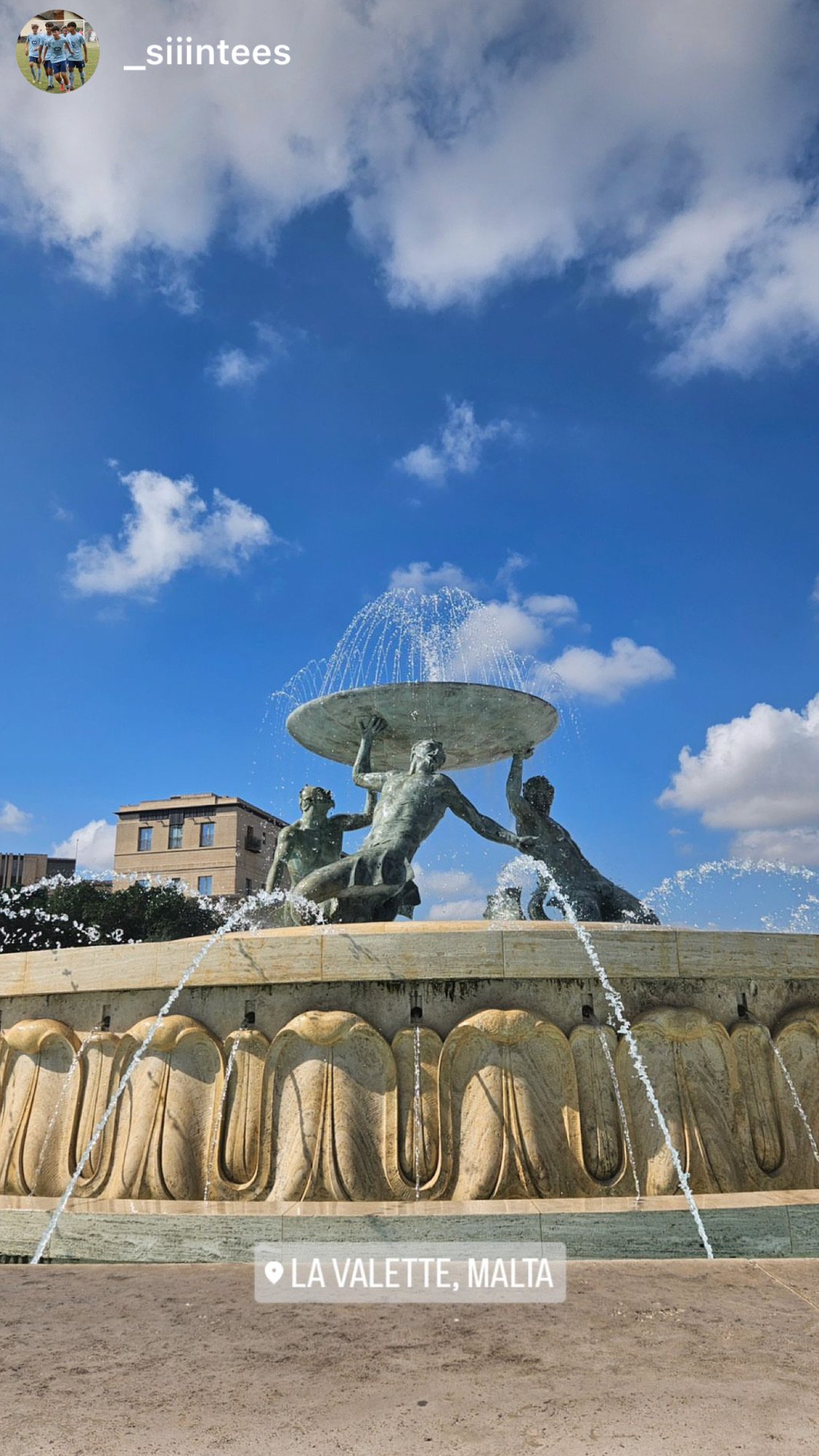
The Triton Fountain, standing at the entrance of Valletta, Malta’s capital, is one of the country’s most celebrated public monuments. Its three dramatic bronze Tritons, supporting a large circular basin, embody Malta’s deep-rooted maritime heritage and modernist artistic aspirations. The fountain is more than a visual landmark—it is a vibrant social hub, a symbol of resilience, and a key piece of the city’s urban identity (Alluring World; Guide to Europe). This detailed guide explores the history, design, visiting hours, accessibility, nearby attractions, restoration efforts, and tips to help you get the most from your visit.

Historical Background
Origins and Conception
Conceived in the post-World War II era, the Triton Fountain was envisioned as part of Valletta’s urban renewal. The Ministry for Public Works and Reconstruction held a competition in the early 1950s, ultimately selecting Maltese sculptor Vincent Apap and draughtsman Victor Anastasi for their mythological Triton-themed design. The fountain was constructed to symbolize Malta’s evolving identity and its perennial relationship with the sea (Alluring World; Maltize).
Design and Symbolism
Completed in 1959, the fountain is a masterful example of modernist sculpture. The three bronze Tritons—sons of Poseidon—are depicted in dynamic poses, supporting a wide basin. The surrounding marine motifs, such as dolphins and seashells, reinforce the island’s connection to the Mediterranean and its seafaring history (Wikipedia; Alluring World).
Location, Accessibility, and Urban Context
The Triton Fountain is prominently situated at Valletta’s City Gate, adjacent to the city’s main bus terminal on Vjal Nelson, Il-Furjana. This strategic location marks the transition from the modern cityscape to Valletta’s UNESCO-listed baroque core, making the fountain a convenient meeting point and the first landmark encountered by most visitors (Guide to Europe; GuideMeMalta).
- Public Transport: Nearly all buses terminate at Valletta’s main bus terminal, steps from the fountain.
- Pedestrian Access: The surrounding Triton Square is fully pedestrianized, making it safe and accessible.
- Wheelchair Accessibility: The square and pathways are level and spacious, with clear access from the bus terminal and parking areas (Holidify).
Visiting Hours and Admission
- Open 24/7: As a public outdoor monument, the Triton Fountain is accessible at all hours, every day of the week.
- Free Entry: There is no admission fee to visit the fountain or the surrounding square. Visitors can enjoy the site at any time, day or night.
- Best Times to Visit: Early mornings and late evenings offer softer light and fewer crowds, while evenings feature beautiful illuminations (Best Time to Visit Valletta).
Artistic and Architectural Features
Sculptural Details
Crafted from bronze, each Triton is about 3 meters (10 feet) tall, arranged in a triangular formation that conveys movement and balance. The muscular forms and expressive faces evoke the power and vitality of the sea. The supporting basin, made from reinforced concrete and clad in travertine imported from Rome, offers a striking contrast to the bronze figures (GuideMeMalta).
Modernist Aesthetic
The fountain’s design combines classical mythological elements with modernist geometry. Water jets animate the sculpture, creating a multisensory experience and reflecting Malta’s post-war artistic ambitions.
Engineering and Innovation
Beneath the fountain lies an intricate network of passageways and chambers for maintenance, showcasing the engineering prowess behind the artistic surface.
Restoration and Preservation
The fountain has undergone several major restoration projects:
- 1978: Damage to a Triton’s arm and collapse of the platter led to repairs that were later criticized for poor quality.
- 1987: Structural reinforcement and partial restoration took place.
- 2017-2018: A €4 million comprehensive restoration included cleaning the bronze Tritons, re-engineering the supporting structures, and installing modern water and lighting systems. The sculptures were sent to Italy for expert conservation, restoring the fountain to its original grandeur (AX Hotels Malta; GuideMeMalta).
Cultural Significance and Social Role
The Triton Fountain is a focal point for public life in Valletta:
- Gathering Spot: Its location makes it a central meeting point for locals and tourists.
- Event Venue: The plaza hosts open-air concerts, festivals, and national celebrations, with the fountain serving as a dramatic backdrop (Holidify).
- Symbolism: The Tritons’ outstretched arms toward Valletta’s City Gate represent a symbolic welcome and protection for all who enter the city.
Nighttime Magic: Illumination and Atmosphere
After sunset, the fountain comes alive with a sophisticated lighting system that highlights the sculptural details and water jets. The illuminated Tritons and cascading water create a magical ambiance, making the fountain a popular destination for evening strolls, photography, and social gatherings (Holidify).
Nearby Attractions and Amenities
The Triton Fountain’s central location makes it an ideal starting point for exploring Valletta:
- Upper Barrakka Gardens: Offers panoramic views of the Grand Harbour.
- St. John’s Co-Cathedral: A short walk away, renowned for its baroque architecture and art.
- Grandmaster’s Palace: Located within Valletta’s historic core.
- Cafes and Shops: Surrounding the square are numerous dining and shopping options.
- Public Facilities: The area includes public restrooms, shaded seating, and free Wi-Fi.
Photography and Visitor Tips
- Best Angles: Photograph the fountain with Valletta’s City Gate in the background or at night when illuminated.
- Etiquette: Please do not climb the sculptures or enter the water for safety and preservation reasons.
- Guided Tours: Many local operators include the fountain in Valletta walking tours, offering valuable historical context.
Frequently Asked Questions (FAQ)
Q: What are the visiting hours for the Triton Fountain?
A: The fountain and square are open 24/7.
Q: Is there an entrance fee?
A: No, visiting is free of charge.
Q: Is the fountain accessible for wheelchair users?
A: Yes, the plaza is flat and fully accessible.
Q: Are guided tours available?
A: Yes, various local operators include the fountain in their Valletta tours.
Q: Can I take photos or hold events at the fountain?
A: Photography is welcome. For commercial shoots or drone use, special permits are required. Public events are held with official authorization.
Practical Information and Visitor Guidelines
- Safety: Security personnel patrol the area regularly. Visitors are asked to respect the monument and avoid climbing or entering the water.
- Travel Tips: Spring and autumn offer pleasant weather; summer evenings are lively with public events.
- Getting There: Easily accessible via public transport; parking is available nearby in Floriana.
Economic and Tourism Impact
The Triton Fountain attracts thousands of visitors annually, benefiting local businesses and serving as a hub for guided tours, cultural events, and community gatherings. Its enduring appeal supports the vibrancy of Valletta’s tourism and cultural sectors (Holidify).
Summary
The Triton Fountain stands as a quintessential symbol of Malta’s artistic excellence, resilience, and maritime heritage. Its commanding presence, coupled with its role as a social and cultural hub, ensures its continued relevance in the heart of Valletta. Open to all and free of charge, it remains an inclusive space for visitors of all backgrounds and abilities (Alluring World; Holidify).
For the best experience, explore nearby attractions, take a guided tour, and enjoy the fountain both by day and illuminated at night.
Discover More
Plan your visit to the Triton Fountain in Valletta and immerse yourself in Malta’s rich history and vibrant public life. For more detailed guides, event updates, and insider tips, download the Audiala app and follow us on social media.
Explore more about Valletta’s historical sites and cultural gems in our related articles.
Listen to the full story in the app
The whole Triton Fountain,
told well.
Listen to sourced travel stories with local history and practical context — ready offline.
Verified, and shown.
Researched and written by the Audiala editorial team from historical records, architectural archives, and local expertise.
Built from cited sources · see the method · How we make our guides →